


As an Amazon Associate I earn from qualifying purchases.
Storing firewood in the garage keeps it dry, accessible, and ready to burn when you need it most. Done right, it can also look sharp and stay organized without taking over your whole space. In this article, I cover four key areas: indoor rack systems, airflow and drying setups, kindling and starter stations, and pest-smart storage tips.
Indoor Rack Systems
A dedicated indoor rack is the foundation of any good garage firewood setup. It gets wood off the concrete floor, keeps your stack from toppling, and makes it easy to grab logs without digging through a messy pile. The right rack also helps your garage look intentional rather than cluttered. If you already have a solid garage storage system in place, adding a firewood rack is a natural extension of that same organized thinking. Sizes range from compact two-foot units that tuck into corners to full wall-length systems that hold a cord or more.
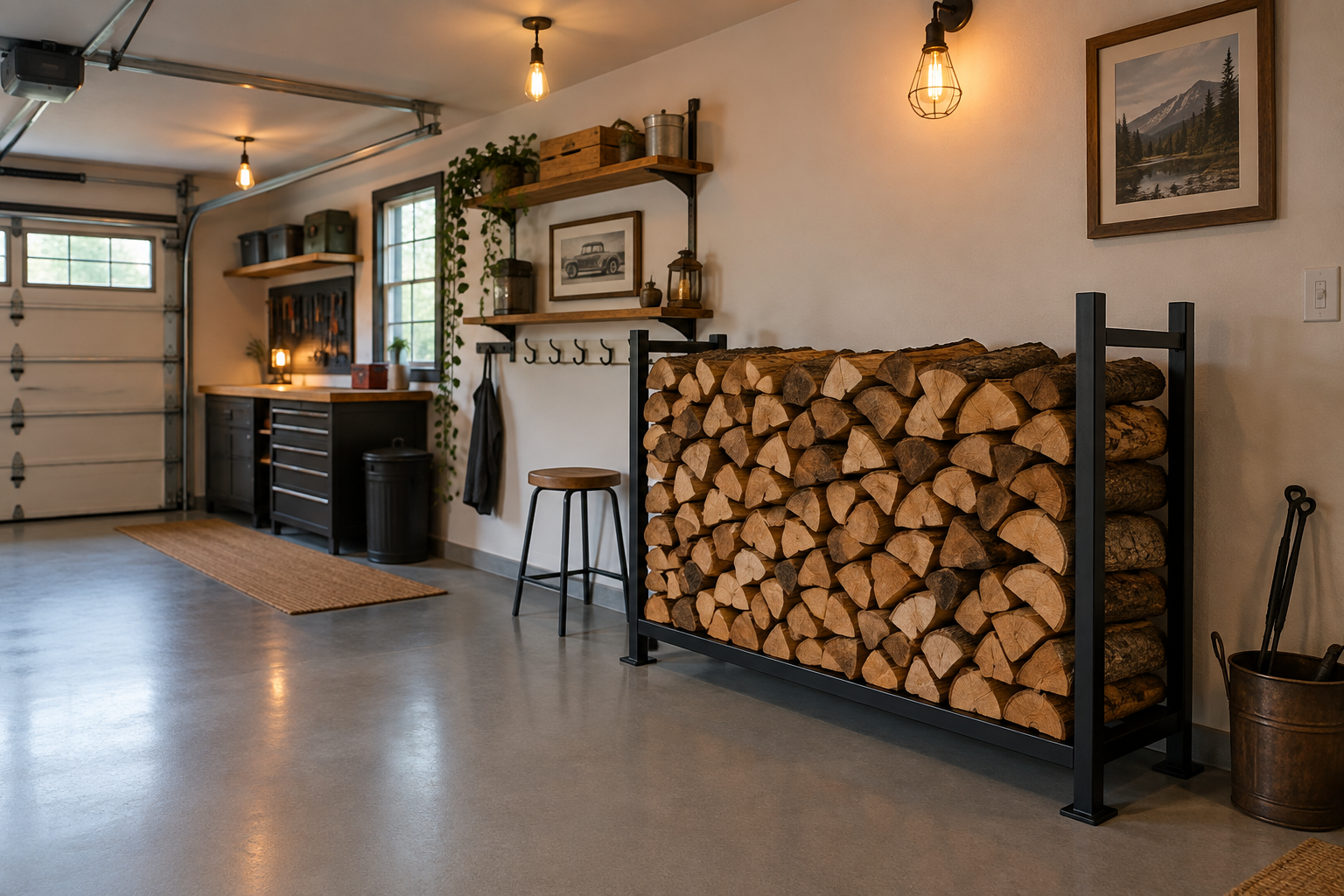
This black powder-coated steel rack sits flush against a white drywall wall and holds a neat, dense stack of split oak. The dark metal against the white wall gives it a clean industrial contrast that works well in a modern garage. It is a simple, affordable setup that keeps logs off the floor and easy to grab on the way inside.
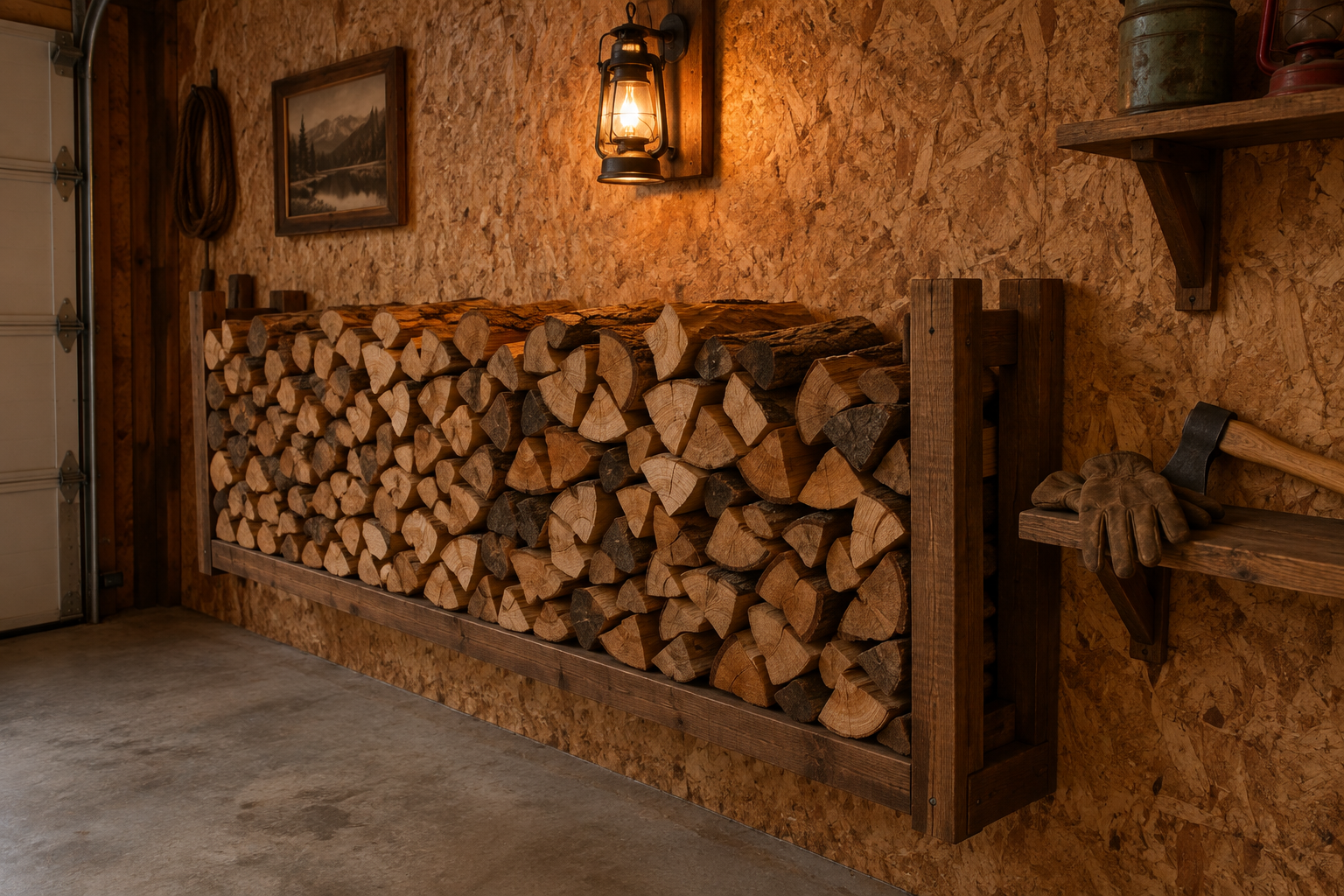
Built from walnut-stained cedar 2x4s, this wall-mounted rack spans six feet and keeps the stack tight and stable without taking up any floor space. The OSB wall and lantern light fixture give the whole corner a rugged, rustic garage feel that is hard to fake with store-bought furniture. A hatchet and worn glove on the small shelf below finish the scene perfectly.
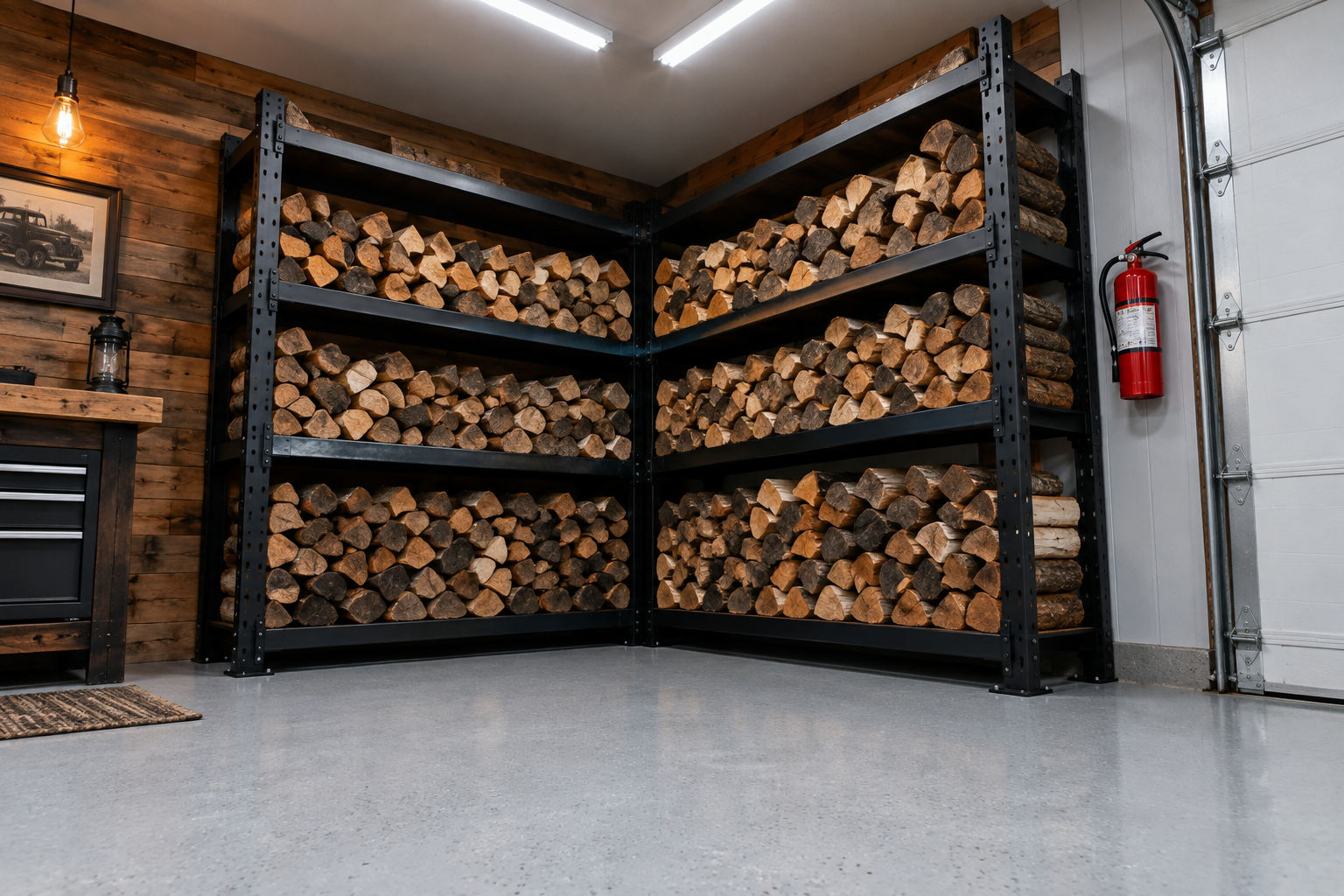
This L-shaped corner configuration uses two linked black metal rack sections to store a serious amount of wood without eating into the center of the garage. The low camera angle emphasizes just how much capacity this setup holds, with hardwood logs packed in tight on both walls. Bright LED shop lights overhead make it easy to assess what you have left mid-winter without squinting into a dark corner.
Airflow and Drying Setups
Freshly cut or rained-on wood needs airflow to dry out properly before you burn it. Stack it too tight against a solid wall with no circulation and you are just trapping moisture, which leads to smoky fires and mold. Good garage firewood storage leaves gaps between logs, raises the stack off the floor, and takes advantage of any natural ventilation your garage has. If your garage tends to run humid, it is worth checking out these garage ventilation methods to improve airflow throughout the whole space. A little extra airflow goes a long way toward getting wood burn-ready faster.
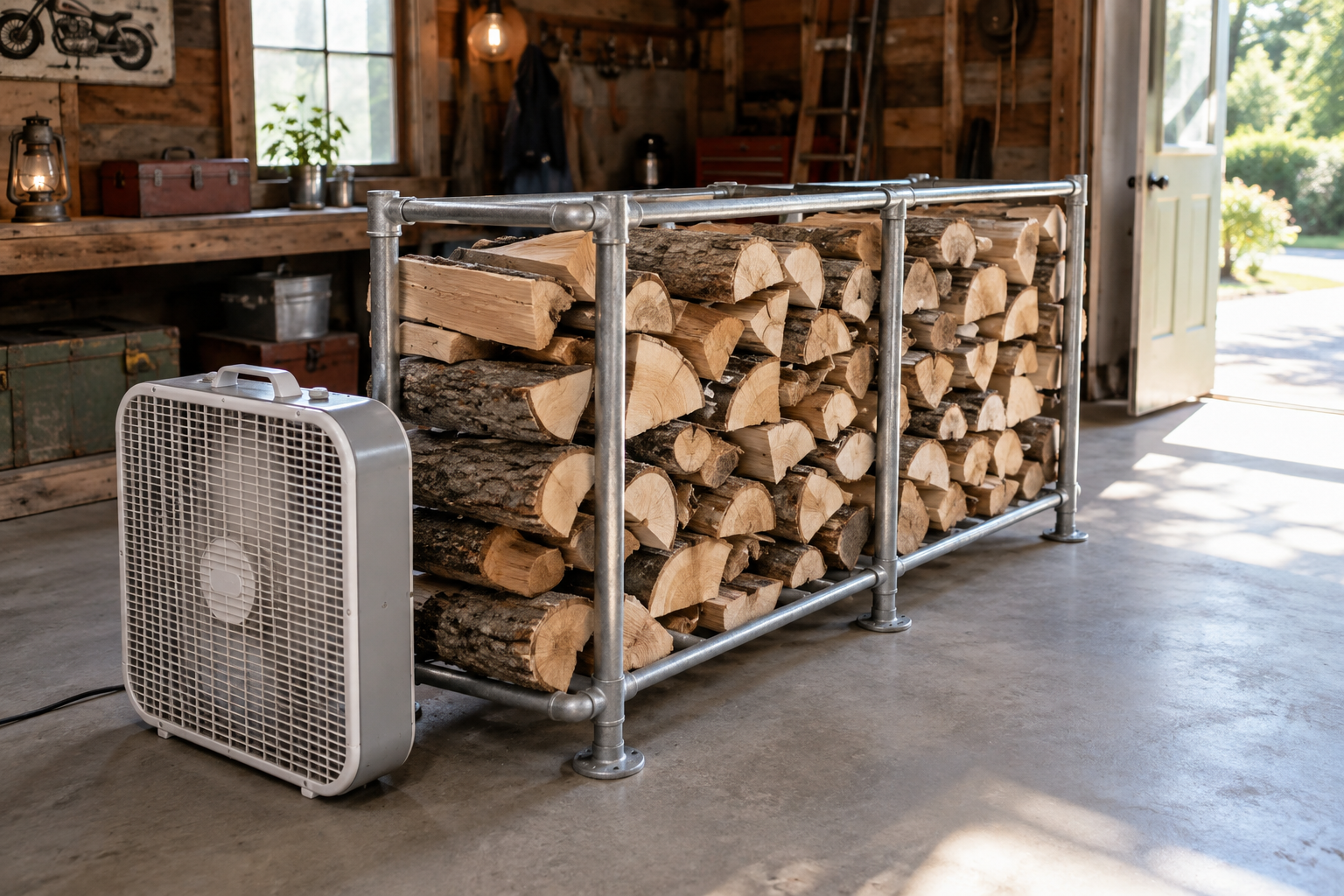
Galvanized pipe fittings give this DIY rack an industrial look while keeping the structure open enough for air to pass freely between every log. A basic box fan positioned at one end pushes a steady stream of air through the stack, which can cut drying time significantly compared to passive storage alone. Fresh-cut log ends showing that creamy pale color tell you this wood still needs time before it is ready to burn.
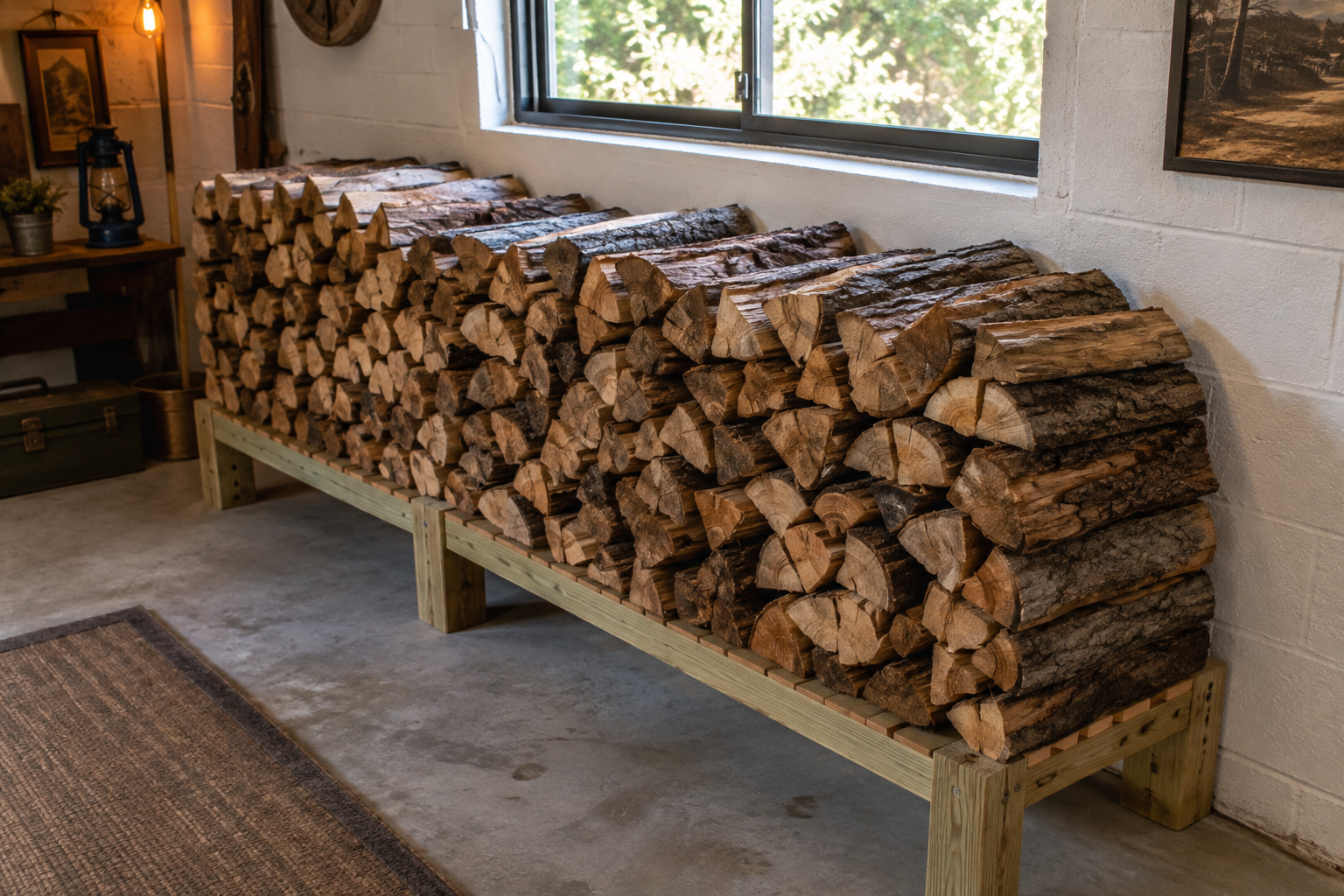
Raising the entire stack six inches off the concrete on pressure-treated 4×4 legs solves two problems at once: it keeps moisture from wicking up through the floor and opens a channel of airflow underneath. The slats across the top of the platform add more spacing between the first layer of logs and the base. Positioning this under an open window lets whatever breeze is available move through the stack from bottom to top.
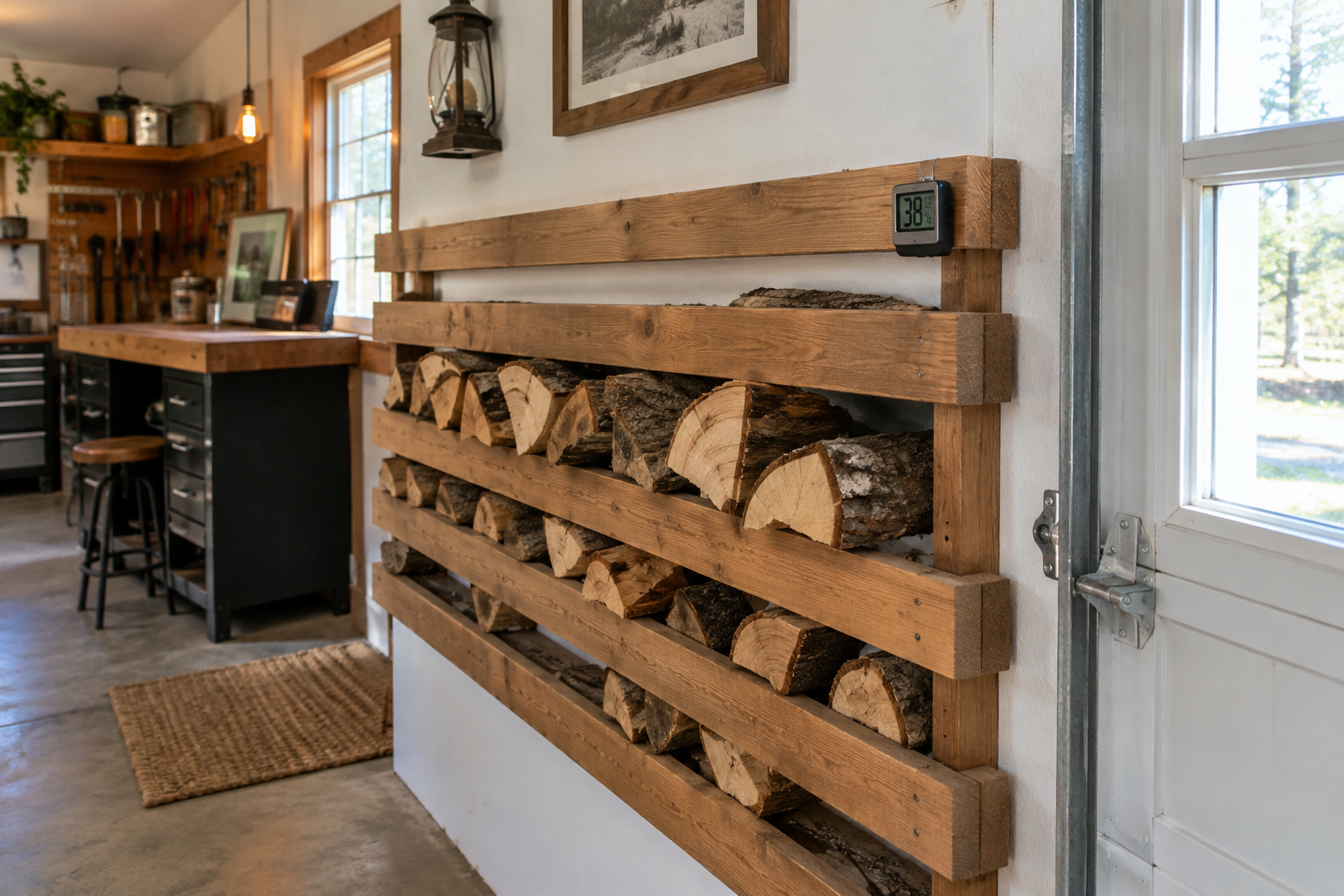
Horizontal 2×4 rails spaced four inches apart create a single-row display rack where every log is exposed to circulating air on all sides. The crisscross stacking pattern borrowed from traditional log cabin technique adds structural stability while naturally leaving voids that encourage airflow. A digital hygrometer clipped to the rail is a smart addition, letting you track moisture levels and know exactly when your wood has hit that sweet spot for burning.
Kindling and Starter Stations
Most firewood storage setups focus entirely on the big logs and completely ignore kindling, firestarters, and the small tools that go with them. A dedicated starter station changes that by keeping everything for building a fire in one place. Think small-diameter split wood, fatwood sticks, fire-starter cubes, matches, and a hatchet, all within arm’s reach of your main log stack. It is the kind of detail that makes your whole system feel finished and thought through. If you are planning out your garage wall space to fit a setup like this, a well-planned garage storage layout can help you figure out exactly where everything should live.
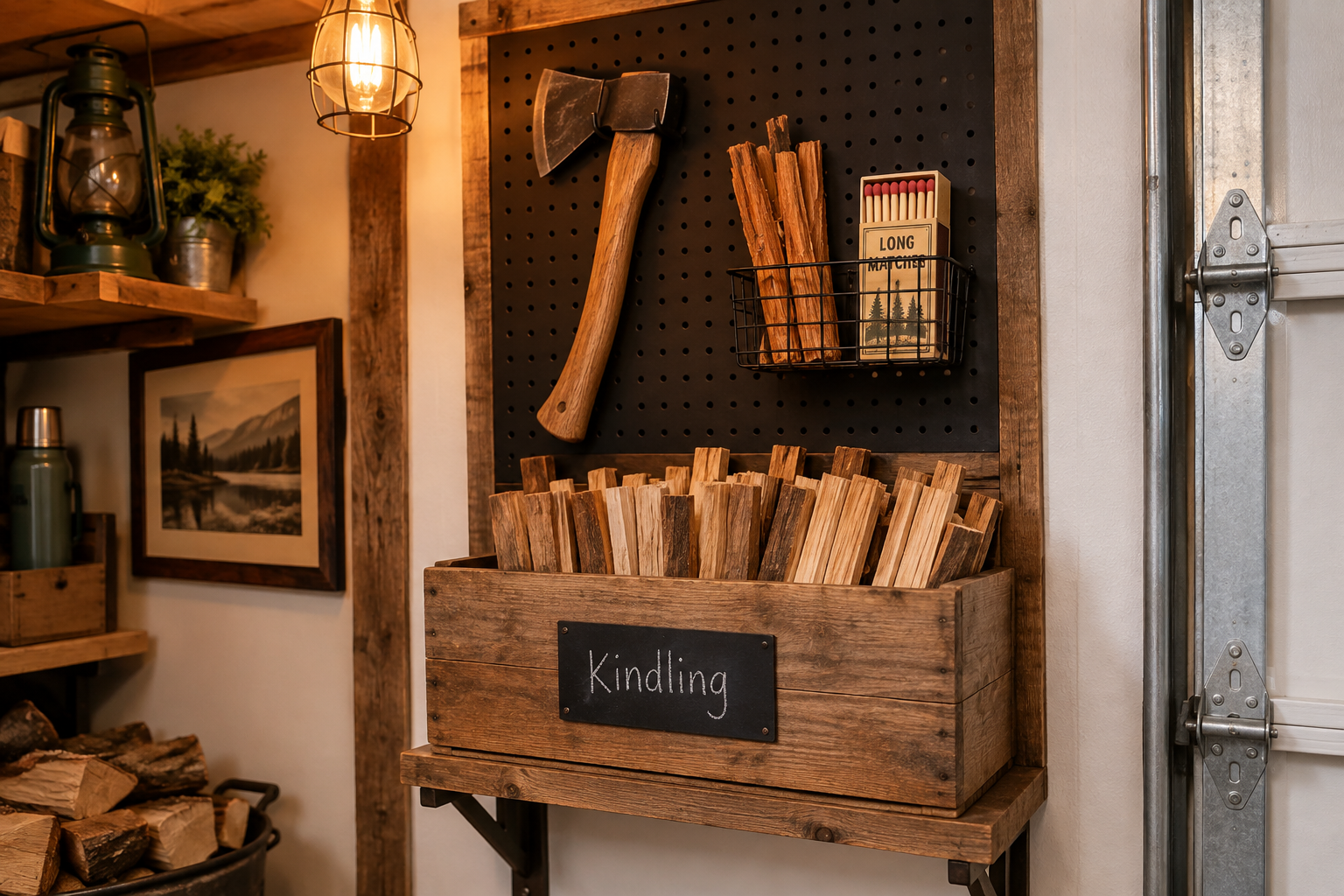
A painted wooden crate with a chalkboard label corrals upright kindling sticks at the bottom while a black pegboard panel above keeps the hatchet, fatwood bundle, and long matches right where you need them. The handwritten label gives it a personal, workshop feel without trying too hard. Everything for starting a fire is within a two-foot square of wall space, which is about as efficient as it gets.
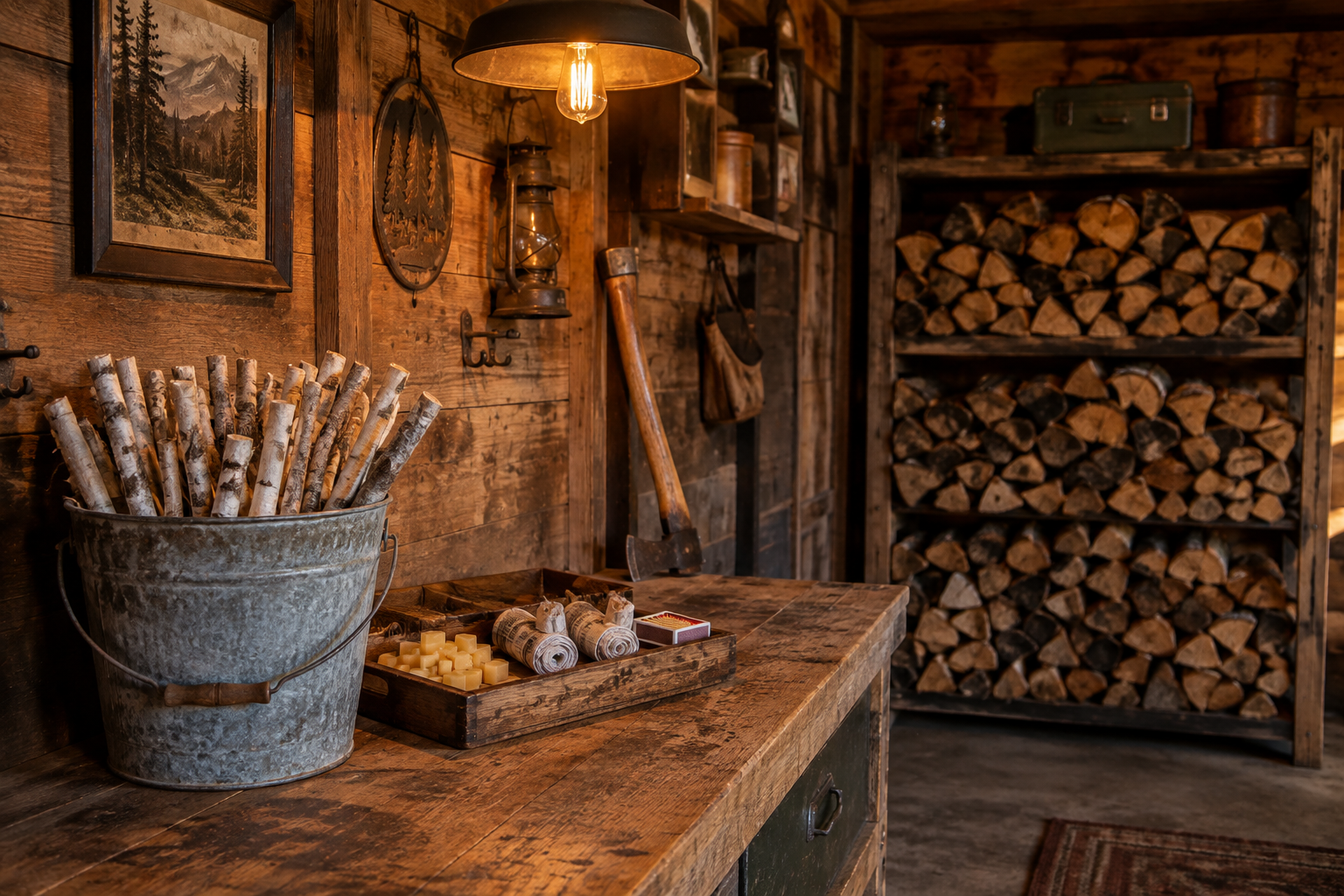
A galvanized metal bucket makes a durable, good-looking container for thin birch kindling sticks and sits naturally on a weathered workbench surface. The wooden tray beside it groups wax fire-starter cubes, newspaper twists, and a matchbox so nothing gets lost in a drawer. Seeing the main log rack visible in the background ties the whole fire-starting system together visually and functionally.
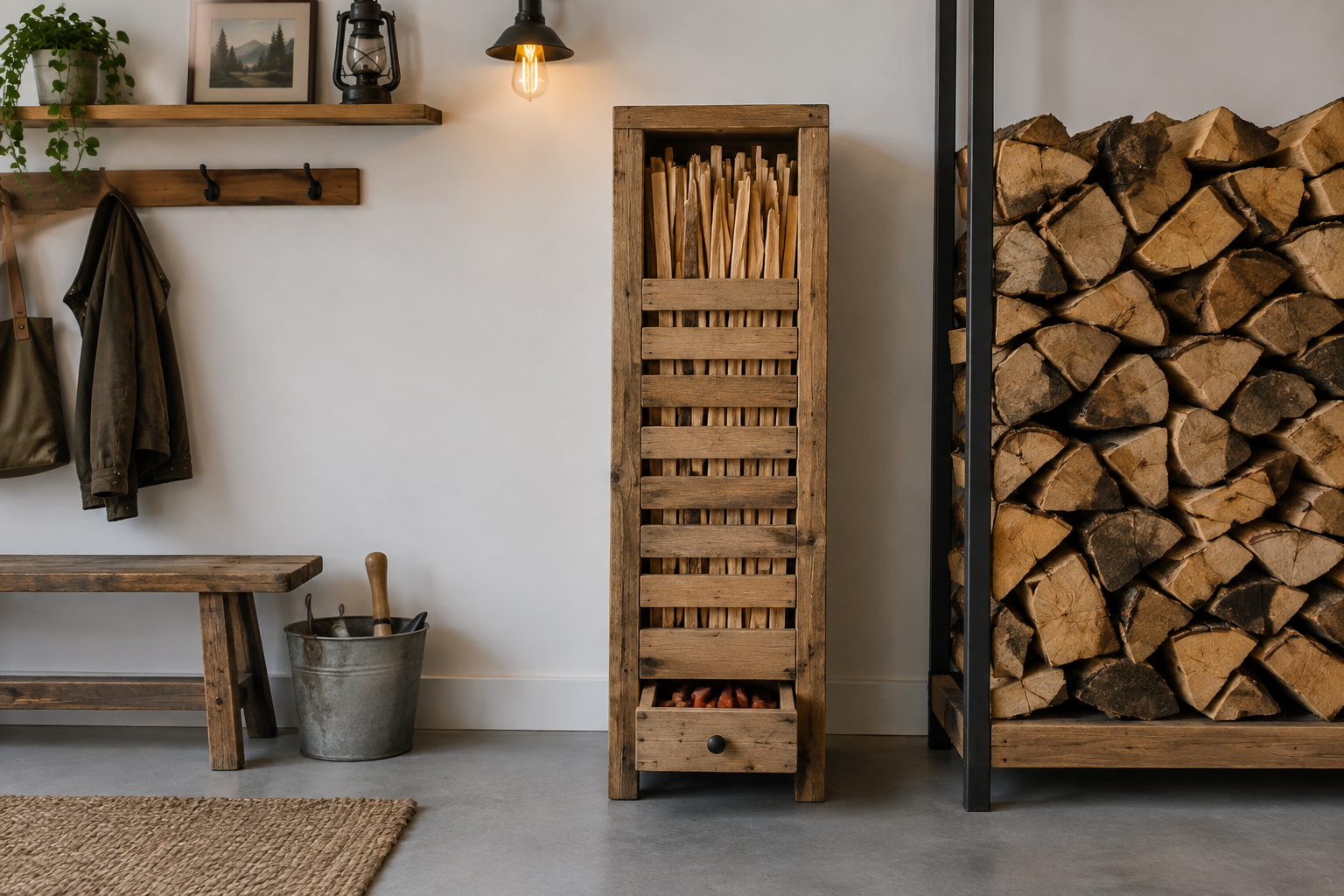
This freestanding cedar kindling tower takes a Scandinavian approach, simple lines, rough-sawn wood, and a slatted front that lets you see the supply level at a glance. The small drawer built into the base is the standout feature, keeping fatwood sticks tucked away but instantly accessible when you need them. Standing it right next to the main log rack means your fire-building sequence flows from big logs to kindling to starters without any backtracking.
Pest-Smart Storage Tips
Firewood and pests are a well-known combination. Termites, carpenter ants, spiders, mice, and even snakes use wood piles as shelter, and bringing infested logs inside your garage can cause real damage over time. The good news is that smart storage habits solve most of the problem before it starts. Keeping wood off the floor, away from garage walls, and moving through your supply regularly are the three biggest things you can do. If you want to go deeper on keeping unwanted visitors out of your garage entirely, this complete guide to rodent-proof garage storage covers the topic thoroughly. Pair those habits with the right firewood setup and you are in good shape year-round.
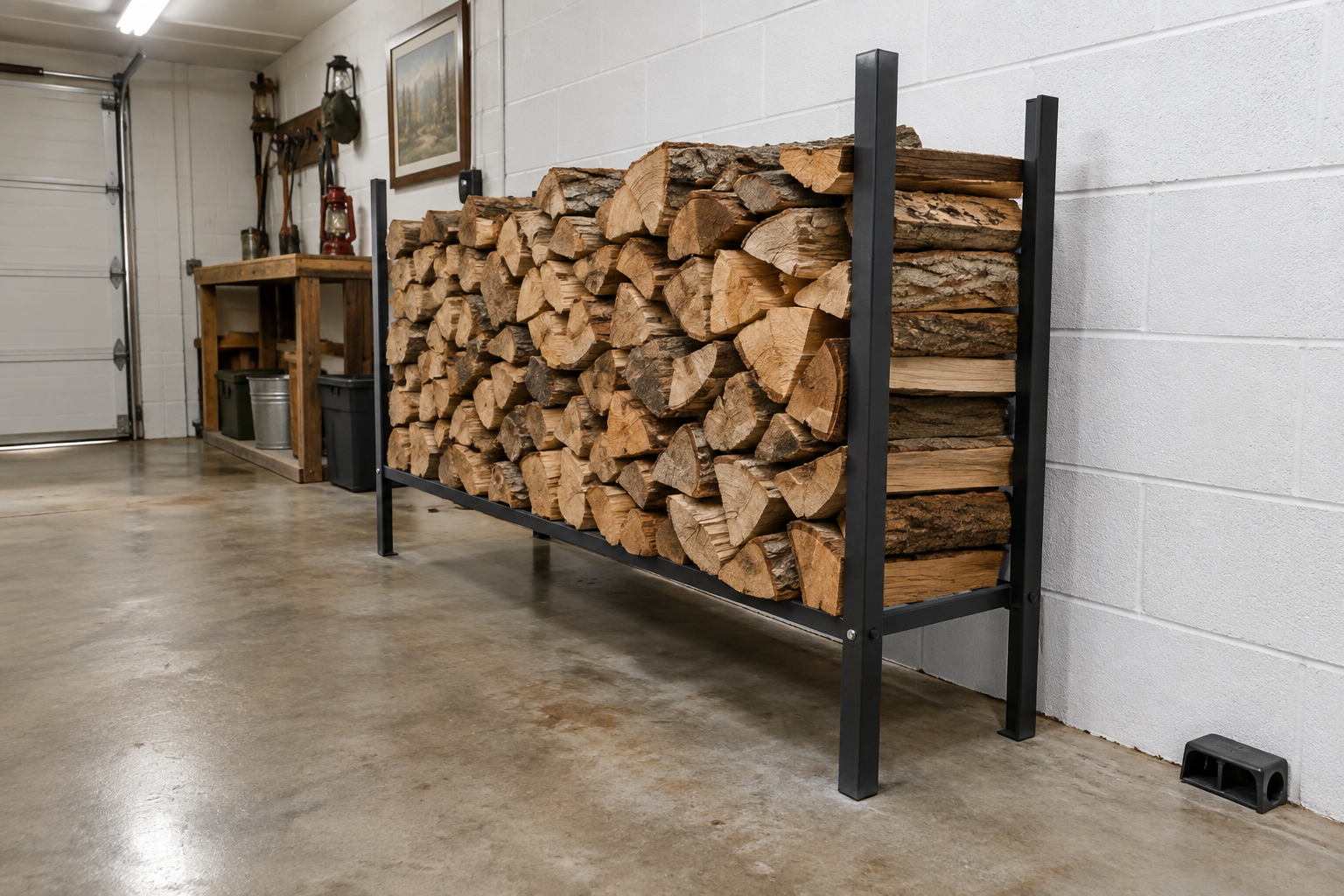
The two most important gaps in pest-smart firewood storage are visible right here: space beneath the rack so nothing can nest underneath, and space between the logs and the wall so insects and rodents cannot use the stack as a bridge into your wall cavity. Positioning a simple snap trap on the floor nearby adds a first line of defense. These are small habits that prevent large problems.
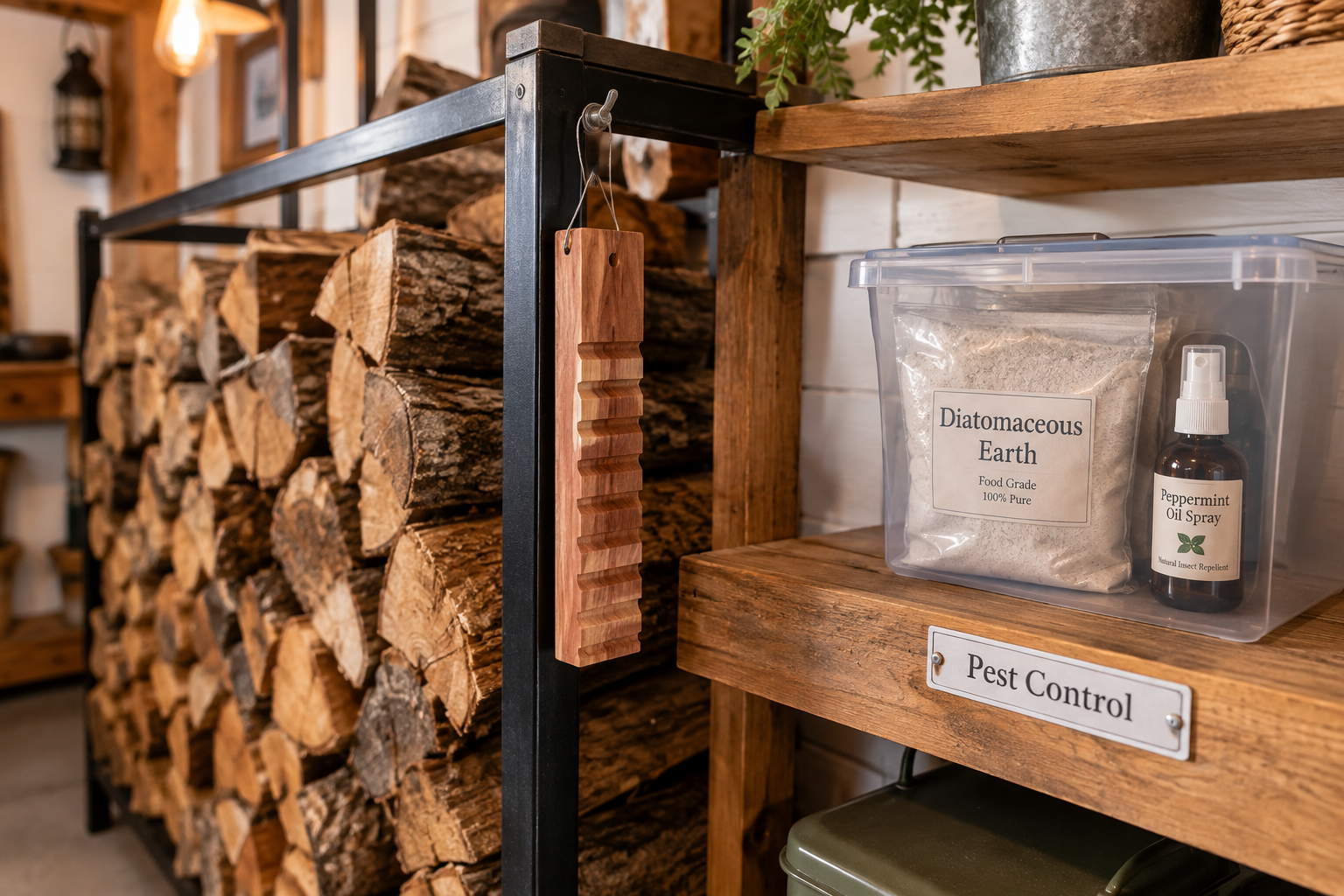
Cedar blocks hung from the rack frame release a natural scent that discourages insects without any harsh chemicals near wood you will eventually burn indoors. The labeled shelf nearby keeps diatomaceous earth and peppermint oil spray together as a two-pronged non-toxic approach to perimeter control. Keeping these supplies visible and organized means you are more likely to actually use them on a regular schedule.
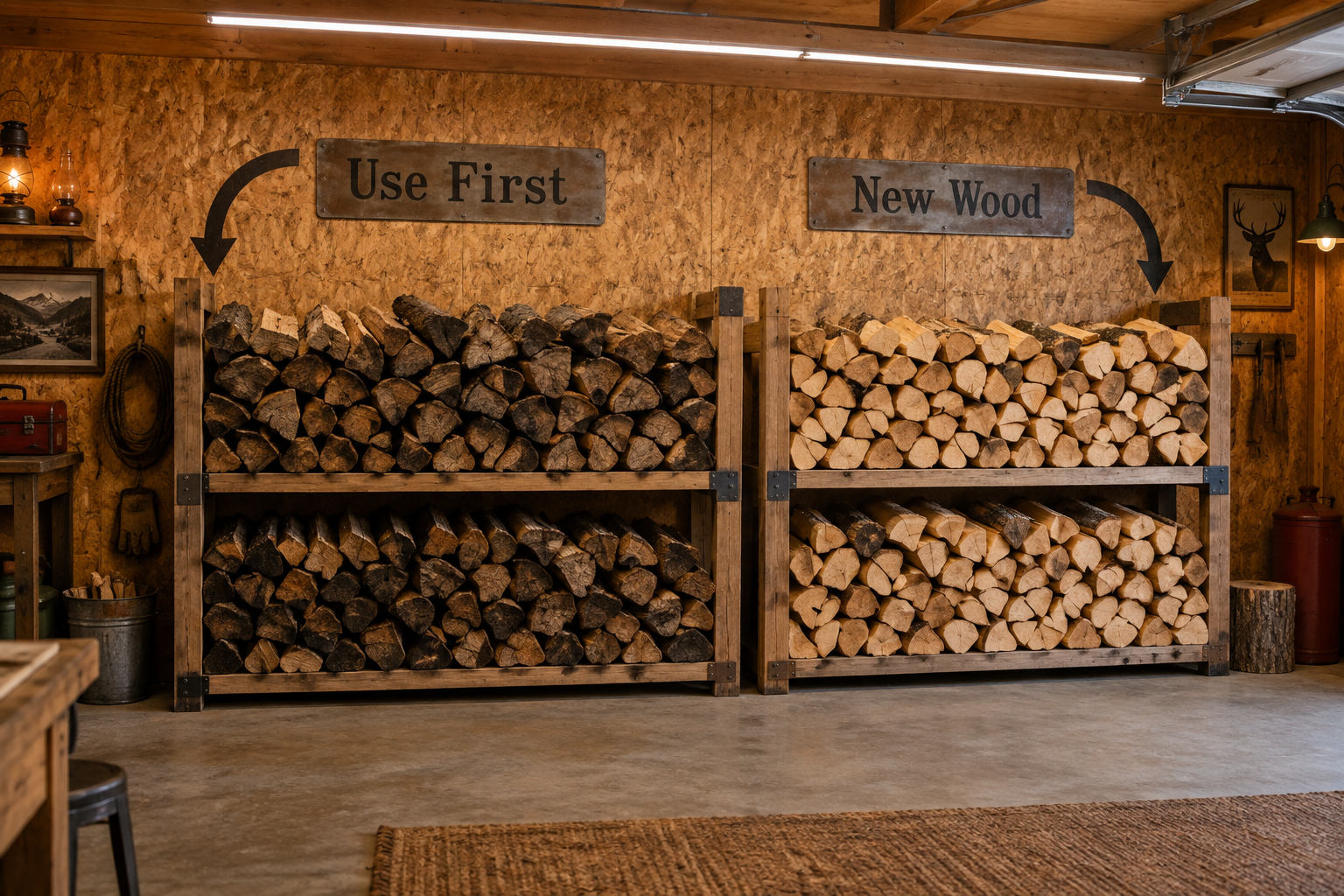
A first-in, first-out rotation system is one of the most underused pest prevention tools in firewood storage. Older wood sitting at the bottom of a static pile for months is exactly where insects establish colonies, but a two-section rack with clear metal labels removes that risk by making the rotation automatic. The painted arrows on the OSB wall might feel like overkill, but they work, and they make the system easy for anyone in the house to follow without thinking about it.
