

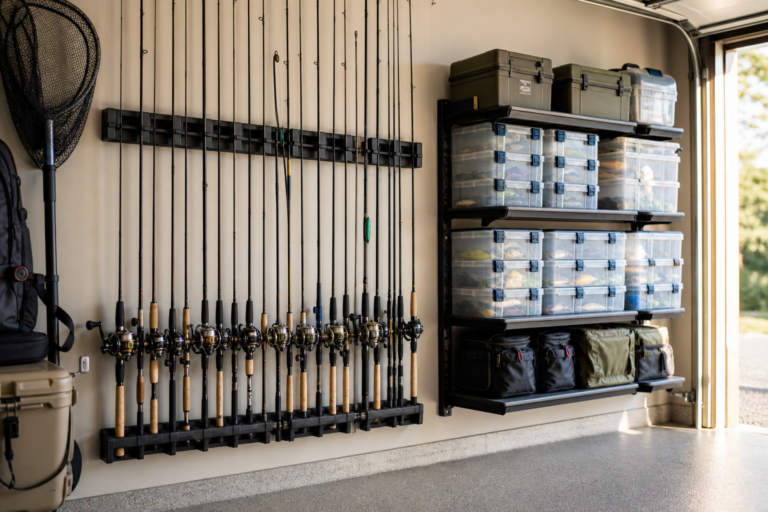
Understanding garage fishing rod and tackle storage in detail gives you a real advantage, whether you’re planning a project, troubleshooting, or making smarter decisions about your space. The specifics matter more than most people expect.
This guide covers everything you need to know in practical terms, with actionable takeaways you can use right away.
Understanding the Basics
Clear plastic bins beat cardboard for garage storage in every way: moisture resistance, pest resistance, visibility, and stackability. Label each bin on the front for easy identification. A label maker and 20 minutes of work saves hours of searching over the coming years.
Zone your garage before buying products. Common zones: tools/workbench, automotive, seasonal items, sports gear, lawn/garden, and household overflow. Each zone stays self-contained so everything for a given task lives in one spot. This zoning approach is fundamental to creating an effective garage layout that maximizes both storage and accessibility.
Effective garage storage uses walls and ceiling as primary surfaces, keeping the floor clear for vehicles and work. Wall-mounted track systems, overhead ceiling racks, and sturdy cabinets provide organized access without eating into parking or workspace.
For fishing gear specifically, you’re dealing with equipment that ranges from delicate graphite rods worth several hundred dollars to inexpensive tackle that still deserves protection from rust and damage. Most anglers accumulate more gear than they realize: multiple rods for different techniques, reels in various sizes, terminal tackle sorted by type, soft plastics that can melt together in heat, hard baits with treble hooks that tangle, waders and rain gear that need to dry properly, and coolers or livewells that take up serious floor space.
The garage handles this storage better than a basement (too damp), attic (temperature extremes), or shed (security concerns and accessibility issues). But only if you set it up right.
Why Fishing Gear Needs Specific Storage Solutions
Rods break easily when stacked horizontally or leaned in corners where they get knocked over. A competitively priced spinning rod can snap from a single fall or from pressure applied mid-blank when buried under other items. Vertical or horizontal wall storage keeps rods separated and supported along their length.
Reels corrode from humidity. Saltwater anglers know this well, but freshwater gear suffers too. Moisture in an uncontrolled garage promotes rust on bearings, guides, and metal components. Even quality reels with sealed drags need dry storage between trips.
Tackle rusts, tangles, or deteriorates depending on type. Hooks oxidize in humid air. Soft plastics melt together or react with certain plastics in tackle boxes, creating a fused mess. Crankbaits with exposed trebles become a tangled nightmare if stored loose. Line degrades from UV exposure if left on reels in direct sunlight.
Waders, boots, and rain gear mildew if stored wet or in poor airflow. Neoprene and breathable fabrics need to dry completely before storage or they’ll smell and degrade. A damp pair of waders stuffed in a bag develops mold within days in a warm garage.
Understanding these vulnerabilities shapes the storage system you build.
Wall-Mounted Rod Racks
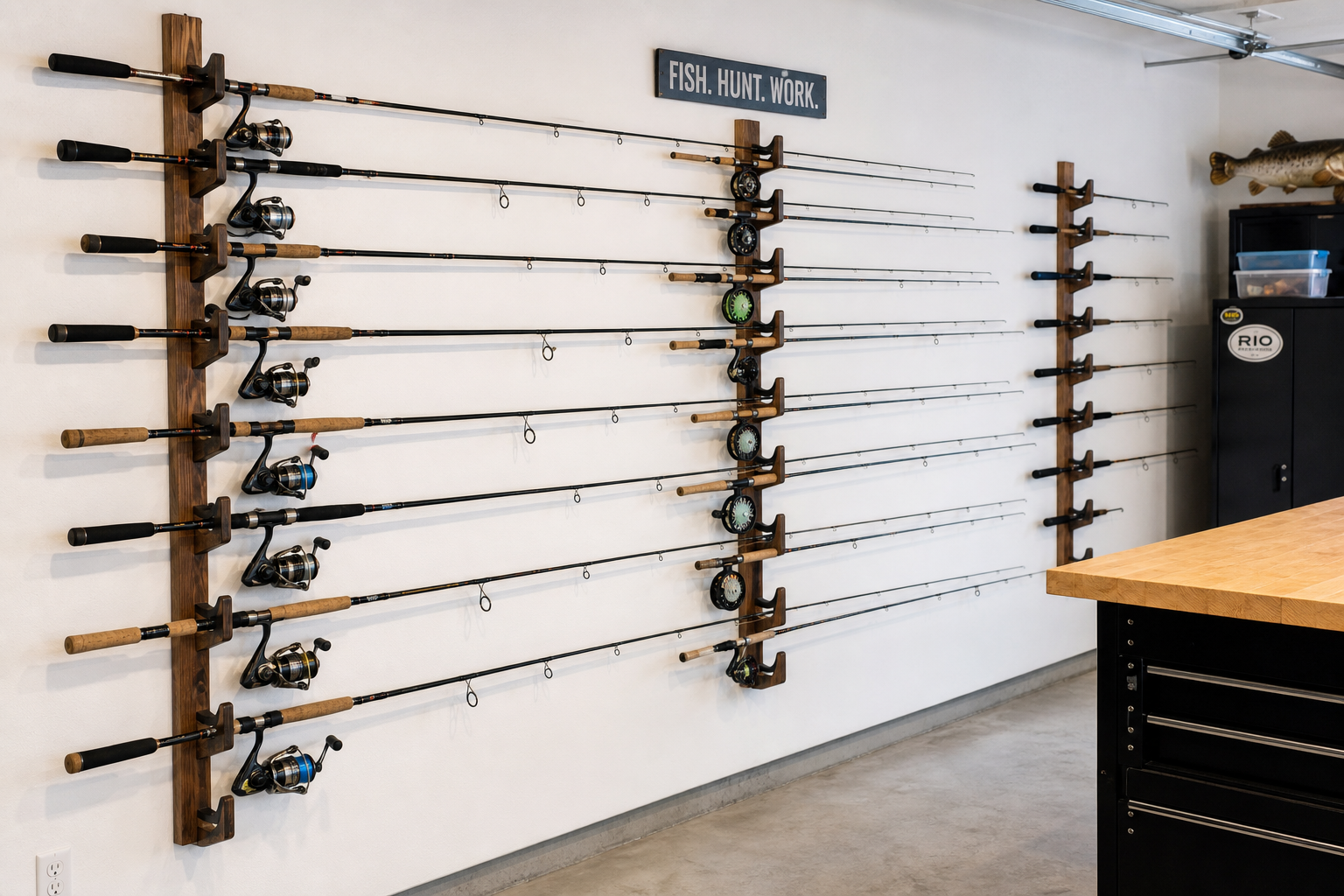
Horizontal rod racks mount to studs or slatwall and cradle rods in individual slots. Each rod rests on two or more contact points, distributing weight and preventing flex. Simple wooden racks built from 1×4 boards with drilled holes work fine. Commercial racks in powder-coated steel or heavy-duty plastic offer cleaner looks and adjustable spacing.
Install horizontal racks high enough to keep rod tips off the floor. An 8-foot ceiling lets you mount a 7-foot rack at chest height with tips clearing the floor by a foot or more. Space the mounting points 16 to 24 inches apart for typical rods. Ultralight rods and two-piece travel rods need closer spacing.
Vertical rod racks take less wall length but require more ceiling height. A vertical rack for 7-foot rods needs at least 90 inches of clearance (rod length plus the holder itself). These racks grip the rod handle in a lower bracket and support the tip in an upper guide. They keep rods fully extended and visible, making it easy to grab the right setup without moving other rods.
Ceiling-mounted horizontal racks work in garages with low ceilings or limited wall space. Mount 2×4 rails perpendicular to ceiling joists, then add PVC pipe sections or foam blocks as rod cradles. This setup keeps rods overhead and out of the way, though it makes access slightly less convenient.

Fishing Rod Wall Mount Storage
Essential for keeping rods safe and organized with proper weight distribution
Capacity planning matters. Count your current rods, then add 30% for future acquisitions. Anglers always add rods. Build the rack for 10 rods if you own 7 right now.
Pad all contact points with foam, rubber, or felt to protect rod finishes and prevent slipping. Pool noodles cut into short sections work well for DIY racks. Marine-grade adhesive-backed foam from hardware stores provides a cleaner finish.
Waterproof Tackle Storage
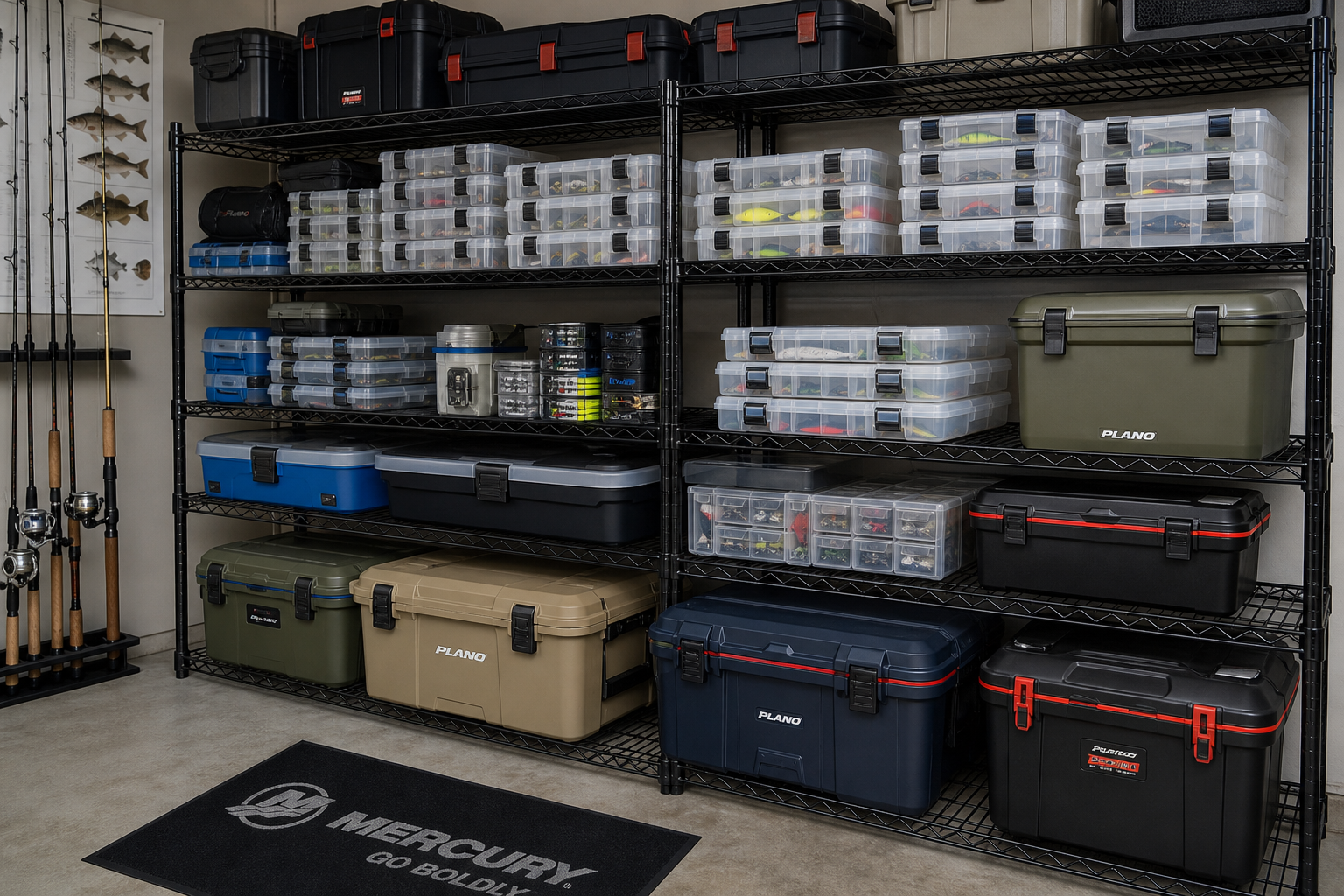
Tackle boxes fail in garages when they’re not truly waterproof. Standard plastic boxes with simple latches let moisture in during humid months. Rust appears on hooks, blades lose their finish, and swivels seize up.
Waterproof boxes with gasket seals and locking latches solve this. Look for boxes rated IP65 or higher (dust-tight and protected against water jets). Waterproof tackle storage systems from Plano, Flambeau, and similar brands offer these in sizes from small utility boxes to large multi-tray systems.
Hard-sided cases designed for tools or camera equipment also work well. Pelican-style waterproof cases with pick-and-pluck foam let you create custom layouts for expensive reels or specialized lures. These cases provide the best protection for high-end gear.
Sort tackle by technique or species rather than by lure type. Keep all your bass topwater gear in one box, crankbaits in another, and soft plastics in a third. This matches how you actually fish: you grab the box for the technique you’re planning to use that day.
Store soft plastics separately from hard plastics. Certain soft plastic compounds react with polycarbonate or PVC, causing plastics to melt or become brittle. Use dedicated soft plastic storage boxes (usually polypropylene) or the original packaging. Keep them in a cool spot if possible, since extreme heat accelerates degradation.
Terminal tackle (hooks, weights, swivels) benefits from small compartmented boxes with adjustable dividers. The Plano Edge series and similar designs keep small components organized and visible. Label each compartment with a permanent marker: “3/0 EWG hooks,” “1/4 oz tungsten weights,” etc.
Stack tackle boxes on wire shelving rather than directly on the garage floor. This keeps them off cold concrete in winter (which promotes condensation inside boxes) and makes inventory easier. A 48-inch wide, 24-inch deep wire shelf holds a dozen medium tackle boxes with room for a few reels on top.
Reel Storage and Maintenance
Reels stored long-term need three things: protection from moisture, protection from impact, and protection from dust. Individual reel bags or cases handle all three. Neoprene reel covers slip over the reel while it’s still mounted on a rod. Hard reel cases provide better crush protection for high-end reels but take more shelf space.
Remove reels from rods for off-season storage if you’re tight on space. Store reels in their original boxes or in divided bins with separators to prevent reels from banging into each other. Loosen the drag completely to prevent spring compression during storage. Wipe reels down with a slightly oily rag (reel oil or 3-in-1) to displace moisture and prevent corrosion.
Baitcasters and spinning reels both benefit from an annual service: disassemble, clean, re-grease, and re-oil. Do this before long-term storage so you’re not storing dirty reels with saltwater residue or grit in the bearings. A basic reel maintenance kit handles several reels.
Drying Systems for Waders and Rain Gear
Waders and wading boots must dry completely between uses or they’ll deteriorate fast. Mold, mildew, and delamination all result from storing wet gear.
A simple drying rack built from PVC pipe or metal conduit gives waders shape while they dry. Hang waders upside down by the boots so water drains out of the legs. A box fan aimed at the waders speeds drying. In humid climates, run a dehumidifier in the drying area.
Boot dryers designed for ski boots or work boots also handle wading boots. These units blow warm air into boots and dry them in 2 to 4 hours. Worth it if you fish often in cold weather when boots take forever to air-dry.
Rain jackets and bibs need hanger space with good airflow. Avoid folding or compressing waterproof fabrics long-term, since this can damage the waterproof coating. Wire shelving with a rod for hangers works well. Space jackets a few inches apart so air circulates.
Store dry waders flat or loosely rolled, never tightly compressed. Neoprene waders can be hung on wide hangers (paint roller frames work well). Breathable waders with stocking feet should be stored flat or loosely folded to prevent creases that can crack the fabric over time. Seasonal gear like this often benefits from specialized storage solutions that keep items accessible but protected during off-season periods.
Handling Rods with Reels Attached
Some anglers prefer to store rods with reels already mounted and line spooled, ready to grab and go. This approach works if you have the space and you fish the same setups repeatedly.
Horizontal racks for rod-and-reel combos need deeper cradles to accommodate the reel. Space rods far enough apart (8 to 12 inches) so reels don’t overlap. Plan for added weight: a rod-and-reel combo weighs 8 to 16 ounces versus 4 to 8 ounces for the rod alone.
Cover reels with neoprene sleeves or at minimum wrap them in a soft cloth to protect finishes and keep dust out of the mechanism. UV exposure fades line and degrades monofilament and fluorocarbon, so store rods with line spooled in shaded areas or cover the reels completely.
Vertical storage for combos requires a reel-holder slot in the lower bracket. Many commercial vertical racks include this feature. DIY builders can cut notches in wooden holders to cradle the reel foot.
Additional Considerations
Weight Capacity and Mounting
Weight capacity is critical and often misunderstood. Wall systems in studs hold 50 to 75 pounds per linear foot. On drywall alone, that drops to 15 to 25 pounds before failure. Ceiling racks rated for 600 pounds assume even distribution; concentrating weight in one area can cause failure well under the total limit.
Fishing gear is lighter than tools or automotive parts, but it adds up. A 6-foot horizontal rod rack holding 10 rod-and-reel combos with tackle boxes on a shelf below can easily hit 40 to 60 pounds total. Anchoring into studs is non-negotiable for any fishing storage system. If you’re planning a slatwall organization system, the same mounting principles apply.
Climate Control
For condensation, a dehumidifier and improved ventilation are the most effective solutions. A 50-pint unit keeps relative humidity below 60% in most two-car garages. Choose a model with auto-defrost if your garage drops below 65 degrees, since standard units ice up in cool conditions.
Temperature swings affect certain tackle more than others. Soft plastics become brittle in extreme cold and can melt or deform in extreme heat (above 120 degrees, which is possible in an uninsulated garage in summer). Store temperature-sensitive tackle on interior walls away from garage doors and in shaded areas if possible.
Security and Organization
Security matters if you have high-end rods or a large collection. Rods mounted openly on a wall are visible through garage windows and advertise your gear. L
