

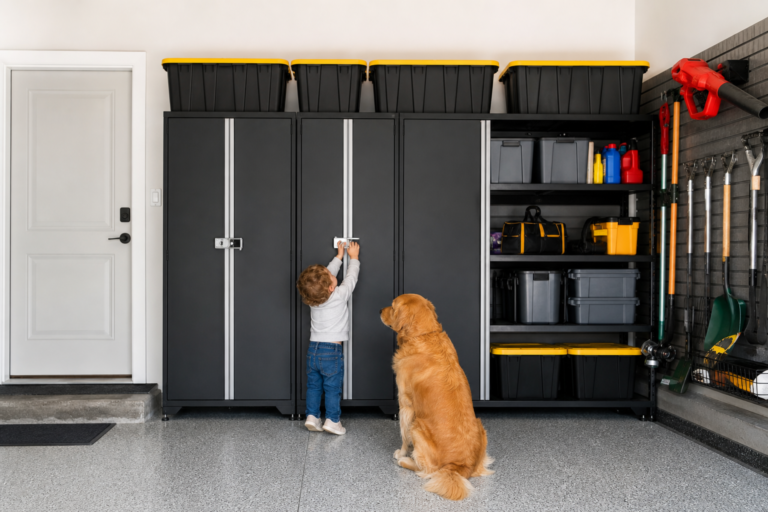
Whether you’ve been planning to child-proof and pet-proof your garage storage for months or decided to tackle it this weekend, a clear roadmap makes all the difference. Preparation accounts for about 80% of the success in projects like this.
Everything you need is below: tools, materials, step-by-step instructions, and the common pitfalls to avoid.
Understanding the Basics
Weight capacity is critical and often misunderstood. Wall systems anchored into studs hold 50 to 75 pounds per linear foot. On drywall alone, that drops to 15 to 25 pounds before failure.
Ceiling racks rated for 600 pounds assume even distribution. Concentrating weight in one area can cause failure well under the total limit. This matters when you’re raising items above head height, away from small hands and curious pets.
Effective garage storage uses walls and ceiling as primary surfaces, keeping the floor clear for vehicles and work. Wall-mounted track systems, overhead ceiling racks, and sturdy cabinets provide organized access without eating into parking or workspace. More importantly for child and pet safety, elevated storage removes temptation from ground level where kids and animals spend most of their time.
Zone your garage before buying products. Common zones include: tools/workbench, automotive, seasonal items, sports gear, lawn/garden, and household overflow. Each zone stays self-contained so everything for a given task lives in one spot. For households with kids or pets, add a hazard zone: anything sharp, toxic, or small enough to swallow goes here and gets locked or elevated.
Children under five can’t reach items stored above 60 inches without climbing. Most dogs can’t access items above 48 inches. Cats can reach anything, which means truly dangerous items need locks, not just height. When you store items based only on how often you use them, poisons and power tools end up at convenient heights that also happen to be perfect for curious toddlers.
Locking Cabinets and Secure Storage
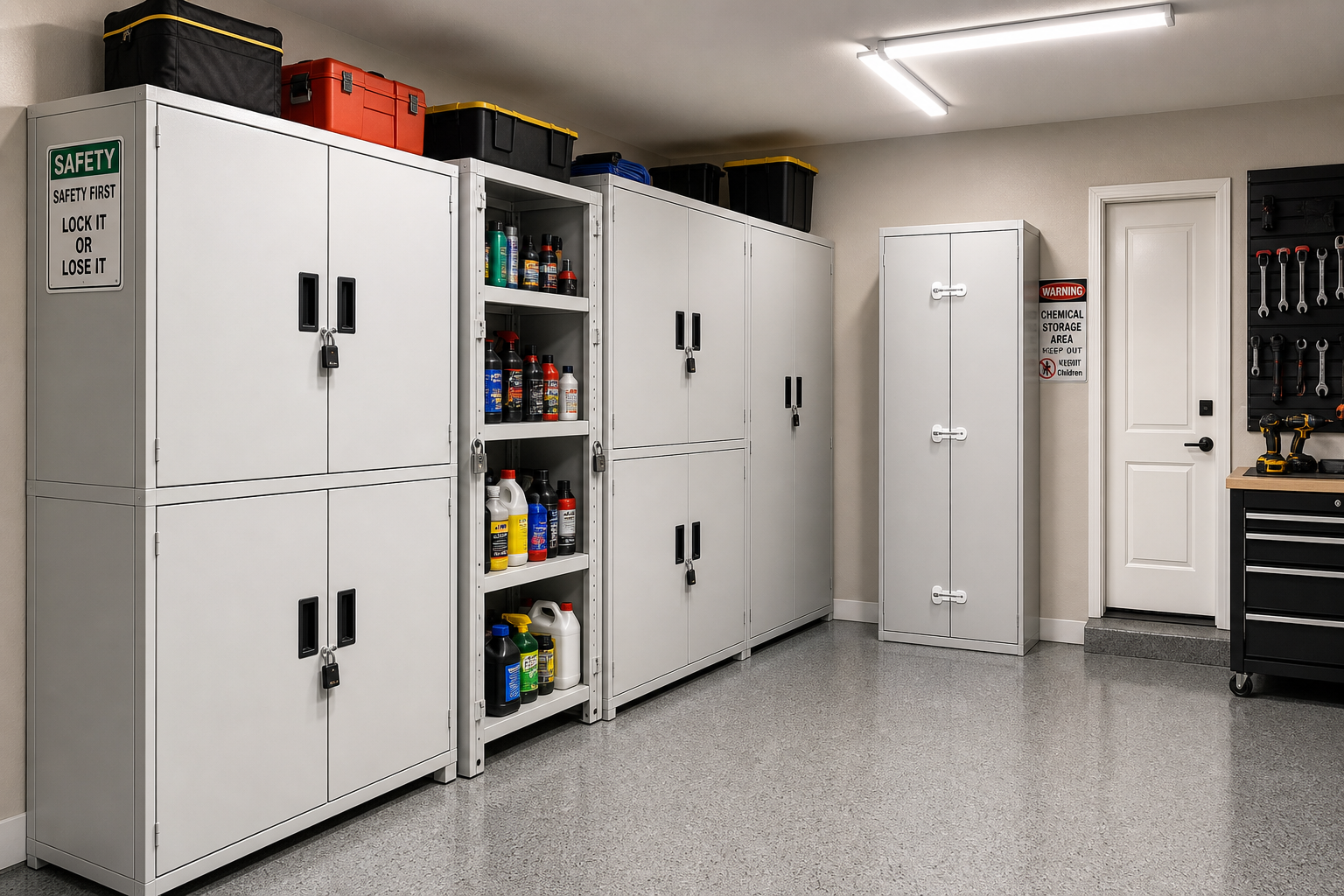
Locking cabinets are non-negotiable for chemicals, paints, solvents, pesticides, and any product with a warning label. A quality steel garage cabinet with a keyed lock keeps these items secure.

Steel Garage Cabinets
Essential for storing hazardous materials away from children and pets
Floor-standing cabinets anchor to wall studs to prevent tip-over. Wall-hung cabinets eliminate the climbing risk entirely but require solid installation into studs, not drywall.
Battery-powered tools with lithium batteries pose a dual risk. Kids see them as toys. Pets chew the batteries. Store cordless tools on high shelves or in locked cabinets, with batteries removed and stored separately. A toddler can’t operate a drill without the battery. A dog can’t choke on what it can’t reach.
Sharp tools need dedicated storage that prevents access and injury. Pegboard with tool outlines works for workshops where kids don’t enter, but it’s not child-proof. Locking tool chests, wall-mounted cabinets with latches, or ceiling-height storage keeps edged tools away from small hands. Garden tools like rakes, shovels, and pruners belong in locked sheds or high wall mounts, not leaning in corners where they can fall.
Antifreeze, windshield washer fluid, motor oil, and brake fluid all taste sweet to pets and kill quickly in small doses. These liquids belong in a locked cabinet on a spill tray, never on open shelving. The same goes for fertilizers, weed killers, and pool chemicals. For comprehensive information on safely organizing these dangerous materials, see our guide on storing paint, gas and chemicals in your garage.
Document every hazardous product you store: brand, active ingredients, poison control instructions. Keep this list with your household emergency contacts. When ingestion happens, you’ll have the product info immediately available for poison control or the vet.
Check current options and reviews on Amazon to find the right cabinet match for your project and budget. Steel cabinets resist rust better than particle board in the humidity swings typical of Midwest garages. They also survive pet chewing and kid roughhousing without falling apart.
Securing Wall and Overhead Storage
Wall track systems like slatwall or StoreWall accept hooks, baskets, and shelves that adjust as your storage needs change. For child and pet safety, mount these systems starting at least 48 inches above the floor. Use the lower wall space for bulk items with rounded edges: bins of sports balls, bags of pet food in sealed containers, or seasonal decoration totes.
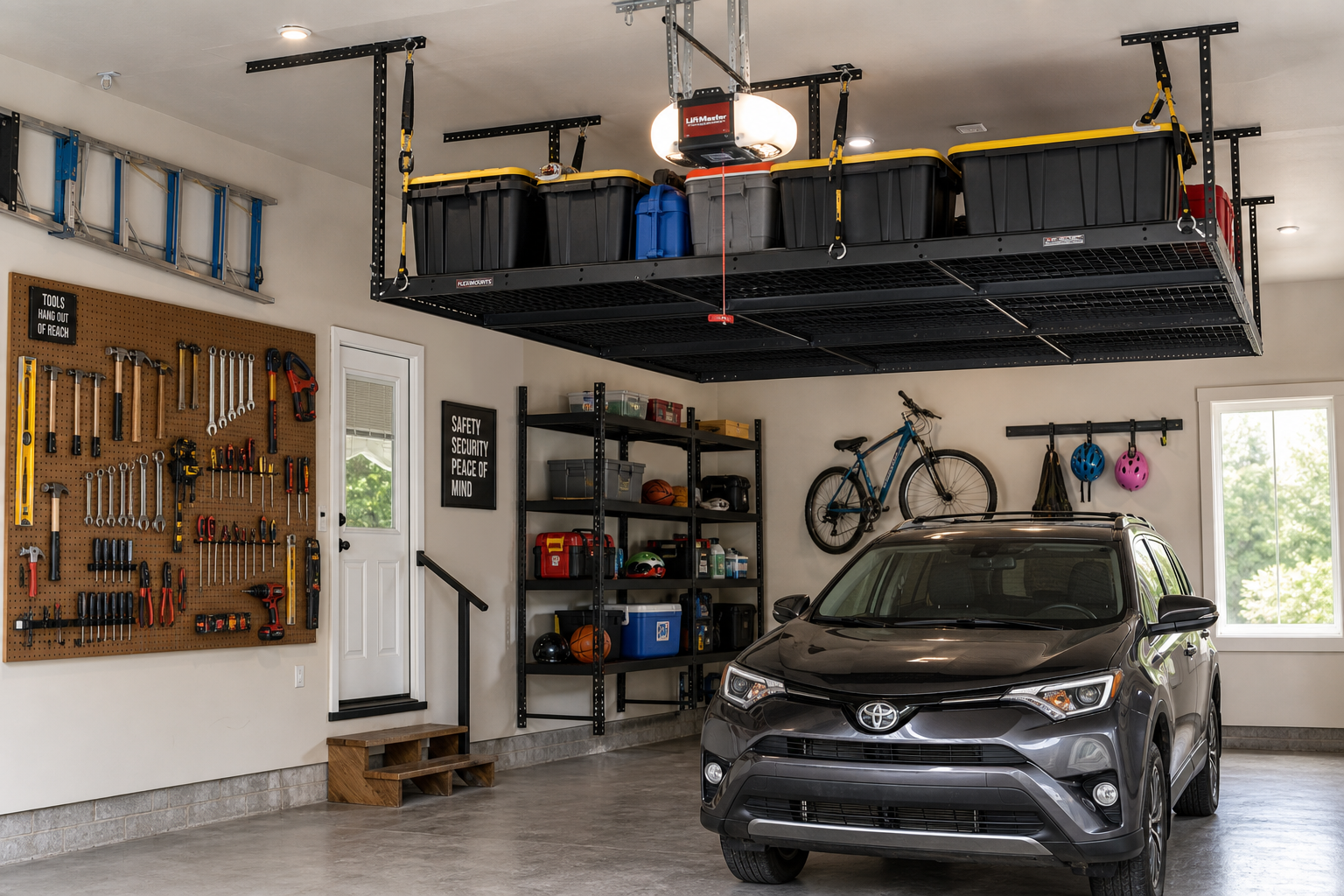
Overhead ceiling racks solve the “where do I put the stuff I need but not often” problem. Camping gear, holiday decorations, and out-of-season equipment go overhead where kids and pets never access them. These racks install into ceiling joists, not drywall.

Ceiling Storage Racks
Perfect for storing items you need but don’t access frequently
A ceiling storage rack rated for 600 pounds handles significant weight, but remember that rating assumes you load it evenly across the entire surface.
Don’t store anything overhead that could seriously injure someone if it fell. Metal toolboxes, cinder blocks, and paint cans belong on floor-level shelving or in cabinets, not suspended above where your family parks and walks. Lighter items like sleeping bags, tents, inflatable pools, and artificial Christmas trees are ideal overhead candidates.
Bins stored overhead need secure lids. An open-top bin might seem fine until you bump it and rain down loose items. Latching lids prevent spills. Clear bins let you see contents without pulling them down, which reduces the number of times you’re moving heavy loads at head height.
Anchor all tall storage units to wall studs. Freestanding shelving, tool chests, and cabinet stacks tip forward when a child climbs them or a large dog bumps into them at speed. Use L-brackets or furniture straps rated for the unit’s weight. This step takes 15 minutes per unit and prevents the tip-over accidents that send families to emergency rooms. When selecting heavy-duty shelving units, choose models specifically designed for garage environments and rated for the weights you need to support.
Families Using the Garage as a Transition Zone
Families using the garage as a transition zone into the house face specific storage challenges. Shoes, coats, backpacks, sports gear, and pet supplies pile up near the door. Getting this right requires matching your approach to actual conditions rather than following a generic formula.
Install low hooks and cubbies for items kids use daily. When a seven-year-old can hang up their own coat and stash their own backpack, they will. When the hook is at adult height, the coat ends up on the floor. The same logic applies to pet leashes, which should hang near the door at a height adults can reach but toddlers can’t, preventing the strangulation hazard of a loop hanging at neck level.
Shoe storage near the entry keeps floors cleaner and prevents tripping hazards. Open cubbies work when your household actually uses them. Closed bins work better for families where “put your shoes away” means “throw them in the general direction of the garage.” Choose based on your reality, not your aspirations.
Sports equipment needs separation by type and user. Tennis rackets and soccer balls in the same bin create a tangle that guarantees nothing gets put away properly. Dedicated bins or wall hooks for each sport, labeled with names when multiple kids play the same sport, cut down on the “I can’t find my shin guards” chaos before practice. For active families with lots of balls and rounded sports gear, a well-organized slatwall system can keep everything visible and accessible while maintaining safety.
Pet food storage deserves its own section. A 40-pound bag of dog food attracts mice and smells up the garage when left open. Transfer pet food into airtight bins that seal completely. This keeps pests out, preserves freshness, and prevents your dog from chewing through the bag and gorging. Elevated bins on low shelves prevent tipping but stay accessible for daily feeding.
Additional Safety Considerations
Clear plastic bins beat cardboard for garage storage in every way: moisture resistance, pest resistance, visibility, and stackability. They also let you spot hazards without opening the bin. When a container of windshield wiper fluid leaked, you’ll see the blue liquid through the clear walls. Cardboard hides the problem until you’re standing in a puddle of toxins. Label each bin on the front for easy identification.
Small items like screws, nails, fishing hooks, and craft supplies need containers with secure lids. Tackle boxes and parts organizers with snap closures work well. Ziplock bags inside larger bins work in a pinch but tend to open when bins get jostled. A toddler who dumps a bin of loose hardware creates a choking-hazard minefield that takes an hour to clean up.
Mousetraps, rat poison, and pest control products are obvious hazards. Less obvious: the places you set them. Putting poison behind the water heater where kids can’t see keeps them safe only until they drop a ball back there and go crawling after it. Use traps that enclose the mechanism completely or choose pet-and-child-safe pest control methods. When you must use poison, put it inside a locked bait station secured to the wall or floor.
Extension cords and power strips left plugged in present electrocution risk in damp garages. Unplug cords when not in use. Wrap and store them on wall hooks above child height. The same goes for air compressor hoses, which look like great tug toys to dogs but create a whipping hazard when the compressor kicks on.
Holiday decorations often include glass ornaments, string lights with exposed bulbs, and candles. Store these in clearly labeled bins on high shelves. Artificial trees go overhead or in locked storage. Live holiday plants like poinsettias are toxic to pets and should never be stored in the garage, even temporarily.
Practical Planning Tips
Set a realistic timeline and budget before buying anything. Most garage storage overhauls take a full weekend when you’re working alone, longer when you’re installing heavy cabinets or ceiling racks. Build that buffer into your plan so unexpected discoveries don’t derail the entire project or blow the budget.
Consider the seasonal timing of your project. Garage organization happens most successfully in spring or fall when temperatures are moderate and you’re motivated to tackle the seasonal gear swap. Extreme heat makes garage work miserable. Extreme cold makes some adhesives and fasteners harder to work with.
Prioritize your projects based on safety first, convenience second. Locking up hazardous materials comes before color-coding sports bins. Anchoring tip-prone shelving comes before installing fancy slatwall accessories. Secure storage for sharp tools beats aesthetic improvements every time.
Before starting any garage storage project, take stock of what you have and what you need. Walk the space with a tape measure and a notepad. Record dimensions, note existing wall studs (use a stud finder for accuracy), check for moisture issues that could affect cabinet installation, and photograph the current state. This baseline assessment prevents surprises mid-project and helps you budget materials accurately.
Make a hazard inventory. Walk through your garage and list every item that could poison, cut, crush, electrocute, or choke a child or pet. This list determines your locking cabinet needs, your overhead storage requirements, and your wall-mounting priorities. When the list is longer than expected, you’re not being paranoid. Garages accumulate dangers.
Involve your family in the planning stage. Kids old enough to understand (usually five and up) can help decide where their gear goes. They’re more likely to maintain a system they helped create. Explain why certain items get locked away. Teaching them the why builds long-term safety awareness that extends beyond your garage.
Installation Best Practices
Studs are your foundation for any weight-bearing installation
