

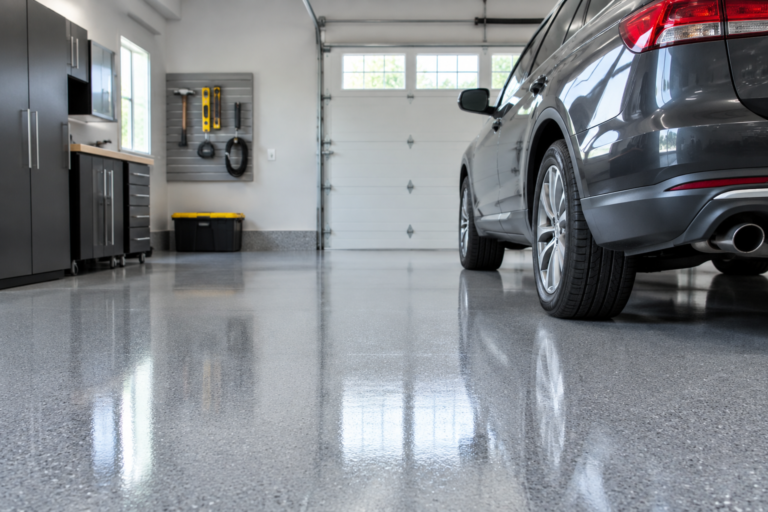
You just spent a weekend rolling out a fresh epoxy coating on your garage floor, and it looks incredible. Now comes the hard part: waiting. Parking your car back in the garage too soon is one of the most common mistakes DIYers make, and it can leave tire marks, dents, or peeling patches on a floor that took real effort to get right.
The honest answer is that cure times vary quite a bit depending on the product you used, the temperature and humidity in your garage, and how thick you applied the coating. This guide breaks down realistic timelines for foot traffic, light storage, and driving your vehicle back in, so you don’t ruin a good finish by rushing it.
Dry to Touch Is Not the Same as Fully Cured
This is the mistake that trips up most first-time epoxy installers. A floor can feel completely dry to the touch within a few hours, but that only means the surface layer has hardened. The chemical reaction underneath, the one that gives epoxy its strength and chemical resistance, keeps going for days or even weeks.
Walking on a floor that’s dry to touch is usually fine. Rolling a two ton vehicle onto it before the coating has fully cross linked is a different story. The weight and the twisting motion of tires turning while parked can tear, scuff, or permanently dent a floor that hasn’t reached its full hardness.
Think of it like concrete. Concrete feels solid a day after it’s poured, but it isn’t rated for full structural load until it cures for weeks. Epoxy works on the same principle, just on a faster timeline.
Typical Cure Times by Product Type
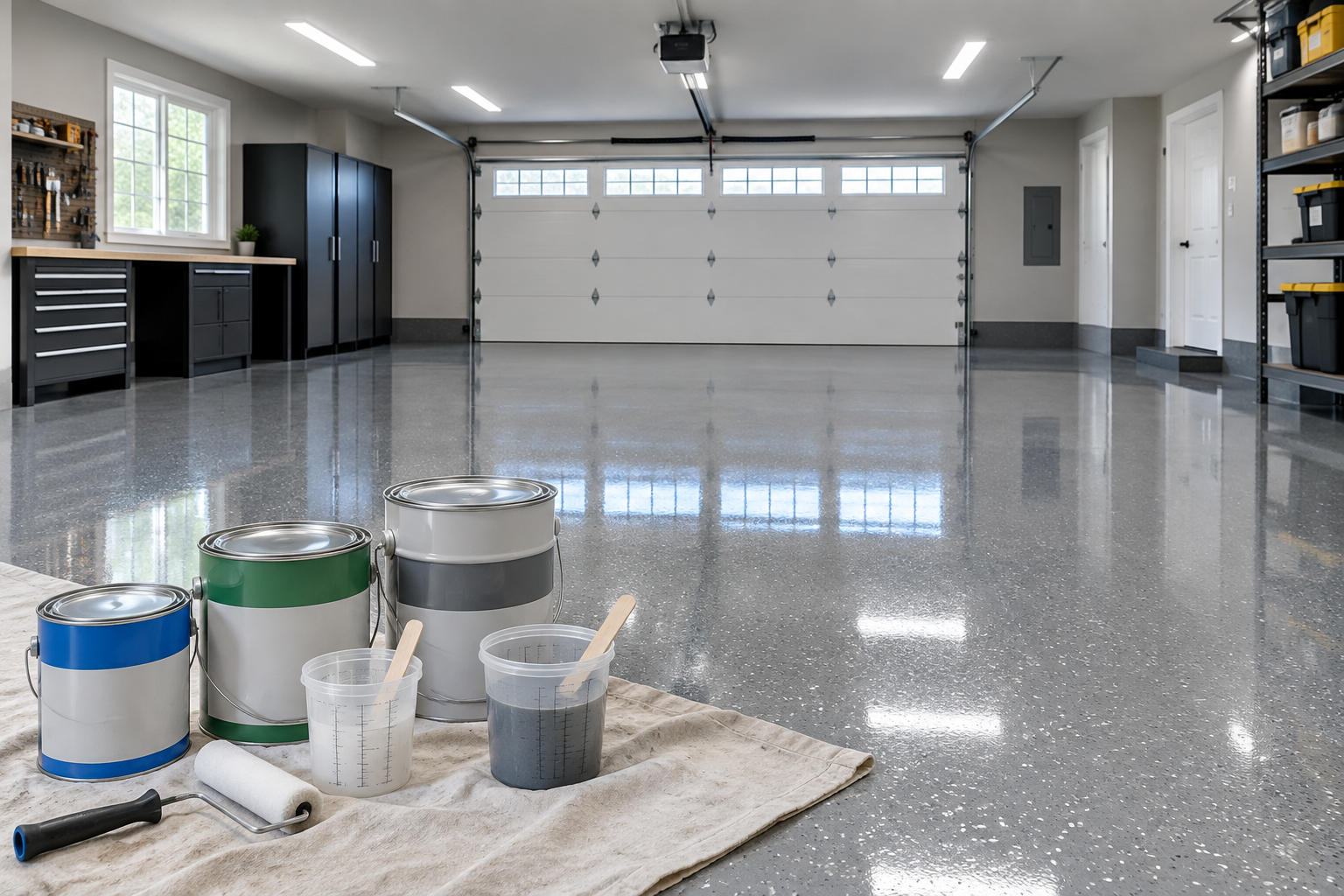
Not all garage floor coatings cure at the same speed. This is one of the biggest differences between the cheap kits sold at big box stores and the higher performance systems sold online or through professional installers.
- Water-based epoxy kits: Dry to touch in 12 to 24 hours, light foot traffic in about 24 hours, full vehicle traffic usually requires 3 to 5 days.
- Solid epoxy or 100% solids epoxy: Dry to touch in 8 to 12 hours, foot traffic in 24 hours, vehicle traffic typically needs 5 to 7 days for a full cure.
- Polyaspartic and polyurea coatings: These cure much faster thanks to their chemistry. Foot traffic is often safe within a few hours, and some products allow vehicle traffic in as little as 24 to 48 hours.
If you’re shopping for a coating and want to minimize downtime, polyaspartic products are worth a look specifically because of that faster turnaround. Just know they tend to cost more and can be trickier to apply because they set up quickly, which leaves less working time.
Rust-Oleum EpoxyShield Garage Floor Coating Kit
A reliable, budget-friendly water-based epoxy kit that’s a solid choice for DIYers doing their first floor coating project.
What Actually Affects Cure Time
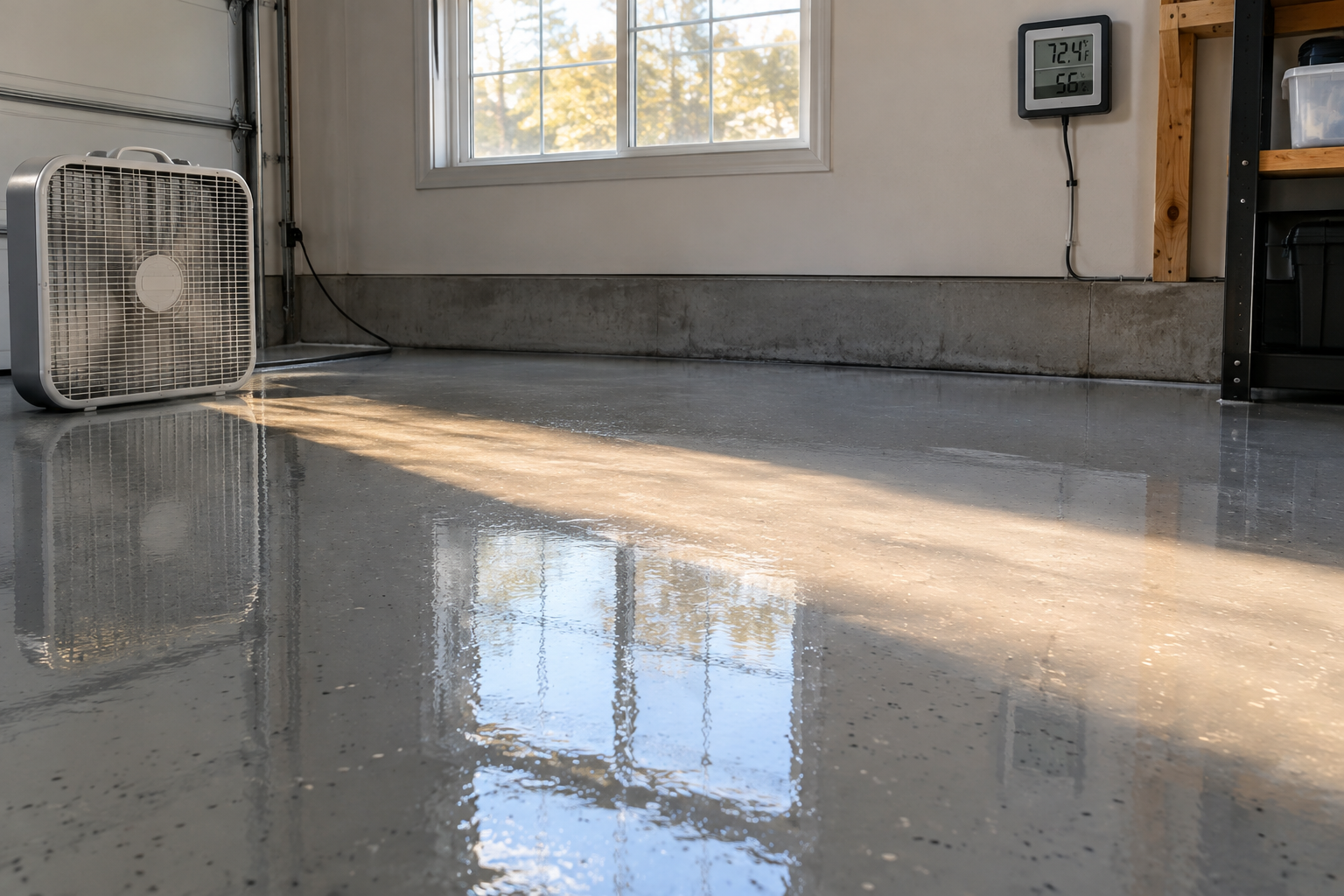
Manufacturer instructions on the can are based on ideal conditions, usually around 70 degrees Fahrenheit and moderate humidity. Your actual garage rarely matches that perfectly, which is why real world cure times often run longer than the label suggests.
Temperature
Epoxy cures through a chemical reaction, and that reaction slows down significantly in cold weather. If your garage sits below 60 degrees, expect cure times to stretch out considerably, sometimes doubling. If it’s a chilly season where you live, it’s worth checking out our guide on fixing a cold garage before you start a coating project, since a warmer space speeds up curing and gives you a better finish overall.
Humidity
High humidity slows curing and can cause a hazy or milky finish on some water-based products. It can also trap moisture beneath the coating, leading to bubbling or peeling down the road. If your garage tends to run damp, take a look at our article on fixing high garage humidity before your next coating job.
Coating Thickness
Thicker coats take longer to cure all the way through, even if the surface looks ready. A single thin coat might be fully cured in the manufacturer’s stated time, but a second or third coat applied for extra durability adds days to the process.
Manufacturer Instructions
Every product is formulated a little differently, so the cure chart on the packaging is your best starting point, not a general internet estimate. Always check the specific technical data sheet for the product you bought rather than assuming all epoxies behave the same way.
Realistic Timeline: Foot Traffic, Storage, and Parking
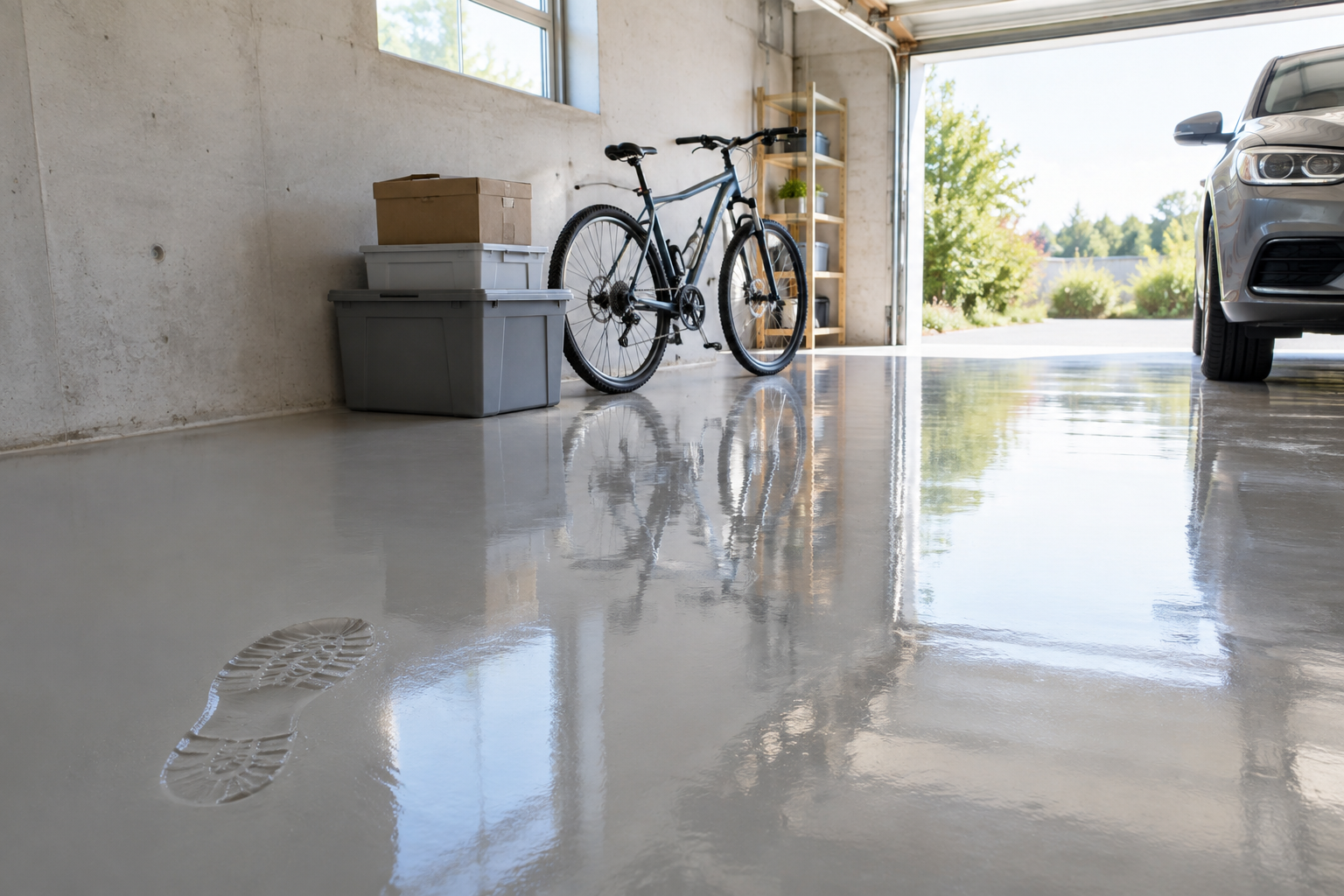
Here’s a practical breakdown you can use as a general guide, assuming a standard water-based or solid epoxy product cured at room temperature:
- Foot traffic: 12 to 24 hours after the final coat, wearing socks or soft-soled shoes to avoid scuffing.
- Light furniture or shelving: 48 to 72 hours, and even then, use felt pads or plywood under heavy items to spread out the weight.
- Rolling carts, bikes, or lawn equipment: 3 to 5 days, moving items slowly rather than dragging or spinning wheels.
- Vehicle parking: 5 to 7 days minimum for most epoxy products, though some manufacturers recommend waiting a full 14 days before driving on it regularly.
Polyaspartic coatings shrink this timeline dramatically, sometimes allowing vehicle traffic within 24 to 48 hours. If your schedule doesn’t allow for a week without your car in the garage, that faster cure time might be reason enough to spend a little more on the product.
Rust-Oleum RockSolid Polycuramine Garage Floor Coating
Cures faster than standard epoxy and holds up well to hot tire pickup, making it a good option if you can’t leave your garage empty for a full week.
When you do park again for the first time, ease the car in slowly and avoid turning the wheels while stationary for at least another week or two. Hot tire pickup, where warm tires soften the coating slightly and lift it when the car turns, is a common issue even on floors that seem fully cured.
Tips to Protect Your New Floor While It Cures
Ventilation helps a lot during the curing process, especially with solvent-based products that give off strong fumes. Open the garage door and any windows, and if your garage doesn’t get much natural airflow, our guide on garage ventilation methods covers some simple upgrades that make a real difference.
Keep pets and kids out of the space entirely during the first 24 to 48 hours. A stray paw print or handprint in soft epoxy is nearly impossible to fix without sanding and recoating that section.
If you notice bubbling or texture issues once the floor cures, it’s usually tied to moisture, rolling technique, or temperature during application. Our article on fixing epoxy floor bubbles walks through the most common causes and how to patch them.
Once your floor is fully cured and you’re back to using the garage normally, it’s a good time to think about finishing touches like shelving or cabinet storage that keep clutter off that brand new floor for good.
FAQ
Can I walk on epoxy after 24 hours?
In most cases, yes. Standard water-based and solid epoxy products are typically safe for light foot traffic in socks or soft shoes within 24 hours. Avoid dragging furniture or wearing shoes with hard soles during this window, since the surface is still relatively soft.
How long until I can drive on epoxy floor coating?
Plan on at least 5 to 7 days for standard epoxy, and up to 14 days for a full cure depending on the product and conditions in your garage. Faster curing polyaspartic and polyurea coatings can sometimes handle vehicle traffic in as little as 24 to 48 hours, so check your specific product’s technical sheet.
What happens if you park too soon on epoxy?
Parking before the coating fully cures can leave tire marks, cause the coating to lift or tear where the tires sit, and create soft spots that never harden properly. In many cases, this damage requires sanding down the affected area and reapplying a patch coat, so it’s worth the wait rather than risking a redo.
This article contains affiliate links. We may earn a small commission at no extra cost to you.
