

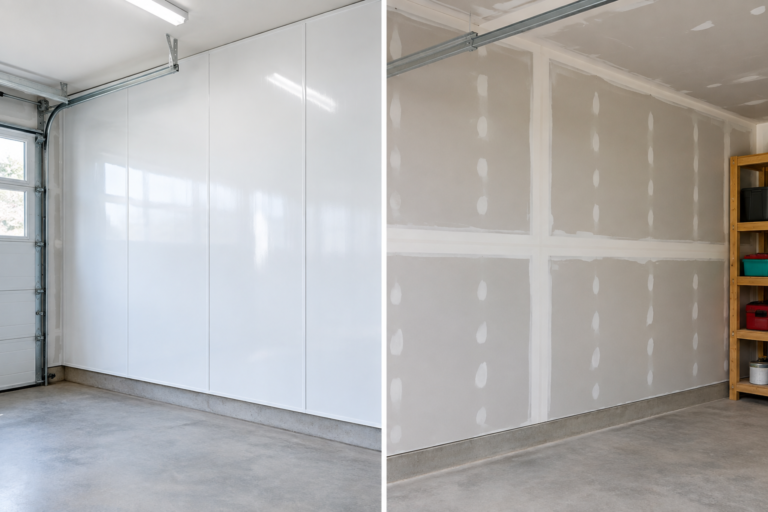
If you’ve ever hosed down a garage wall only to watch the drywall soak up water like a sponge, you already know why this comparison matters. Garage walls take a beating that living room walls never see: tire splash, road salt, dropped tools, humidity swings, and the occasional bike handlebar gouge. Picking the wrong material means redoing the job in five years instead of twenty.
FRP (fiberglass reinforced plastic) panels and drywall are the two most common choices for finishing garage walls, and they solve very different problems. This guide breaks down cost, durability, moisture resistance, fire code, and installation so you can pick the right one for your space without guessing.
The Quick Answer: Which One Wins?
For a garage that sees moisture, cars, bikes, and general abuse, FRP panels win on durability and cleanability. For a garage being converted into a finished living space, man cave, or home gym where appearance and paintability matter more than splash resistance, drywall wins on cost and flexibility.
Most garages actually do best with a hybrid: drywall on the upper walls and ceiling, FRP or another washable panel on the lower few feet where impacts and moisture happen. But if you’re forced to pick one material for the whole wall, keep reading to see which fits your situation.
What Is FRP, Exactly?
FRP stands for fiberglass reinforced plastic. It’s a rigid panel made of a plastic resin embedded with fiberglass strands, usually sold in 4×8 sheets with a smooth, glossy, or pebbled white surface. You’ll recognize it from restaurant kitchens, commercial bathrooms, and laundry rooms because it’s basically waterproof and wipes clean with a rag.
In a garage, FRP gets screwed or adhered directly over studs, existing drywall, or OSB, then finished with matching PVC trim strips and moldings at the seams and corners. It’s not a paint-and-forget product like drywall, it’s closer to installing a giant sheet of shower surround material on your walls.
FRP Wall Panels
A washable, waterproof panel option that holds up far better than painted drywall in a working garage.
Moisture Resistance
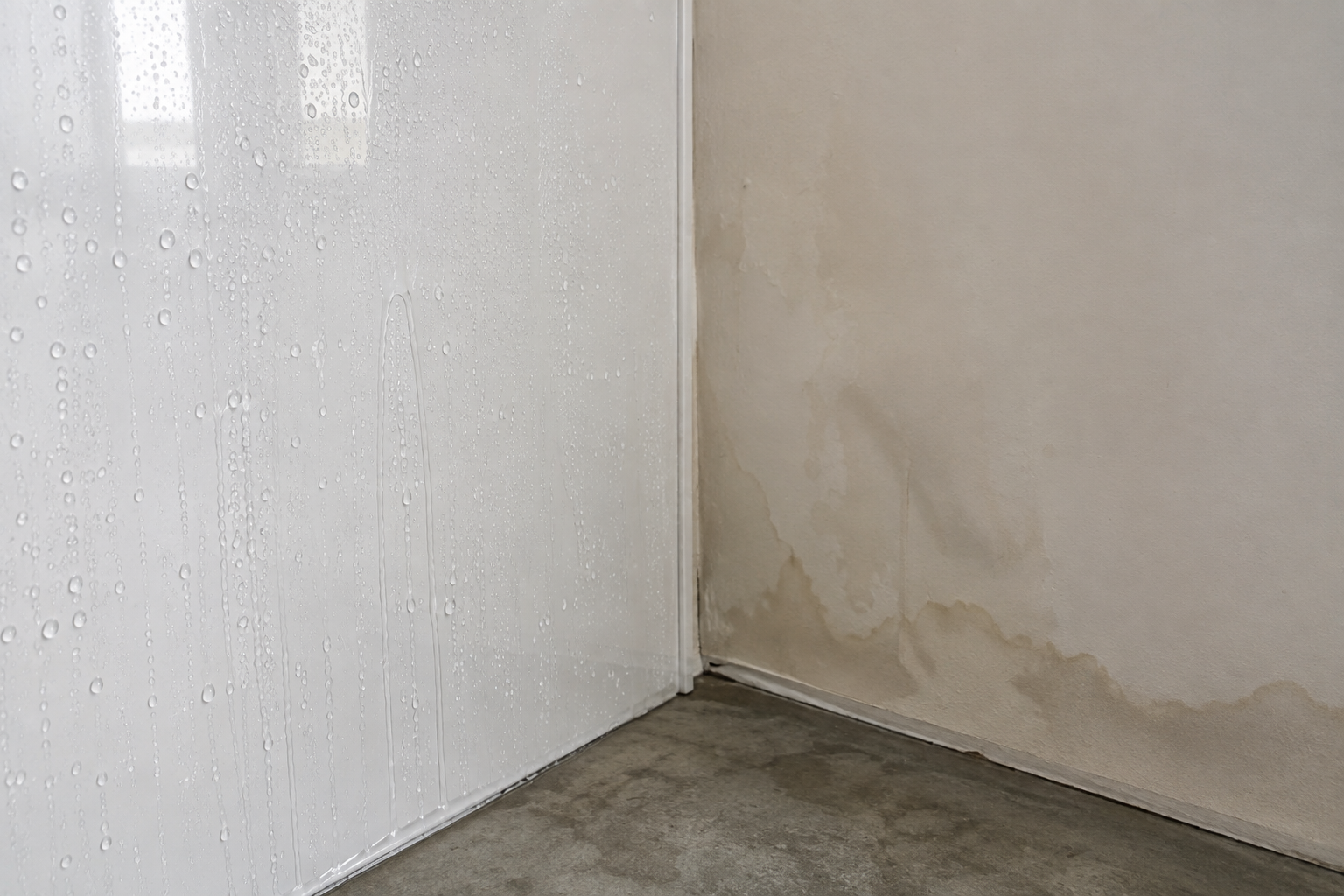
This is where FRP separates itself from drywall completely. FRP panels are essentially impervious to water. You can splash them, hose them down near a utility sink, or deal with snowmelt dripping off your car all winter and the panel itself won’t absorb a drop.
Drywall, even the moisture-resistant “green board” variety, is paper-faced gypsum. It will absorb water if it sits wet long enough, and once the paper face gets damp repeatedly, mold and mildew become a real risk. If your garage already struggles with dampness, it’s worth reading about fixing high garage humidity or diagnosing a musty garage after rain before you commit to either material, because no wall finish fixes a moisture source on its own.
If your garage floor also holds water after storms, that’s a bigger issue than wall material. Check out our guide on fixing garage flooding after rain before you finish the walls, since standing water will wick into drywall’s paper facing from the bottom up regardless of what’s higher on the wall.
Impact and Damage Resistance
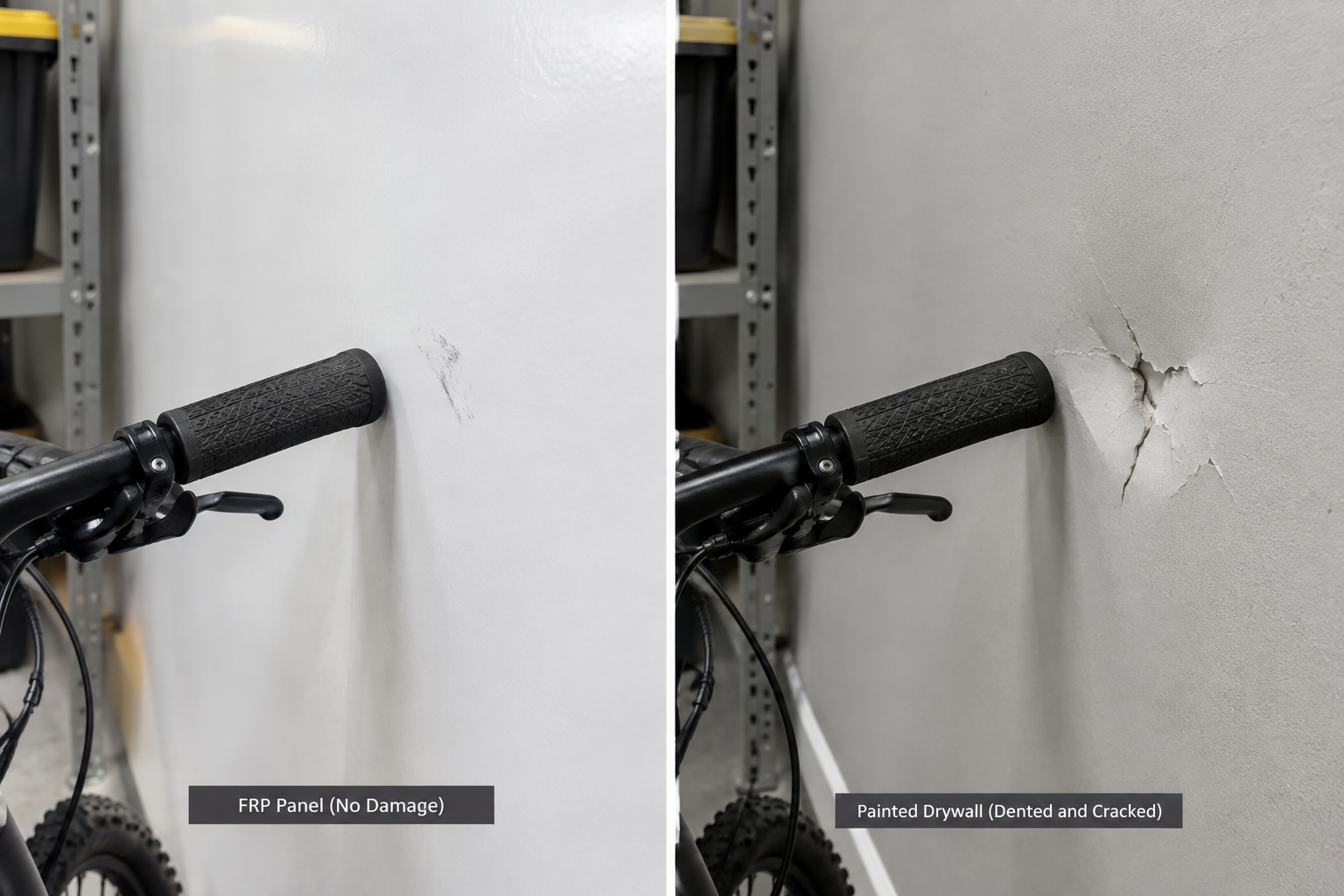
Drywall dents. A bike pedal, a dropped ladder, or the corner of a toolbox will put a hole in half-inch drywall without much effort. Once that happens, you’re mudding and sanding a patch, which is a bigger project than most homeowners want to tackle more than once.
FRP shrugs off most of that abuse. It flexes slightly on impact instead of cracking, and its rigid fiberglass backing resists dents from bumps that would crater drywall. It’s not indestructible, a hard enough impact from a sharp object can still puncture or crack it, but for day-to-day garage use like rolling a trash can past the wall or leaning a ladder against it, FRP holds up dramatically better.
If your garage doubles as ladder storage, this matters more than people expect. Take a look at our wall vs ceiling ladder mounting guide to figure out where your ladders live, since wall-mounted racks bang against the surface behind them constantly.
Fire Rating and Code Considerations
Building codes in most jurisdictions require a fire-rated wall assembly between an attached garage and living space, typically 5/8-inch Type X drywall on the garage side of shared walls and ceilings. This is a life-safety requirement, not a preference, and it’s the reason drywall is the default in attached garages.
FRP panels are not a fire-rated assembly on their own. Some products carry a Class A or Class C flame spread rating for the panel surface itself, but they’re not a substitute for the Type X drywall required behind them on shared walls with living space. In practice, this means many garages actually end up with both: Type X drywall installed first to meet code, then FRP panels installed over top for durability and cleanability.
Always check with your local building department before finishing an attached garage, especially on the walls and ceiling shared with the house. Skipping the fire-rated layer isn’t just a code violation, it’s a real safety gap if there’s ever a fire in the garage.
Cleaning and Maintenance
FRP is the clear winner here. Grease, road salt, chalk lines, oil drips, they all wipe off with a damp rag or mild cleaner because the surface is non-porous. This is exactly why the food service industry uses it, and it translates well to a garage workshop or a space where you’re constantly handling tools and fluids.
Painted drywall can be wiped down too, but it’s far less forgiving. Gloss or semi-gloss paint helps, but scrubbing too hard removes the paint sheen, and any bare drywall underneath a chip or scratch will absorb stains permanently. If you’re set on drywall, pairing it with the right paint makes a real difference, and our garage wall paint ideas guide covers finishes that hold up better to scrubbing.
Appearance and Design Flexibility
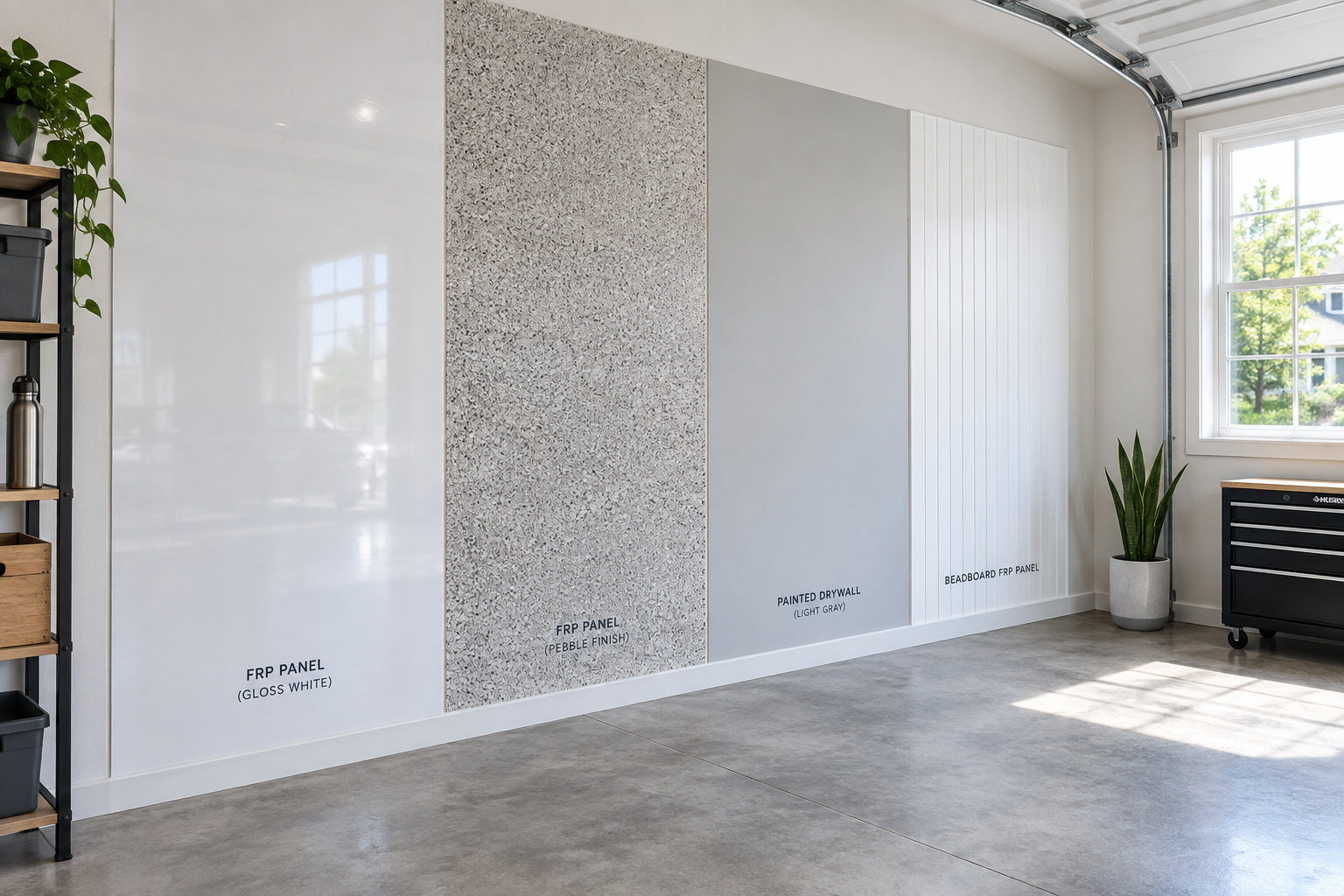
Drywall wins on looks and flexibility, no argument. It can be painted any color, textured, trimmed out, and made to look like an actual room rather than a utility space. If you’re building out a garage man cave or going for a specific aesthetic like the ones in our farmhouse garage ideas or black garage ideas articles, drywall is the only realistic base for that kind of design work.
FRP panels come in a limited range of finishes, mostly white, off-white, or pebbled textures meant to look clean rather than stylish. Some manufacturers now offer wood-look or colored FRP, but the selection is nowhere near what you get with paint on drywall. It reads as “utility space” even when installed well, which is fine for a workshop but not what most people want in a converted living area.
Installation Difficulty
Drywall installation is a known quantity: hang the sheets, tape and mud the seams, sand, prime, and paint. It’s labor-intensive and messy with dust, but the tools and techniques are well documented and most DIYers can manage it with some patience, or hire a drywall crew relatively cheaply since it’s such a common trade.
FRP installation is arguably easier for a DIYer in some ways because there’s no mudding or sanding. Panels get cut with a circular saw or utility knife, then attached with panel adhesive and finish nails or screws, with PVC trim covering the seams and edges. The tricky part is getting straight, tight seams and clean caulked joints, since any gaps in a wet-use area can let moisture behind the panel.
Substrate Requirements
Both materials need a reasonably flat, structurally sound substrate, but FRP is less forgiving of an uneven wall because its rigidity means it won’t hide bumps or waviness the way drywall’s slight flex and mud coats can. If your studs or existing wall surface aren’t flat, plan on shimming or furring strips before installing FRP.
Drywall can go directly over studs, and it’s also commonly installed over OSB in garages for extra impact resistance underneath the finished surface. If you’re deciding between those two base materials before you even get to FRP, our drywall vs OSB comparison covers that decision in more detail.
Installed Cost Comparison
Drywall is the cheaper material up front, especially if you’re comfortable hanging and finishing it yourself. Sheet goods are inexpensive and widely available, but factor in mud, tape, primer, and paint, plus the labor time for taping and sanding if you’re hiring it out.
FRP panels themselves often cost more per square foot than drywall, and you’ll need panel adhesive, trim moldings, and sealant on top of the sheet price, which adds up. However, FRP’s installed cost gap narrows when you account for drywall’s finishing labor, and it narrows further over time since FRP rarely needs repainting or patching the way drywall does after a few years of garage use. You can check current panel pricing and sheet sizes through FRP wall panels on Amazon to get a sense of what’s available for a DIY install.
FRP Panel Adhesive
The right adhesive matters as much as the panel itself for a moisture-tight, long-lasting install.
Which One Should You Choose?
If your garage is a working space with tools, a workbench, bikes, and general traffic, FRP is the better long-term investment. It handles moisture, cleans up fast, and won’t need repainting every few years. Pair it with good LED garage lighting and the space will look sharp and function well for decades.
If you’re finishing the garage into a home gym, office, or hangout space where appearance matters more than washability, drywall gives you far more design freedom and a lower material cost. Just budget for a quality moisture-resistant paint and make sure any humidity issues are addressed first, since no amount of good paint fixes a wall that’s staying damp behind the surface.
Frequently Asked Questions
Can you install FRP panels directly over existing drywall?
Yes, as long as the drywall is dry, structurally sound, and free of mold. FRP panels are commonly installed over existing drywall with construction adhesive and finish nails, which is actually the standard approach when the drywall was installed to meet a fire rating and the FRP is added purely for durability and cleanability.
Does FRP need to be painted?
No. FRP panels come pre-finished with a gel coat surface, usually white or off-white, and don’t require paint or sealing. That’s part of the appeal, since you skip the priming and painting step entirely and get a finished wall as soon as the panels and trim are installed.
Is FRP or drywall better for mouse and pest resistance?
FRP has a slight edge since it’s a solid, non-porous surface that mice can’t chew through as easily as paper-faced drywall, though neither material stops rodents from entering through gaps around the wall’s edges, plumbing penetrations, or the garage door. If mice are a recurring problem, sealing entry points matters more than wall material, and our guide on mouse-proofing your garage covers the gaps that actually matter.
Can FRP panels be used on garage ceilings too?
Yes, FRP is rated for ceiling installation and holds up well against moisture and grime overhead, though it’s heavier to work with solo since you’re fighting gravity while positioning full sheets. If you’re planning a full ceiling finish, our garage ceiling ideas guide covers other options worth comparing before you commit to panels overhead.
This article contains affiliate links. We may earn a small commission at no extra cost to you.
