

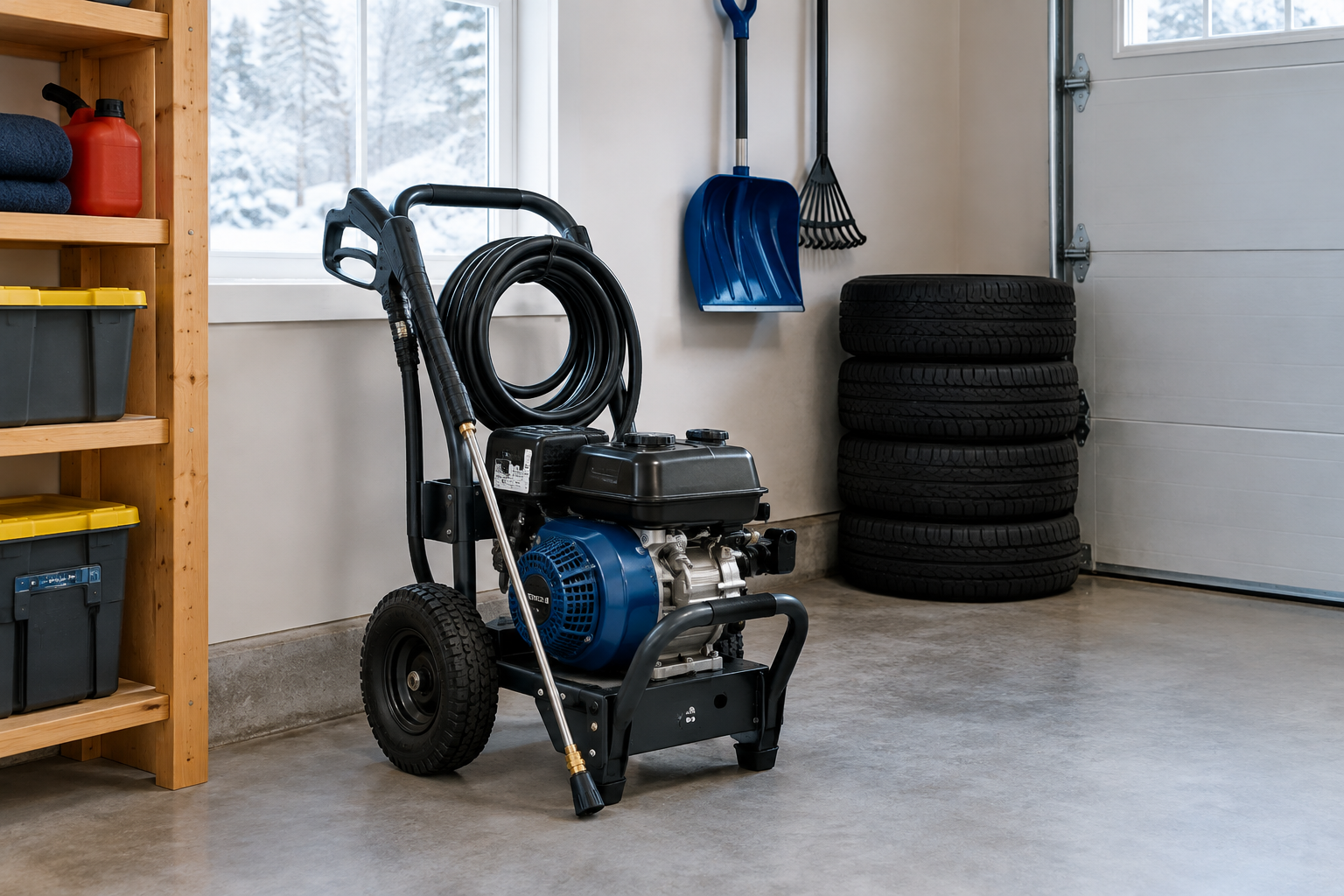
Leaving a pressure washer out in the cold is one of the fastest ways to turn a solid machine into an expensive paperweight. Water left inside the pump can freeze, expand, and crack internal components, and that’s not a cheap repair on most units. A few minutes of prep before winter hits can save you from buying a new pump or an entirely new washer come spring.
Whether it’s an electric unit you use for the deck and siding or a gas model you rely on for heavier jobs, the storage process is a bit different for each. Below is a complete walkthrough for getting your pressure washer ready for a garage winter, along with a few storage upgrades that keep it out of the way until you need it again.
Why Winter Storage Actually Matters
Pressure washer pumps are precision components with tight tolerances, and they’re not cheap to replace. Even a small amount of trapped water can freeze overnight in an unheated garage, expand, and crack the pump housing or damage internal seals. You often won’t know it happened until spring, when you fire it up and get a leak or no pressure at all.
This isn’t just a concern for outdoor storage either. A garage that isn’t insulated can get just as cold as the driveway, especially overnight. If your garage runs cold all winter, it’s worth reading through our guide to fixing a cold garage so you know what kind of temperatures your equipment is actually dealing with.
Step 1: Drain Every Drop of Water
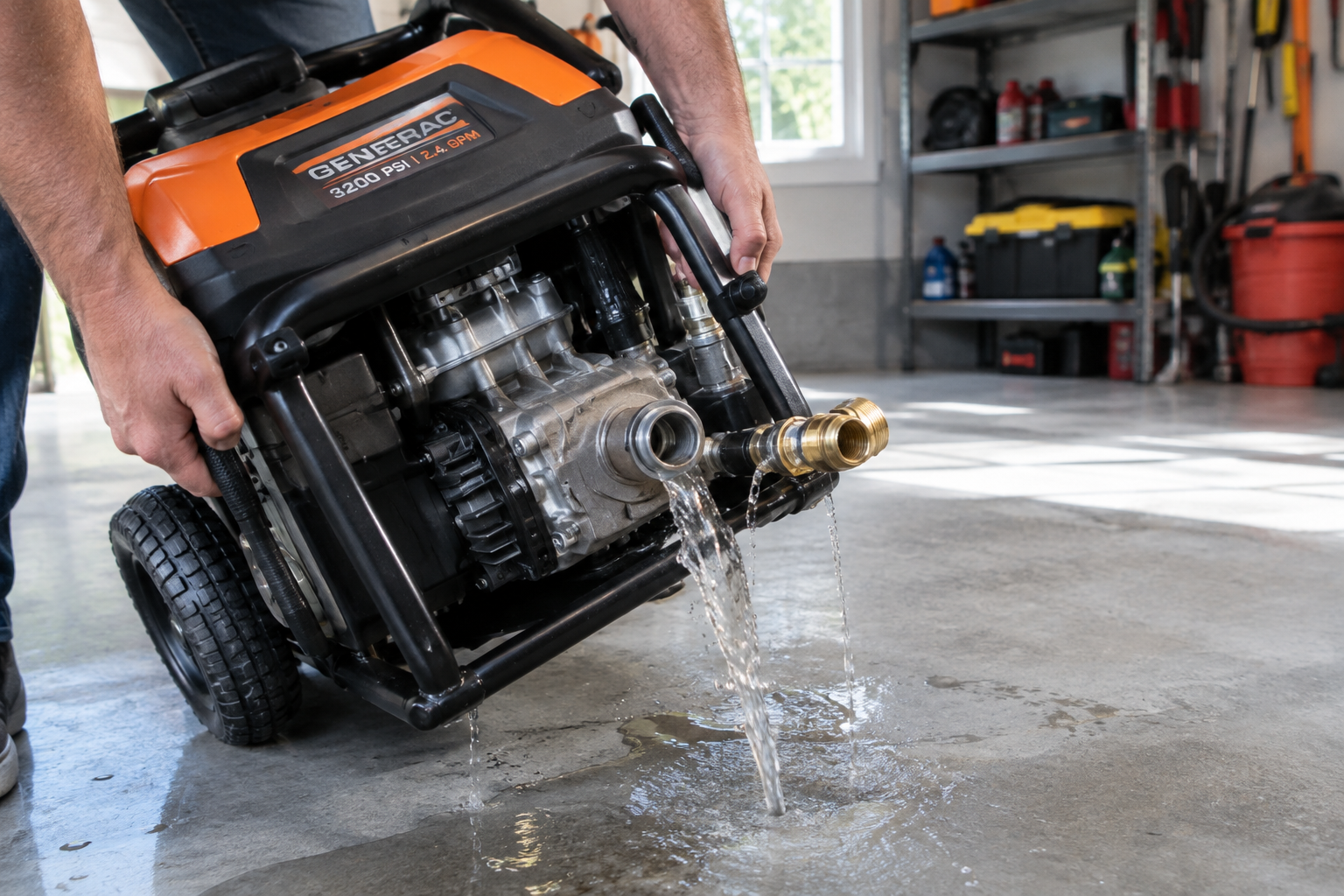
This is the single most important step, and it applies to both gas and electric models. Water hiding in the pump, hose, or wand is what causes freeze damage, so don’t skip any part of this process.
- Turn off the washer and disconnect it from the garden hose and power source (or shut off the engine on gas models).
- Squeeze the trigger gun to release any built-up pressure in the system.
- Disconnect the high-pressure hose from both the machine and the spray gun, and let gravity drain any remaining water out of both ends.
- Run the machine briefly (10 to 15 seconds, no more) without a water source connected to help clear residual water from the pump. Some manufacturers advise against this, so check your owner’s manual first.
- Tip the unit slightly to drain water pooled in the base or housing.
If you want to go a step further, a small amount of pump saver antifreeze (not automotive antifreeze) run through the pump adds a layer of protection against any water you couldn’t fully drain. This is standard practice for anyone storing equipment in a garage that dips below freezing for weeks at a time.
Step 2: Protect the Pump
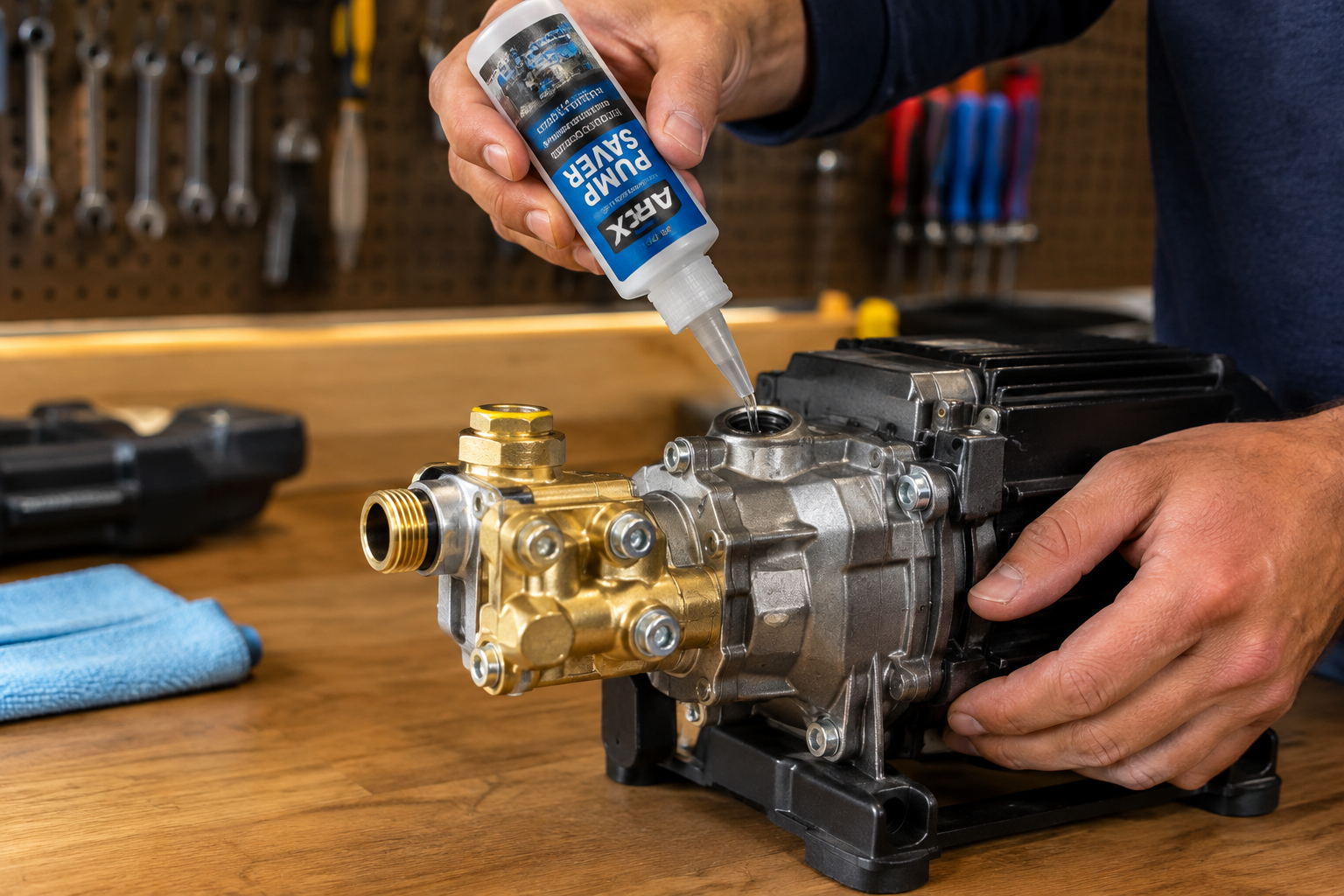
Once the water is drained, the pump itself needs a little attention before it sits idle for months. Rubber seals and O-rings inside the pump can dry out and crack if the machine goes into storage completely dry, which is why pump saver fluid matters more than people think.
Pour a small amount of pump saver or non-toxic RV antifreeze into the water inlet, then pull the recoil (on gas models) or briefly run the unit (on electric models) to circulate it through the pump. This coats the internal seals and prevents them from drying out or freezing over the winter.
Pressure Washer Pump Saver Antifreeze
An easy way to protect internal seals and prevent freeze cracks during months of garage storage.
Once the pump saver is in, wipe down the exterior housing and check for any cracks in the plastic casing that might let moisture creep in over winter. If you notice rust starting to form on any metal fittings, hit them with a light coat of silicone spray or WD-40 before storing.
Step 3: Handle the Hose and Wand Properly
A high-pressure hose that’s coiled too tightly or left kinked all winter can develop cracks or weak spots that show up as leaks next season. Once it’s drained, coil it loosely in wide loops rather than tight circles, and hang it rather than leaving it in a pile on the floor where moisture and rodents can get to it.
Speaking of rodents, an unheated garage is exactly the kind of space mice look for once temperatures drop outside. If you store hoses, wands, or fuel containers on the floor, you’re basically inviting trouble. It’s worth checking our guide to mouse-proofing your garage before winter really sets in, especially if you’ve had issues in past years.
For the spray wand and nozzles, rinse them out, let them dry completely, and store them somewhere they won’t get knocked around or crushed under other gear. A small parts bin or a dedicated hook works well here.
Step 4: Fuel Considerations for Gas Models
Gas pressure washers need a bit more attention than electric ones, mainly because of what happens to fuel sitting untouched for months. Old gas left in the tank breaks down, gums up the carburetor, and can turn a five-minute startup next spring into an hour of troubleshooting.
You have two solid options here. Either run the tank close to empty and then run the engine until it stalls out from lack of fuel, or fill the tank completely and add a fuel stabilizer to prevent the gas from degrading. Most people find the stabilizer method easier since it doesn’t leave the carburetor bone dry.
Never store a gas pressure washer with fuel stabilizer added but the engine never run afterward. You need to actually run the engine for a few minutes after adding stabilizer so it circulates through the carburetor, not just the tank.
Also change the engine oil before storage if it’s been more than a season since the last change. Old oil left sitting all winter can lead to internal corrosion, and it’s a cheap, easy thing to do while you’re already prepping the machine.
Step 5: Battery Care for Cordless or Battery-Assisted Models
Some newer pressure washers use battery packs for ignition systems or cordless operation. Lithium-ion batteries don’t like extreme cold, and leaving them in an unheated garage all winter can shorten their lifespan significantly.
If your unit has a removable battery, take it inside and store it somewhere climate-controlled, ideally at around 50 percent charge rather than fully charged or fully dead. Check on it every month or two during winter, since batteries left completely dead for extended periods can fail to hold a charge again.
Step 6: Choose the Right Storage Spot in the Garage
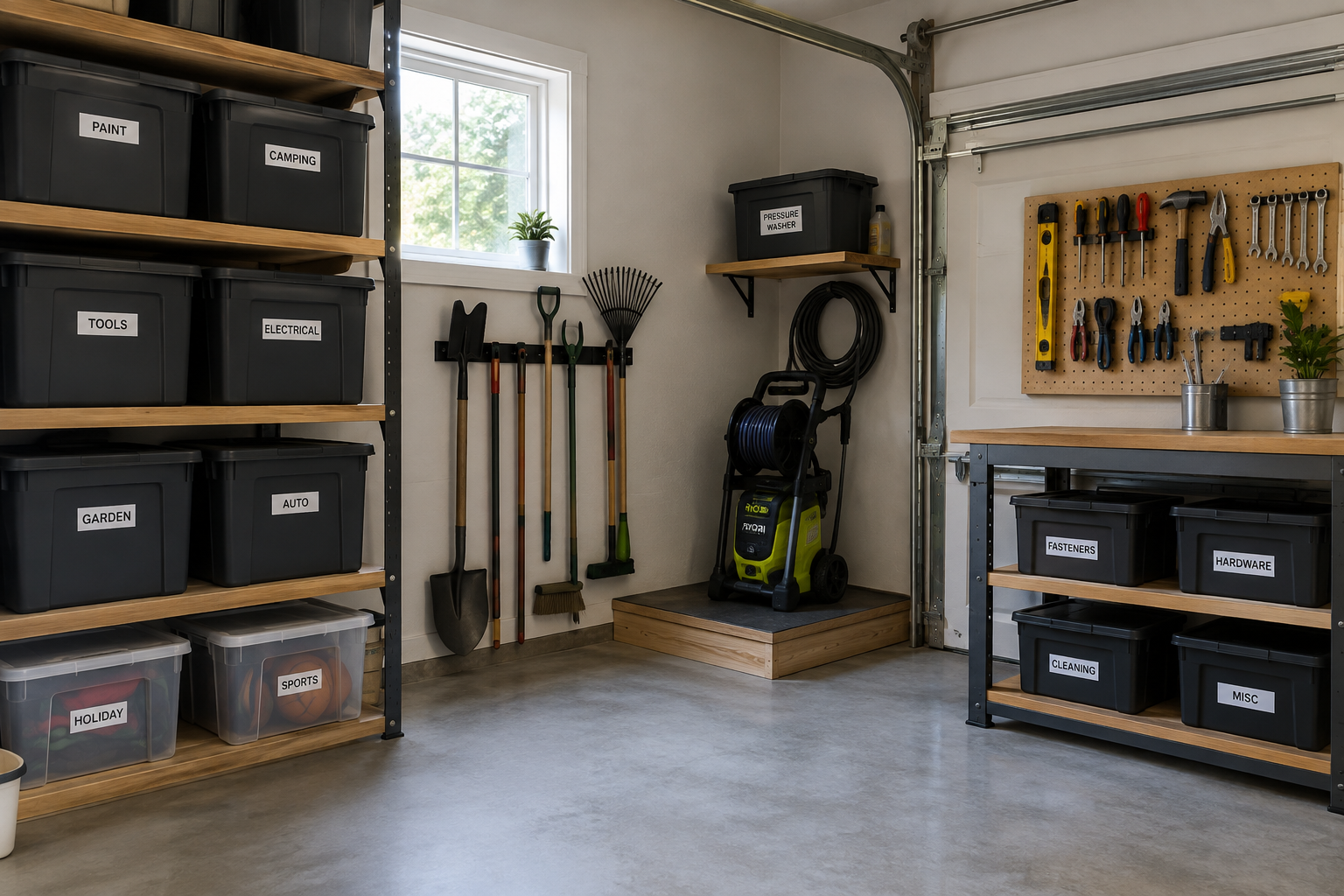
Where you put the pressure washer matters almost as much as how you prep it. Floor storage in a garage puts your equipment right in the path of moisture, road salt tracked in from vehicles, and any humidity issues your garage already has.
If your garage tends to feel damp or musty, especially after storms, that moisture will find its way into stored equipment too. It’s worth working through our guide to fixing high garage humidity so your pressure washer isn’t sitting in the same damp air that’s causing other problems in the space.
Wall-mounted storage keeps the unit off the ground, out of the way of vehicle traffic, and organized alongside your hose and accessories. A dedicated hook or wall bracket system designed for pressure washers holds the machine, hose, and wand together in one spot instead of scattered across the garage floor.
Pressure Washer Storage Hooks
Wall-mounted hooks that keep the washer, hose, and wand organized and off the cold garage floor.
If you’re already rethinking how your garage walls are used for storage, it’s a good time to look at broader options too. Our garage shelving ideas and garage cabinet ideas articles cover setups that work well alongside pressure washer hooks, especially in a garage where floor space is already tight.
A Quick Pre-Winter Checklist
- Drain water from the pump, hose, and wand completely.
- Run pump saver antifreeze through the system.
- Coil the hose loosely and store it off the floor.
- Stabilize or drain fuel on gas models, and run the engine after adding stabilizer.
- Change old engine oil before storage.
- Remove batteries and store them indoors at partial charge.
- Mount the unit on the wall or store it on a shelf, not directly on a cold concrete floor.
Frequently Asked Questions
Can I leave my pressure washer in an unheated garage all winter?
Yes, as long as you’ve drained the water and protected the pump properly. An unheated garage still offers more protection than leaving it outside exposed to snow and direct freezing wind, but it won’t stop freeze damage if water is still trapped inside the system.
Do I need to drain a pressure washer if I only use it a few times a year?
You do, and arguably it matters even more if the machine sits unused most of the year. Water and old fuel left sitting for extended stretches cause more damage than regular use does, so draining and stabilizing before storage is just as important for occasional users.
What temperature is too cold for pressure washer storage?
Any temperature below freezing (32°F) puts undrained water at risk of freezing and cracking the pump. If your garage regularly drops below freezing, focus on getting every trace of water out of the system rather than relying on the space itself to stay warm.
Should I store my pressure washer standing up or on its side?
Always store it upright, the way it was designed to sit during use. Laying it on its side can let residual oil or fuel leak into places it shouldn’t, and it puts unnecessary stress on the wheels and frame over months of storage.
This article contains affiliate links. We may earn a small commission at no extra cost to you.
