

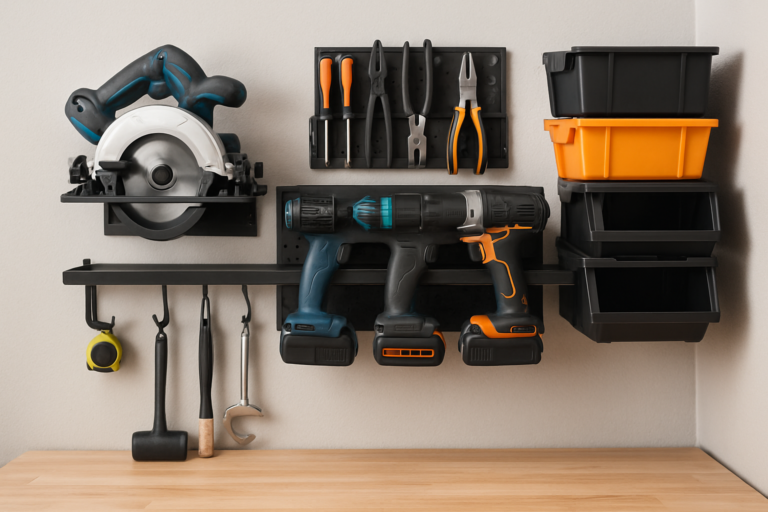
Power tools have a way of multiplying in your garage until you’re faced with a chaotic pile of drills, batteries, and chargers scattered across workbenches. Keeping everything organized isn’t just about aesthetics. It’s about being able to grab the right tool quickly, knowing your batteries are charged, and protecting expensive equipment from damage.
The right organizer can transform your garage workflow. Let’s look at the best systems for 2026 that actually work with how you use your tools.
Wall-Mount Systems vs. Cabinet Storage
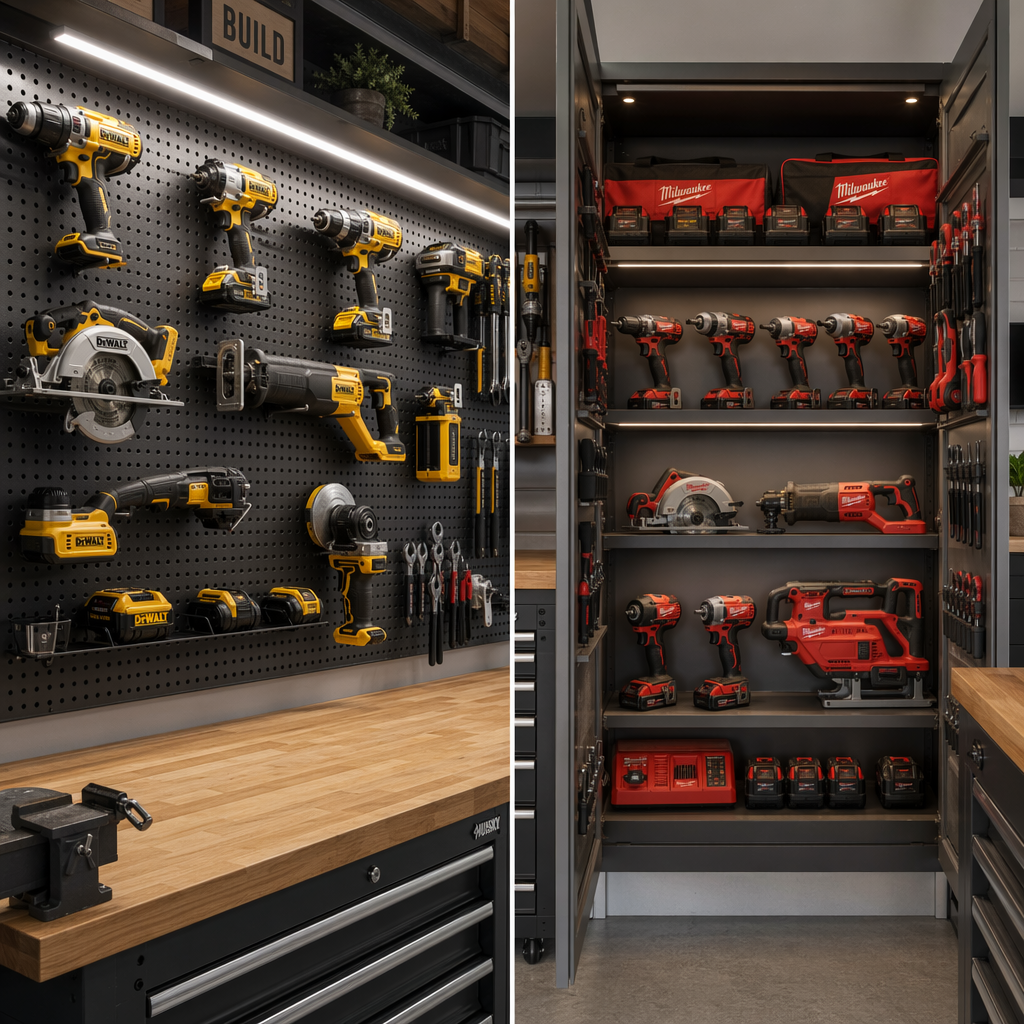
You’ve got two main approaches to power tool storage. Wall-mount systems keep everything visible and accessible, while cabinet systems hide the clutter and provide dust protection.
Wall-mount racks excel when you need quick access during active projects. You can see every tool at a glance, and there’s no fumbling with cabinet doors. They work particularly well if you use specific tools daily. The downside is that everything stays exposed to dust and temperature fluctuations.
Cabinet systems shine for long-term storage and protecting tools from garage elements. They’re ideal if you want a cleaner look or need to secure expensive equipment. The tradeoff is slightly slower access and the need for more floor or wall space.
Most serious DIYers end up using both. Wall mounts for frequently used tools, cabinets for specialty items and bulk storage. For comprehensive storage solutions that combine both approaches, consider exploring professional garage storage systems designed specifically for automotive work.
Brand-Specific Organizers
DeWalt, Milwaukee, and Ryobi each offer their own storage ecosystems designed to integrate perfectly with their tool lines.
DeWalt ToughSystem
DeWalt’s ToughSystem 2.0 provides modular storage that works both as portable cases and wall-mounted storage. The system uses interlocking cases that stack securely and mount to wall rails. Each case is IP65 rated for water and dust resistance.
The real advantage here is flexibility. You can take individual cases to job sites, then click them back onto your wall system when you return. The larger cases accommodate full-size drills with room for accessories, while shallow organizers handle smaller items and drill bits.

DeWalt ToughSystem 2.0 Wall Mount
Perfect for contractors who need portable storage that also works as a permanent wall system
Milwaukee Packout
Milwaukee’s Packout system follows a similar modular approach but with even more configuration options. The wall plates allow you to arrange boxes in custom layouts, and the system includes specialized organizers for specific tool types.
Milwaukee offers a Packout charging station that mounts in the system and charges up to six batteries simultaneously. This integration is genuinely useful if you run multiple Milwaukee tools and hate hunting for charged batteries.
The Packout boxes are slightly bulkier than DeWalt’s, but many users find them more durable for heavy job site use.
Ryobi Link System
Ryobi’s Link system targets the budget-conscious DIYer without sacrificing functionality. The modular cases cost significantly less than DeWalt or Milwaukee options while still providing weather-sealed storage and wall-mount capability.
The Link system works well for homeowners who don’t need commercial-grade durability. The cases handle typical garage use just fine, and the lower cost means you can buy more units to organize your entire collection.
Universal Organizers That Work With Any Brand
Not everyone stays loyal to one tool brand. Universal organizers accommodate mixed collections and often cost less than brand-specific systems.
Pegboard systems remain popular because they’re infinitely customizable. You can rearrange hooks and holders as your tool collection changes. Modern metal pegboards handle heavy drills and impact drivers without sagging, unlike the old hardboard versions. For a detailed comparison of pegboard options and installation tips, there are several factors to consider when choosing the right system for your space.
Look for pegboard systems that include specialized power drill holders with slots for battery storage. These dedicated holders secure tools better than basic hooks and prevent drills from tipping forward.

Metal Pegboard Tool Organizer
Excellent universal solution that accommodates any brand and adjusts as your collection grows
French cleat systems offer even more flexibility than pegboard. The two-part mounting system lets you move entire tool holders by simply lifting and repositioning them. You can build custom holders for specific tools or buy pre-made options. These systems work particularly well when combined with wall rail organizers for maximum versatility.
Battery Storage and Charging Stations
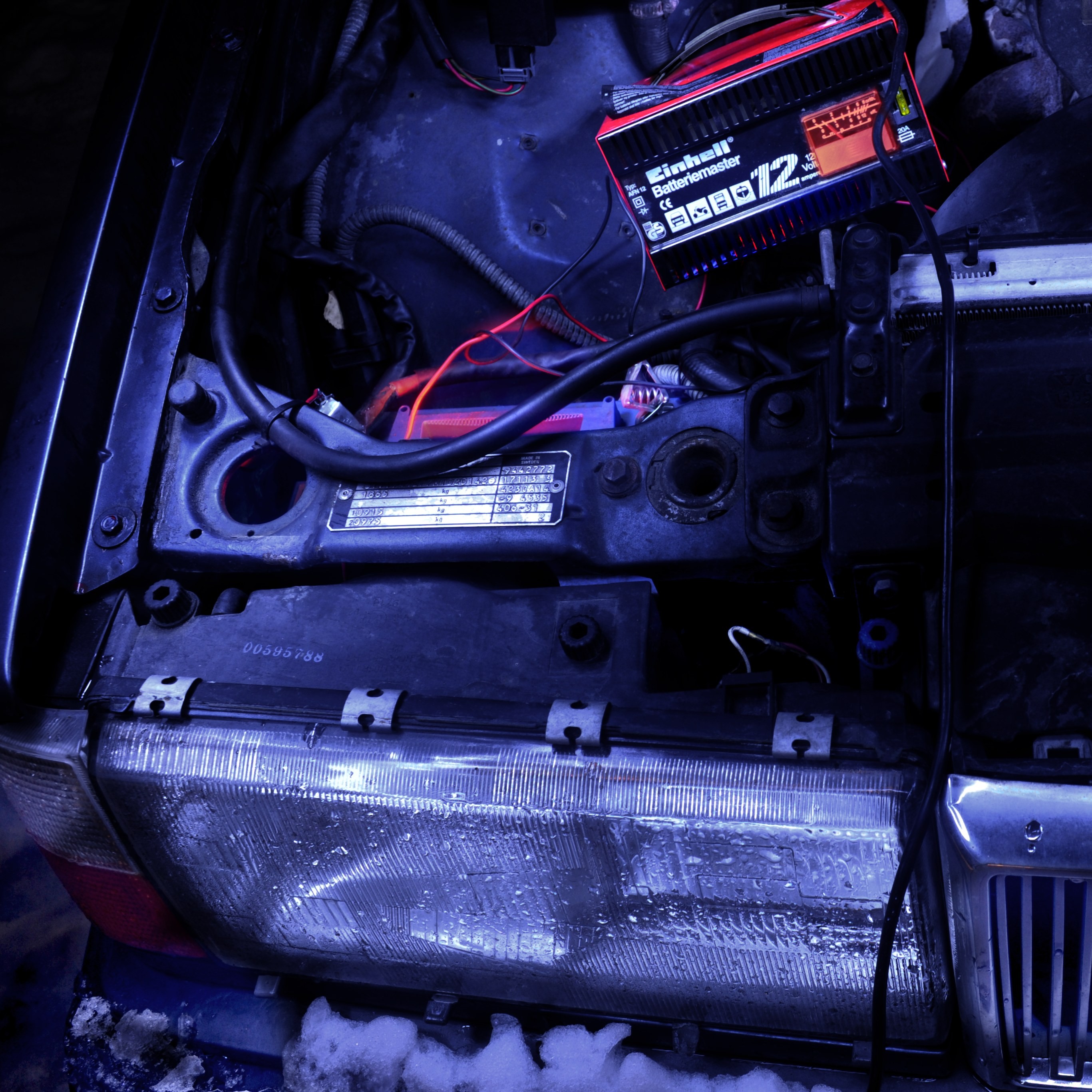
Dead batteries are one of the most frustrating garage problems. Integrated charging solutions keep batteries topped off and organized in one location.
Dedicated battery charging stations mount to walls and include slots for multiple batteries plus built-in chargers. The best versions include LED indicators showing charge status for each battery at a glance.
Pay attention to ventilation when setting up charging stations. Batteries generate heat during charging, and good airflow extends battery life. Mount stations away from enclosed spaces and avoid stacking charged batteries in tight compartments.
Some organizers include passive battery storage separate from charging areas. This makes sense for keeping spare batteries organized even when not actively charging. Label batteries with purchase dates using a marker so you rotate older batteries into use first.
Drill Bit and Accessory Organization
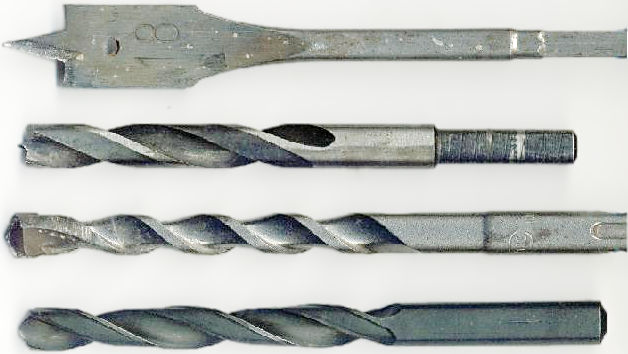
Power tools are useless without bits, but small accessories are notorious for getting lost in garage clutter.
Wall-mounted drill bit organizers with labeled slots keep everything sorted by size and type. Clear acrylic versions let you see inventory at a glance, while metal organizers provide better durability.

Drill Bit Storage Rack
Keeps bits organized by size and prevents the frustrating hunt for the right bit mid-project
Index cases work better for portable storage. Get cases with clear lids so you can identify contents without opening them. Store index cases in shallow drawers or on shelves near your primary work area.
For saw blades and larger accessories, vertical storage racks prevent blades from dulling through contact with each other. Mount these racks inside cabinet doors to maximize space efficiency.
Installation Tips for Maximum Efficiency
Even the best organizer fails if you install it in the wrong location. Place your primary power tool storage within easy reach of your main work area. You shouldn’t need to walk across the garage to grab a drill.
Mount wall systems at a comfortable height. The middle shelf should sit at chest level so you’re not constantly reaching up or bending down. Leave 18-24 inches of clearance above top-mounted tools for easy removal.
Stud mounting is non-negotiable for wall systems holding power tools. Toggle bolts and drywall anchors won’t support the weight safely. Use a stud finder and mount rails or pegboard backing directly to studs with 3-inch screws minimum.
Plan for expansion when setting up your system. Buy slightly more organization capacity than you currently need. Your tool collection will grow, and adding capacity later means reinstalling or buying new systems. For those looking to make an informed purchase decision, our comprehensive buyer’s guide covers all the key features to consider.
Frequently Asked Questions
Can I mix different brand organizers in my garage?
Absolutely. Many people use brand-specific systems for their primary tools and universal solutions for accessories and mixed brands. Just maintain consistent mounting heights so everything looks intentional rather than haphazard.
How much weight can wall-mounted power tool organizers hold?
When properly mounted to studs, quality systems handle 50-100 pounds per linear foot. Always check the manufacturer’s weight rating and distribute heavy tools across multiple mounting points. One stud can typically support 200+ pounds, but spread the load across at least two studs for safety.
