

Shopping for garage pest control that won’t harm your pets means sifting through dozens of options that all claim to be the best. Marketing language is unreliable, and Amazon reviews can be misleading with incentivized ratings mixed in.
This guide focuses on specs and features that matter for real-world garage use. Every recommendation is based on performance, durability, and value, not advertising budgets.
Understanding the Basics of Pet-Safe Exclusion
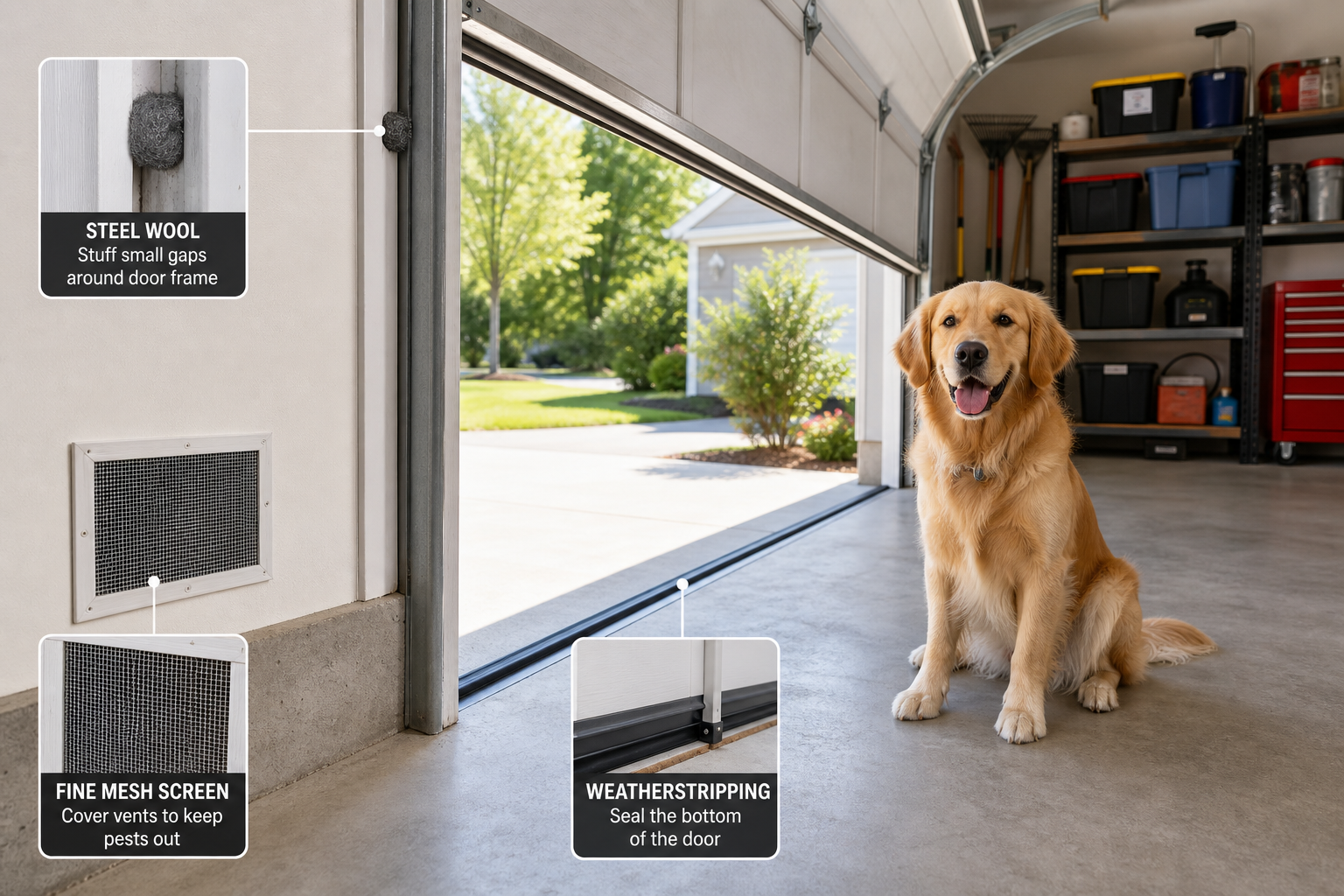
Steel wool packed into openings and secured with expanding foam stops rodents effectively. Foam alone gets chewed through quickly, but the combination creates a lasting barrier. Copper mesh works even better for long-term protection.
For larger gaps, 1/4-inch galvanized hardware cloth screwed in place creates a permanent, chew-proof barrier that pets can’t access or disturb.
Common entry points include gaps around pipes and wires, sill plate-to-foundation spaces, unscreened vents, and deteriorated weatherstripping on garage doors. Physical exclusion beats traps because it prevents entry entirely while keeping your pets completely safe.
The garage door bottom seal represents the most common pest entry point. A 1/4-inch gap admits mice, insects, and spiders with ease. Inspect the entire seal length for cracks, compressed areas, or hardened rubber that no longer contacts the ground fully. For comprehensive protection, implementing proper sealing techniques throughout your garage creates the most effective long-term barrier against pest intrusion.

Steel Wool Pest Control
Effective first line of defense when combined with expanding foam
Safe Trap and Bait Placement
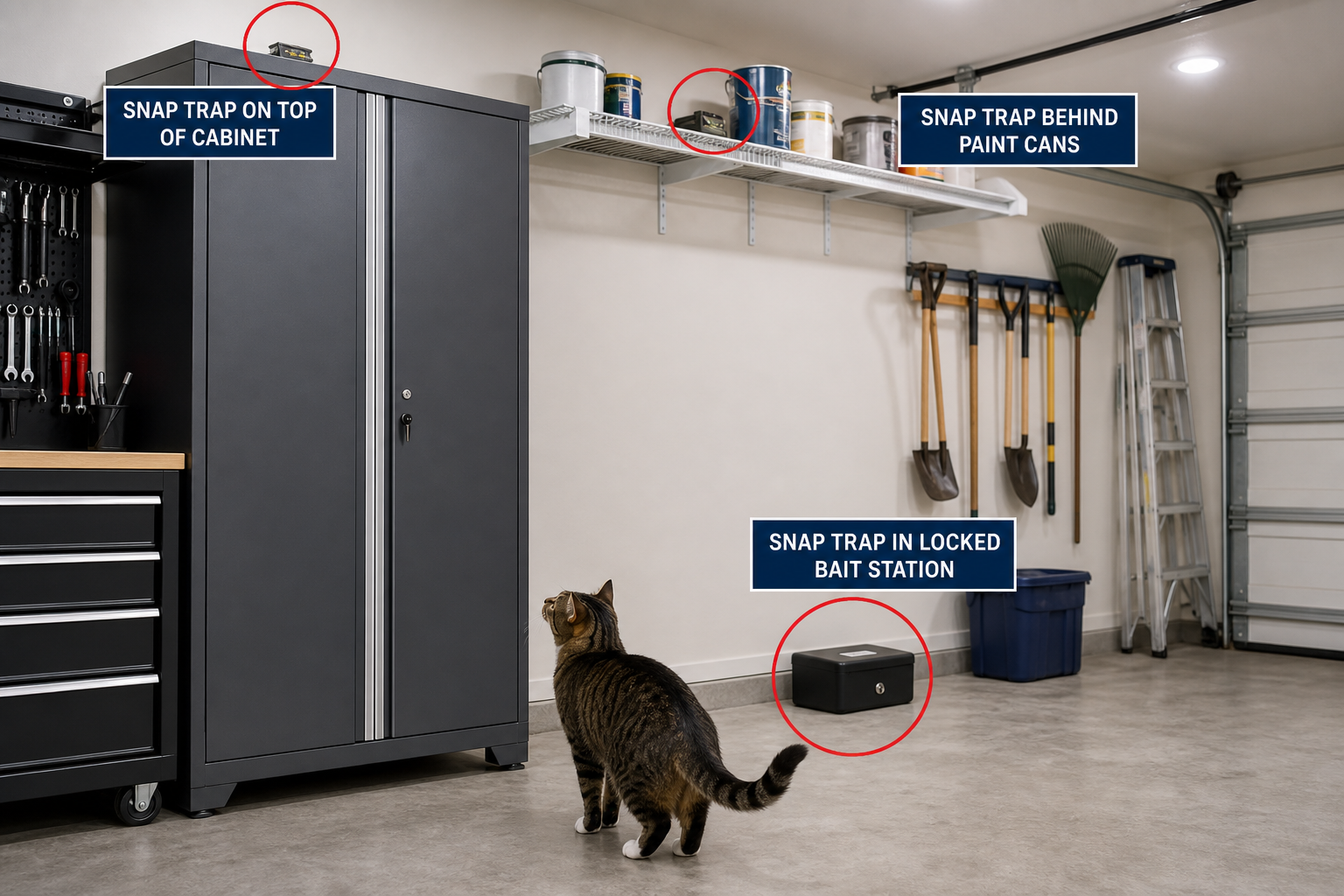
Traps and baits require strategic placement that minimizes risk to dogs and cats. Understanding your garage’s layout helps you choose secure locations where pets can’t reach dangerous materials.
Your garage’s age, construction type, and local climate all influence what works best and what to avoid. Older garages often have more entry points, while newer construction may have fewer but larger gaps.
Keep your workspace organized throughout any pest control project. Debris and clutter cause errors and safety issues, especially when pets are around. Clear tools and waste between major steps rather than letting mess accumulate. Proper flooring choices can make cleanup easier and reduce places where pests might hide.
Factor in maintenance when choosing your approach. The lowest-maintenance option isn’t always cheapest initially, but it usually wins over a 5 to 10-year window when you include touch-ups, repairs, and replacements.
A quality pest-blocking expanding foam makes a noticeable difference in results. Check current options and reviews on Amazon to find the right match for your project and budget.
Securing High-Risk Areas
Place any toxic baits or snap traps in locations where kids and pets absolutely can’t reach them. Behind water heaters, inside locked cabinets, or on high shelves work best for dangerous materials.
Your garage’s specific layout determines the safest placement options. Walk through the space from your pet’s perspective to identify potential access points you might miss from human height. Installing comfortable floor mats in areas where you’ll spend time working can help you thoroughly inspect low-level entry points without knee strain.
Start with a small test area if you’re uncertain about placement. A single corner or section lets you evaluate effectiveness and safety without committing to a full installation.
Expect to adjust your approach based on results. Pest behavior and pet curiosity both vary, so flexibility in your strategy prevents problems before they develop.
Practical Planning Tips
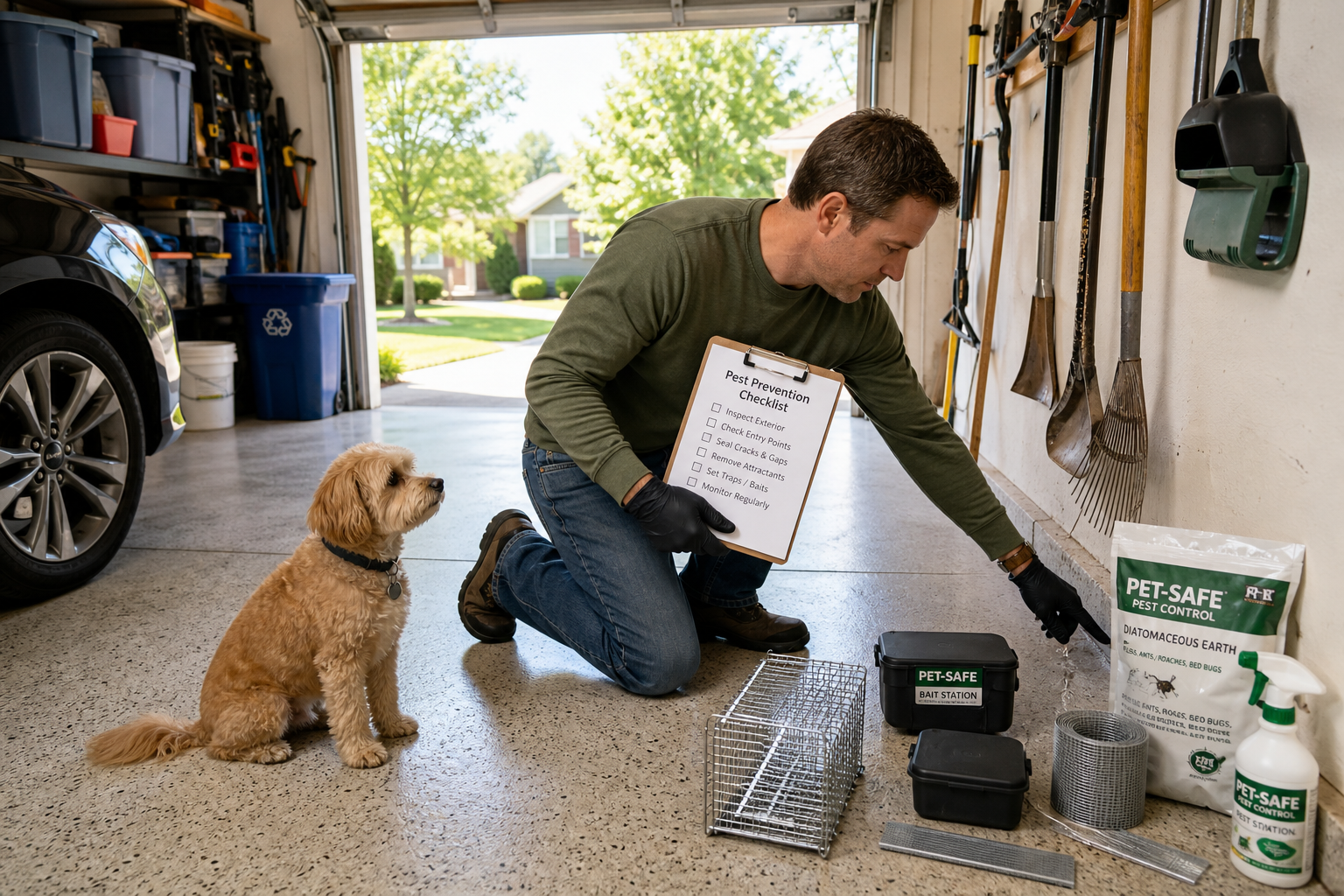
Prioritize your projects based on impact and urgency. Safety issues like structural gaps or electrical problems come first. Preventive measures like sealing and exclusion come second. Monitoring and maintenance systems come last.
Before starting any garage pest control project, take stock of what you have and what you need. Walk the space with a flashlight and notepad. Record entry points, note moisture issues, and photograph problem areas for reference.
Consider seasonal timing for your project. Sealing work performs best in dry weather when materials cure properly. Pest activity peaks in fall and spring, making these ideal times for comprehensive exclusion efforts. Temperature control also plays a role in pest prevention, so understanding the insulation options for your garage can help create less appealing conditions for unwanted visitors.
Invest in quality tools for tasks you’ll repeat. A good caulk gun, proper safety gear, and reliable measuring tools make every project easier and more effective. These tools pay for themselves across multiple maintenance sessions.
What to Avoid
Knowing what to skip prevents expensive mistakes and keeps your pets safer:
- Products with vague specs or missing safety data sheets. If a manufacturer won’t publish details, that’s a red flag for pet safety.
- Suspiciously cheap deals from unauthorized sellers. Counterfeit pest control products pose serious risks to animals.
- Unknown brands offering toxic solutions. Established brands charge more for proven formulations and real safety testing.
- Any product that doesn’t clearly state its active ingredients and pet safety warnings.
Professional-grade solutions from established pest control companies often provide better results than consumer products while maintaining higher safety standards.
Browse current garage pest repellent options on Amazon for the latest safe formulations and user reviews from other pet owners.
Frequently Asked Questions
How much should I budget for pet-safe pest control?
Costs vary widely by scope and materials chosen. DIY exclusion methods save significantly on labor costs. Physical barriers like steel wool and hardware cloth offer the best value for long-term protection. Check current Amazon pricing for accurate material estimates.
What mistake should I avoid above all else?
Rushing the sealing process without considering pet access. Take time to view your garage from your pet’s perspective and secure all potentially dangerous materials before starting work. Proper preparation prevents both pest entry and pet exposure to harmful substances.
Can I handle this as a DIY project with pets in the house?
Most exclusion work is DIY-accessible with basic tools and doesn’t require toxic materials. Focus on physical barriers and mechanical traps rather than poisons. Keep pets away from work areas until all materials are fully cured and secured.
How long will these pet-safe methods last?
Physical exclusion methods provide years of reliable performance with quality materials and proper installation. Steel wool and hardware cloth barriers often outlast the garage structure itself. Regular inspection and minor touch-ups maintain effectiveness indefinitely.
Related Articles
- How to Pest-Proof Your Garage: Complete Sealing Guide
- Best Garage Detailing Bay Flooring: Complete DIY Guide
- Best Anti-Fatigue Garage Floor Mats: Buyer’s Guide 2026
- Radiant Barrier vs Insulation For Your Garage: Which is Better?
This article contains affiliate links. We may earn a small commission at no extra cost to you.
