

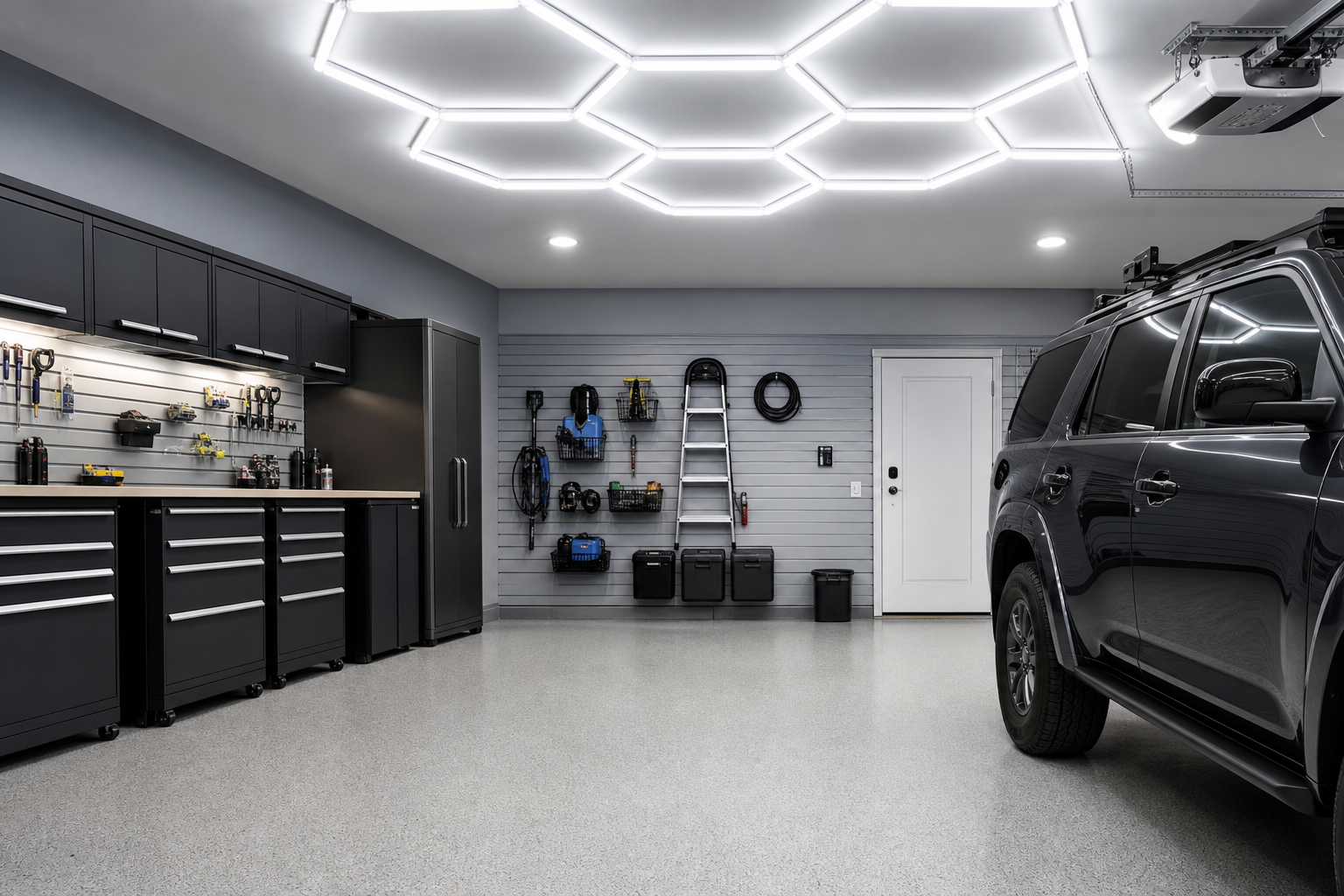
Shopping for LED garage lighting kits means sifting through dozens of options that all claim to be best. Marketing language is unreliable, and Amazon reviews can be misleading with incentivized ratings mixed in.
This guide focuses on specs and features that matter for real-world garage use. Every recommendation is based on performance, durability, and value, not advertising budgets.
Understanding the Basics
LED shop lights are the standard: 50,000+ hour lifespan, low electricity consumption, and instant full brightness. Linkable models daisy-chain from one outlet. Most manufacturers limit chains to 4 to 8 fixtures to prevent voltage drop that causes dimming or flickering on distant units.
Color temperature (Kelvin) determines light quality. 5000K (daylight) gives crisp, color-accurate illumination ideal for garages. 4000K (neutral white) is slightly warmer if you find daylight too harsh. Avoid warm-white bulbs (2700-3000K) for workshop use since they make it harder to see fine detail.
Placement matters as much as total output. Evenly spaced fixtures eliminate dark spots. Four to six 4-foot LED shop lights in rows cover most two-car garages well. Add a task light directly above the workbench, positioned so you don’t cast your own shadow on the work surface.
Target 50 lumens per square foot for general garage use. A 400 square-foot two-car garage needs at least 20,000 lumens total. For workbench detail, boost to 300 lumens per square foot with dedicated task lighting positioned to minimize shadows. That higher concentration matters when you’re working with small fasteners, precision measurements, or finishes where color accuracy counts.
Installation height affects coverage and glare. Mount shop lights 7 to 8 feet high in standard garages. Higher ceilings can handle fixtures at 9 to 10 feet, but you’ll need higher lumen output to compensate for the distance. Lower than 7 feet and you’ll work in your own shadow. Mount fixtures perpendicular to where you typically stand, not parallel. This spreads light across your work area instead of creating bright and dark stripes.
Types of LED Garage Lighting
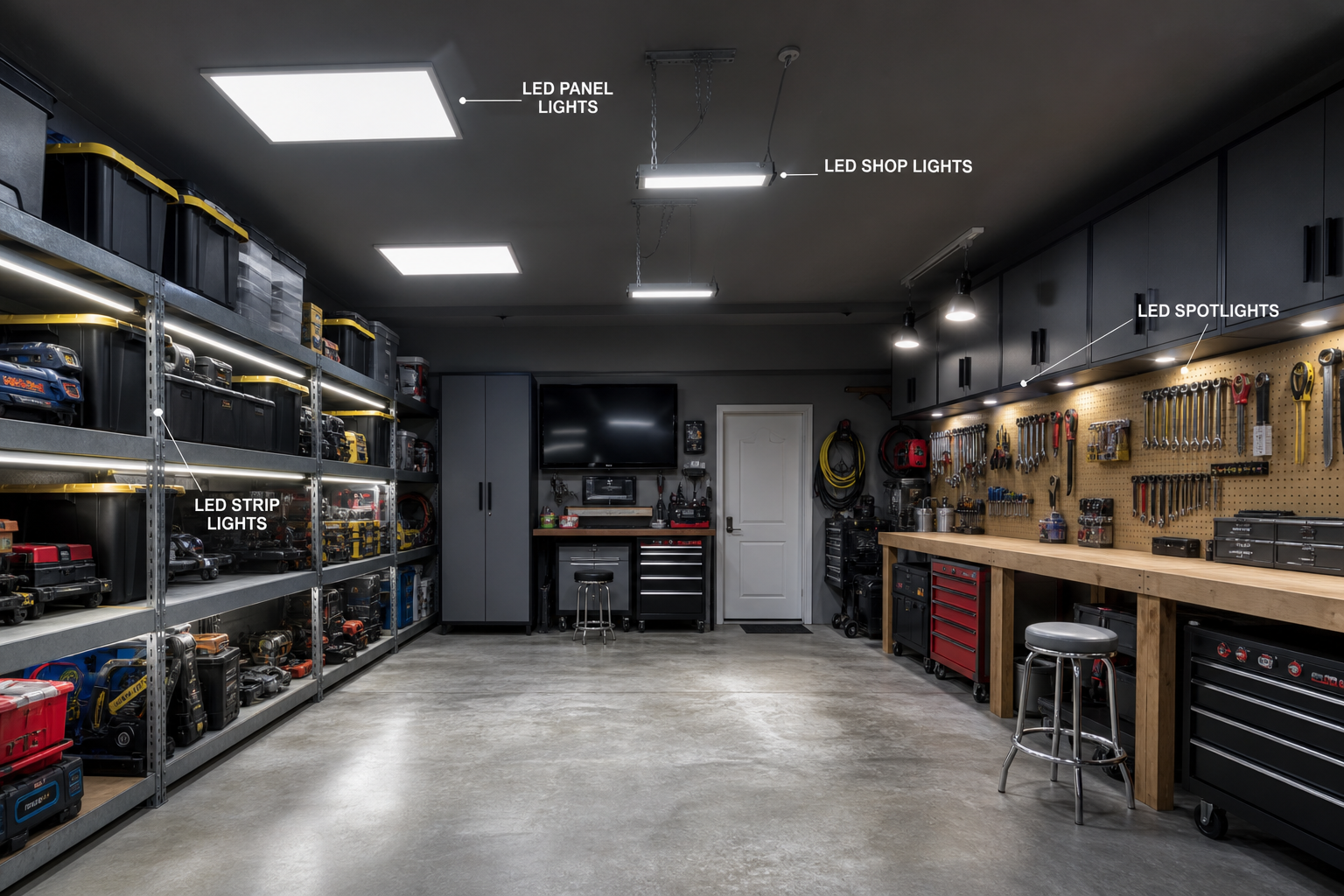
Integrated LED shop lights dominate the market. The LED array is built into the fixture, not a replaceable bulb. When the LEDs eventually dim after tens of thousands of hours, you replace the whole unit. This design keeps costs down and eliminates compatibility issues between bulbs and fixtures.

Linkable LED Shop Light
Easy installation with daisy-chain capability for most garage applications
Linkable fixtures connect end-to-end with plug-and-play connectors. No additional wiring, no junction boxes. Run power to the first fixture and daisy-chain the rest. Check the manufacturer’s limit before buying. Some allow 8 units on one circuit, others cap at 4. Exceeding that limit risks dimming, flickering, or tripped breakers.
Wraparound LED fixtures enclose the light source in a diffuser that spreads light in all directions. These work well in the center of the garage where you need 360-degree coverage. They’re bulkier and typically more expensive than open shop lights, but they eliminate harsh shadows when you’re working underneath.
Tri-panel and quad-panel fixtures use multiple adjustable LED panels that fold out from a central base. They screw into standard light sockets, making them the easiest retrofit option if you have existing ceiling fixtures. Coverage is excellent, but heat buildup in the socket can shorten lifespan compared to dedicated shop lights with better ventilation.
Motion-sensor fixtures save electricity in garages used sporadically. They go to full brightness when you enter and dim or shut off after a set period of inactivity. Useful for detached garages or spaces where you’re in and out throughout the day. The downside: sensors can be triggered by passing cars, animals, or even large temperature swings that create air movement. Position them carefully to avoid false activations.
Installation Considerations
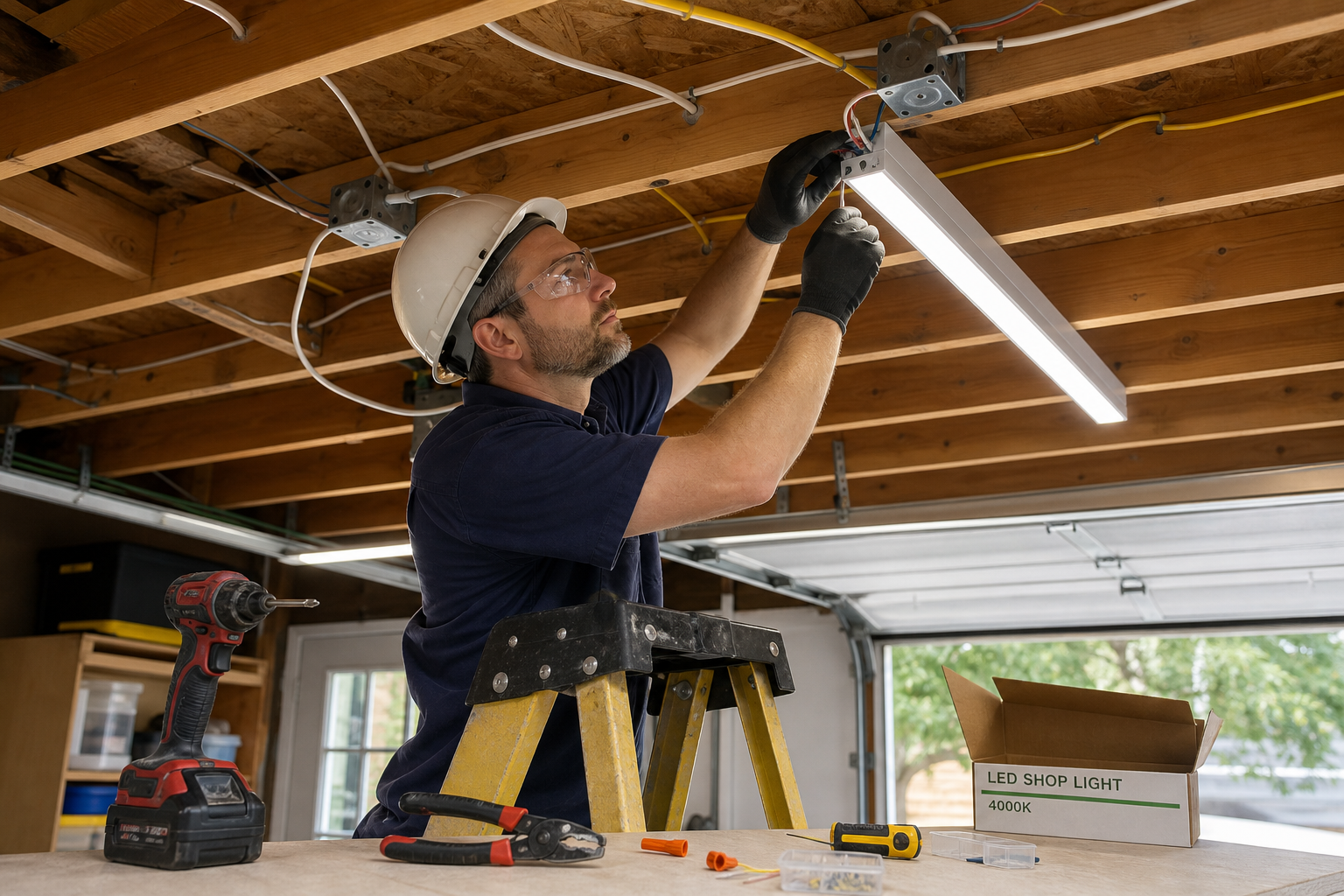
Most LED shop lights mount with included chains or screws. Chain mounting is faster and allows easy height adjustment. Screw mounting is more secure and eliminates any swaying from vibration when the garage door opens and closes.
Ceiling type matters. Wood joists or trusses give you solid anchoring points anywhere. Drywall ceilings need ceiling anchors rated for the fixture weight, or you need to locate joists with a stud finder. Unfinished ceilings make installation simple but collect dust on the fixtures faster.
Wire management keeps installations clean. Use cable clips or zip ties to secure power cords along joists. Avoid letting cords dangle where they’ll collect dust, get caught on ladders, or look sloppy. For permanent installations, consider having an electrician hardwire the fixtures instead of using plugs. This eliminates visible cords entirely and frees up outlets.
Switched control adds convenience. Wire fixtures to a wall switch so you can control all lights from the entry door. Alternatively, use smart plugs or switches that let you control lights from your phone or set schedules. A simple improvement over pull-chain switches scattered across the ceiling.
Performance Specs That Matter
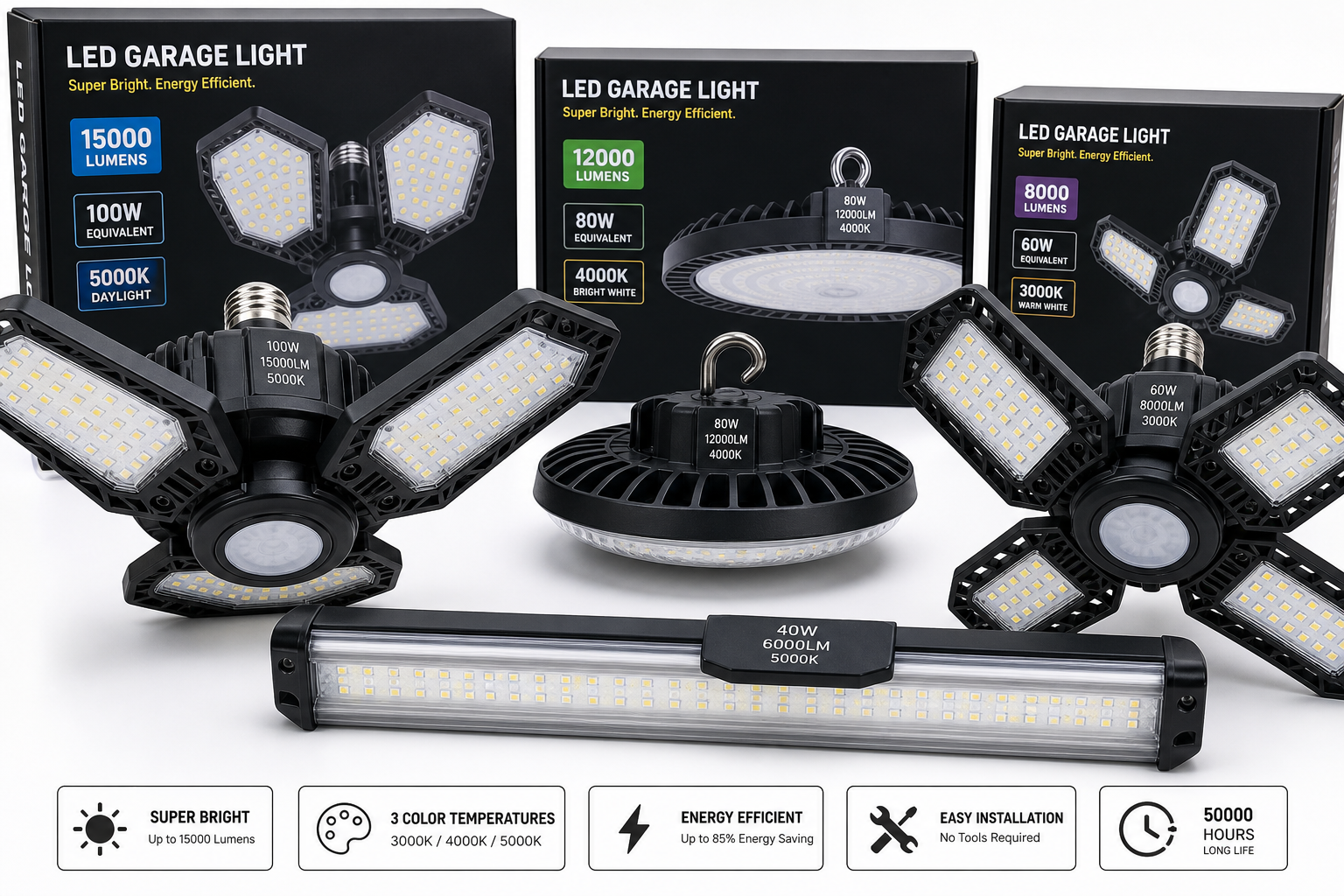
Lumens measure total light output. Higher is brighter, but distribution matters more than raw numbers. A 5,000-lumen fixture poorly positioned creates harsh spots and deep shadows. Three 3,000-lumen fixtures evenly spaced give better overall illumination even though total lumens are lower.
Color Rendering Index (CRI) measures how accurately colors appear under the light. Look for CRI above 80. Shop lights in the 80 to 90 range show colors accurately enough for most garage work. CRI above 90 approaches natural daylight, useful if you’re doing finish work, painting, or detailed inspections where color precision matters.
Power draw determines operating cost. A 40-watt LED fixture running 4 hours daily costs competitively priced per year in electricity at average rates. Compare that to the old 160-watt fluorescent it replaces, which cost competitively priced annually. Over the 50,000-hour lifespan of an LED, you’re saving over competitively priced in electricity per fixture.
Voltage compatibility prevents headaches. Most LED shop lights run on standard 120V household current. Some commercial-grade fixtures require 240V. Check before buying, especially if you’re ordering commercial surplus or industrial lighting.
Warranty length signals manufacturer confidence. One year is standard. Three to five years suggests better build quality. Anything less than one year is a red flag. Read the fine print to see what’s actually covered. Some warranties exclude labor or shipping costs, leaving you with a “free” replacement you have to pay to install.
Common Mistakes to Avoid
Buying on lumens alone without checking beam angle creates uneven lighting. A narrow beam concentrates light in a small area. A wide beam spreads it thin. For general garage use, look for 120-degree beam angles. Narrower beams (60 to 90 degrees) work for task lighting over specific areas.
Mixing color temperatures in the same space looks unprofessional and creates visual fatigue. Stick with one color temperature throughout the garage. If you add fixtures later, match what you already have.
Ignoring flicker specifications causes headaches, literally. Cheap LED drivers can produce visible flicker that strains your eyes during extended work sessions. Look for “flicker-free” in the product description. High-frequency flicker (above 100 Hz) is less noticeable but still fatiguing over time.
Skipping IP ratings for dusty or damp garages shortens fixture life. IP65 fixtures seal out dust and water spray. Overkill for climate-controlled garages, necessary for unheated spaces in humid climates or dusty workshops. The extra cost pays off in longer lifespan and fewer replacements.
Underestimating installation time leads to frustration. Budget 30 to 45 minutes per fixture for a clean, professional installation. Rushing creates crooked fixtures, visible wires, and weak connections that fail later.
Quality workbench lighting makes a noticeable difference in results. Check current options and reviews on Amazon to find the right match for your project and budget.
Budgeting Your Lighting Upgrade
Expect quality 4-foot LED shop lights to be competitively priced for reliable performance. Budget fixtures often use lower-grade LEDs that dim faster or inferior drivers that fail early. Premium fixtures offer marginal improvements unless you need specific features like high CRI, industrial-grade construction, or extended warranties.
Calculate total fixture count before shopping. Measure your garage in square feet, multiply by 50 lumens, then divide by the lumen output of your chosen fixture. Round up. A 400 square foot garage needs 20,000 lumens. If you’re using 4,000-lumen fixtures, that’s five fixtures minimum. Six provides better coverage.
Installation supplies add to the budget. Factor in ceiling anchors, cable management clips, and potentially a new power strip or surge protector if you’re daisy-chaining multiple fixtures. Professional installation by an electrician may be needed if you’re adding new circuits or hardwiring fixtures.
Energy savings offset initial cost. Replacing six old fluorescent fixtures (160 watts each) with LED shop lights (40 watts each) saves 720 watts, or competitively priced annually if you use the garage 4 hours daily. The LED fixtures pay for themselves in electricity savings within two to three years, then continue saving for decades.
Special Situations
Cold Climate Considerations
Unheated garages in cold climates need fixtures rated for low temperatures. Standard LEDs lose brightness below freezing and may not start at all below zero. Look for fixtures rated to negative 20 or negative 30 degrees Fahrenheit. These use specialized drivers and LED arrays that function reliably in winter conditions.
High-Vibration Environments
High-vibration environments like woodworking shops or garages with heavy door use benefit from fixtures with shock-resistant housings and secure LED mounting. Vibration loosens connections over time, causing intermittent failures or complete burnouts.

Motion Sensor Garage Light
Reliable choice for detached garages or spaces with sporadic use
Electrical Capacity Limitations
Garages with limited electrical capacity can’t support multiple high-wattage fixtures on one circuit. Calculate your existing load before adding lighting. A standard 15-amp circuit safely handles about 1,440 watts continuous load. Six 40-watt LED fixtures draw only 240 watts, well within limits. Add in a space heater, air compressor, or power tools and you’re pushing capacity.
Detached garages without dedicated circuits may require running new wiring from the main panel. This isn’t a DIY project unless you’re a licensed electrician. Expect significant costs depending on distance, local codes, and whether trenching is required for underground conduit.
Maintenance and Longevity
LED shop lights require minimal maintenance. Wipe dust off the lens every few months with a dry microfiber cloth. Dust buildup can block 10% to 20% of light output over time. For fixtures in particularly dusty environments, consider a quick wipe-down monthly.
Check connections annually if you’re using linkable fixtures. Vibration from garage door operation can loosen plug connections. A poor connection creates resistance, which generates heat, which accelerates failure. Takes five minutes to unplug and re-seat each connection firmly.
Monitor for dimming as fixtures age. LEDs don’t burn out suddenly like incandescent bulbs. They gradually lose brightness over tens of thousands of hours. When output drops to 70% of original brightness (L70 rating), it’s time to replace. In most garage applications, you’ll notice the difference before you reach that point.
Failure modes are predictable. Driver failure is most common, showing up as flickering, buzzing, or complete failure to light. LED array failure is rarer and typically presents as individual LEDs going dark while others stay lit. Either failure means replacing the entire integrated fixture.
Making the Decision
Start with overhead general lighting first. Get the basic illumination right before adding specialty fixtures. Four to six quality shop lights properly spaced will transform most garages from cave to functional workspace.
Add task lighting second. Once you know how you use the space, you’ll see where concentrated light improves specific tasks. Workbench areas, tool storage zones, and detail work areas all benefit from dedicated fixtures.
Consider future changes. Whether you’re planning a garage gym conversion, workshop setup, or new storage systems, those changes might affect optimal light placement. Better to coordinate lighting with other improvements than install twice.
Buy from retailers with solid return policies. You won’t know if a fixture works for your specific garage until it’s installed. Being able to return or exchange within 30 to 90 days gives you flexibility if the beam angle, color temperature, or brightness doesn’t match your needs.
Frequently Asked Questions
How many lumens do I need for my garage?
Target 50 lumens per square foot for general use. A 400 square foot two-car garage needs 20,000 lumens total. Add task lighting at 300 lumens per square foot over workbench areas where you need precise visibility for detailed work.
What’s the best color temperature for garage lights?
5000K (daylight) provides clear, accurate illumination ideal for most garage work. 4000K (neutral white) works if you prefer slightly warmer light. Avoid warm-white bulbs (2700-3000K) since they make it harder to see fine details.
Can I mix different brands of linkable LED fixtures?
Not recommended. Linkable connectors vary by manufacturer and mixing brands can create compatibility issues, uneven brightness, or electrical problems. Stick with one brand for your entire chain to ensure proper function and safety.
How long do LED shop lights actually last?
Quality fixtures typically last 50,000 hours. At 4 hours of daily use, that’s over 34 years. Realistically, expect 15 to 20 years of useful life before noticeable dimming prompts replacement. This makes LEDs far more cost-effective than fluorescent alternatives over time.
This article contains affiliate links. We may earn a small commission at no extra cost to you.
