

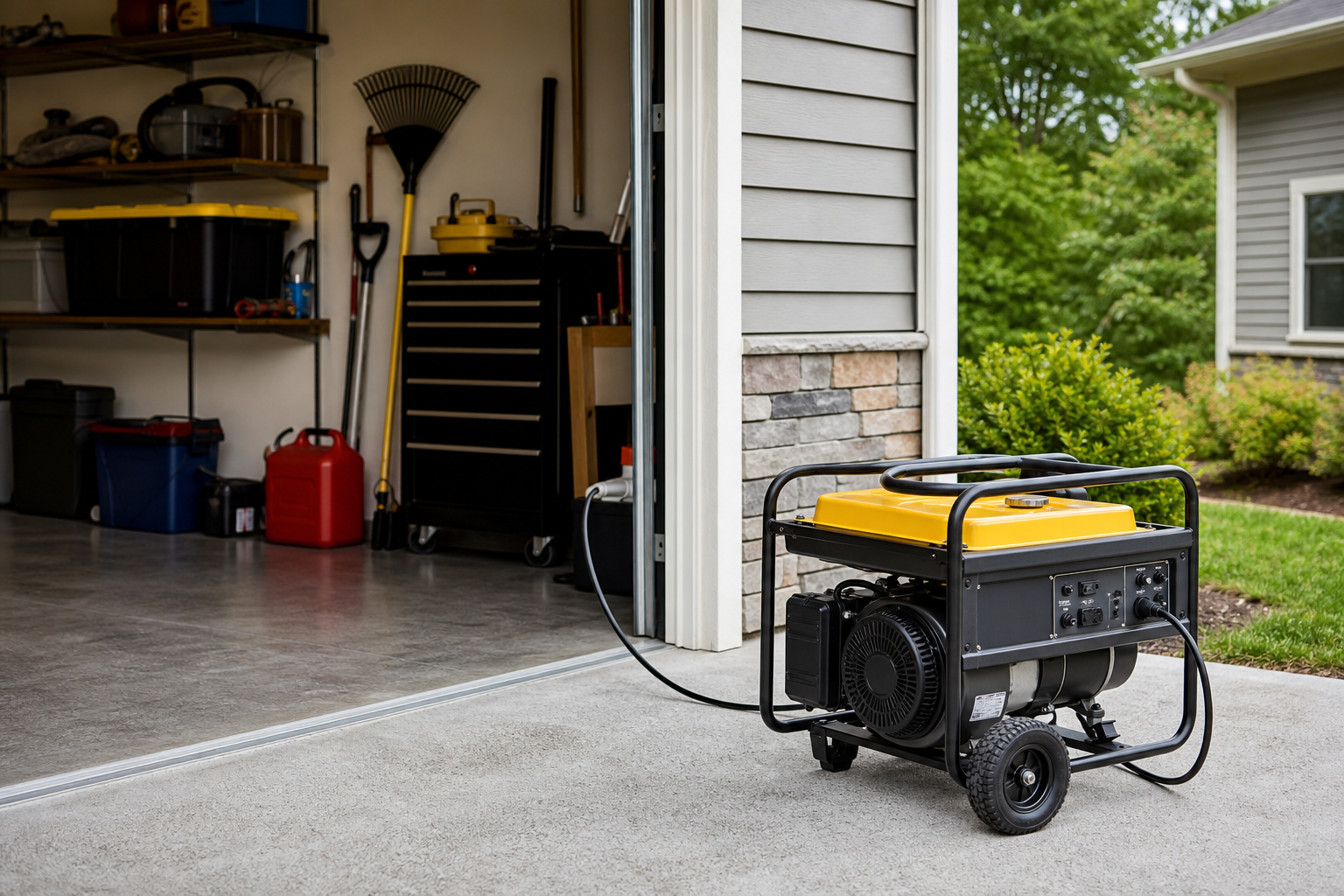
Understanding garage generator exhaust and CO safety gives you a real advantage when planning backup power for your home. The specifics matter more than most people expect, and the stakes are life-or-death.
Carbon monoxide from portable generators kills dozens of people every year and sends hundreds more to emergency rooms. Most of those deaths happen in garages. This guide covers what you need to know about safe generator placement, exhaust management, CO detection, and the rules that keep your family alive during a power outage.
Why Generators and Garages Don’t Mix
Portable generators produce carbon monoxide at deadly concentrations. A typical 5,000-watt generator running in an enclosed space generates enough CO to kill someone in less than five minutes. Opening the garage door partway doesn’t solve the problem. CO is roughly the same density as air, so it doesn’t quickly rise and escape.
It lingers, accumulates, and seeps into your living space through any shared wall or door. If you’re considering converting your garage to a guest room or home office, proper ventilation becomes even more critical for any future generator use.
The Consumer Product Safety Commission’s data is clear: running a generator in a garage, basement, or enclosed porch is dangerous even with ventilation. The exhaust contains 10,000+ parts per million of CO at the tailpipe. Safe indoor levels max out at 9 ppm over eight hours. You can’t ventilate that gap away with a box fan and an open door.
People make this mistake because garages feel semi-outdoor. They’re not climate-controlled, they have big doors that open, and they’re separate from the main house. But legally and physically, they’re enclosed spaces. The same walls that keep rain and snow out also trap exhaust.
Proper Generator Placement Rules
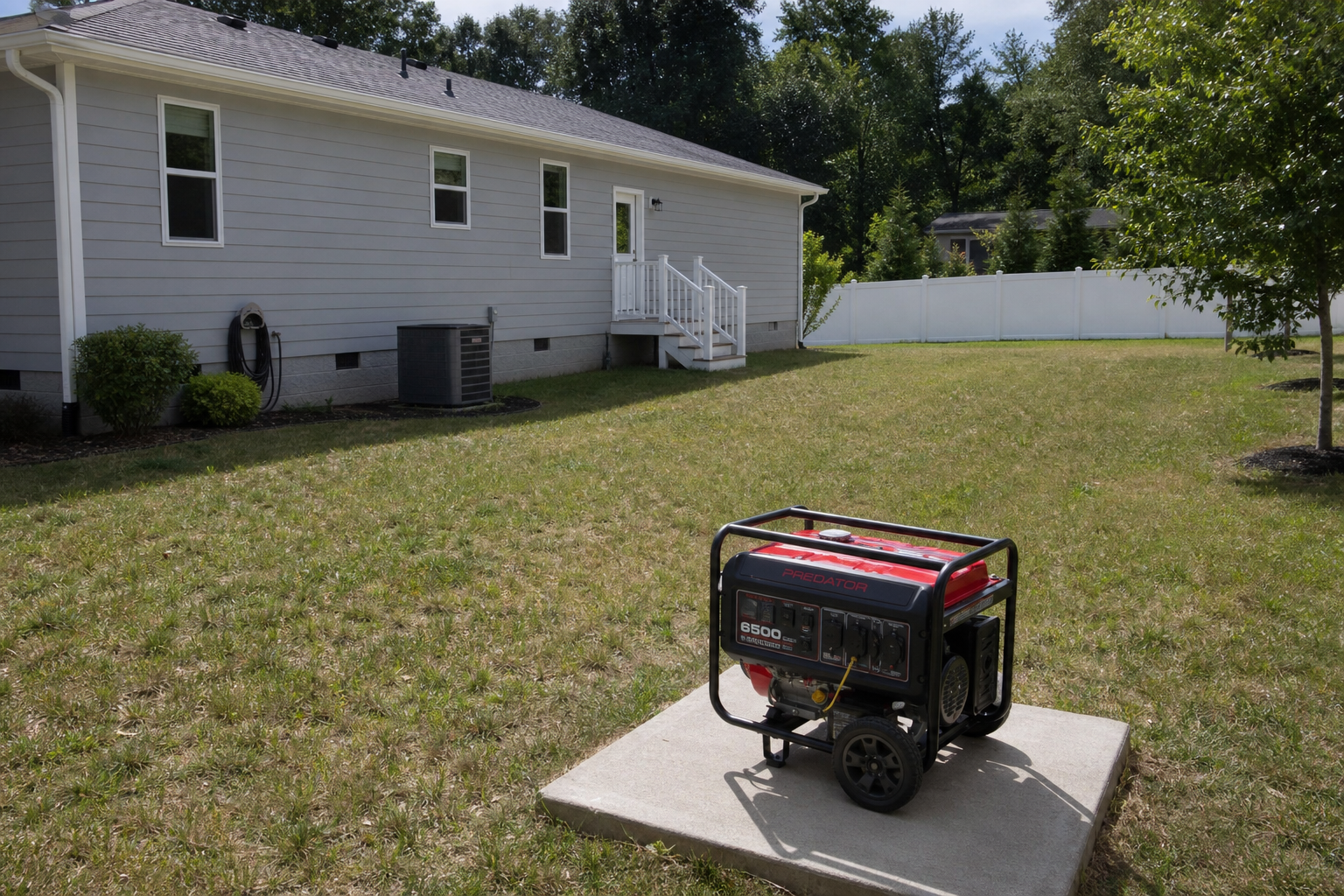
Place your generator at least 20 feet away from windows, doors, and vents, measured from the generator’s exhaust port. Point the exhaust away from the house. This distance keeps CO concentrations low enough that normal air circulation dilutes them before they reach living areas.
Set the generator on a level, dry surface outdoors. Concrete pads, gravel patches, or generator stands work well. Avoid placing generators on grass during wet conditions. The weight and vibration can cause them to sink or tip, and wet ground increases electrical shock risk.
Keep generators away from combustible materials. The exhaust manifold runs hot enough to ignite dry leaves, cardboard, or other debris. Maintain at least three feet of clearance on all sides. This also improves cooling airflow, which helps the engine run efficiently and extends its service life.
Never run a generator on a deck, patio, or carport that shares a roof or walls with your home. These semi-enclosed spaces trap exhaust just like a garage does. The overhang that keeps rain off you also holds CO in place long enough to seep through walls and vents.
Weather Protection Without Enclosures
Generators need rain protection but can’t be enclosed. Generator tents and canopies solve this. These open-sided structures keep rain and snow off the unit while maintaining ventilation on all sides. Most use a metal or PVC frame with a waterproof fabric top.

Portable Generator Cover
Weather-resistant covers designed specifically for outdoor generator protection
Set them up so the open sides face away from prevailing winds to reduce rain intrusion. DIY covers built from tarps and stakes work if you maintain airflow. Leave at least two full sides completely open. Never drape a tarp directly over a running generator or stake it down on all sides.
Some portable generators include built-in weather-resistant features. These units have sealed electrical components and rust-resistant frames. They still need overhead rain protection, but they tolerate brief exposure to drizzle better than standard models. Check your owner’s manual for the manufacturer’s wet-weather guidelines.
Extreme cold affects generator performance. Oil thickens, fuel doesn’t vaporize as readily, and batteries lose starting power. Synthetic oil helps cold starts. Keep the fuel tank topped off to prevent condensation. Store the generator in the garage between uses, but always move it outdoors before starting, even for a test run.
Exhaust Extension Systems
Some manufacturers offer exhaust extension kits that let you route generator exhaust further from the unit. These kits include high-temperature flexible pipe and mounting hardware. They extend your placement options during bad weather, allowing you to tuck the generator closer to a building while directing exhaust away.
Exhaust extensions don’t make indoor operation safe. They reduce CO concentration near the generator itself, but they don’t eliminate it. The joints, connections, and pipe material all leak trace amounts of exhaust. In an enclosed space, those trace amounts accumulate to dangerous levels.
Install extensions according to manufacturer specs. Improper routing can create backpressure that damages the engine or causes exhaust leaks at connections. The pipe must slope downward away from the generator to prevent condensation from flowing back into the exhaust port.
Inspect extension pipes before each use. High heat and vibration cause wear. Cracked pipes, loose clamps, and corroded fittings all leak exhaust. Replace damaged sections immediately.
Carbon Monoxide Detector Placement
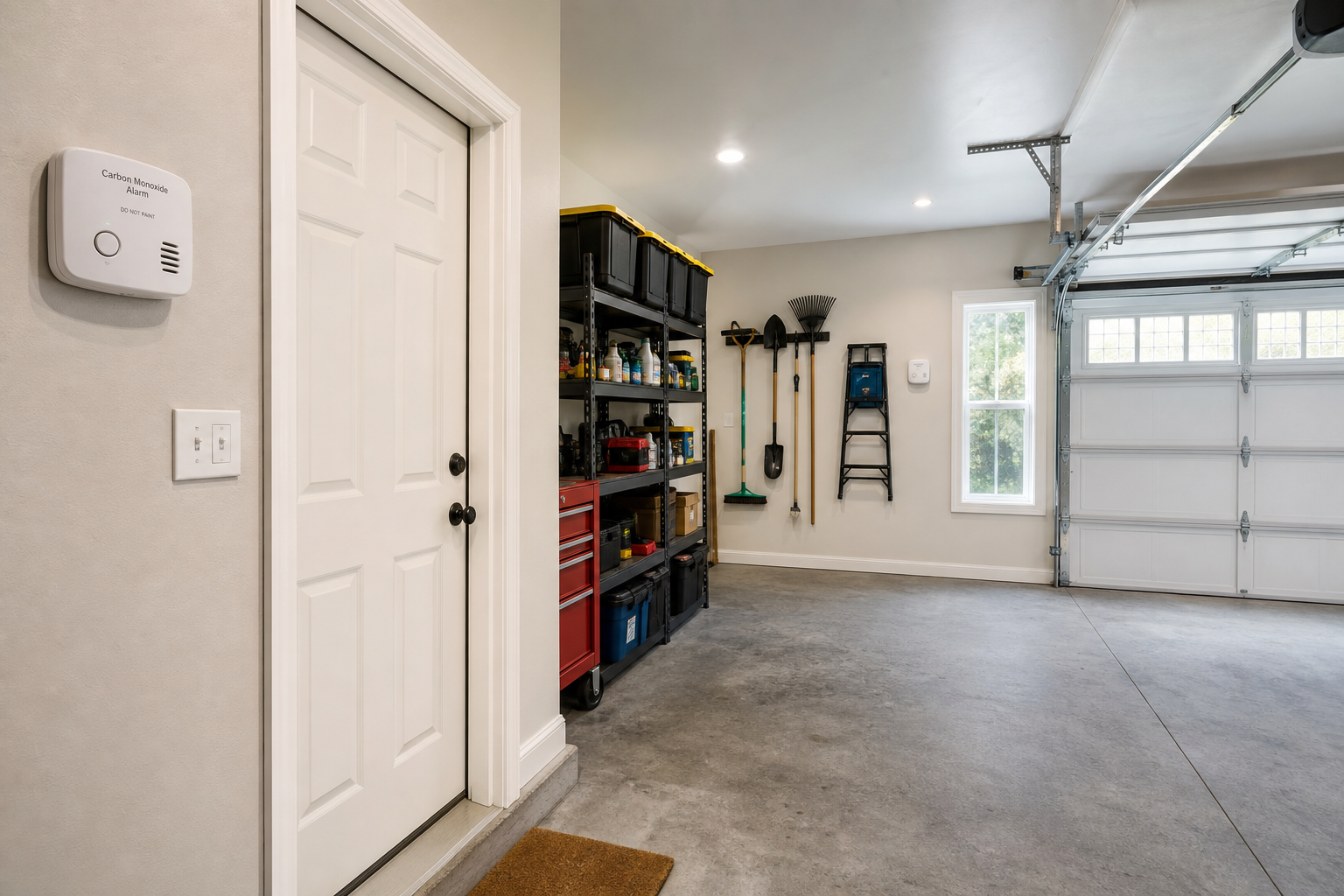
Install battery-powered CO detectors in every sleeping area and on every level of your home. Plug-in detectors fail during power outages, which is exactly when you’re running the generator. Battery models keep working.
Place detectors at breathing height, not near the ceiling. CO mixes with air rather than rising like smoke. Wall-mounted units should sit five feet off the floor. Bedside table placement works for portable models.
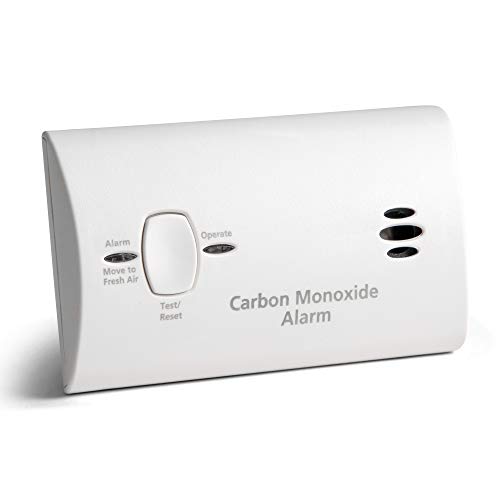
Battery Powered CO Detector
Essential safety device that continues working during power outages
Test detectors monthly and replace batteries annually, even if they still work. Most CO detectors have a seven-year sensor life. Check the manufacture date on the back of the unit. Replace detectors older than seven years regardless of whether they still chirp during tests.
Don’t rely on your existing smoke detectors. Combination smoke/CO units exist, but older models detect only smoke. Know which type you have. If you’re unsure, replace them with current combination models.
What to Do If the CO Alarm Sounds
Move everyone outside immediately. Don’t spend time investigating or gathering belongings. CO poisoning symptoms (headache, dizziness, nausea, confusion) develop quickly and impair your ability to escape.
Call 911 from outside. Emergency responders have meters that measure CO levels. They’ll ventilate your home and determine when it’s safe to re-enter. Don’t go back inside until authorities clear the space.
Shut off the generator if you can do so without entering an enclosed space. If the generator is outdoors and you can reach the shutoff switch from a safe position, kill the engine. If shutting it down requires entering a contaminated area, leave it running. Your life matters more than the equipment.
Seek medical evaluation even if symptoms seem mild. CO poisoning causes delayed effects. Brain and heart damage can occur hours after exposure. Medical-grade oxygen treatment prevents long-term complications.
Transfer Switch and Permanent Installation Options
Transfer switches let you connect a generator directly to your home’s electrical panel. They isolate the generator from the utility grid, preventing backfeeding that can kill utility workers and damage equipment. Transfer switch installation is a job for a licensed electrician.
Whole-house generators install permanently outside your home. These units run on natural gas or propane and start automatically during outages. They sit on concrete pads at least five feet from structures, with permanent exhaust systems that direct CO away from buildings.
Permanent installations cost more upfront but eliminate the safety risks of portable generators. No extension cords, no refueling during outages, no dragging equipment out of storage. The generator sits outside year-round in a weatherproof enclosure with proper exhaust routing built in.
Standby generators require annual maintenance. Oil changes, filter replacements, and battery checks keep them ready to run. Many manufacturers offer service contracts. A technician visits once a year, performs all maintenance, and verifies the system works correctly.
Common Mistakes That Kill
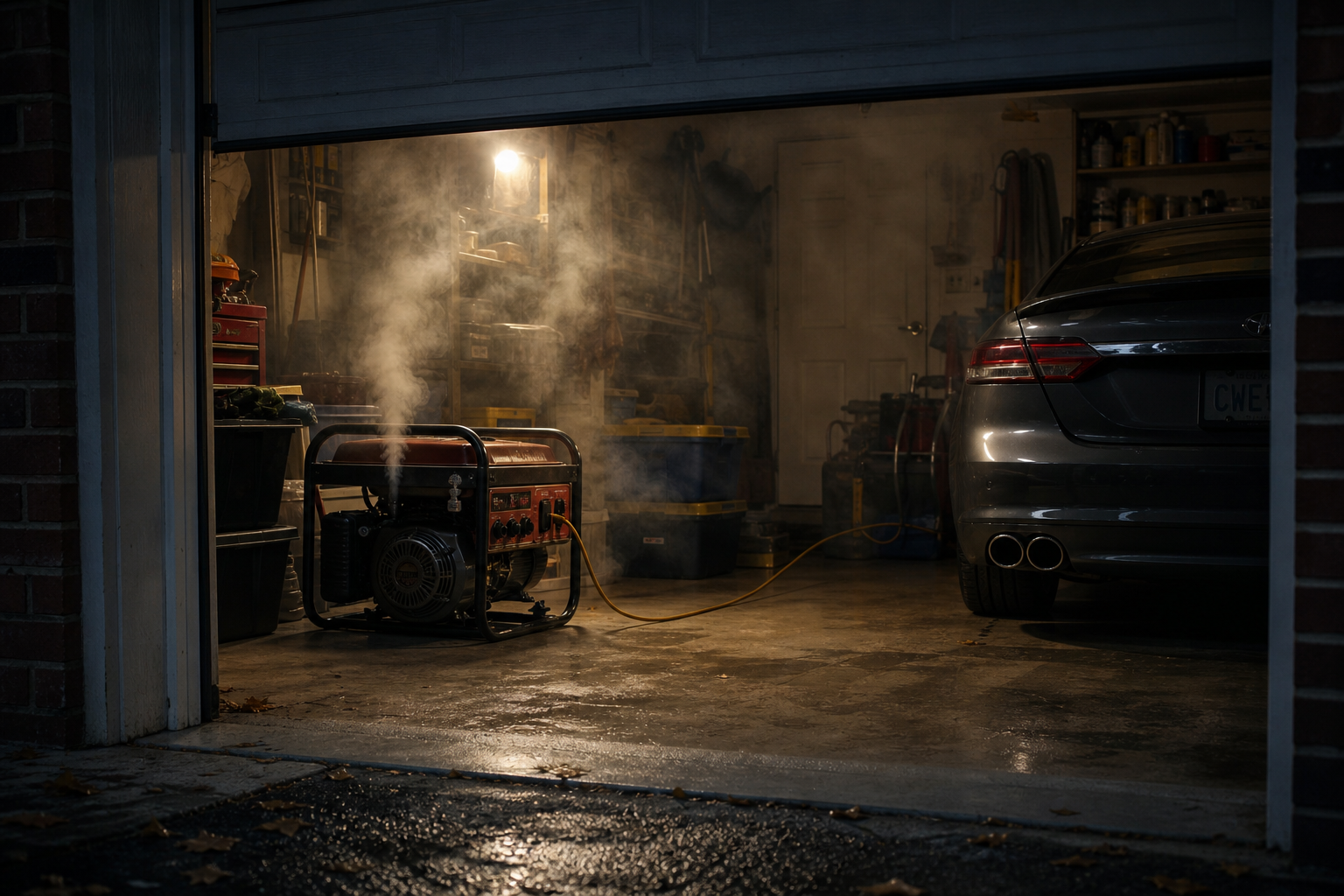
Running a generator in a garage with the door open is the most common fatal mistake. People assume the open door provides enough ventilation. It doesn’t. CO fills the garage faster than it escapes, then seeps into living spaces through shared walls and the interior door.
Bringing a generator into a garage or basement when weather turns bad causes deaths every winter. The impulse to protect expensive equipment overrides safety judgment. A competitively priced generator isn’t worth your life. Leave it outside under a cover.
Starting a generator inside to warm it up, then moving it outside, still produces dangerous CO levels. The few minutes of indoor runtime pump enough exhaust into the space to create a hazard that persists for hours.
Refueling a hot generator near the house creates fire risk. Gasoline spilled on a hot engine ignites. Vapor from the fuel can reach the hot exhaust manifold and flashes. Always shut the generator down, let it cool for 10 minutes, and refuel at least 10 feet from structures.
Extension Cord Safety
Use outdoor-rated extension cords sized for the load. Undersized cords overheat, melt insulation, and start fires. Match the cord gauge to the generator’s output and the distance to your house. A 25-foot run to power a refrigerator needs at least 12-gauge wire. Longer runs or higher loads require 10-gauge.
Inspect cords before each use. Cracked insulation, exposed wire, and damaged plugs create shock and fire hazards. Repair isn’t worth the risk. Replace damaged cords.
Keep connections dry. Water and electricity create electrocution risk. Elevate cord connections above ground level. Use weatherproof cord covers where the extension cord meets the generator and where it enters the house.
Never plug a generator into a wall outlet to backfeed power into your home’s wiring. This kills utility workers repairing lines. It also bypasses the breaker panel’s safety features, creating fire risk. Use a transfer switch or plug appliances directly into the generator.
Fuel Storage and Handling
Store gasoline in approved containers away from living spaces. Garages work if you keep quantities under five gallons and maintain ventilation. Larger quantities belong in a detached shed or outdoor storage cabinet. Gasoline vapors are heavier than air, so they accumulate in low spots and ignite from any spark source.
Stabilize stored fuel. Gasoline degrades in 30 days without treatment. Fuel stabilizer extends shelf life to 12 months. Add stabilizer when you fill the storage can, not months later. It can’t restore fuel that’s already degraded.
Rotate your fuel supply. Use stored gasoline in your car and refill the storage can with fresh fuel every few months. This keeps your generator fuel fresh and prevents the buildup of large quantities of old gas.
Mark fuel cans with the fill date. A piece of masking tape and a marker work fine. Discard gasoline older than 12 months, even with stabilizer. Old fuel clogs carburetors and causes hard starting.
Practical Planning Tips
Consider the seasonal timing of your generator purchase. Demand spikes before hurricane season and winter storms, driving prices up and reducing availability. Buy during off-peak months for better selection and pricing.
Research local building codes and permit requirements for permanent generator installations. Electrical work, gas line connections, and structural modifications often require permits and inspections. Working without required permits creates liability issues, insurance complications, and problems when selling the home.
Prioritize safety over convenience. The temptation to cut corners increases during stressful outage situations. Fatigue, cold, and frustration cloud judgment. Decide on your safety protocols before the power goes out. Write down your generator placement rules and keep the list with your equipment.
For those setting up dedicated workspace areas like a garage workshop, plan your generator placement to ensure adequate power while maintaining safe distances from your work areas.
Getting the Most From Your Project
Before installing a permanent generator or setting up your portable equipment for the first time, take a few minutes to photograph the setup from multiple angles. These “before” photos serve as a reference if you need to troubleshoot placement issues, help you remember cable routing when you store the equipment between uses, and provide documentation for insurance purposes if damage occurs during an outage.
Keep all receipts, warranty cards, and product data sheets for generator equipment in a dedicated folder or binder. Most generators come with warranties that require proof of purchase. When a repair or replacement is needed three years from now, having that documentation readily available can save you the full cost of replacement parts.
Having the right supplies on hand prevents mid-project delays. Make sure you have proper tool organization in place to keep safety equipment and maintenance supplies easily accessible.
Making the Most of Your Garage
Every safety improvement builds on the ones before it. A well-organized, properly maintained garage serves as a functional extension of your home, not just a place to park. Establishing clear protocols for generator use and storage protects your family while keeping your backup power plan practical and ready to deploy.
Start with the basics and build from there. Proper CO detector coverage, adequate outdoor generator placement, safe fuel storage, and organized equipment access form the foundation that makes power outages manageable rather than dangerous. Skipping these fundamentals creates risk that no amount of expensive equipment can overcome.
Keep a running list of power outage lessons learned. After each outage, note what worked, what didn’t, and what you wish you’d had on hand. This list guides future equipment purchases and procedure updates. The goal is a smoother response next time.
Consider improving your garage’s ventilation system overall. Proper garage roof ventilation helps with year-round air quality and makes your space safer for equipment storage and maintenance activities.
Frequently Asked Questions
What mistake should I avoid above all?
Running the generator in the garage, even briefly, even with the door open. CO buildup kills faster than you’d expect, and it seeps into your house through walls and doors.
How far from the house is safe?
Minimum 20 feet from any door, window, or vent, measured from the exhaust outlet. Point the exhaust away from the house. More distance is always better.
Can I use an exhaust extension to run the generator closer?
Extensions help with placement flexibility but don’t make indoor operation safe. Leaks at connections still release CO. Always operate outdoors.
How long will stored gasoline last?
30 days untreated, up to 12 months with stabilizer. Date your fuel cans and rotate the supply regularly.
This article contains affiliate links. We may earn a small commission at no extra cost to you.
