

As an Amazon Associate I earn from qualifying purchases.
A fresh coat of paint on your garage door is one of the fastest ways to boost your home’s curb appeal without spending a fortune. I’ve seen it happen on my own street here in Central Florida: one weekend project and the whole front of the house looks brand new. In this article I’m sharing 15 garage door paint ideas grouped into four categories: solid color refreshes, faux wood techniques, accent and trim painting, and weather-resistant finishes.
Solid Color Refreshes
Sometimes the simplest move makes the biggest difference. A single bold or neutral color applied cleanly across the entire door surface can modernize a dated facade without any special techniques. The key is choosing the right paint for the job. Before you pick up a brush, check out my guide to the best garage door paint options so you know what finish and formula will hold up outdoors. If you want more color inspiration beyond the door itself, I also have a roundup of cool garage paint ideas that covers the whole space. Solid colors work on steel, aluminum, and fiberglass doors and are the easiest category to DIY in a single afternoon.
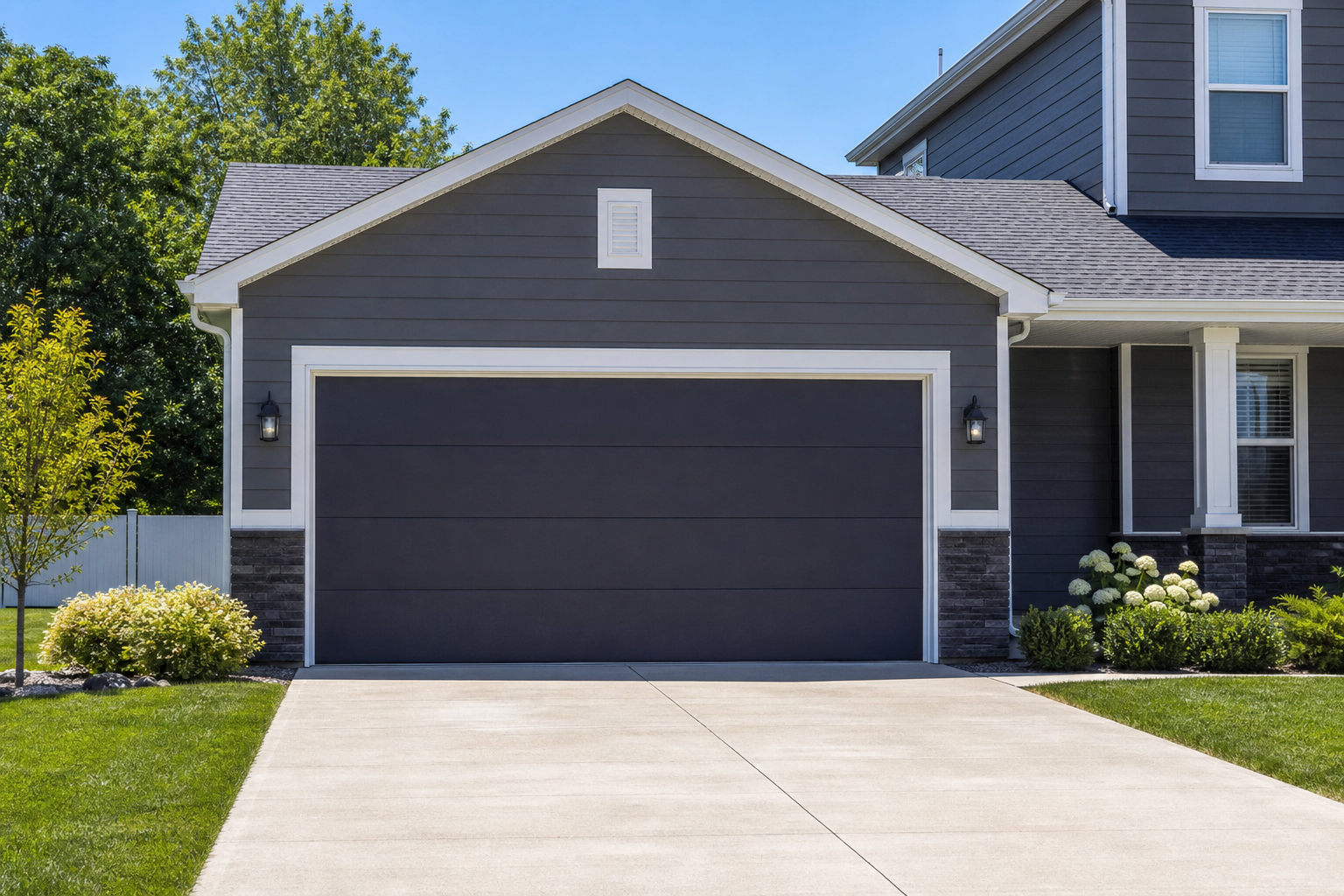
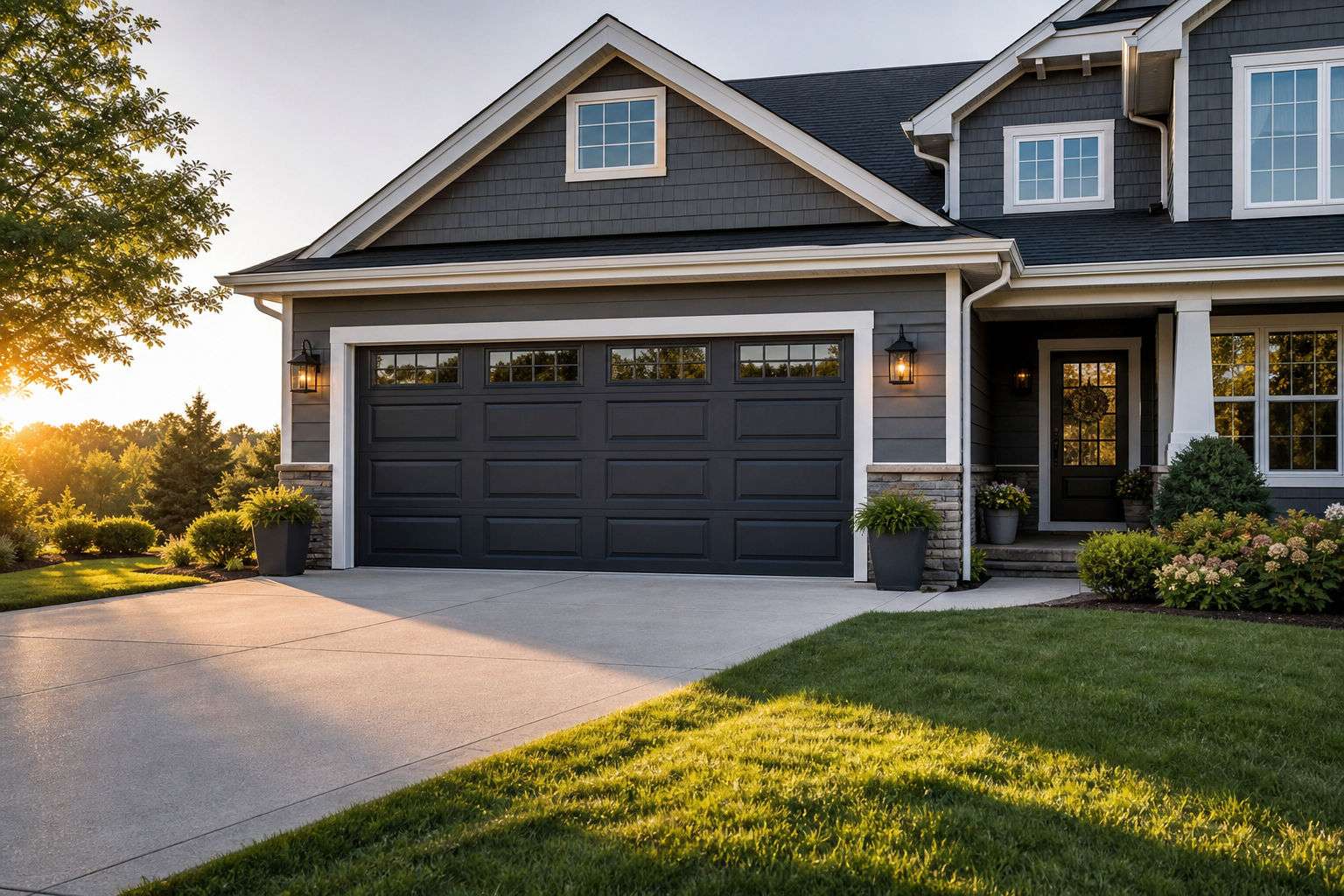
Charcoal gray has become one of the most popular solid colors for garage doors because it pairs with almost every exterior color scheme. This deep, cool tone reads as almost black in shade but shows its true gray in full sunlight. It works especially well against white or light gray house siding.
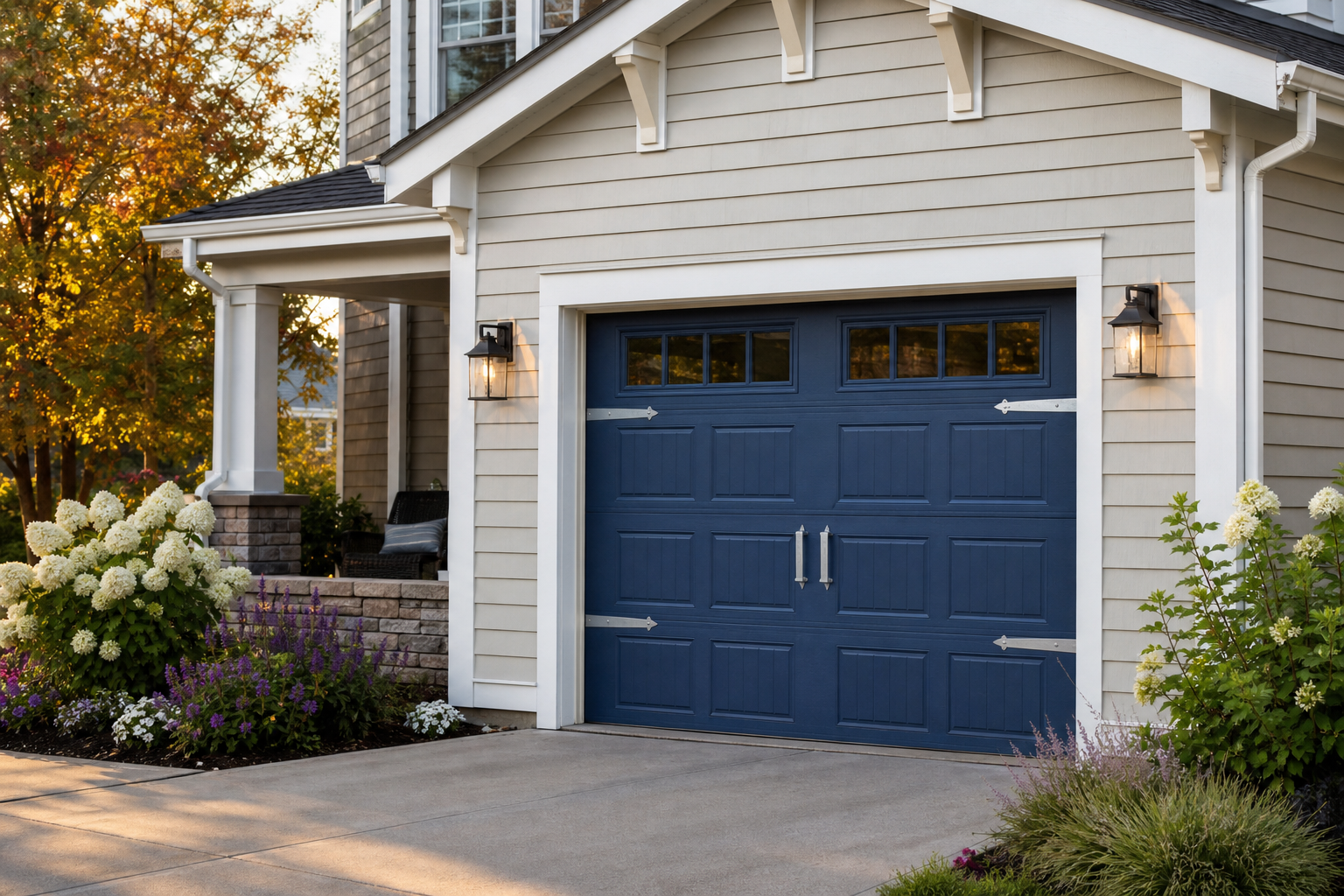
Navy blue on a raised-panel door brings a classic, almost nautical confidence to a craftsman or colonial exterior. The deep blue plays nicely against cream or tan siding and looks sharp with silver or brushed nickel hardware. If you’re thinking about updating the hardware at the same time, I’ve got a full walkthrough on painting your garage door hardware to match.
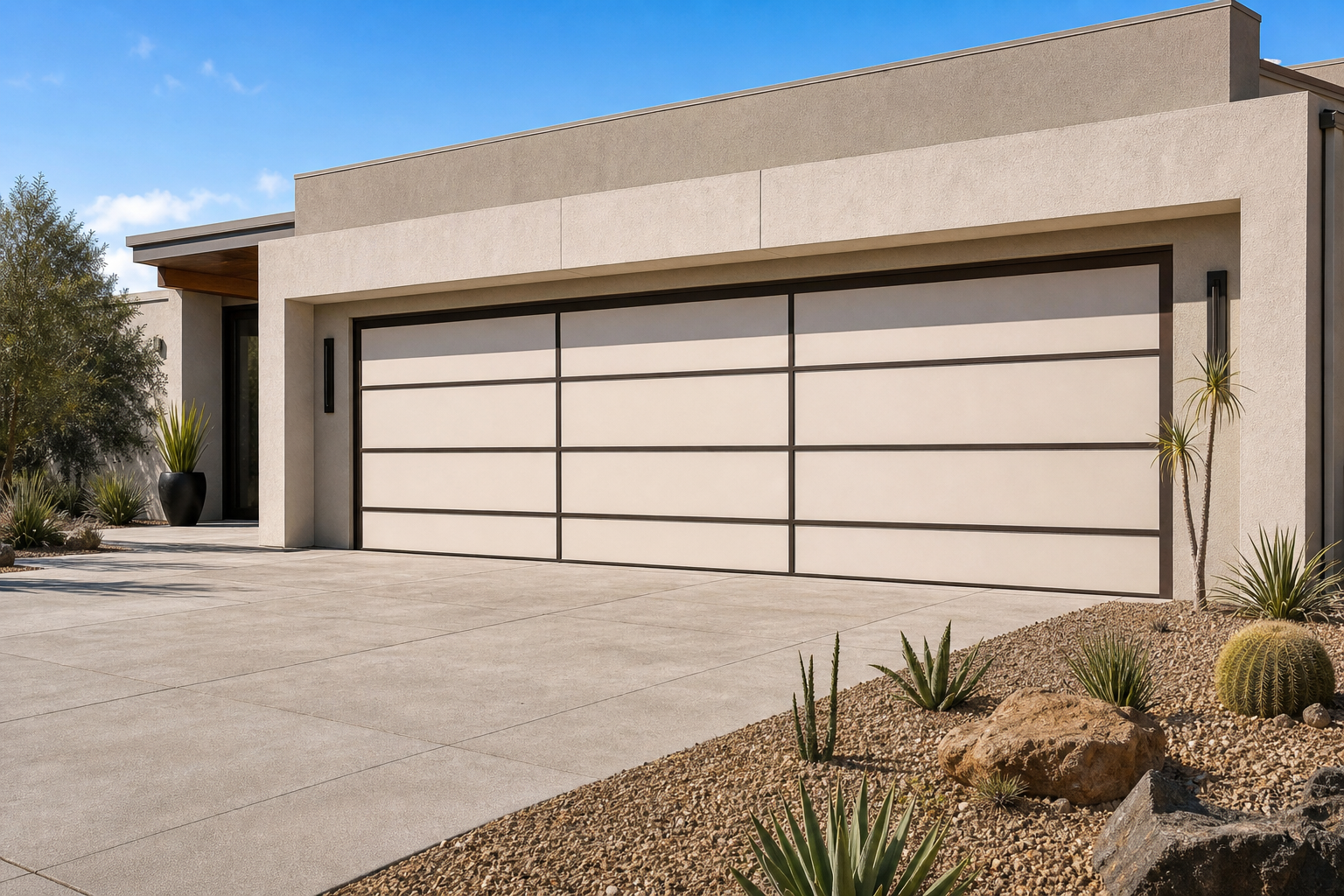
Off-white or creamy white keeps a modern home feeling airy and open rather than stark. On a wide three-car door with flush panels, it reads clean and intentional rather than simply unpainted. This shade also shows less yellowing over time compared to bright white, which matters a lot in a sunny climate like mine.
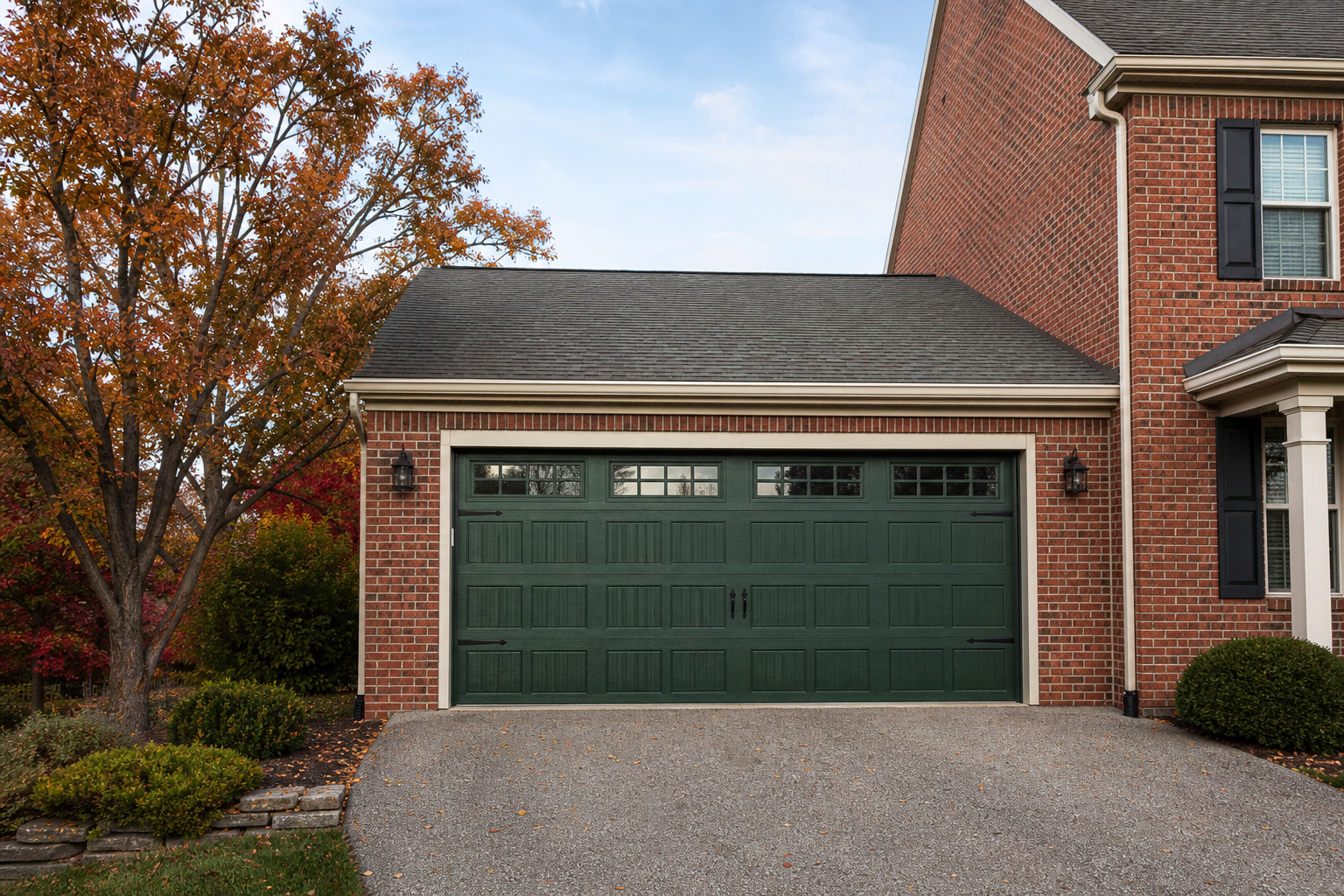
Forest green against red brick is a combination that feels timeless without being predictable. The black iron strap hinges tie into the door color while adding a traditional detail. If your door already has windows or you’re thinking about adding them, the garage door window insert installation guide on this site walks you through the whole process.
Faux Wood Techniques
Faux wood finishes let you get the warm, natural look of a wood garage door on a steel or fiberglass door that actually holds up to the elements. The technique usually involves a base coat in a warm tan or honey tone, followed by layered glaze work with a graining tool or crumpled cloth to mimic wood grain. It takes more patience than rolling on a solid color, but the results genuinely fool people at street distance. If you love the idea of wood-look surfaces in your garage, you might also want to browse wood garage floor ideas for a cohesive look inside and out. The good news is that a faux finish applied over a properly primed steel door will last for years with the right topcoat.
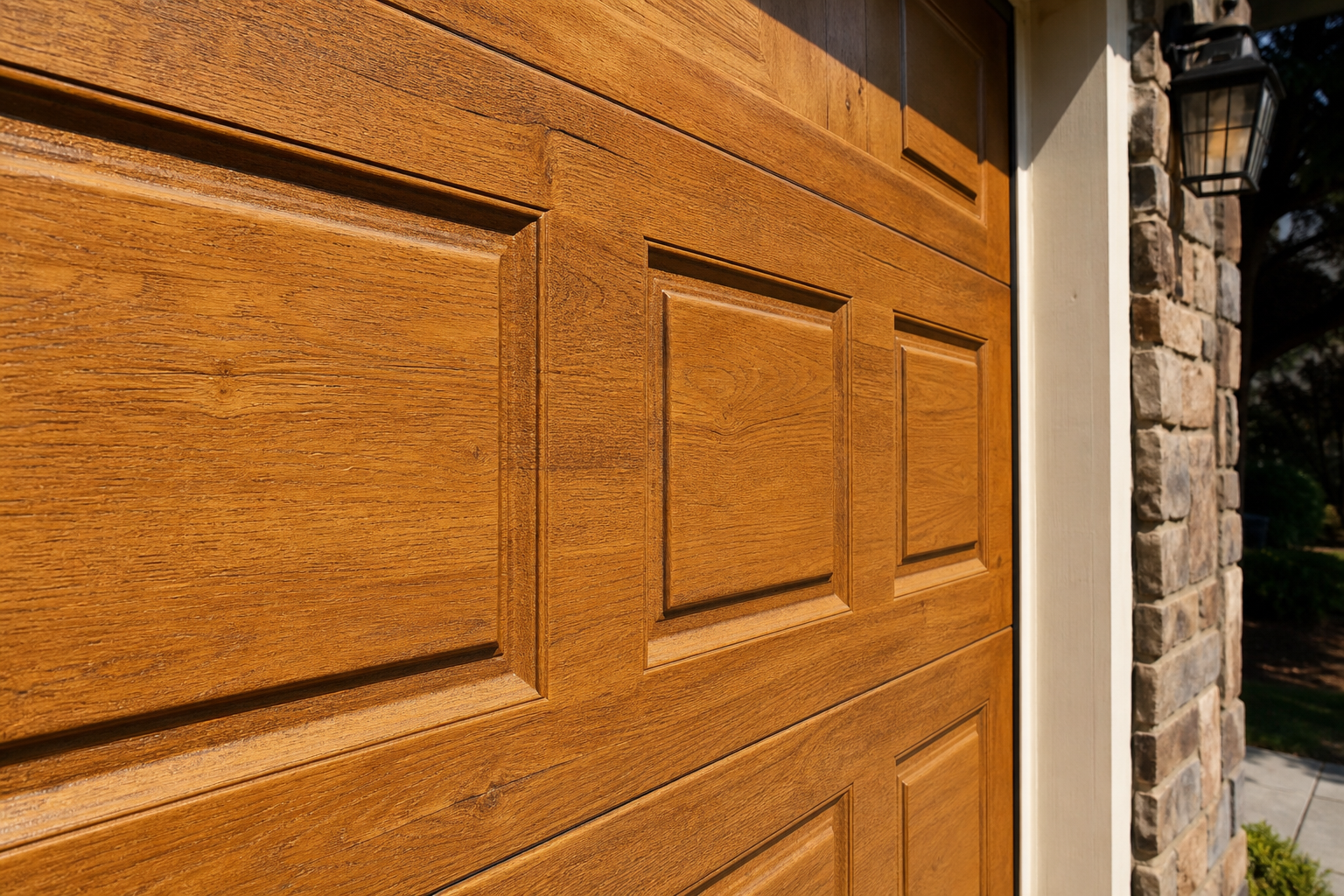
A golden oak faux finish is the sweet spot for homeowners who want warmth without going too dark or too rustic. The layered glaze technique creates depth that catches light differently at different times of day, making the door look genuinely three-dimensional. This tone pairs beautifully with stone or brick accents on the house facade.
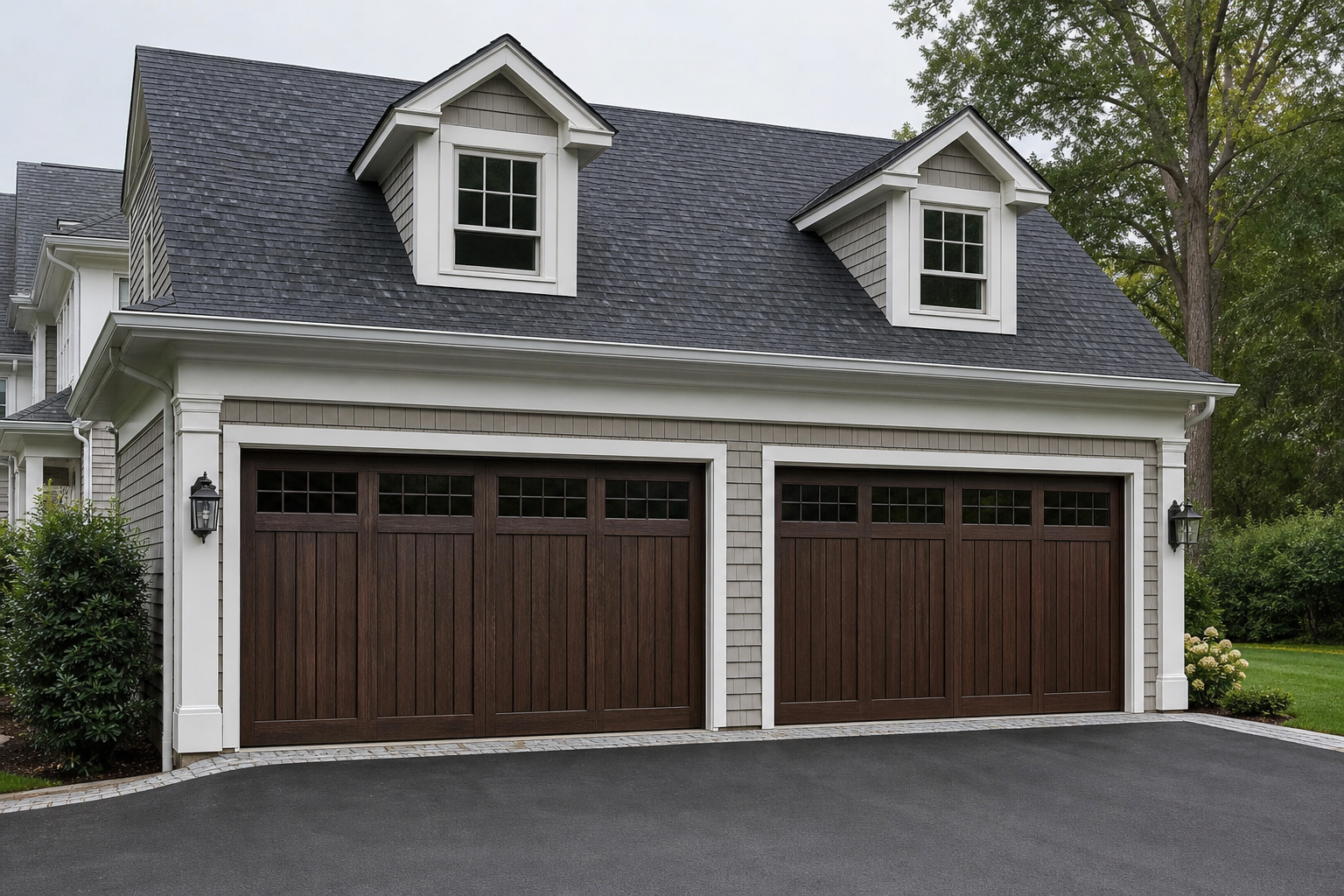
Dark walnut faux grain on a carriage-house door adds richness and drama without the maintenance headache of real wood. The board-and-batten panel layout enhances the illusion because the vertical lines already mimic how planked wood would be laid. White columns and trim provide the contrast needed to make the dark finish pop.
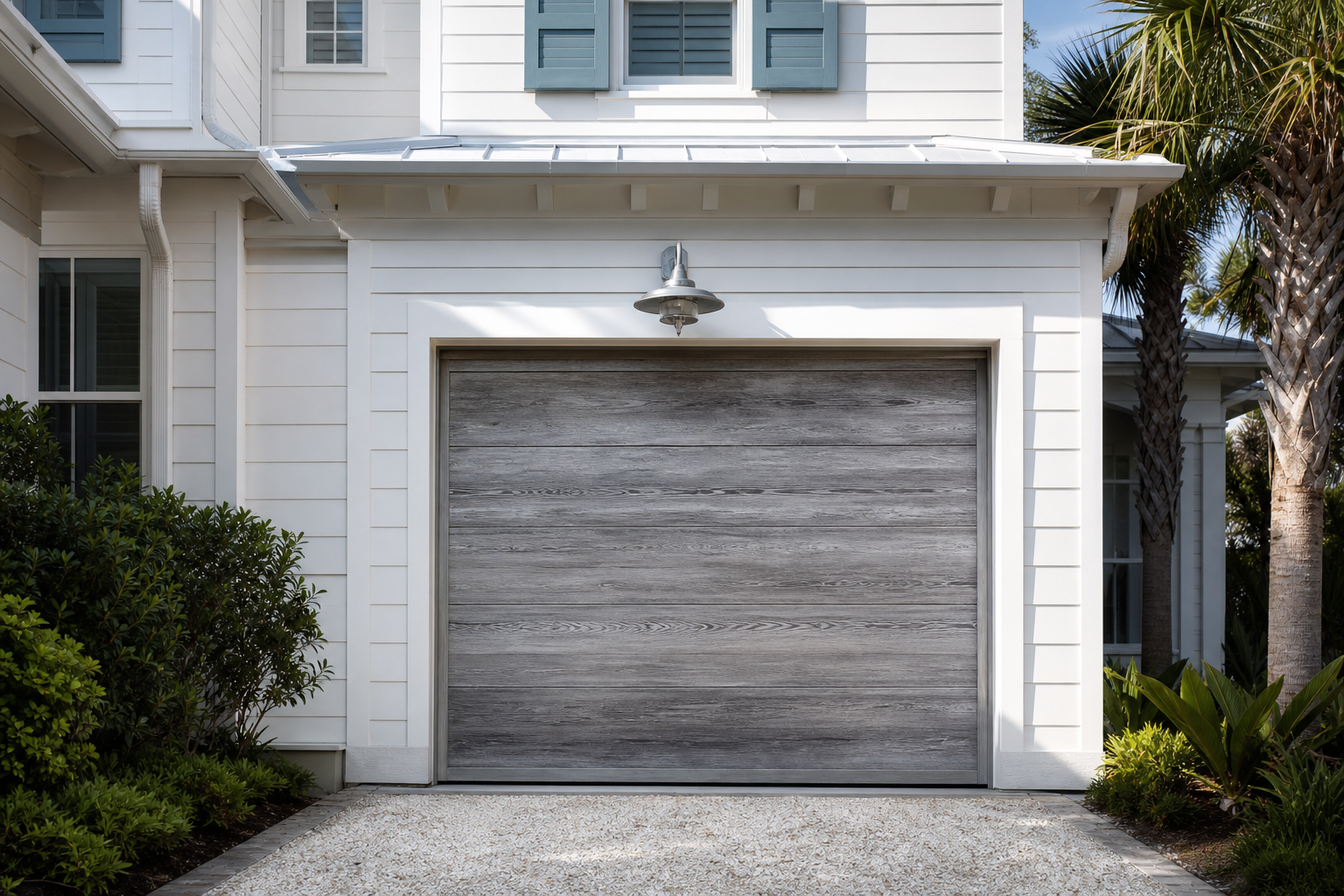
Driftwood gray is a softer take on faux wood that suits coastal and farmhouse exteriors perfectly. The finish uses a silvery base with warm brown undertones dragged through it to suggest weathered, sun-bleached wood. It gives the door real character without looking worn out or neglected.
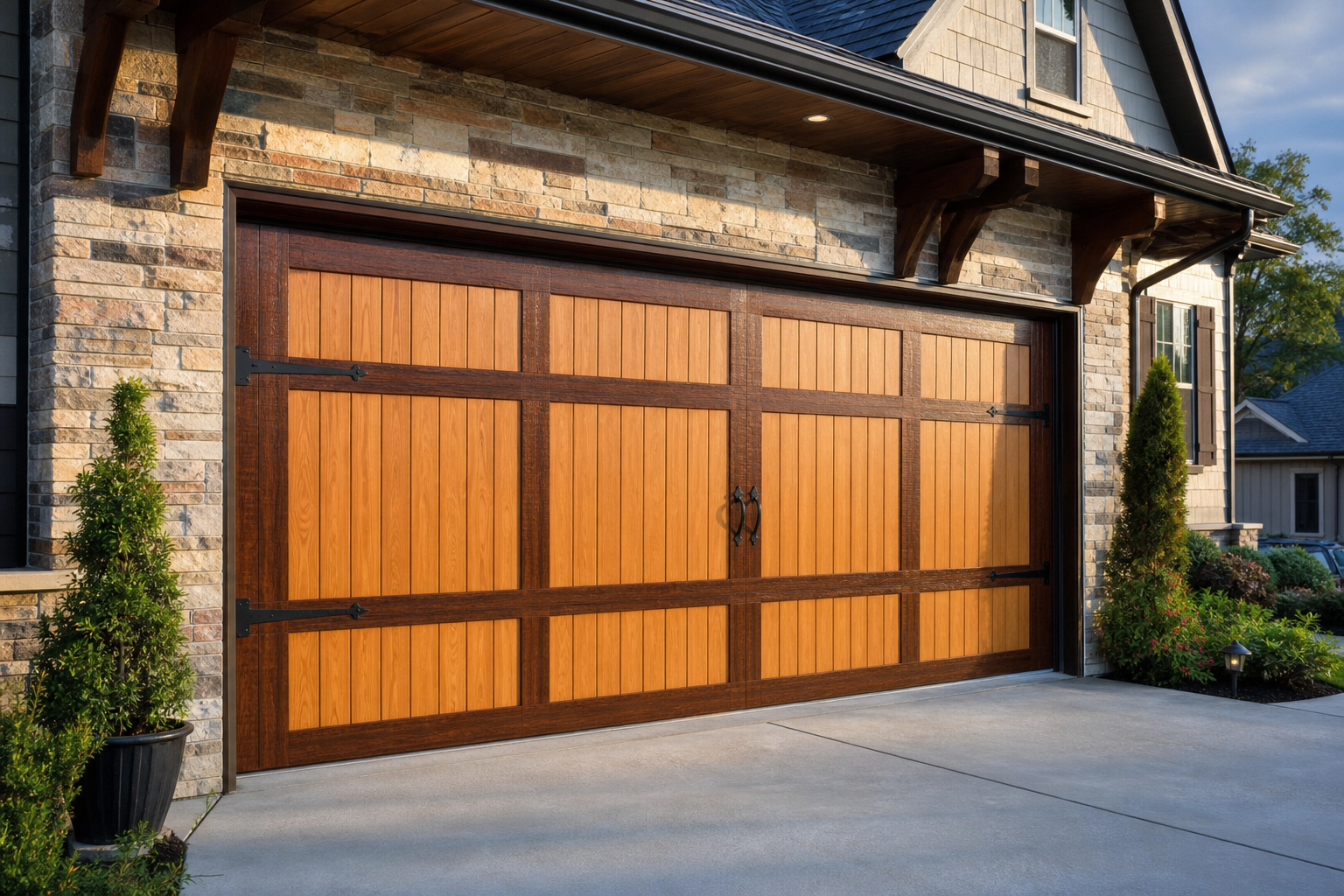
Using two faux wood tones on the same door creates a furniture-quality look that feels custom-built. The lighter cedar on the main field draws the eye in while the darker mahogany border anchors the whole design. It’s the kind of detail that makes a garage door look expensive, and I have a full guide on other tricks to make your garage look expensive without the big price tag.
Accent and Trim Painting
Painting just the trim, panel borders, or accent sections of your garage door is a great way to add visual interest without committing to a full repaint. This approach works especially well on raised-panel and carriage-house doors where the geometry naturally creates zones you can highlight with a contrasting color. A two-tone paint job also lets you tie the door into both your house’s main color and its trim color at the same time. When you’re ready to take it further, adding decorative hardware is a natural next step. My guide on installing garage door decorative hardware pairs perfectly with an accent paint job. Think of the paint and the hardware as a team rather than separate projects.
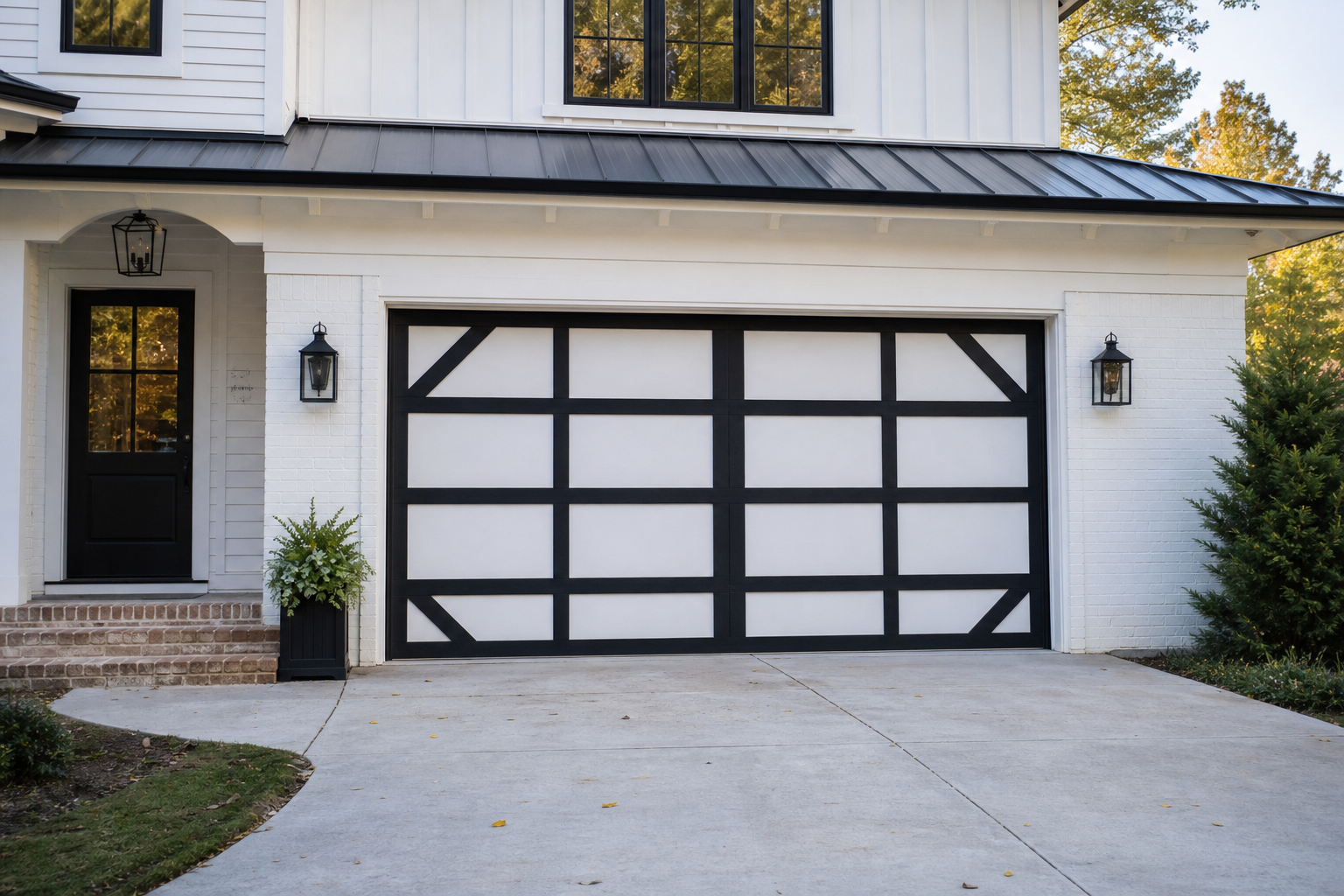
White body with matte black trim is the modern farmhouse combination that never seems to go out of style. Painting only the raised border lines and crossbeams in black creates a graphic grid effect that looks intentional and sharp. It also lets the door echo a black front door or shutters without making the whole facade feel heavy.
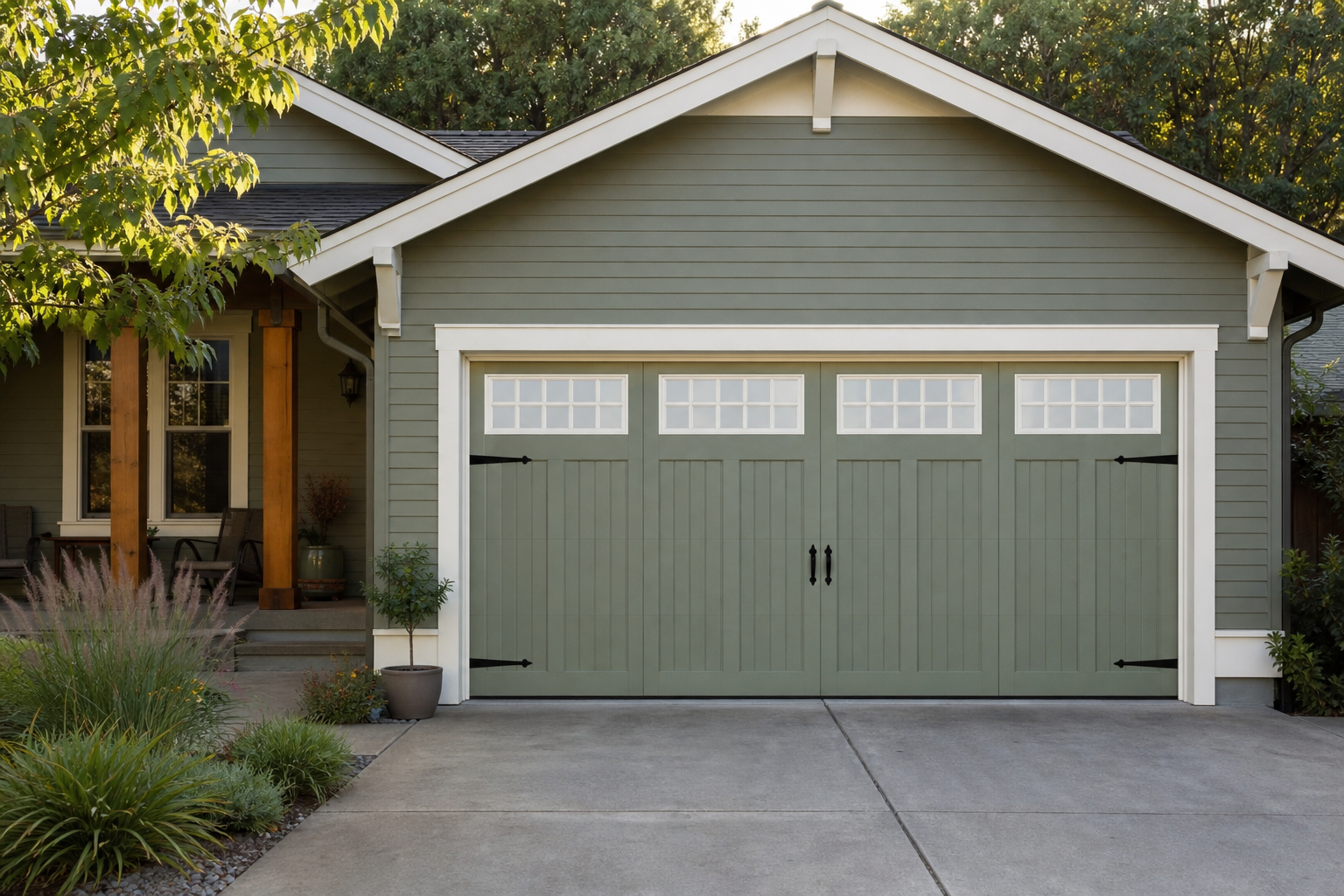
Sage green panels with white trim molding bring a soft, garden-fresh energy to a craftsman bungalow. The white accent on the borders mirrors the trim work on the house itself, so the door feels like a natural extension of the architecture. Black iron hinges pull the two colors together and add a handcrafted feel.
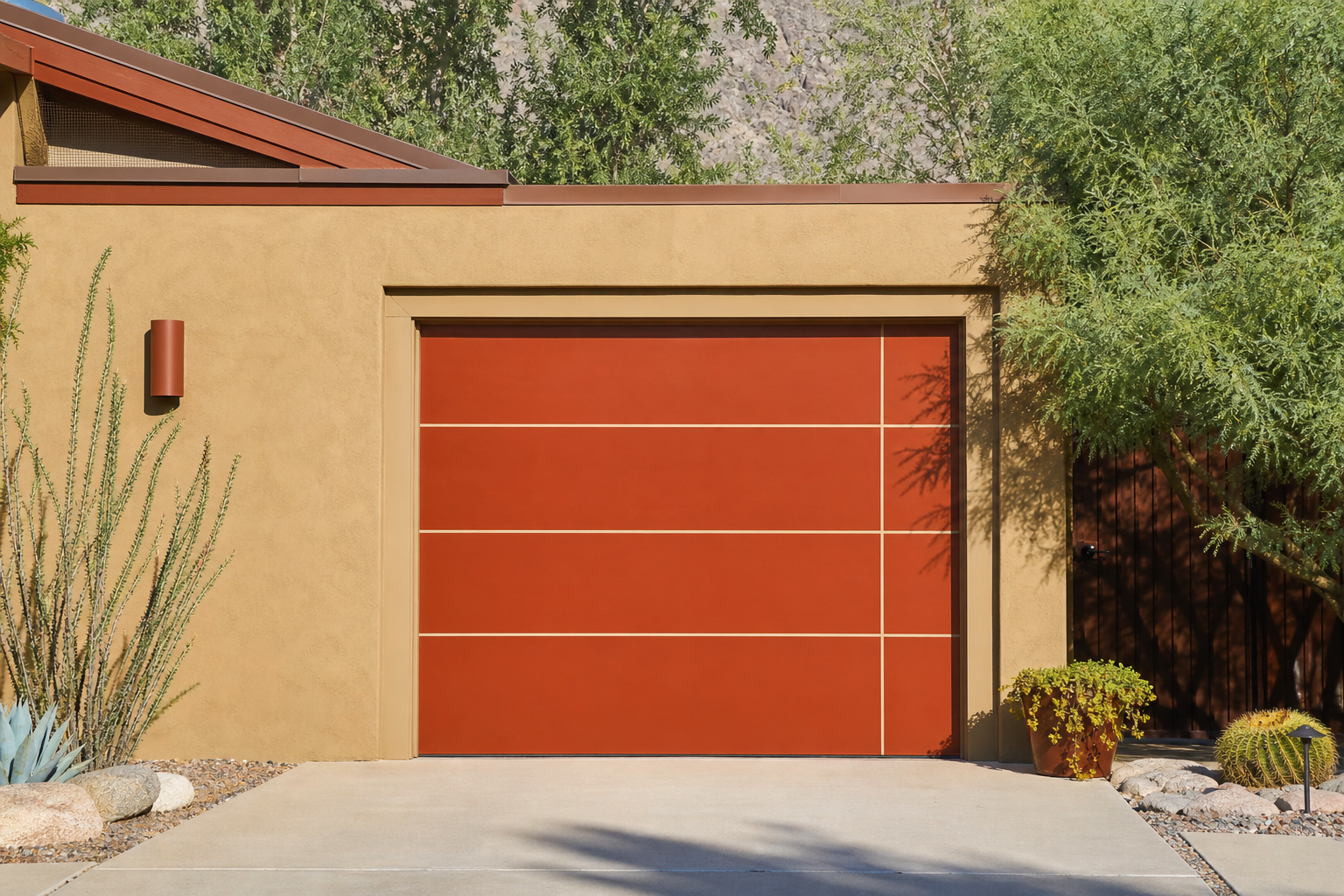
Terracotta with cream trim accents suits a mid-century or southwestern exterior in a way that feels earthy and considered. The thin cream lines outlining the flat panels add structure without weight. This palette tends to glow in the afternoon sun, which is something I genuinely love about it in a warm climate.
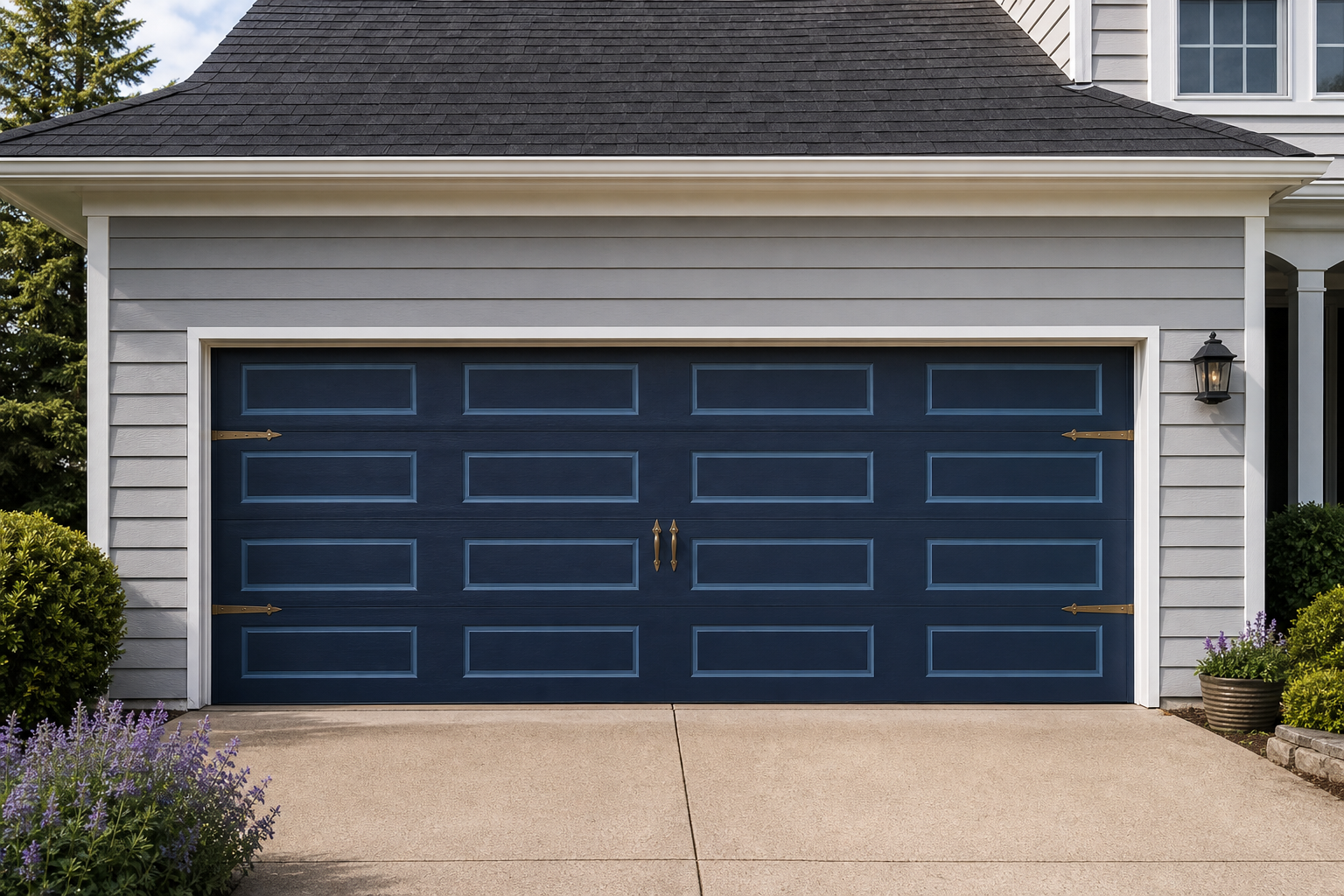
Using two shades of the same color family on a door is a subtle technique that rewards up-close attention. Here, deep navy on the raised frame and a lighter steel blue in the recessed panels creates shadow and dimension even on a flat day. Brass hardware ties in warmth and prevents the all-blue composition from feeling cold. For more color direction, the garage door color trends for 2026 post shows where palettes like this are heading.
Weather-Resistant Finishes
Down here in Central Florida, I learned quickly that not every paint can handle intense UV exposure, humidity, and the occasional hurricane-force rain. A weather-resistant finish is not optional, it’s the difference between a paint job that lasts two years and one that lasts ten. The right products include 100% acrylic exterior paints, elastomeric coatings, and specialized primers designed to bond to metal and resist moisture intrusion. If you’re in a storm-prone area, it also pays to think about overall door durability alongside your paint choice. My article on protecting your garage door during a hurricane covers the full picture. Choosing a weather-resistant finish is also where color matters less and preparation matters most, so don’t skip the primer.
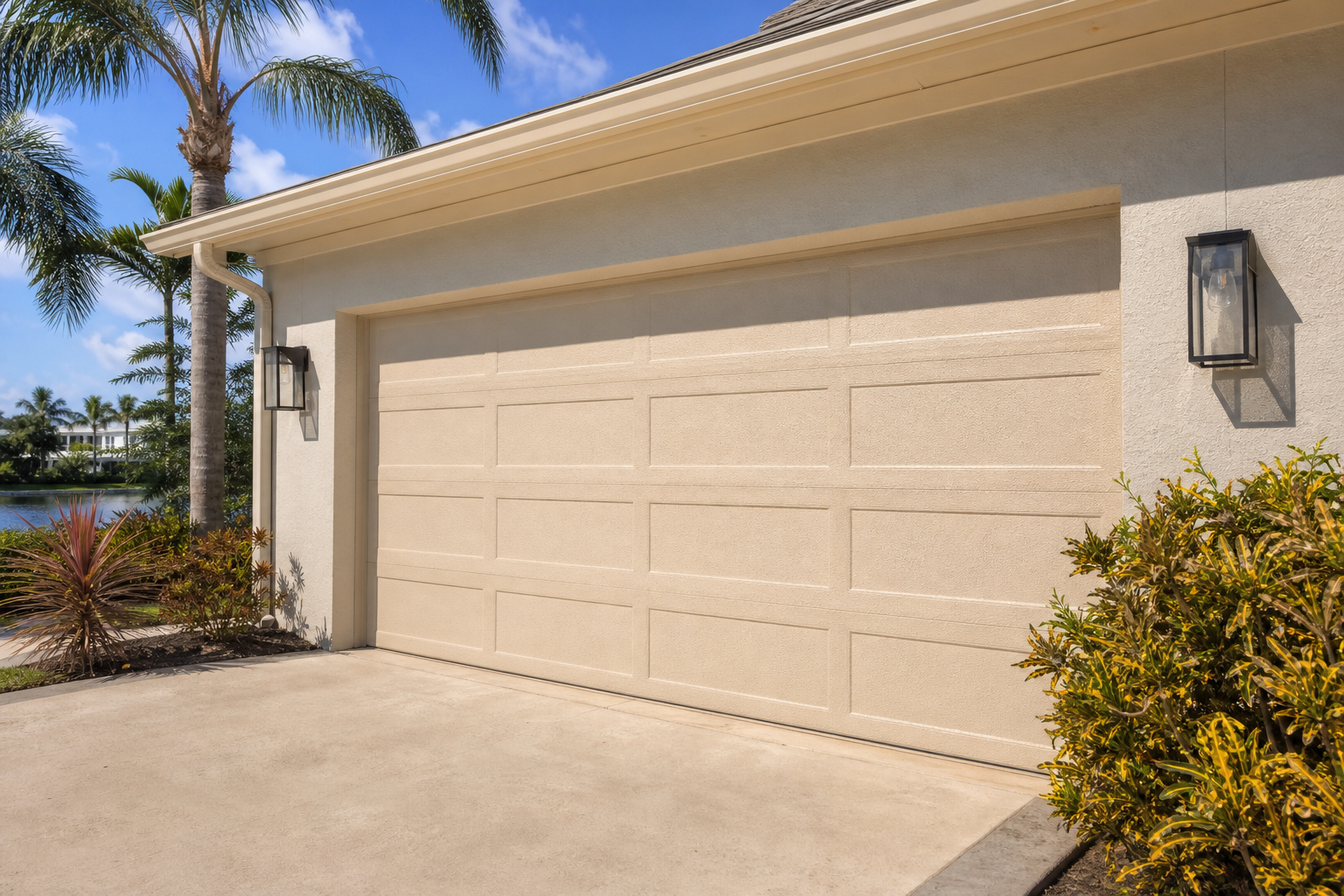
Elastomeric paint applied in pale sandy beige gives coastal doors a thick, waterproof barrier that bridges small cracks and flexes with the door as temperatures swing. The slight texture you see in full sunlight actually helps the surface shed water faster than a gloss finish. If you’ve had peeling issues in the past, the guide to why garage paint peels and how to fix it explains the prep steps that prevent it from happening again.
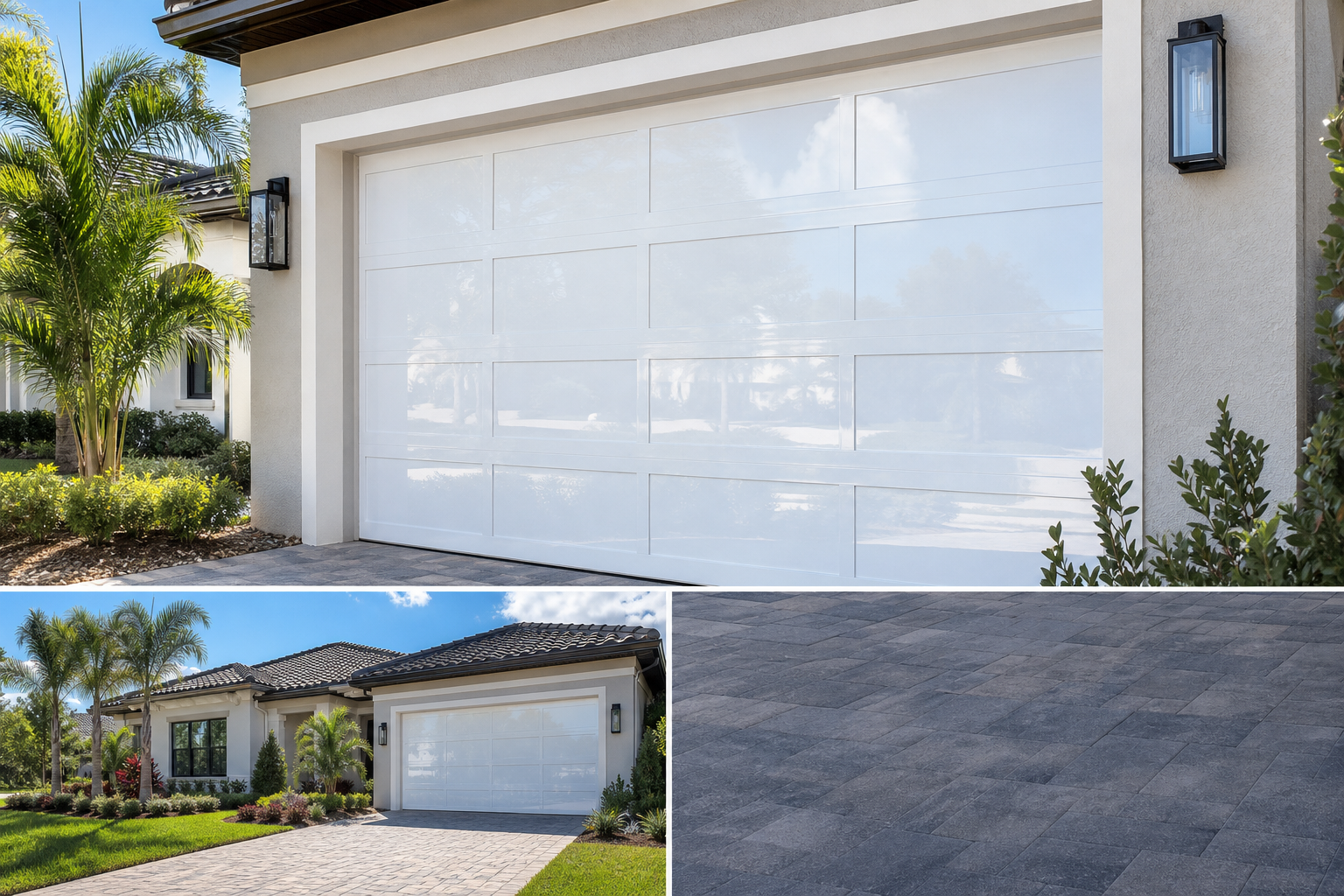
A high-gloss UV-resistant formula in bright white is a smart choice for doors that face direct afternoon sun because the reflective surface bounces heat away rather than absorbing it. The gloss level also makes the door easier to rinse clean after storms. It is a finish that looks equally sharp on a brand new door and on a properly prepped older one. If you’re also exploring whether interior vs. exterior garage paint makes a difference for your project, that article breaks down exactly why it does.
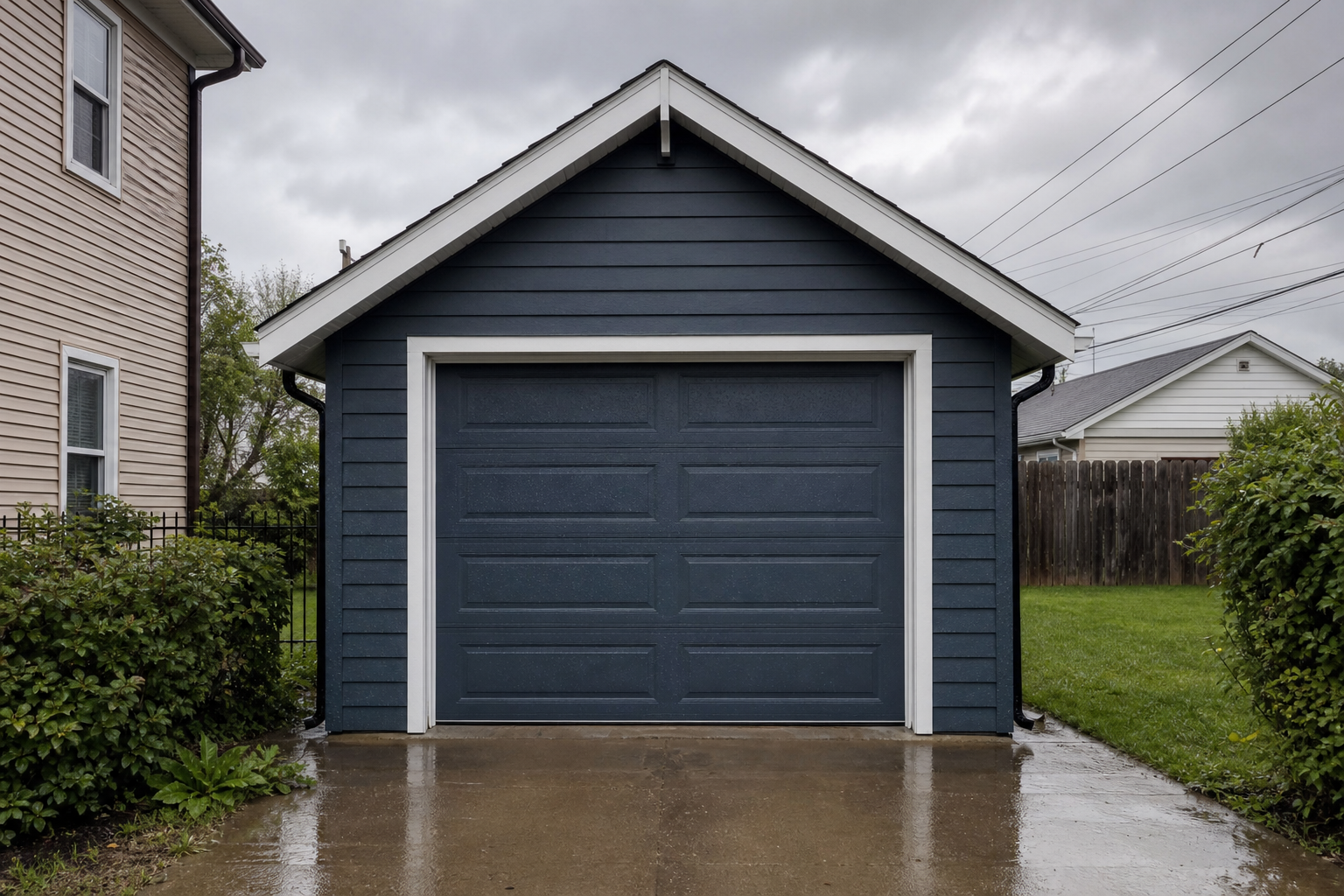
A matte rust-inhibiting topcoat in dark slate blue handles moisture without the glare of a glossy finish, which can be an advantage on older steel doors where surface imperfections would show through a sheen. The dark tone absorbs and disperses heat gradually, and the matte surface makes small dings and dents far less visible. Pairing this kind of paint with proper door seals is equally important. The article on why garage door seals fail is worth reading before you button up any exterior painting project.
