

As an Amazon Associate I earn from qualifying purchases.
The trim around your garage door does more work than most people realize. It sets the tone for your whole facade, and the right framing can make even a basic door look like it belongs on a much more expensive home. In this article I’m covering four approaches to garage door trim: classic molding frames, modern minimal trim, contrasting color borders, and decorative hardware accents.
Classic Molding Frames
Traditional molding profiles have been dressing up garage doors for decades, and they still hold up beautifully. The key is choosing a profile that matches the architectural language of your house , a craftsman bungalow calls for something different than a colonial. Most classic trim uses primed MDF or pine boards combined with a crown or casing profile at the top corners. If you’re planning to tackle this yourself, my guide on how to install garage crown molding walks through the whole process. When it’s done right, the framing gives the door a sense of weight and importance that flat boards just can’t match.
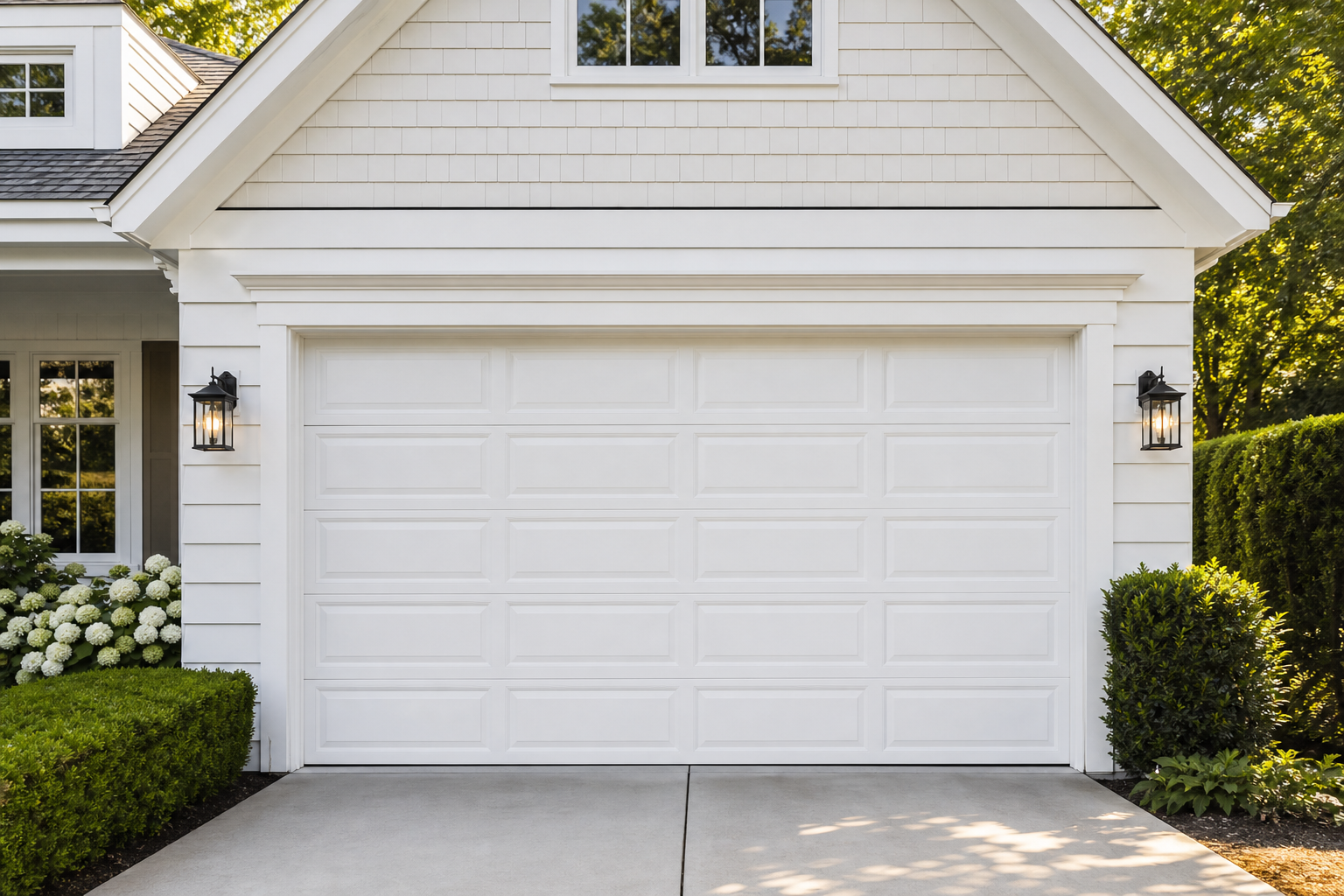
Wide flat casing boards paired with a simple crown header give this white raised-panel door a finished, architectural look. The trim is painted to match the door and house trim, so everything reads as one cohesive unit. It’s a low-cost upgrade that genuinely makes the facade feel more polished , exactly the kind of detail covered in my guide on how to make your garage look expensive.
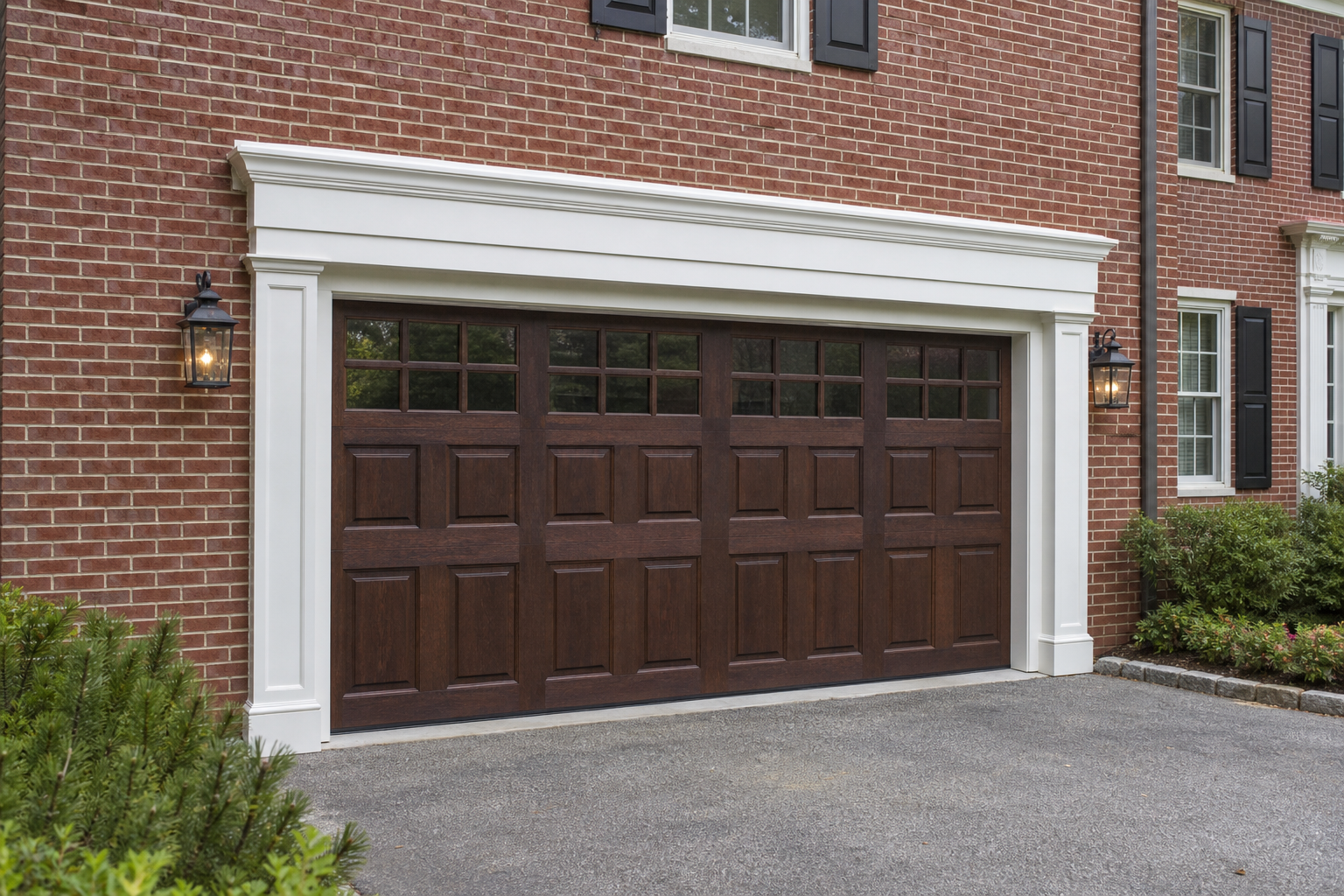
Pilaster-style trim columns and a formal entablature header give this colonial entry serious curb appeal without touching the door itself. The high-contrast white trim pops sharply against the warm brick and dark door. This kind of framing works especially well on symmetrical facades where the garage is centered under a gable.
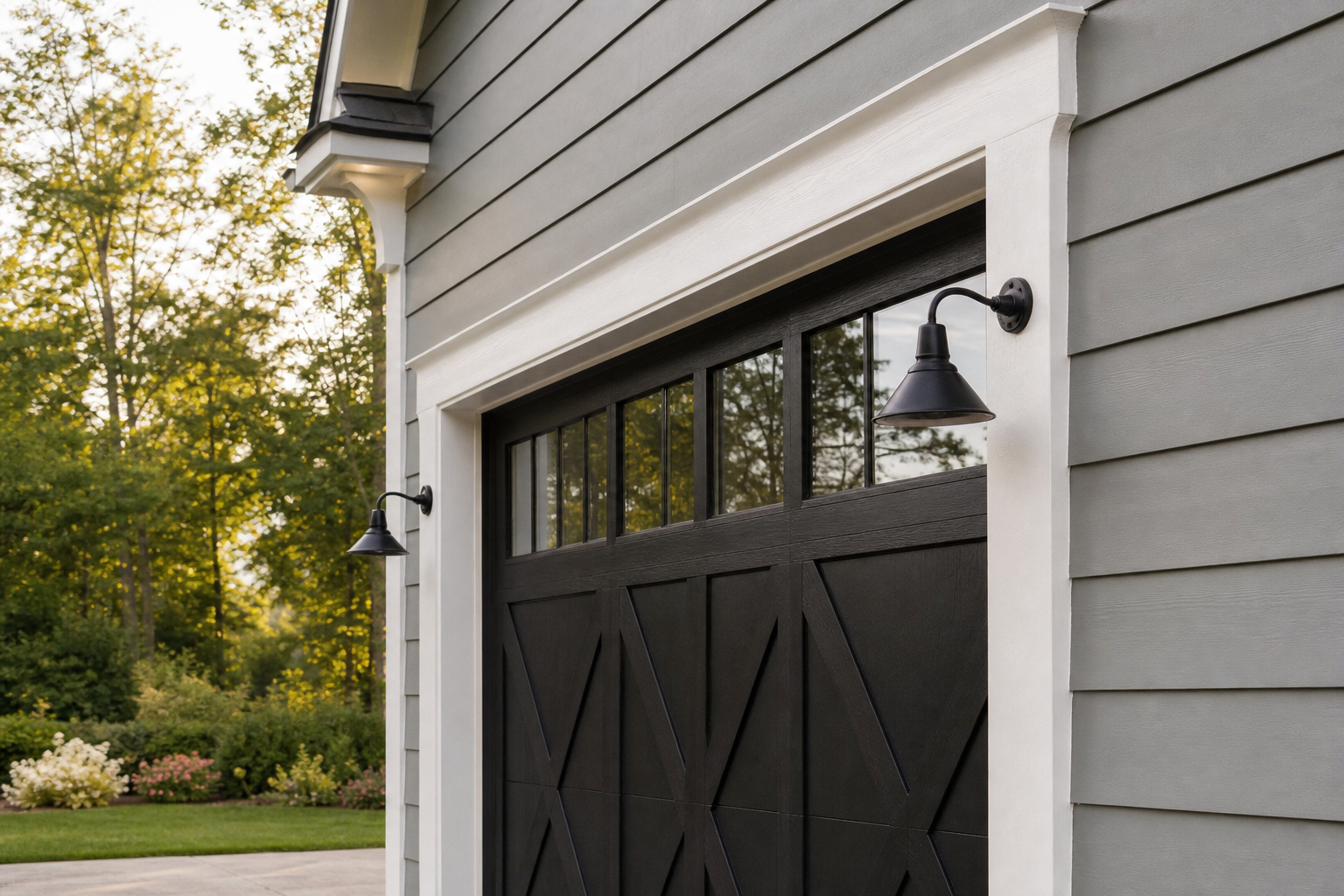
The ogee edge on these wide white boards adds just enough shadow line to read as real millwork from the street. Against a black carriage door and gray siding, the white trim acts as a strong visual anchor. Coach lights mounted directly on the trim boards rather than the siding keeps the whole assembly looking intentional.
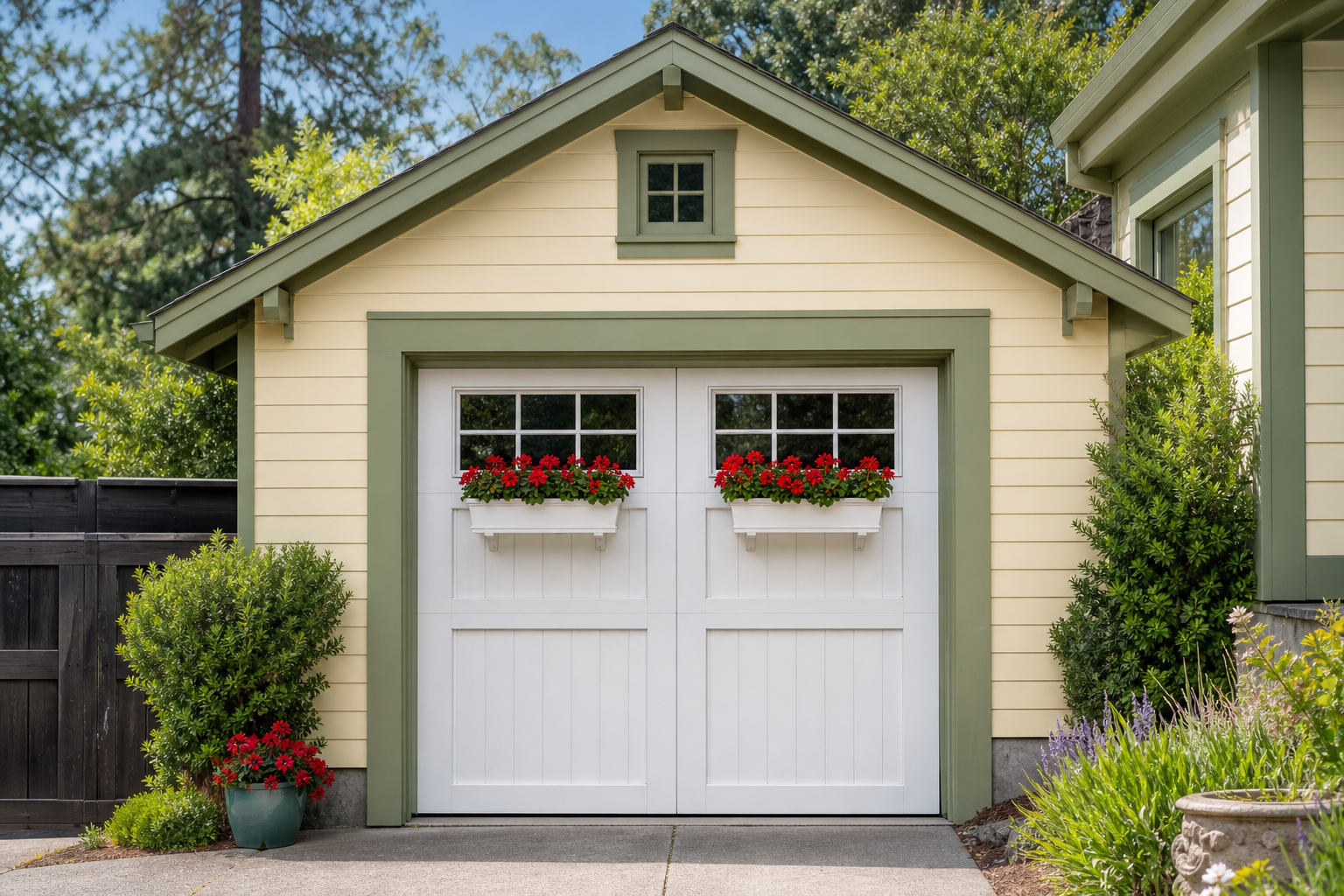
Painting the trim a different color from both the door and the siding is a simple way to add depth to a cottage facade. The sage green backband casing here creates a layered look that ties the garage into the window boxes and landscaping. If you’re thinking about color choices like this, my roundup of cool garage paint ideas has a lot of good starting points.
Modern Minimal Trim
Clean lines and tight reveals define modern minimal trim. The goal is framing the door without drawing attention to the trim itself , the door and facade do the talking, and the trim just keeps everything looking intentional. Aluminum, steel, and fiber cement are common material choices because they hold a crisp edge and don’t require much maintenance. Profiles are typically flat, narrow, and flush, sometimes with a small reveal cut instead of a raised face. If you’re pairing this style with a new door, it’s worth checking the latest garage door color trends for 2026 to make sure your trim and door work together.
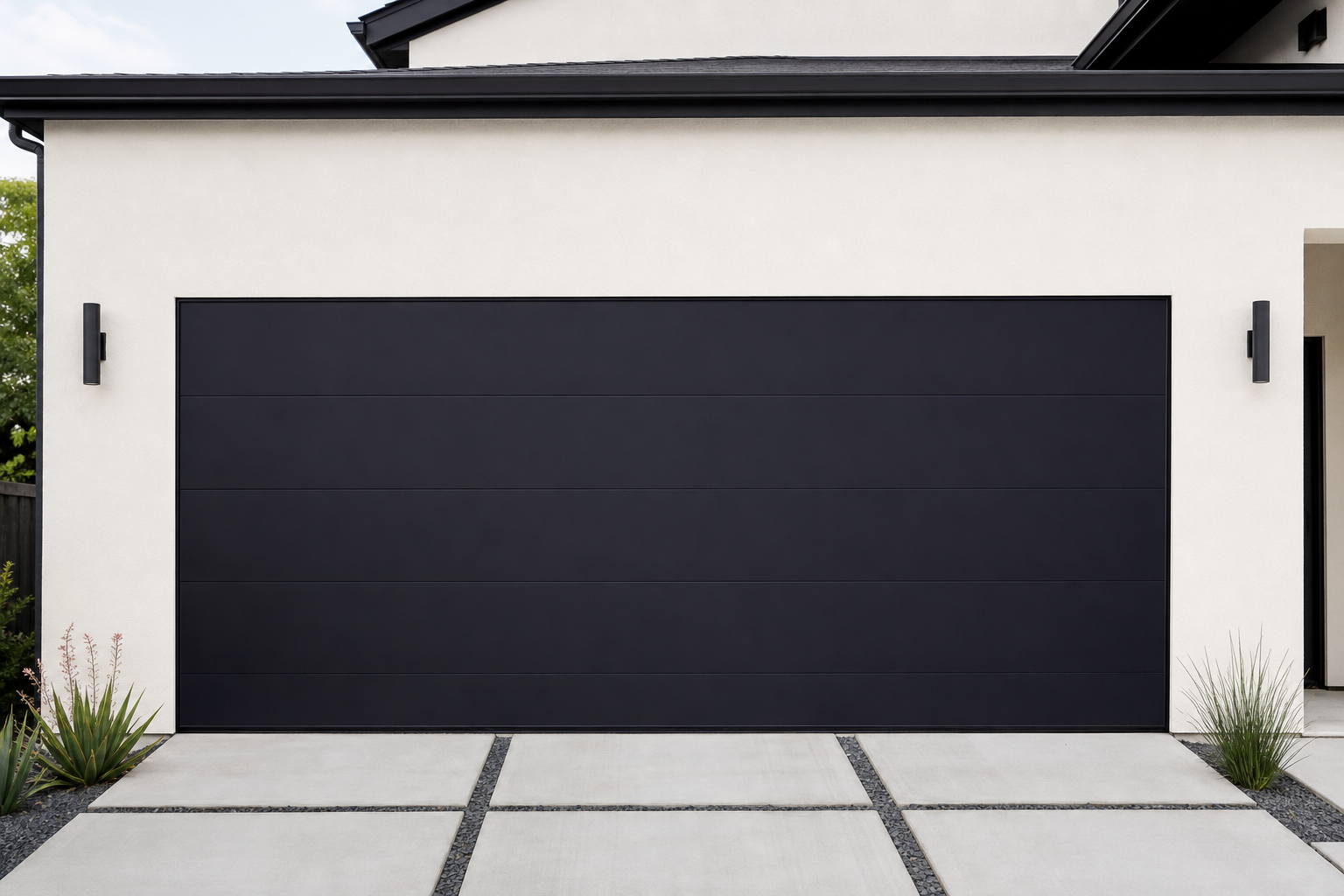
A thin aluminum channel trim in matching black creates a shadow-line reveal that looks deliberate and precise. The nearly flush profile means the trim disappears into the overall composition , you notice the door and the facade, not the frame. This approach suits contemporary and transitional homes where ornament is kept to a minimum.
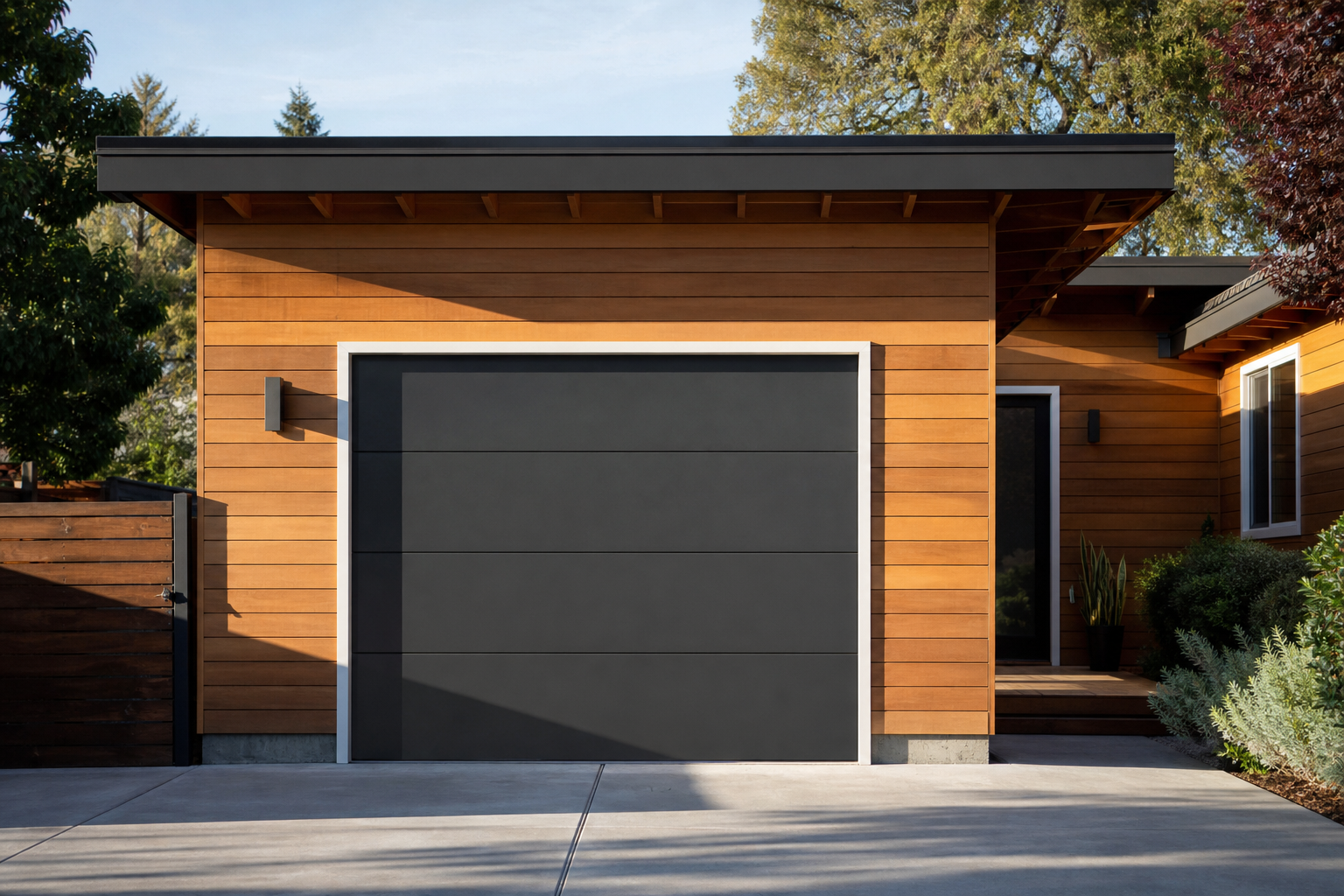
A three-inch flat fiber cement board in white creates just enough separation between the charcoal door and the cedar siding without feeling heavy. The contrast is subtle but effective , your eye registers the door as a distinct element, which makes the facade feel composed. Fiber cement holds paint well and resists the humidity and temperature swings that cause wood trim to crack over time.
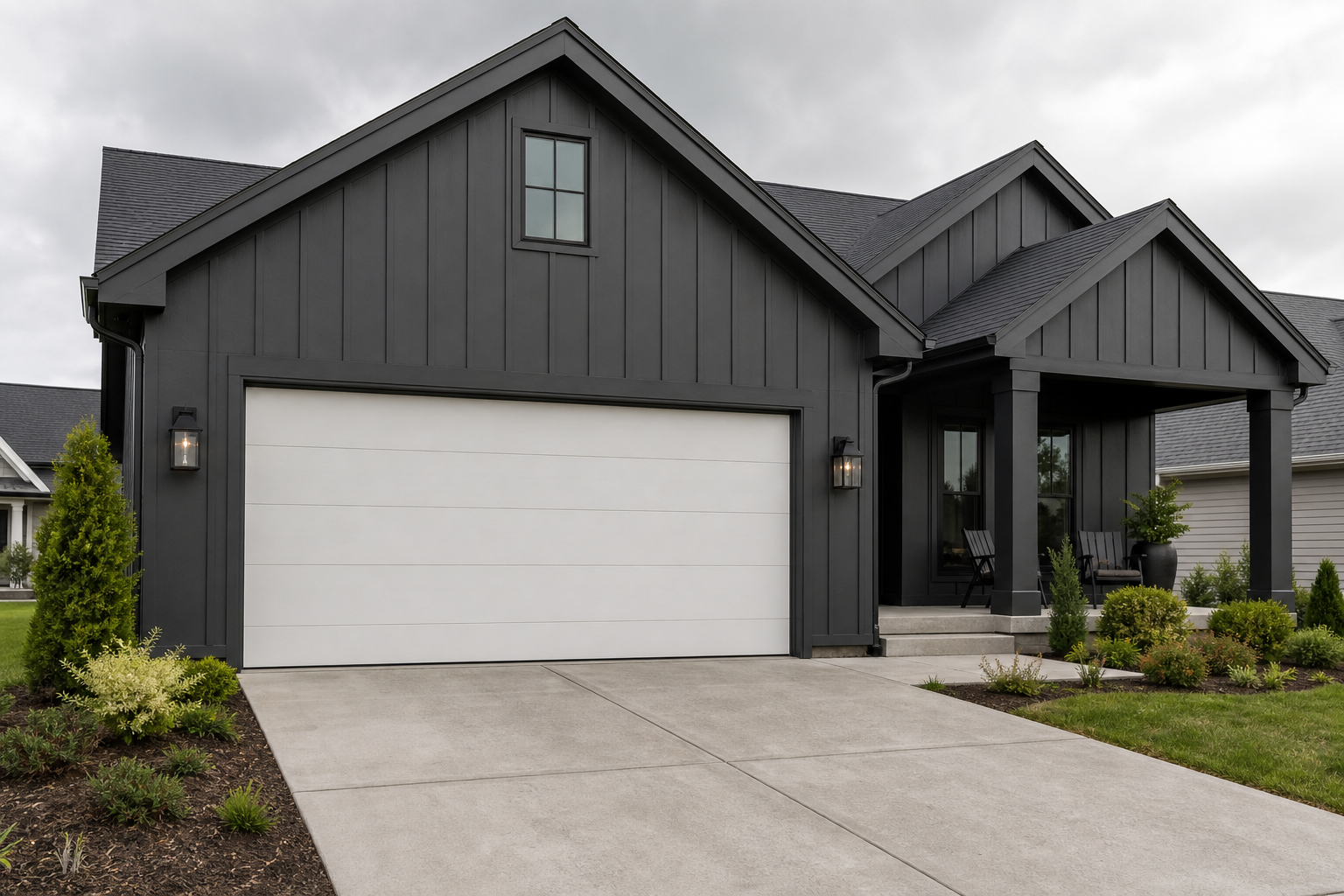
Tone-on-tone trim , where the frame nearly matches the siding color , is a subtle move that keeps the facade quiet and confident. Here the dark gray composite trim almost disappears against the board-and-batten siding, letting the white door carry all the visual weight. It’s a restrained look that reads as intentional rather than incomplete.
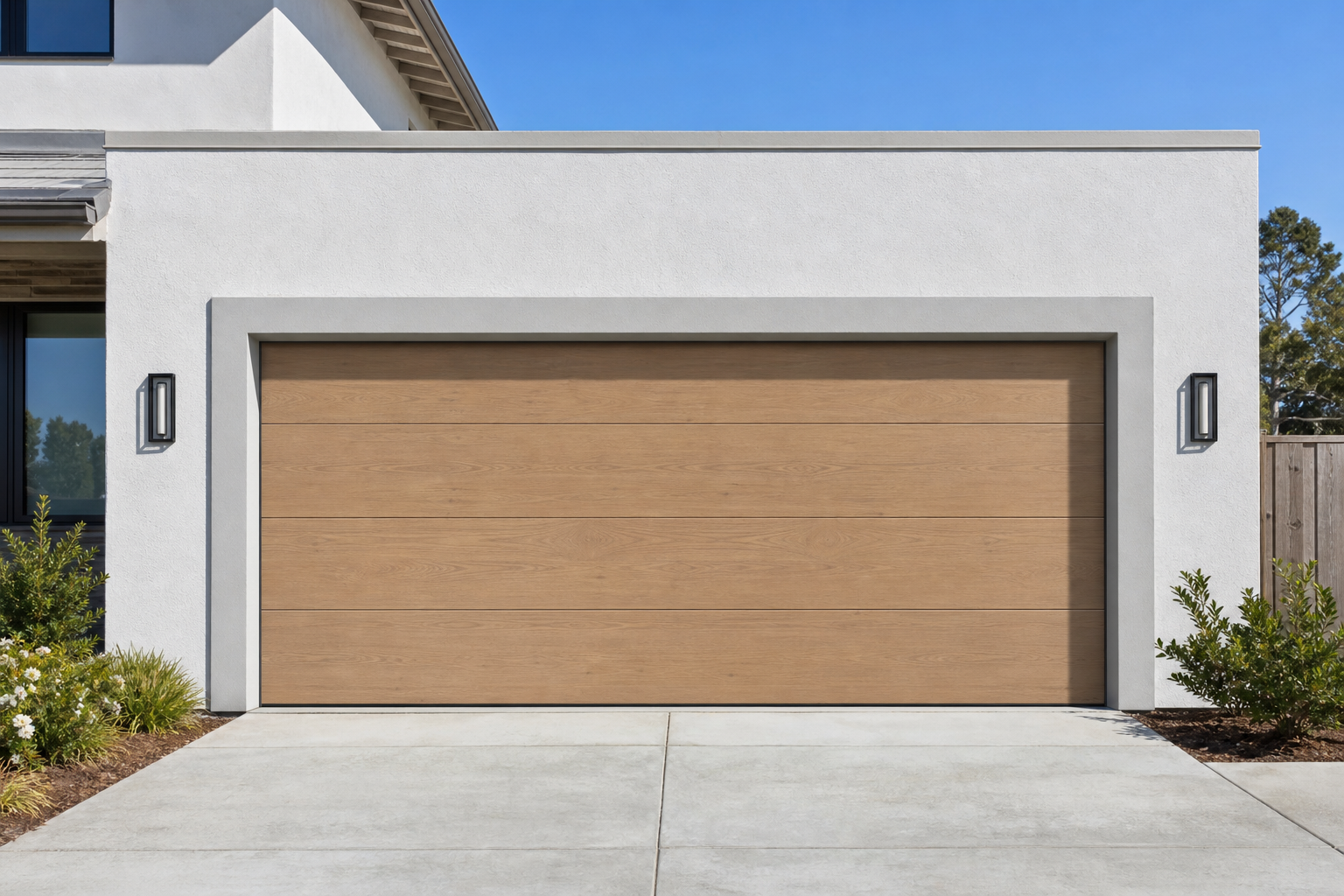
Instead of applied boards, this design uses a projected stucco band to create the trim detail , the shadow line does all the work. The warm gray band reads as a frame without adding any physical profile beyond the stucco plane. It’s a detail that feels architecturally integrated rather than added on after the fact.
Contrasting Color Borders
Color is the fastest way to make trim pop, and a contrasting border around a garage door is one of the higher-impact changes you can make to a facade for relatively little money. The classic move is painting trim white against a dark or saturated door, but there’s a lot of room to push further , navy against cream, black against sage, deep red against pale gray. The key is keeping the contrast intentional and tying the trim color back to at least one other element on the house. If you’re working out a color scheme from scratch, the ideas in my garage paint color guide are a good place to start thinking through combinations.
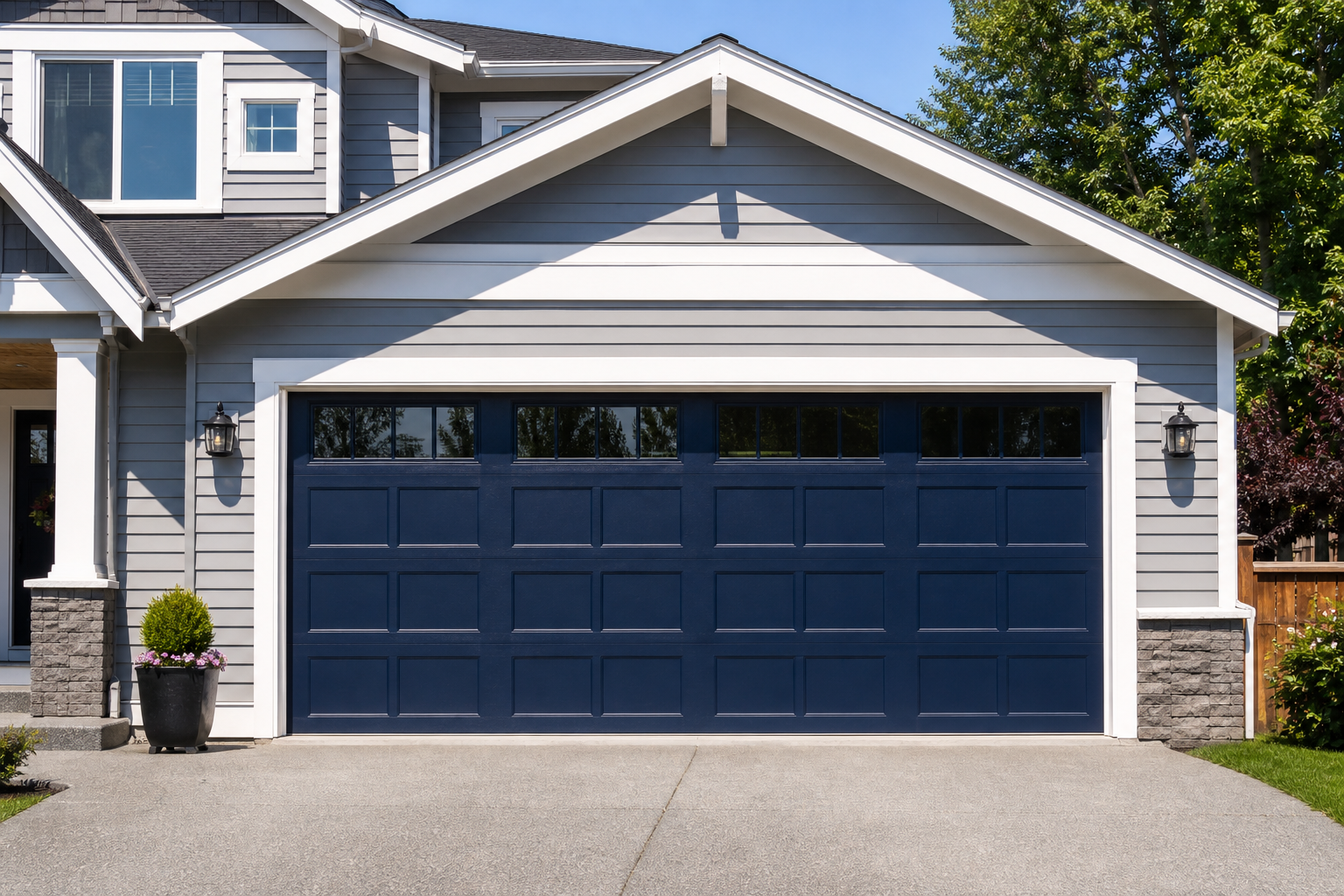
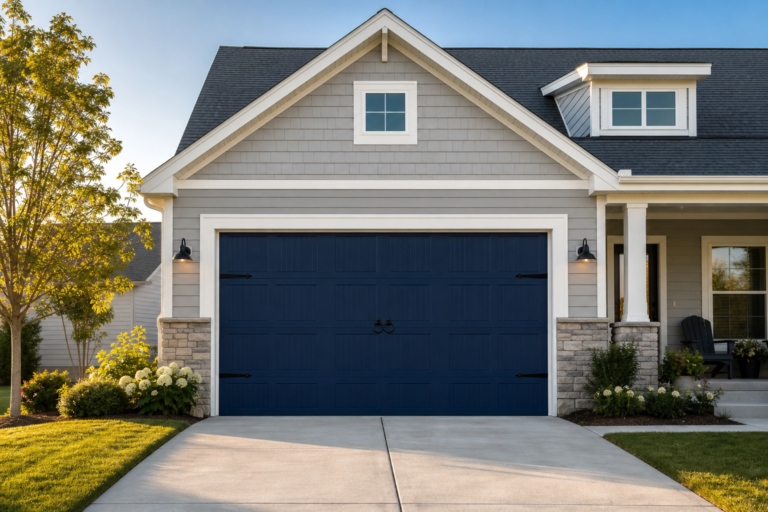
Navy and white is one of those combinations that holds up across almost every architectural style. The wide white border here frames the door with enough visual weight to anchor the whole facade. Because the white trim repeats at the roofline and windows, the garage doesn’t look like an afterthought , it’s part of a clear, consistent palette.
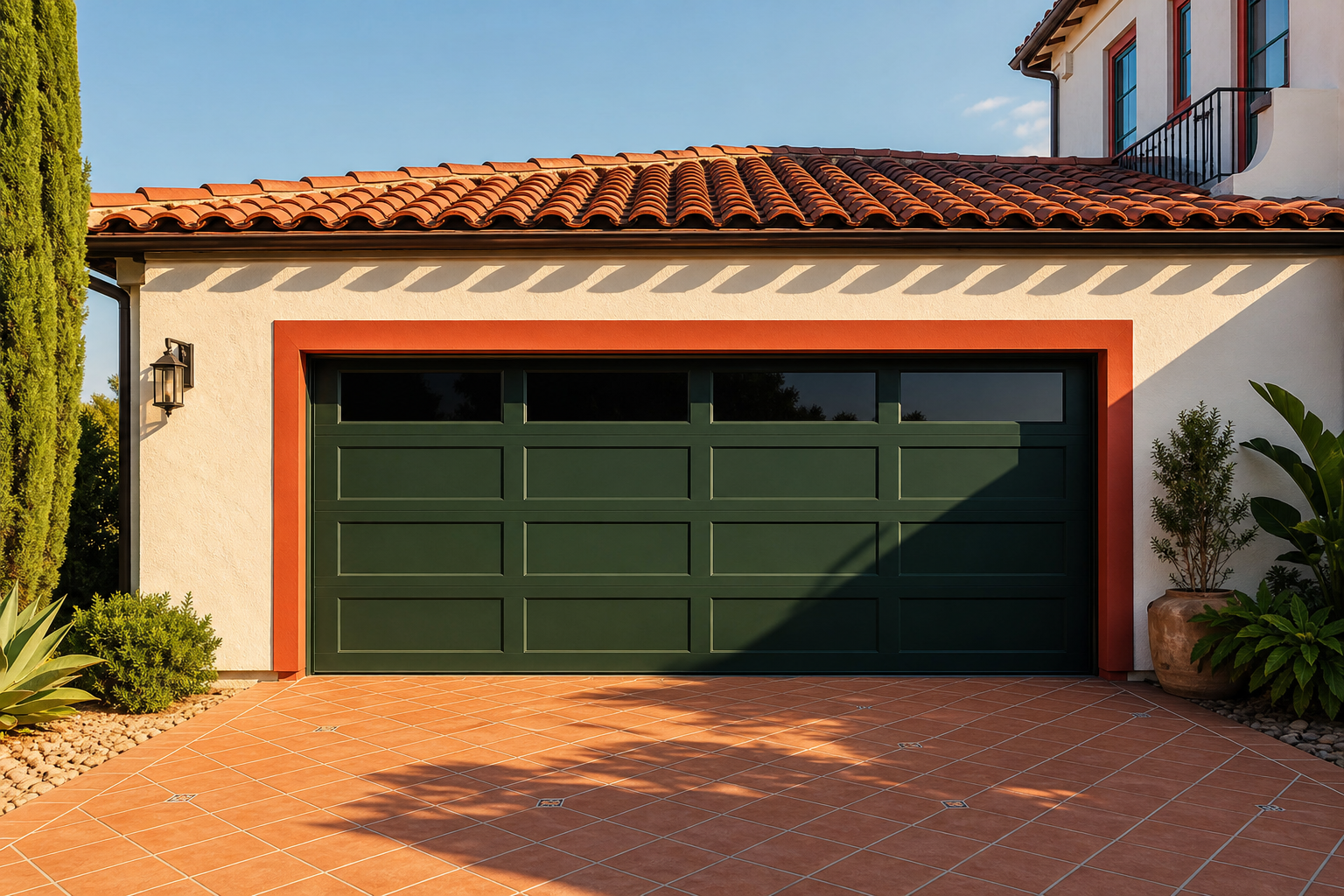
Terracotta trim against a forest green door and cream stucco creates a warm, Mediterranean feel that works particularly well in sunny climates. The three colors are all pulled from a warm, earthy range, so the contrast is lively without feeling jarring. A terracotta tile driveway ties the trim color back into the hardscape and makes the whole entry feel cohesive.
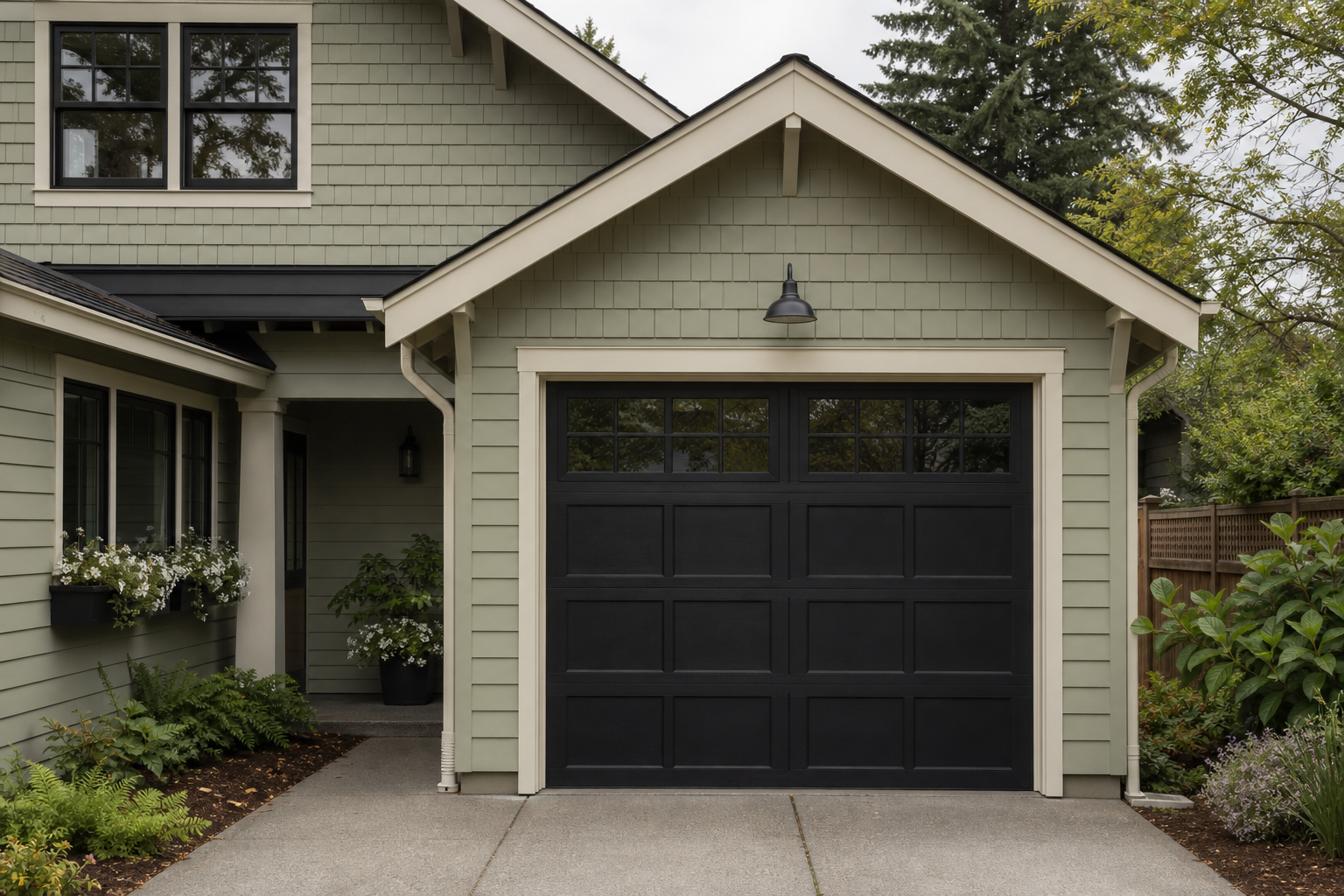
Linen-toned trim sits between the sage siding and black door without competing with either, and the subtle bead detail gives it enough character to register from the street. The warmth of the off-white pulls the whole palette toward cozy rather than stark. Window boxes with white flowers pick up the linen tone and soften the dark door nicely.
Decorative Hardware Accents
Hardware accents , hinges, handles, clavos, and straps , are technically separate from trim boards, but they do the same job of framing and defining the door. Used well, they can transform a plain steel door into something that looks custom-built. The most common approach is carriage-house style straps and ring pulls in matte black or oil-rubbed bronze, but there’s also a modern version using brushed nickel or satin black with cleaner, less ornate shapes. My article on installing garage door decorative hardware covers the mounting process in detail if you want to take this on yourself. Pairing hardware accents with the right trim boards creates a layered, finished look that reads as genuinely designed rather than assembled.
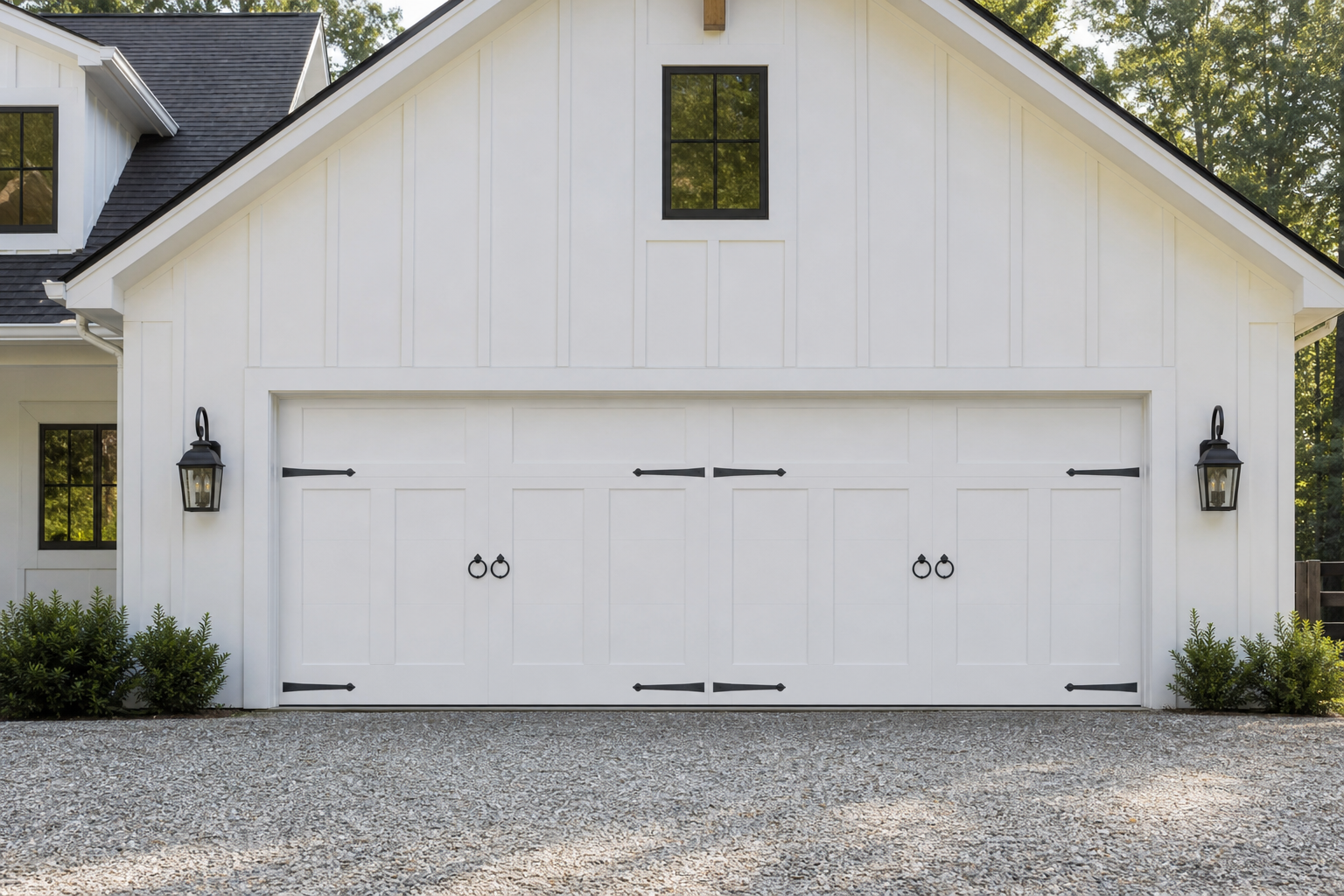
Matte black strap hinges and ring pulls on a plain white raised-panel door create the look of a traditional carriage house without replacing the door itself. The hardware is evenly spaced to mimic four separate panels, so the visual trick reads cleanly from the street. If you want to take the effect further, painting your existing garage door hardware to match is an easy way to pull the whole look together.
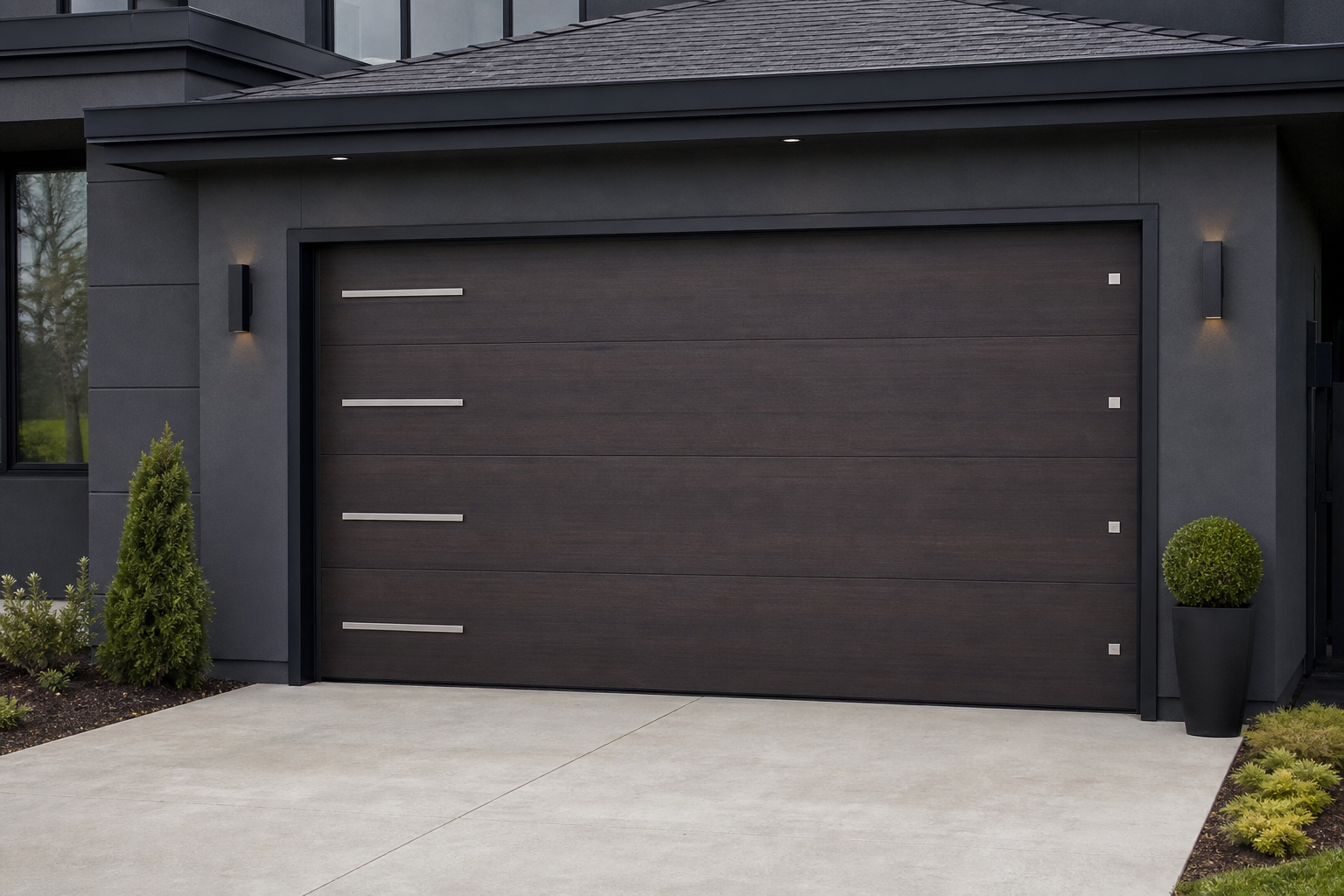
Brushed nickel bar handles and square corner plates give a wood-grain door a modern edge without leaning into the carriage-house cliche. The geometry is clean and horizontal, which reinforces the low, wide proportions of the garage. This kind of hardware pairs especially well with the flat, minimal trim profiles described earlier in this article.
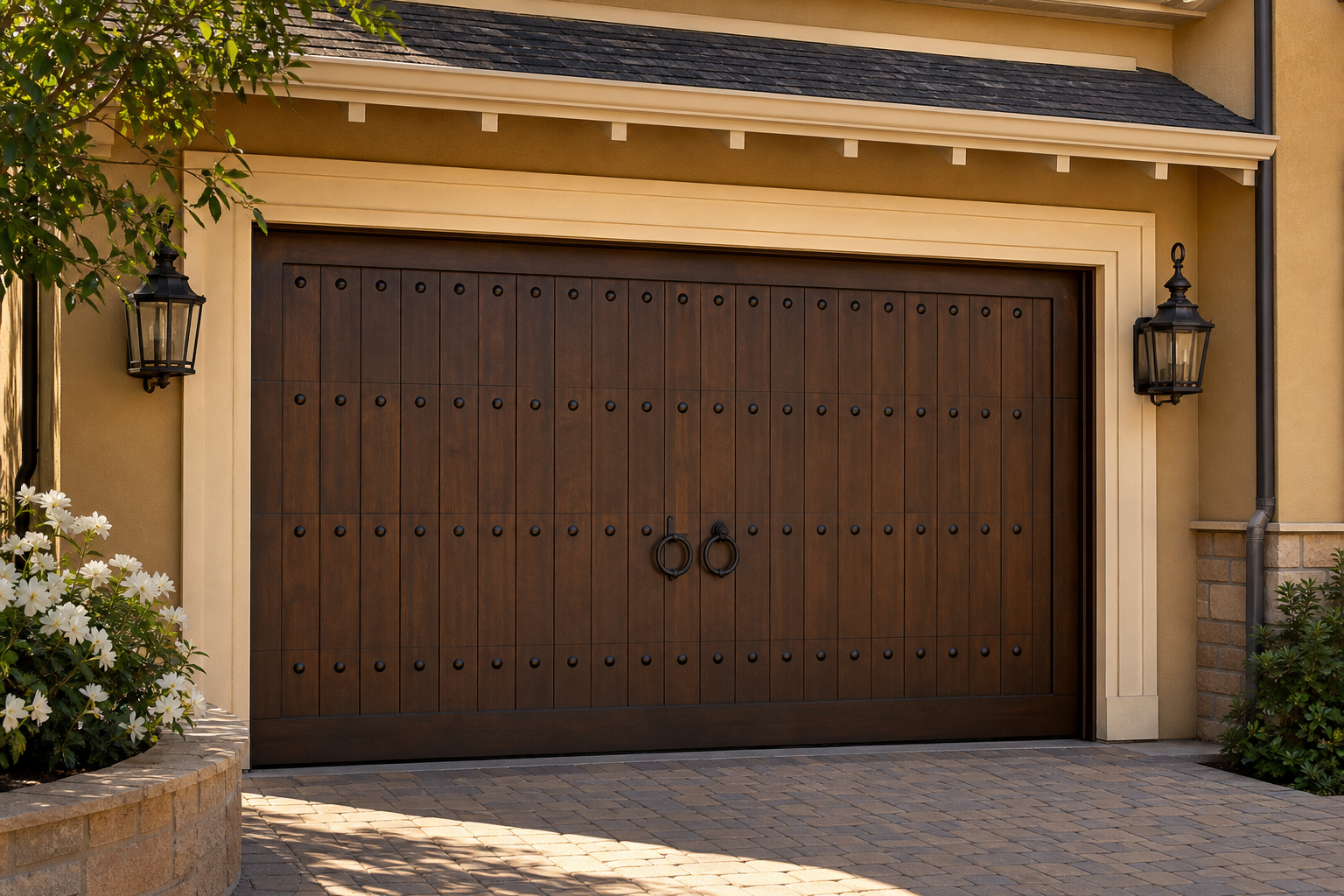
Clavo studs in oil-rubbed bronze arranged in a precise grid give a stained wood door a heavy, Spanish Colonial character that suits warm-toned traditional homes. The ring pulls at handle height reinforce the motif and give the eye a place to land. Combined with wide cream craftsman trim, the door looks like it could have cost twice as much as it did , which is really the goal of most of these upgrades.
