

As an Amazon Associate I earn from qualifying purchases.
The right garage door windows do two things at once: they pull natural light into your garage and give the whole front of your house a sharper, more finished look. Whether you want something subtle and private or bold and architectural, there are more options than most homeowners realize. In this article I’m covering four main directions: frosted and privacy glass, decorative grille patterns, full-view glass panels, and arched and custom shapes.
Frosted and Privacy Glass
Frosted glass is one of the most practical choices you can make for a garage door window. You get a steady stream of diffused daylight without giving passersby a clear view of your tools, cars, or storage. The glass has a soft, clean quality that works with almost any home style, from modern farmhouse to traditional colonial. If you use your garage as a workshop or home gym, privacy glass is especially worth considering since it lets in light while keeping the interior feeling like your own space. For more ways to brighten up a garage without sacrificing privacy, my guide on increasing natural light in your garage walks through several good options.
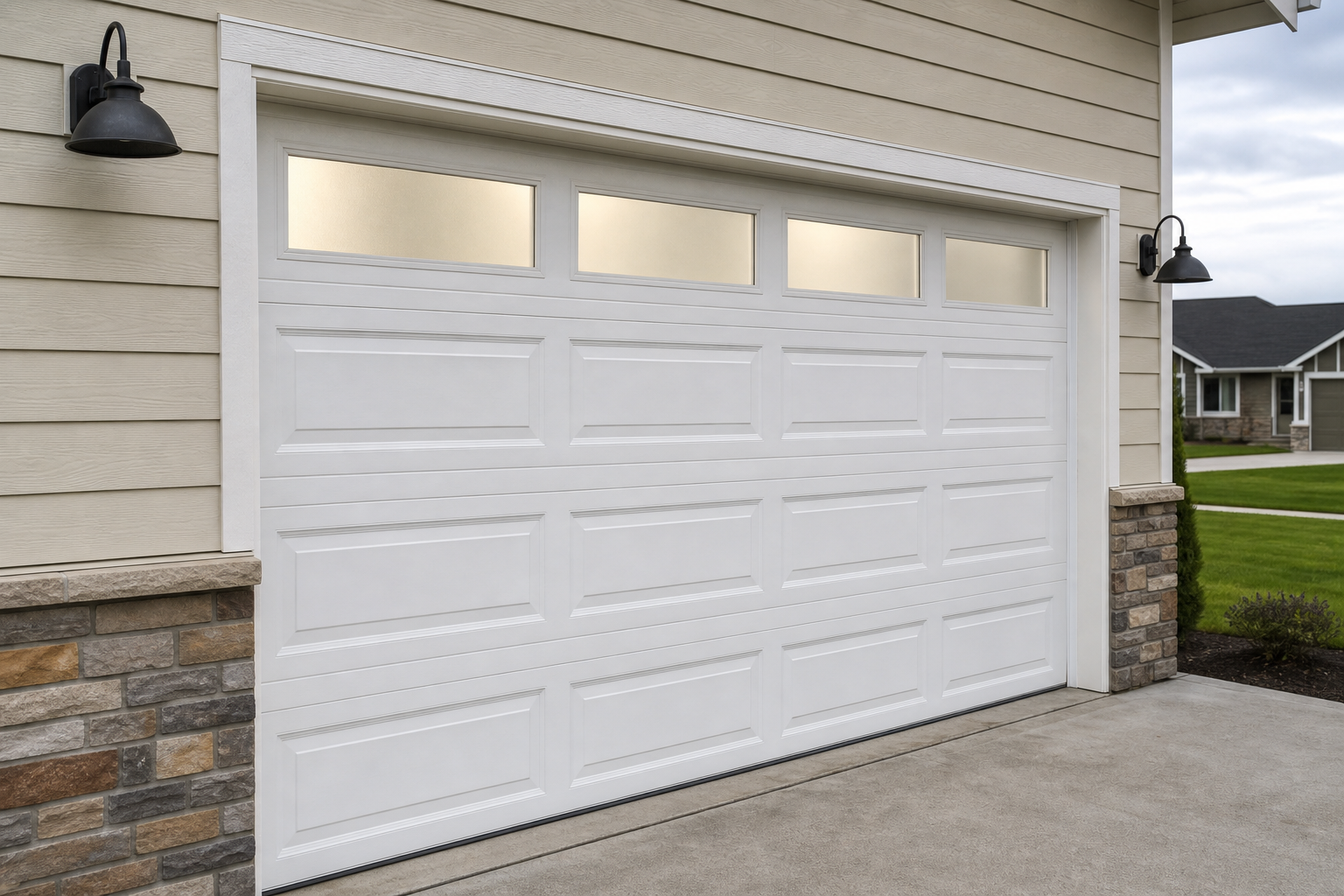
A single row of frosted rectangular inserts across the top panel is a classic look that never feels dated. The opaque white glass glows softly in the morning and keeps the interior completely private. This setup works especially well on traditional raised-panel doors painted white or cream.
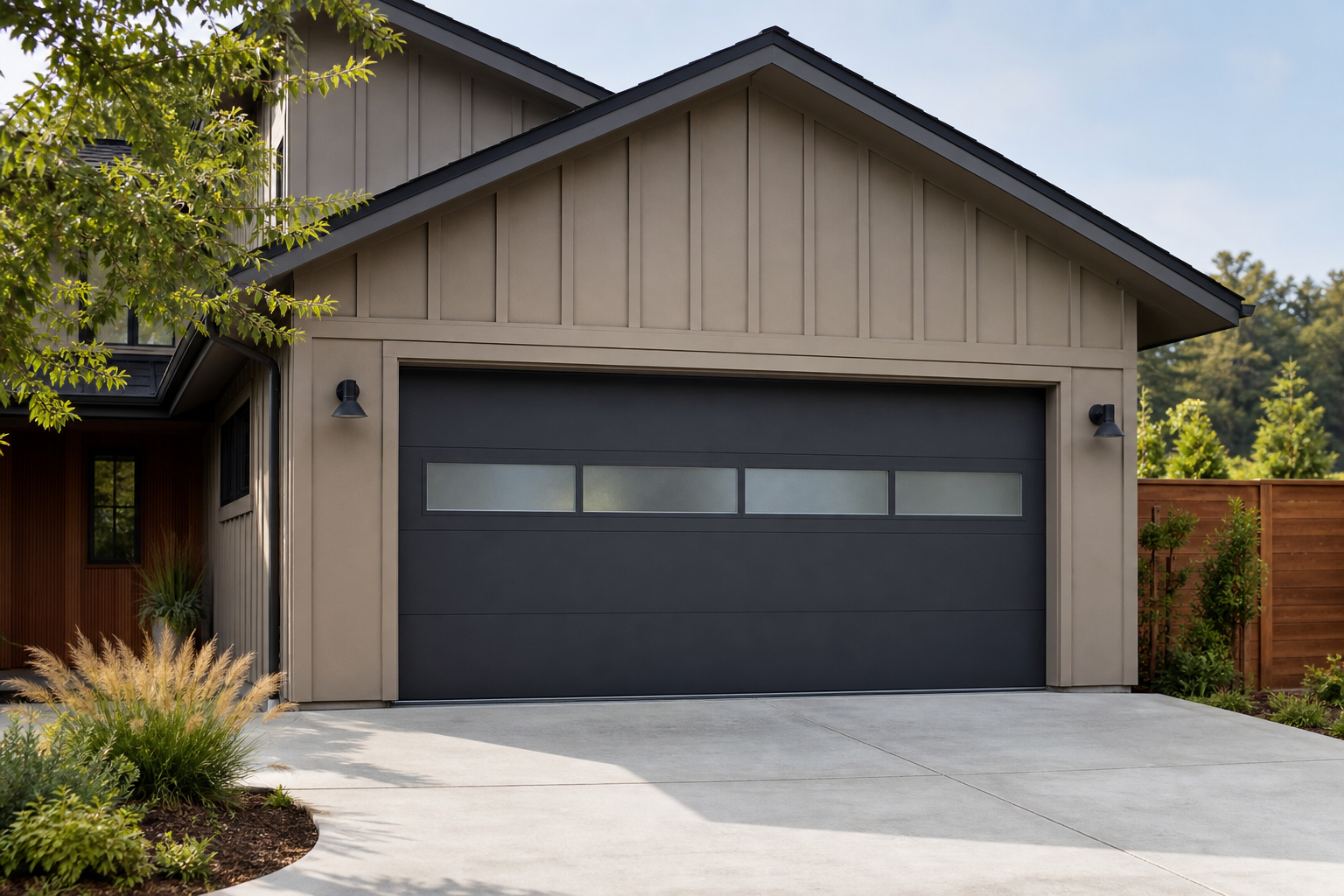
Narrow horizontal frosted strips on a dark charcoal door give a contemporary home an understated, architectural feel. The satin finish on the glass catches light without looking shiny or cheap. Paired with board-and-batten siding, this combination reads as genuinely intentional.
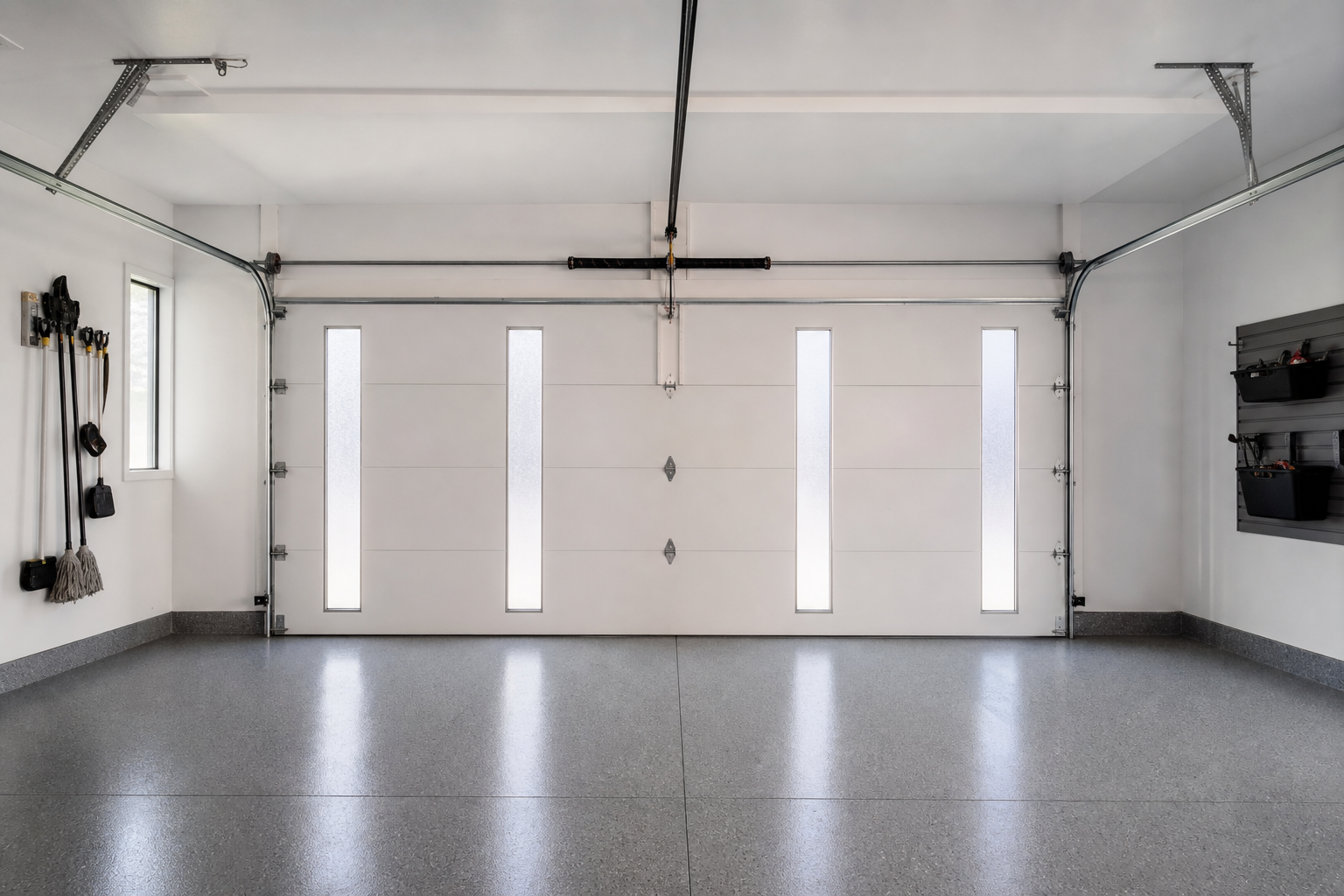
Tall vertical frosted inserts flood the interior with soft, even light that’s easy to work in all day. From inside, the panels glow without creating any harsh glare on your work surfaces. If you’re planning a serious workspace, pairing this with good overhead lighting makes a big difference, and it’s worth reading about how to light a garage workshop without shadows before you finalize anything.
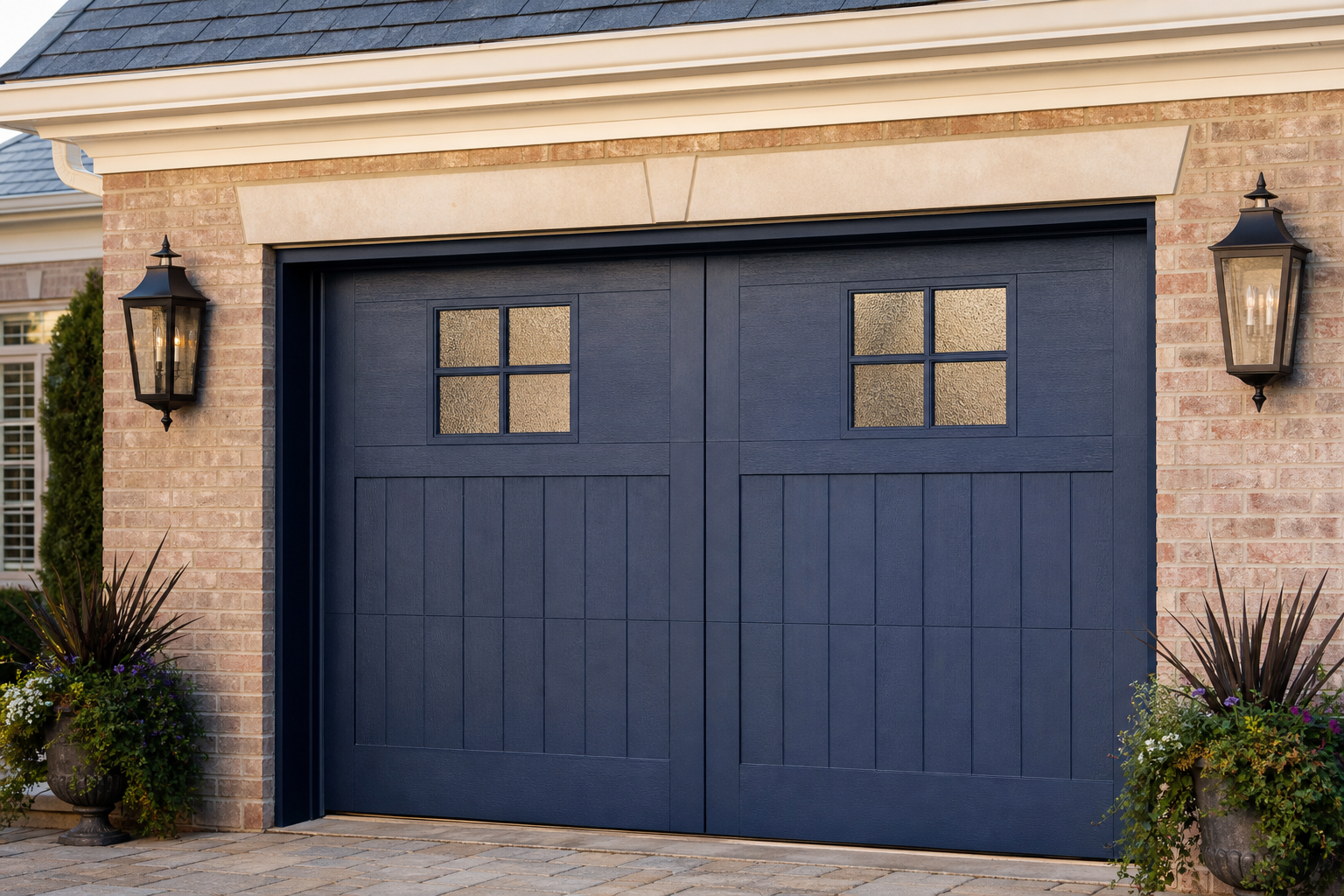
Hammered frosted glass in a 2×2 grid adds just enough texture to keep a carriage-style door from looking flat. The slight surface variation in the glass catches afternoon light in an interesting way without drawing attention away from the door’s overall shape. Navy pairs especially well with black hardware and brick, giving the whole facade a polished, cohesive appearance.
Decorative Grille Patterns
Decorative grille patterns sit inside or on top of the glass and give a garage door a lot more visual personality without requiring a full door replacement. You can find grilles in colonial, craftsman, prairie, and farmhouse styles, and most are available as snap-in inserts that drop right into existing window openings. The grille itself doesn’t affect how much light comes through, but it does change the character of the door dramatically. I always tell people that updating the windows and hardware at the same time makes the biggest visual impact, and if you haven’t looked at installing decorative garage door hardware yet, it’s worth doing both projects together. These are also one of the more affordable ways to make your garage look expensive without spending much at all.
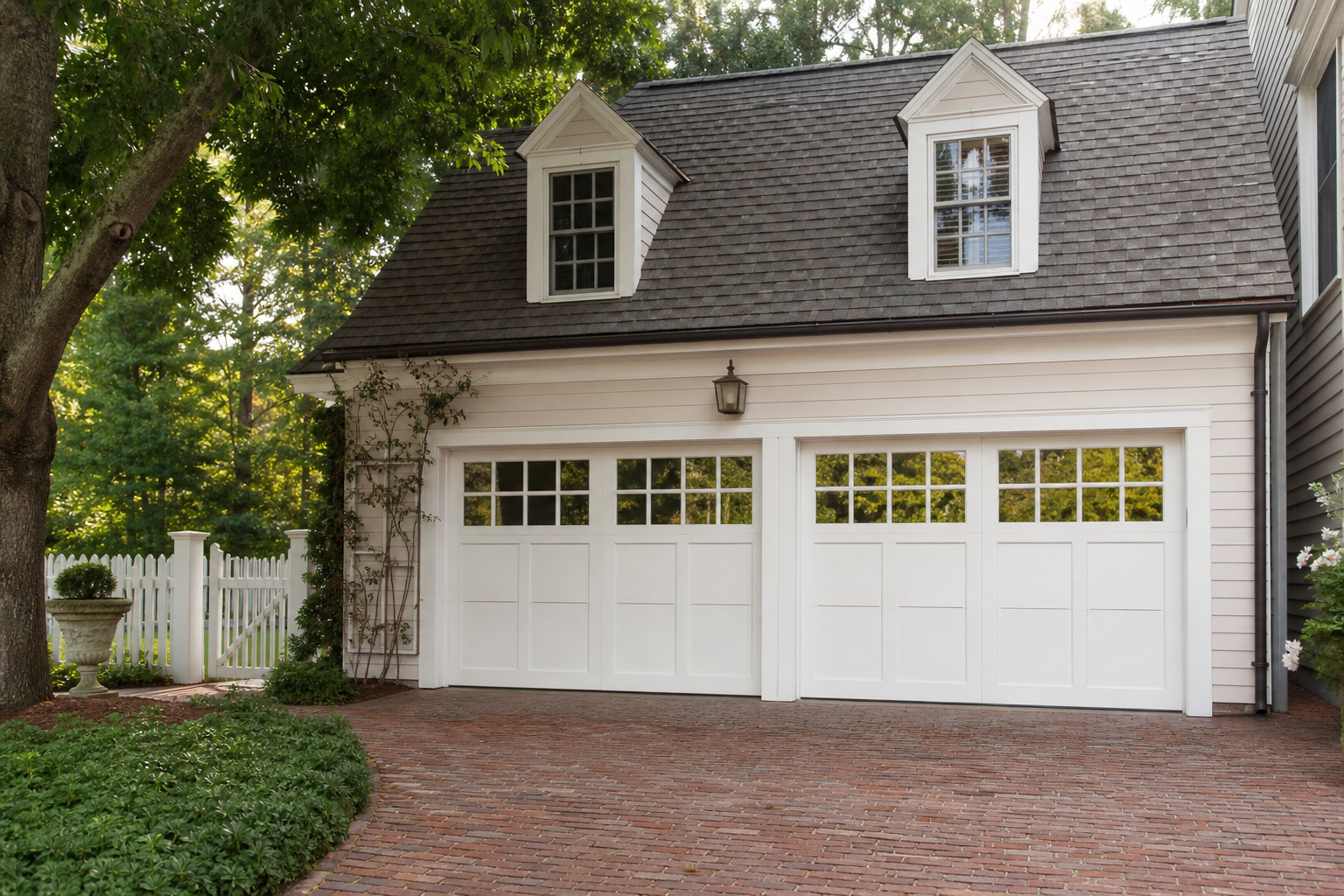
Colonial divided-light grilles are probably the most recognizable pattern in the category. Each pane is small enough to give the windows a traditional, almost lantern-like quality that suits classic American home styles well. White grilles on a white door keep the look clean, while black grilles on a dark door create stronger contrast.
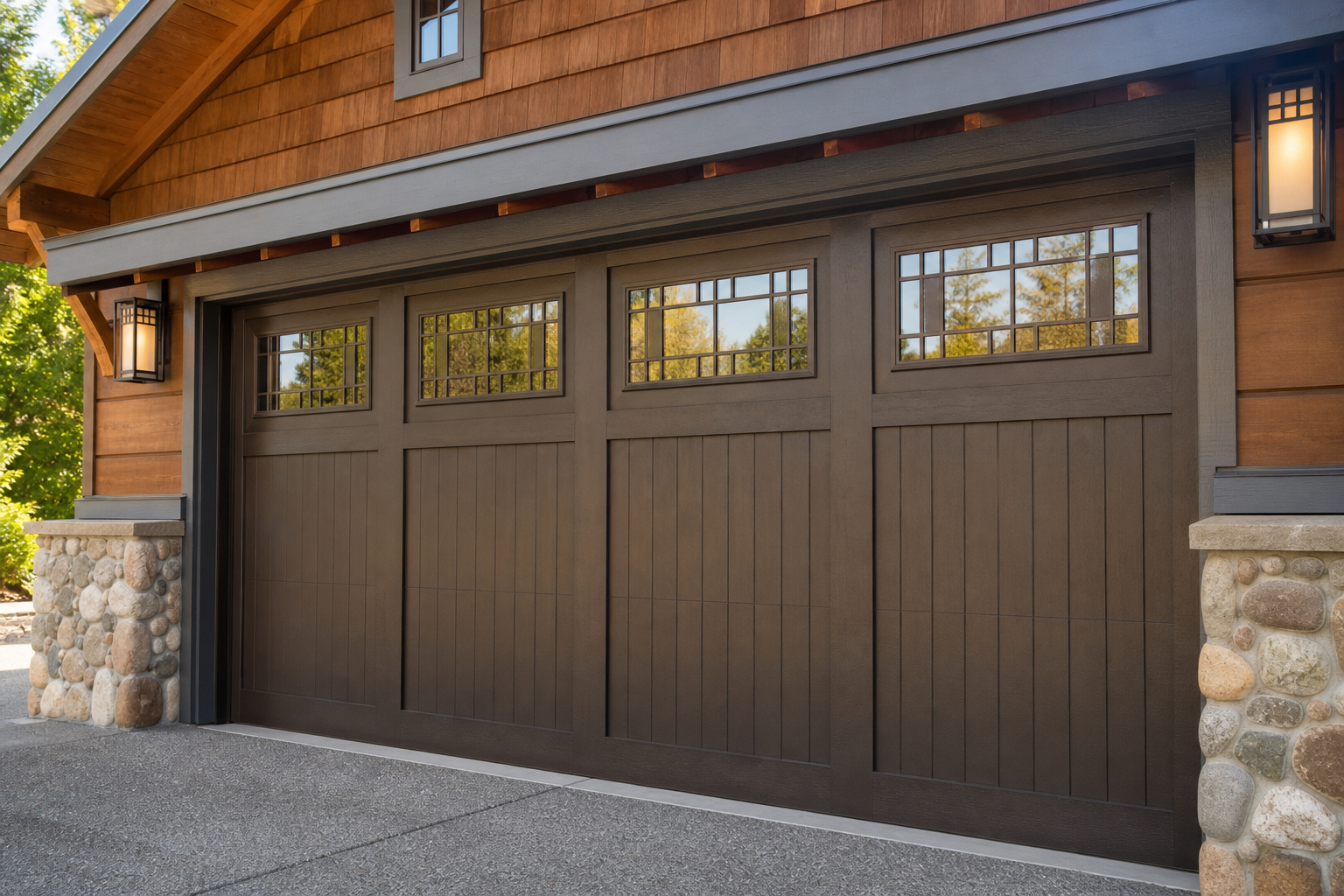
The prairie grille pattern, with its border of small squares surrounding a clear center pane, is a signature detail of craftsman and arts-and-crafts architecture. It suits a cedar-accented or stone-detailed home exterior in a way that feels historically grounded rather than decorative for decoration’s sake. Dark brown doors with matching brown grilles let the pattern register without becoming the loudest thing on the facade.
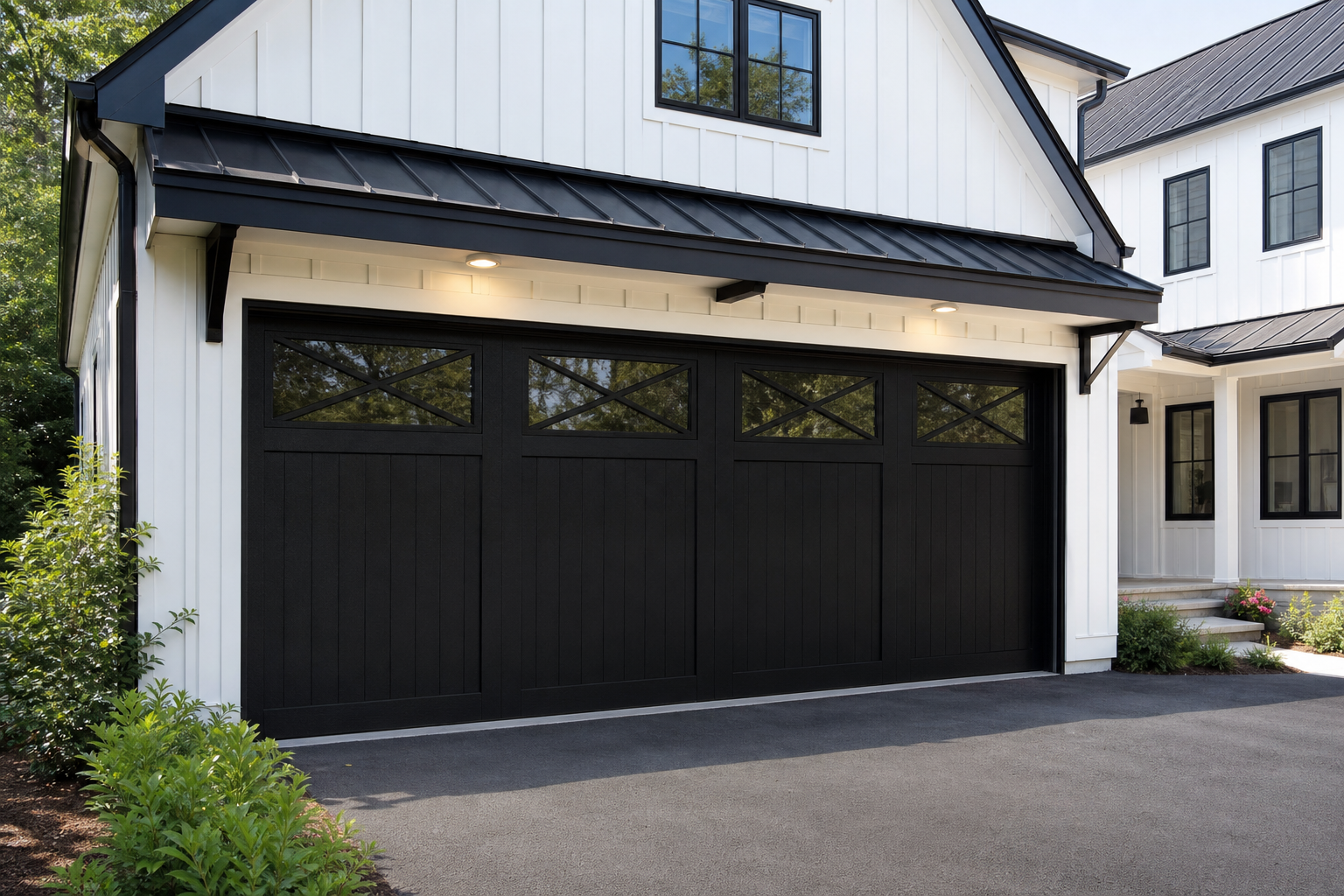
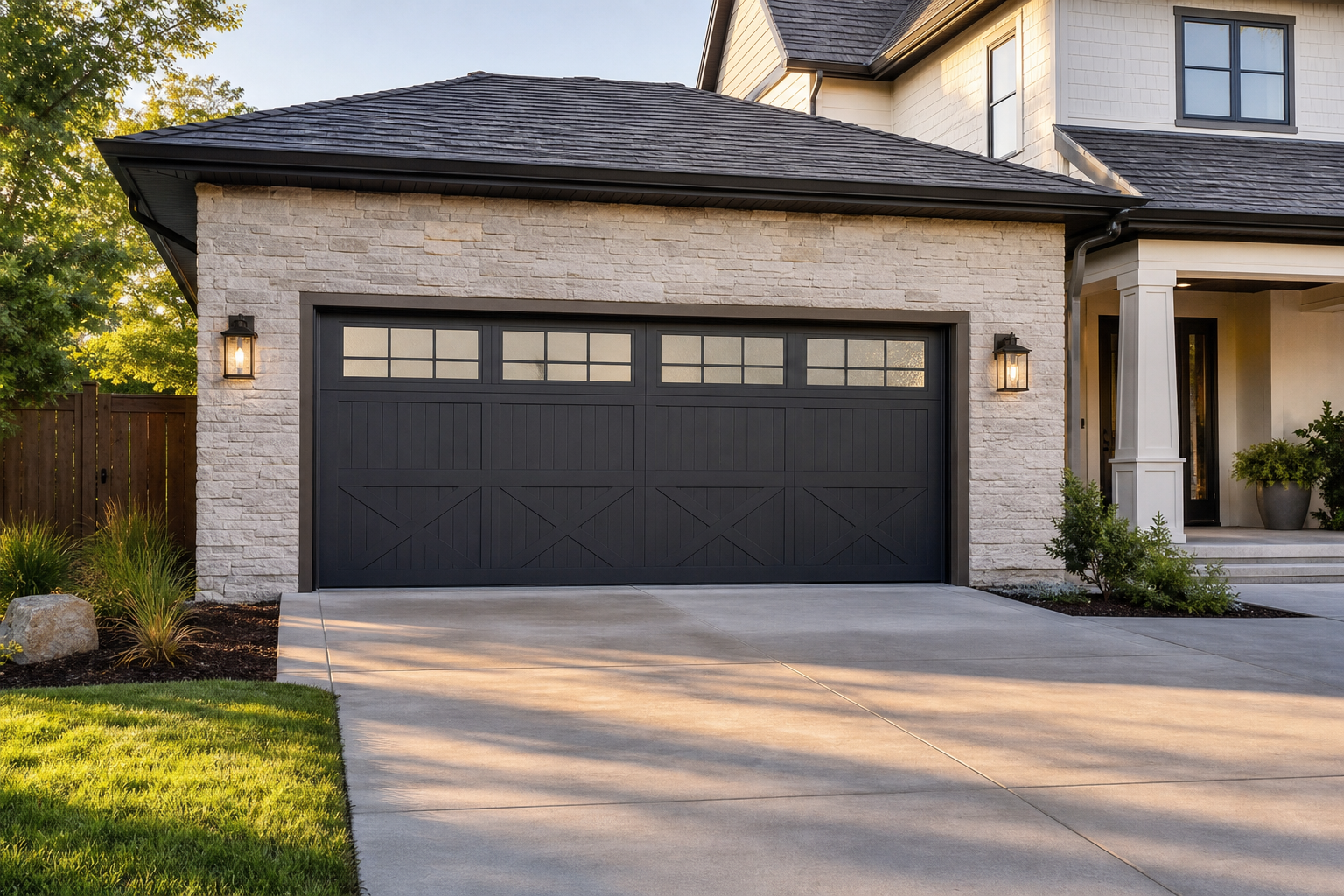
An X-pattern grille on a black door is one of the defining details of the modern farmhouse style, and it works because it’s bold without being fussy. The strong diagonal lines echo barn door hardware and similar design elements that are popular right now. If you’re painting a door to match this look, my roundup of cool garage paint ideas has some color combinations worth considering.
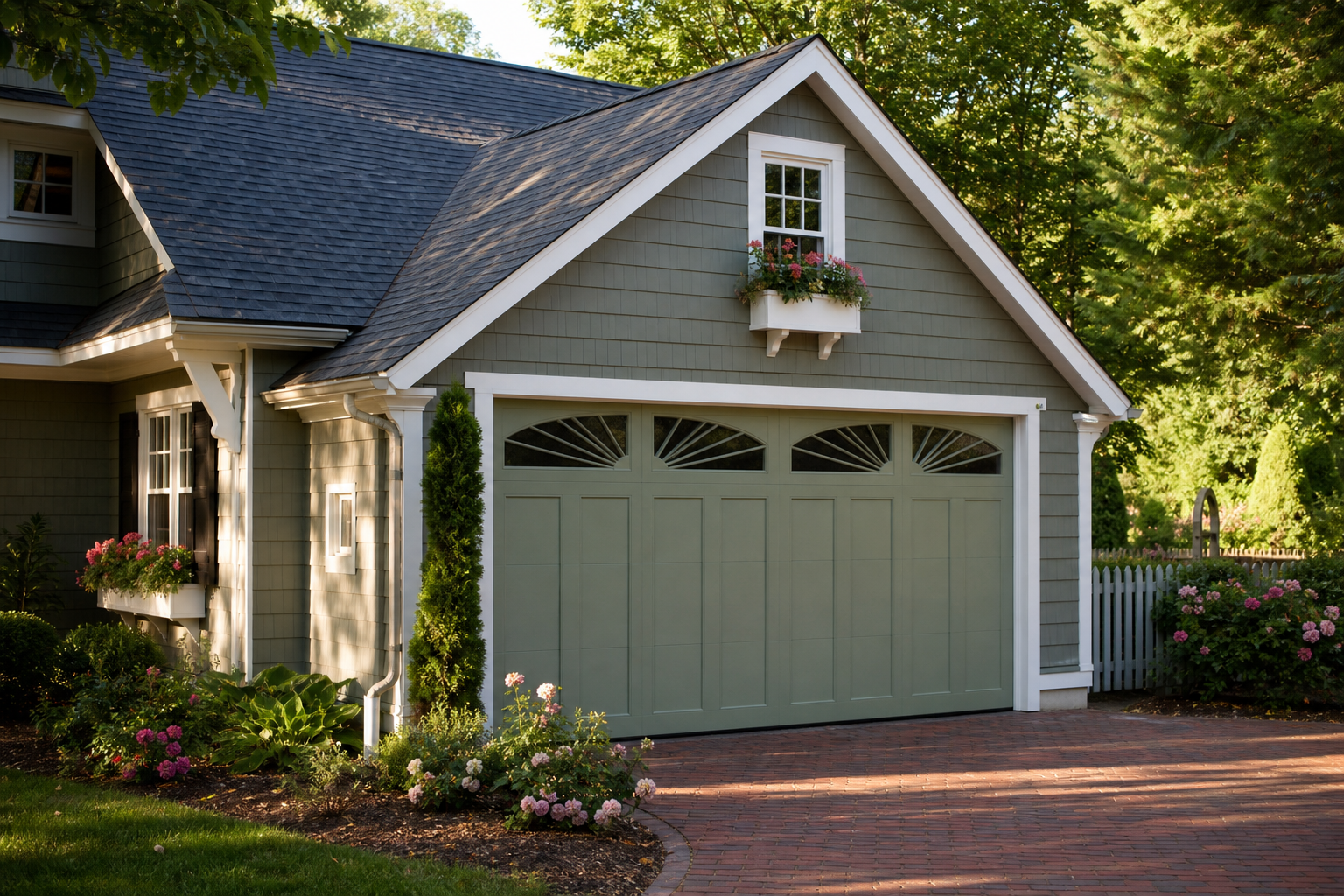
A sunburst or fan grille gives a cottage or Cape Cod-style home a bit of whimsy without going over the top. The radiating lines draw the eye upward and add movement to what would otherwise be a flat surface. Sage green is a color that reads as fresh and considered, and the white trim ties the windows back to the rest of the house.
Full-View Glass Panels
Full-view garage doors replace the solid panel sections with floor-to-ceiling glass, usually in aluminum or steel frames. They’re the most dramatic option on this list and the most expensive, but the payoff in terms of light and curb appeal is significant. These doors work especially well when the garage is used as a living space, workshop, or showroom for a nice car collection. Because you’re letting in a large amount of light and potentially some heat depending on your climate, it’s worth thinking about insulation alongside the glass choice. I’d read up on whether to insulate your garage door and walls before committing to a full-view option, particularly if you’re in a hot or cold climate.
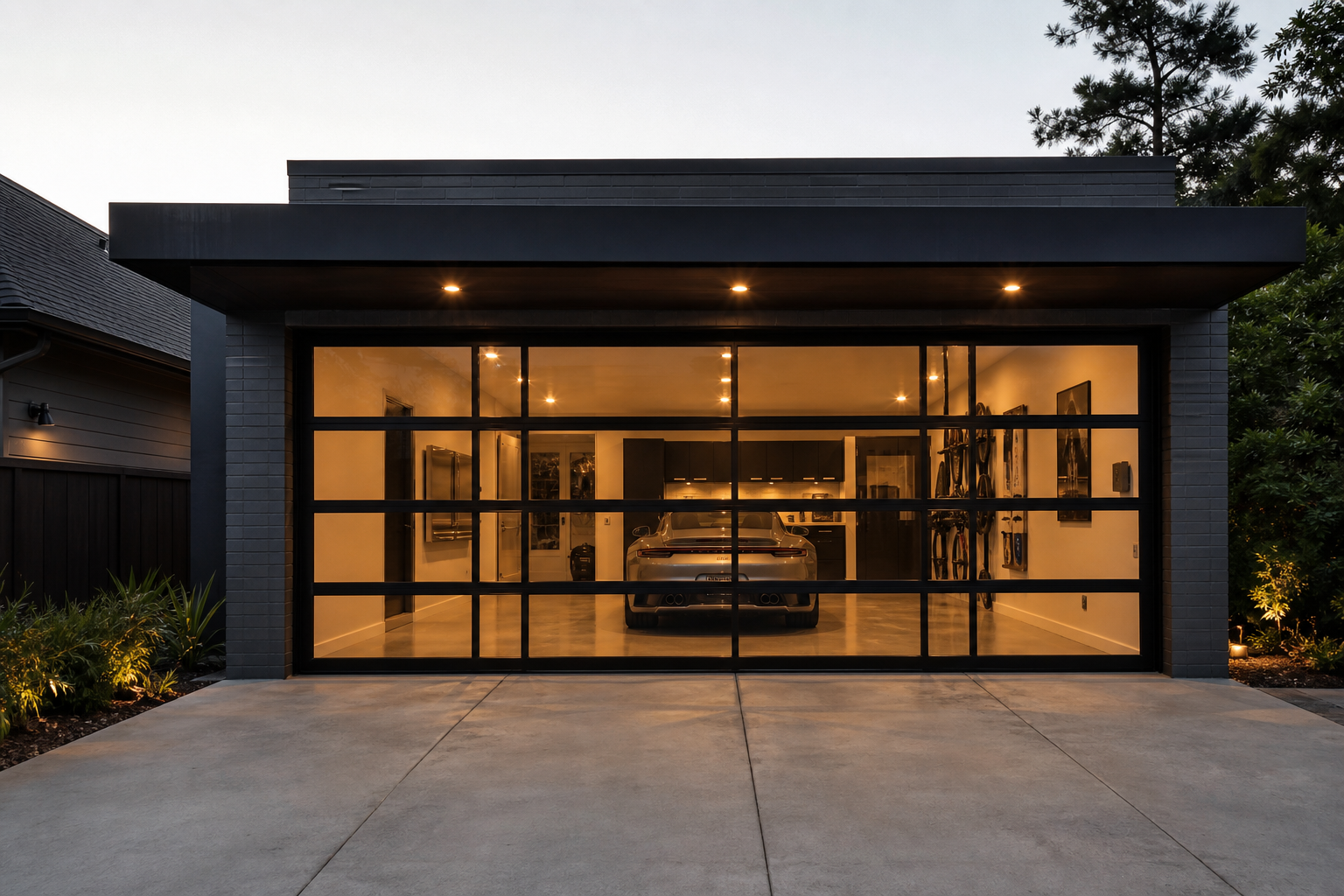
A full-view door with matte black aluminum frames and tempered glass turns the garage into a display case after dark. The warm interior light spills out and makes the whole front of the house feel alive in the evening. If you’re going for this look, a well-finished floor underneath makes a huge difference, and garage floor tile ideas are worth browsing before you start.
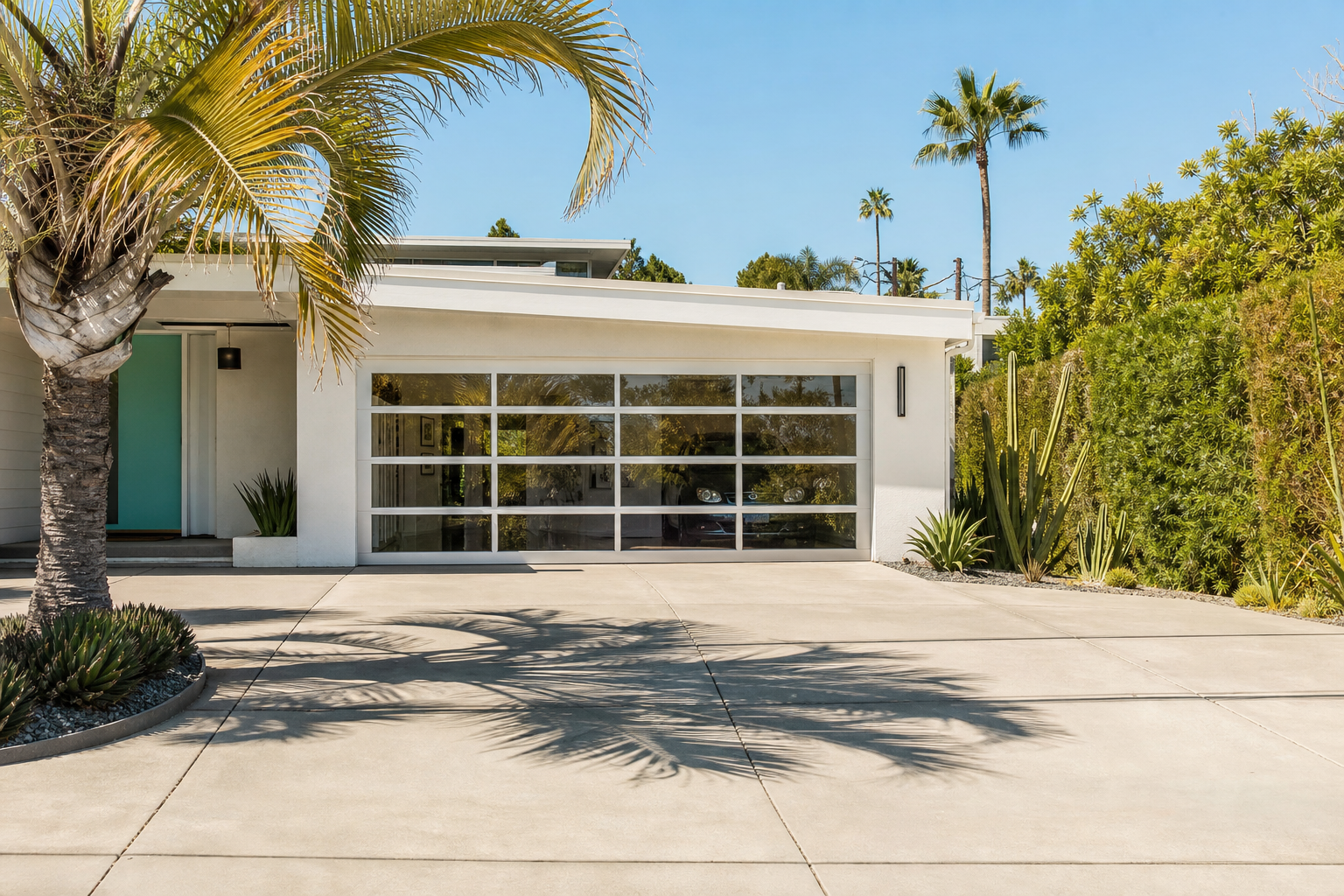
White aluminum frames on a full-view door complement mid-century modern architecture in a way that feels period-appropriate and fresh at the same time. The horizontal framing lines echo the low-slung rooflines and ribbon windows that define the style. Clear glass keeps the look open and airy, which suits warm-climate homes where indoor-outdoor connection is a priority.
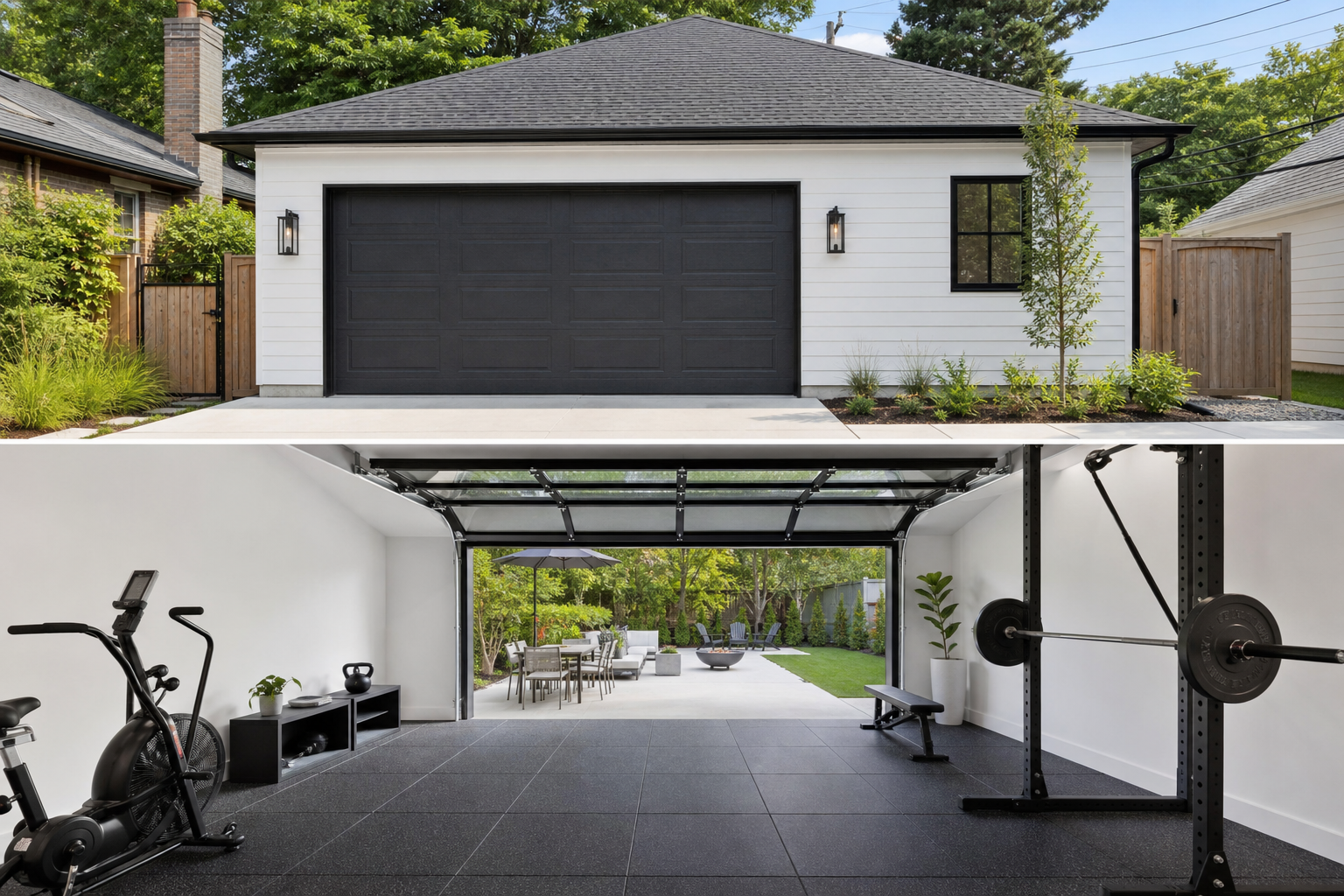
A full-view door on a converted garage gym or studio creates an open-air feel when the door is raised, blurring the line between inside and outside. The rubber flooring absorbs impact and adds a practical layer under all that glass. This kind of space benefits from thinking carefully about the floor from day one, and applying metallic epoxy for a custom garage floor is another route worth considering if you want something more polished.
Arched and Custom Shapes
Arched and custom-shaped garage door windows move beyond the standard rectangle and give a door a genuine architectural identity. A simple round-top arch softens an otherwise boxy door and works well on Tudor, Mediterranean, and craftsman-influenced homes. More elaborate custom shapes, like octagons, diamonds, or multi-light fan windows, are less common and tend to make a strong statement. Because these windows are non-standard, they’re usually ordered as part of a new door rather than retrofitted into an existing one. If you’re already pricing out a new door installation, it’s useful to understand what a garage door installation costs so you know where custom windows fit into the overall budget.
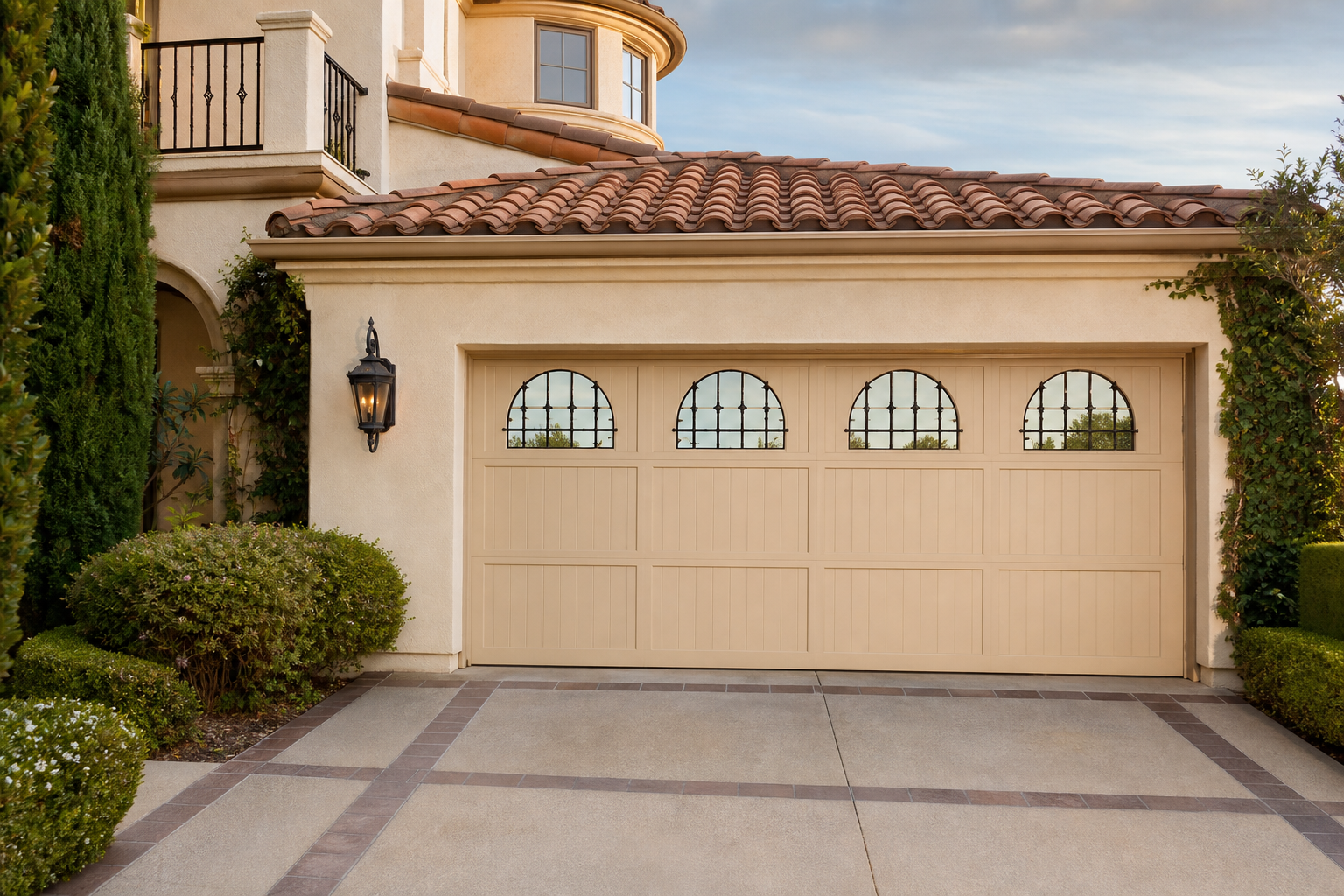
Round-top arched windows with a simple wrought-iron grille are a natural fit for Mediterranean and Spanish colonial architecture. The arch mirrors the curved openings common throughout these homes, tying the garage door into the broader design language of the facade. Warm stucco and terra cotta roof tiles make the golden afternoon light feel rich rather than harsh.
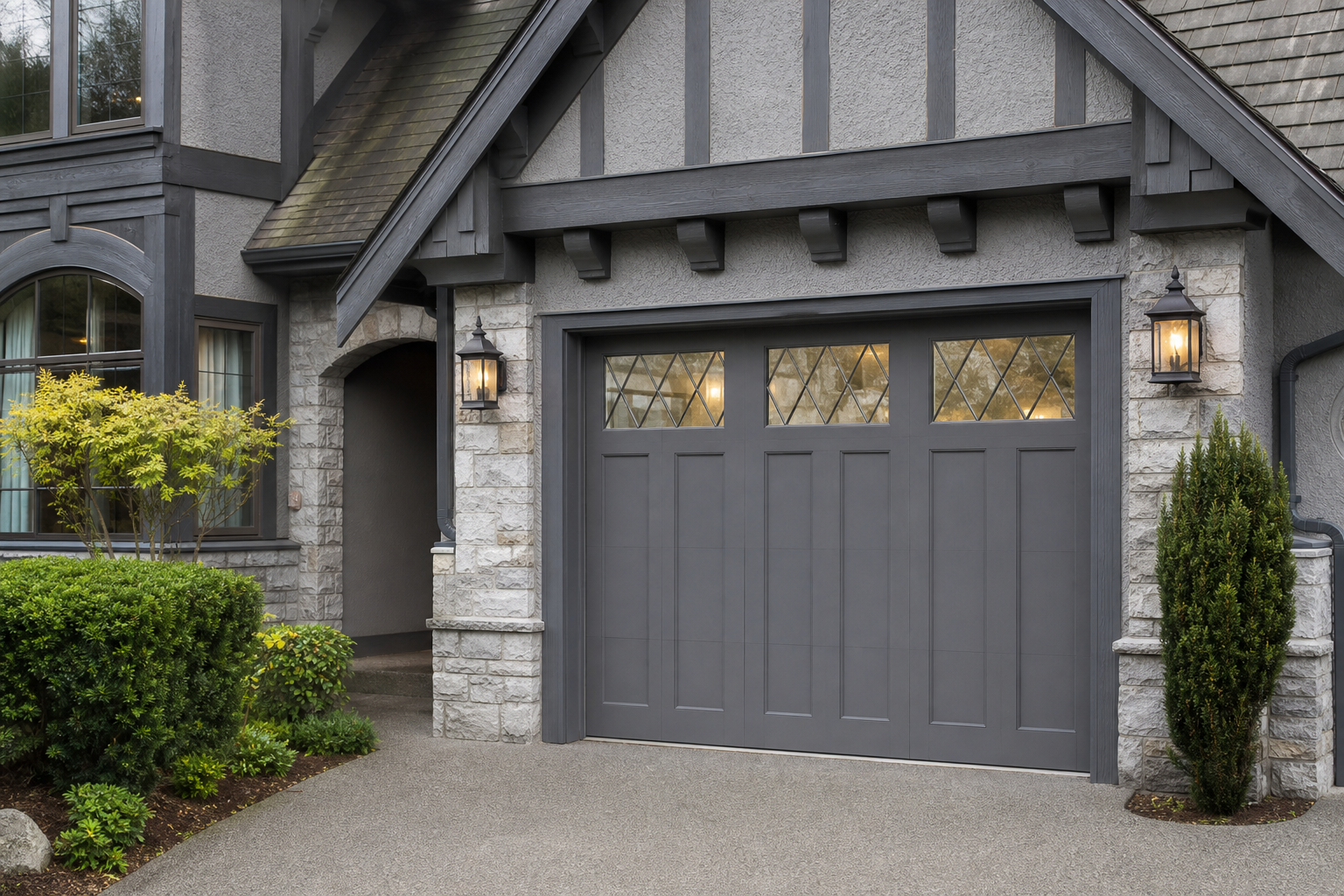
Diamond-pattern leaded glass is one of the oldest window motifs in residential architecture and it reads immediately as Tudor or English cottage. The seeded or antique texture in the glass adds depth that plain clear glass simply doesn’t have. Dark wood trim and stone accents reinforce the period character without the look feeling like a costume.
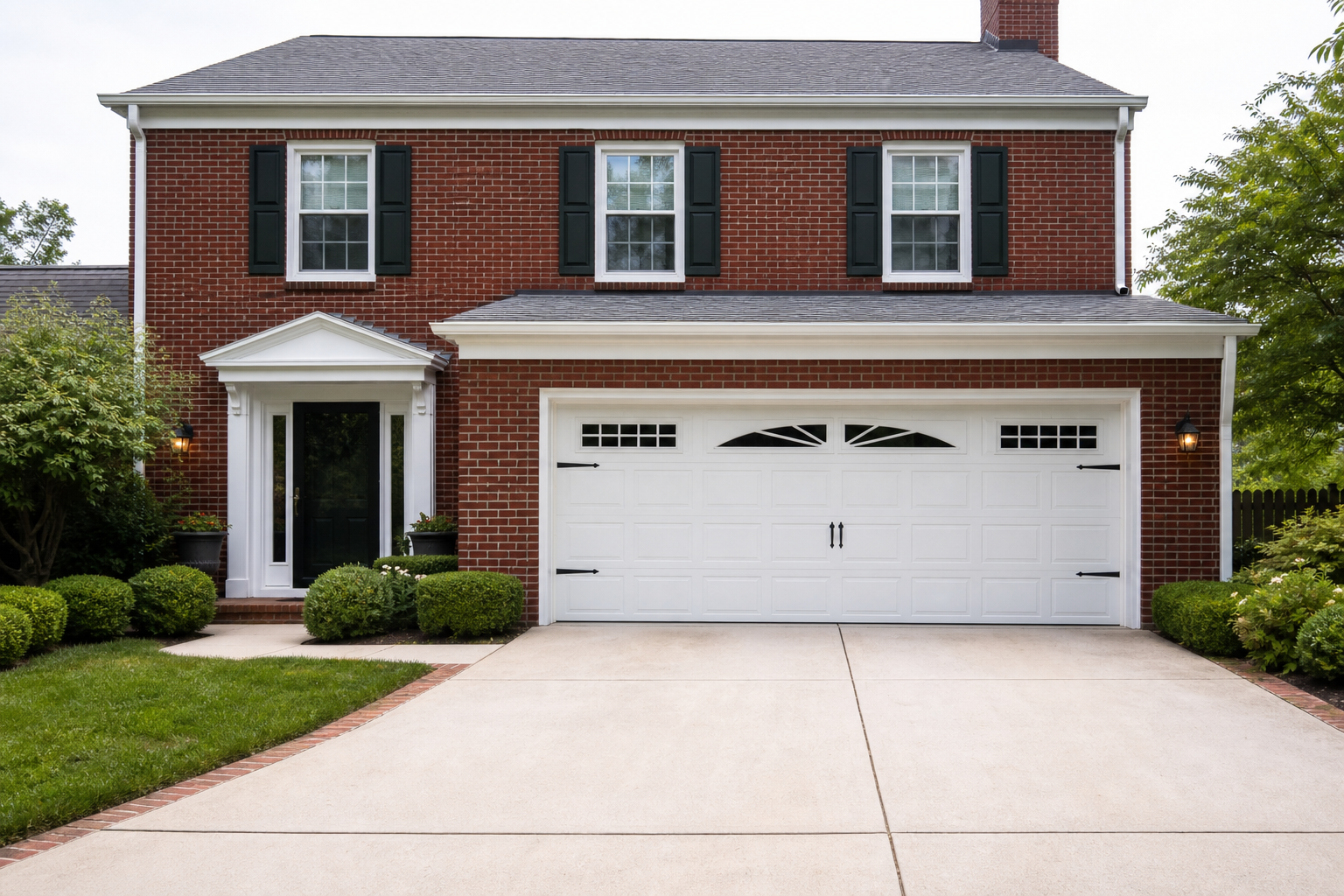
A central fan window flanked by rectangular inserts brings a formal, symmetrical energy to a traditional colonial facade. The fan shape echoes the transom windows above front doors that are common in this architectural style, so the garage feels like it belongs to the house rather than being an afterthought. Finishing the door with matching hardware and paint color ties everything together, and my article on painting garage door hardware covers how to get a consistent finish on all the metal details.
