

As an Amazon Associate I earn from qualifying purchases.
A black garage door is one of the fastest ways to sharpen your home’s exterior and make it look like you spent a lot more than you did. Whether your house is modern, craftsman, or somewhere in between, black works. In this article I’m covering four looks that homeowners keep coming back to: matte black finishes, black doors with window accents, modern panel styles, and black and wood combinations.
Matte Black Finishes
Matte black is the finish that keeps showing up on high-end builds, and for good reason. It absorbs light instead of bouncing it around, which gives the whole front of a house a grounded, intentional look. There’s no glare, no reflection, just a clean and confident presence from the street. If you want your garage to look expensive without a major renovation, swapping to a matte black door is one of the highest-return moves you can make. Check out my full breakdown of ways to make your garage look expensive if you want to pair the door upgrade with other exterior and interior changes.
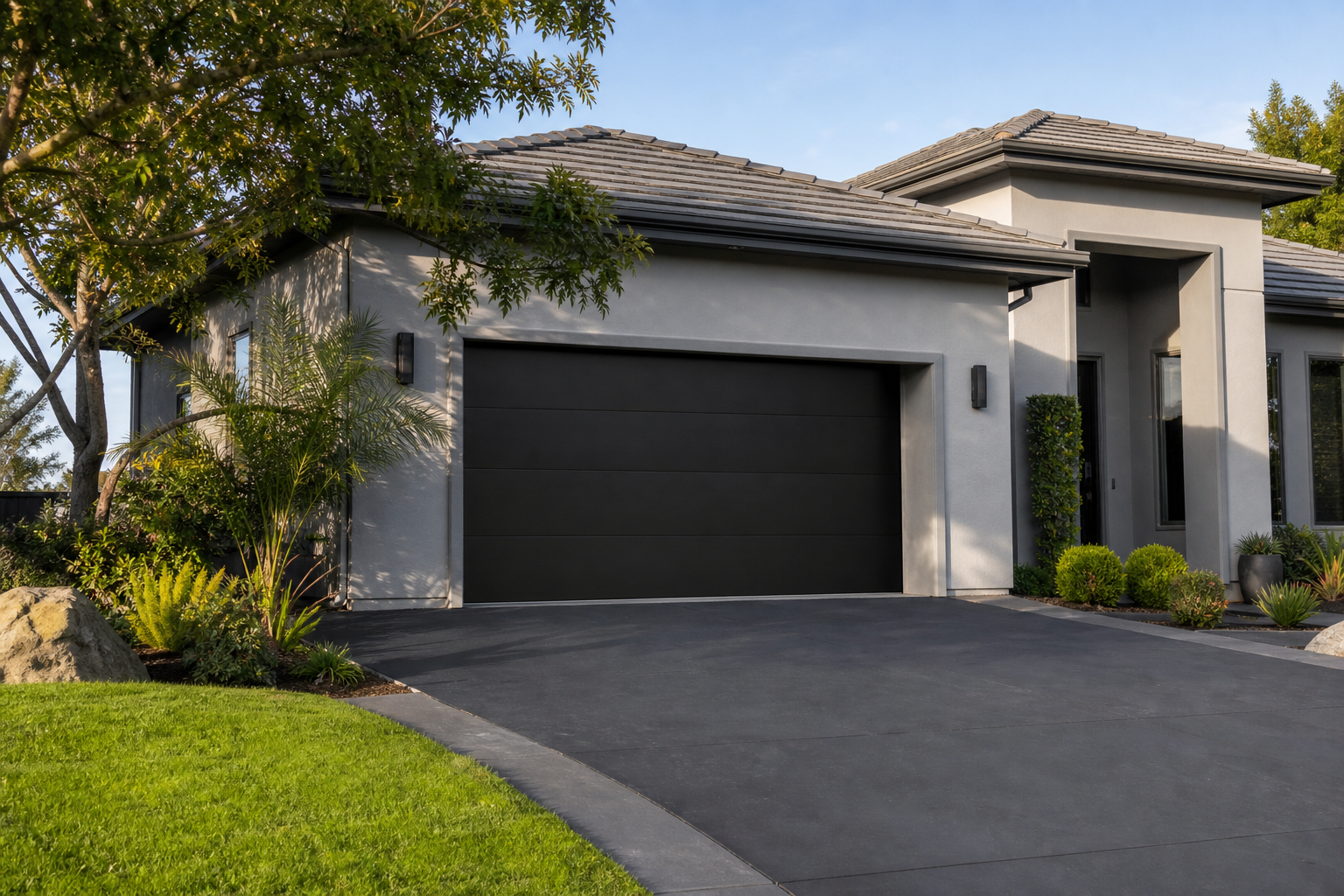
This flat-panel matte black door sits flush against a light gray stucco exterior, and the contrast is striking without being aggressive. The charcoal driveway pulls the color story down to the ground, creating a cohesive look from curb to roofline. No windows means nothing to distract from the door’s clean geometry.
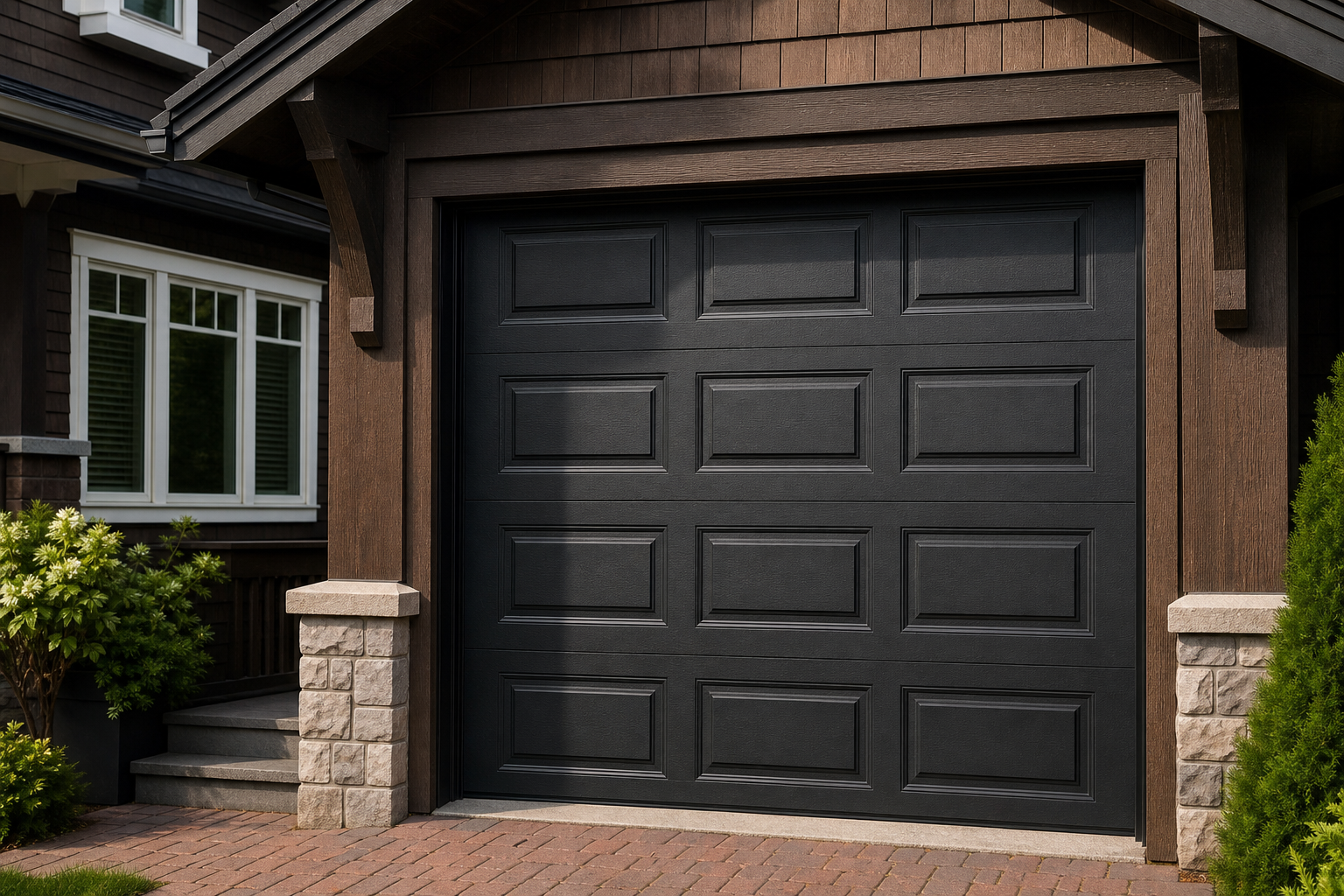
Raised panels in matte black give this craftsman exterior a look that feels both traditional and current. The dark brown wood trim on the home ties directly into the door color, making the whole facade read as one deliberate design choice. Morning light brings out the panel depth without creating any unwanted glare.
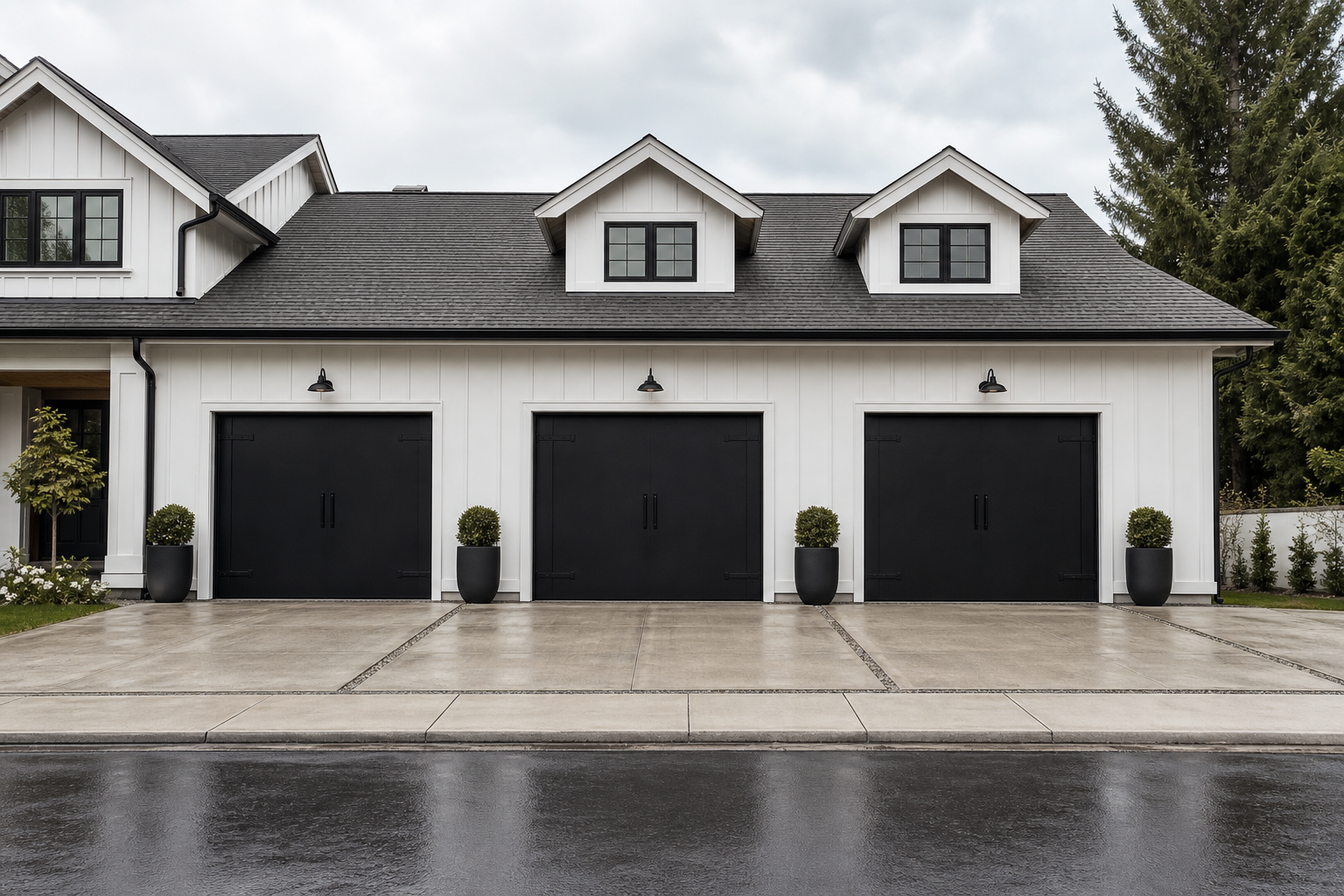
Three individual doors instead of one wide panel give this farmhouse garage a carriage-house feel that works perfectly with the board-and-batten siding. The brushed black iron hardware echoes the matte finish on the doors themselves, so every detail points in the same direction. If you’re thinking about updating your door’s decorative hardware to match, the process is easier than most people expect.
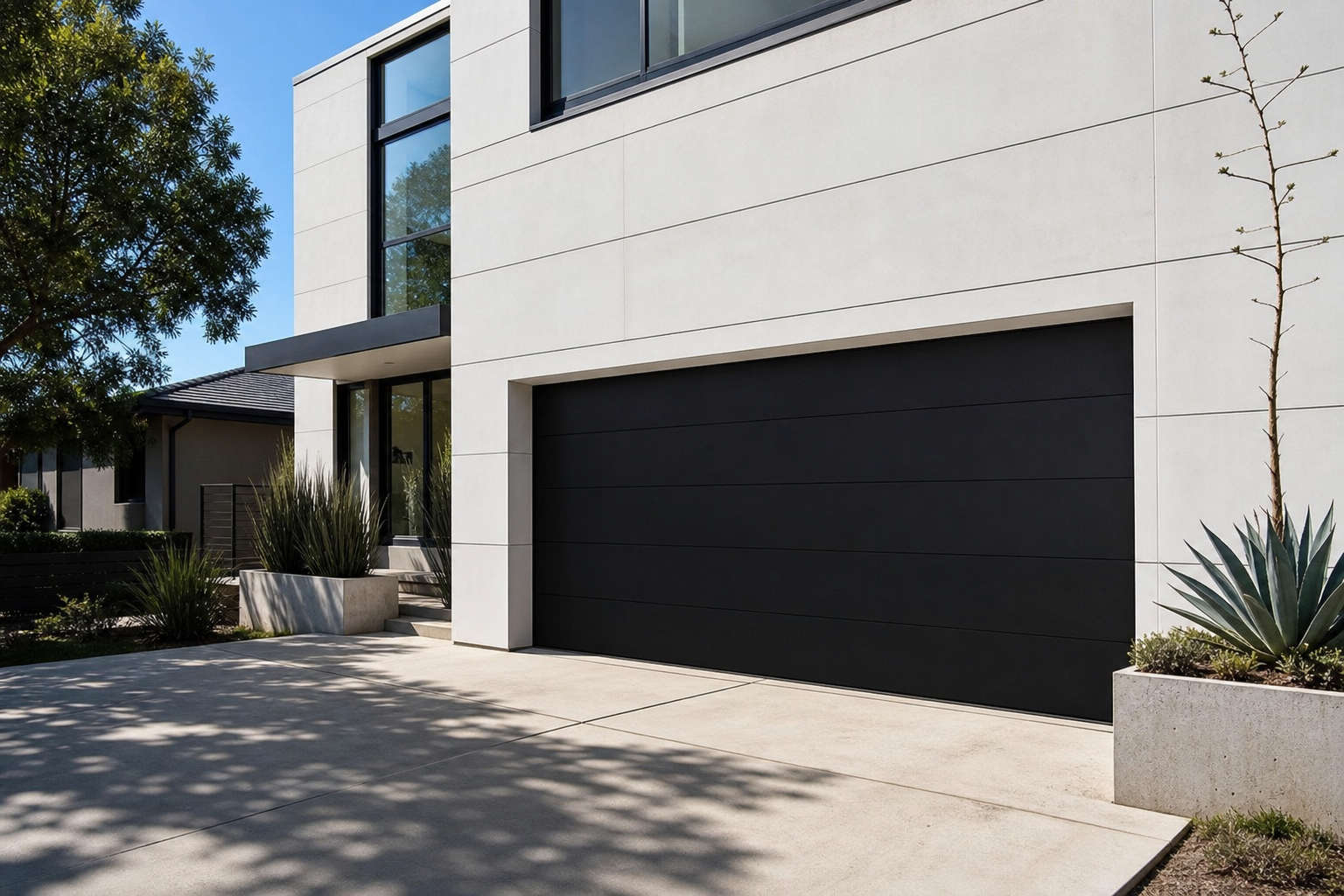
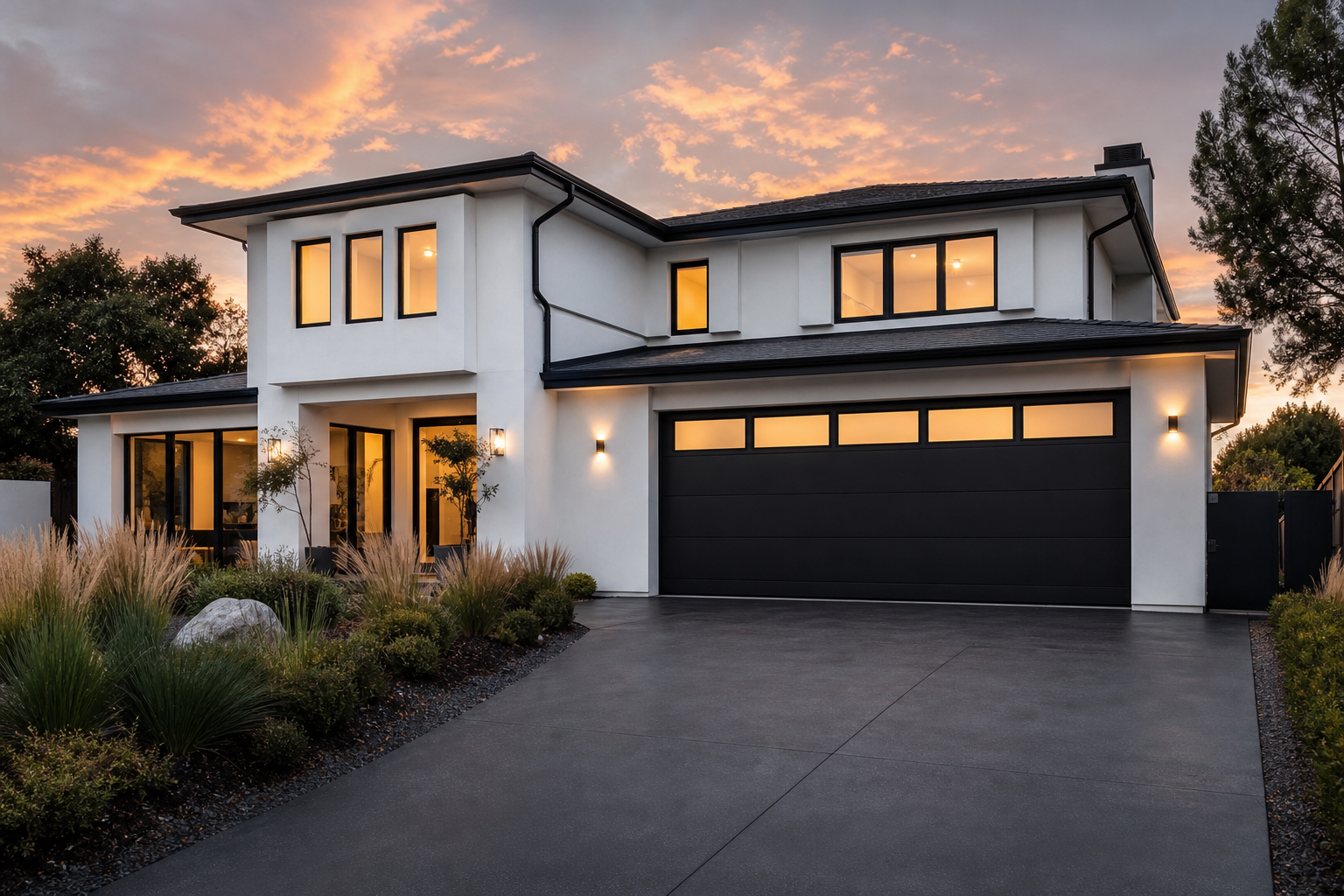
Slim flush panels keep this door looking razor-sharp against the white concrete exterior, with almost no visual noise between the panels. The black window frames on the house repeat the color at every level, so the door doesn’t feel like an isolated choice. Concrete planters with low-water plants reinforce the clean, architectural feel without softening it too much.
Black with Window Accents
Adding windows to a black garage door does two things at once: it breaks up the solid mass of the door and brings natural light into the garage. That’s a practical win and a visual one. The style of the window insert matters a lot here. Long horizontal lights read as modern, while divided-lite grilles push toward craftsman or carriage-house territory. If you’re working with an existing door, installing garage door window inserts is a manageable DIY project that can completely change the look. The right window placement also draws the eye upward, making the whole garage opening look taller.
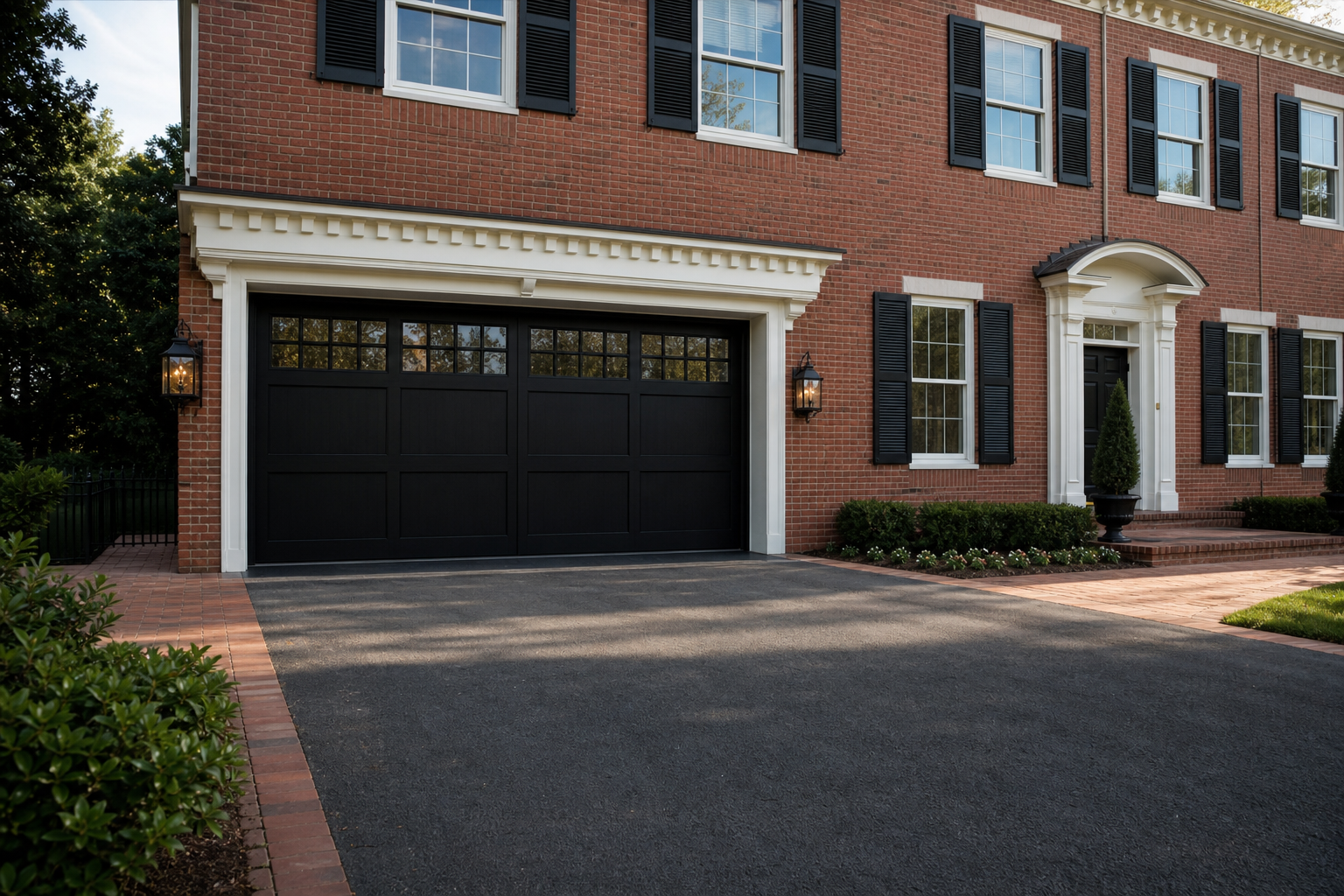
Divided-lite window inserts across the top row give this carriage-style door an authentic period look that suits the brick colonial perfectly. The small pane size keeps the traditional scale consistent with the home’s shutters and window proportions. Black painted shutters throughout tie everything together without requiring any additional hardware changes.
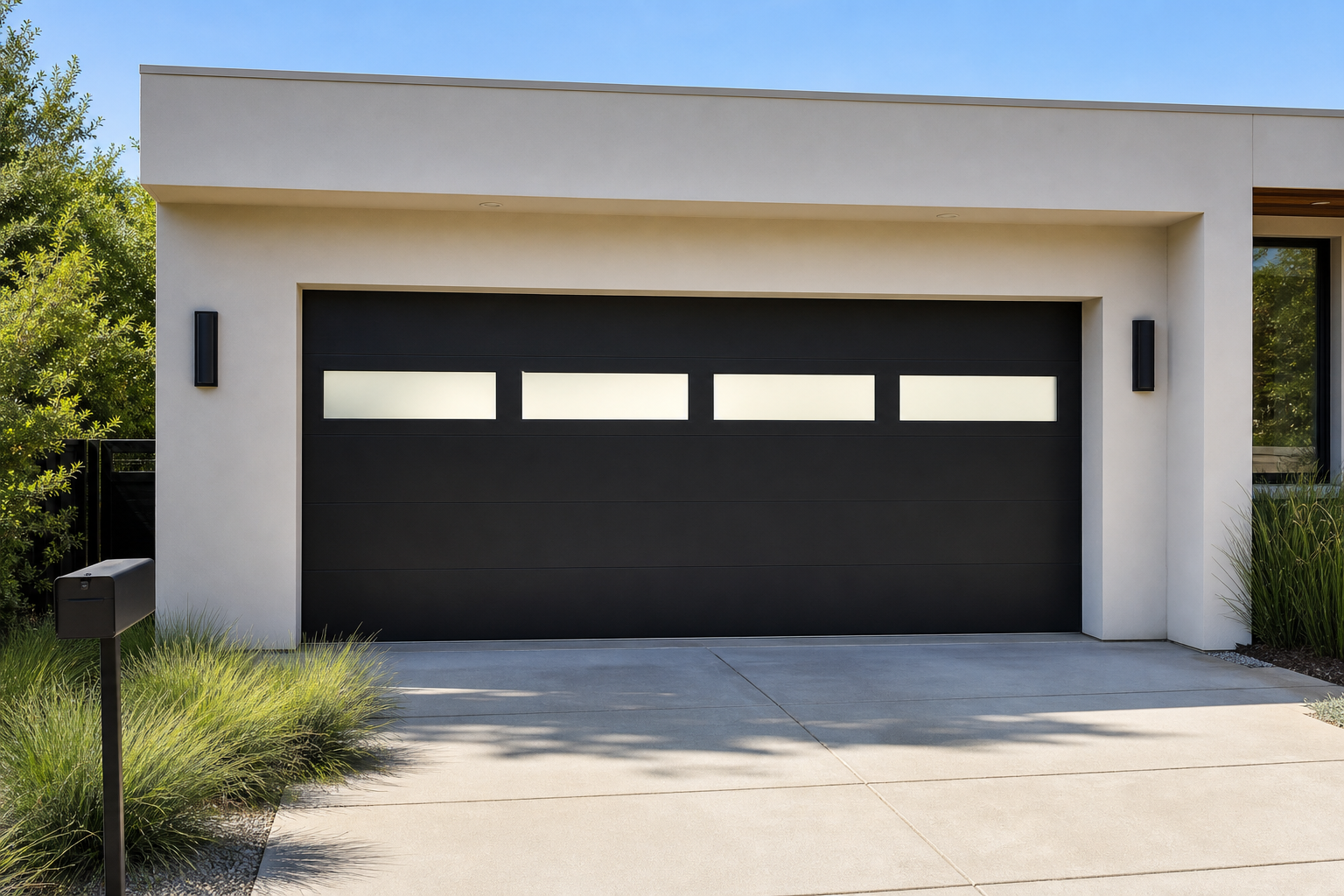
Long horizontal frosted glass strips modernize this black door while keeping privacy intact inside the garage. The frosted finish scatters light beautifully, giving the panels a soft glow even in direct sun. This kind of door pairs well with a well-lit interior, and if you’re upgrading lighting at the same time, it’s worth knowing that some LED bulbs can interfere with garage door openers.
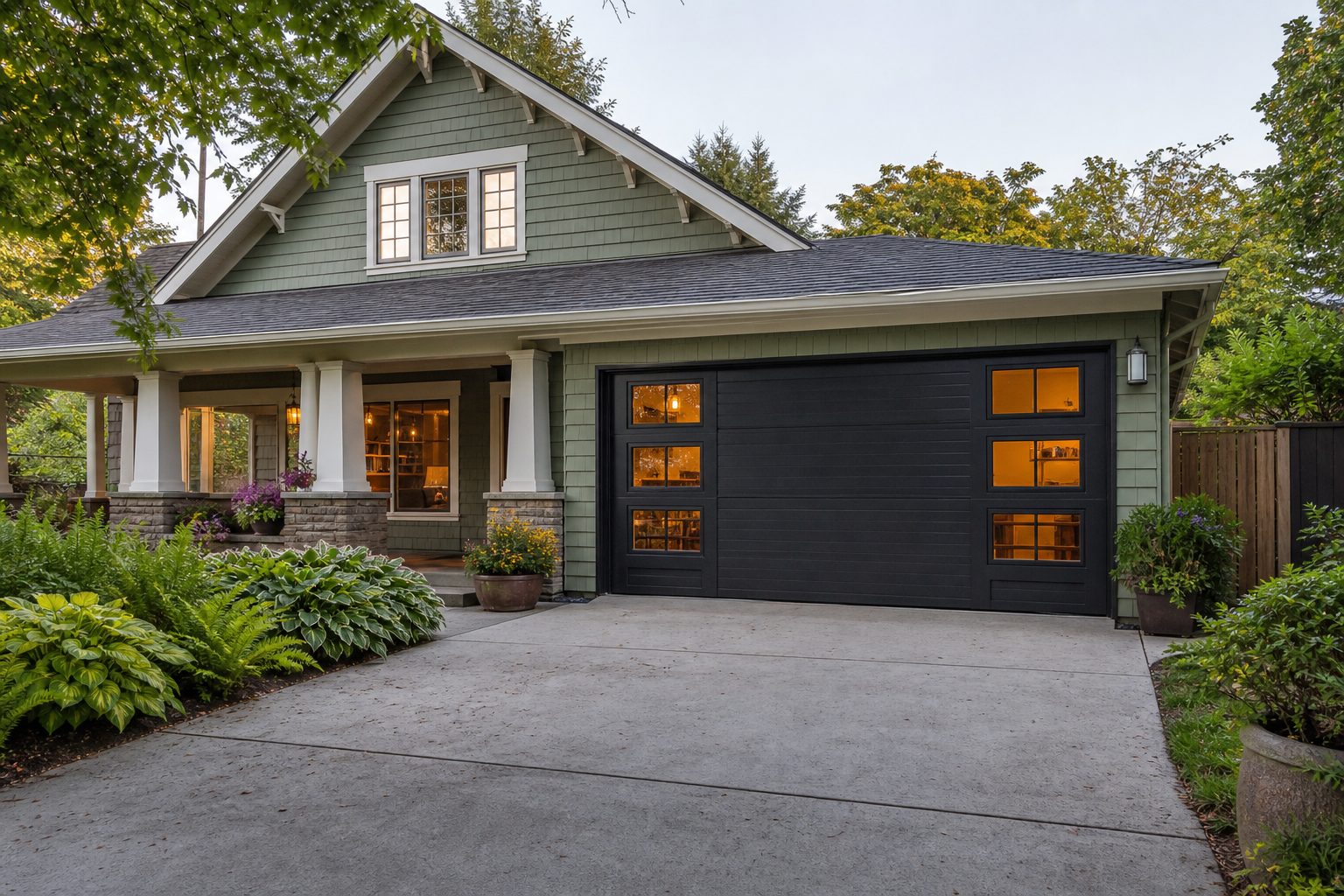
Two columns of square windows with simple grilles give this craftsman door a symmetry that echoes the bungalow’s architecture. Clear glass instead of frosted means the warm interior light shows through in the evening, which makes the whole front of the house feel lived-in and welcoming. The sage green siding and black door combination is quieter than black-on-white but just as striking.
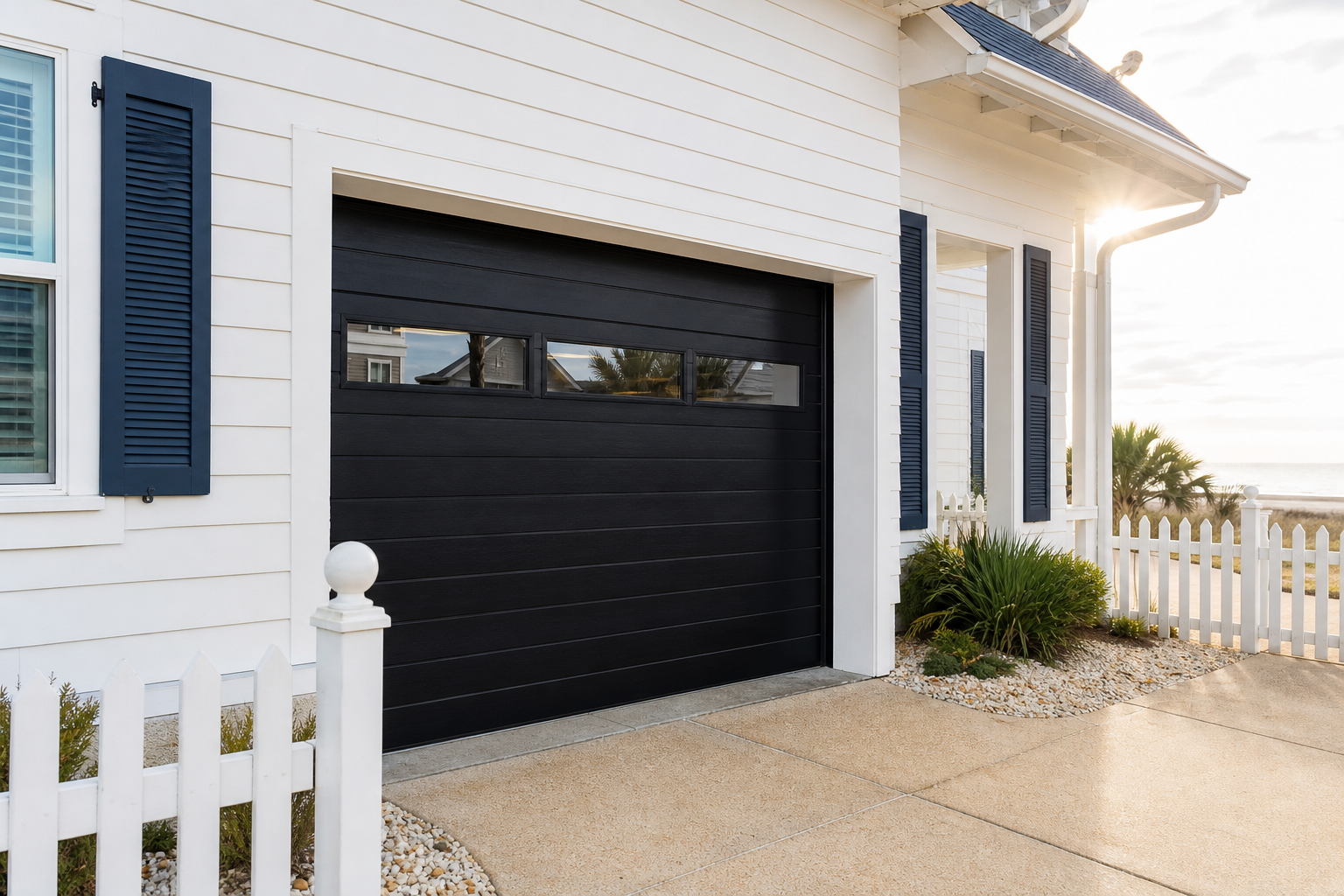
Five narrow rectangular windows in a clean horizontal line give this coastal home’s black door a modern edge that plays well with the navy shutters and white lap siding. The restrained window size keeps things airy without making the interior visible from the street. If you ever want to add a privacy film to those windows down the road, my guide on installing garage window insulation film covers that process in detail.
Modern Black Panel Styles
Panel design is where black garage doors really show off their range. Flush panels read as architectural and minimal. Deep-relief panels add shadow lines that give a door dimension from a distance. Corrugated or ribbed steel panels lean industrial, which works surprisingly well on contemporary and mixed-material homes. When you’re shopping for a door or considering a panel swap, the details matter more than people expect. If your current door has damaged sections, it’s worth knowing what’s involved in replacing individual garage door panels before committing to a full door replacement. The right panel profile can make even a modest home look custom-built.
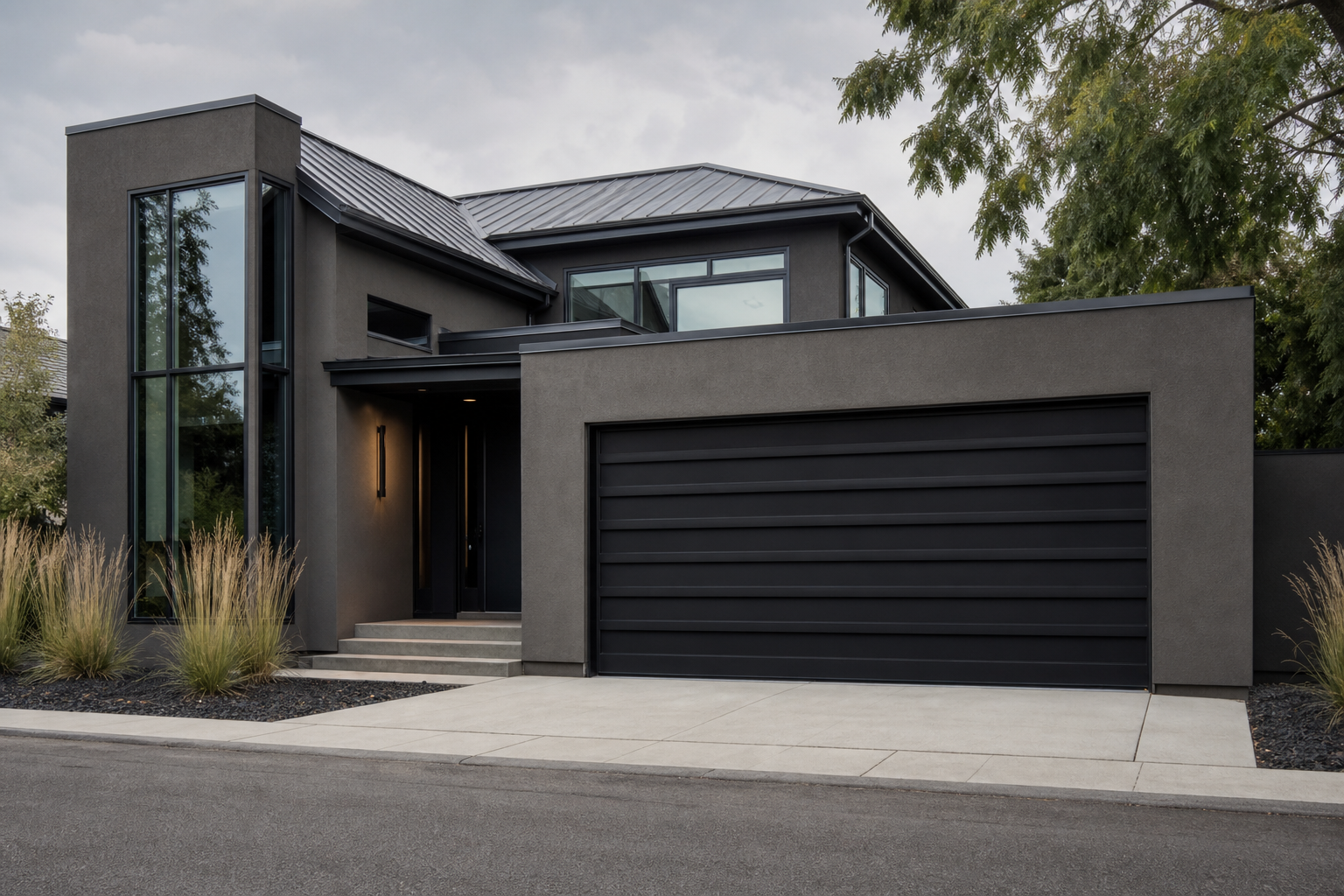
Deep horizontal ribs on this black steel door create shadow lines that shift as the sun moves, giving the facade a constantly changing texture. The charcoal exterior makes the door feel embedded in the design rather than applied to it. Black gravel beds and ornamental grasses continue the controlled, architectural tone down to ground level.
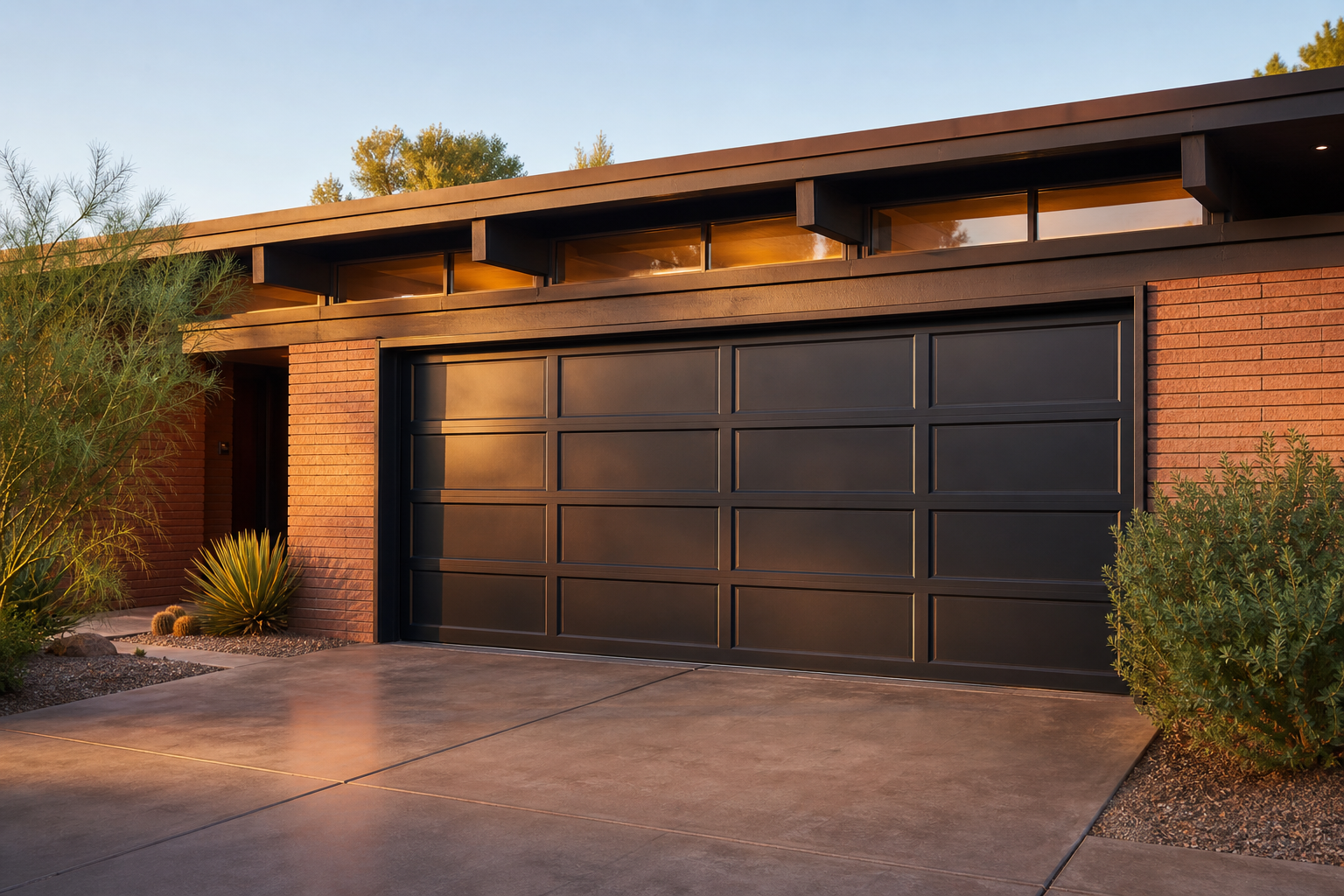
A 4×4 grid of recessed square panels gives this door a geometric quality that echoes mid-century design instincts without mimicking them literally. Terracotta brick beside the black door is a warm-and-cool pairing that somehow always works. Golden hour raking light makes every panel edge pop in a way that flat midday lighting never could.
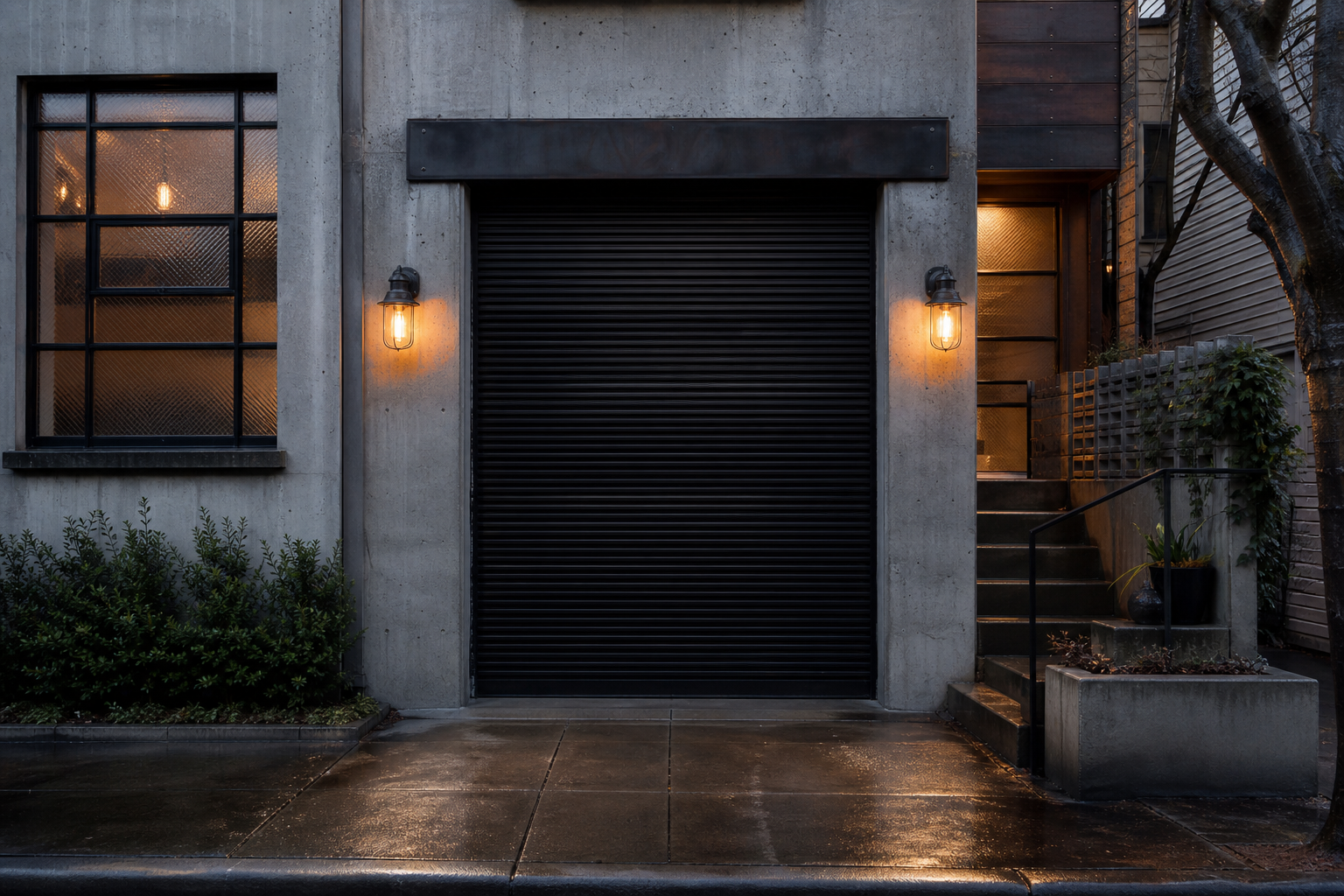
Corrugated steel in black gives this narrow urban garage door an industrial honesty that matches the raw concrete and steel window frames surrounding it. The ribbed texture catches light differently at every angle, so the door never looks flat even in low-contrast conditions. Edison wall sconces flanking the door add warmth that keeps the whole exterior from feeling cold.
Black and Wood Combos
Black and wood is one of those pairings that shows up everywhere in interior design, and it translates just as well to garage doors. The warmth of natural wood grain against the depth of black creates contrast without tension. Cedar, teak, and reclaimed wood are the most common choices, each bringing a different character to the combination. Lighter woods like cedar read as fresh and modern, while darker stained wood feels more grounded and rich. If you’re drawn to wood elements in your garage more broadly, the idea of a wood garage floor might also be worth exploring. Whether the wood is structural or decorative on the door itself, the combination with black almost always reads as high-end.
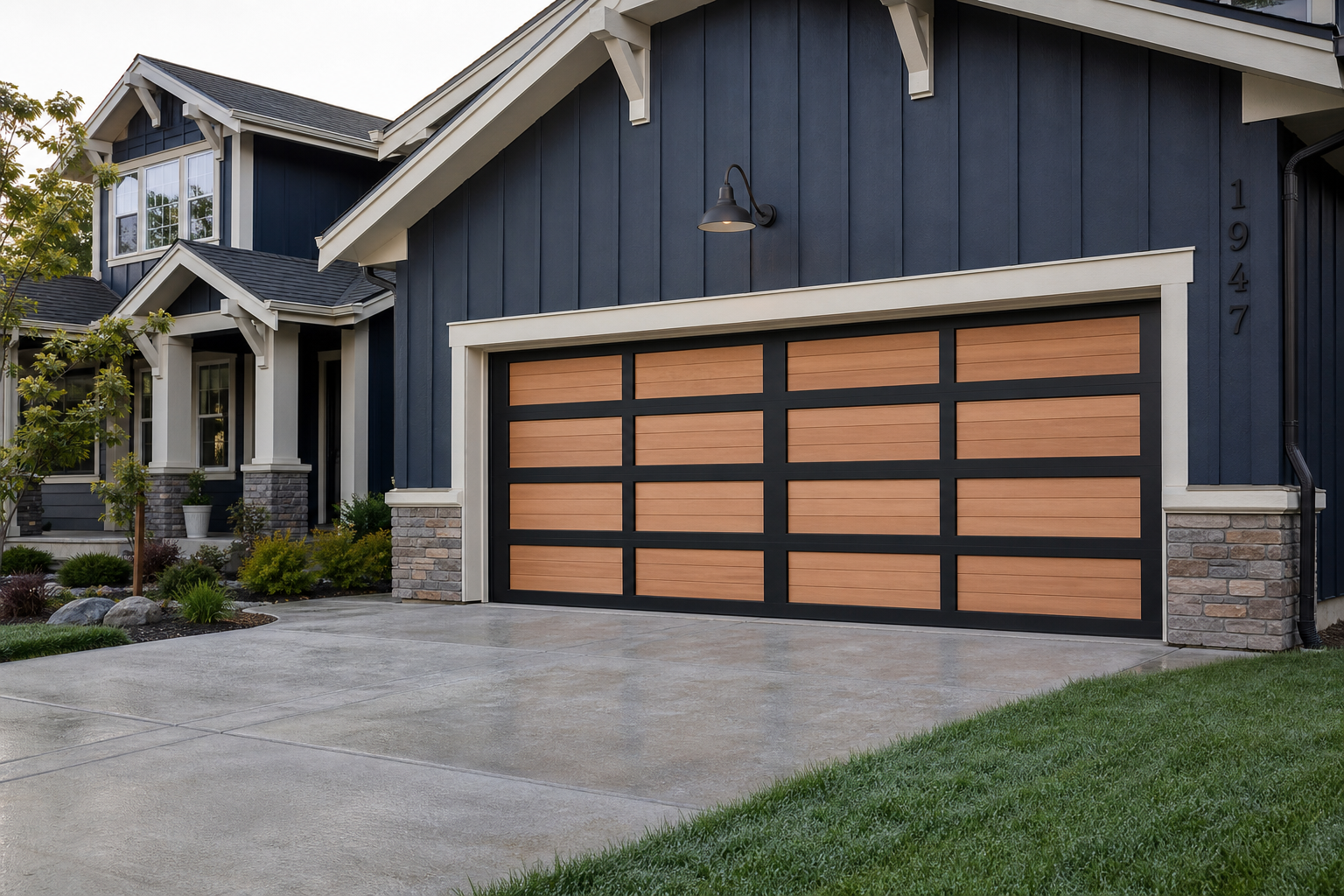
Horizontal cedar slats inside a black steel frame bring warmth to a navy exterior that might otherwise feel heavy. The natural, unstained cedar tone keeps things fresh rather than rustic, which suits the clean lines of the craftsman style here. Black iron house numbers on the siding repeat the black steel detail so the door feels tied into the whole composition. This is the kind of combination that makes your home look like you hired a designer, and if you want more ideas in that direction, my post on garage curb appeal ideas has a lot of practical options.
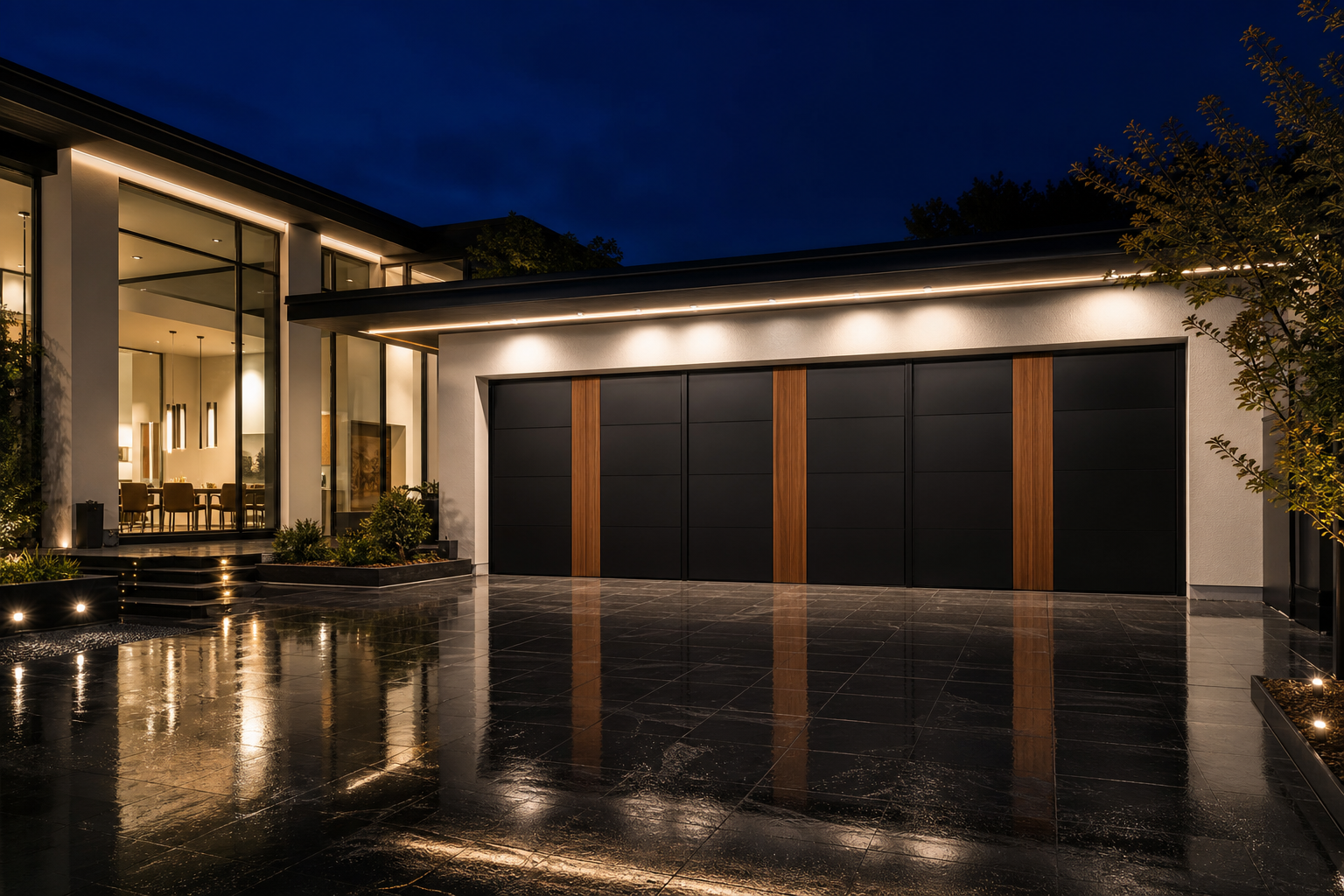
Vertical walnut inlay strips breaking up the black aluminum panels give this door a warmth that pure metal could never achieve on its own. The grain of the dark walnut is visible even in evening lighting, which makes the door feel intentional and premium after dark. Roofline LED accent lighting frames the whole facade, turning the garage into a focal point rather than just a utility door.
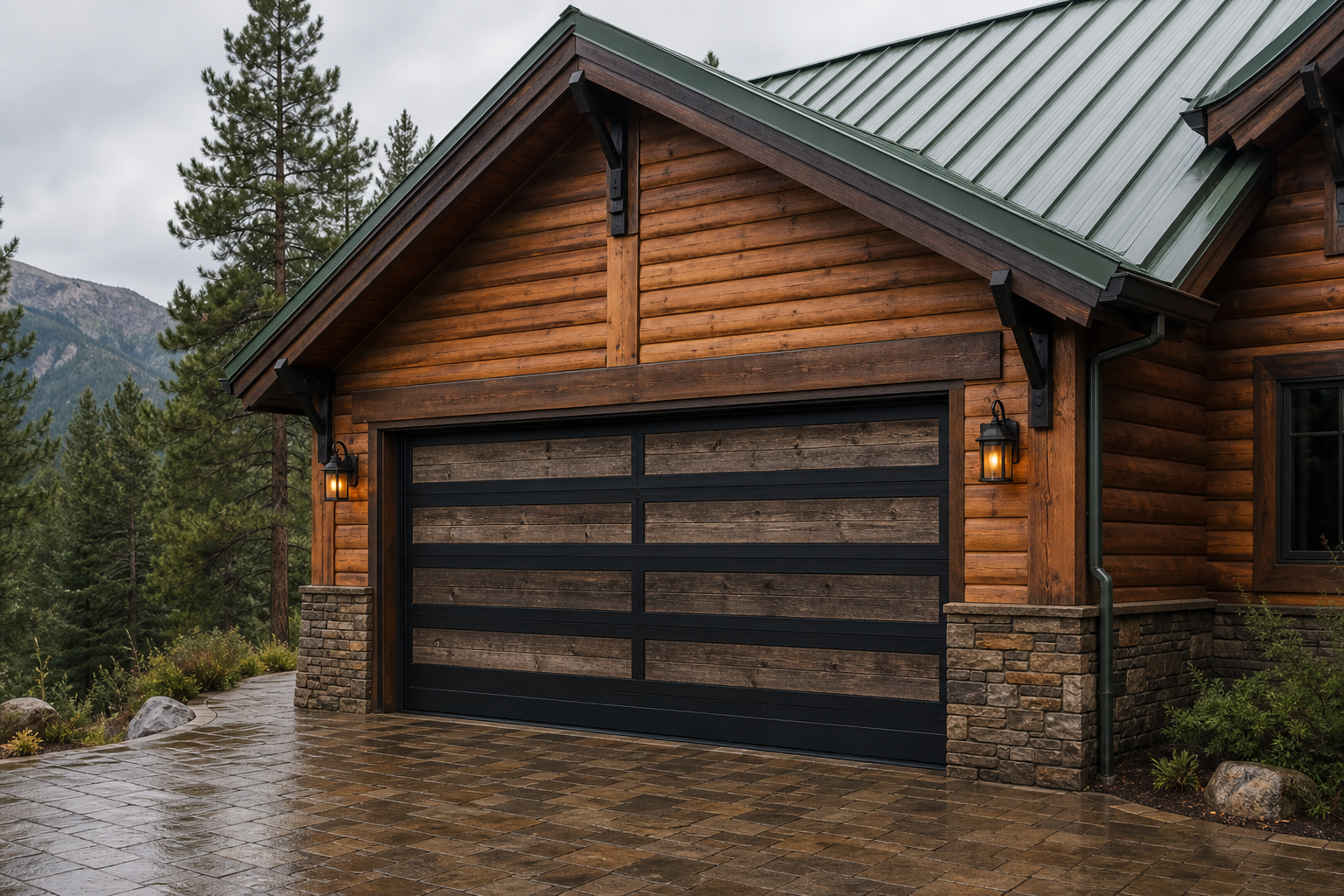
Alternating reclaimed barn wood panels and black steel rails give this door a rugged, layered look that fits the mountain setting without feeling like a costume. The natural grey-brown tones of the aged wood sit comfortably beside the black steel, and the rough texture contrasts the smooth metal in a way that feels deliberate. Stone veneer and log cabin siding on the home reinforce the same material honesty all the way across the facade.
