

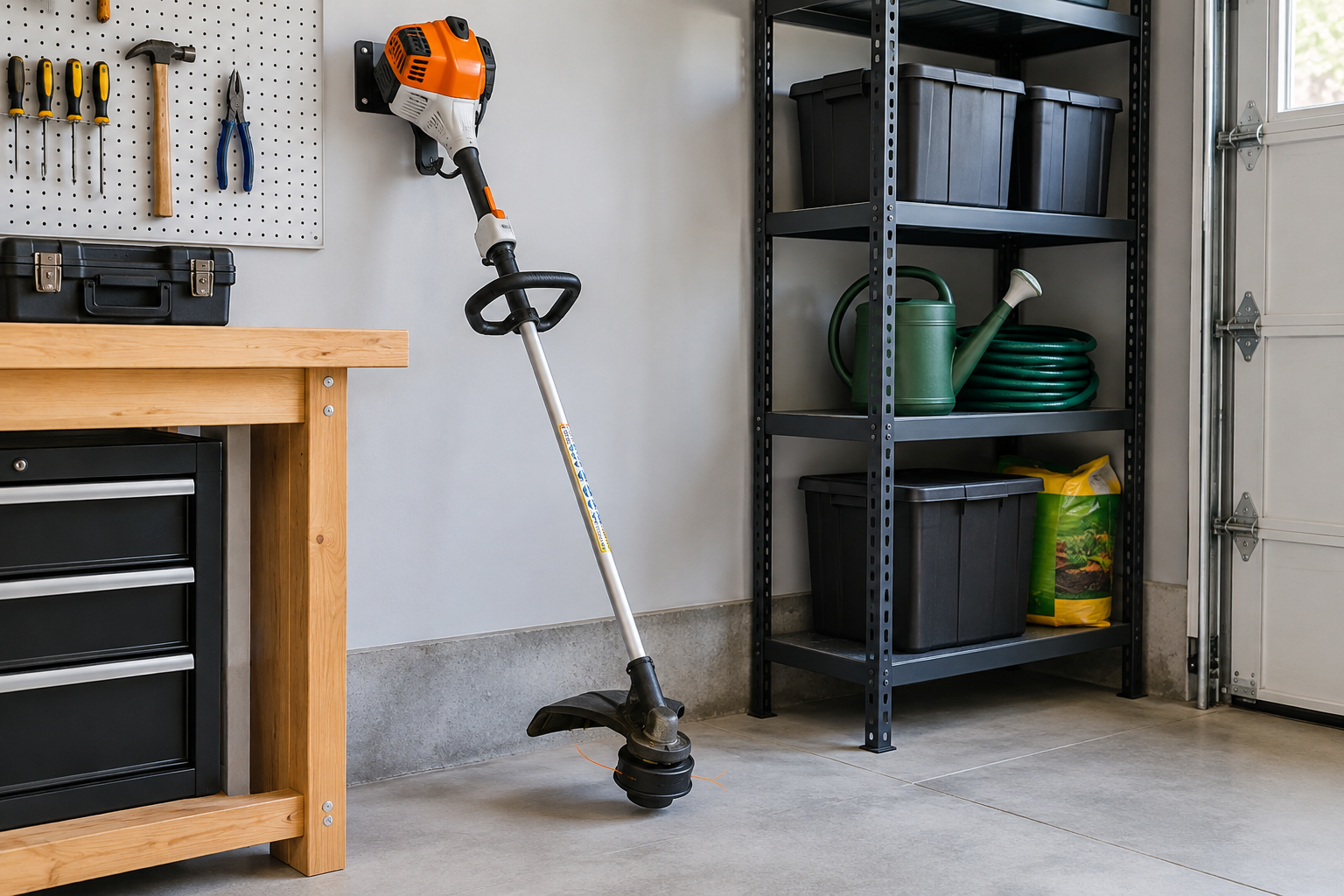
Your string trimmer probably spends most of its life leaning against a wall, tipped over on the floor, or wedged behind the lawn mower where it’s just annoying enough to knock over every time you walk past. It’s a small tool, but it’s an awkward one. The long shaft, the head full of line or blades, and the curved handle make it tough to store neatly without it sliding down or tipping over.
The good news is that trimmers are actually one of the easiest yard tools to organize once you pick the right mounting method. This guide walks through the best ways to store a string trimmer in your garage, from wall hooks to slatwall systems, plus the battery and fuel details most people overlook.
Why Trimmers Are Harder to Store Than They Look
A string trimmer isn’t a simple straight tool like a rake or a shovel. It’s got a curved or bent shaft, a motor housing on one end, and a cutting head on the other that’s usually heavier and wider than the rest of the tool. That off-balance shape means it doesn’t just hang or lean cleanly the way a broom does.
Leaving it on the floor also invites problems. Concrete floors hold moisture, and a trimmer left flat can trap grass clippings and dirt against the housing, which speeds up corrosion on the metal shaft and fasteners. If your garage already deals with dampness, this is worse than it sounds. Check out our guide on fixing high garage humidity if your tools seem to rust faster than they should.
Floor storage also just eats up space you don’t have. Getting the trimmer up on the wall clears a walking path and keeps it away from moisture, dust, and the occasional rolling bike tire.
Horizontal vs Vertical Wall Mounting
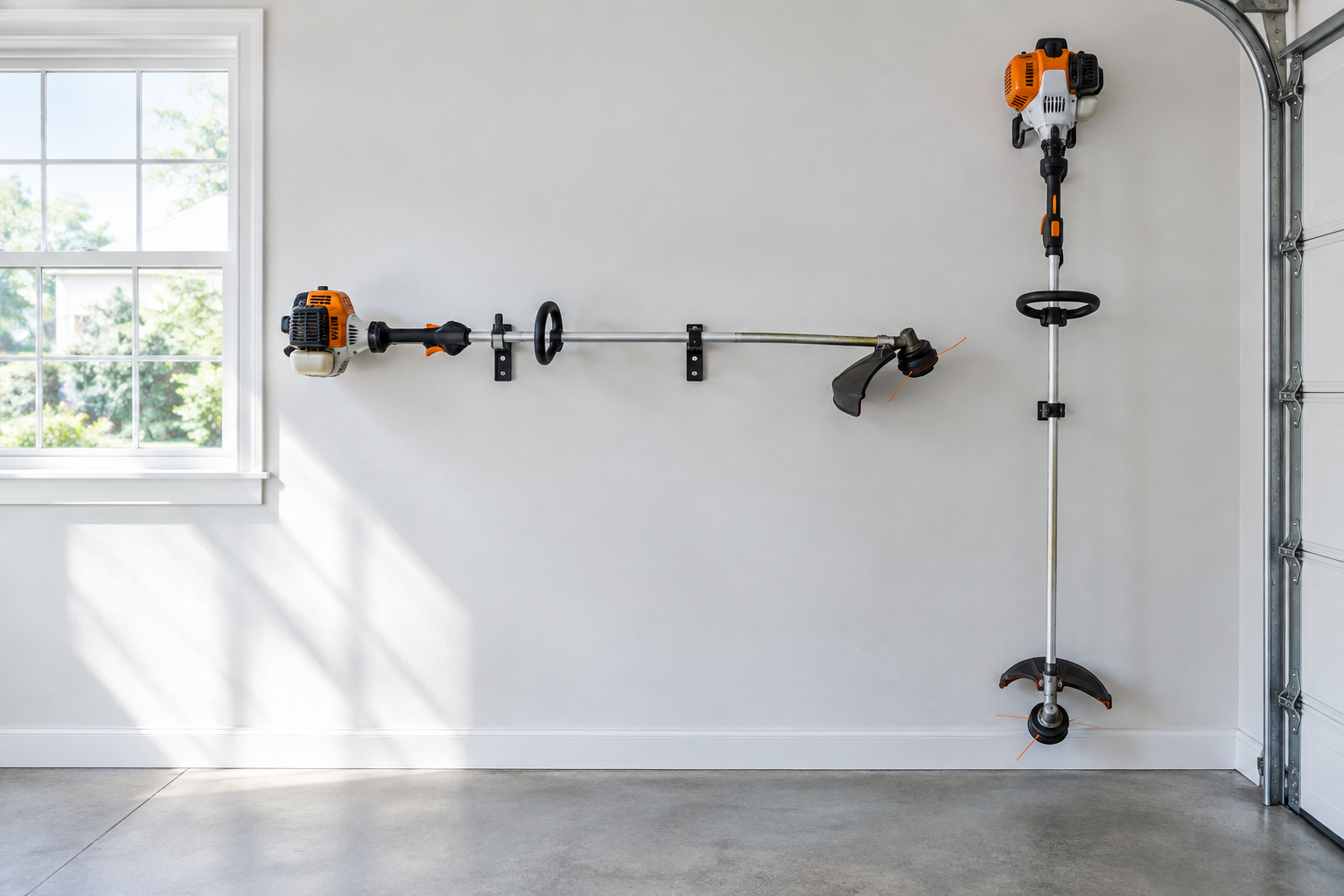
You’ve got two basic options for wall mounting a trimmer, and each one works better in different situations.
Horizontal Mounting
Horizontal storage means the trimmer lies flat against the wall, usually supported by two hooks or a cradle bracket spaced a couple feet apart. This is the most stable option and the easiest on the tool itself, since the weight is distributed across two support points instead of hanging from one.
The downside is that horizontal mounting takes up more wall width, usually three to four feet depending on your trimmer’s length. If you’ve got a long, open wall section, this is worth it. If your garage walls are already packed with shelving or cabinets, it might not fit.
Vertical Mounting
Vertical mounting hangs the trimmer by its shaft or handle so it stores nose-down or nose-up, taking up only a narrow strip of wall. This is the better pick for smaller garages or when you’re storing several yard tools side by side.
The tradeoff is that a single hook holds all the weight, so you want a hook rated for at least ten pounds and installed into a stud or solid backing, not just drywall anchors. Vertical storage also works best if your trimmer has a hook loop or a flat spot near the handle designed for hanging, which most gas and battery models do.
If you’re trying to decide, vertical wins for garages tight on space, and horizontal wins if stability and easy on-off access matter more to you. Either way, you want to keep the head at least a few inches off the ground so nothing drags or catches on the floor.
Hooks, Racks, and Slatwall Accessories
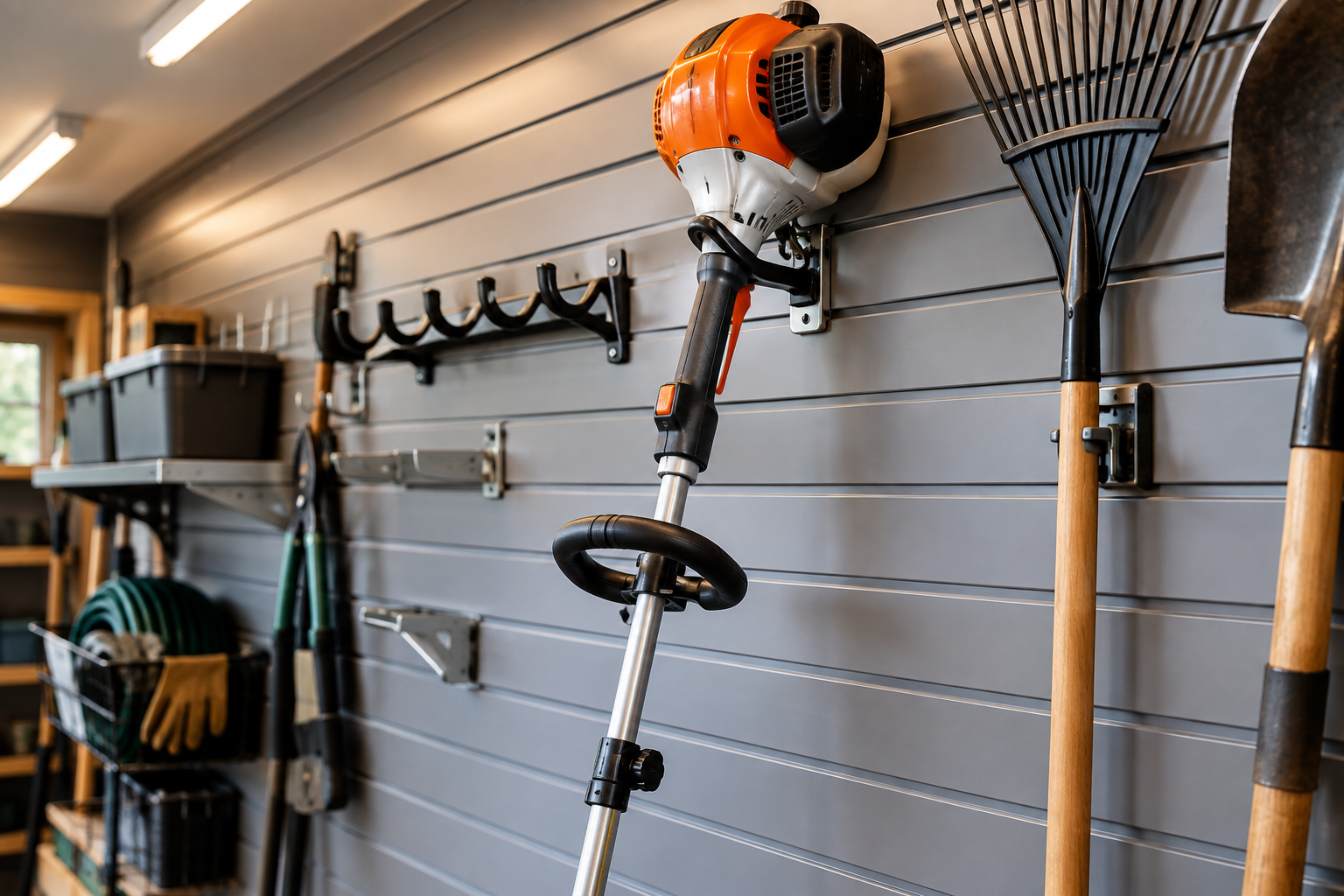
The simplest fix is a single heavy-duty hook mounted directly into a wall stud. This works fine for one trimmer, costs almost nothing, and takes ten minutes to install. The tradeoff is that a bare hook doesn’t do much to keep the tool from swinging or scuffing the wall.
A step up from that is a dedicated garden tool rack designed with spring-loaded or rubber-coated arms that grip the shaft without scratching it. These racks usually hold two or three tools at once, which is handy if you’ve also got an edger or a hedge trimmer competing for the same wall space.
Garden Tool Wall Mount Rack
A multi-tool rack keeps your trimmer, edger, and rake organized on one strip of wall instead of three separate hooks.
If you’ve already got a slatwall or pegboard system installed in your garage, string trimmer storage gets even easier. Slatwall hook accessories are sold specifically for long-handled tools, and they let you reposition the trimmer’s spot whenever you rearrange the rest of your setup. This is the same approach we recommend for leaf blowers, and it works just as well here since both tools share that awkward long-and-lopsided shape.
Slatwall Utility Hook Set
Slatwall hooks give you flexible, adjustable storage that works for trimmers, blowers, and other long-handled yard tools.
If you’re building out your wall storage from scratch, it might make sense to plan the whole layout at once rather than adding one hook at a time. Our garage shelving ideas article and our garage cabinet ideas guide both cover ways to combine hanging tool storage with shelving so your whole yard equipment corner stays organized instead of scattered.
Battery and Fuel Considerations Before You Hang It Up
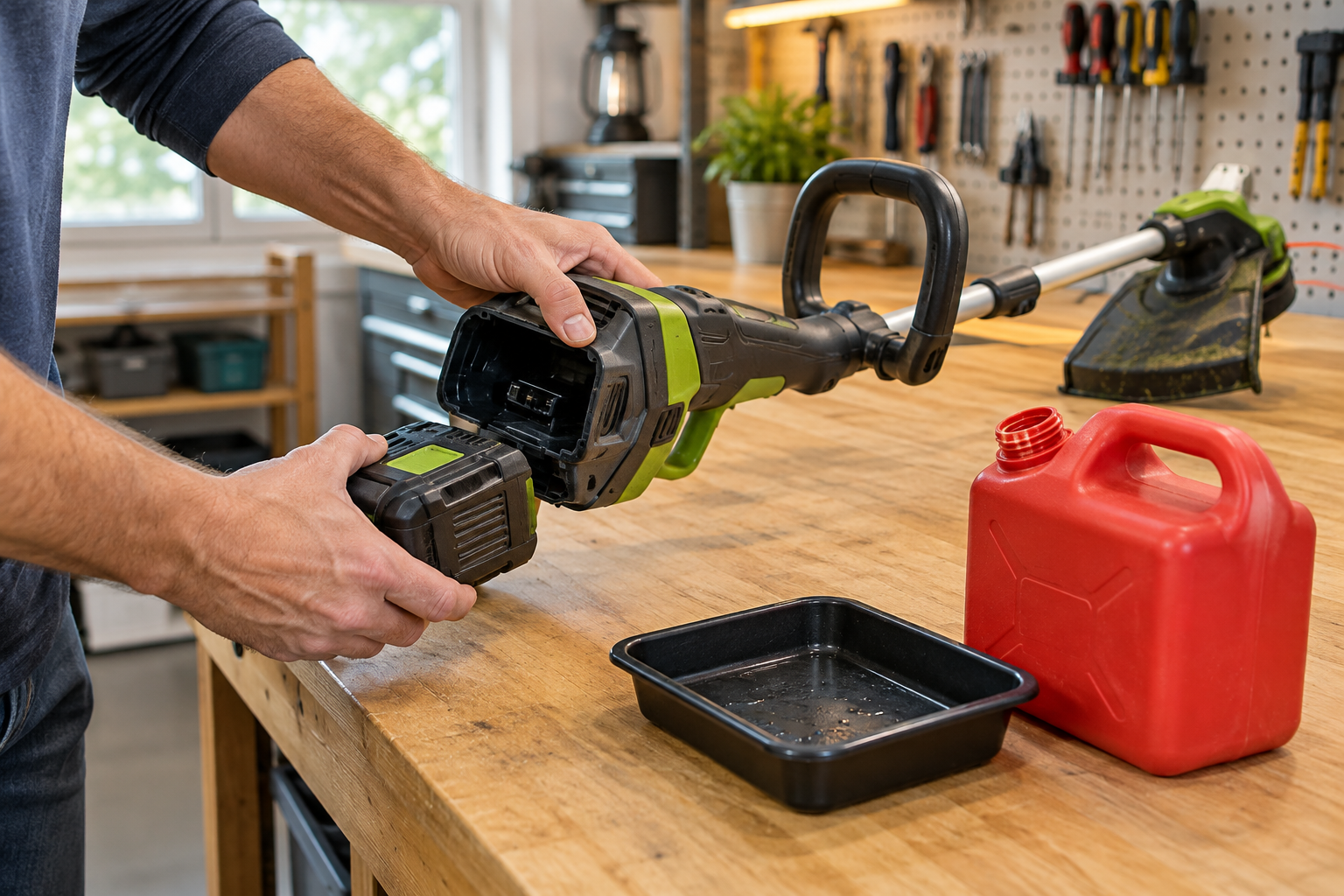
How you store the trimmer depends a lot on what powers it, and this is the part people skip.
If you run a gas trimmer, don’t store it for more than a few weeks with a full tank. Old gas gums up carburetors and turns a simple spring startup into an afternoon of troubleshooting. Either run the tank dry before long-term storage or add a fuel stabilizer, and always store it upright or at a slight angle so fuel doesn’t seep past the cap or into the air filter.
Gas trimmers also should never be stored right next to a water heater, furnace, or anything else with a pilot light or spark source. If your garage houses a generator too, our generator garage safety guide covers a lot of the same fuel storage principles worth following here.
Battery-powered trimmers are simpler in some ways but come with their own rules. Pull the battery out before hanging the tool up, especially in a garage that swings between hot summers and freezing winters. Lithium-ion batteries degrade faster when they sit at full charge in extreme heat, so store batteries indoors or in a temperature-stable spot rather than leaving them clipped into the trimmer on the wall.
Clearance and Keeping It Accessible
A mounted trimmer only helps if it doesn’t block anything else and doesn’t turn into a hassle to grab every time you need it.
Leave at least a foot of clearance below the hanging trimmer so the cutting head or string doesn’t interfere with anything stored underneath it. Mount it at a height where you can lift it off the hook without having to duck or reach overhead, usually somewhere between shoulder and eye level works best for most people.
Keep it near the door you actually use to head out to the yard, not tucked in the back corner near the holiday bins. If your garage doubles as storage for seasonal decorations, our holiday decoration storage guide has good tips on keeping that gear separated from your daily-use tools so they don’t end up competing for the same wall space.
Also think about what’s nearby. Mounting a trimmer above a workbench or near stored cardboard can be a problem if you’re dealing with rodents in the garage, since gas residue and debris can attract pests looking for a place to nest. Our mouse-proofing guide is worth a look if you notice chewed cords or nesting material near your yard tools.
FAQ
Can I store my string trimmer outside instead of in the garage?
You can, but it shortens the tool’s life. UV exposure cracks plastic housings, and moisture speeds up rust on metal parts and fasteners. A garage wall mount is a better long-term option, even if it’s just a basic hook near the door.
What weight rating do I need for a trimmer wall hook?
Most gas trimmers weigh somewhere between nine and twelve pounds, and battery models are usually lighter. Look for a hook rated for at least fifteen pounds to give yourself a safety margin, and always anchor into a stud rather than drywall alone.
Should I store the trimmer with the line spool attached?
Yes, there’s no need to remove it for storage. Just make sure the head isn’t resting directly on the floor or pressed against anything that could bend the guard. Hanging it clear of the ground protects the spool and prevents the line from picking up moisture.
This article contains affiliate links. We may earn a small commission at no extra cost to you.
