

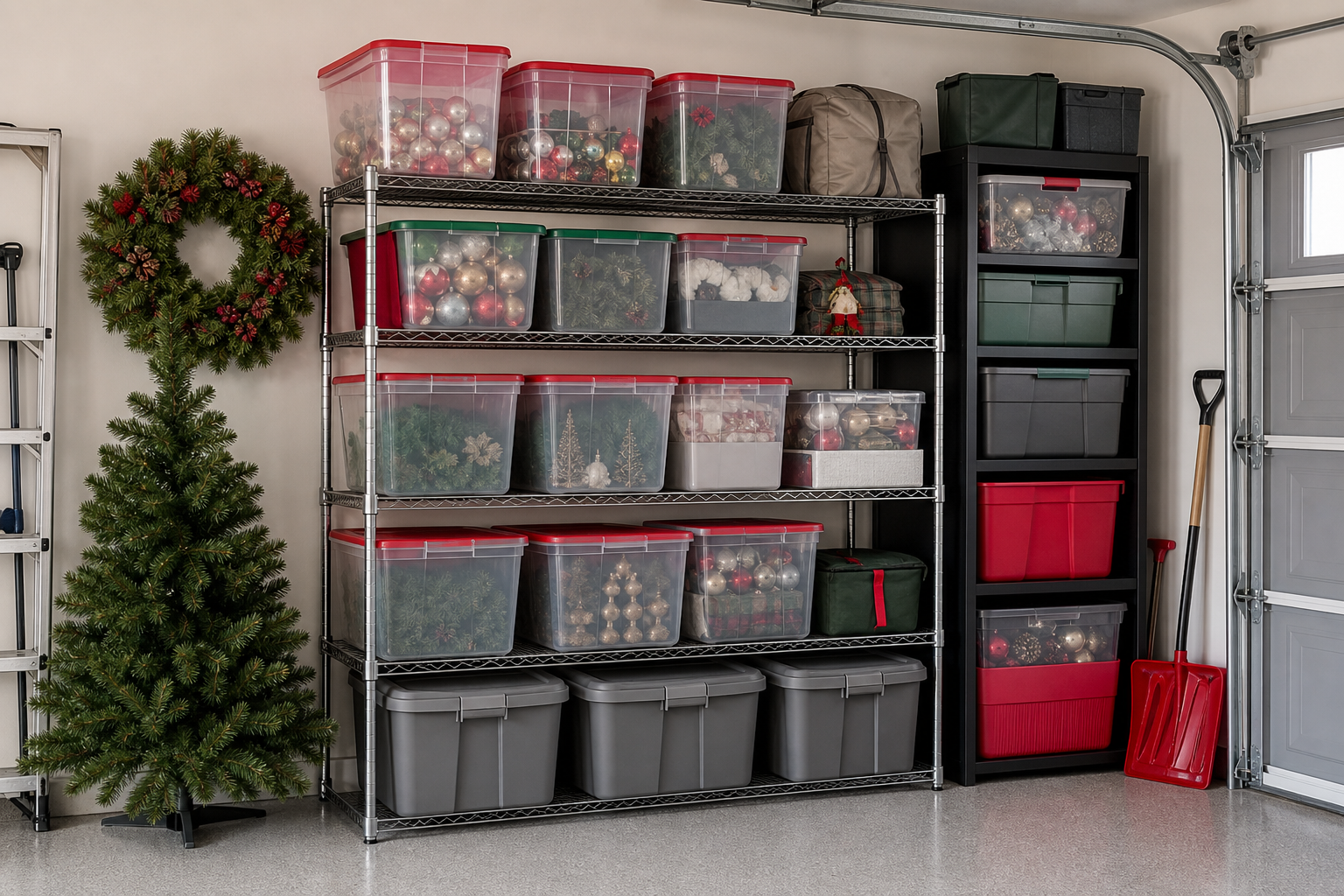
Understanding garage holiday decor storage in detail gives you a real advantage, whether you’re planning a project, troubleshooting, or making smarter decisions about your space. The specifics matter more than most people expect.
This guide covers everything you need to know in practical terms, with actionable takeaways you can use right away.
Understanding the Basics
Effective garage storage uses walls and ceiling as primary surfaces, keeping the floor clear for vehicles and work. Wall-mounted track systems, overhead ceiling racks, and sturdy cabinets provide organized access without eating into parking or workspace.
Clear plastic bins beat cardboard for garage storage in every way: moisture resistance, pest resistance, visibility, and stackability. Label each bin on the front for easy identification. A label maker and 20 minutes of work saves hours of searching over the coming years.
Weight capacity is critical and often misunderstood. Wall systems in studs hold 50 to 75 pounds per linear foot. On drywall alone, that drops to 15 to 25 pounds before failure. Ceiling racks rated for 600 pounds assume even distribution; concentrating weight in one area can cause failure well under the total limit.

Clear Storage Bins with Labels
Essential for visibility and moisture protection in garage conditions
The temperature swings in a typical garage create challenges cardboard can’t handle. Summer heat builds moisture in sealed cardboard boxes. Winter cold makes cardboard brittle. A single season cycle can turn sturdy boxes into sagging failures.
Plastic bins cost more upfront but last decades in garage conditions. They seal against dust, don’t absorb odors, and stack reliably without compression.
Bin size matters for holiday decorations. 18-gallon bins (roughly 24″ x 16″ x 16″) work well for wreath collections, garlands, and medium ornament sets. 66-gallon bins handle artificial trees up to 7.5 feet when disassembled. Oversized bins tempt you to overfill them, creating back-straining lifts and unstable stacks. Keep individual bin weight under 40 pounds for safe handling.
Seasonal Access and Rotation Strategy
Holiday decorations sit unused for 11 months of the year. That makes them ideal candidates for overhead or high-wall storage that’s harder to reach. Store frequently accessed items at chest height or lower. Reserve the prime real estate for tools, automotive supplies, and gear you touch monthly or more.
Create a rotation system where you’re not wrestling bins out of a deep stack every season. Position Christmas decorations toward the front or on an easily accessible overhead rack since you’ll need them in late fall. Push Halloween and Thanksgiving bins to the back after use. This front-to-back rotation prevents the frustrating shuffle where you have to move eight bins to reach the one you need.
Consider a simple inventory list taped inside your garage or stored on your phone. Note which bins contain which holidays and categories. When you’re hunting for the outdoor light strands in November, you’ll know exactly which bin without opening six wrong ones. Update the list as you add or reorganize items.
Wall Storage Systems for Holiday Decor
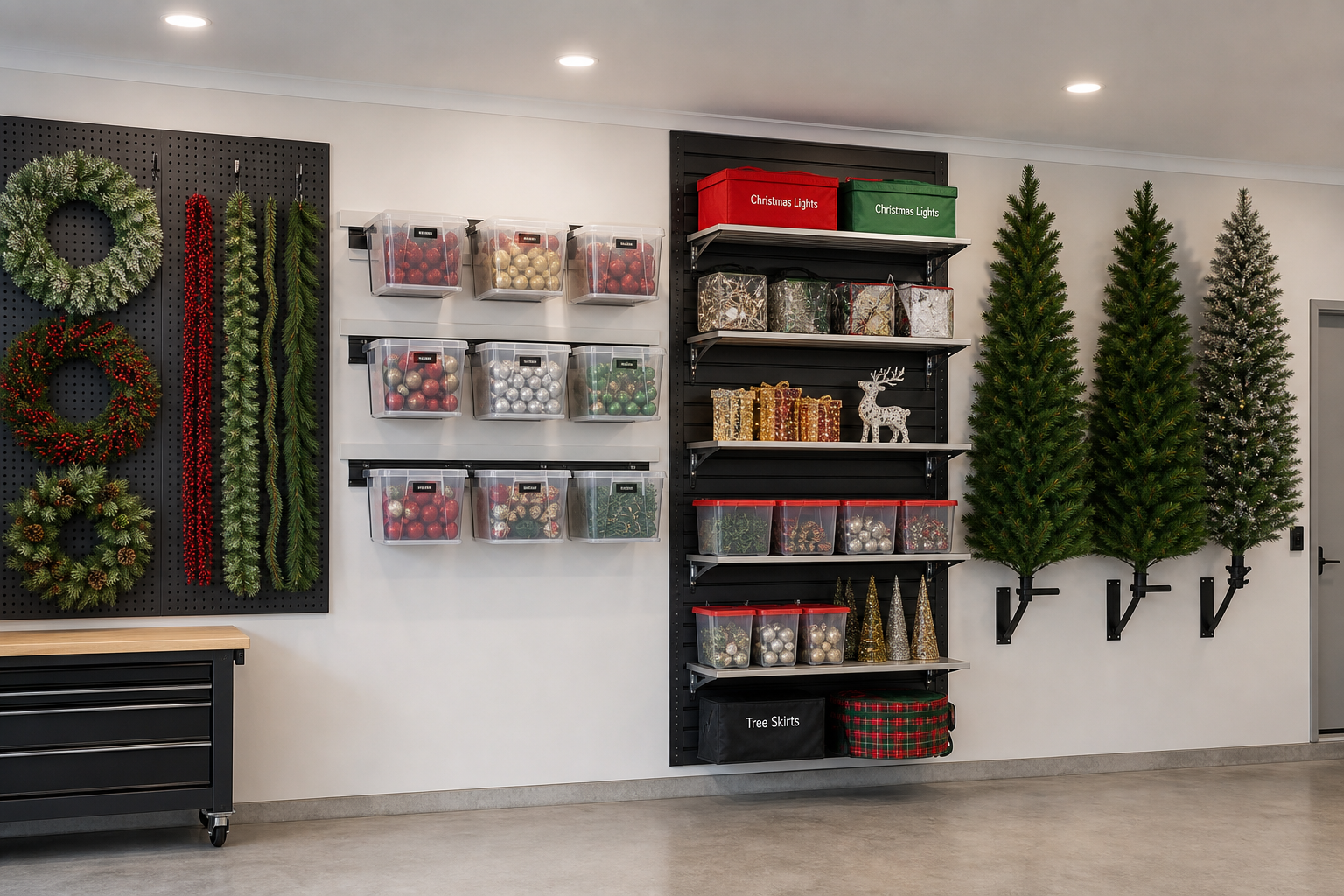
Wall-mounted track systems excel at holding bins of lights, outdoor decorations, and lightweight seasonal items. Install tracks into studs at 16-inch or 24-inch intervals depending on your garage framing. Use a stud finder that detects both wood and metal studs, since newer homes often use metal framing.
Slatwall panels provide the most versatile wall storage. Standard slatwall accepts hooks, baskets, and shelving brackets that you can reposition as needs change. A 4-foot by 8-foot slatwall panel is competitively priced depending on material quality. PVC slatwall resists moisture better than MDF-core panels in unheated garages where condensation occurs.
For detailed guidance on setting up your slatwall system, check out our comprehensive guide on how to install garage slat wall accessories.
Wire grid panels offer similar versatility at lower cost but with less weight capacity. They work fine for lightweight wreaths, garland bins, and boxed ornament sets. Wire grid struggles with heavier items like bins full of outdoor light strands or large ceramic decorations.
Dedicated wreath hangers mounted to slatwall or directly into studs keep wreaths from getting crushed in storage. Hang wreaths vertically rather than stacking them flat in bins. This preserves their shape and prevents flattening of bows and decorative elements.
Overhead Ceiling Storage Solutions
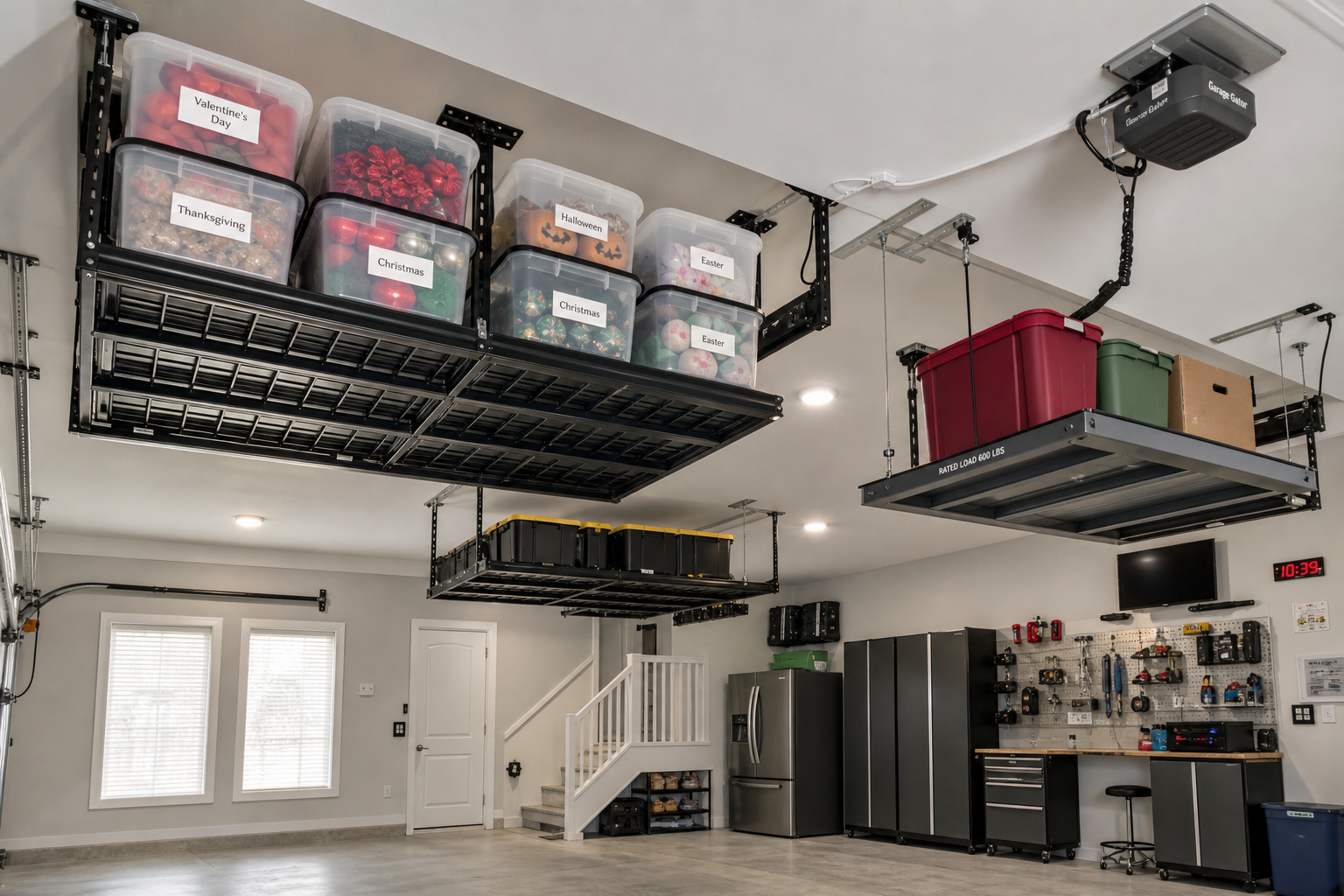
A quality ceiling storage rack makes a noticeable difference in results. Check current options and reviews to find the right match for your project and budget.
Overhead racks mount to ceiling joists and hang 16 to 24 inches below the ceiling surface. This creates a storage platform above vehicles and workspace. Most racks measure 4 feet by 8 feet or 4 feet by 4 feet. The larger size stores six to eight standard holiday decoration bins.

Garage Ceiling Storage Rack
Perfect for seasonal items that only need access once or twice per year
Installation requires locating ceiling joists accurately. Joists typically run perpendicular to the garage door at 16-inch or 24-inch centers. Older homes may have irregular joist spacing. Use a high-quality stud finder and verify joist location by drilling a small test hole before committing to final rack placement.
Mount overhead racks using lag bolts, not standard wood screws. A 5/16-inch lag bolt driven 3 inches into solid joist provides reliable support. Each corner of the rack needs at least one lag bolt. For racks over 6 feet long, add center support points to prevent sagging.
Clearance matters for overhead storage. Measure from the garage floor to the bottom of the installed rack. You need at least 84 inches of clearance if you park an SUV or truck underneath. Standard sedans clear with 78 inches. Account for roof cargo boxes, bike racks, or other accessories that add height to your vehicle.
Adjustable-height overhead racks use a pulley or crank system. These work well if ceiling height varies or you occasionally need the space for tall vehicles. Manual pulley systems are budget-friendly options. Motorized versions cost more but make access easier for heavy bin loads.
For more advanced storage solutions, explore our guide on the best garage ceiling storage lifts for automated overhead access.
Cabinet Systems and Closed Storage
Closed cabinets protect decorations from dust, direct sunlight, and temperature extremes better than open shelving. Metal cabinets resist humidity and pests more effectively than particleboard or MDF units. Expect to check current pricing for a 36-inch-wide metal garage cabinet with adjustable shelves.
Freestanding cabinets offer flexibility. You can rearrange them as your storage needs change. Wall-mounted cabinets save floor space but require stud mounting for safety. A loaded 36-inch wall cabinet weighs 150 to 200 pounds when full of bins and decorations.
Cabinet depth affects usability. Standard 18-inch-deep cabinets work well for holiday bins and boxed items. Shallow 12-inch cabinets hold flat items like table runners, small wreaths, and boxed ornament sets but waste space with deeper bins. Deep 24-inch cabinets accommodate larger items but make it harder to see and reach items pushed to the back.
Adjustable shelves let you customize vertical space as your collection changes. Set shelves 16 to 18 inches apart for standard storage bins. Taller spacing accommodates artificial trees stored in original boxes or large outdoor decoration sets.
Climate Control Considerations
Unheated garages in four-season climates swing from below freezing to over 100°F. These extremes stress certain decoration materials. Ceramic and glass ornaments risk cracking from freeze-thaw cycles. Outdoor inflatables and fabric decorations fare better but still degrade faster in extreme temperature swings.
Insulating your garage stabilizes temperature and protects decorations. Insulation also reduces condensation that damages cardboard boxes and corrodes metal decoration frames. Fiberglass batt insulation in a two-car garage is a worthwhile investment for DIY installation. Blown-in cellulose costs more but offers professional installation.
Climate-controlled storage isn’t necessary for most holiday decorations. Standard garage storage works fine for artificial trees, plastic ornaments, outdoor lights, and fabric items. Reserve indoor storage for heirloom ornaments, delicate glass pieces, and items with sentimental value that justify the premium space.
Avoid storing decorations against exterior walls in uninsulated garages. The temperature differential between interior and exterior surfaces creates condensation on walls. This moisture damages bins stacked directly against the wall. Leave 3 to 4 inches of airspace between storage and exterior walls.
Specific Storage Solutions by Decoration Type
Artificial Trees
Disassemble artificial trees and store sections in tree bags or boxes. Forcing a tree into a compressed space bends branches permanently. Tree storage bags are competitively priced depending on tree height capacity. Heavy-duty bags with reinforced handles and structural supports protect trees better than basic zipper bags.
Upright storage in a corner saves floor space. Some homeowners build simple PVC pipe stands that hold tree bags vertically. This works well if you have 8-foot ceilings and a tree under 7.5 feet tall.
String Lights and Extension Cords
Tangled light strings waste time and damage bulb connections. Wind each strand around a cord reel or piece of cardboard. Dedicated light storage reels are budget-friendly and prevent tangling. Label each reel with the length and location: “front porch, 50 feet” or “tree, multi-color, 100 feet.”
Store lights in clear bins separate from other decorations. This prevents ornament hooks and garland wire from snagging delicate bulb connections. Keep spare bulbs and fuses in the same bin.
Extension cords need similar organization. Coil each cord and secure with velcro straps. Never use zip ties or tape that leave sticky residue. Store outdoor-rated cords separately from indoor cords to avoid confusion during setup.
Wreaths and Garlands
Wreath storage boxes with individual compartments prevent crushing. Boxes holding three to four wreaths are reasonably priced. Stack boxes on overhead racks or high shelves where they won’t get buried under other items.
Garland stores well when loosely coiled in large bins. Don’t compress garland tightly or you’ll create permanent kinks in wire-backed types. Pre-lit garlands need careful coiling to protect bulb connections.
Outdoor Inflatables and Yard Decorations
Clean and dry inflatables completely before storage. Moisture trapped in folded fabric creates mildew and odors. Run the inflatable one final time after the season, then deflate and wipe down with a dry cloth.
Fold inflatables loosely and store in breathable bins or bags. Some decorators skip bins entirely and use large mesh laundry bags that allow airflow. This prevents the musty smell that develops in sealed containers.
Metal yard stakes and frames corrode in humid garages. Spray with light machine oil before storage or wrap in old towels to prevent rust. Replace rusted stakes rather than fighting with bent, corroded metal next season.
Zone Your Garage Before Buying Products
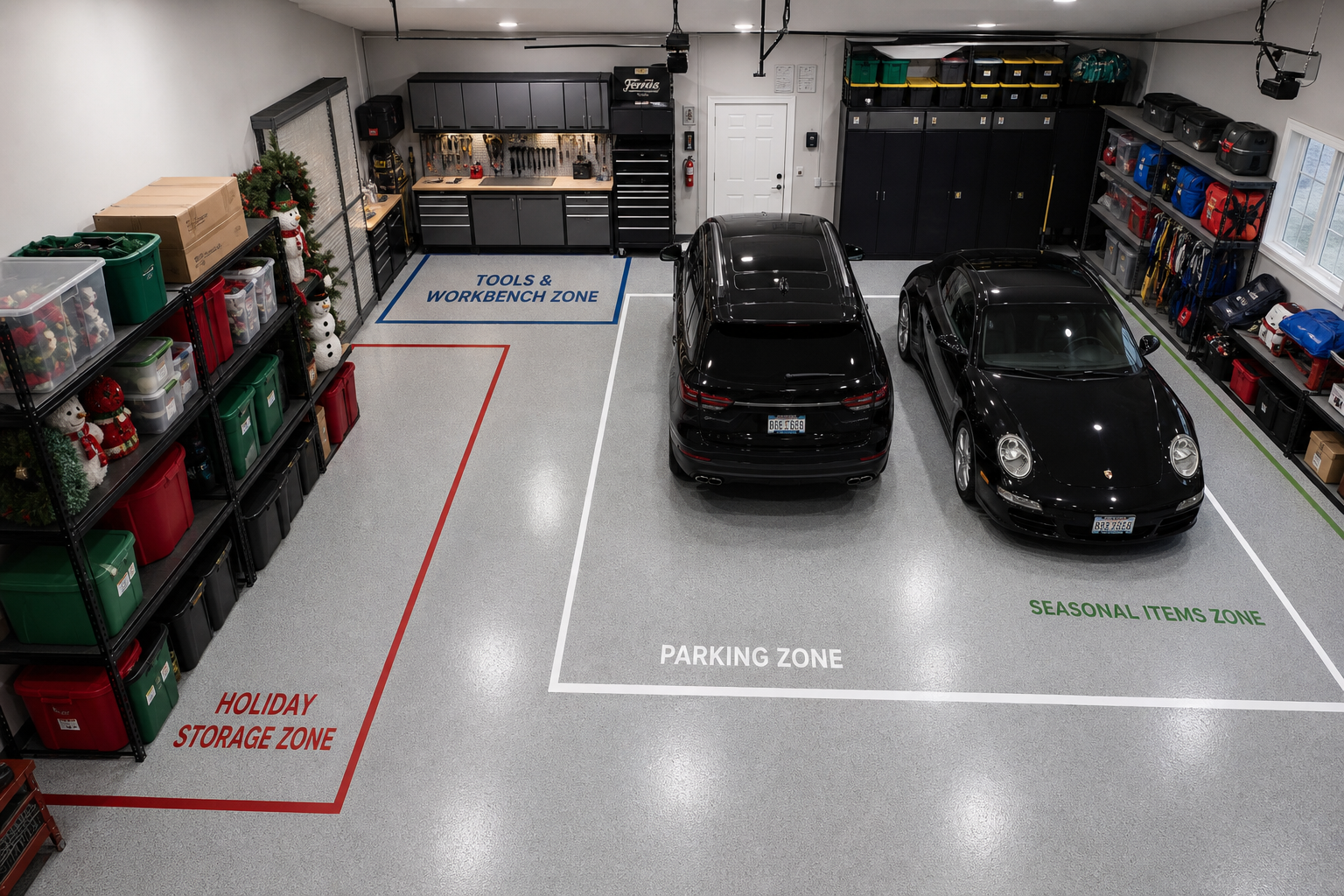
Zone your garage before buying products. Common zones: tools/workbench, automotive, seasonal items, sports gear, lawn/garden, and household overflow. Each zone stays self-contained where everything for a given task lives in one spot.
Holiday decorations typically occupy 15 to 25 square feet of wall or overhead space in a two-car garage. Measure your available space before shopping for storage solutions. An 8-foot ceiling with overhead racks at 7 feet high leaves 3 feet of vertical storage, enough for two levels of stacked bins.
Mark zones with tape on the floor during planning. This visual reference helps you see whether your storage plan actually fits. Adjust zone sizes based on what you own, not what seems standard. Your garage might serve multiple purposes, such as a workshop space or even a home gym. Allocate space accordingly based on your actual usage.
Lighting Matters for Storage Access
Color temperature (Kelvin) determines light quality. 5000K (daylight) gives crisp, color-accurate illumination ideal for garages. 4000K (neutral white) is slightly warmer if you find daylight too harsh. Avoid warm-white bulbs (2700-3000K) for workshop use since they make it harder to see fine detail.
Install lighting near storage areas, not just in the center of the garage. A central ceiling fixture leaves corners and overhead storage in shadow. LED shop lights mounted under overhead racks illuminate stored bins. Motion-sensor LED strips along slatwall panels provide automatic lighting when you approach storage zones.
Battery-powered LED puck lights stick inside cabinets for better visibility. This small upgrade prevents the frustrating search through dark cabinet interiors. Three-packs of puck lights are affordable and last years on a set of batteries.
For specialized work areas, consider our guide to the best garage workbench lighting solutions for task-specific illumination.
Practical Planning Tips
Invest in quality tools for tasks you’ll repeat. A reliable stud finder, a good level, a quality tape measure, and proper safety gear (eye protection, hearing protection, respirator) make every project easier and safer. These tools pay for themselves across multiple projects over the years.
Set a realistic timeline and budget before buying anything. Most garage projects take 50% longer and cost 20% more than initial estimates, especially for first-timers. Build that buffer into your plan where unexpected discoveries don’t derail the entire project or blow the budget.
Research local building codes and permit requirements for your specific project. Electrical work, structural modifications, and HVAC installations often require permits and inspections. Working without required permits can create liability issues, insurance complications, and problems when selling the home.
Prioritize your projects based on impact and urgency. Safety issues (faulty wiring, CO risk, structural problems) come first. Comfort improvements (insulation, lighting, climate control) come second. Cosmetic upgrades (floor coatings, paint, organization systems) come last. Following this order ensures you’re building each improvement on a solid foundation.

Slatwall Hook Set
Versatile hooks that adapt to changing storage needs throughout the year
Common Mistakes to Avoid
Overfilling bins creates handling
