

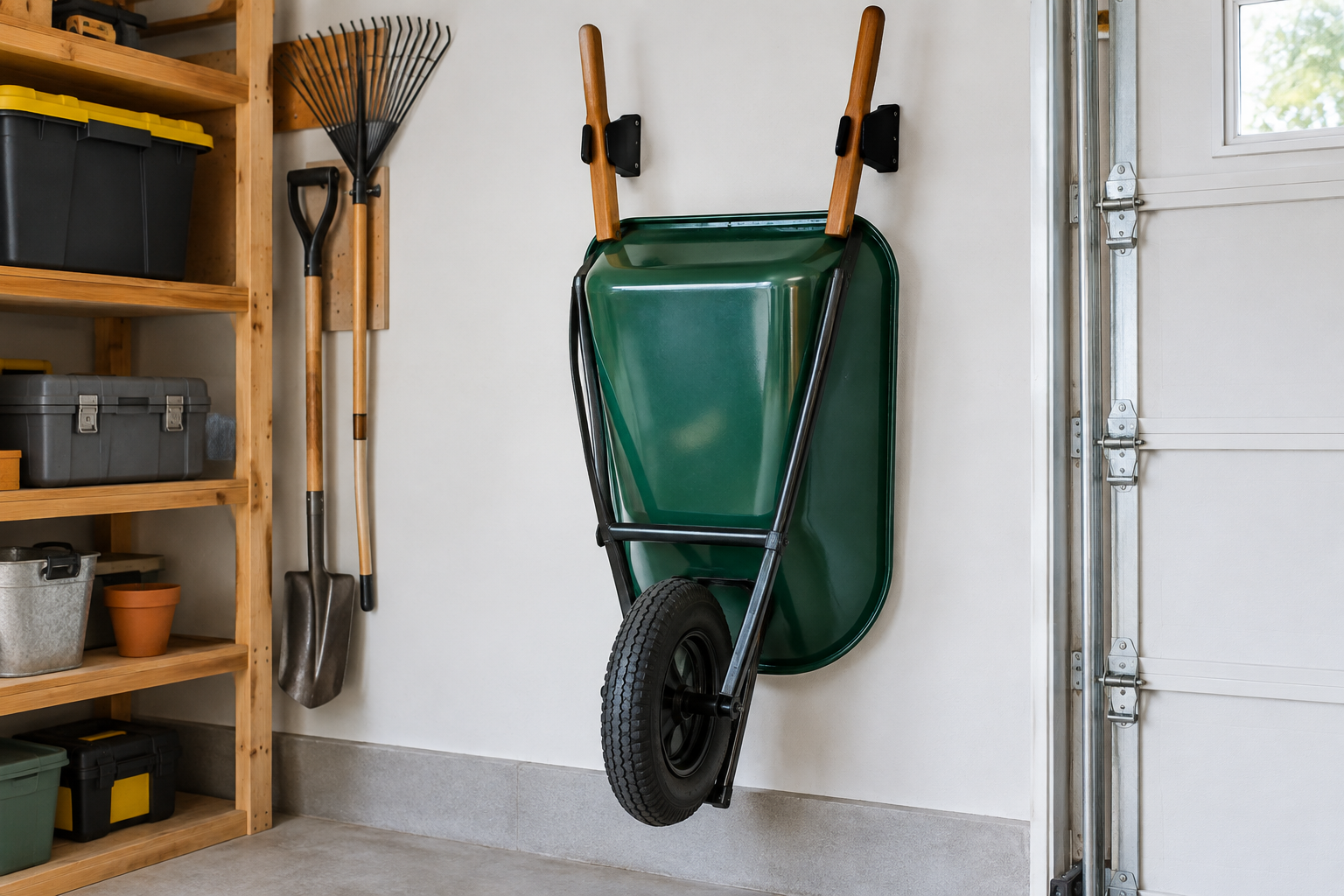
A wheelbarrow takes up more floor space than it has any right to, and it always seems to end up tipped over right where you need to walk. Getting it up on the wall solves two problems at once: you get your floor space back, and the wheelbarrow actually stays put instead of rolling into your shins every time you open the garage door.
The good part is that hanging a wheelbarrow doesn’t require any special skills. You just need the right hardware, a stud finder, and about twenty minutes.
Choosing the Right Bracket or Hook System
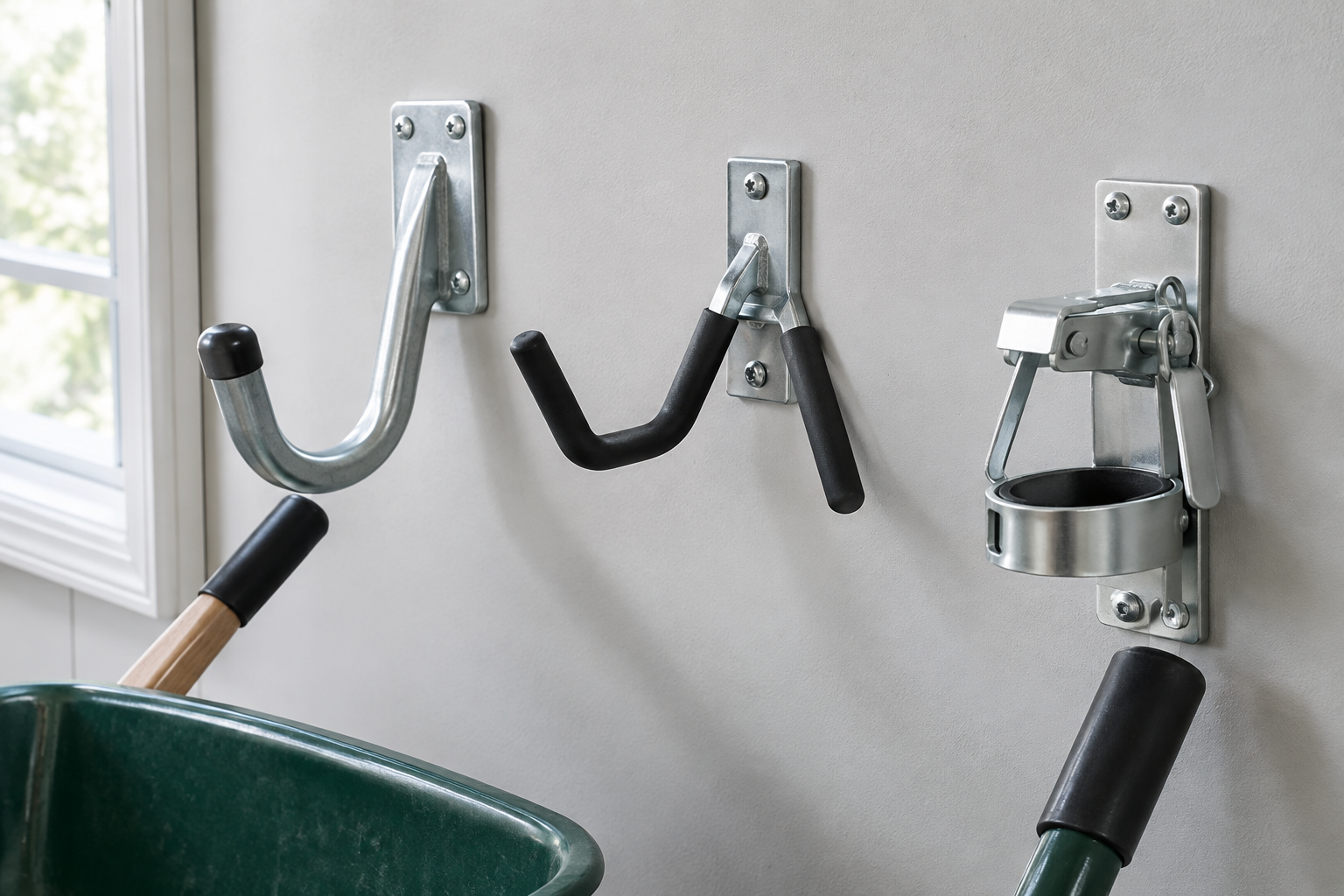
You’ve got two main options here: a dedicated wall-mounted wheelbarrow bracket, or a heavy-duty utility hook. Both work, but they’re suited to slightly different setups.
A purpose-built wheelbarrow rack usually consists of a wide cradle or arm that supports the bin itself, with the wheelbarrow tilted up against the wall. These are built to handle the odd, unbalanced shape of a wheelbarrow better than a generic hook. If you’re storing a standard contractor-style wheelbarrow with a single front wheel, this is your best bet.
Utility hooks, on the other hand, work well if your wheelbarrow has a lip or frame edge you can hang directly from. They’re cheaper and more flexible, since you can also use them for other tools, but they don’t always distribute weight as evenly across the frame.
Wheelbarrow Wall Mount Rack
Purpose-built cradle design that supports the bin evenly and keeps the wheelbarrow tilted flat against the wall.
Whichever style you go with, skip anything rated for light-duty garden tools. Wheelbarrows are bulky and awkward even when empty, and a bracket that’s marginal on paper will feel worse in practice. Look for hardware specifically labeled for wheelbarrows or heavy garden equipment, not generic hook sets meant for rakes and shovels.
Stud Placement and Weight Capacity
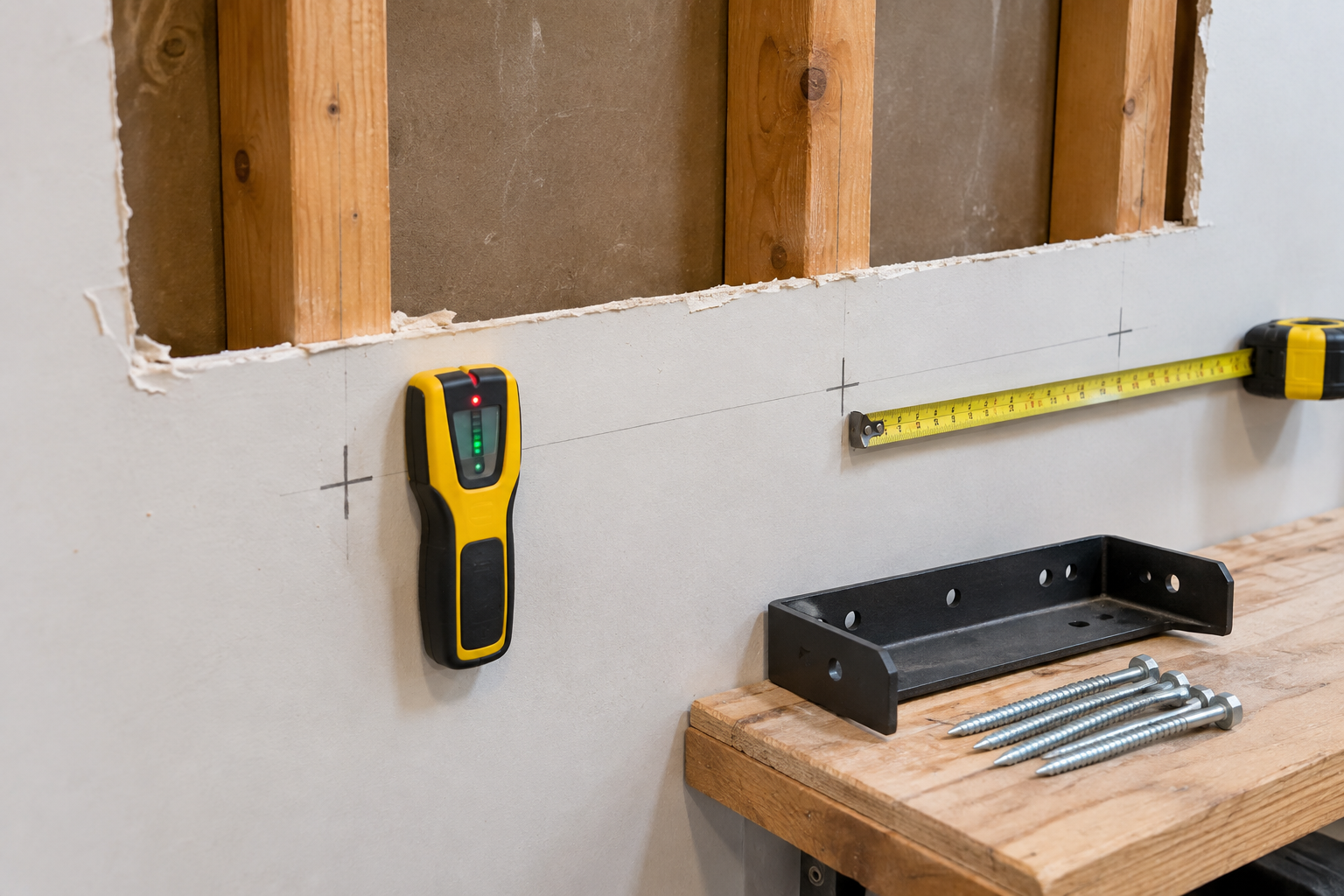
This is the part people skip, and it’s the part that actually keeps the wheelbarrow from ripping out of the wall six months later. An empty contractor wheelbarrow typically weighs somewhere between 60 and 80 pounds, and that weight is concentrated on one bracket point instead of spread out like it would be on shelving.
Always mount into wall studs, not just drywall anchors. Use a stud finder to locate at least one stud, and if your bracket has multiple mounting holes, try to catch two studs for extra stability. Studs in most garages are spaced 16 inches on center, so once you find one, you can usually predict where the next one is.
If your garage walls are OSB or plywood instead of drywall, you’ve got more flexibility since you can often screw directly into the sheathing itself, as long as it’s backed by solid framing. If you’re not sure what you’re working with, our guide on garage drywall vs OSB breaks down the differences and what that means for hanging heavy items.
Check the weight rating on any bracket before you buy it. A bracket rated for 50 pounds isn’t going to cut it for most wheelbarrows, especially if you sometimes leave a bit of dirt or debris in the bin before hanging it up. Look for hardware rated at 100 pounds or more to give yourself a safety margin.
Hanging Orientation and Handle Clearance
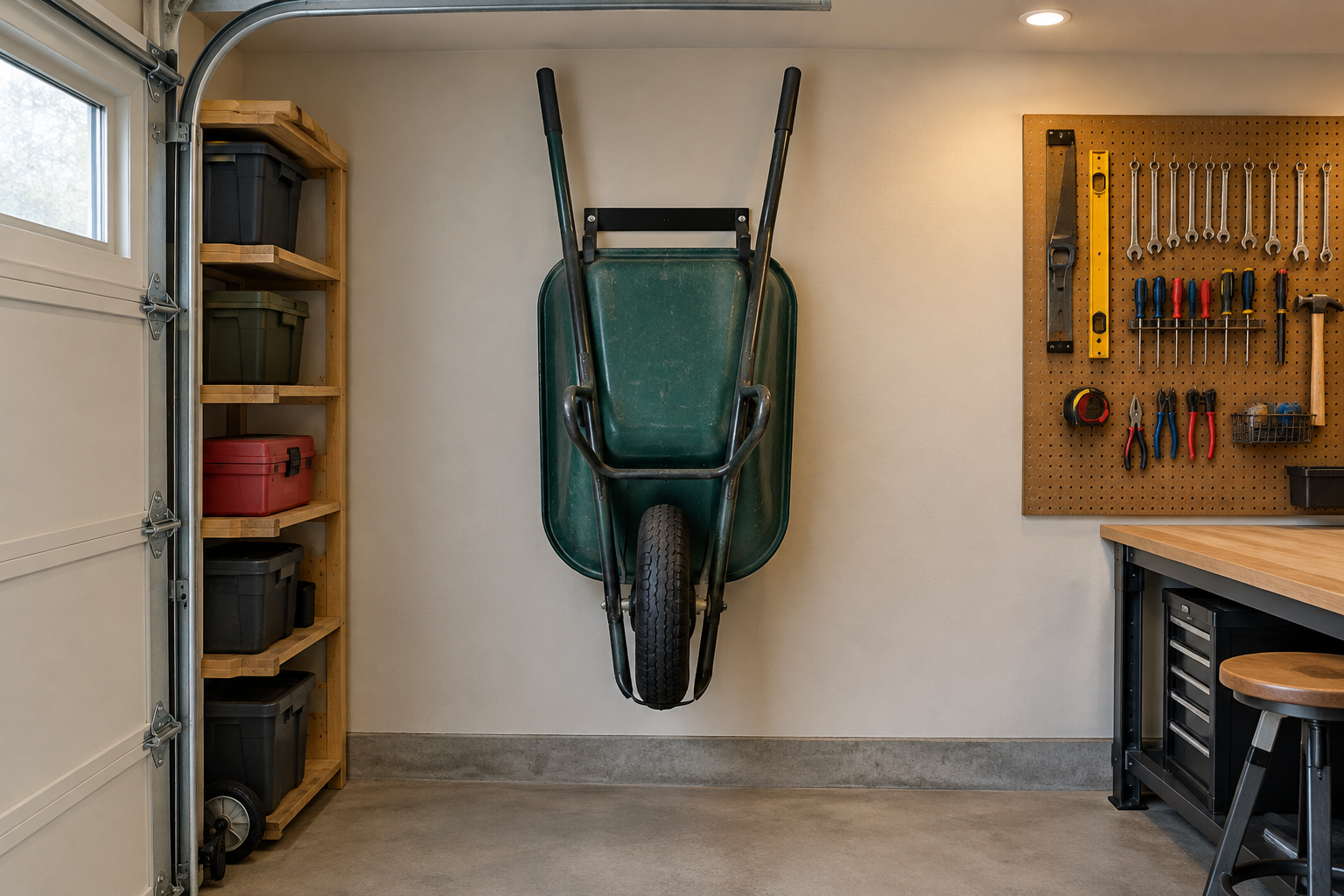
Most wheelbarrow brackets are designed to hang the wheelbarrow vertically, bin facing out, with the wheel at the bottom or top depending on the bracket style. This orientation keeps the footprint tight against the wall, which is really the whole point of hanging it in the first place.
Before you commit to a spot, extend the handles out and measure how far they’ll stick into your walking path. A standard wheelbarrow with handles attached can add another two to three feet of clearance depending on the model, and that’s easy to forget when you’re staring at a bare wall picturing how great it’ll look.
Mount the bracket high enough that the bottom of the wheelbarrow clears any workbenches, trash cans, or parked cars nearby, but not so high that lifting it on and off becomes a two-person job. A good rule of thumb is keeping the top of the wheelbarrow no higher than your shoulder height when it’s on the ground in front of you, so you can lift it into place without straining your back or shoulders.
If you’re planning out storage for other bulky items alongside the wheelbarrow, like ladders or long-handled tools, it’s worth looking at your garage layout as a whole. Our guide to garage ladder storage racks covers wall versus ceiling mounting, which pairs well with wheelbarrow storage since both items eat up a similar amount of wall real estate.
Heavy Duty Garden Tool Hook
A solid backup option if your wheelbarrow’s frame lip is a better fit for a hook than a full cradle bracket.
Once the wheelbarrow is off the floor, take a look at what else is competing for space along that wall. A lot of garages end up cluttered simply because there’s no dedicated spot for anything, and adding some garage shelving nearby can help keep smaller tools organized so they don’t pile up under your newly mounted wheelbarrow.
Frequently Asked Questions
Can I hang a wheelbarrow without drilling into studs?
You can use heavy-duty drywall anchors rated for the weight, but it’s not something we’d recommend for anything this bulky. The repeated motion of lifting the wheelbarrow on and off puts stress on the mounting point, and drywall anchors are far more likely to loosen or pull out over time than a screw driven into solid framing.
What’s the best height to hang a wheelbarrow in a garage?
Most people find a mounting height between 4 and 5 feet off the ground works well, measured to the bottom of the bracket. This keeps the wheelbarrow high enough to clear parked cars and workbenches while still being low enough to lift on and off without needing a step stool.
This article contains affiliate links. We may earn a small commission at no extra cost to you.
