

As an Amazon Associate I earn from qualifying purchases.
A great car detailing setup in your garage doesn’t happen by accident. It takes the right lighting, smart storage, dedicated product stations, and clean air management working together. In this article I’m covering four key areas: polish and product stations, lighting for paint correction, vacuum and air line setups, and microfiber and tool storage. Whether you’re doing this for fun on weekends or running a side business out of your garage, there’s something here worth stealing.
Polish and Product Stations
A dedicated polish and product station is where a detailing garage goes from amateur to professional. Instead of hunting through boxes for your compound or digging under a workbench for a pad, everything lives in one organized spot at arm’s reach. The goal is a clean, purpose-built surface that holds your polisher, compounds, glazes, waxes, and backup pads in a logical order. A well-sealed floor underneath matters too since product spills are inevitable, and epoxy makes cleanup fast and painless. If you’re planning the floor as part of this build, the garage epoxy floor ideas on this site are a great place to start.
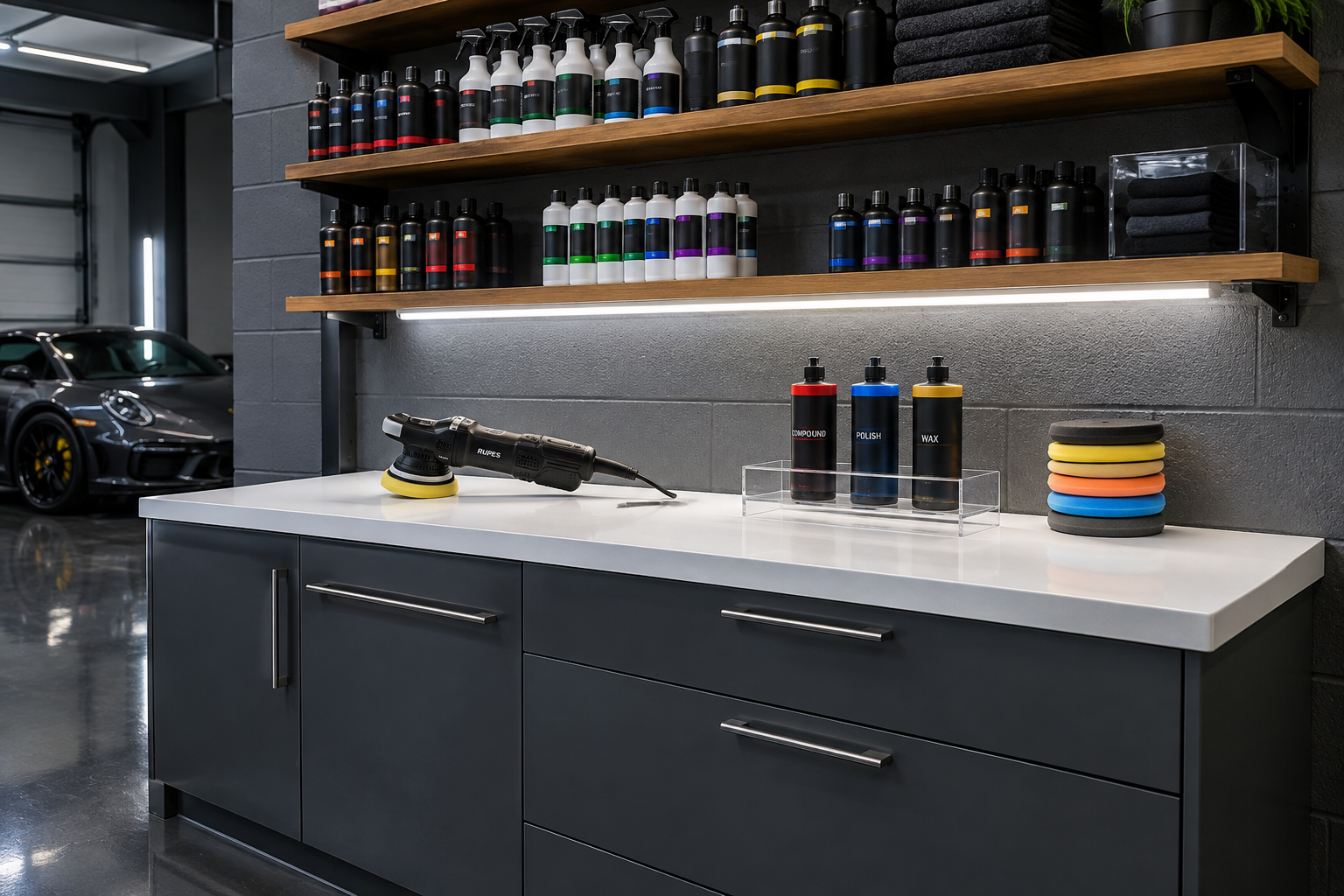
This setup centers on a wall-mounted laminate counter with dark gray base cabinets underneath, giving you both a solid work surface and closed storage for less-used supplies. Open shelving above keeps daily-use products visible and easy to grab without breaking your workflow. The glossy charcoal epoxy floor ties the whole station together and wipes clean in seconds when product hits the ground.
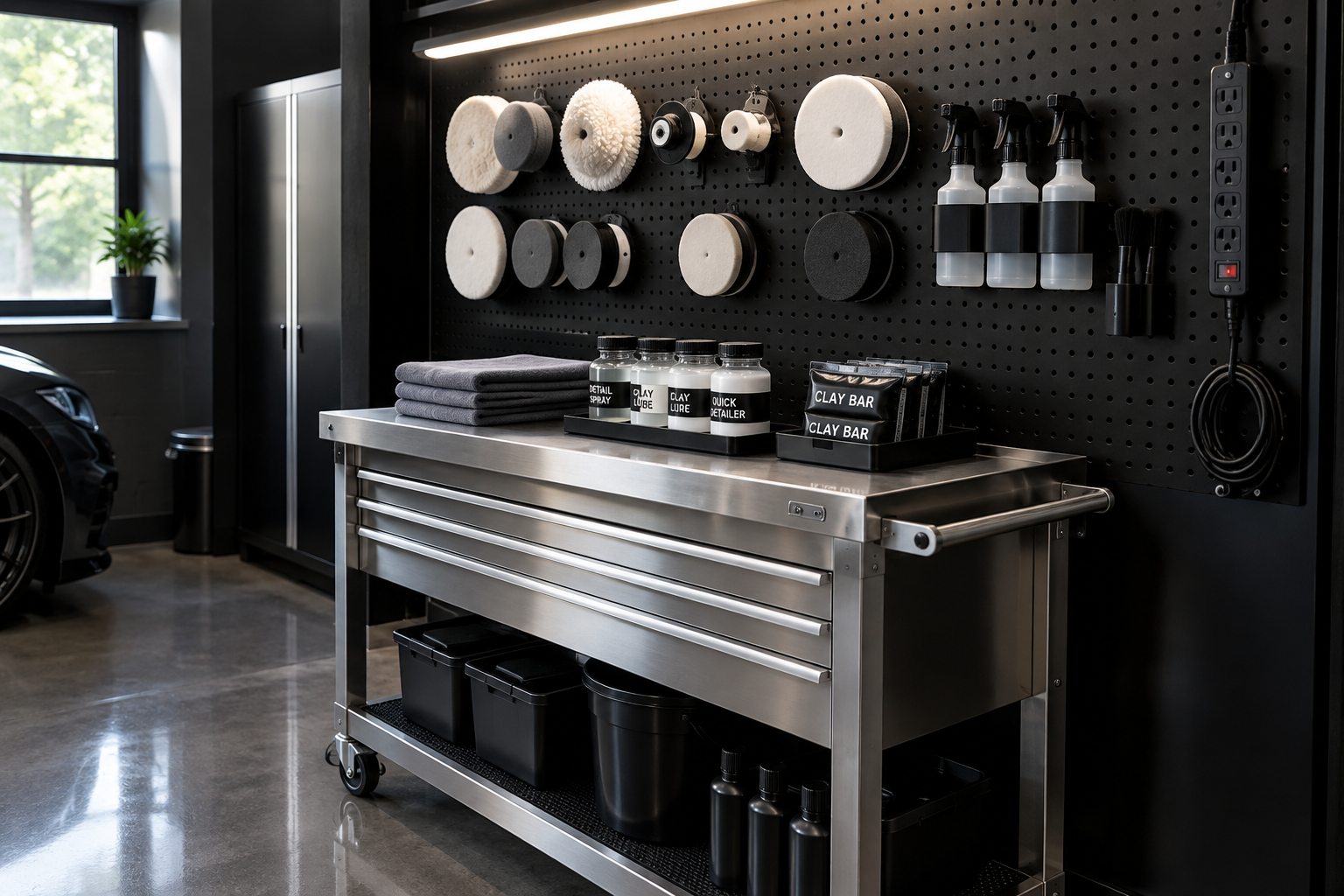
A rolling stainless cart gives you the flexibility to move your core products right up to the vehicle instead of running back and forth to a fixed station. The matte black pegboard behind it keeps pads and spray bottles sorted by size and use, which cuts down on the mental overhead during a long detail session. If you want to build out your own pegboard wall like this, the guide to garage pegboard systems covers materials and layout in detail.
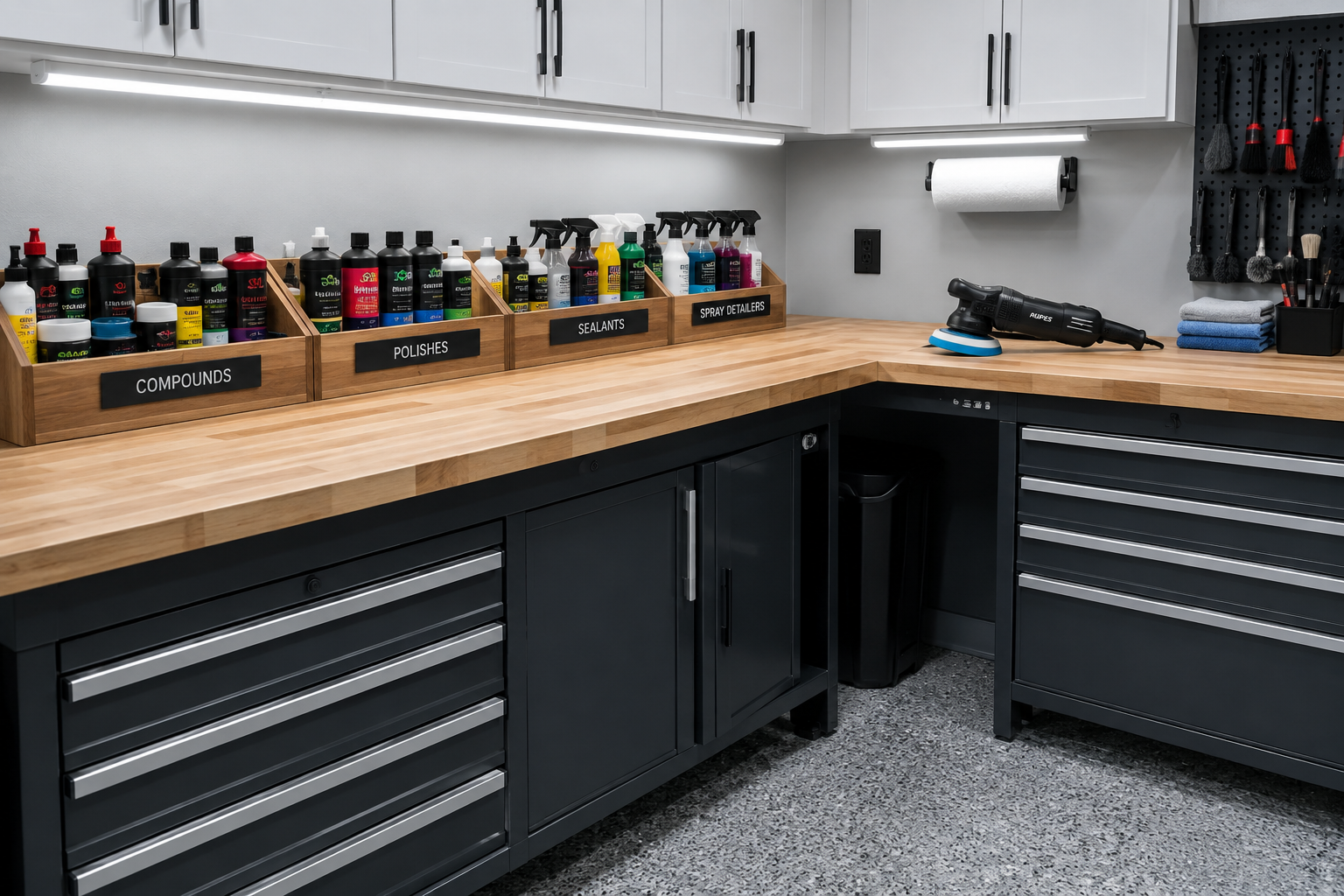
An L-shaped butcher block bench in the corner of the garage gives you maximum counter real estate without chewing up floor space you need for the vehicle. The custom wooden product organizer with labeled dividers is a small addition that makes a big difference when you’re mid-correction and need to find the right compound fast. White upper cabinets above the bench store overflow stock and keep the working surface from getting crowded.
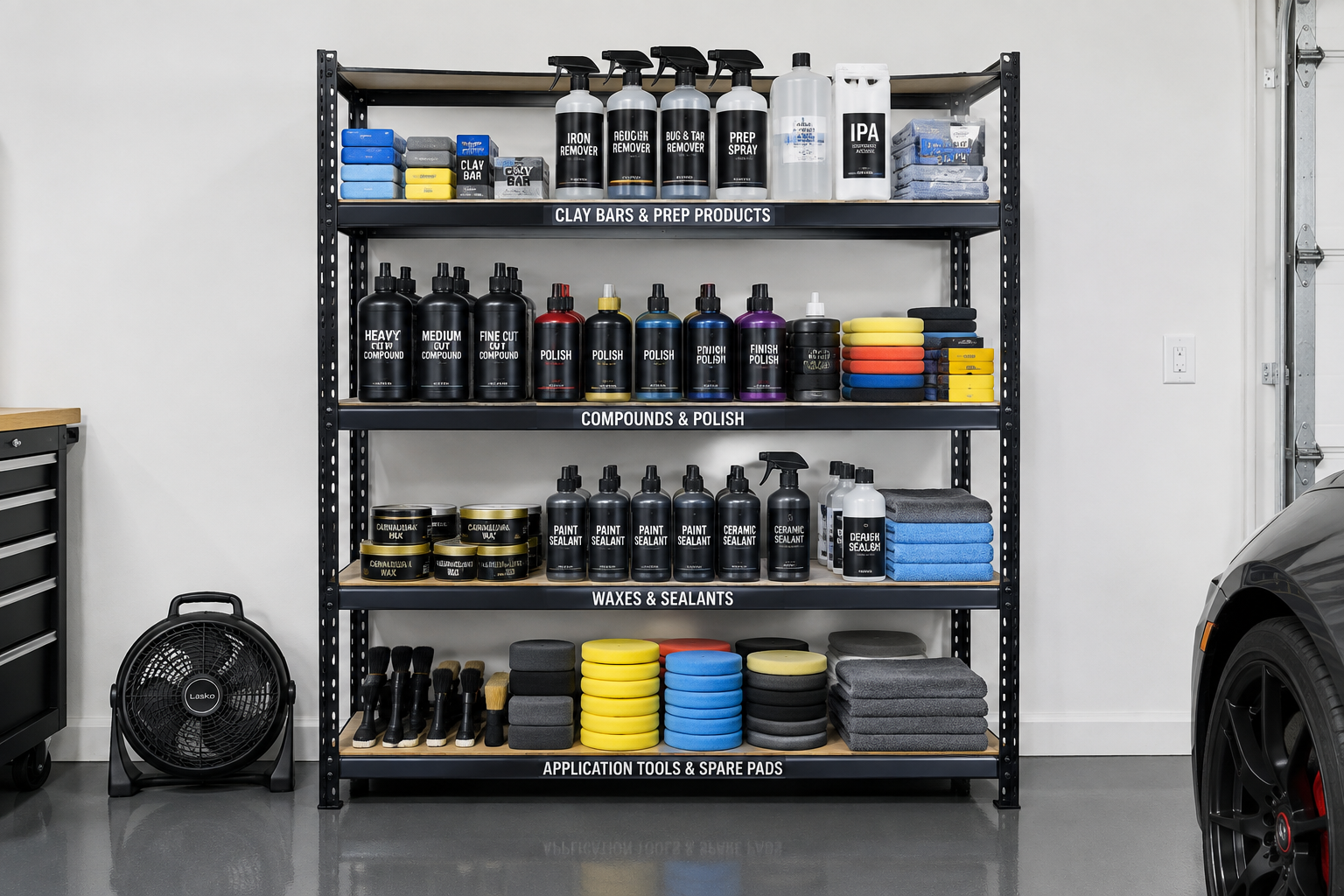
Freestanding metal shelving is one of the most affordable ways to build a full product station fast, and the category-by-shelf system shown here means you never have to think about where anything lives. Printed shelf-edge labels take about ten minutes to make and save a lot of time over the course of a year. This kind of vertical storage approach works especially well in tighter garages where wall space for cabinets is limited.
Lighting for Paint Correction
Lighting is probably the single most important factor in a detailing garage, and it’s also the most overlooked. You cannot correct paint you cannot see, and the standard single overhead light in most garages will hide swirls, holograms, and buffer trails until the car is sitting in sunlight. For paint correction work you need bright, even, color-accurate lighting aimed at the paint from multiple angles. A combination of overhead LED shop lights and portable work lights positioned at low angles will expose every imperfection on the surface. If you’re planning a full lighting upgrade for your garage, the garage lighting ideas post covers a wide range of options worth considering before you buy.

Four rows of 5000K LED shop lights running ceiling to wall give this bay the even, shadowless coverage needed to catch every swirl and micro-scratch on dark paint. The portable tripod work lights on both flanks let you adjust the angle as you move around the car, which is critical for catching holograms left behind by a rotary. This type of dedicated correction bay layout is something I’d seriously consider if you’re planning a high-end garage build from the ground up.
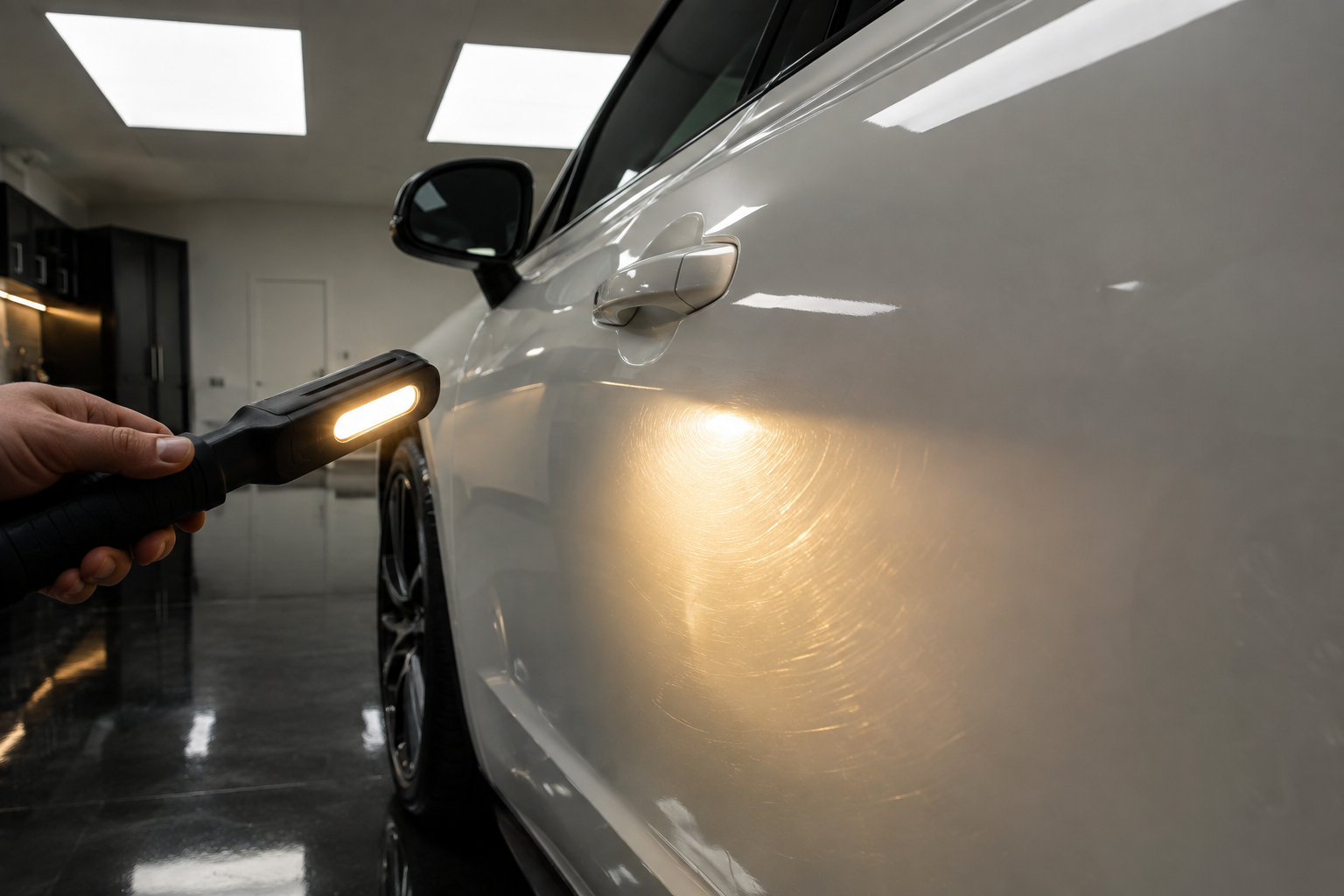
A handheld LED inspection light used at a raking angle is one of the most useful tools in a detailer’s arsenal because it shows exactly what needs correction before you touch the machine to the paint. The two flush-mount LED ceiling panels in the background keep the ambient light level high enough that you’re not working in a cave between passes. Getting your garage ceiling lighting right before you add the portable pieces makes the whole system work better.

Continuous ceiling LED light bars without gaps eliminate the dead zones that strip lights on standard spacing leave over the rear and front of the car. The swing-arm wall-mount light on the passenger side lets you lock in a specific angle and free up both hands for polishing without losing your inspection light. Semi-gloss white walls here are doing a lot of quiet work, bouncing light back into the space and reducing harsh shadows on curved body panels.

Using floor-level LED work lights with the overhead lights switched off is a technique professional detailers use to find paint defects that other lighting setups miss entirely. The raking light at bumper height throws every imperfection into sharp relief against the black paint, making it easy to map out exactly where you need to focus your correction work. It’s a simple setup with four stands and a dark floor, but it’s one of the most revealing inspection methods available. The LED shop light setup guide on this site has good advice on choosing the right color temperature for this kind of multi-mode lighting approach.
Vacuum and Air Line Setups
A clean detailing garage needs clean air management, and that means thinking through both your vacuum setup and your compressed air lines before you start parking cars inside. Running an air line from a wall-mounted compressor to a retractable hose reel overhead keeps the floor clear and the hose off the paint. For vacuuming, a central wet-dry vac with a long reach hose or a dedicated garage vacuum mounted to the wall beats dragging a unit around by hand every single time. Ventilation matters in this space too, especially when you’re using certain spray products, so thinking about airflow is worth the time. If your garage runs hot and stuffy, check out the options covered in the garage air conditioning guide before you finalize the layout.
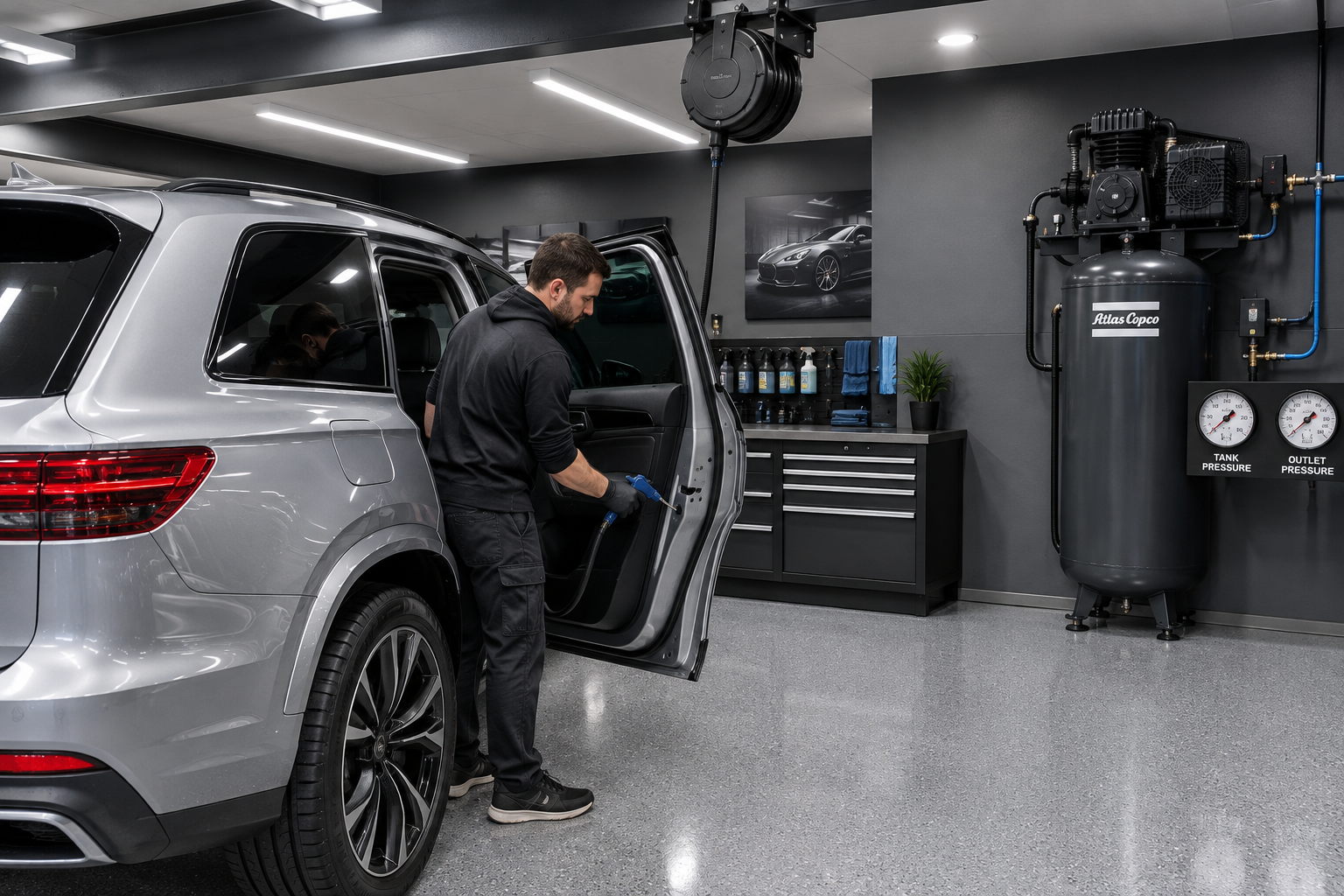
A ceiling-mounted retractable air hose reel is one of the cleanest upgrades you can make to a detailing garage because it completely eliminates hose management from your workflow. The hose drops exactly where you need it, retracts out of the way when you don’t, and never drags across the paint. Pairing this with a wall-mounted compressor keeps the floor plan open and the whole setup looking intentional rather than improvised.
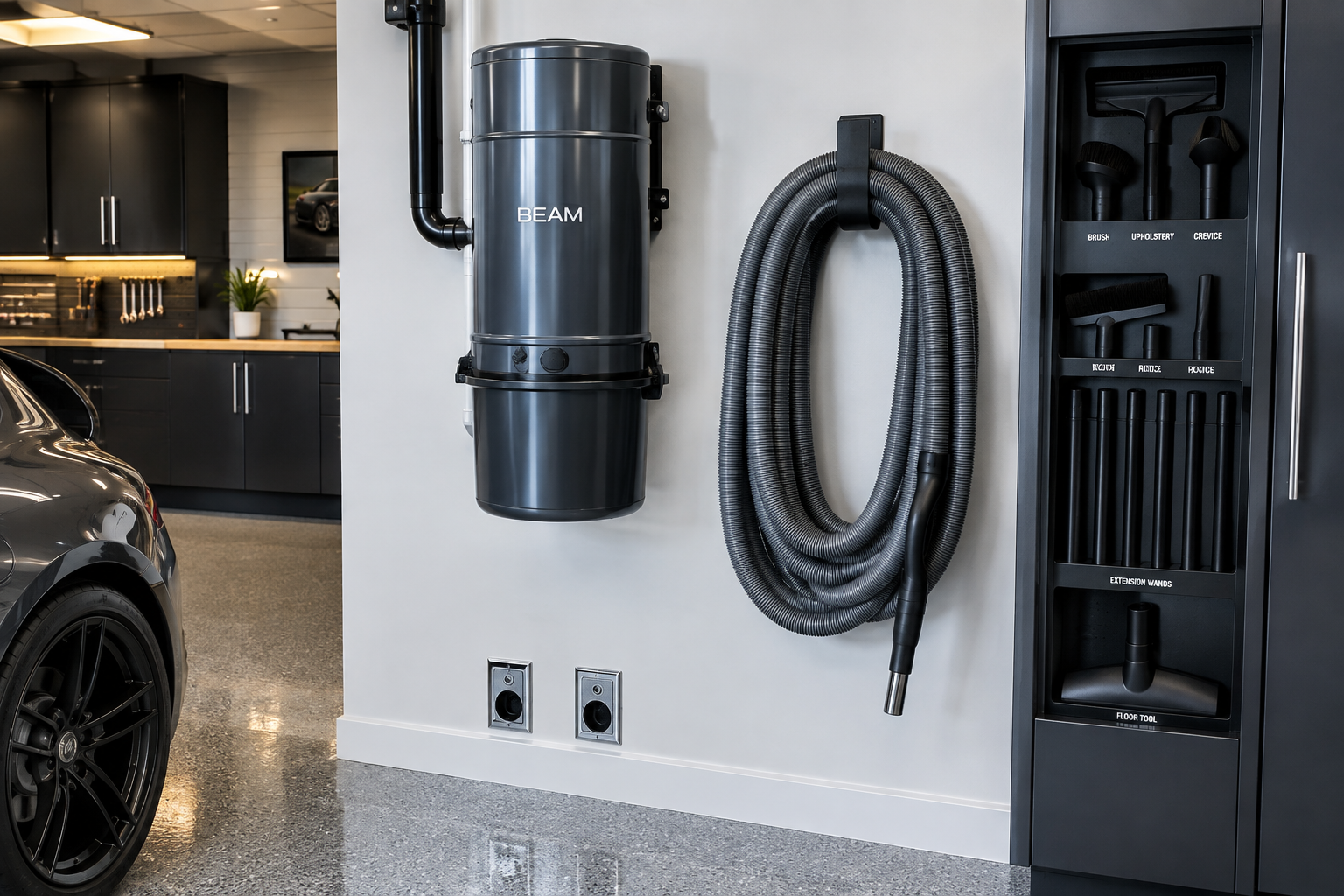
A wall-mounted central vacuum with recessed floor-level inlets is the kind of setup you see in professional detailing shops, and it’s more achievable in a home garage than most people think. The chrome inlet plates look sharp against the white drywall and are positioned where they’re genuinely useful rather than just decorative. Keeping the attachments in a labeled cabinet right beside the unit means nothing gets lost between jobs.
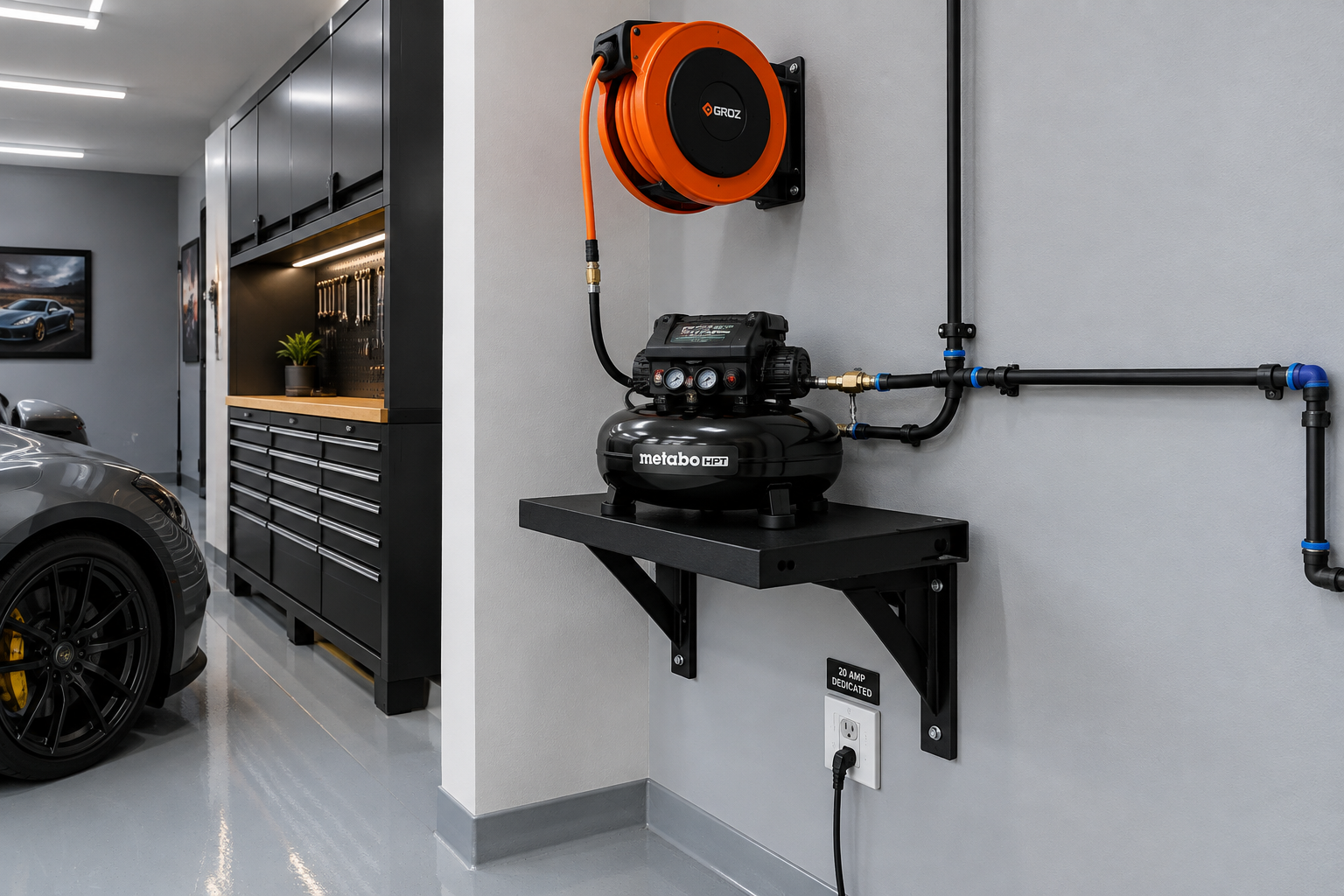
This compact corner air station keeps the compressor off the floor, the hose off the ground, and the supply lines routed cleanly along the wall so nothing is underfoot during a detail. The black polyurethane tubing with push-connect fittings looks far more purposeful than the typical coiled rubber hose running across the floor. Mounting the reel directly above the compressor on the same wall section keeps the whole system in one corner and out of the main work area.
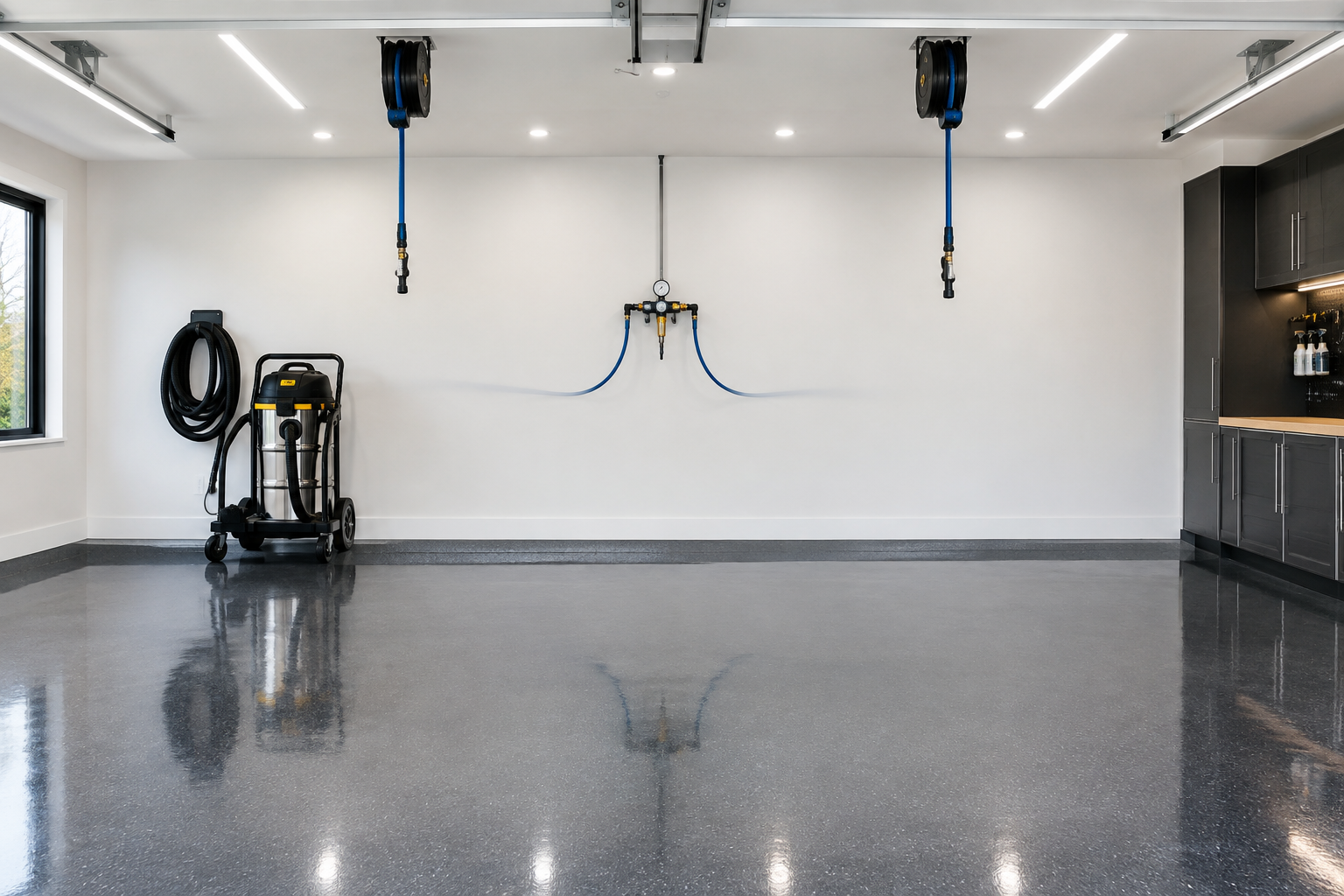
Scaling up to a two-car detailing bay means doubling up on air access points, and the dual retractable ceiling reels here mean each parking position has its own drop without sharing or repositioning. The shop vac on a wheeled cart stays against the back wall when not in use and rolls to wherever the job is happening. This kind of layout pairs well with a well-thought-out two-car garage plan that accounts for workflow, not just parking.
Microfiber and Tool Storage
Microfiber management is one of those things that separates a functional detailing garage from a frustrating one. You need clean towels staged and ready, used towels corralled away from clean ones, and your machine polishers, pads, and applicators stored where they won’t get dusty or contaminated between uses. Closed cabinet storage works well for anything that needs to stay clean, while open wall storage is better for tools you reach for constantly. The same organizational logic that works for general garage tool storage applies here, just adapted for softer materials and more delicate equipment. Getting this section of your setup right makes every single detail job go faster.
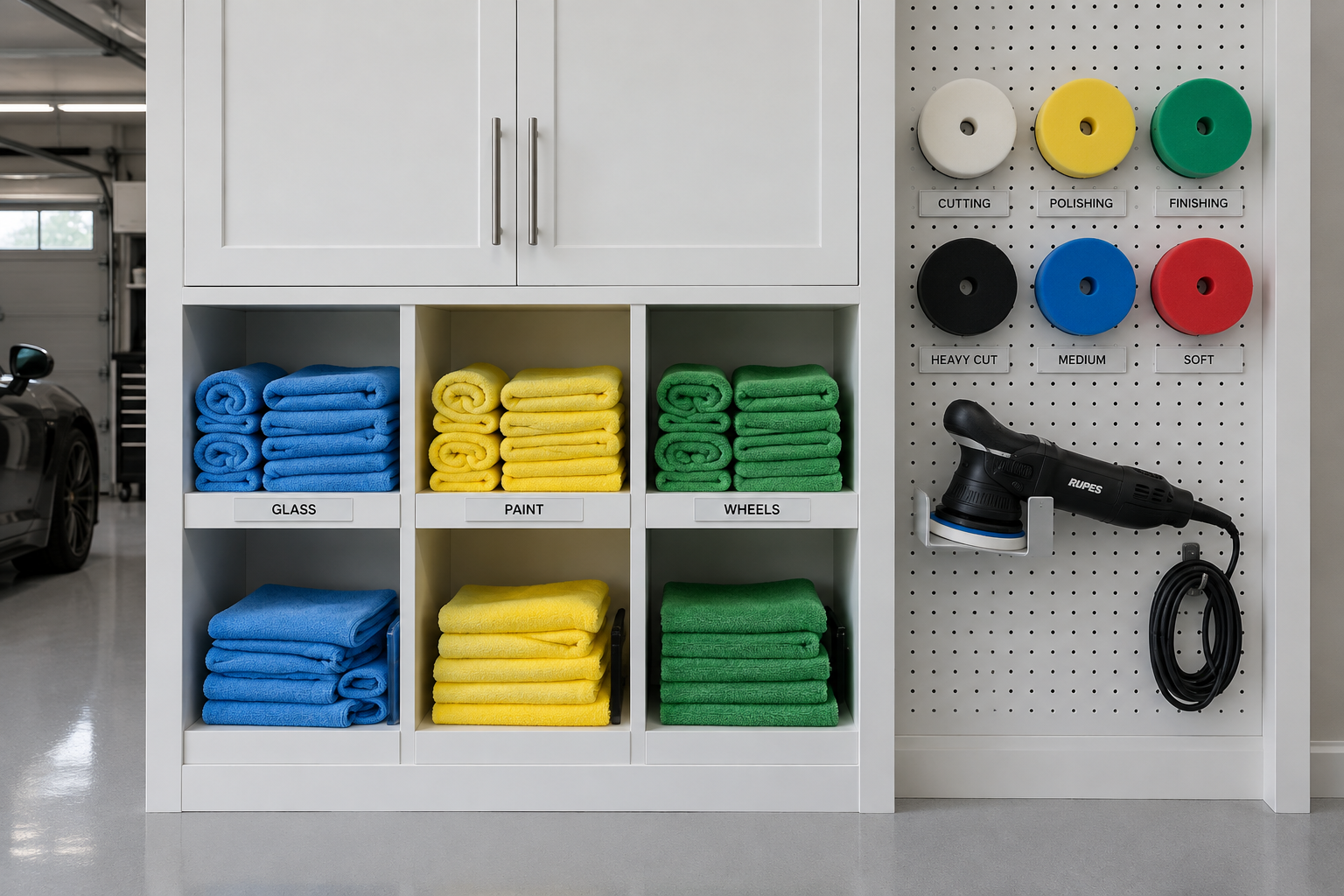
Color-coded microfiber storage in labeled cubbies is one of the most practical systems a detailer can build because it eliminates the risk of grabbing a wheel towel for paint work mid-job. The closed upper cabinets keep dust off anything that doesn’t need to be grabbed quickly, while the open cubbies below put the high-frequency items at fingertip level. The pegboard panel beside it keeps the polisher and pads off the bench and visible, so you know at a glance what’s ready and what needs cleaning.
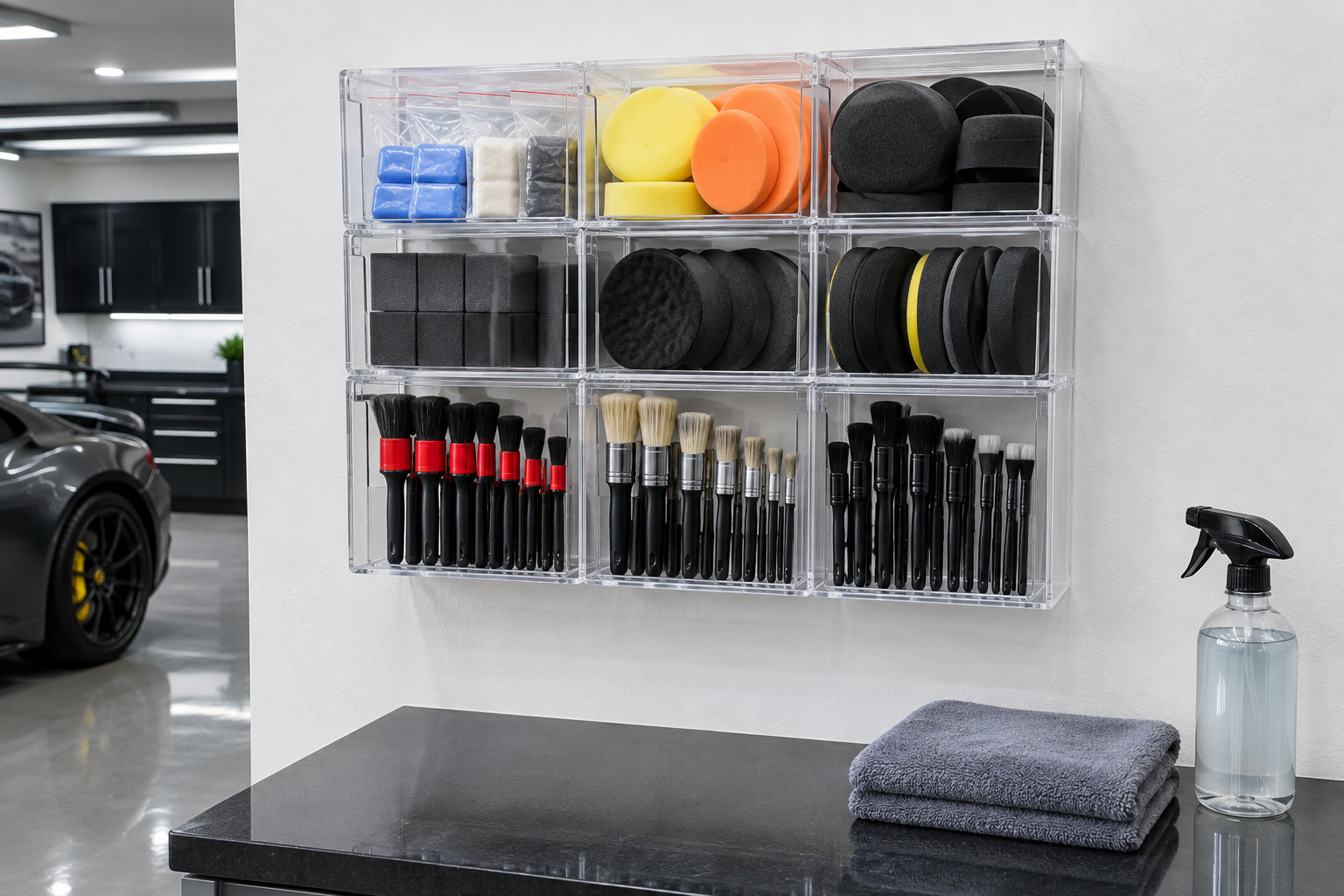
Clear acrylic wall organizers are ideal for small detailing accessories because you can see exactly what you have and what needs restocking without opening a single drawer. The compartments shown here keep specialty items like clay bars and trim applicators from getting jumbled together in a bin where they’re harder to find and easier to contaminate. This kind of small-item organization works really well when paired with a larger pegboard system for the heavier tools.
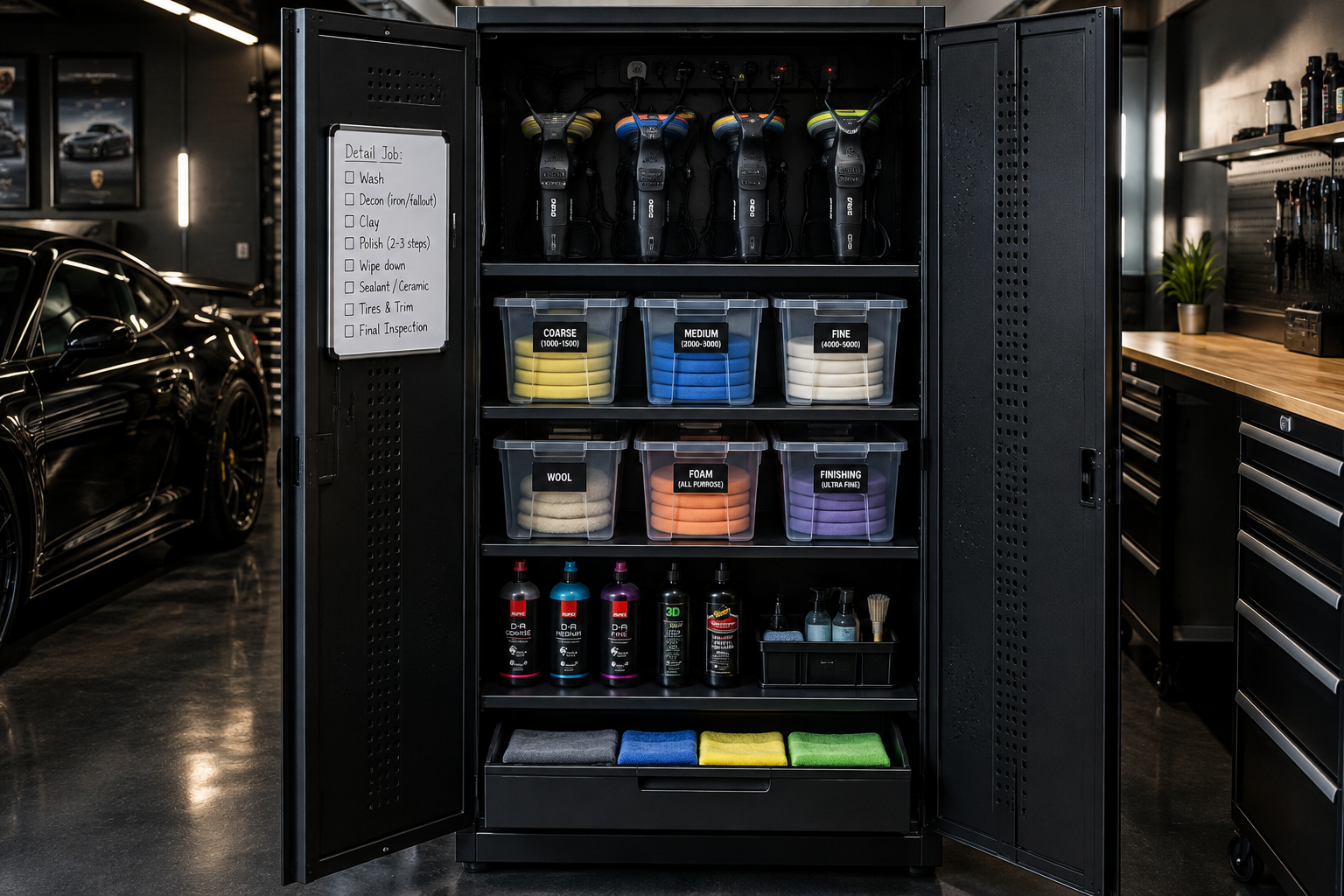
A dedicated locker cabinet for polishers and pads keeps your most expensive tools protected from dust and contamination when they’re not in use, which matters more than most people realize for machine longevity. Charging the polishers on the top shelf inside the cabinet means they’re always ready when you open it up for the next job. The whiteboard checklist on the inside of the door is a small detail that keeps the process consistent whether you’re doing it yourself or training someone else.
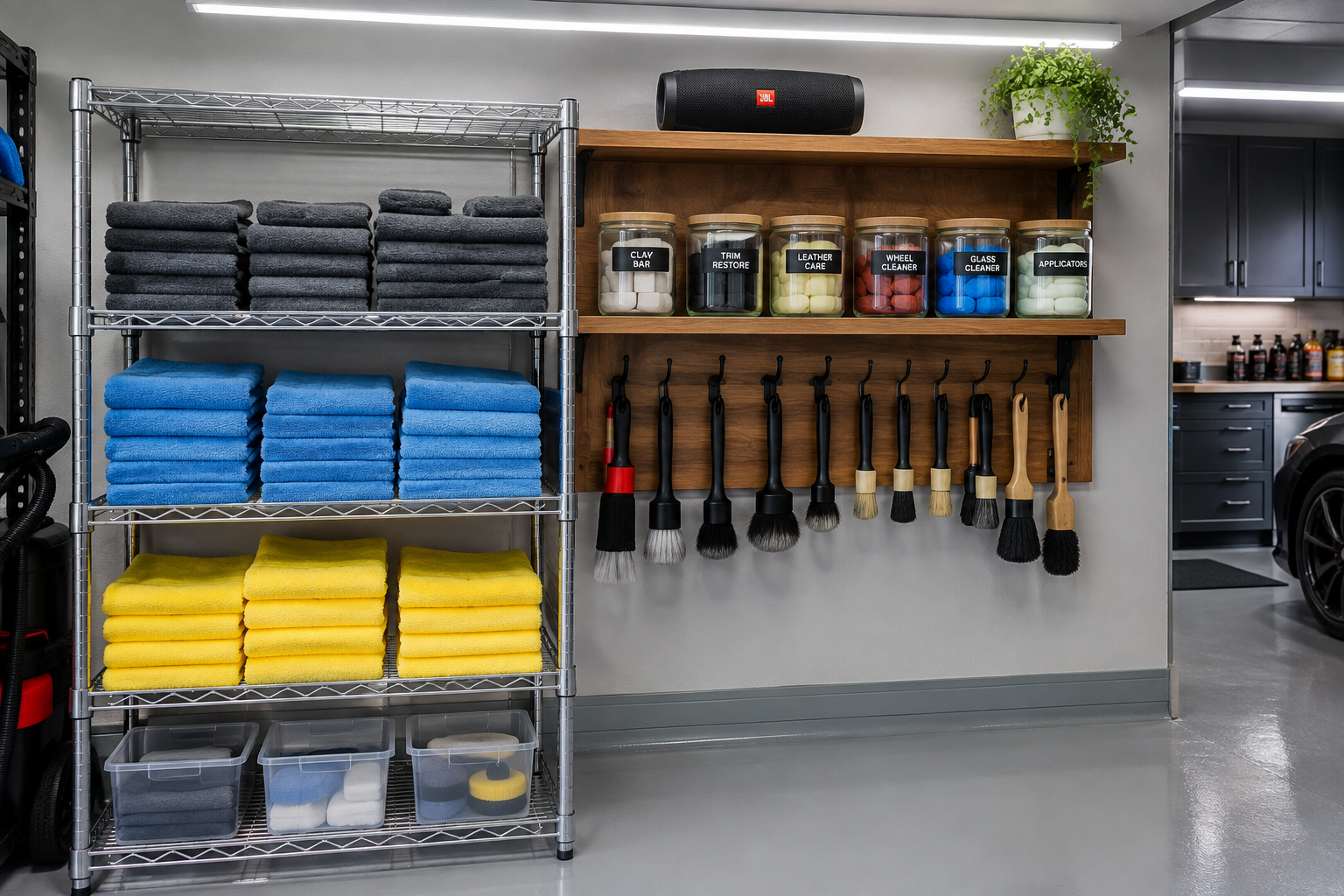
Mixing wire shelving for soft goods with a wooden shelf and hook system for rigid tools gives each type of item the storage it actually needs rather than forcing everything into the same solution. The individual hooks for detailing brushes keep the bristles from getting crushed or bent, which extends their useful life considerably. If you’re planning your overall garage storage layout and want to integrate this kind of dedicated zone into a broader plan, the post on planning a garage storage layout that works is a solid read before you start drilling anything.
