


As an Amazon Associate I earn from qualifying purchases.
Ski and snowboard gear takes up a serious amount of space, and if you just pile it in a corner every winter, you already know how that ends. This article covers four practical storage approaches for your garage: wall rack systems, boot drying stations, helmet and glove shelves, and off-season overhead storage. Whether you’re outfitting a family of four or just keeping your own setup dialed in, there’s a setup here that fits.
Wall Rack Systems
Ski and snowboard wall racks are the most popular starting point for a reason. They keep gear vertical and off the floor, free up serious square footage, and put everything in plain sight so nothing gets buried before a trip. The options range from simple hook-based systems to full slatwall panels loaded with sport-specific accessories. If you’re already thinking about a broader garage storage system for your space, ski racks fit naturally into that kind of organized, zone-based setup. A well-mounted rack can handle skis, poles, and boards all on a single wall section, leaving your floor clear for boots, bags, and everything else.
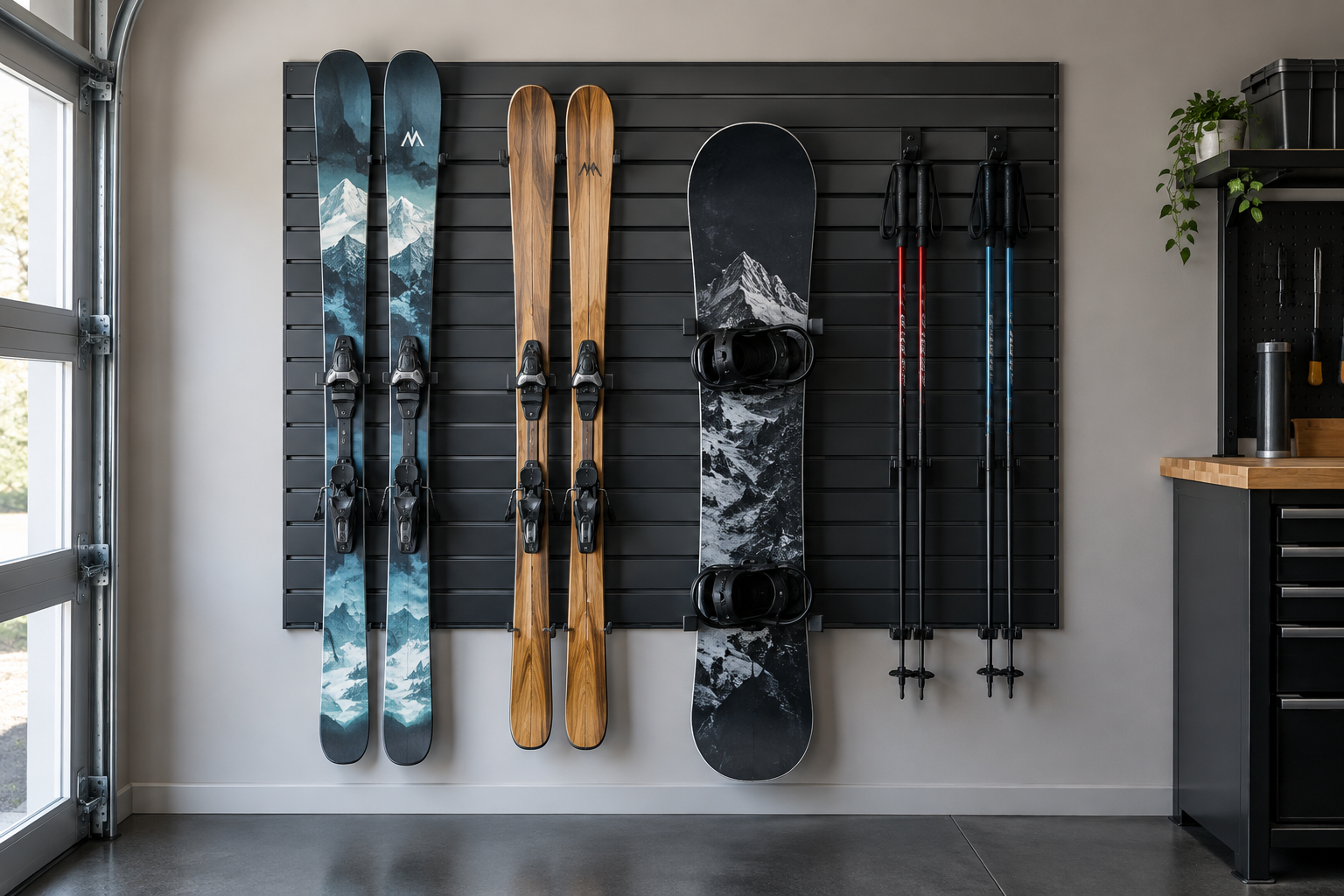
This setup uses a slatwall panel in a deep charcoal finish to hold two pairs of skis, a snowboard, and poles all on a single wall section. The sport-specific hooks angle the skis slightly forward for easy grab-and-go access. The warm gray wall behind the panel keeps the space feeling clean rather than industrial.
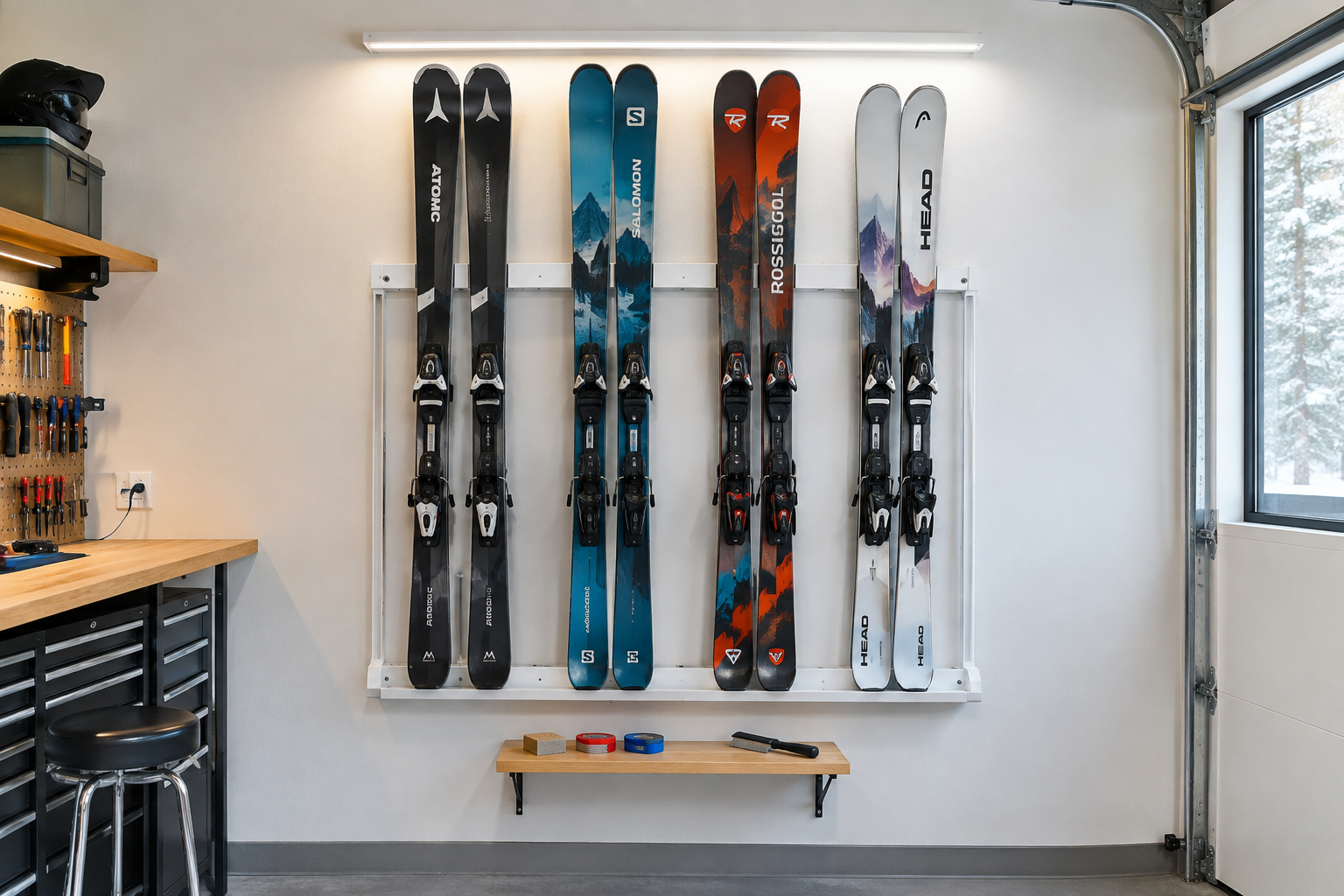
A white powder-coated steel rack keeps four pairs of skis slotted upright in individual padded channels, protecting bases and edges from contact damage. LED strip lighting mounted above the rack makes it easy to find what you need in a dimly lit garage. The small wooden shelf tucked underneath is a smart spot for wax and tools you reach for on loading day.
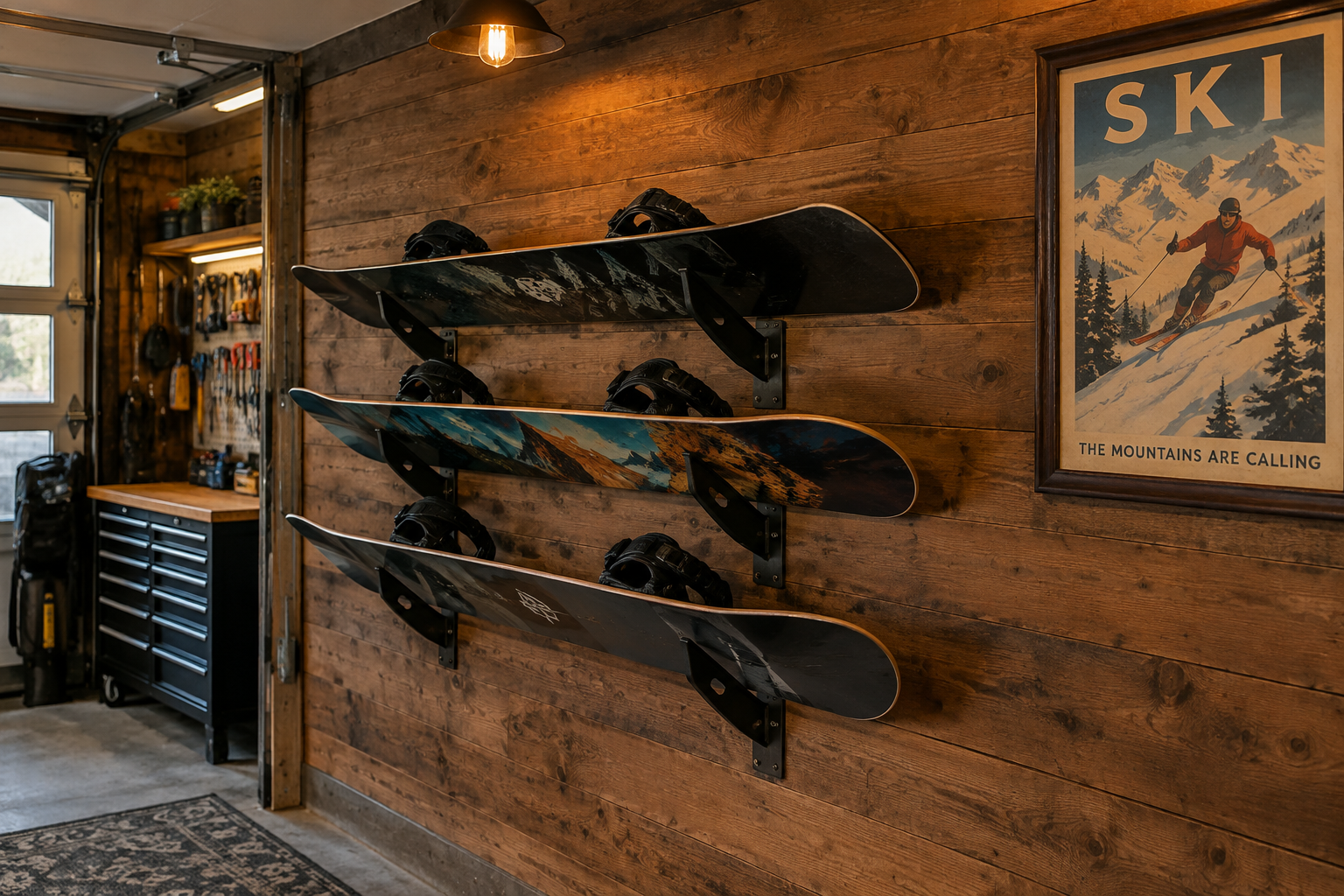
This rack leans into a mountain-lodge vibe with a walnut-stained wood plank accent wall and black iron cradle arms holding three snowboards at a slight outward angle. The boards are fully supported at two points each, which protects them better than simple hook storage. It’s the kind of setup that feels intentional rather than just functional, and it makes the garage worth showing off.
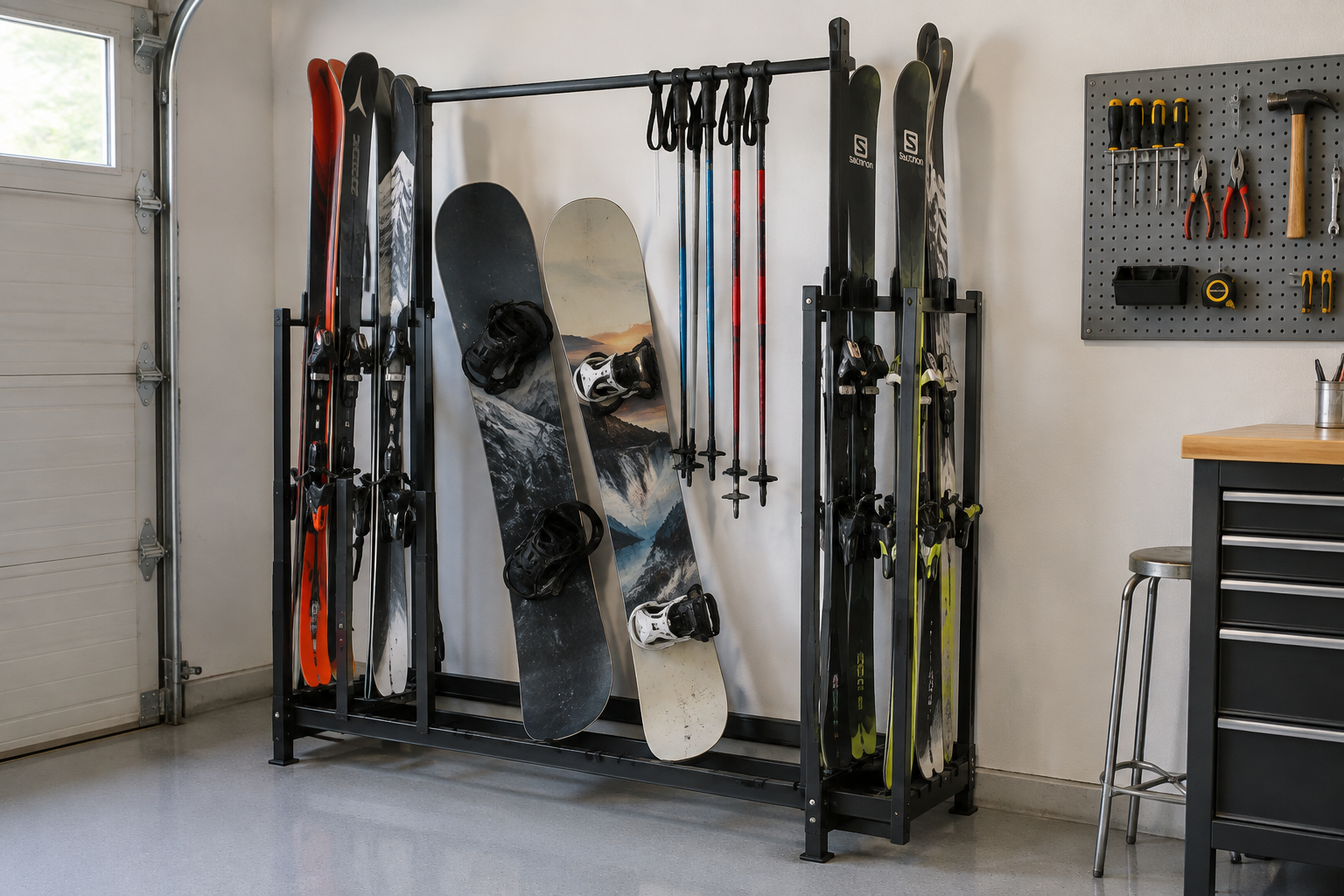
A freestanding rack is a great option if you rent or just don’t want to put holes in the wall for permanent hardware. This black steel unit handles skis on the side wings and boards in the center cradles without a single wall anchor required. The pegboard panel mounted behind it keeps small tools and accessories within reach without cluttering the rack itself.
Boot Drying Stations
Ski and snowboard boots are expensive, and wet boots that never dry properly break down from the inside out faster than almost any other gear failure. A dedicated boot drying station in the garage solves that problem completely. The best setups combine a low bench or shelf for staging with boot dryers, a drain-friendly mat underneath, and sometimes a small fan or heat source nearby. Since boots come in dripping wet and need to sit for hours, it makes sense to designate a specific zone near the garage door rather than dragging them inside the house. If your garage runs cold in winter, it’s worth thinking about how temperature affects your gear storage space, because a freezing garage slows the drying process significantly.
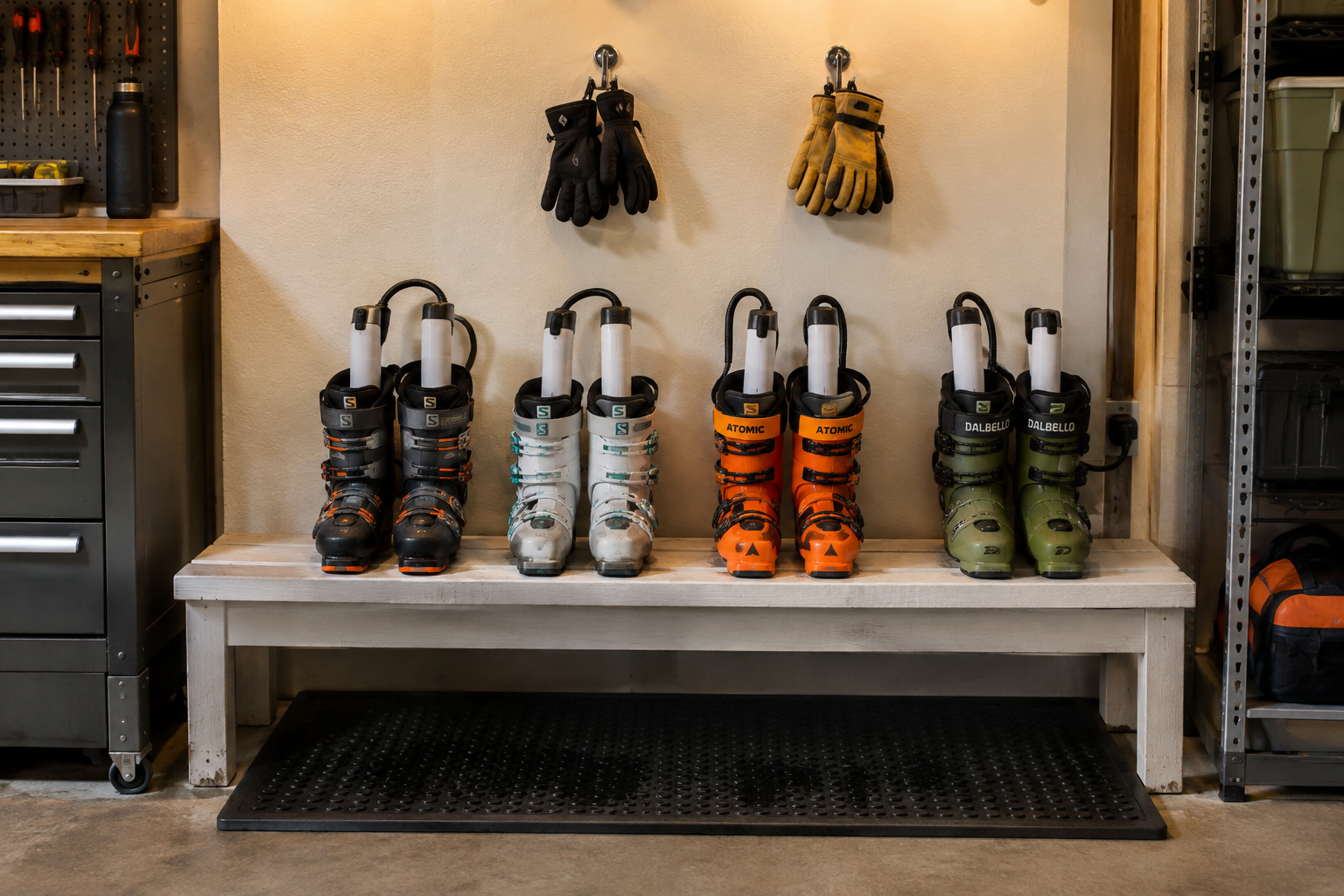
This station uses a simple painted wood bench as the base, with individual electric dryer tubes inserted into each boot to force warm air through the liner. The black rubber drainage mat below catches drips and keeps the floor from getting stained or slippery. Two chrome hooks above handle gloves while they dry at the same time, which is the kind of small detail that makes a big difference after a long day on the mountain.
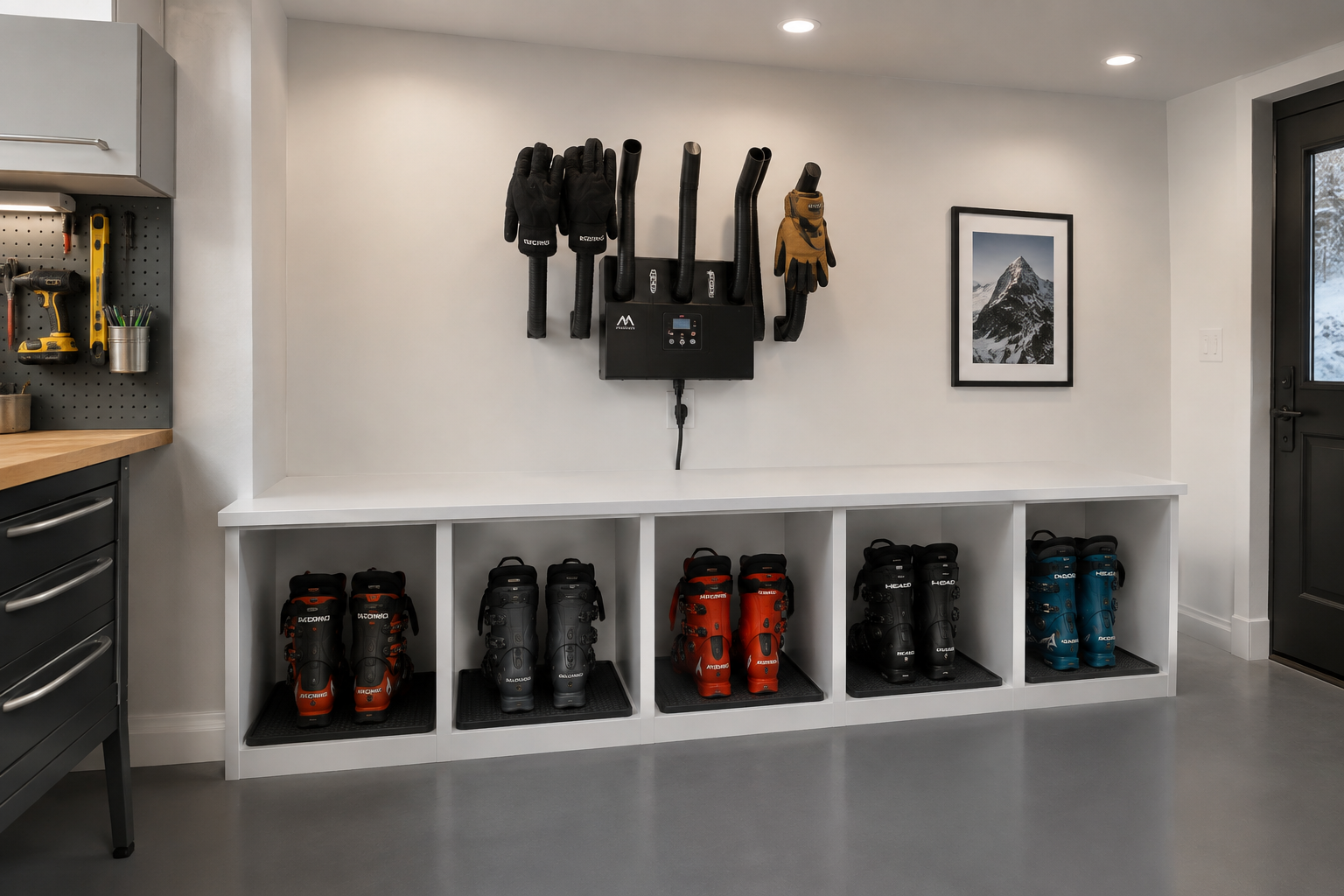
Built-in cubbies give each pair of boots their own landing spot, which prevents the pile-up that happens when everyone drops their gear in one place after a trip. Each cubby has a removable mesh tray that lets water drain away from the boot rather than pooling around it. The wall-mounted electric dryer above the cubbies serves multiple pairs at once and folds flat against the wall when not in use.
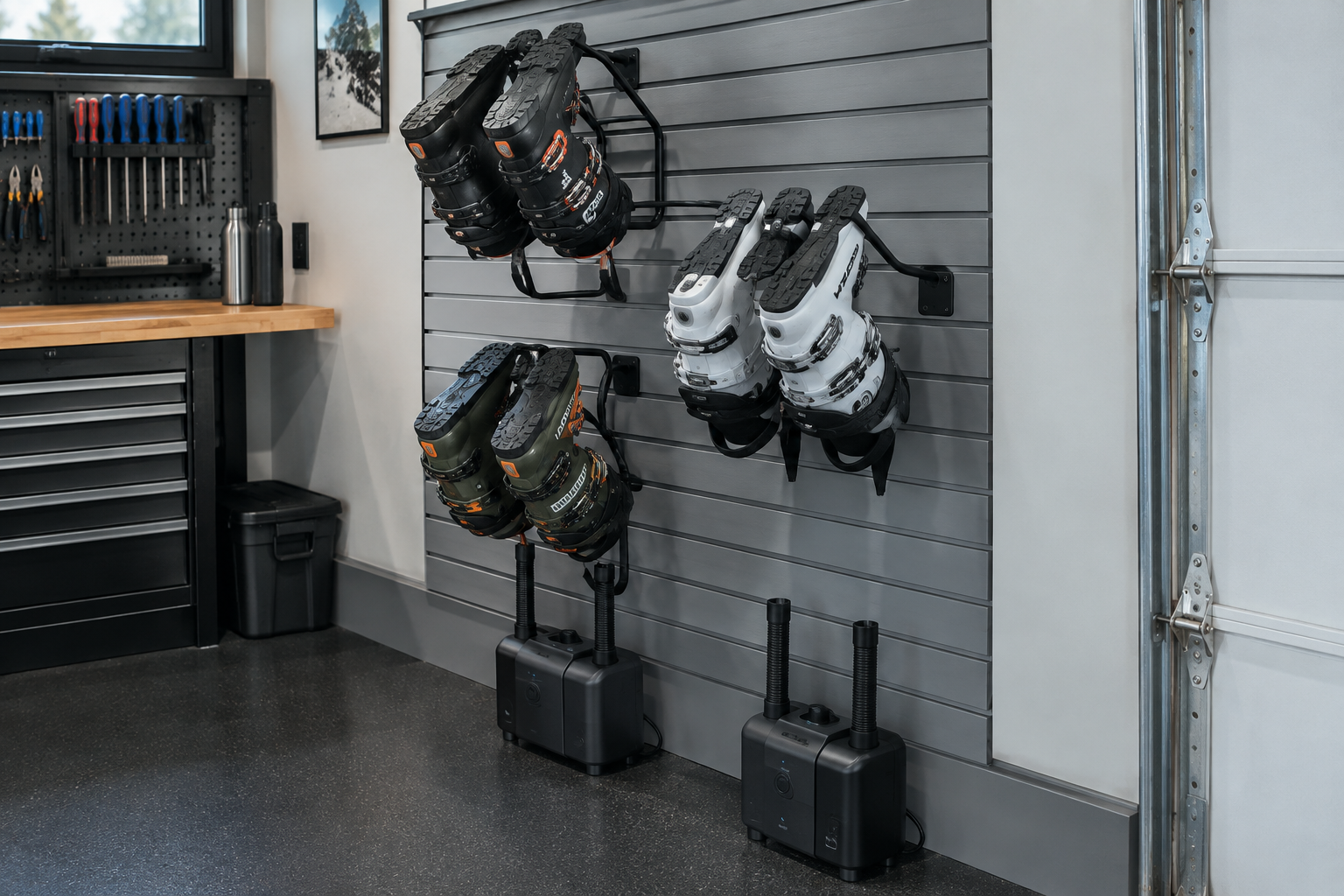
Hanging boots upside down from slatwall hooks is one of the most effective drying methods because gravity pulls moisture down and out of the liner. The portable dryer units on the floor beneath each pair push warm air up into the boot opening, working with the hang rather than against it. This slatwall approach is especially flexible because the hooks reposition in seconds if you need the panel space for something else off-season. If you want to see how slatwall handles other sports gear beyond ski equipment, check out this slatwall sports gear storage guide.
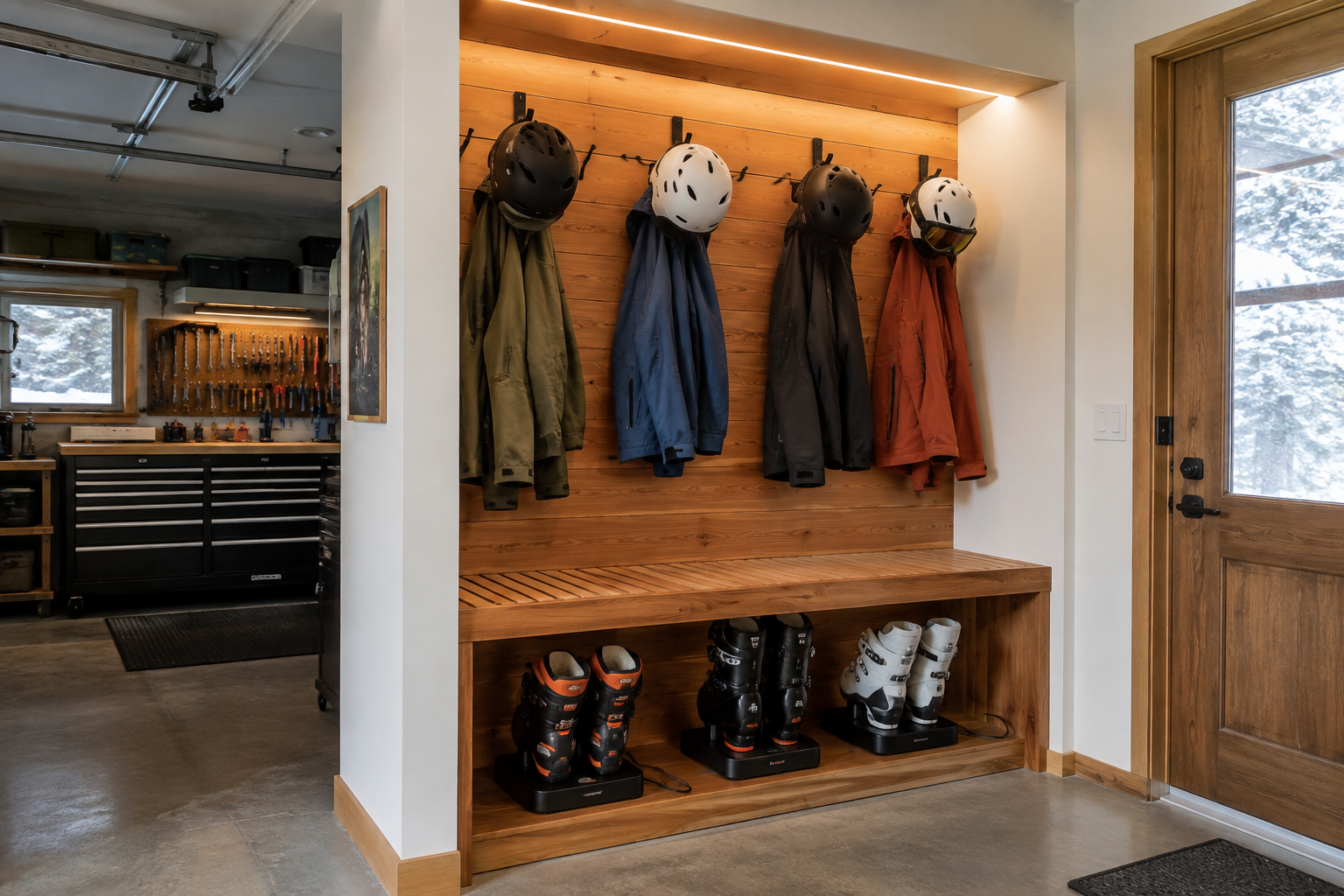
Positioning your boot station near the garage entry door creates a natural drop zone so wet gear never makes it further into the garage than it needs to. The cedar slatted bench adds warmth to what could easily be a sterile utility space, and the open lower shelf lets air circulate freely around the boots sitting on dryer stands. Hooks above the bench handle helmets and jackets so the whole gear-off process happens in one tidy spot.
Helmet and Glove Shelves
Helmets and gloves are small enough to disappear into the garage chaos fast, and expensive enough that you really don’t want to lose them or let them get crushed under a pile of gear bags. A dedicated shelf section for these items takes minutes to set up and saves a lot of frustration on the morning of a trip. Wall-mounted shelves with open cubbies work well for helmets since they need airflow to dry and should sit upright rather than stacked. Gloves benefit from hooks or short pegs where they can hang open and dry thoroughly between uses. These shelves also work well as part of a bigger garage sports equipment storage wall that handles all your seasonal gear in one organized zone.
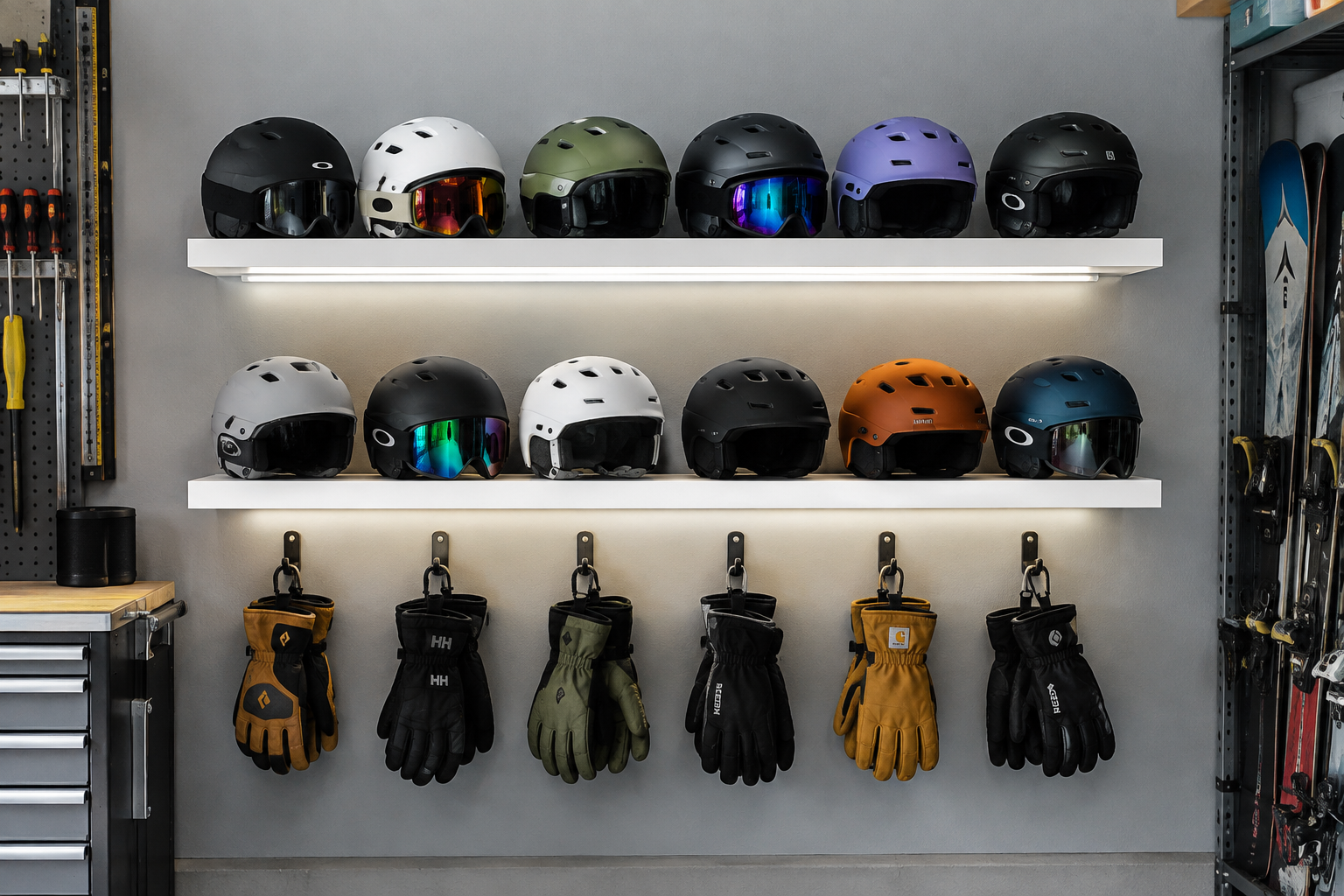
Two floating shelves at different heights give each helmet its own space without the need for cubbies or dividers. The short black metal pegs below the bottom shelf are sized perfectly for hanging gloves open so they dry from the inside out rather than balling up in a wet clump. LED strips under each shelf add a clean look and make it easy to grab the right helmet even in a dim garage.
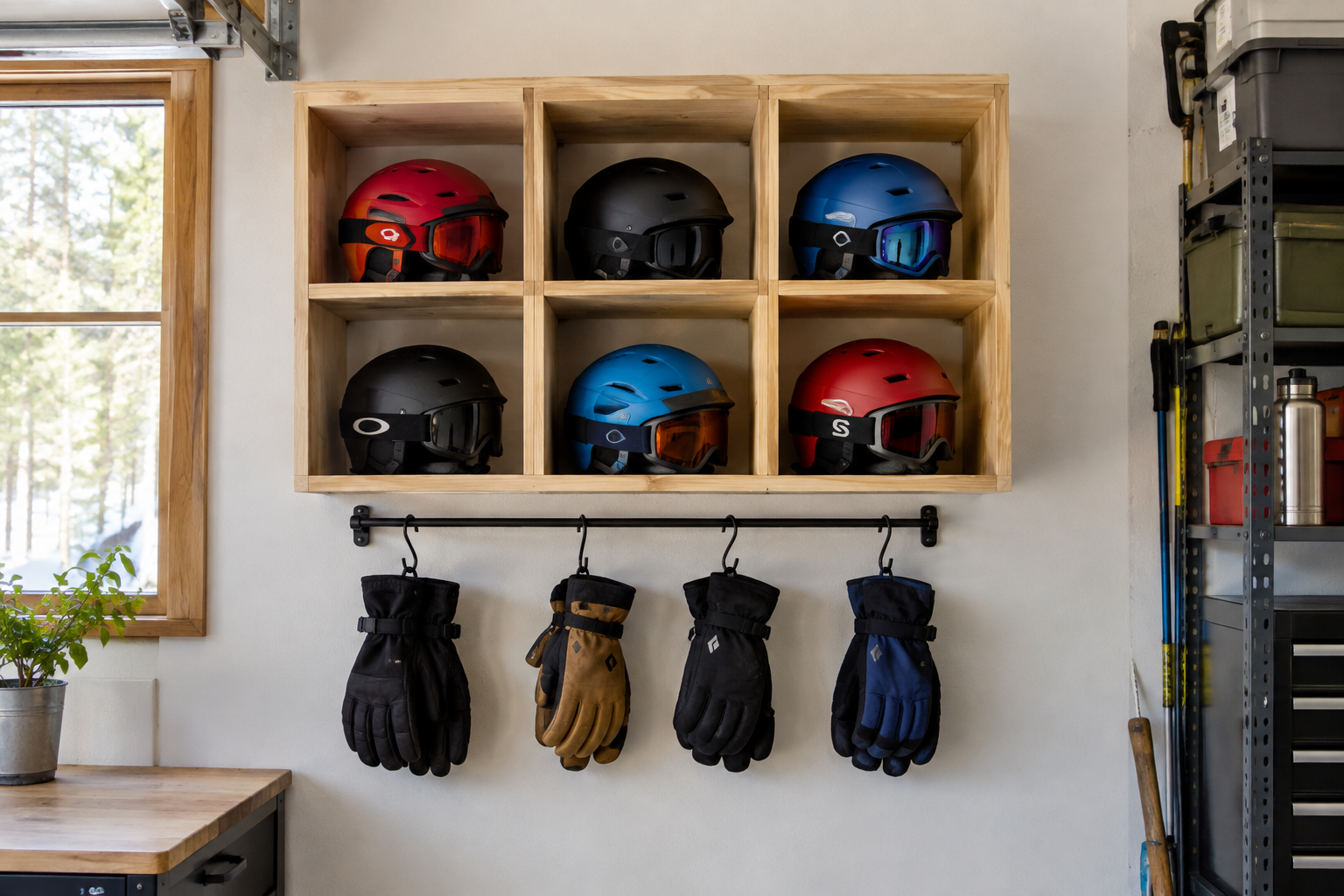
A natural pine cubby unit gives each helmet its own enclosed slot, which protects the foam liner and goggle lens area from getting bumped or scratched by other gear. The rail below with S-hooks is cheap, dead simple, and easy to reconfigure when glove count changes from season to season. The light wood finish keeps the setup looking intentional rather than like a locker room wall.
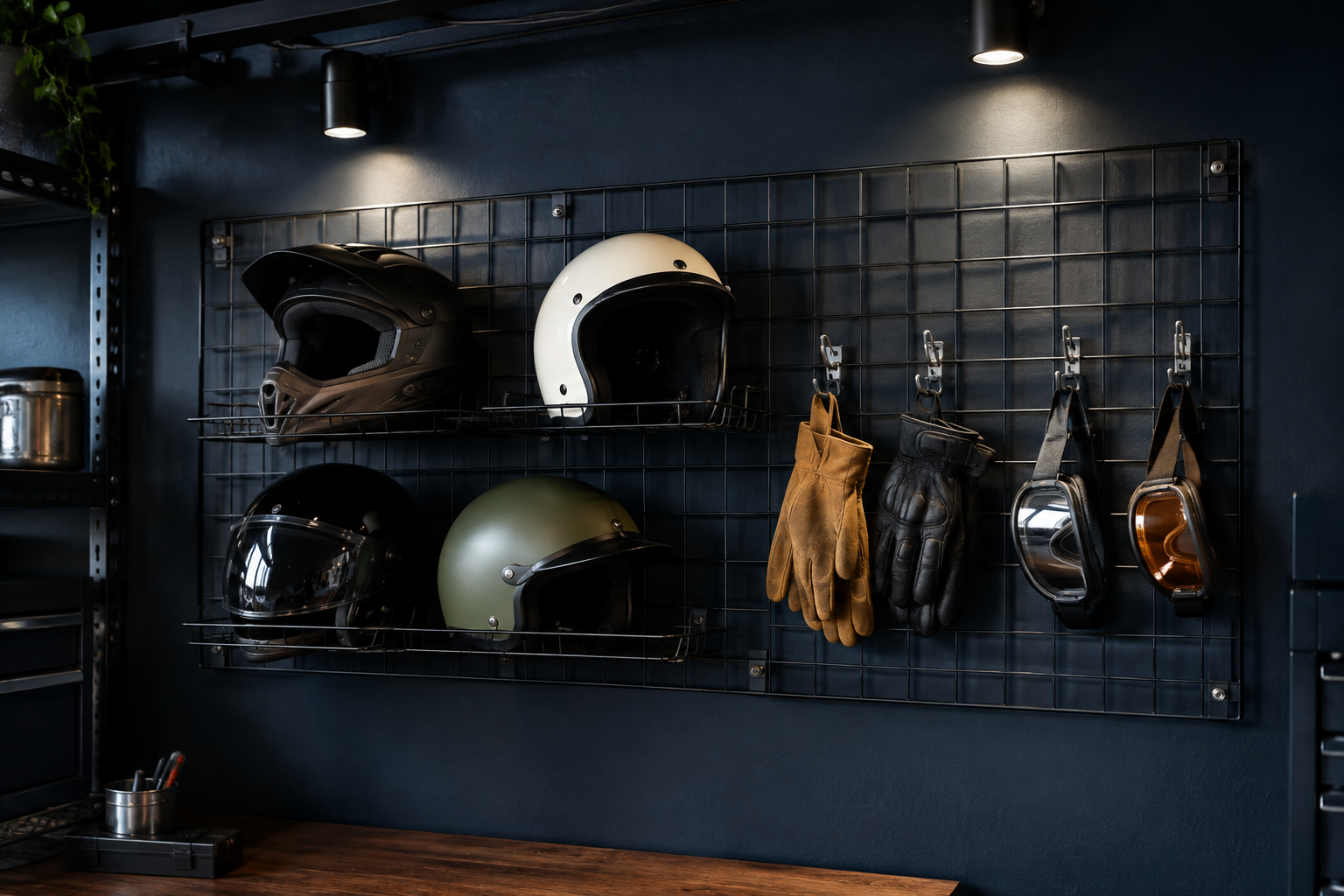
A wire grid panel is one of the most adaptable storage surfaces you can mount in a garage because the layout changes in seconds as your needs shift. Here it handles helmets on wire shelves, gloves on chrome hooks, and goggles on a separate row of hooks, all within a compact two-by-four-foot footprint. The dark navy wall behind the panel makes the gear colors pop and gives the space a more polished look than you’d expect from a garage.
Off-Season Overhead Storage
Once ski season wraps up, your boards, skis, and bags shouldn’t be taking up prime wall and floor space for the next eight months. That’s what the ceiling is for. Overhead storage keeps bulky off-season gear out of the way while leaving your active garage space free for summer activities. Ski bags and padded board bags store particularly well overhead because they protect your gear from dust and UV, and they stack or hang flat without wasted air space. If you’re new to ceiling storage, the ceiling storage ideas on this site cover a wide range of approaches from simple hooks to full platform systems, and the complete guide to overhead racks and systems gets into the details on weight limits and installation. The key with ski gear is making sure the storage surface is large enough to lay long skis flat without overhang.
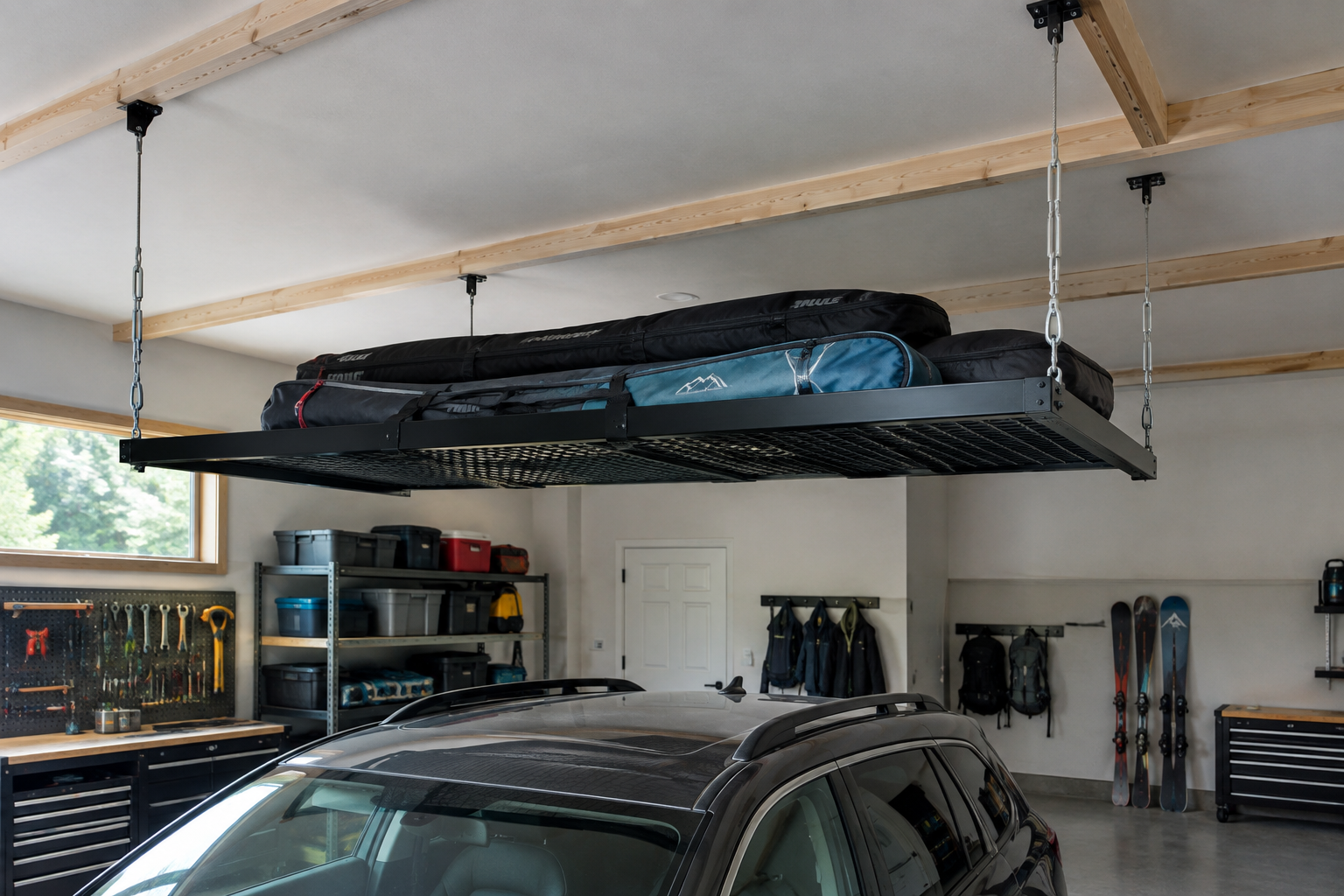
A suspended steel platform is the gold standard for off-season ski storage because it handles serious weight and gives you a flat surface long enough for full-length ski bags without any awkward overhang. This platform sits high enough to park a standard SUV underneath it with no clearance issues. The adjustable cable suspension means you can raise or lower the platform during installation to get the height exactly right for your ceiling. For more ideas on what these systems can handle, the best overhead garage storage guide breaks down top-rated platforms by size and capacity.
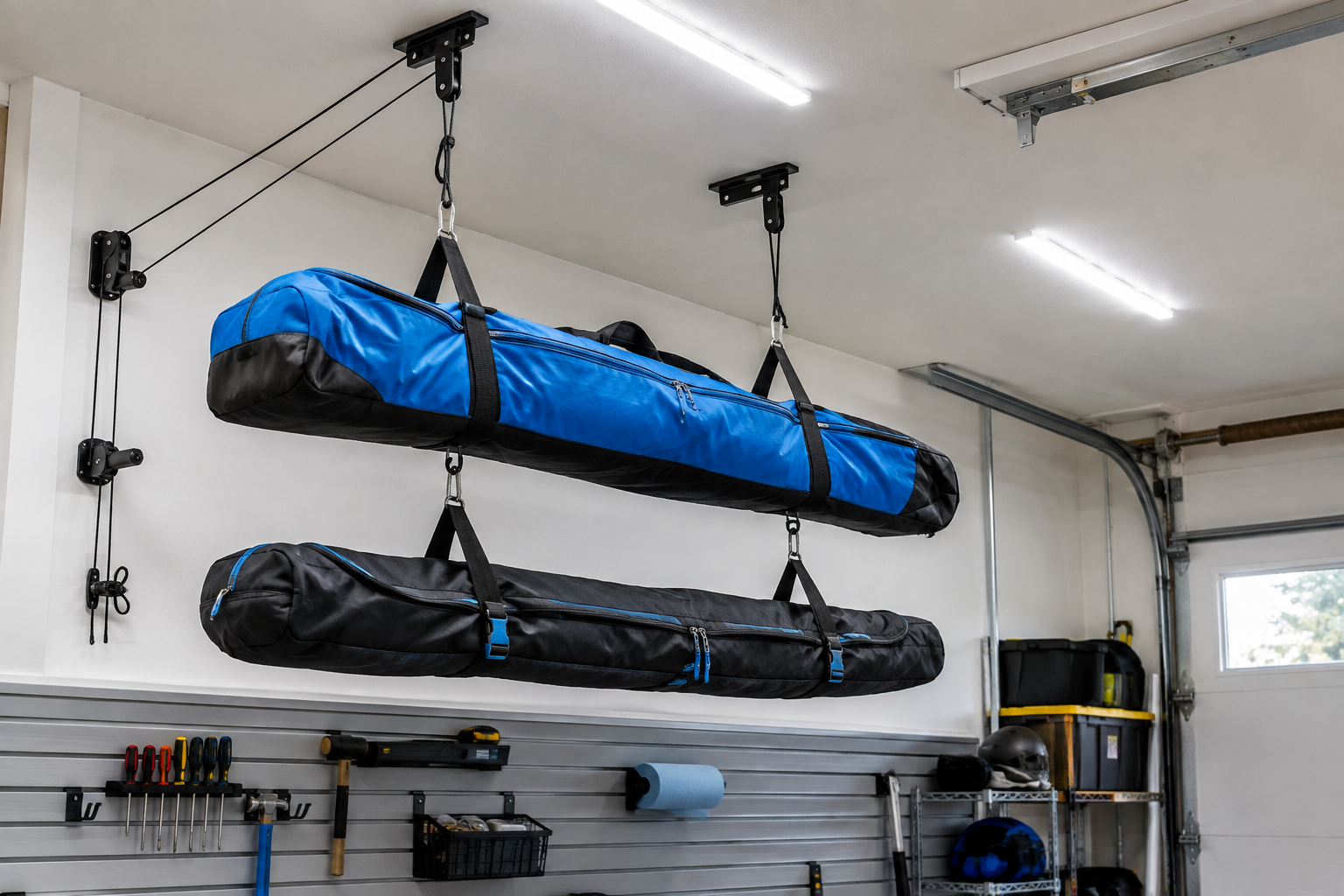
Hoist systems work especially well for ski and board bags because you can lower the bag to floor level for packing, load everything in, then crank it back up to the ceiling without lifting the full weight overhead. The pulley and cleat system mounts to the wall at a convenient height, and the rope locks off securely so there’s no risk of the bag dropping. If you want to tackle the installation yourself, this step-by-step guide to installing overhead garage storage walks through the whole process.
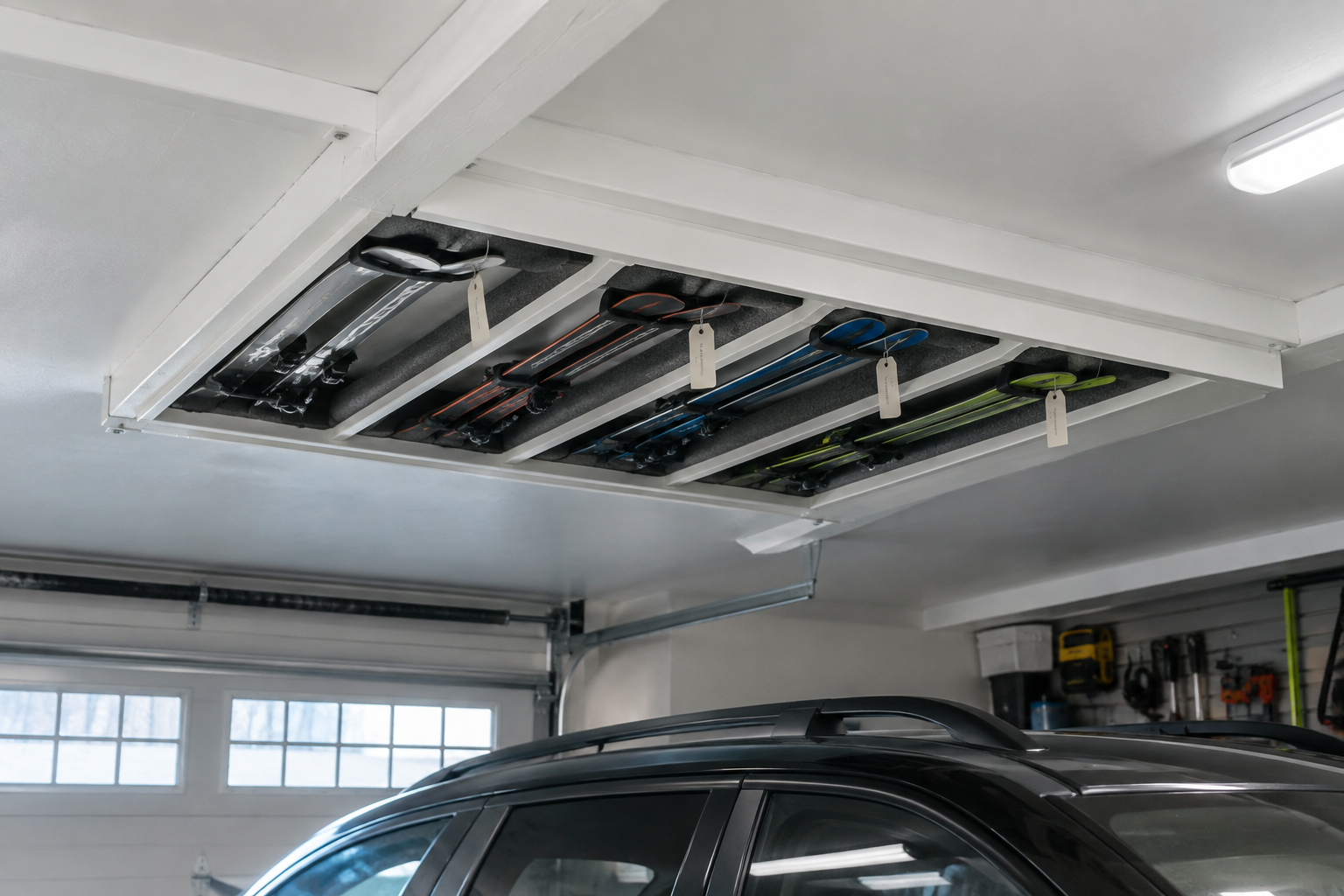
Building a ski shelf directly between ceiling joists is one of the most space-efficient overhead storage options available because it uses structure that’s already there rather than adding new framing. The padded channels keep ski bases and edges from touching each other during the months they sit up there, which matters more than most people realize for long-term gear condition. Label tags on each pair might seem overly organized, but when you’re pulling gear out six months later, knowing which skis belong to which family member saves real time. This kind of custom build pairs well with a planned garage storage layout so the overhead shelf works with the rest of your zones rather than competing with them.
