

As an Amazon Associate I earn from qualifying purchases.
The garage door takes up a huge chunk of your home’s front face, so what you plant and place around it matters more than most people realize. A little landscaping goes a long way toward making the whole exterior look polished and intentional. In this article I’m covering four areas where you can make a real difference: foundation planting beds, potted plant arrangements, pathway and border designs, and lighting and accent features.
Foundation Planting Beds
Foundation planting beds are the most impactful thing you can do for your garage’s curb appeal. A well-planted bed softens the hard line where the garage wall meets the ground and draws the eye upward toward the door itself. The best beds use a mix of heights, from low groundcovers at the front to taller shrubs or ornamental grasses toward the back. If you’re already thinking about how the garage exterior looks as a whole, it pairs well with some of the interior upgrades covered in our guide on how to make your garage look expensive.

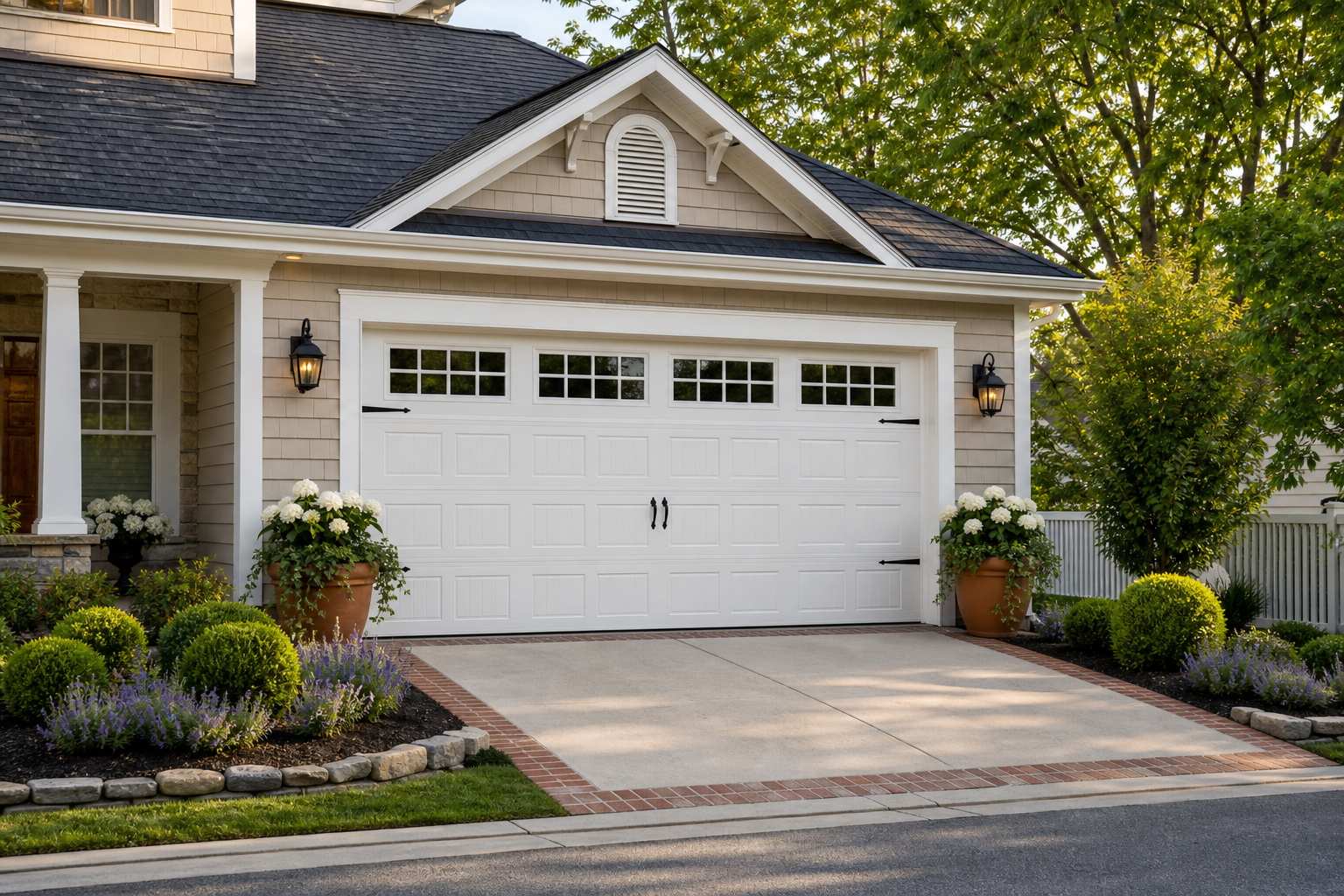
Dark mulch and white river rock edging give this bed a crisp, finished look that contrasts well against a white garage door. The boxwood globes anchor the design visually without blocking sight lines or window inserts. A simple palette like this stays low-maintenance through most of the year.

Purple lavender and salvia are a natural match for charcoal or dark gray garage doors because the cool tones play off each other without competing. Black steel edging keeps the bed boundary razor-sharp and prevents grass from creeping in. This kind of planting also attracts pollinators, which adds life and movement to an otherwise static facade.

Feather reed grass fits perfectly in a modern design because it grows tall and upright without spreading messily. Swapping mulch for fine gravel gives the bed a drier, more architectural feel that suits homes with clean lines and dark cladding. The movement of the grass in a breeze adds just enough softness to prevent the facade from feeling cold.

Hydrangeas are one of the easiest ways to get big, showy color along a garage wall because they bloom reliably and grow full without much fuss. Creeping phlox at the front edge spills slightly over the fieldstone border in a way that looks intentional rather than untidy. Red cedar mulch ties into the warm tones of the brick and makes the whole bed feel cohesive.
Potted Plant Arrangements
Potted plant arrangements give you flexibility that in-ground beds simply can’t match. You can move them seasonally, swap out plants when they fade, and adjust the layout without touching a shovel. Flanking a garage door with containers is especially effective on driveways where the apron meets the wall and there’s no soil bed to work with. I think of pots as punctuation marks for the garage facade. When they’re grouped well, they signal to visitors that someone pays attention to the details, which is exactly the vibe most of us are going for.
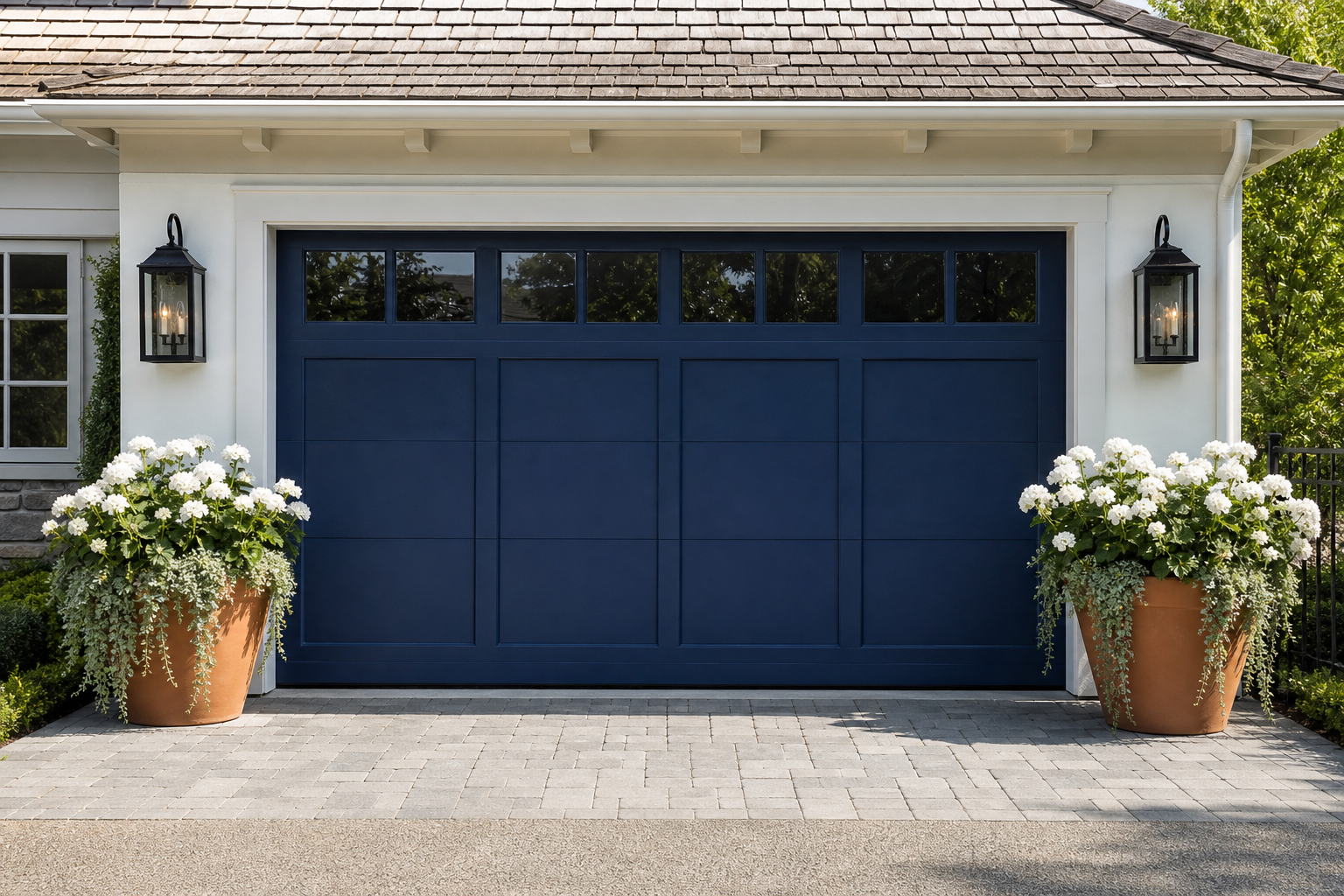
Symmetry is the easiest design rule to apply near a garage door, and two matched terracotta pots pull it off without looking stiff or formal. White geraniums and trailing dichondra give the arrangement movement and contrast against the deep navy of the door. This pairing works just as well for a one-car garage as it does for a wider two-car setup.
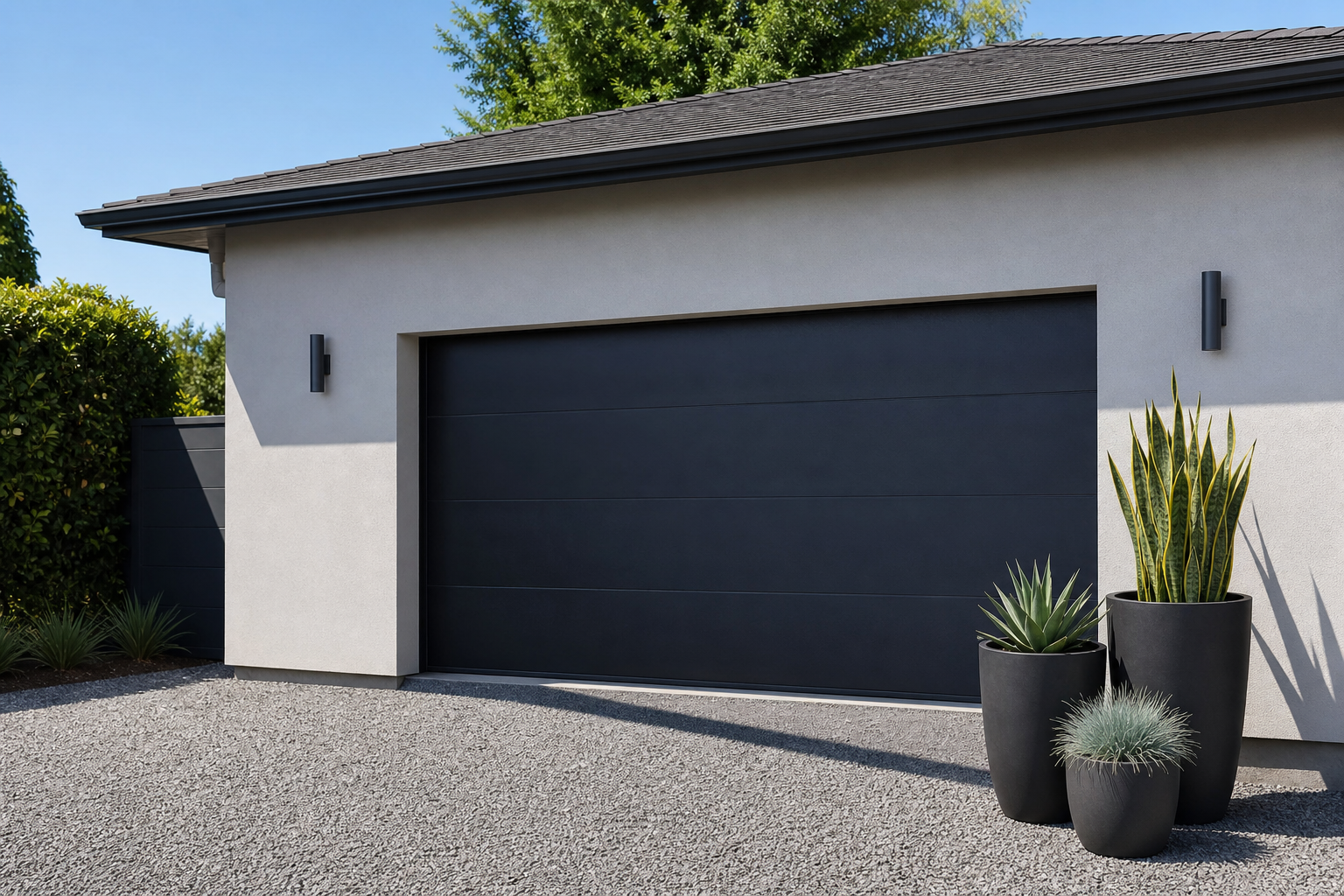
Grouping pots in odd numbers and varying their heights creates a display that looks composed rather than scattered. Matte black concrete planters work especially well against a black garage door because the similar tones let the plants become the focal point. Succulents and architectural plants like agave are a practical choice too, since they handle heat and occasional neglect better than most annuals.
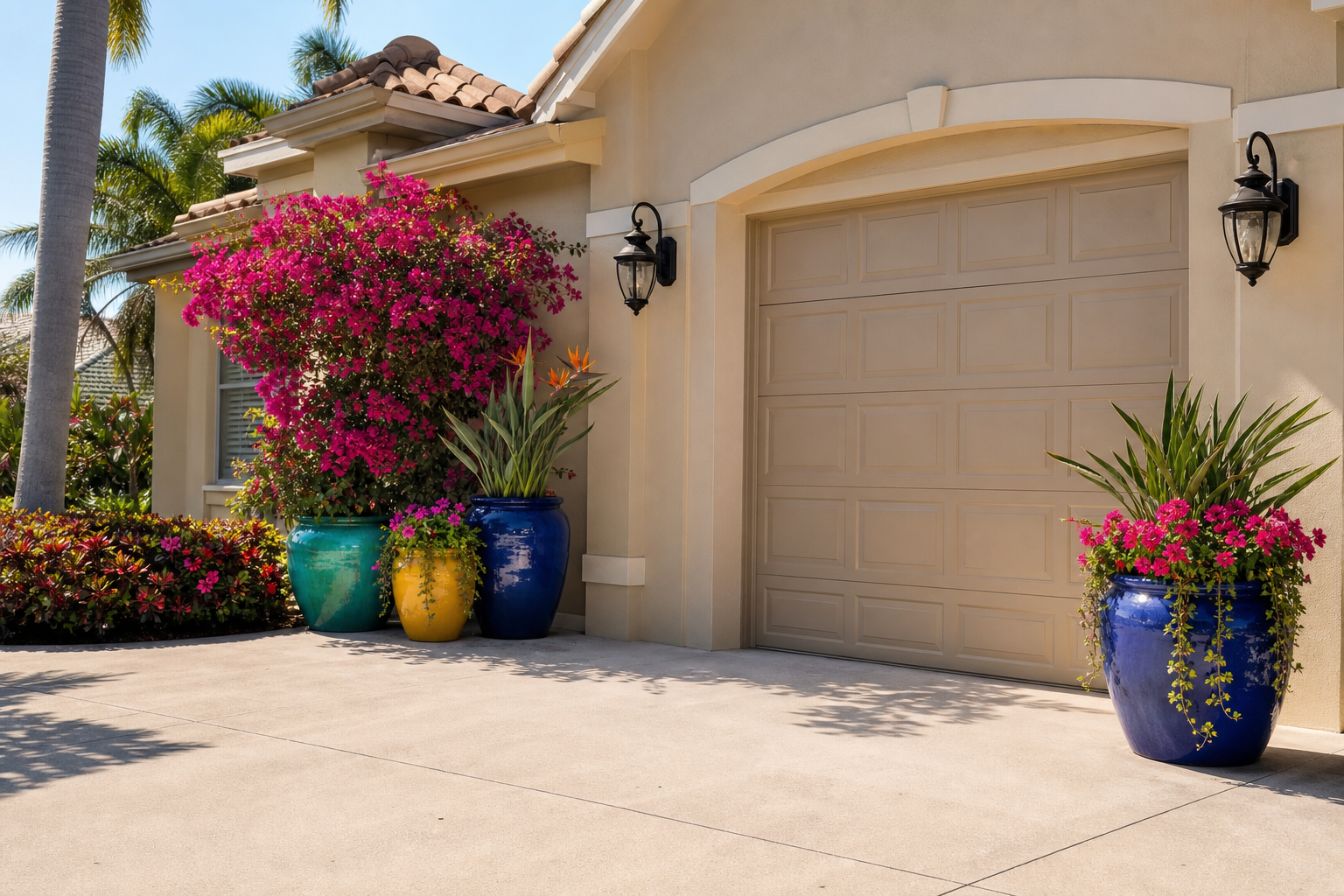
In warmer climates like Central Florida, bougainvillea thrives in containers and delivers intense color that holds up through summer heat. Mixing glazed ceramic pots in bold colors adds personality to a neutral stucco exterior without requiring any permanent changes. The contrast between the vibrant pots and the tan garage door is what makes this kind of arrangement pop from the street.

Galvanized metal tubs bring a farmhouse aesthetic that suits board-and-batten or paneled garage doors beautifully. Ornamental kale, dusty miller, and purple sweet potato vine give you a cool-season palette that’s rich and textural without relying on warm-weather flowers. If you’re considering adding decorative touches to the door itself, pairing this planting with decorative garage door hardware takes the farmhouse look even further.
Pathway and Border Designs
The pathway leading to and alongside your garage sets the tone before anyone even reaches the door. A well-defined border along a driveway edge or a stepping stone path leading to a side entry can make the whole space feel designed rather than default. Materials matter a lot here. Brick, natural stone, pavers, and gravel each carry a different personality, and the right choice depends on what your home’s architecture is already saying. Good border designs also solve practical problems like preventing grass from creeping into the driveway and channeling rainwater away from the garage foundation.
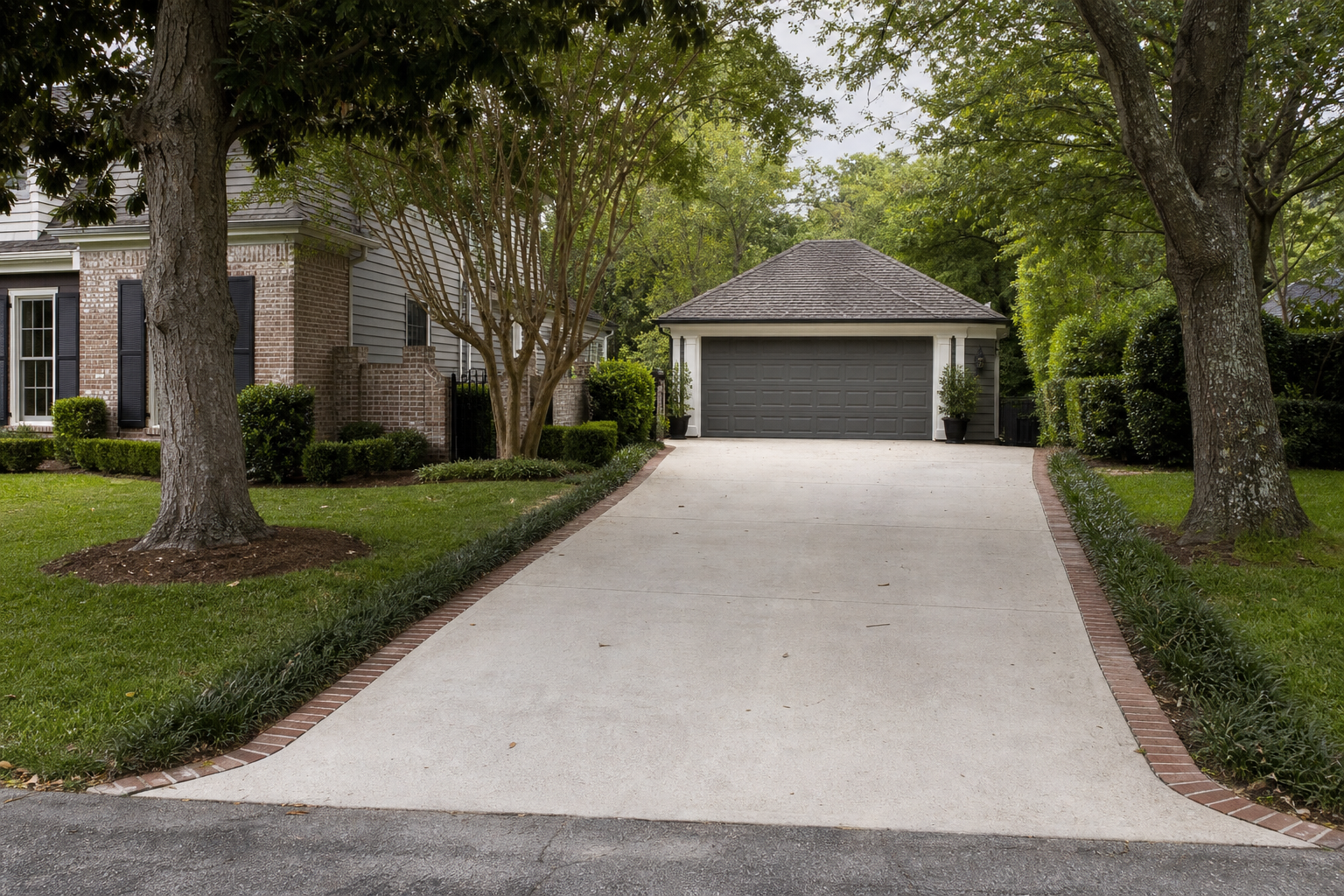
Brick edging along a concrete driveway is one of the most cost-effective border upgrades you can make because the materials are widely available and the installation requires minimal excavation. A thin ribbon of mondo grass planted just inside the brick softens the hard boundary and stays green year-round in most climates. The combination guides the eye naturally toward the garage door.
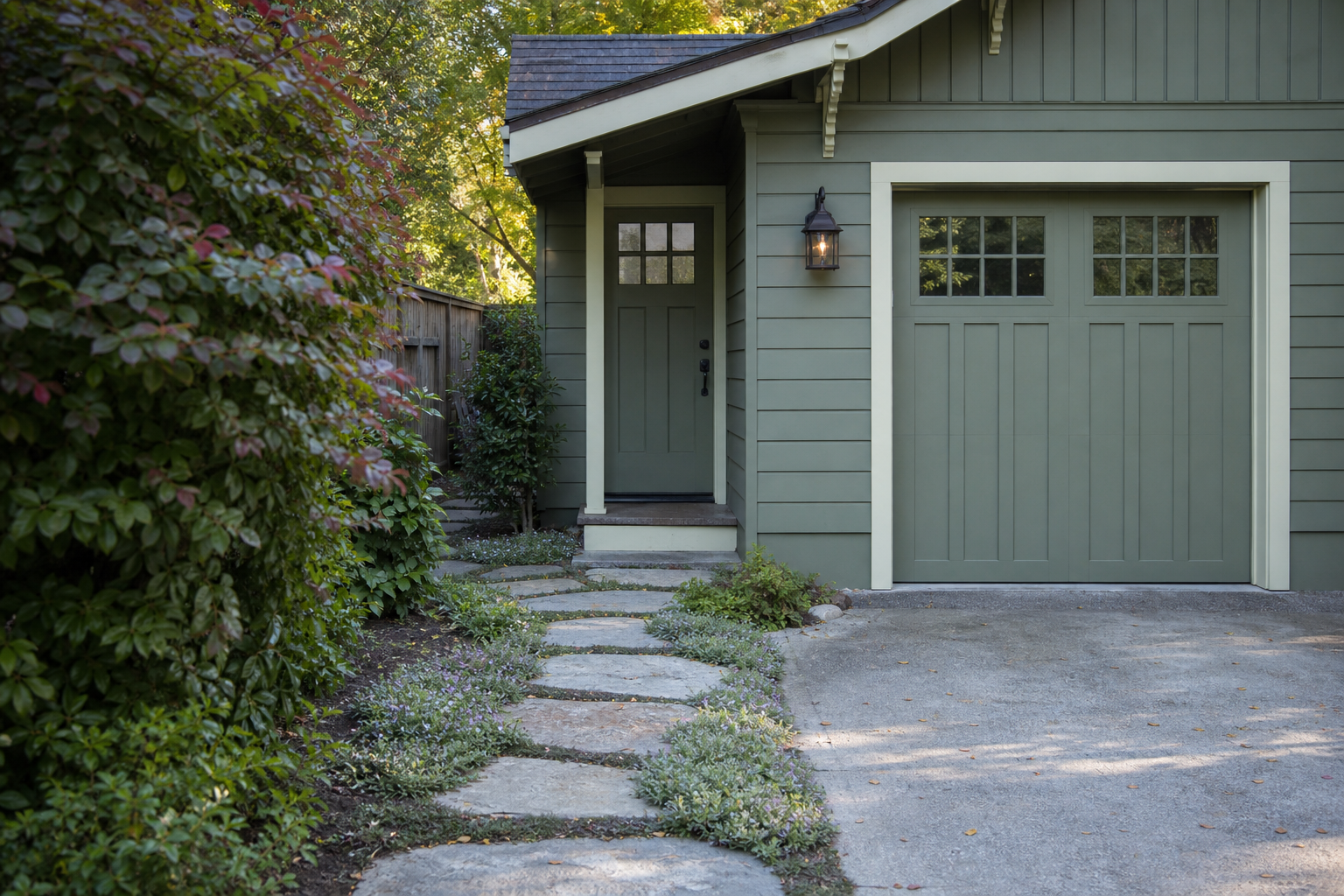
Flagstone paths work well for the side entries that most garages have because they’re easy to lay on a curve and feel welcoming underfoot. Planting creeping thyme between the stones fills the gaps naturally and releases a gentle scent when stepped on. Sage green pairs particularly well with the warm gray tones of natural flagstone.
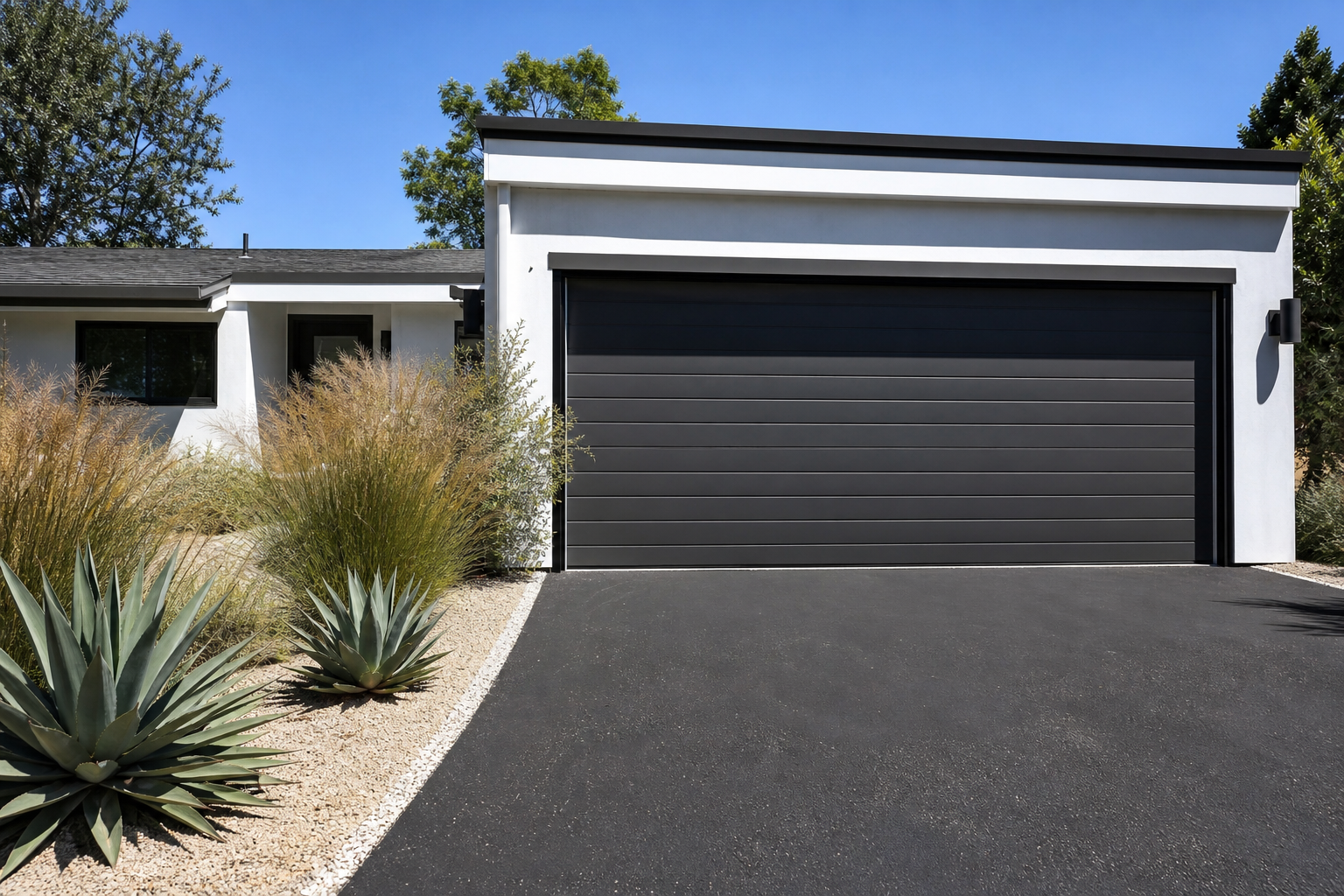
White decomposed granite makes a striking border material alongside a dark asphalt driveway because the contrast is bold and requires almost zero maintenance once it’s laid and compacted. Alternating agave plants and ornamental grasses along the border bring rhythm and repetition to the design. This approach works especially well for contemporary homes where clean geometry is part of the aesthetic.
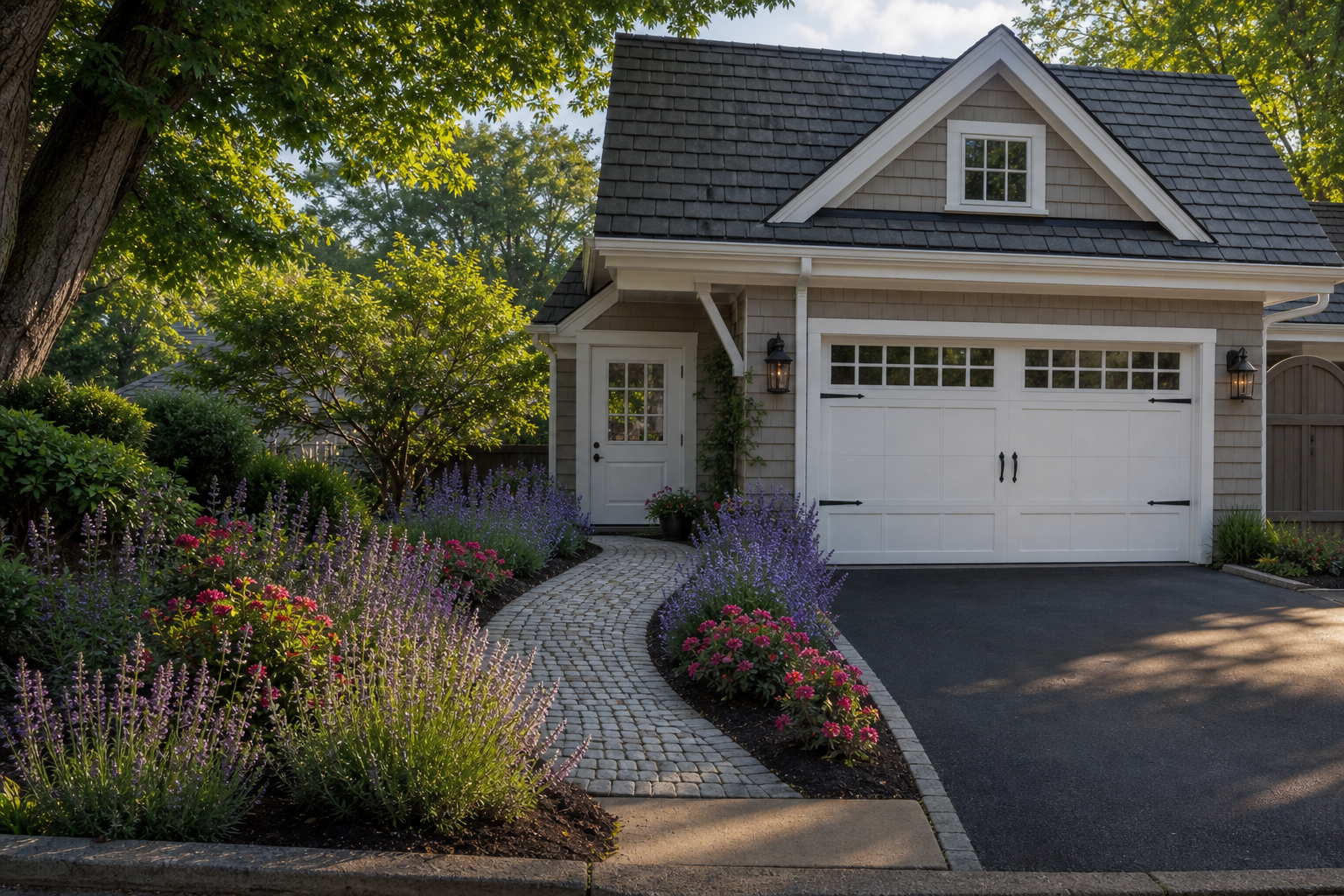
A curved cobblestone path immediately signals that this is a home where care has been taken, and the organic shape contrasts nicely with the rectangular garage door behind it. Lavender and catmint are workhorses in a pathway border because they’re drought-tolerant, fragrant, and bloom over a long season. If you’re updating the door hardware to match those black accents, our guide on painting garage door hardware walks through the whole process.
Lighting and Accent Features
lighting around the garage is one of those upgrades that punches well above its price point. A few well-placed fixtures can make the whole driveway area feel intentional at night, and they add a layer of security without looking like security lighting. Accent features like window boxes, house numbers, and decorative posts give the garage facade depth and character during the day. The goal is to treat the garage door surround the same way you’d treat the front door, because for a lot of homes, the garage door actually gets more visual attention from the street. Good lighting outdoors can also complement thoughtful garage lighting decisions you’ve already made inside.
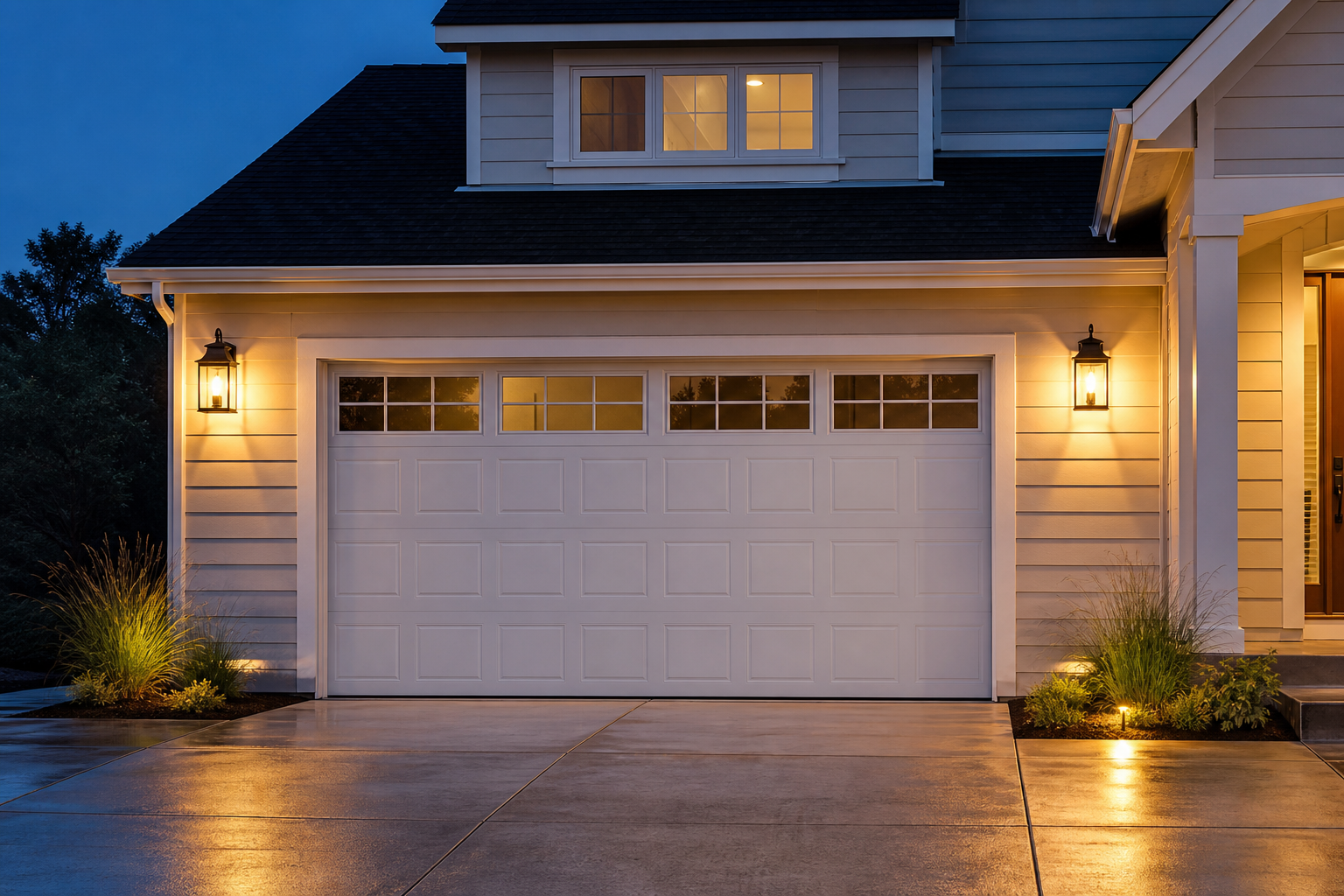
Wall sconces flanking the garage door are the single easiest lighting upgrade you can install because they mount to existing exterior walls and most can be wired into a standard outlet or junction box. Warm amber bulbs produce a welcoming glow that makes the garage facade feel like a proper entrance rather than a utilitarian opening. Matching the sconce finish to your door hardware creates a put-together look without requiring a designer.

Low-voltage pathway lights along the driveway edge create a runway effect that looks polished and makes navigation easy after dark. Brass spike lights have become a popular choice because they weather to a warm patina and hold up well without rusting. Most low-voltage systems connect to a single transformer and can be expanded easily if you want to add more fixtures later.
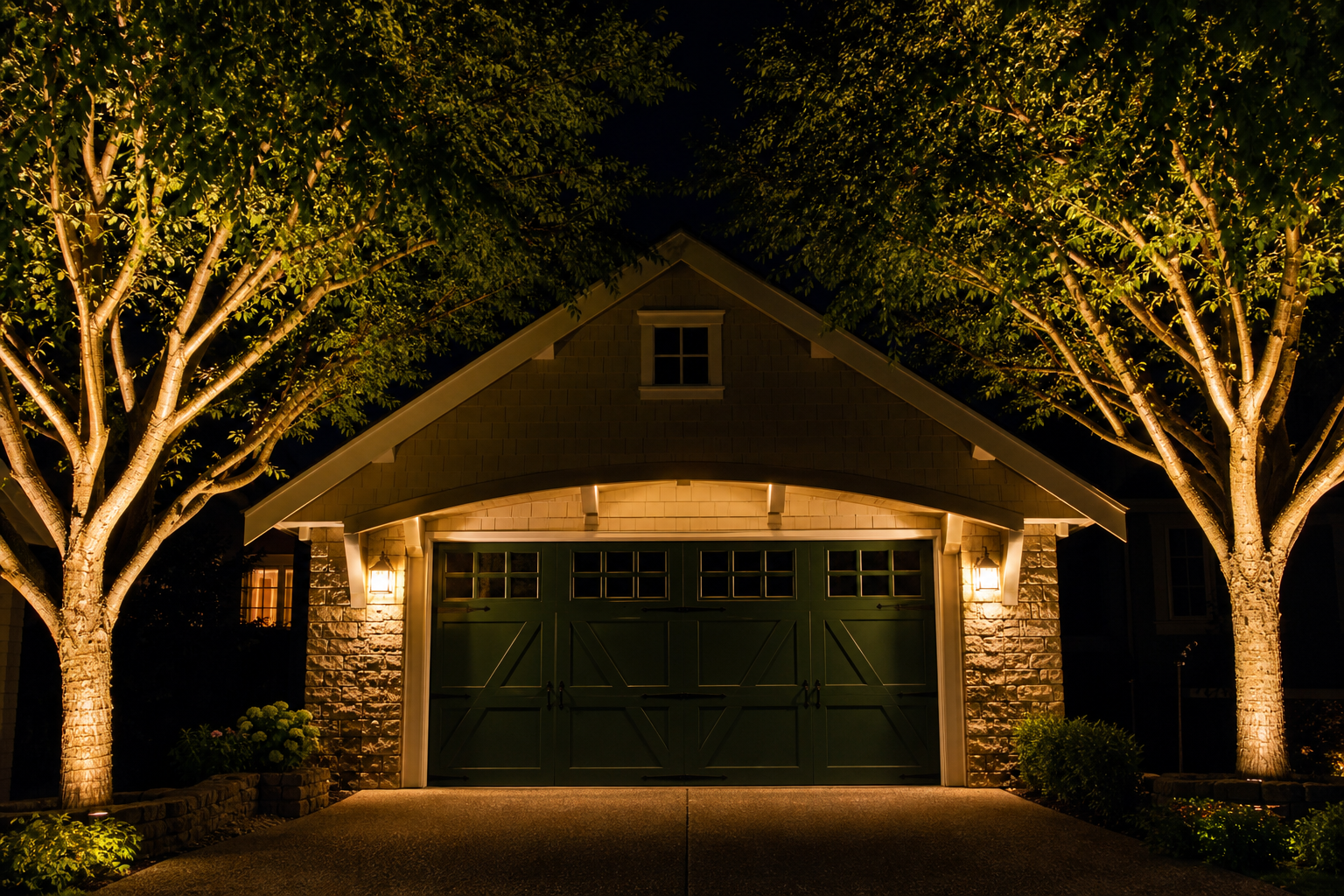
Uplighting trees near the garage is a technique that adds drama and depth to the facade without putting light directly on the building itself. The glow from illuminated tree canopies creates a soft wash of ambient light that makes the garage door visible and attractive at night. If you’re building out a smarter exterior setup, it pairs naturally with the garage smart home integration options that can automate your driveway lights on a schedule.
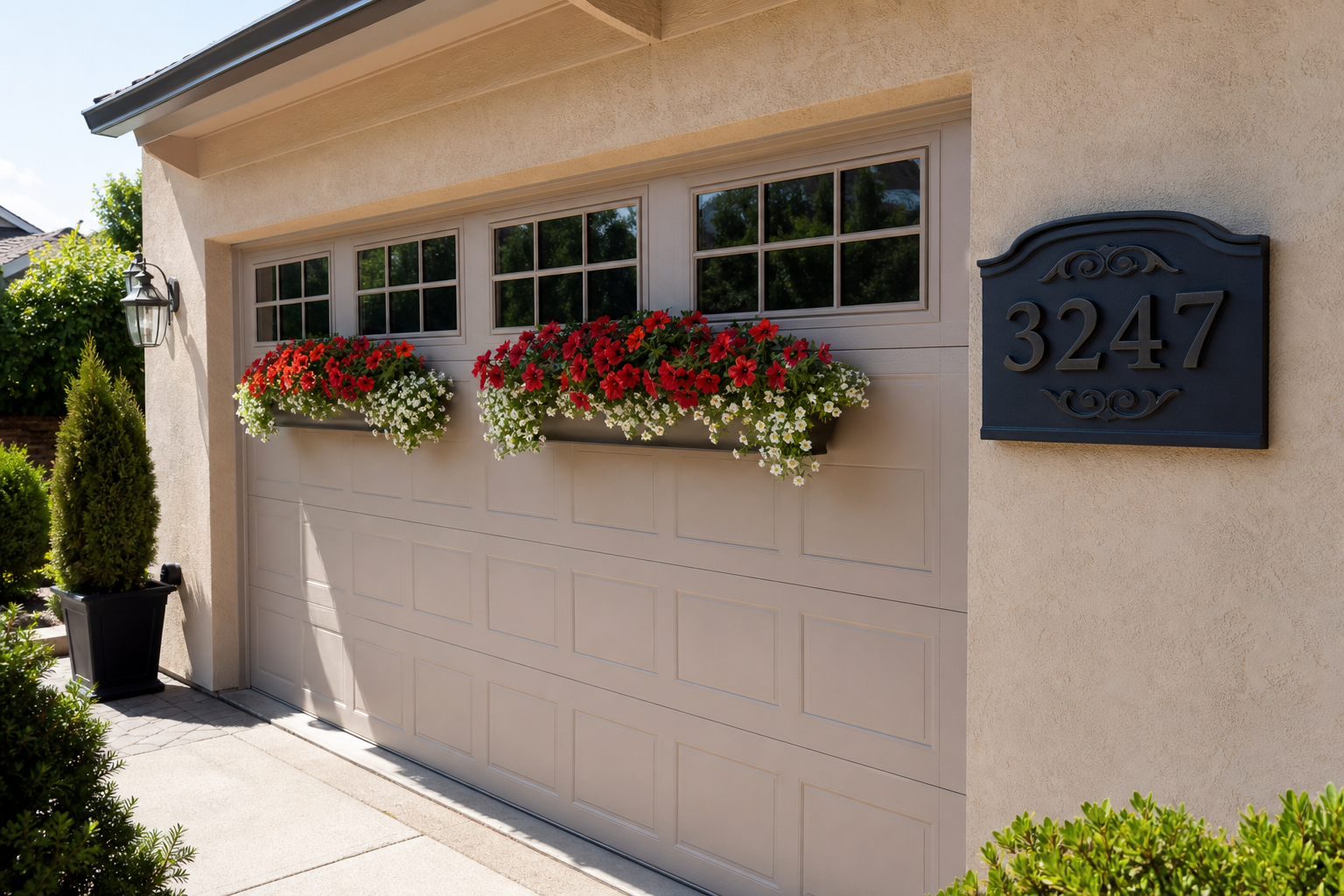
Window boxes are one of the most underused accent features on garage doors that have glass panels, and they bring the same charm to a garage as they do to a cottage front window. Red petunias and white alyssum trail over the edge with minimal upkeep once established. A bold matte black house number plaque beside the door adds a graphic element that makes the whole facade easier to read from the street, which also helps with delivery drivers and guests finding the right house quickly.
