

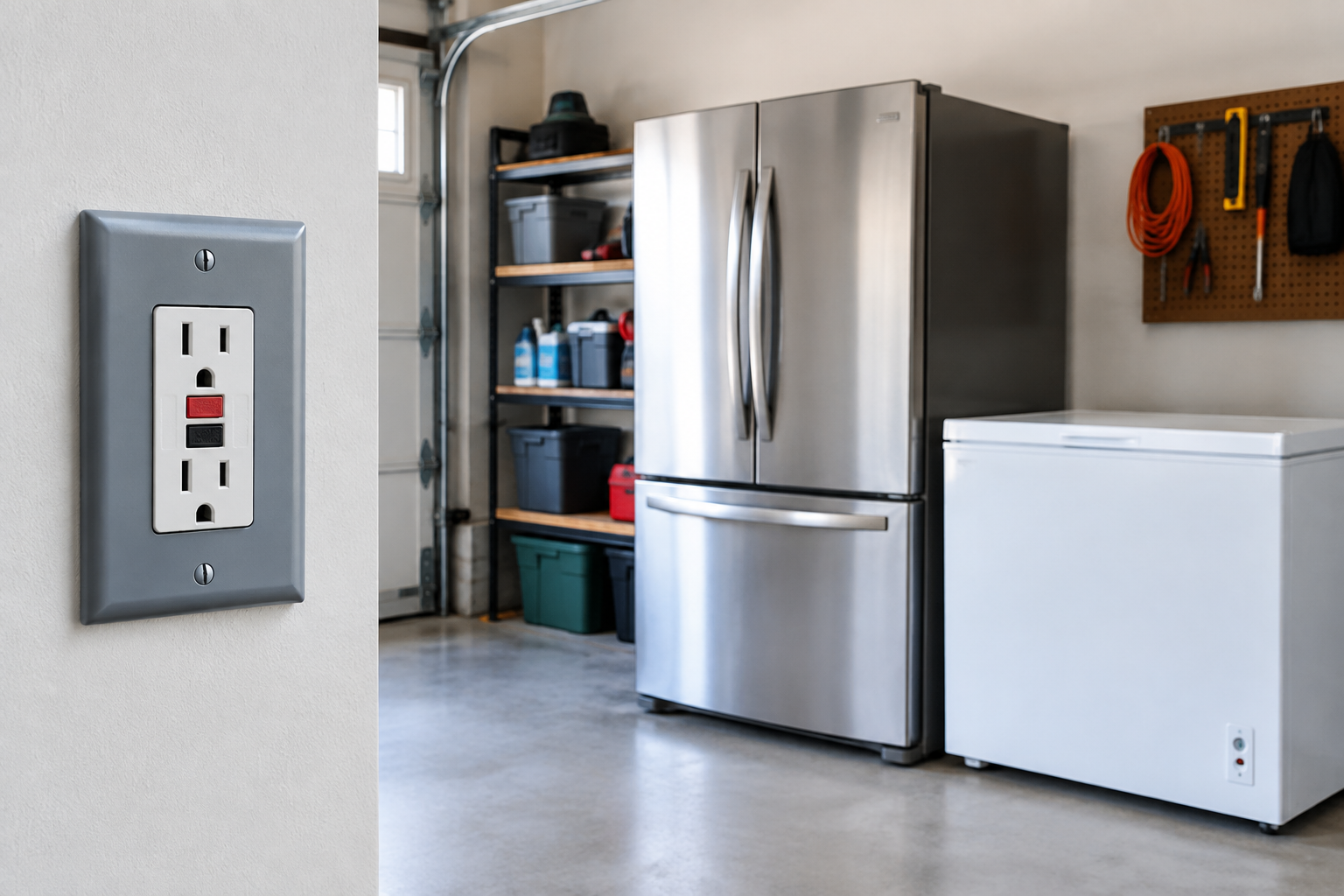
You reset the GFCI outlet in your garage, plug the fridge back in, and everything runs fine until the compressor kicks on again. Then the outlet trips and your food starts warming up. This is one of the most common electrical complaints homeowners have about garage refrigerators and freezers, and it usually isn’t a sign that anything is seriously wrong with your appliance.
It’s also not something to just ignore by running an extension cord to a non-GFCI outlet elsewhere. Understanding why this happens will help you figure out whether you’re dealing with a normal quirk of compressor motors or an actual electrical problem that needs attention.
Why Compressor Startup Trips a GFCI
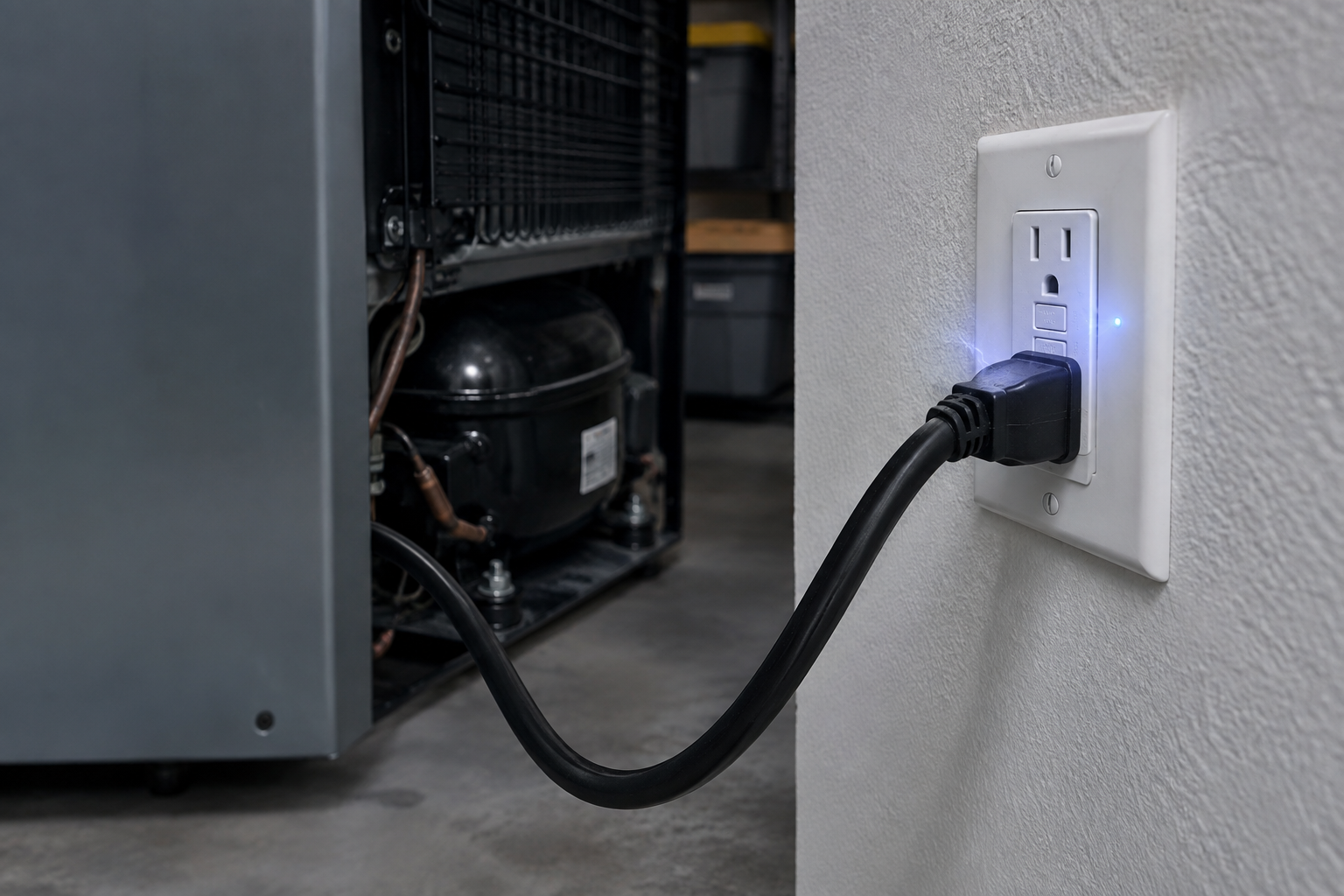
Every refrigerator and freezer compressor pulls a large surge of current the instant it starts, often several times its normal running amperage. That startup surge briefly creates a small amount of current leakage as the motor’s windings and internal components energize. A GFCI outlet is designed to detect even tiny imbalances between hot and neutral current, as little as 4 to 6 milliamps, and it trips to prevent shock hazards.
Older refrigerators and freezers, or units that have sat in a cold garage for years, tend to have compressor motors with more internal wear and slightly higher leakage than newer models. That leakage might not be enough to matter on a standard outlet, but it’s often just enough to push a sensitive GFCI over the edge every time the compressor cycles on.
This is different from a circuit breaker overload. A breaker trips because too much current is flowing on the circuit overall, usually from multiple devices sharing one line. A GFCI trips because of a leakage imbalance, even if the total current draw is well within normal limits. You can have a GFCI trip on a circuit that isn’t overloaded at all.
Common Causes Behind the Nuisance Trip
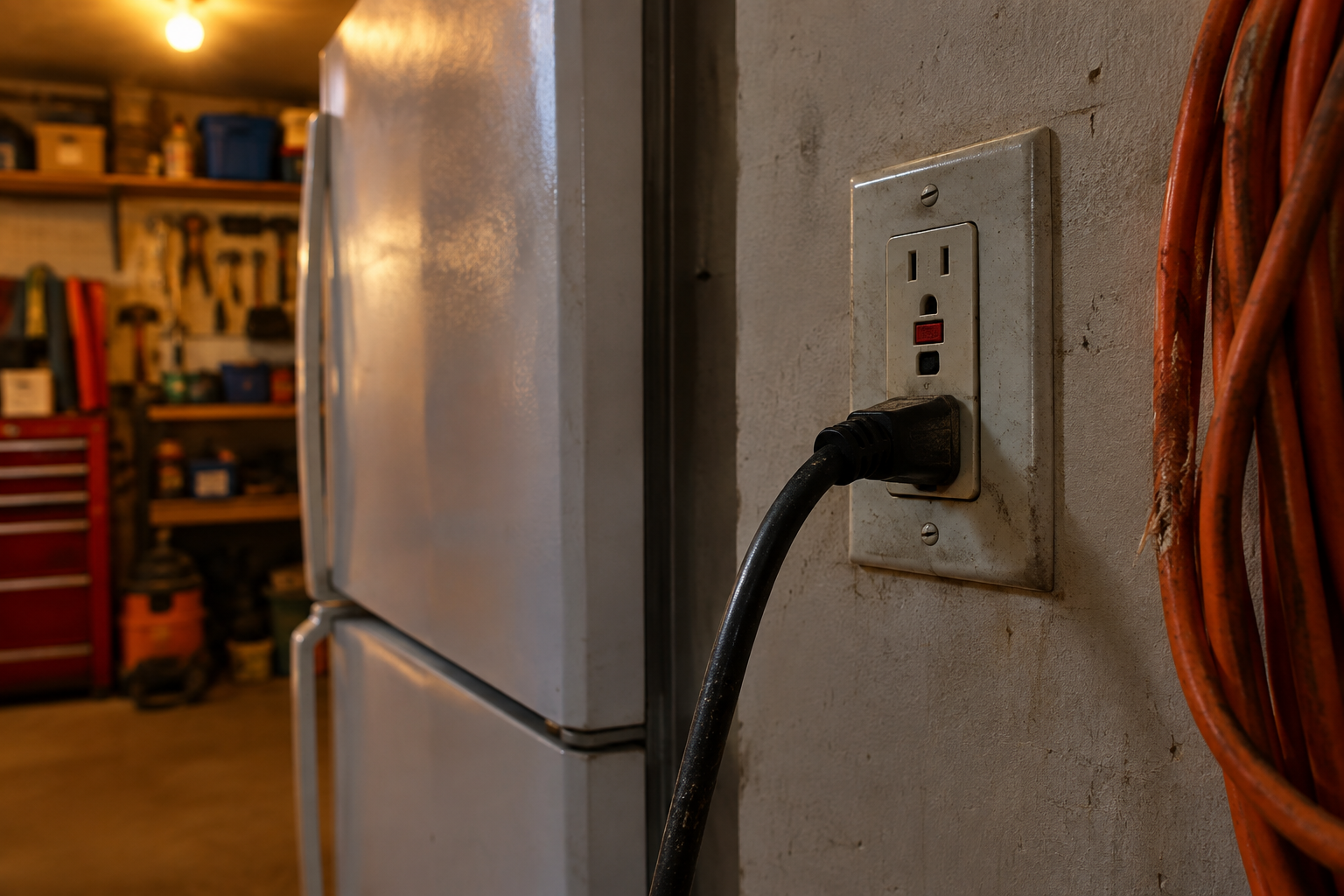
A few specific issues show up again and again when a garage fridge or freezer keeps tripping a GFCI:
- Appliance age and internal leakage. Compressors, defrost heaters, and internal wiring degrade over time, increasing the leakage current the GFCI detects.
- Moisture in the outlet or garage environment. Garages get humid, especially near exterior walls or during rainy seasons, and moisture inside an outlet box or cord connection can create a leakage path. If your garage stays damp, it’s worth reading through our guide on fixing high garage humidity since damp air affects more than just your electrical outlets.
- Damaged or worn power cords. A cracked or pinched cord, especially one that’s been run over by a car tire or crushed under a shelf, can leak current even without visible fraying.
- A worn out GFCI receptacle. GFCI outlets don’t last forever. The internal sensing components can become overly sensitive with age, tripping on loads that a new GFCI would handle fine.
- Shared circuit loads. If the fridge shares a circuit with garage lighting, a door opener, or other outlets, added current from those devices can combine with the compressor’s leakage and tip the GFCI into tripping.
- Long or undersized extension cords. Running a freezer through a thin gauge extension cord adds resistance and can increase leakage current, especially over long runs.
Safe Checks You Can Do Yourself
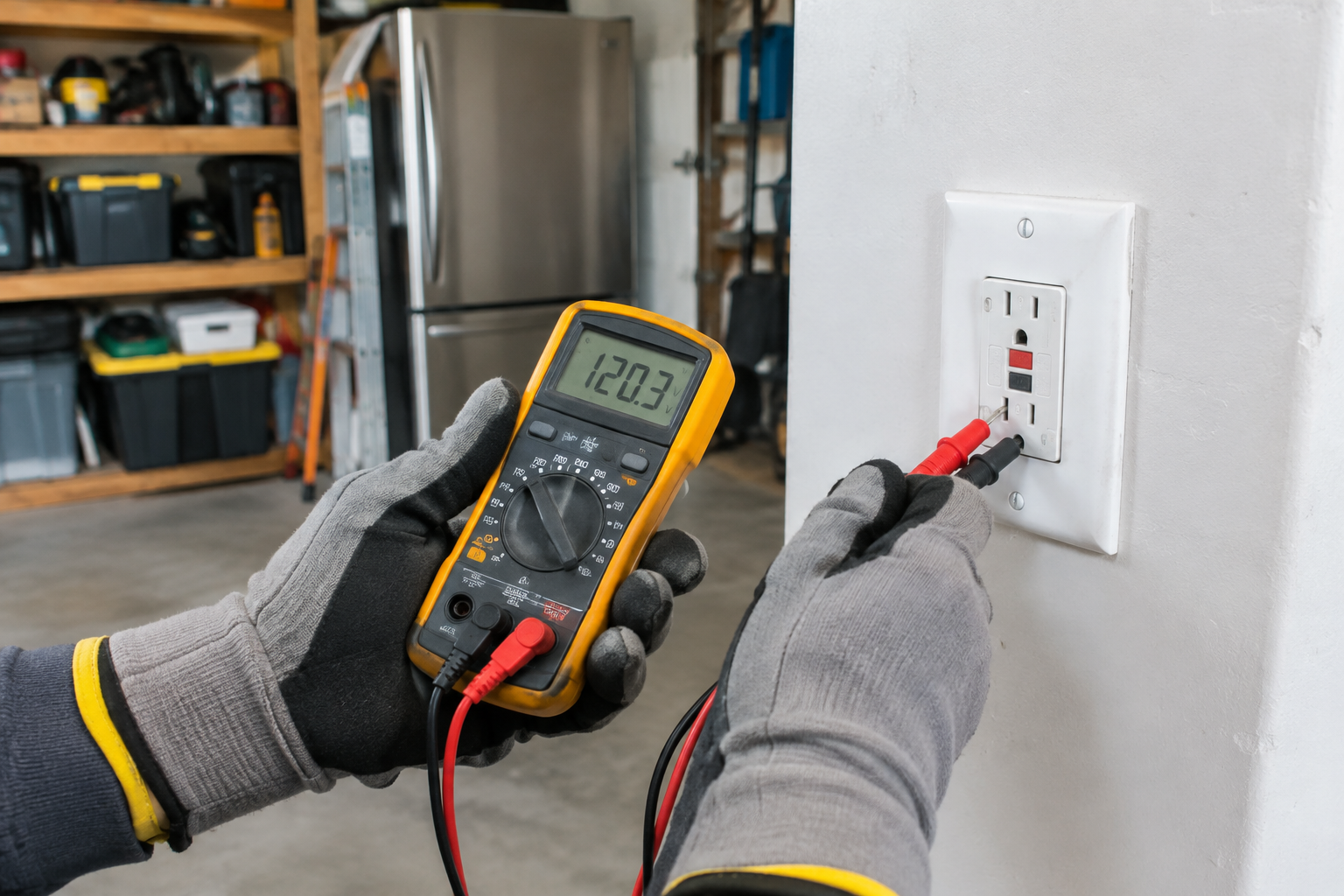
Start by unplugging the refrigerator and plugging in a lamp or other simple device to confirm the GFCI itself resets and holds without tripping. If it trips with nothing but a lamp connected, the outlet itself is likely faulty and needs replacing.
Next, inspect the power cord for any visible damage, cracks, or discoloration near the plug. Check that the outlet and surrounding wall area are dry, particularly if your garage has had any water intrusion issues.
A GFCI outlet tester is a cheap and simple tool that plugs into the outlet and tells you whether the GFCI is wired correctly and functioning properly. It’s one of the fastest ways to rule out a bad receptacle before you call anyone.
GFCI Outlet Tester
A quick, affordable way to confirm whether your GFCI outlet is wired correctly before assuming the appliance is at fault
If the fridge or freezer is plugged into an extension cord, stop. Appliances like these should always be plugged directly into a wall outlet rated for their load. Swapping to a heavy-duty, appliance-rated cord if you absolutely must use one can reduce leakage, but a direct connection is always the better fix.
If your garage lighting also flickers or behaves oddly when the fridge cycles, it may point to a shared circuit issue worth investigating further. Our article on why garage lights turn on by themselves covers some related wiring quirks that are worth ruling out.
When to Call a Professional
If a brand new GFCI outlet still trips reliably every time the compressor starts, and the cord and appliance test fine, the issue is likely inherent leakage in the appliance itself. A licensed electrician can measure actual leakage current with a clamp meter and confirm whether the fridge is within normal range or genuinely faulty.
Electricians can also install a dedicated 20 amp circuit for the refrigerator, which is often the real fix. Refrigerators and freezers ideally shouldn’t share a circuit with anything else, and many local codes actually require a dedicated line for major appliances in garages.
If you’ve ruled out the outlet and wiring and the appliance itself still seems to be the culprit, particularly if it’s making unusual noises or the compressor runs longer than it used to, an appliance technician can inspect the compressor and internal wiring for wear or damage. This is especially worth doing if your fridge has struggled to keep temperature consistently, which our guide on garage fridge not staying cold can help you diagnose alongside the electrical issue.
Frequently Asked Questions
Is it safe to bypass the GFCI outlet for my garage fridge?
No. Garage outlets are required to be GFCI protected specifically because garages have higher risks of moisture and grounding faults. Bypassing protection to stop nuisance tripping removes a safety feature that exists to prevent shock hazards, and it’s not worth the risk to save a bit of inconvenience.
Can a dedicated circuit really fix constant GFCI tripping?
In many cases, yes. A dedicated circuit eliminates the added leakage and current draw from other devices sharing the line, which is often enough to stop nuisance trips caused by combined loads. It won’t fix a genuinely faulty appliance or a worn out GFCI receptacle, but it removes one of the most common contributing factors.
This article contains affiliate links. We may earn a small commission at no extra cost to you.
