

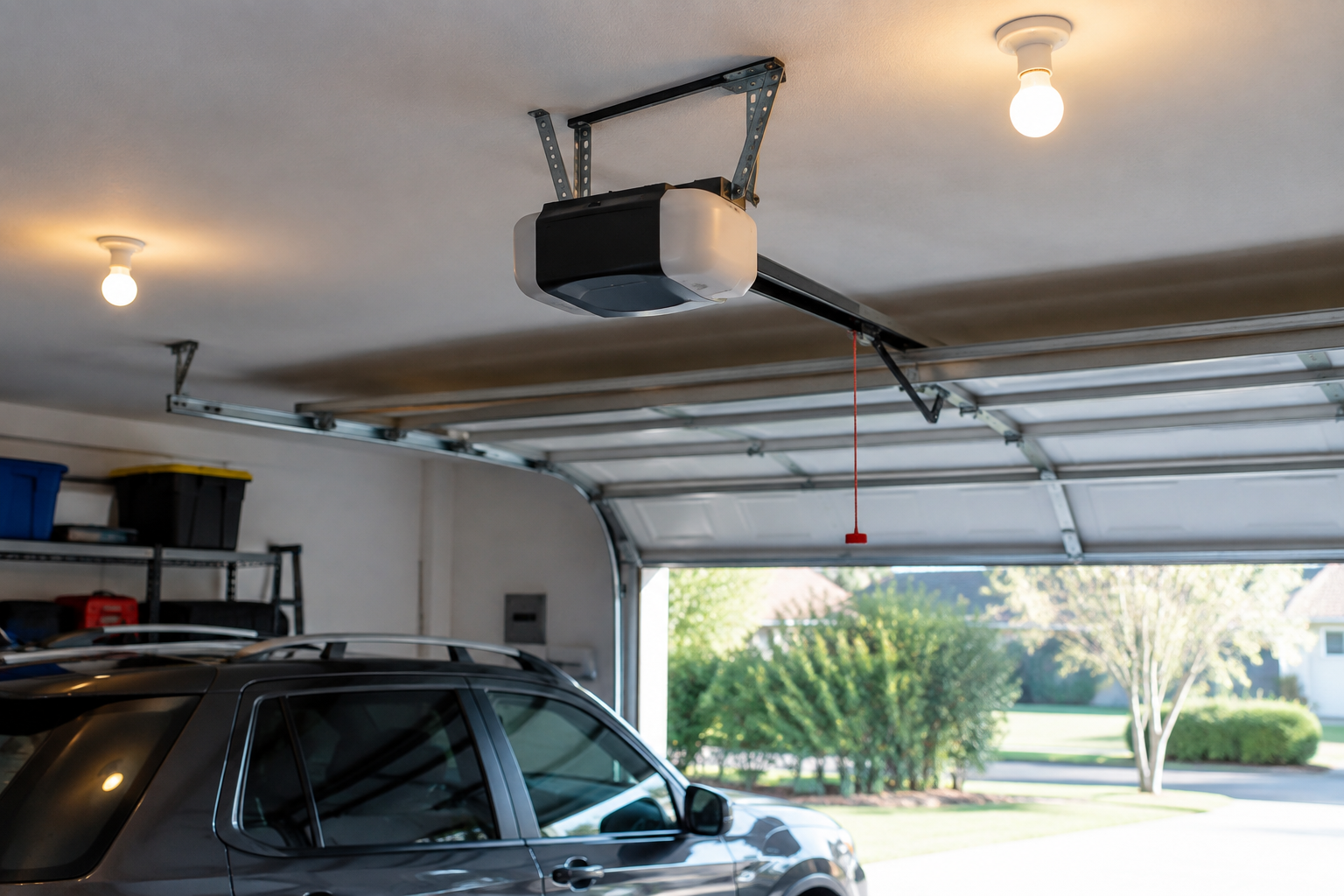
You flip on the garage lights, hit the button on the
Motor Inrush Current Is Normal, But There’s a Limit
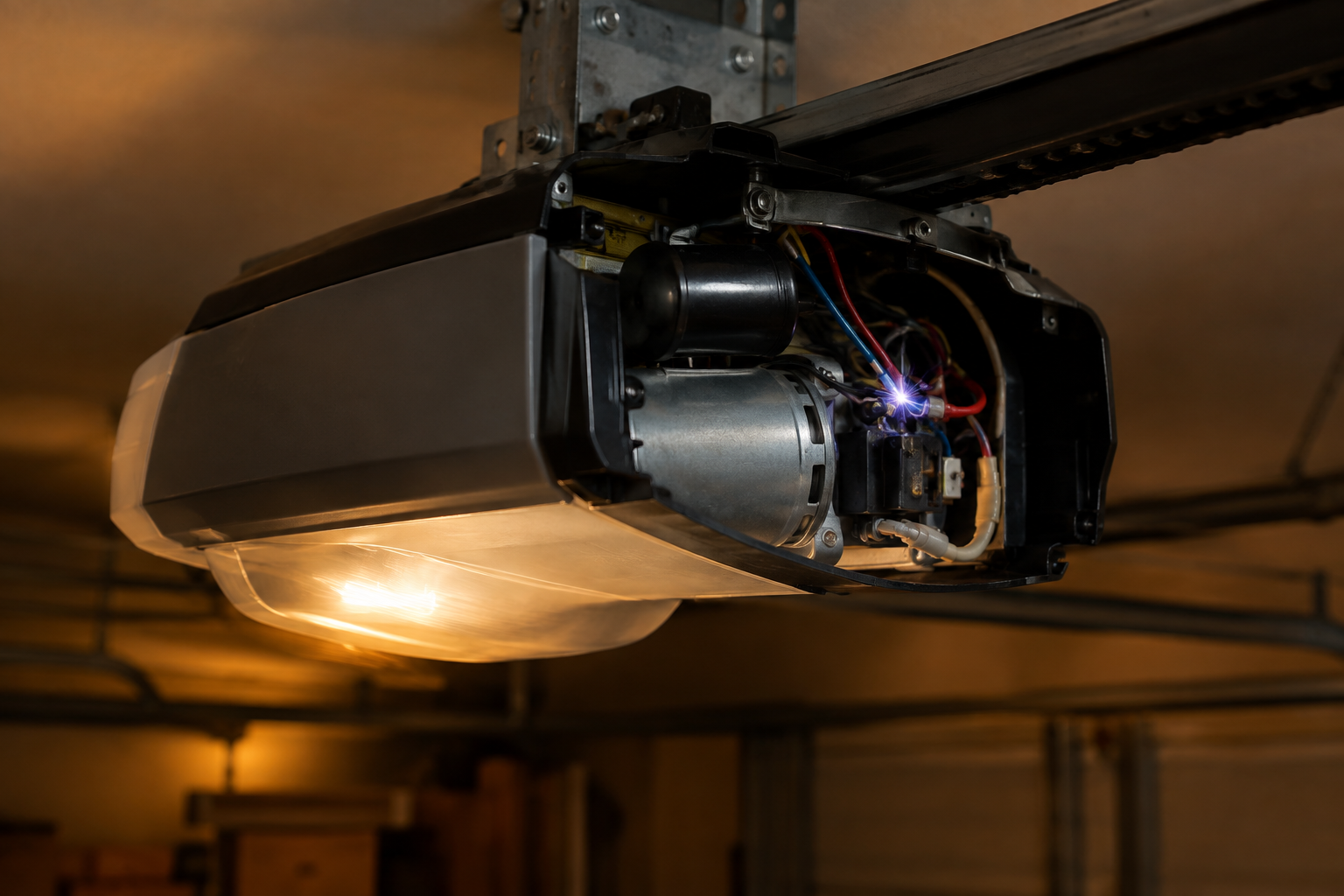
Every garage door opener motor pulls a big gulp of current the instant it starts, sometimes three to five times its running current. That’s called inrush current, and it’s completely normal for any AC induction motor, whether it’s your opener, a shop compressor, or a refrigerator.
That momentary surge pulls voltage away from everything else sharing the circuit, which is exactly why your lights dip for a second. A quick, mild dim that resolves in under a second is nothing to worry about. It’s physics, not a fault.
The problem starts when that dip is dramatic, lingers for a few seconds, or happens even when the opener is on its own dedicated circuit. That points to something adding extra resistance or load where there shouldn’t be any.
What Turns Normal Dimming Into a Warning Sign
A few specific issues account for most of the cases where dimming goes from “normal” to “get an electrician.”
Loose or Corroded Connections
Loose wire nuts, a backstabbed outlet connection, or a corroded splice inside the opener’s junction box all add resistance to the circuit. Resistance turns into heat and voltage drop, and that drop shows up as dimming that’s more noticeable than it should be. This is one of the more common causes of an intermittent dim, since a loose connection can behave differently depending on vibration, temperature, or how hard the motor is working that day.
An Overloaded or Shared Circuit
Garage circuits often get pressed into service for a lot more than lights and an opener. Add a chest freezer, a space heater, or shop equipment to the same breaker and you’ve got several appliances fighting for the same limited voltage. If your dimming got noticeably worse after you plugged in a new tool or fridge, that’s your answer.
Aging Opener Motors Drawing More Current
Older chain-drive and belt-drive openers with worn bearings, dried-out gears, or a motor that’s simply getting tired will draw more current to do the same job they used to do effortlessly. If your opener is more than 10 to 15 years old and the dimming has crept up gradually, the motor itself may be the real culprit, not the wiring. Grinding noises, slower travel time, or the door reversing unexpectedly are other signs the motor is on its way out.
LED Bulbs Are More Sensitive Than You’d Expect
LED drivers respond to voltage fluctuations differently than old incandescent bulbs did. Incandescents just dimmed smoothly and predictably. Cheap LED bulbs, on the other hand, can flicker, flash, or even briefly shut off completely during the exact same voltage dip that would barely register as a dim on an incandescent bulb.
That doesn’t mean LEDs are bad, it means bulb quality matters more than people realize. If you switched to LEDs recently and the dimming got more noticeable rather than less, the bulbs are amplifying a voltage fluctuation that was already there, just less visible before. Our LED garage lighting buyer’s guide covers which bulbs handle voltage swings gracefully and which ones tend to flicker at the first sign of trouble.
Kasa Smart Dimmer Switch
A compatible dimmer or smart switch rated for LED loads can smooth out minor voltage swings and reduce visible flicker.
How to Check It Yourself Before Calling an Electrician
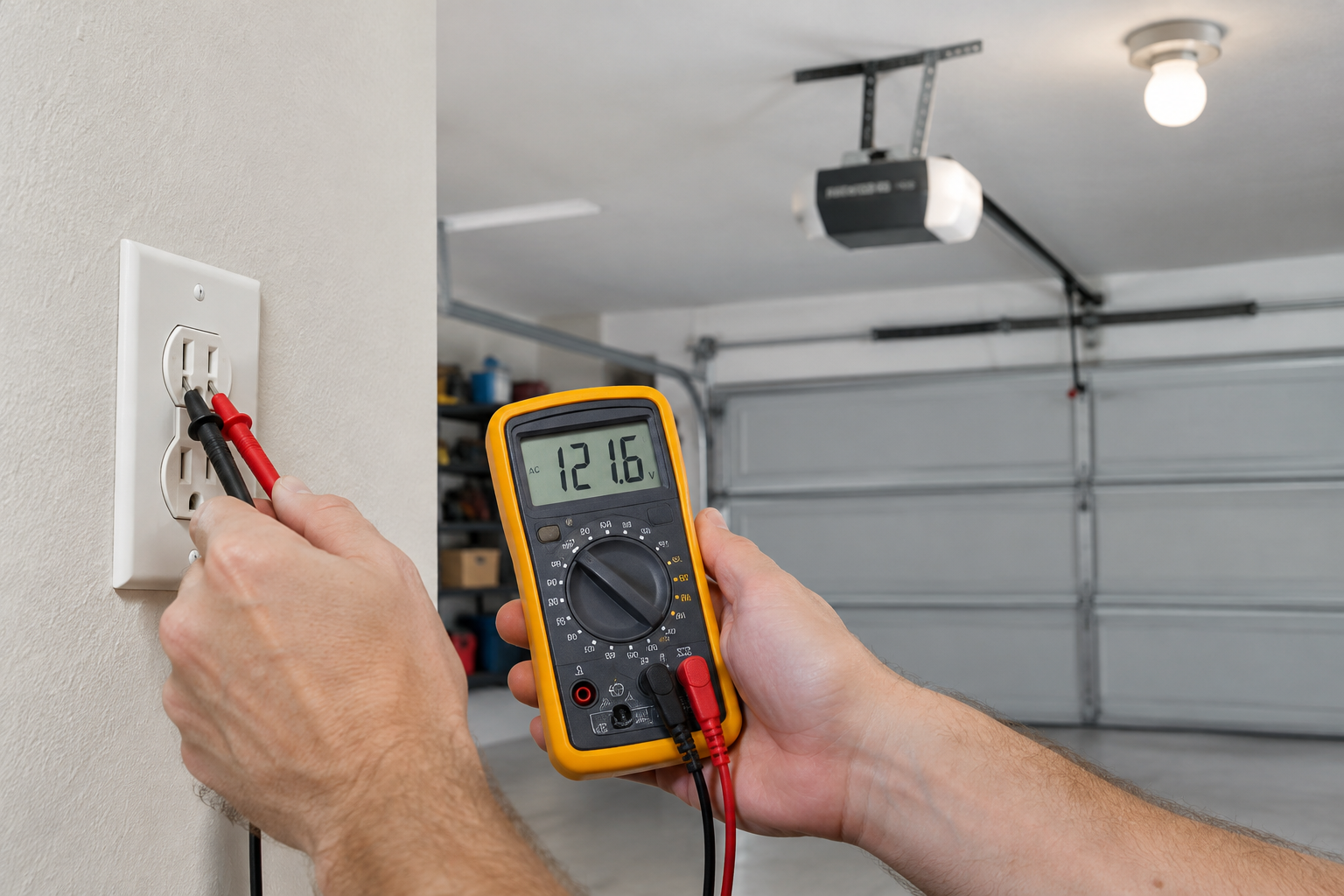
You don’t need an electrical license to do some basic troubleshooting. Grab an outlet voltage tester or multimeter and check the voltage at a garage outlet while the opener is idle, then again the moment it starts. A drop of a few volts during startup is expected. A drop of 10 volts or more, or a reading that stays low after the motor is running, is not normal.
Next, kill the power at the breaker and check the wire connections in the opener’s junction box and at the light fixture itself for anything loose, warm, or discolored. Warm insulation or a scorched smell around a connection means stop what you’re doing and call a licensed electrician immediately, that’s a fire risk, not just an annoyance.
Also take stock of what else is running on that circuit. If you’ve got a fridge, freezer, or heater sharing the load, moving the opener to its own dedicated circuit usually solves the problem for good. This is worth combining with a broader look at your setup if you’re also dealing with garage lights turning on by themselves, since both issues often trace back to the same aging wiring or overloaded panel.
If the dimming happens with every single door cycle, gets progressively worse, or is joined by flickering elsewhere in the house, that’s not a lighting problem anymore. That’s a wiring problem wearing a lighting costume.
When to Call a Professional
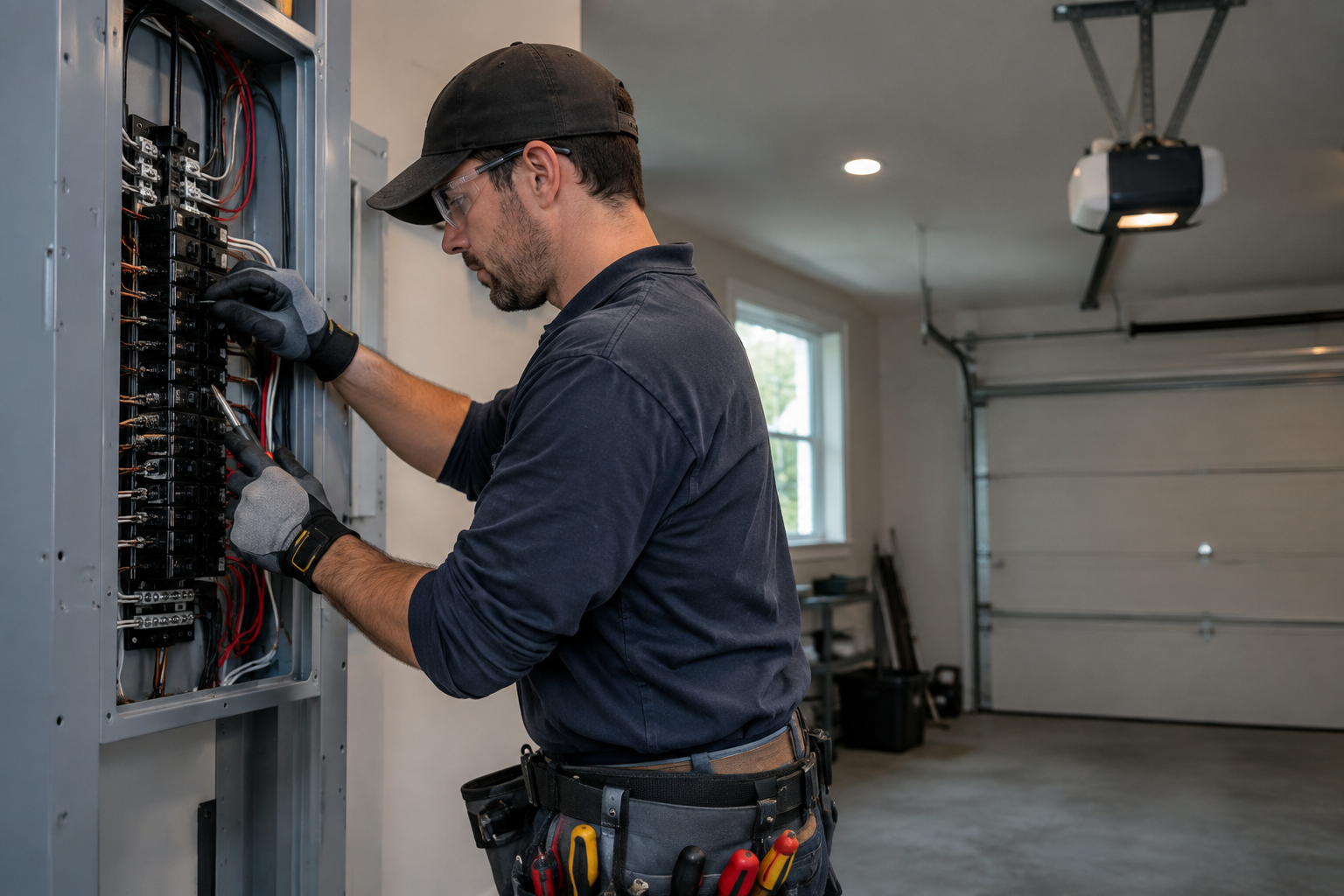
A one-time flicker on a hot day isn’t worth a service call. But you should get an electrician out if you notice any of the following: dimming that affects other rooms in the house, warm outlets or switch plates, a burning smell near the panel, breakers that trip when the opener starts, or voltage readings that swing more than 10 volts at startup.
These are signs of undersized wiring, a failing breaker, or a panel that’s simply outmatched by everything you’ve added to your garage over the years. If you’re planning any garage upgrades, like adding cabinets with built-in lighting or setting up a proper workspace, it’s smart to have an electrician evaluate the whole circuit at once rather than patching problems piecemeal.
Frequently Asked Questions
Is it normal for lights to dim every time the garage door opens?
A brief, mild dip is normal because of motor inrush current. It should last less than a second and shouldn’t get worse over time. If it’s dramatic, lasts several seconds, or seems to be intensifying month over month, treat it as a sign of loose wiring, an overloaded circuit, or a motor that’s wearing out.
Can a bad garage door opener capacitor cause the lights to dim?
Yes. A weak or failing start capacitor forces the motor to draw more current for a longer stretch during startup, which pulls more voltage from the rest of the circuit and makes the dimming more noticeable. This is common in belt and chain-drive openers over a decade old and is usually paired with the door starting more slowly than it used to.
This article contains affiliate links. We may earn a small commission at no extra cost to you.
