

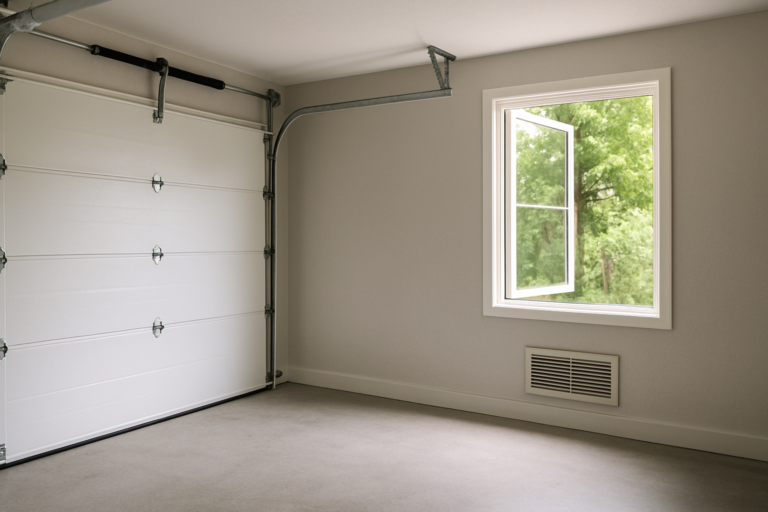
You can upgrade your garage all you want, but if the air feels hot, stale, or smells like fumes, you’ve got a problem: poor ventilation. It affects comfort, safety, and how usable the space really is, especially if it’s a gym, workshop, or attached to your home.
There are two main ways to fix it: passive ventilation, which uses natural airflow, and active ventilation, which relies on fans.
In this guide, we’ll walk through six essential methods to improve airflow, compare what they cost, and help you build the right setup for your garage project.
Garage Airflow 101: Intake, Exhaust, & Cross-Ventilation
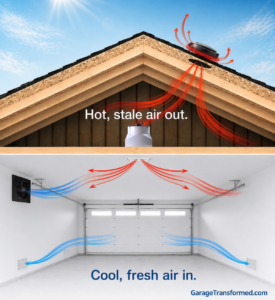
Good airflow in a garage starts with understanding three basic things:
Intake: You need fresh air coming in, usually from down low.
Exhaust: Stale, hot, or dirty air has to go out, usually from higher up.
Cross-Ventilation: When air can move across the space, it keeps things from feeling stuffy and helps push out moisture, odors, and fumes.
Passive systems rely on wind, temperature differences, and basic vent placement. Active systems force air in or out with fans.
Both can work, but they work best when used together.
The 6 Essential Methods for Optimal Garage Airflow
No one method fixes everything, but pick the right combo, and your garage starts feeling like a completely different space.
Method 1: Natural Ventilation
Sometimes, the easiest solution is just opening things up. Letting in fresh air through existing doors and windows creates a simple, short-term way to exchange stale indoor air with cleaner outdoor air.
This works by using natural air pressure and wind to move air through the space.
Here are a few common ways to do it:
- Open the main garage door (all the way or just a bit)
- Use a side or back door to create airflow
- Crack open windows, especially across from each other
- Install doors with built-in vents for a little ongoing airflow
Pros: Quick, easy, and costs nothing.
Cons: Relies on good weather, lowers security, doesn’t work when the garage is closed, and can let in bugs or allergens.
This method works best for letting fumes out after painting or running power tools, and cooling things down temporarily in decent weather.
Method 2: Passive Vents
Passive vents give you a steady, low-maintenance way to keep air moving in and out of your garage without using any electricity. These vents take advantage of natural forces like wind and the stack effect (warm air rising, cool air sinking) to create a constant airflow.
For them to work well, placement matters. You need:
Low intake vents to bring in fresh air
(e.g., soffit vents, foundation vents, wall vents)
High exhaust vents to release hot, stale air
(e.g., ridge vents, gable vents, turbine vents, roof tile vents, high wall louvers)
Pros: Always running, no noise, no energy cost.
Cons: Needs proper installation, effectiveness depends on weather, must be sized and placed correctly.
This method works best for keeping air slowly moving all the time, managing humidity, and setting a solid base for more powerful systems.
Method 3: Window Fans
Window fans are a simple way to give your garage ventilation a boost, especially if you’ve already got a window to work with. These fans can pull fresh air in or push stale air out, depending on how you set them up.
Common types include:
- Basic one-direction fans (intake or exhaust)
- Reversible fans (switch airflow direction)
- Dual-fan units (one side pulls air in while the other pushes it out)

Window Fan
Budget-friendly option that provides instant ventilation improvement for garages with existing windows
Pros: Budget-friendly, easy to set up and remove, great for directing airflow where you need it.
Cons: Requires a window, uses electricity, can be noisy, and isn’t as strong as built-in systems.
This method works best for boosting airflow in windowed garages, helping passive systems, and clearing fumes during projects.
Method 4: Dedicated Exhaust Fans
If you need serious airflow, like in a workshop, paint area, or an attached garage, a dedicated exhaust fan is one of the most effective tools you can install.
These permanently-mounted fans actively pull large volumes of air out of the garage, creating negative pressure that draws in fresh air through intake vents or other openings.
They’re ideal for garages that deal with:
- High fumes or chemical use
- Excess heat or humidity
- A tight connection to the home that needs strong ventilation
Types of exhaust fans include:
- Wall-mounted exhaust fans
- Roof-mounted models
- Inline duct fans for targeted airflow

Exhaust Fan
Essential for workshops and attached garages where strong ventilation is needed to remove fumes and heat
Pros: Strong ventilation power, good control options, excellent for removing fumes, moisture, and heat.
Cons: More expensive, installation is more complex (often needs electrical work), can be loud, and depends on having fresh air pulled in to work properly.
Some of the key considerations when choosing exhaust fans are:
CFM (Cubic Feet per Minute): This tells you how much air the fan moves. To estimate what you need, multiply your garage’s length × width × height to get volume, then decide how often you want the air replaced (typically 6 to 10 air changes per hour).
Make-Up Air: An exhaust fan won’t work right without a way for air to enter. Intake vents or windows are a must.
Controls: Look for options with wall switches, timers, thermostats, or humidity sensors to make operation easier.
Pro Tip: Never run a car in a closed garage, even with a fan. If your garage is attached to your home, a working CO detector is non-negotiable.
Method 5: Circulation Fans
Circulation fans don’t bring in fresh air or push bad air out, but they do help keep the air moving inside your garage. By breaking up still zones and spreading airflow more evenly, they make the space feel cooler and more comfortable while you work.
You’ve got a few options:
- Ceiling fans
- Wall-mounted oscillating fans
- Floor or pedestal fans
- Portable utility blowers for specific work areas
Pros: Affordable, easy to use, improves comfort, helps other systems work better by reducing hot or stale air pockets.
Cons: Doesn’t actually ventilate (no air exchange), runs on electricity.
These fans are suited for making the garage feel better during work sessions, especially in bigger or oddly shaped spaces where air tends to sit still.
Method 6: Climate Control & Moisture Management
While not true ventilation systems, air conditioners and dehumidifiers play a big role in garage comfort, especially if the space is used regularly for working, lounging, or storage.
These tools focus on temperature and humidity, with a bit of added air movement and filtration depending on the setup.
Common options include:
- Mini-split or window AC units (some come with HEPA filters for cleaner air)
- Standalone dehumidifiers for pulling moisture out of the air
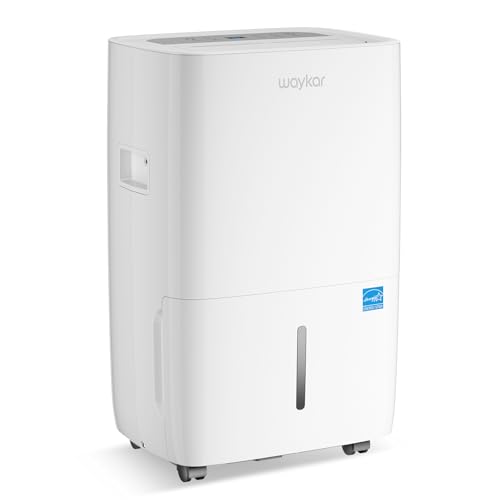
Garage Dehumidifier
Critical for humid climates and attached garages to prevent rust, mold, and moisture damage to stored items
Pros: Big boost in comfort, removes humidity, filters dust and allergens (AC units).
Cons: Higher cost to buy and run, AC recirculates air instead of replacing it, dehumidifiers need to be emptied or drained regularly.
This method works best when garages are used as living spaces in hot or damp climates, or when you need extra moisture control to protect tools, gear, or stored items.
Note: These don’t remove fumes, so they should always support, not replace, a proper ventilation setup.
How to Choose & Implement Your Garage Ventilation Strategy
Every garage is different, and the right ventilation setup depends on how you use the space and what problems you’re trying to solve. Here’s how to figure out what works best for your garage.
Assess Your Specific Needs
Start by thinking about how your garage is set up:
Size: Measure the space to help estimate fan strength (CFM). Check out our guide on standard garage sizes for reference.
Main Use: Is it a gym, workshop, or storage area? Different uses have different airflow needs.
Problem Areas: Are you dealing with heat, moisture, fumes, or all of the above?
Climate: Hot, dry, humid, or seasonal changes affect your ventilation priorities.
Garage Type: Attached garages may need extra attention for CO safety.
Budget & DIY Skill: Some options are simple; others need pro help or more tools.
Combine Methods for Best Results
There’s no one-size-fits-all fix. The most effective setups layer multiple methods:
Passive vents give you steady background airflow.
Exhaust fans handle serious heat and fumes.
Circulation fans keep the space comfortable while you work.
When used together, these systems cover more ground and make each other more effective.
Plan Airflow Patterns
Where you place your vents and fans matters. To get proper circulation:
- Put intake vents low to bring in cooler air.
- Place exhaust vents high to push out hot, stale air.
- Make sure air flows across the entire garage, not just in and out of the same corner.
- Avoid short-circuiting your airflow by keeping intake and exhaust on opposite sides, if possible.
Address Moisture
If you live in a humid area or notice musty smells, rust, or dampness, it’s worth adding a dehumidifier to your setup. This keeps humidity under control and helps protect your tools and belongings.
Seal Unwanted Gaps BUT Leave Room for Air
Seal up leaks around windows, doors, and base plates to keep your system working efficiently, but don’t make the garage airtight, especially if you’re running an exhaust fan.
Make sure you’ve got planned intake vents or windows to let fresh air in or the whole system could stall out.
Critical Considerations for Garage Ventilation
Getting airflow set up is great, but staying safe matters more.
Carbon Monoxide (CO) Detection
Always have a working CO detector in any garage with combustion tools or that’s attached to your home. CO is odorless and deadly. Never idle a car in an enclosed space, even with the fan on.
Electrical Safety
Don’t mess around with wiring if you’re not confident. Hire an electrician, especially if you’re installing roof fans, controls, or new outlets. Use outdoor-rated wires and boxes if moisture is present.
Proper Installation
Whether it’s a vent or a whole fan system, follow installation instructions carefully. Use sealant around roof and wall cuts to prevent leaks.
Fume Source Control
Ventilation helps manage paint and chemical fumes, but it’s not a substitute for safe storage, proper containers, and limiting exposure time. Always work with good airflow and follow product safety guidelines.
