

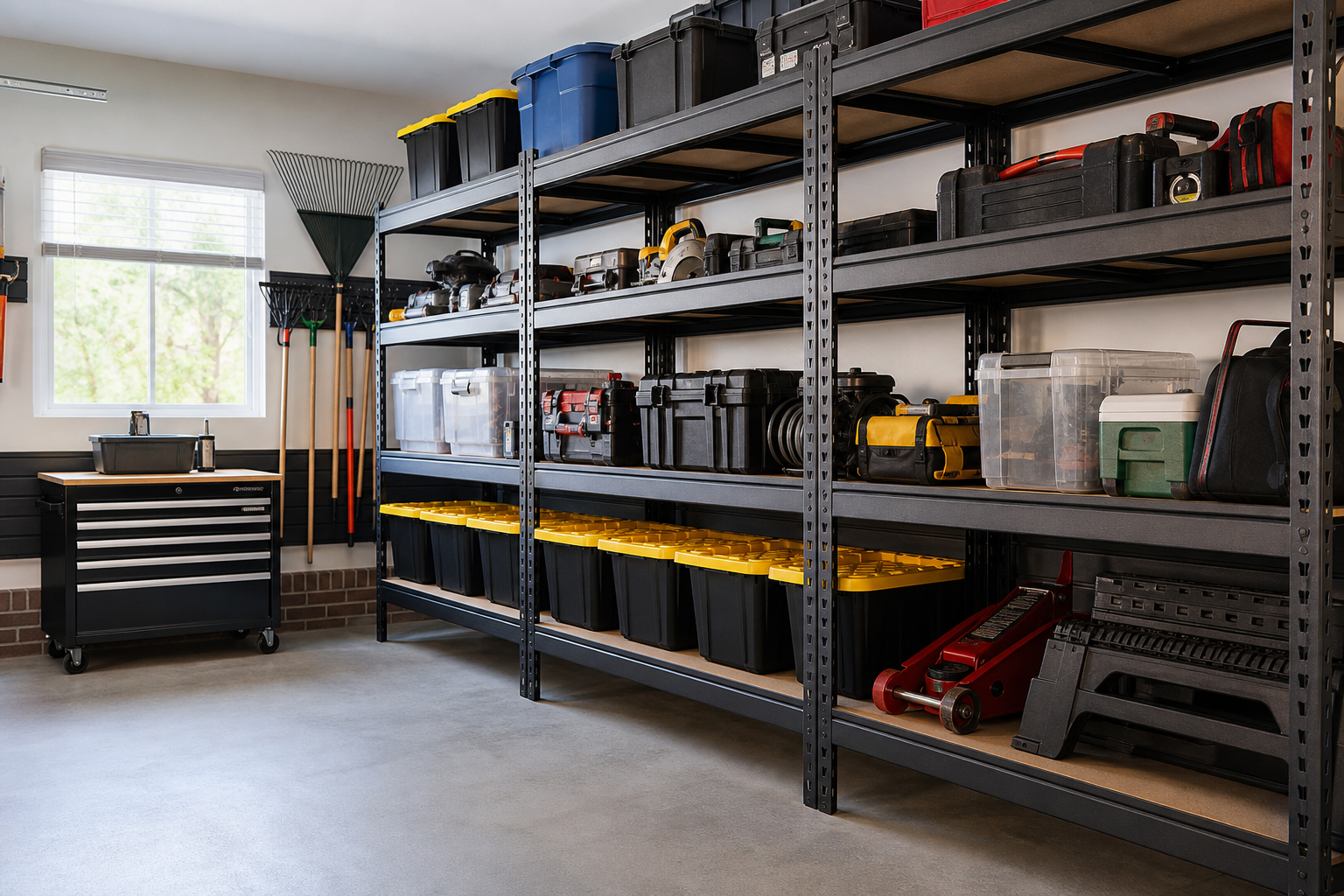
Understanding the Basics
Shopping for garage shelving units for heavy storage means sifting through dozens of options that all claim to be the best. Marketing language is unreliable, and Amazon reviews can be misleading with incentivized ratings mixed in.
This guide focuses on specs and features that matter for real-world garage use. Every recommendation is based on performance, durability, and value, not advertising budgets.
Zone your garage before buying products. Common zones include tools/workbench, automotive, seasonal items, sports gear, lawn/garden, and household overflow. Each zone stays self-contained so everything for a given task lives in one spot.
Weight capacity is critical and often misunderstood. Wall systems mounted in studs hold 50 to 75 pounds per linear foot. On drywall alone, that drops to 15 to 25 pounds before failure. Ceiling racks rated for 600 pounds assume even distribution. Concentrating weight in one area can cause failure well under the total limit.
Clear plastic bins beat cardboard for garage storage in every way: moisture resistance, pest resistance, visibility, and stackability. Label each bin on the front for easy identification. A label maker and 20 minutes of work saves hours of searching over the coming years.
Steel Shelving: Muscle Rack, Husky, and Gladiator
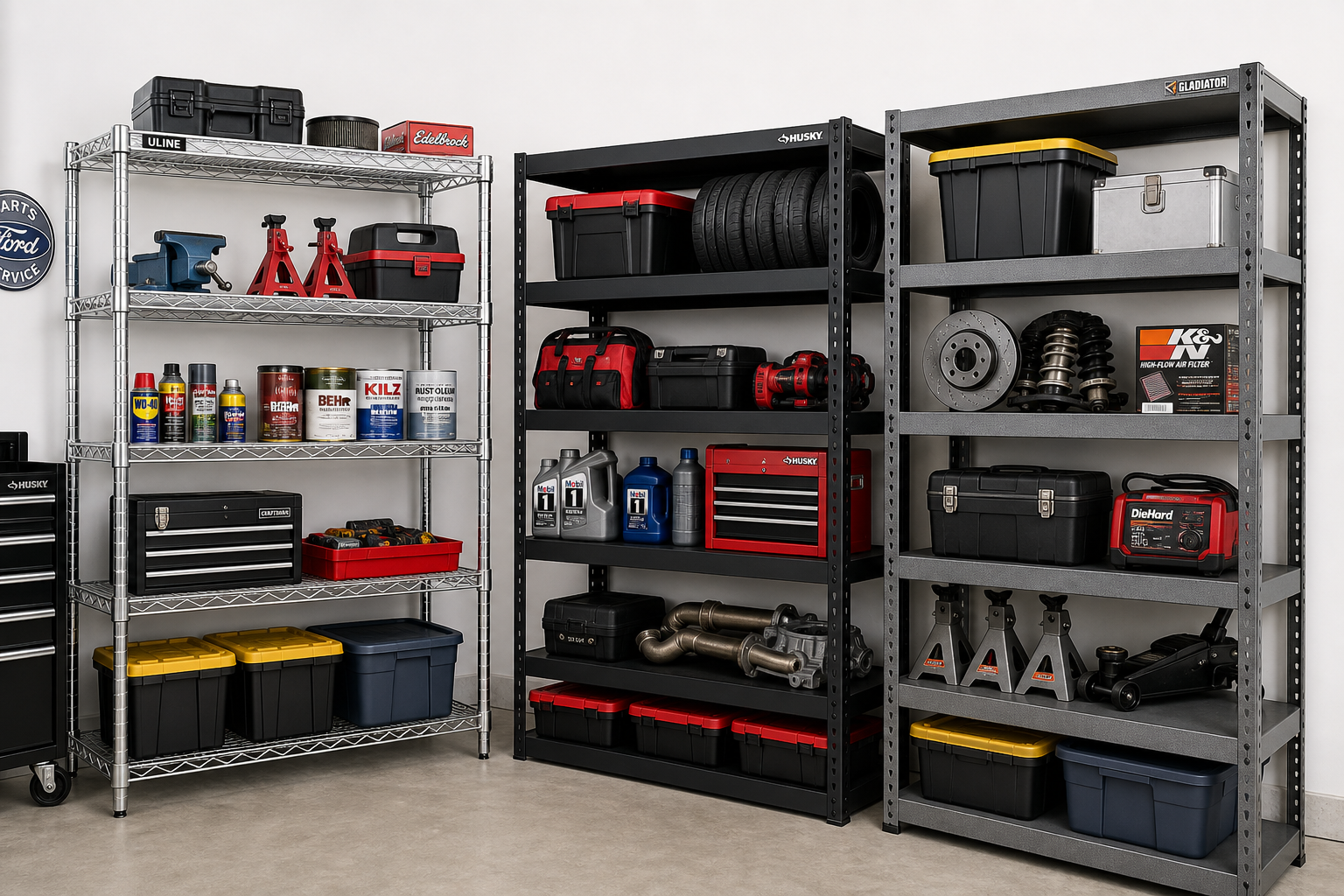
Steel shelving from Muscle Rack, Husky, Gladiator, and Amazon Basics represents where cutting corners comes back to haunt you. Invest the effort upfront and you’ll save significant time and money over the next several years of use.
Check specific requirements before purchasing materials. Measure the area, note unusual conditions like extreme temperatures, high humidity, or uneven surfaces, and read product specs carefully. A mismatch between your conditions and the product’s rated range is the most common cause of unexpected failures.
Wear appropriate protection throughout: safety glasses, gloves, and a respirator when working with chemicals or dust. Ventilate when using adhesives, paints, or solvents. These aren’t optional precautions.

Gladiator Steel Shelving
Proven track record for heavy-duty garage use with superior weight capacity
Per-Shelf Weight Capacity and Materials
Per-shelf weight capacity shows an important difference between advertised and real-world performance. Shelf material matters too, with wire versus solid surfaces offering different advantages. Understanding the specifics of your situation helps you choose the right approach. Your garage’s age, construction type, and local climate all influence what works best and what to avoid.
Keep the workspace organized throughout. Debris and clutter cause errors and safety issues. Clear tools and waste between major steps rather than letting mess accumulate until the end.
If this is your first project of this type, budget 50% more time than guides suggest. The learning curve is real, and careful work produces better results than rushing to meet an estimated timeline.
Adjustability and Configuration
Adjustable shelving adapts to changing storage needs over time. Work in small, manageable sections for better quality control. For wall systems, complete one section fully before starting the next. Rushing large areas creates inconsistencies and errors.
For heavy storage applications, Gladiator products have a solid reputation among homeowners. Check current selection and pricing on Amazon, and read recent reviews from buyers with conditions similar to yours.
Consider how this change fits the larger garage picture. Improvements in one area can shift dynamics elsewhere. Better insulation changes humidity patterns. Heavy storage affects the floor underneath. Think about interactions between different systems.

Husky Heavy Duty Shelving
Excellent value with reliable weight capacity for most garage applications
Anchoring and Installation
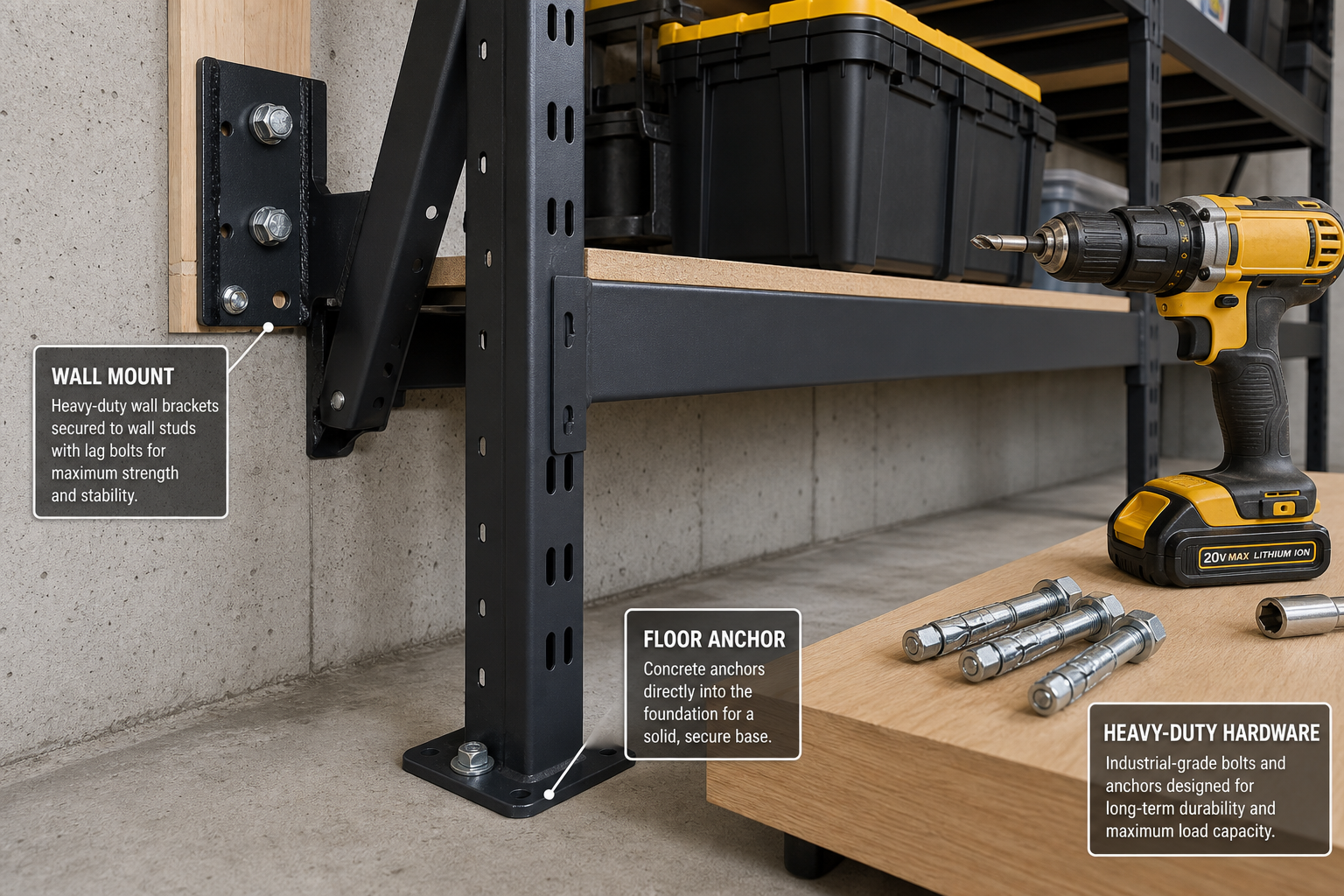
Anchoring to the wall properly determines which units are best for totes versus loose items. The details here make the difference between a result that lasts and one that needs redoing within a year. Take the time to assess your conditions before committing to a method or product.
Measure twice and commit once. A tape measure and five minutes of verification prevent the mistakes that take hours to fix. This applies doubly to cuts, holes, and any irreversible step.
For wall-mounted applications, Husky products offer reliable options. Look past overall star ratings and focus on detailed reviews discussing long-term durability rather than just first impressions.
Factor in maintenance when choosing your approach. The lowest-maintenance option isn’t always cheapest initially, but it usually wins over a 5 to 10-year window when you include touch-ups, repairs, and replacements.
Testing and Troubleshooting
Start with a small test area if you’re uncertain. A 4 by 4-foot section in an inconspicuous spot lets you evaluate adhesion, appearance, and workability without committing to the full project. Troubleshooting a small test area is far easier than redoing everything.
Expect at least one surprise during the project. Hidden moisture, non-standard dimensions, or outdated wiring are common discoveries. Having backup materials and a flexible timeline reduces the stress when they appear.
Remember that proper tool organization extends beyond shelving. Power tool organizers and magnetic tool holders complement your shelving system for complete workshop organization.
Storage Strategy and Organization
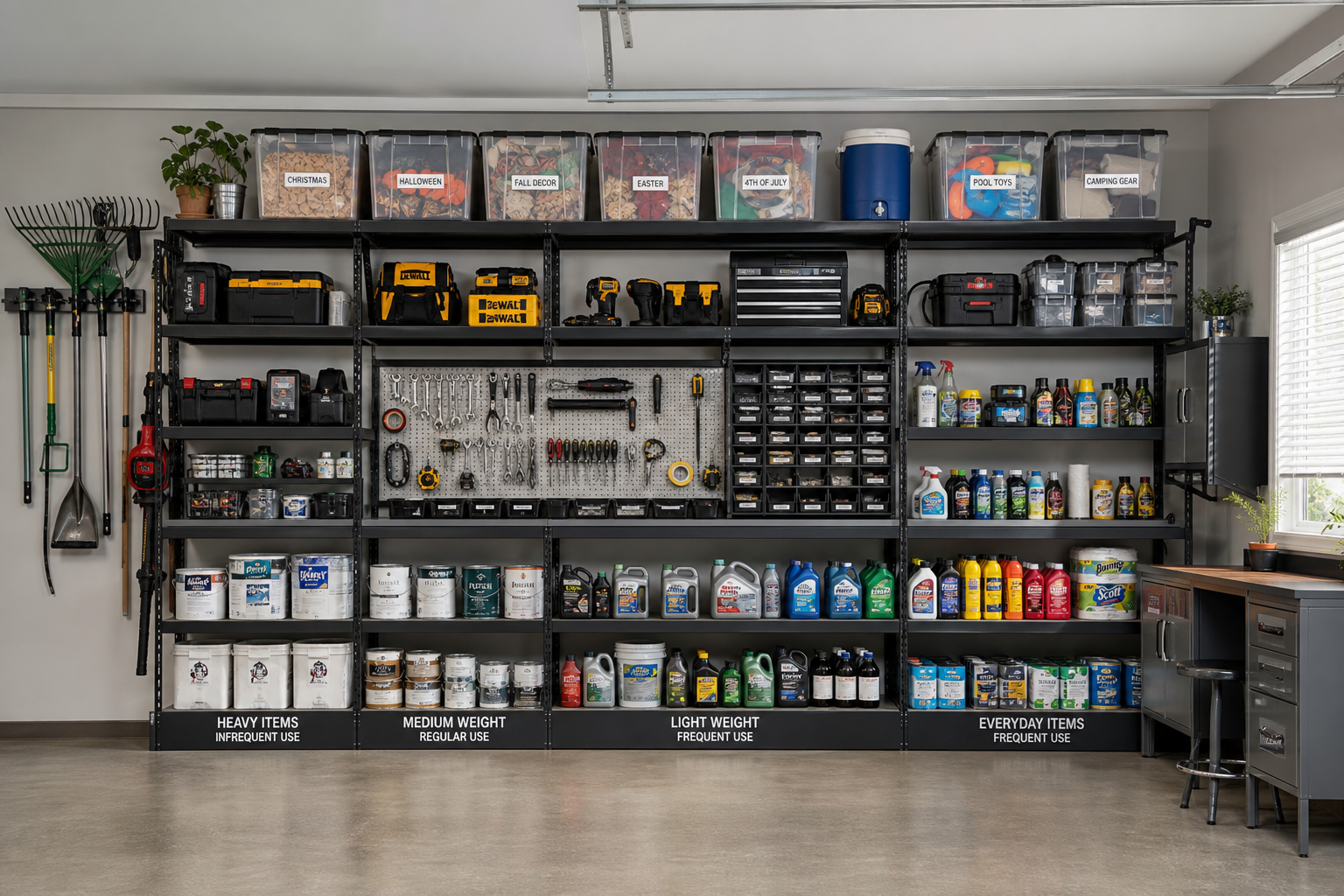
Effective garage storage uses walls and ceiling as primary surfaces, keeping the floor clear for vehicles and work. Wall-mounted track systems, overhead ceiling racks, and sturdy cabinets provide organized access without eating into parking or workspace.
Different storage needs require different approaches. Bike storage systems handle long, awkward shapes, while ceiling storage lifts maximize overhead space for seasonal items.
Wall organization systems like slatwall provide flexibility for changing tool collections. Learn more about installing slatwall accessories to maximize your vertical storage potential.
What to Avoid
Knowing what to skip prevents expensive mistakes:
- “Universal” products claiming to work everywhere. Specialized products consistently outperform generalists.
- Products with vague specs or missing data sheets. If a manufacturer won’t publish details, that’s a red flag.
- Unknown brands at rock-bottom prices. Established brands charge more for proven materials and real warranties.
Frequently Asked Questions
Slatwall or pegboard: which is better?
Slatwall holds more weight, looks cleaner, and accepts more accessories. Pegboard is cheaper. For heavy workshop tools, slatwall is the better investment.
How do I maintain garage organization long-term?
Designated zones, clear labeled bins, and the discipline to return items to their zone after each use. The system only works if you maintain it consistently.
How much weight can wall-mounted storage hold?
50 to 75 pounds per linear foot when anchored into studs. Drywall-only mounting fails above 15 to 25 pounds. Always use studs for heavy storage applications.
What’s the difference between wire and solid shelves?
Wire shelves allow air circulation and prevent dust buildup, but small items can fall through. Solid shelves support more weight and hold smaller objects but require more cleaning in dusty environments.
This article contains affiliate links. We may earn a small commission at no extra cost to you.
