

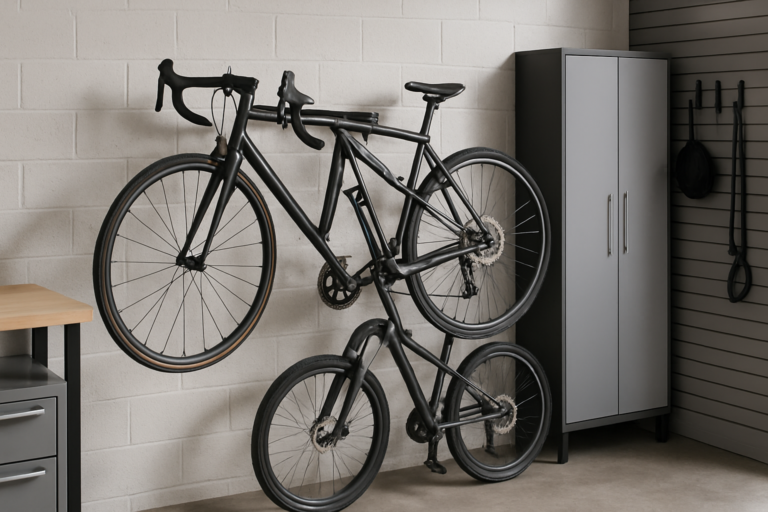
Your garage probably has enough floor space to store your bikes, but that doesn’t mean you should keep tripping over them every time you need to get to your car or workbench. Bike storage systems can transform a cluttered garage into an organized space where you can actually find what you need.
The right storage solution depends on how many bikes you own, how often you ride, and how much wall or ceiling space you can dedicate to storage. Let’s break down the main types of garage bike storage systems and help you figure out which one makes sense for your situation.
Vertical Wall-Mounted Systems
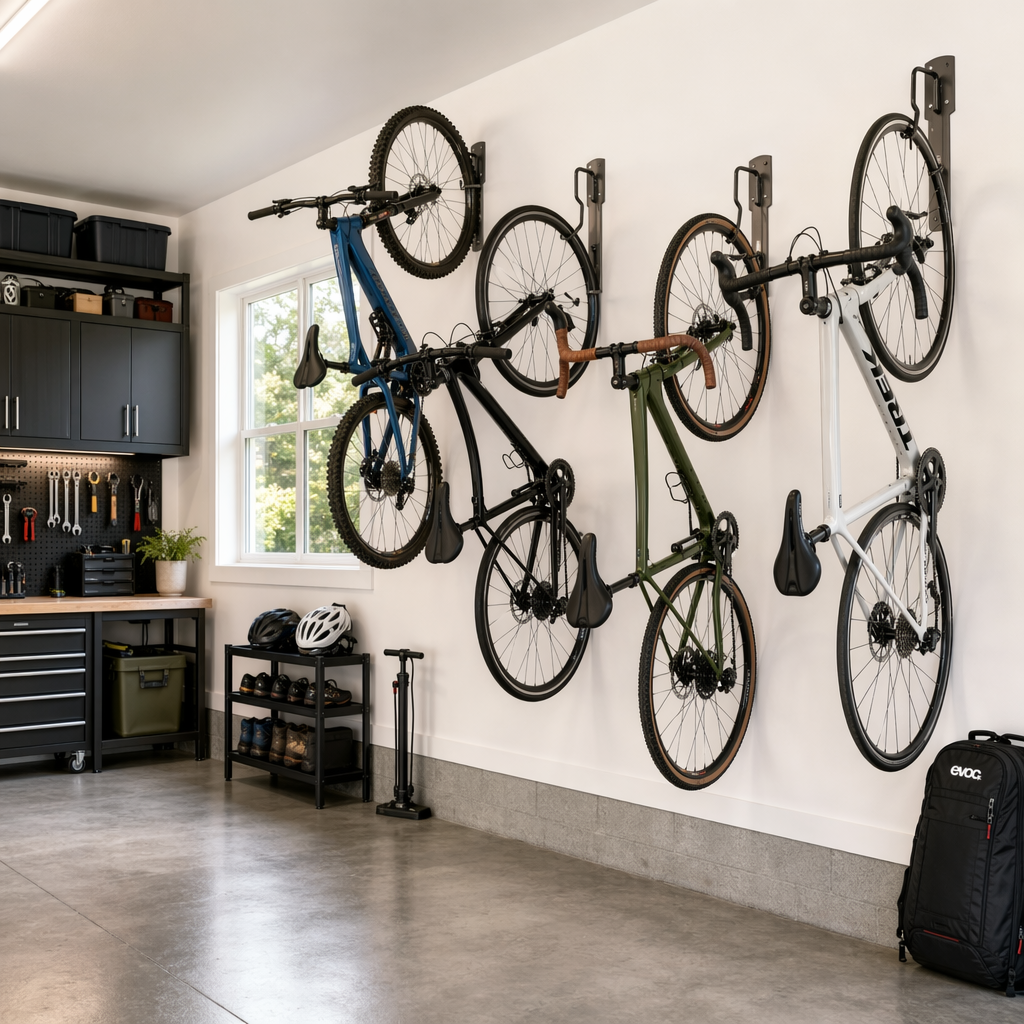
Vertical storage hangs your bike by one wheel, positioning it perpendicular to the wall. This approach uses minimal wall space, making it ideal for narrow garages or areas where you need to store multiple bikes close together.
Most vertical racks hold your bike by the front wheel using a hook or cradle system. You lift the front wheel into the rack and let gravity do the rest. The bike hangs straight down, taking up only about 14-18 inches of wall space per bike.
The main advantage here is density. You can fit three or four bikes in the space where horizontal storage would only accommodate one or two. This matters when you’re dealing with a family’s worth of bikes and limited wall real estate.

Steadyrack Vertical Bike Rack
Swivels to maximize space efficiency and works with different tire widths
The downside is accessibility. Lifting a 30-pound bike by its front wheel isn’t difficult, but it’s not as quick as just rolling it out from a horizontal rack. You’ll also want to make sure the system you choose has a sturdy tire cradle, not just a basic hook that could damage your rims.
Horizontal Wall-Mounted Racks
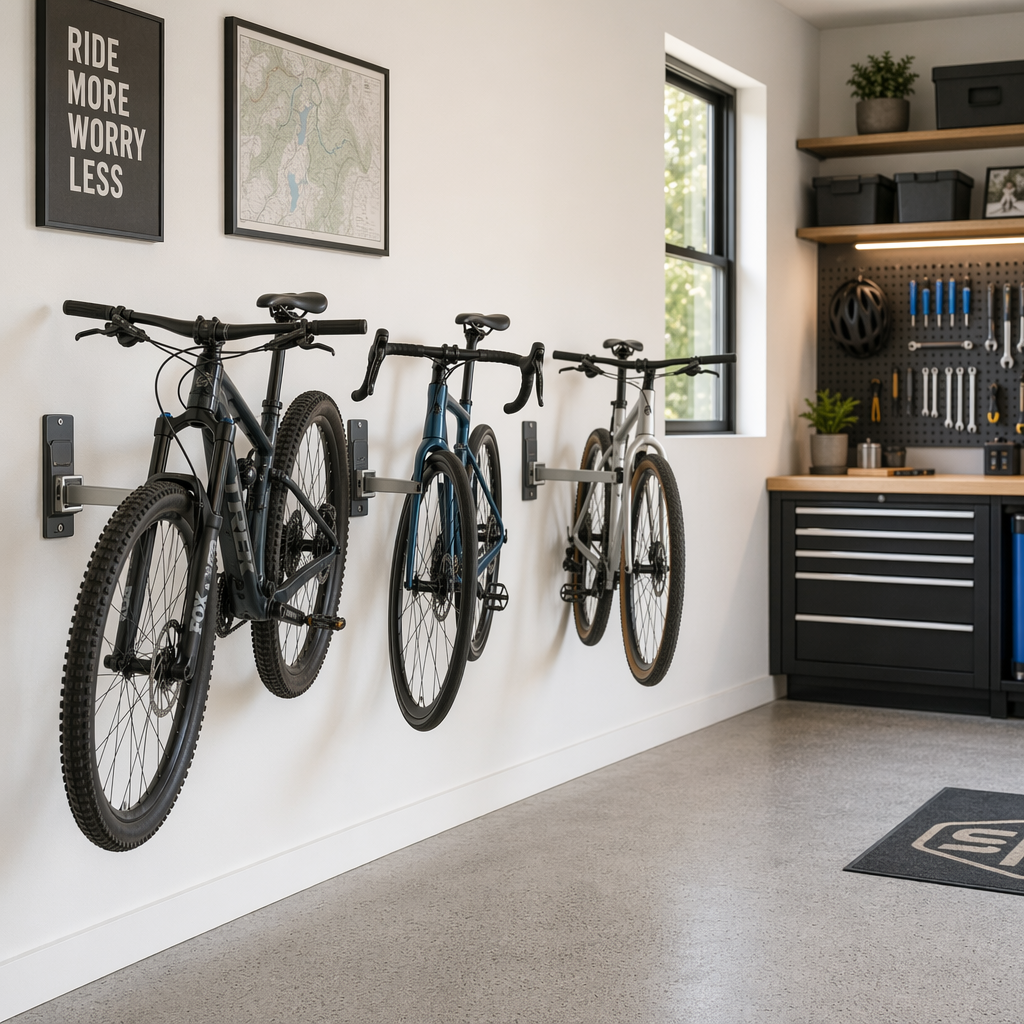
Horizontal systems store your bike parallel to the wall, either hanging by the frame or resting on arms that support both wheels. This is the most common type of bike storage, and for good reason.
These racks make it easy to grab your bike and go. You simply lift it off the hooks or arms and you’re ready to ride. No awkward angles or heavy lifting required. Many horizontal racks also include hooks for helmets, pumps, and other gear.
The tradeoff is space. Each bike needs about 24-30 inches of horizontal wall space, plus clearance for the handlebars. You can stagger bikes at different heights to save some room, but you’ll still use more wall length than vertical systems.
Look for racks with rubberized or padded arms that won’t scratch your bike’s frame. The better horizontal racks let you adjust the arm spacing to accommodate different frame sizes and styles. If you’re considering a complete garage organization overhaul, wall-mounted bike racks can be part of a comprehensive storage strategy.
Ceiling-Mounted Storage
Ceiling storage gets your bikes completely out of the way, making it perfect for garages where wall space is already claimed by shelving, tools, or car doors that swing wide.
These systems typically use either a hoist mechanism with pulleys or fixed mounting brackets. Hoist systems let you raise and lower bikes with minimal effort using a rope and pulley system. Fixed brackets hold bikes statically against the ceiling and require you to lift them up each time.

RAD Cycle Products Bike Lift Hoist
Pulley system makes lifting heavy bikes to the ceiling manageable for most people
Ceiling storage works well when you have bikes you don’t ride daily, like kids’ bikes they’ve outgrown but you’re keeping for younger siblings, or seasonal bikes you only use part of the year. The lifting and lowering process adds enough friction that you won’t want to do it before every ride.
Make sure your garage ceiling can support the weight. Most residential garages have ceiling joists that can handle multiple bikes, but you need to mount directly into the joists or use appropriate anchors for drywall ceilings.
Freestanding Bike Racks
Freestanding racks don’t require any wall or ceiling mounting, making them ideal for renters or anyone who doesn’t want to drill holes. These gravity-based systems use wide bases and counterweights to stay stable.
You’ll find two main styles. Vertical freestanding racks hold bikes upright in a floor stand, similar to bike shop displays. Leaning racks let you prop bikes at an angle against a weighted base. Both types can typically store two to six bikes depending on the model.
The flexibility is appealing. You can move a freestanding rack around your garage as needed, or take it with you when you move. Some models even work indoors if you want to store bikes in a basement or utility room.
The drawback is footprint. These racks need floor space, which defeats the purpose if you’re trying to clear your garage floor. They work best when you have adequate floor area but limited wall access.
Multi-Bike Systems for Families
When you’re storing four or more bikes, individual racks become less practical than dedicated multi-bike systems. These larger units combine multiple storage positions with integrated accessory storage.
Many multi-bike systems use a combination of horizontal and vertical positioning at staggered heights. This lets you pack more bikes into less space while keeping each one accessible. Some models include shelves or bins for helmets, tools, and bike maintenance supplies.

Monkey Bars Bike Storage Rack
Modular design holds up to six bikes at different heights with accessory hooks included
Installation takes more effort since you’re mounting a larger structure, but the result is a dedicated bike station that keeps everything organized in one spot. This approach works particularly well if you have a blank wall you can dedicate entirely to bike storage.
Consider your tallest and shortest family members when setting up a multi-bike system. The person who rides most frequently should get the most accessible position, while bikes used occasionally can go higher or lower.
Storage Tips for Small Garages
Limited space requires creative solutions. Vertical storage gives you the highest bike density per square foot of wall space. You can often fit four bikes vertically in the space needed for two horizontal mounts.
Take advantage of corners and areas near the garage door track where you can’t place other storage. A bike hanging vertically in a corner wastes space you probably weren’t using anyway.
Measure your actual available space before buying any system. Account for car door swing, walking paths, and other obstacles. A rack that looks perfect online might not fit your specific garage layout.
Don’t forget about pedal and handlebar clearance. Bikes don’t hang in perfectly flat planes. The pedals and handlebars stick out, adding several inches to the space requirements. Some systems let you alternate which direction bikes face to minimize these protrusions. If you’re working with a tight budget, consider comprehensive storage solutions that can accommodate both bikes and other garage essentials.
Frequently Asked Questions
Can wall-mounted bike racks damage drywall?
Wall-mounted bike racks won’t damage drywall if you install them correctly. Always mount into wall studs using appropriate screws, not just drywall anchors. A single bike can weigh 20-40 pounds, and that weight concentrated on a small mounting point will pull out of drywall alone. Use a stud finder to locate the wooden framing behind your drywall and secure the rack there.
How much ceiling height do I need for ceiling-mounted bike storage?
You need at least 12 inches of clearance above your bike when it’s mounted. Most bikes are 40-45 inches tall when hanging vertically, so a standard 8-foot garage ceiling provides adequate space. Measure your tallest bike and add a foot to determine your minimum ceiling height requirement. Hoist systems need slightly more room to accommodate the pulley mechanism.
What’s the best storage method for expensive bikes?
Horizontal wall-mounted racks with padded arms provide the best protection for expensive bikes. These systems distribute weight across the frame rather than hanging from a single wheel, reducing stress on components. Avoid cheap hooks that contact your rims directly. Look for systems where the bike frame rests on wide, cushioned supports that won’t scratch carbon fiber or premium paint finishes. For added security, consider integrating your bike storage with steel storage cabinets that can house valuable accessories and tools.
This article contains affiliate links. We may earn a small commission at no extra cost to you.
