

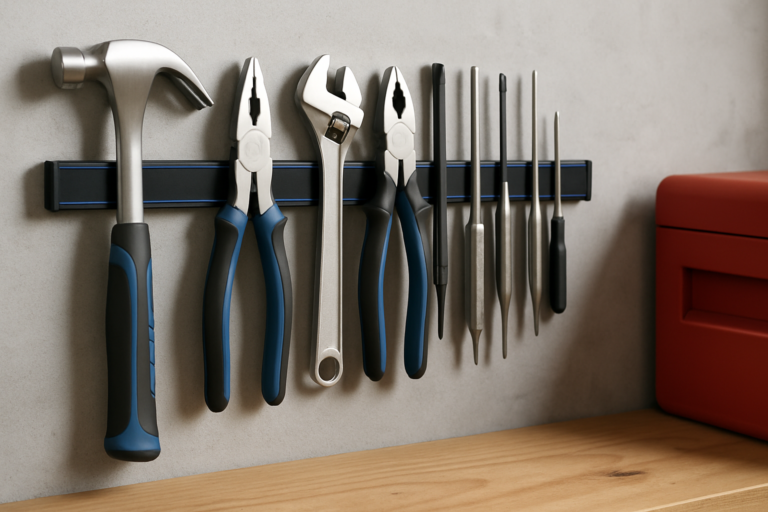
If you’ve ever wasted ten minutes hunting for the right screwdriver in a cluttered drawer, you know exactly why magnetic tool holders have become a garage essential. These simple strips mount to your wall or workbench and keep your most-used tools visible, organized, and within arm’s reach.
The best part is how versatile they are. You can arrange them however you want, move tools around instantly, and actually see what you have. Let’s break down what separates the good magnetic holders from the weak ones that drop your tools mid-project.
Magnetic Strength: The Only Spec That Really Matters
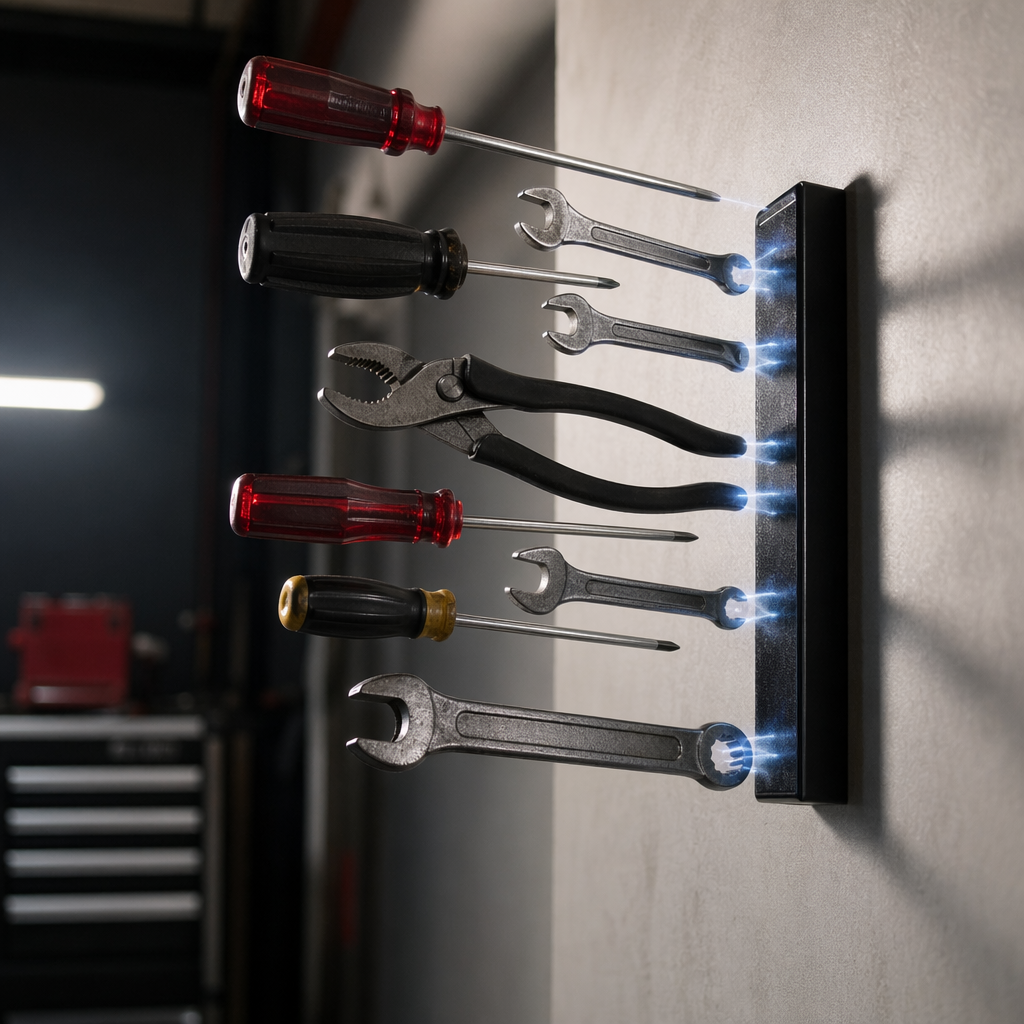
You’ll see magnetic holders advertised with pull force ratings, usually measured in pounds. A decent strip should hold at least 5 pounds per foot of length. That’s enough for standard screwdrivers, pliers, and small wrenches.
For heavier tools like large adjustable wrenches or hammers, look for holders rated at 8-10 pounds or more. The Olsa Tools magnetic bar is a solid choice here, with enough holding power for surprisingly heavy tools.

Olsa Tools Magnetic Tool Holder
Strong enough for heavy wrenches and features scratch-resistant coating to protect tool finishes
Test the actual holding power by hanging a tool vertically. If it slides down slowly, the magnet isn’t strong enough for real workshop use. The tool should grip firmly enough that you need to pull it off with deliberate force.
Length and Configuration Options
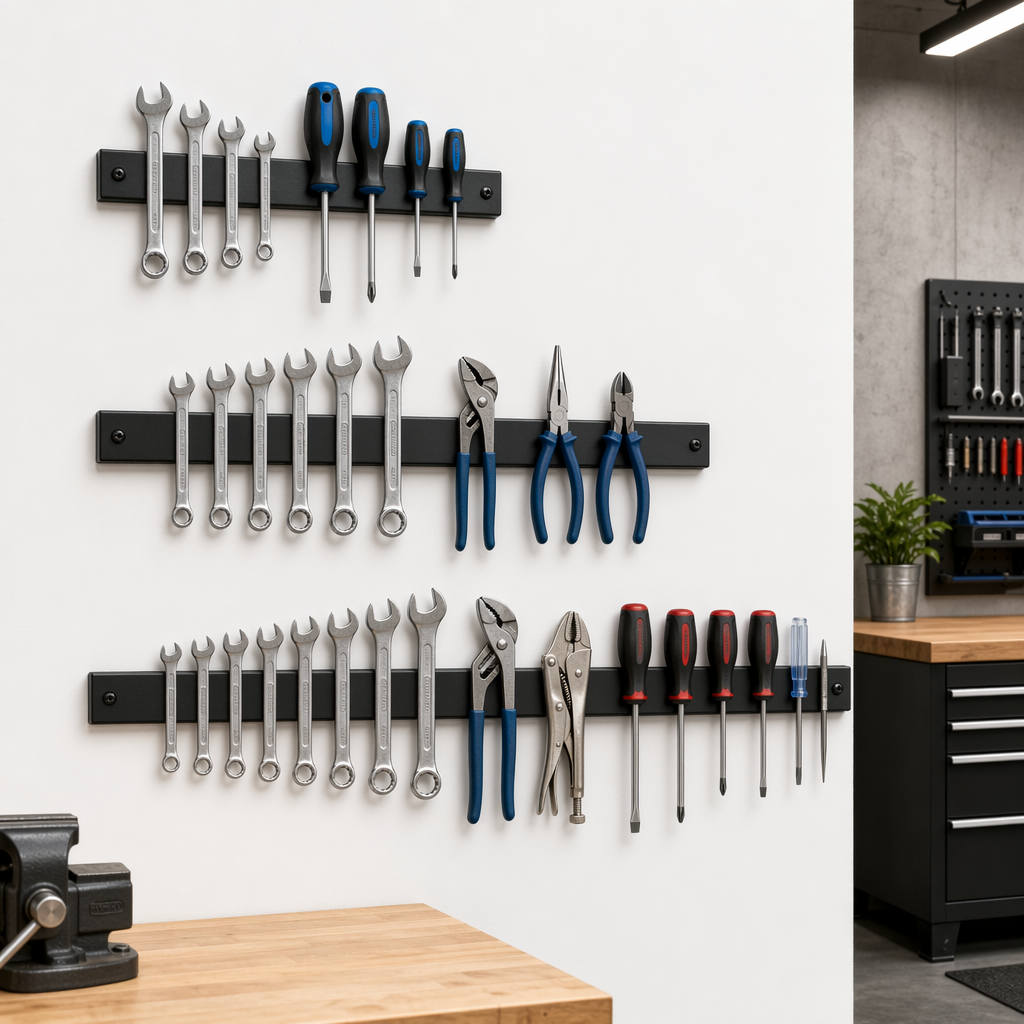
Magnetic holders come in lengths from 8 inches up to 24 inches or longer. The 18-inch size hits the sweet spot for most garage setups. It holds a good assortment of tools without overwhelming a smaller wall space.
You can also find multi-pack sets that include several shorter bars. These work great when you want to create dedicated zones for different tool types. Mount one strip for screwdrivers, another for wrenches, and a third for specialty tools.
Some holders feature a double-sided magnetic strip, which gives you more surface area for smaller tools like drill bits or Allen keys. The dual-strip design prevents tools from twisting when you grab them, which gets annoying fast with single strips. If you need more comprehensive organization, consider installing pegboard systems alongside your magnetic holders for larger tools that don’t work well with magnets.
Mounting Methods That Actually Hold
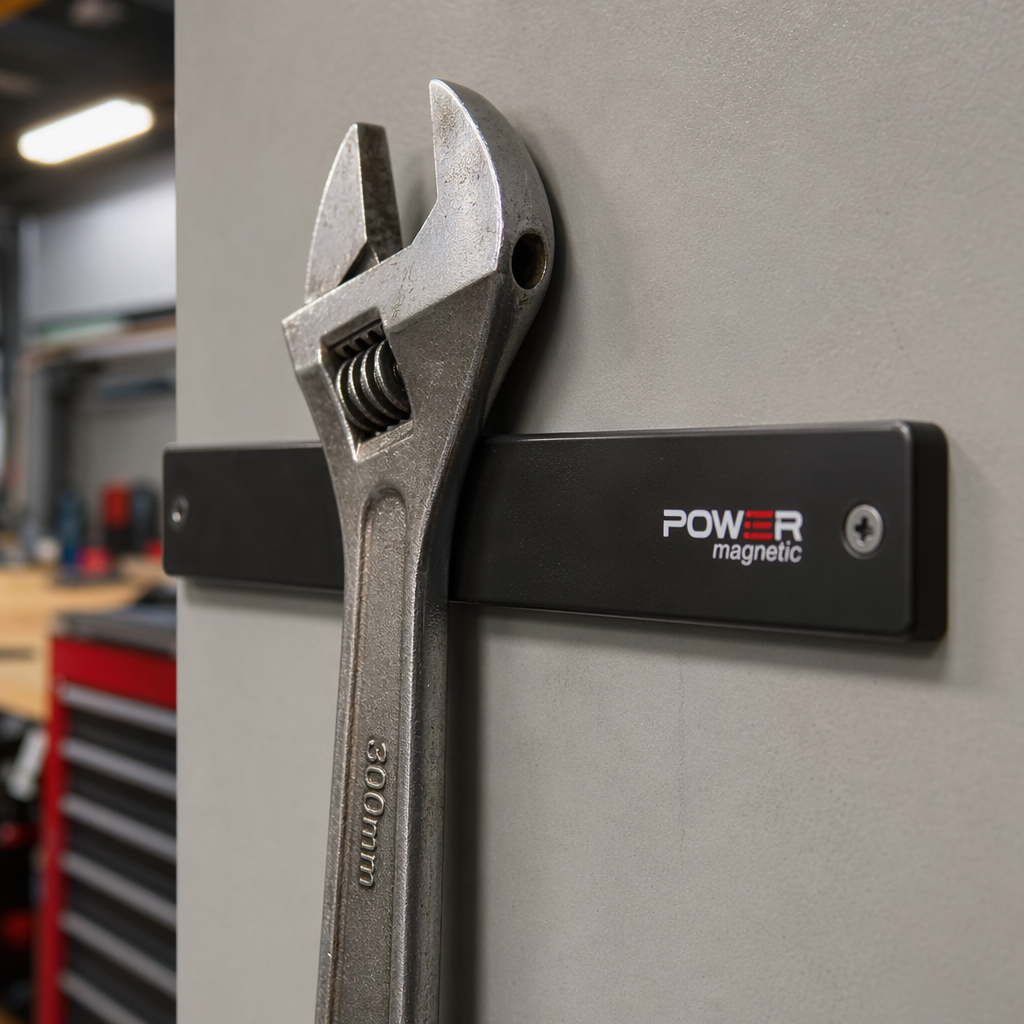
Most magnetic holders mount with screws, which is the most secure method. You’ll want to hit at least one stud for heavier tool loads. The mounting holes should be countersunk so the screw heads sit flush and don’t interfere with tool placement.
Adhesive-backed holders exist, but skip them unless you’re mounting on metal surfaces. They work fine on a toolbox or metal cabinet, but drywall mounting with adhesive strips fails eventually. Save yourself the frustration and use screws from the start.

Master Magnetics Magnetic Tool Holder
Budget-friendly option with pre-drilled mounting holes and solid mid-range magnetic strength
Some premium models include a rail system that lets you slide multiple magnetic sections along a track. This gives you flexibility to reconfigure your setup without drilling new holes, but it adds complexity you probably don’t need for a basic garage setup. For a more permanent solution that accommodates both magnetic strips and larger tools, consider steel garage cabinets that provide multiple mounting surfaces.
Beyond Basic Tool Storage
Magnetic holders shine for organizing more than just hand tools. Mount one inside your kitchen knife drawer to keep blades separated and safe. Attach a short strip inside a cabinet door to hold scissors, nail clippers, and tweezers.
In the garage, try mounting a holder vertically along your workbench leg for frequently-grabbed tools like tape measures and utility knives. You can also use them horizontally under a shelf to hang spray paint cans by their metal caps.
Woodworkers love using magnetic strips to organize drill bits, router bits, and chisel sets. The 18-inch magnetic knife strips designed for kitchens actually work perfectly for this, often at a lower price point than tool-specific versions.
For metal fabrication or welding shops, mount strips at eye level to keep safety glasses, welding magnets, and small clamps instantly accessible. The magnetic surface is usually powder-coated, so it won’t scratch tool finishes or leave residue. When storing chemicals or hazardous materials, keep them separate from magnetic tool storage by using dedicated safety storage solutions.
Which Tools Work Best on Magnetic Holders
Screwdrivers, combination wrenches, pliers, and scissors are perfect candidates. They have enough ferrous metal to grip well and their shape makes them easy to grab quickly.
Socket wrenches and adjustable wrenches work fine if the magnetic strip is strong enough. Chrome-plated tools generally have better magnetic response than tools with thick powder coating.
Avoid storing precision measurement tools like calipers or micrometers on magnetic strips. The magnetic field can interfere with their accuracy over time. Also skip aluminum tools, which obviously won’t stick, and tools with rubber or plastic handles that cover most of the metal surface.
Frequently Asked Questions
Will the magnets damage my tools or lose strength over time?
Modern neodymium and ceramic magnets used in quality tool holders won’t demagnetize your screwdriver bits or damage tools. The magnetic field isn’t strong enough to affect hardened steel. The magnets themselves should maintain full strength for decades under normal garage conditions. Extreme heat above 175°F can weaken some magnets, but that’s not a concern in typical garage environments. If you live in an area with freezing temperatures, check our guide on winterizing your garage to protect your tools and organization systems.
Can I mount magnetic tool holders on metal surfaces like a toolbox?
Yes, and this actually creates an even stronger hold since the metal surface completes the magnetic circuit. You can use adhesive-backed magnetic strips on toolboxes, metal shelving, or steel workbenches without screws. Just clean the surface thoroughly with isopropyl alcohol before applying the adhesive. For vertical surfaces on toolboxes, you might want to add a couple of screws for extra security if you’re loading heavy tools.
This article contains affiliate links. We may earn a small commission at no extra cost to you.
