

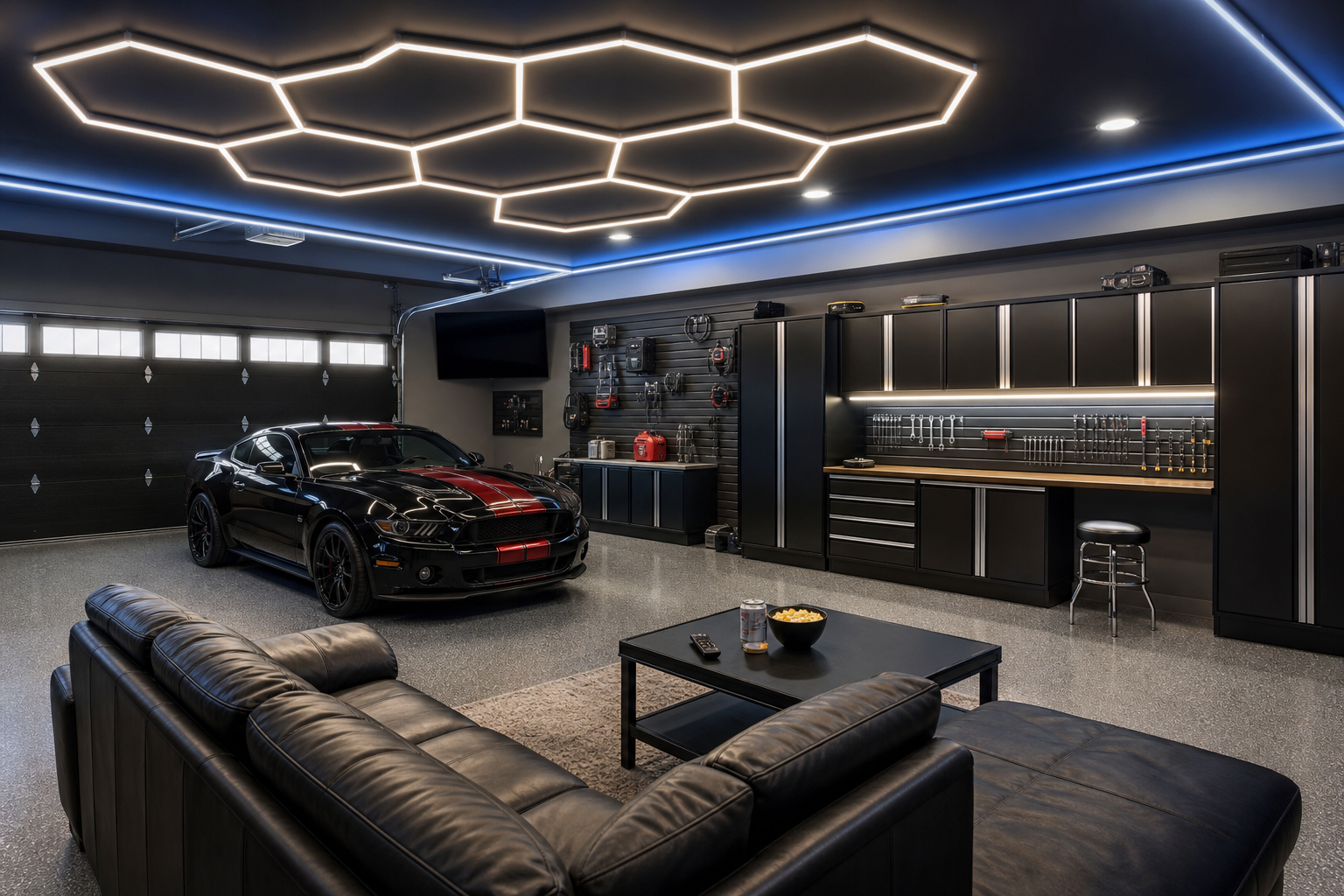
Picking the right smart lighting for garage man caves isn’t about finding the highest star rating. It’s about matching product strengths to your needs: durability, ease of installation, or budget constraints.
Below, you’ll find honest assessments of top contenders, what separates them, and which ones fall short of their marketing. Check Amazon for current pricing.
Understanding Smart Lighting Basics
Placement matters as much as total output. Evenly spaced fixtures eliminate dark spots. Four to six 4-foot LED shop lights in rows cover most two-car garages well. Add a task light directly above the workbench, positioned so you don’t cast your own shadow on the work surface.
LED shop lights are the standard: 50,000+ hour lifespan, low electricity consumption, and instant full brightness. Linkable models daisy-chain from one outlet. Most manufacturers limit chains to 4 to 8 fixtures to prevent voltage drop that causes dimming or flickering on distant units.
Target 50 lumens per square foot for general garage use. A 400 square-foot two-car garage needs at least 20,000 lumens total. For workbench detail, boost to 300 lumens per square foot with dedicated task lighting positioned to minimize shadows.

LED Shop Lights for Garage
Standard choice for garage lighting with linkable design and long lifespan
Choosing the Right Color Temperature
Color temperature (Kelvin) determines light quality. 5000K (daylight) gives crisp, color-accurate illumination ideal for garages. 4000K (neutral white) is slightly warmer if you find daylight too harsh. Avoid warm-white bulbs (2700-3000K) for workshop use since they make it harder to see fine detail.
Whether you’re setting up a garage workshop or creating a game room, proper lighting color temperature affects both functionality and comfort.
Task Lighting for Work Areas
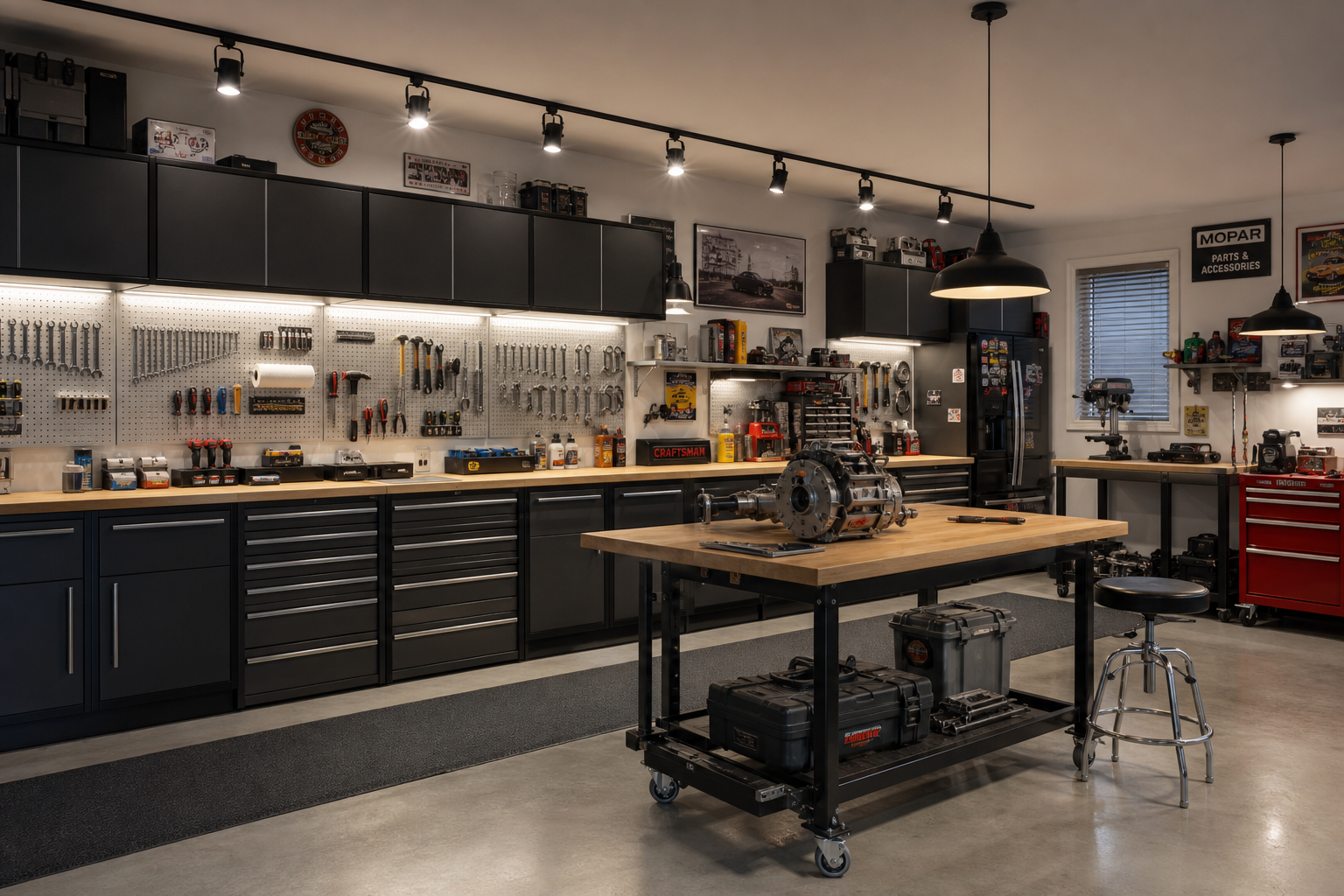
A quality LED workbench task light makes a noticeable difference in results. Position it to eliminate shadows cast by your body when working. Under-cabinet mounting works well for permanent workbenches.
For detailed work like electronics or precision assembly, consider adjustable-arm task lights that you can position exactly where needed. Look for lights with magnetic bases for versatility on metal surfaces.
Motion sensor options work well for frequently used areas. A motion sensor garage light provides instant illumination when you enter the space, perfect for man caves that double as workshops.

Motion Sensor Garage Light
Convenient hands-free operation with reliable motion detection
Practical Planning Tips
Invest in quality tools for tasks you’ll repeat. A reliable stud finder, a good level, a quality tape measure, and proper safety gear (eye protection, hearing protection, respirator) make every project easier and safer. These tools pay for themselves across multiple projects over the years.
Before starting any garage project, take stock of what you have and what you need. Walk the space with a tape measure and a notepad. Record dimensions, note existing electrical outlets and their amperage, check for moisture issues, and photograph anything you want to change.
This baseline assessment prevents surprises mid-project and helps you budget materials accurately. Check our guide on workbench lighting solutions for specific installation tips.
Project Prioritization
Prioritize your projects based on impact and urgency. Safety issues (faulty wiring, CO risk, structural problems) come first. Comfort improvements (insulation, lighting, climate control) come second. Cosmetic upgrades (floor coatings, paint, organization systems) come last.
Following this order ensures you’re building each improvement on a solid foundation. Proper electrical work should be completed before installing folding workbenches or other equipment that requires power.
Set a realistic timeline and budget before buying anything. Most garage projects take 50% longer and cost 20% more than initial estimates, especially for first-timers. Build that buffer into your plan so unexpected discoveries don’t derail the entire project or blow the budget.
What to Avoid
Knowing what to skip prevents expensive mistakes:
- “Universal” products claiming to work everywhere. Specialized products consistently outperform generalists.
- Products with vague specs or missing data sheets. If a manufacturer won’t publish details, that’s a red flag.
- Unknown brands at rock-bottom prices. Established brands charge more for proven materials and real warranties.
Don’t overlook ventilation when planning your lighting layout. Poor air circulation can cause heat buildup that shortens LED lifespan. Consider adding wall-mount fans to keep air moving.
Smart Features Worth Considering
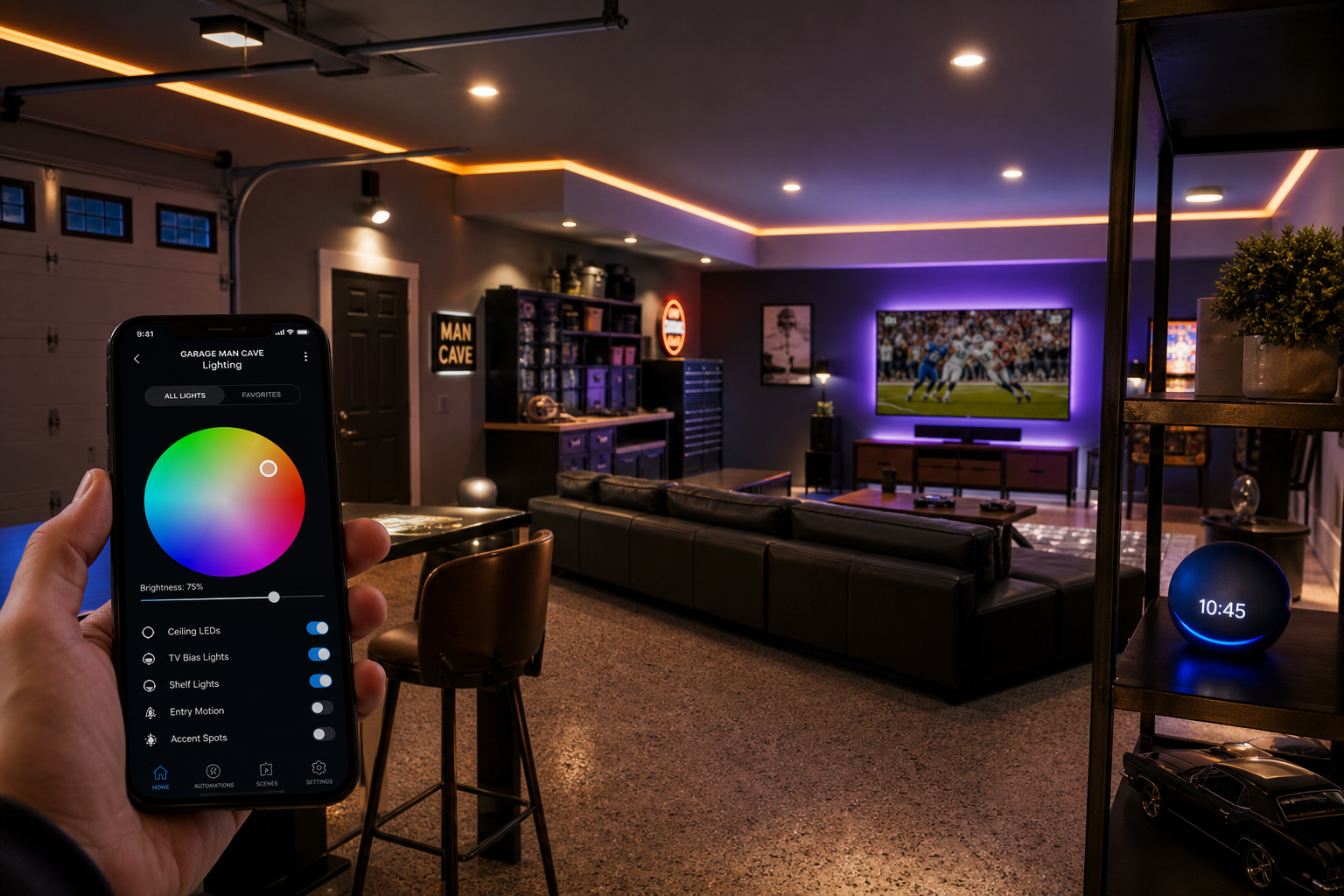
Basic smart features like dimming and scheduling add convenience without complexity. App control lets you adjust brightness from your phone or set automatic schedules that match your usage patterns.
Voice control through Alexa or Google Assistant works well for hands-free operation when your hands are dirty from projects. Look for lights compatible with your existing smart home ecosystem.
Zone control allows different lighting levels for different areas. You might want bright task lighting at the workbench while keeping ambient lighting dimmer in seating areas of your man cave.

Installation Considerations
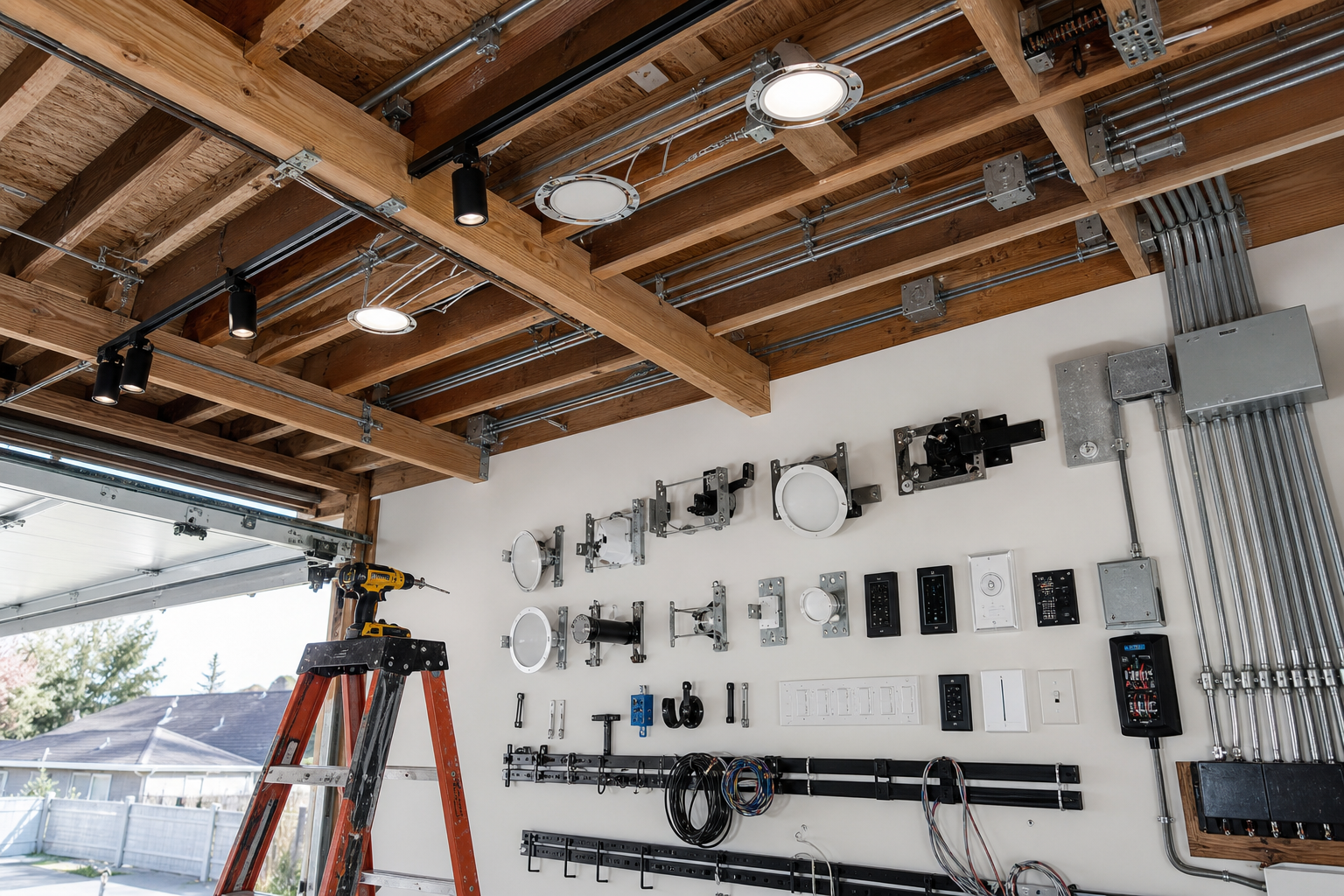
Most LED shop lights install with simple mounting brackets and basic electrical connections. However, adding new circuits or moving electrical boxes requires electrical knowledge or professional help.
Plan wire routing before mounting fixtures. Exposed conduit looks more professional than loose cables, especially in finished garage spaces. Use proper junction boxes for all electrical connections.
Consider future expansion when running initial wiring. Extra capacity costs little upfront but saves major work later. This applies whether you’re planning a home theater setup or a garage gym.
Frequently Asked Questions
What mistake should I avoid above all?
Rushing preparation. Whether it’s surface prep, measuring, or reading instructions, upfront time prevents expensive do-overs. Take time to plan your lighting layout on paper before drilling any holes.
How much should I budget for smart garage lighting?
Budget varies widely by scope and materials. DIY installation saves significantly on labor costs. Check current Amazon pricing for accurate material estimates, but expect to spend more on smart features compared to basic LED fixtures.
How long will smart LED garage lights last?
Quality LED fixtures provide years of reliable performance with proper installation. Most offer 50,000+ hour lifespans. Preparation quality and proper electrical connections are the biggest longevity factors.
What’s the best color temperature for garage lights?
5000K (daylight) provides clear, accurate illumination perfect for detailed work. 4000K (neutral white) works if you prefer slightly warmer light. Avoid warm-white bulbs (2700-3000K) for workshop tasks since they reduce visibility of fine details.
This article contains affiliate links. We may earn a small commission at no extra cost to you.
