

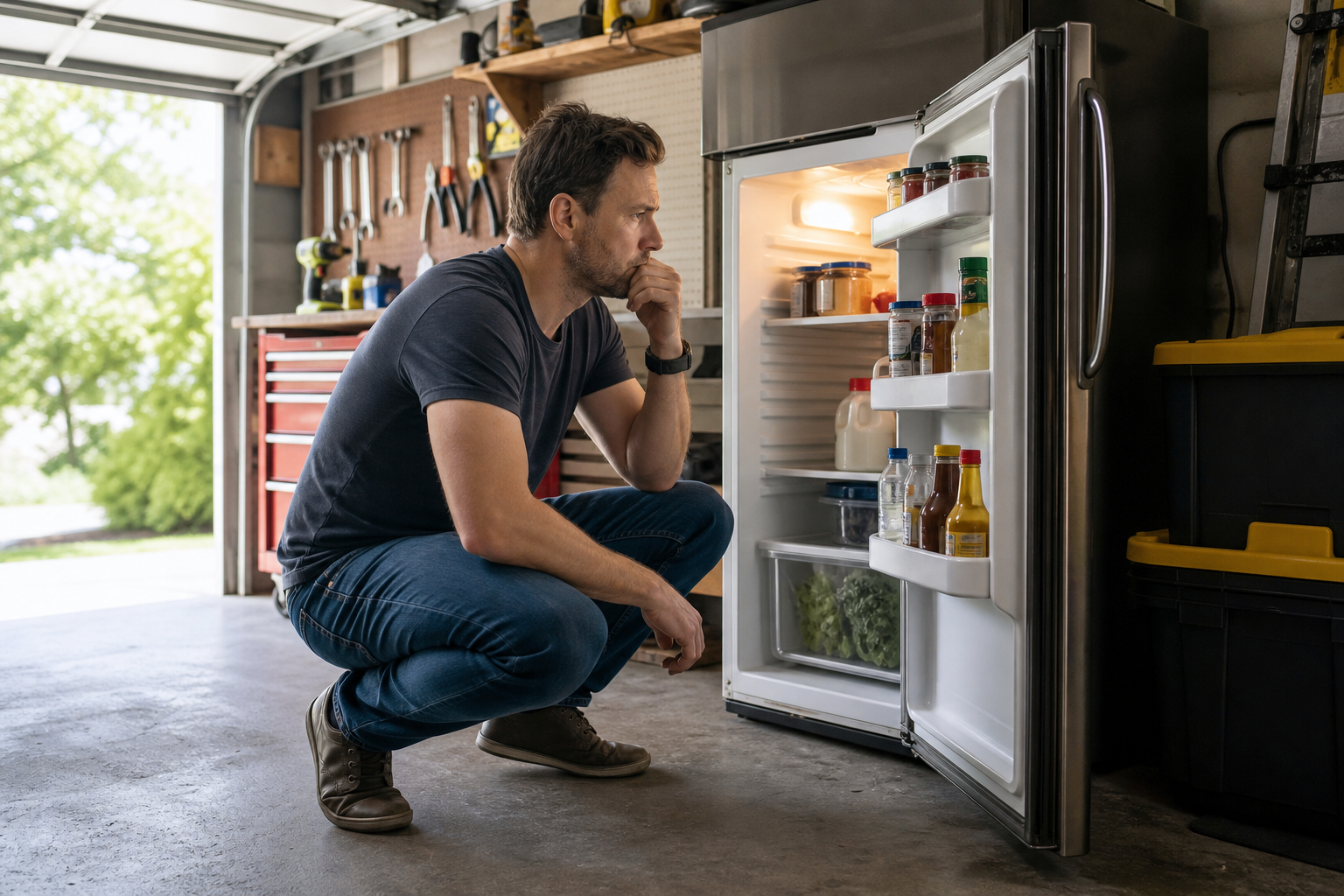
Dealing with a situation where your garage freezer or fridge isn’t staying cold is one of those garage frustrations that catches you off guard. Everything seemed fine until one day you notice the ice cream’s soft, the drinks aren’t cold, or worse, you’ve lost a freezer full of meat. The reassuring truth is that these issues almost always trace back to identifiable causes with practical solutions.
This guide covers the most common culprits in diagnostic order, starting with the simplest checks. Most readers find their answer within the first few sections without needing a service call. The fixes range from five-minute adjustments to deciding whether your current unit belongs in the garage at all.
Understanding the Basics
Garage refrigerators and freezers face conditions indoor units never see. Temperature swings from 20 degrees in January to 95 in July stress compressors designed for stable 65-to-75-degree environments. Dust accumulates faster. Humidity fluctuates more. These factors combine to create failure points that don’t show up in climate-controlled kitchens.
Standard refrigerators use thermostats calibrated for indoor temperatures. When your garage drops below 50 degrees, many units think the kitchen is cold enough and stop running the compressor. The fridge section might stay cool from ambient air, but the freezer warms up because it’s not getting active cooling cycles. When summer hits and the garage climbs above 90, the compressor runs constantly trying to maintain temperature, wearing out faster and often failing to keep up.
Garage-ready units address these problems with wider operating ranges, typically 0 to 110 degrees. They use heavy-duty compressors, better insulation, and thermostats that compensate for extreme ambient temperatures. If you’re shopping for a new unit, this designation matters. If you already own a standard fridge in the garage, the fixes below help you work around its limitations.
Ambient Temperature Issues
Temperature extremes are the number one cause of garage fridge failures. Walk into your garage right now and check the thermometer. If it’s below 50 degrees, your standard refrigerator’s thermostat likely isn’t triggering cooling cycles. The fridge section stays cold from the surrounding air, but the freezer slowly warms because it depends on active compressor cycles to maintain sub-zero temperatures. Cold garage conditions can affect more than just your appliances—understanding temperature transfer through different surfaces helps explain why some areas feel colder than others.
The quick fix: a garage heater kit. These small heating elements attach near the thermostat and trick it into thinking the ambient temperature is higher than it actually is. The thermostat triggers the compressor, and the freezer gets the cooling cycles it needs. Kits install in under an hour. Look for models compatible with your fridge brand.
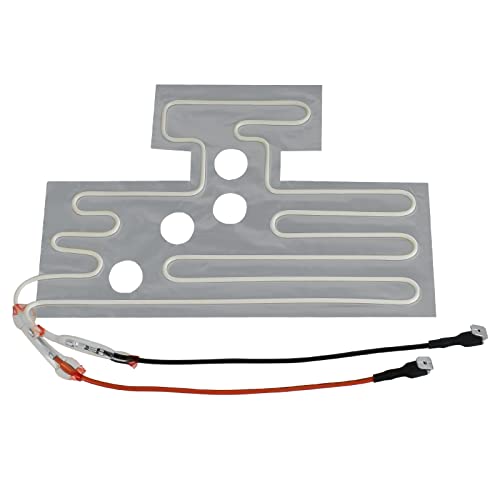
Garage Heater Kit for Refrigerator
Essential for making standard fridges work in cold garages
Summer heat causes the opposite problem. When your garage hits 95 degrees, the compressor runs non-stop trying to cool the interior. It’s fighting physics at that point, especially if the unit sits in direct sunlight or near a west-facing door. The compressor overworks, burns out faster, and still struggles to maintain temperature.
Solutions here: move the unit to the coolest spot in the garage (typically the north wall), ensure six inches of clearance on all sides for airflow, and consider adding a small fan to improve air circulation around the condenser coils. If your garage regularly exceeds 100 degrees, a standard fridge will fail eventually. You either upgrade to a garage-ready model or accept that you’ll need the space conditioned.
Insulating the garage helps both extremes. Even basic wall insulation and weatherstripping around the main door moderates temperature swings by 10 to 15 degrees, which often keeps a standard fridge in its working range.
Blocked or Dirty Condenser Coils
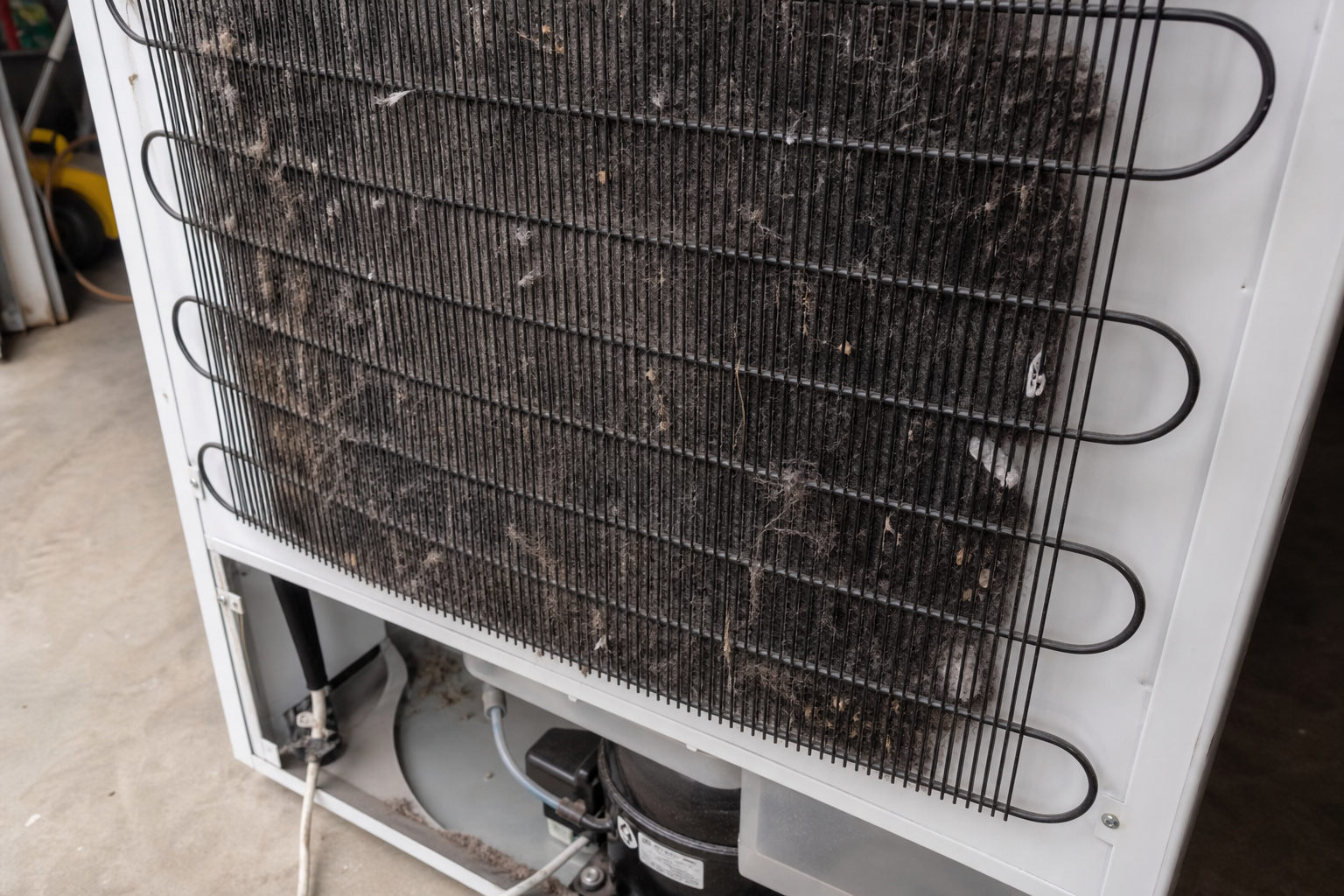
Condenser coils on the back or bottom of your fridge dissipate heat. When dust, cobwebs, pet hair, or garage grime coat these coils, heat can’t escape efficiently. The compressor works harder, uses more electricity, and eventually can’t maintain proper temperatures.
Pull the fridge away from the wall and look at the coils. If you see a layer of dust or buildup, you’ve found your problem. Cleaning takes 15 minutes. Unplug the unit first. Use a coil brush (a long-handled brush designed for this job, available at any hardware store) or a vacuum with a brush attachment. Work gently to avoid bending the fins. Get into the spaces between coil loops where dust accumulates.
For bottom-mount coils under the unit, you’ll need to remove the kick plate panel at the base. The coils are usually visible once that’s off. Vacuum carefully, working the brush into tight spots.
Clean these coils twice annually if the fridge lives in the garage. Indoor units can go longer between cleanings, but garages generate more dust, especially if you do woodworking or pull vehicles in and out daily. Mark your calendar for spring and fall cleanings.
After cleaning, plug the unit back in and give it 24 hours. Check temperatures with a simple thermometer. Fridge sections should hold 37 to 40 degrees. Freezers should stay at 0 degrees or below.
Door Seals and Gaskets
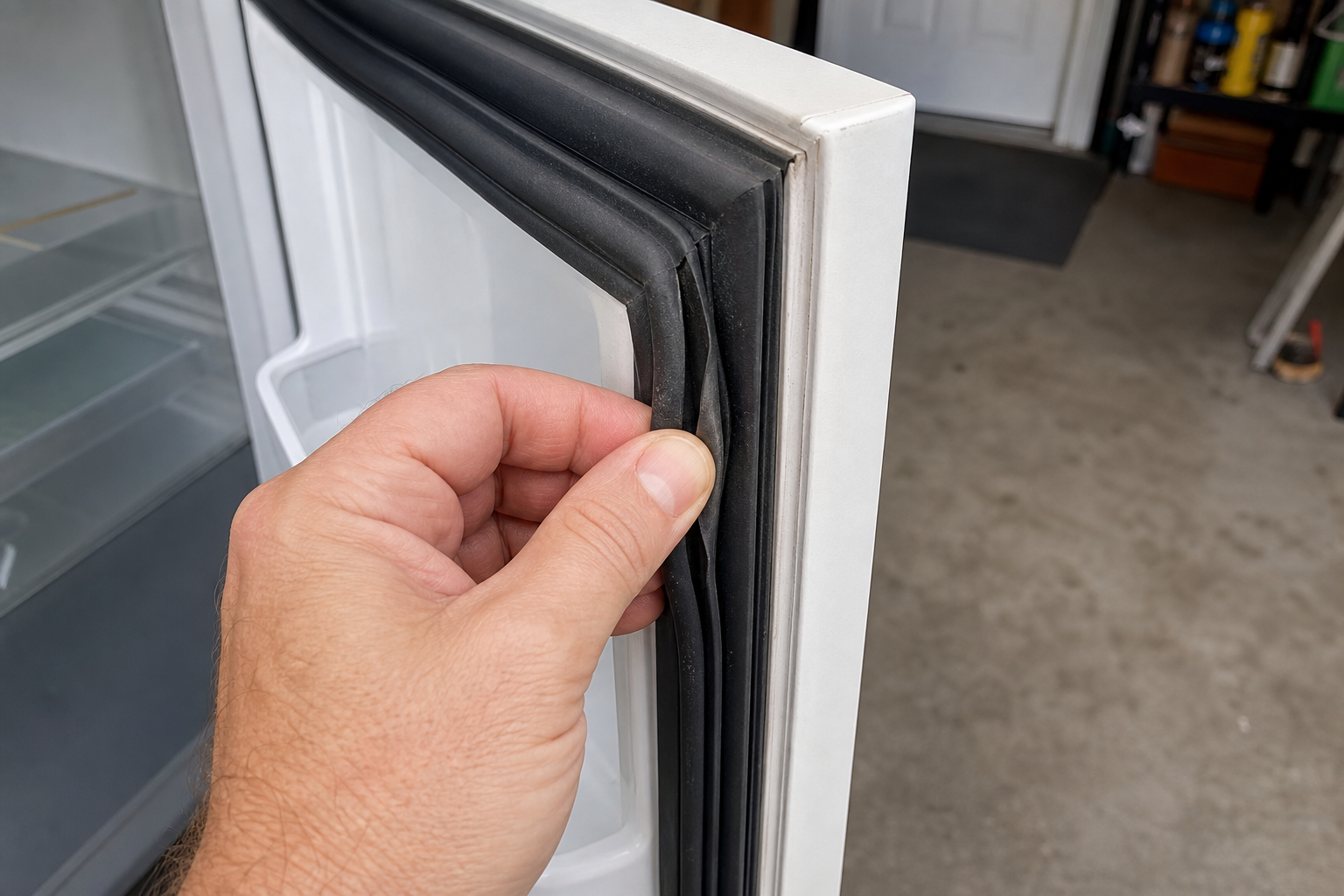
A failing door seal lets warm air infiltrate constantly, forcing the compressor to work overtime without ever catching up. The rubber gasket around the door perimeter should create an airtight seal when closed. Over time, gaskets crack, tear, compress permanently, or pull away from the door frame.
Test the seal with the dollar bill method: close a dollar bill in the door so half sticks out. Pull gently. You should feel resistance. If the bill slides out easily, the seal isn’t tight. Repeat this test at six to eight points around the door, including corners where seals often fail first.
Inspect the gasket visually. Look for cracks, tears, mildew buildup, or sections that have compressed flat and won’t spring back. If the gasket is dirty, clean it with warm soapy water and a soft cloth. Sometimes dirt or sticky residue prevents a good seal. Dry thoroughly.
If the gasket is damaged, replacement is manageable. Most gaskets either screw into place or tuck into a retainer channel behind a trim strip. Measure your model’s door dimensions and order the correct replacement gasket online or through an appliance parts supplier. Installation takes 30 to 45 minutes with basic hand tools.
A quality replacement gasket costs less than a service call. It’s a worthwhile fix if the rest of the unit is sound. A good seal can drop your electricity bill noticeably and restore proper cooling.
Thermostat Calibration and Settings
Sometimes the fix is embarrassingly simple. Check the temperature settings. Garage fridges occasionally get bumped when you’re moving things around, shifting the dial from the proper setting. Verify the fridge is set to 37 degrees and the freezer to 0 degrees. Electrical issues can affect more than just your fridge—if you notice lighting problems alongside cooling issues, it might indicate broader electrical concerns in your garage.
If settings are correct but temperatures don’t match what a thermometer reads, the thermostat may be out of calibration. Some models have a small adjustment screw accessible behind the control panel. Check your owner’s manual for calibration instructions specific to your model. Adjust incrementally, wait 24 hours, and measure again.
Older mechanical thermostats can drift over time, especially after years of temperature cycling in a garage. If recalibration doesn’t work, replacing the thermostat is often DIY-friendly for anyone comfortable with basic electrical work, but if you’re uncertain, call a tech.
Digital thermostats rarely drift but can fail outright. If the display is blank or shows error codes, you’ve found your issue. Replacement parts are model-specific. Search by your fridge’s model number.
Overloaded or Underloaded Freezer
An overpacked freezer blocks airflow between items, preventing cold air from circulating properly. Cold air needs to flow around food to maintain even temperatures. If you’ve crammed every cubic inch full, warm spots develop.
Remove some items. Leave space between packages for air to move. Arrange things so vents inside the freezer aren’t blocked. Check the back wall and ceiling of the freezer compartment for vent grilles and make sure nothing’s pressed against them.
The opposite problem also causes issues: an empty or nearly empty freezer. Frozen items act as thermal mass, helping the unit maintain temperature when the door opens. An empty freezer loses all its cold air instantly when you open the door, forcing the compressor to work much harder.
If you’re running a mostly empty freezer, fill some gallon jugs with water and freeze them. They’ll take up space, provide thermal mass, and give you emergency ice or drinking water if needed. This trick is especially useful in garages where power outages from storms can happen.
Compressor and Refrigerant Issues
If you’ve checked everything above and the fridge still isn’t cooling, the compressor or refrigerant system may have failed. You’ll hear clues: a compressor that’s running constantly without cooling, loud clicking or buzzing sounds, or complete silence when the unit should be running.
Compressor failure usually means the unit is done. Replacing a compressor often exceeds the value of a used fridge. Refrigerant leaks require a licensed technician to diagnose and repair.
At this point, run the numbers. If your garage fridge is over 10 years old and needs a major repair, replacement usually makes more sense. A new garage-ready chest freezer will run reliably for years without the headaches.
One exception: if you have a high-end unit that’s relatively new and still under warranty, pursue the repair. Otherwise, take this as a sign to upgrade to something designed for garage conditions from the start.
When Standard Fridges Don’t Belong in Garages
Not all refrigerators are created equal when it comes to garage duty. Standard kitchen refrigerators are engineered for stable indoor climates. Many manufacturers explicitly state in the manual that their units aren’t rated for ambient temperatures below 55 degrees or above 90 degrees. Operating outside that range voids warranties and leads to premature failure.
If you’re experiencing repeated problems despite trying all the fixes above, you may own a unit that simply can’t handle garage conditions. Common signs: the fridge works fine in spring and fall but fails every summer and winter. The compressor cycles erratically. Temperatures fluctuate by 10 degrees or more even when the door stays closed.
Garage-ready refrigerators and freezers use heavier-duty compressors, better insulation, and thermostats designed for 0-to-110-degree operation. Brands like Gladiator, Frigidaire, and GE offer garage-ready models. Expect to pay more than a comparable standard model, but that premium buys you reliability in extreme conditions.

Garage Ready Refrigerator
Built specifically for extreme temperature conditions
Chest freezers generally handle garages better than upright fridges. They’re simpler mechanically, lose less cold air when opened, and typically have wider operating ranges even in non-garage-ready models. If you only need freezer space, a chest freezer is the most reliable garage option.
Consider your actual needs before upgrading. Do you need a full fridge in the garage, or would a dedicated freezer handle most of your overflow storage? A quality chest freezer costs less, uses less electricity, and survives garage temperature swings better than any upright fridge.
