

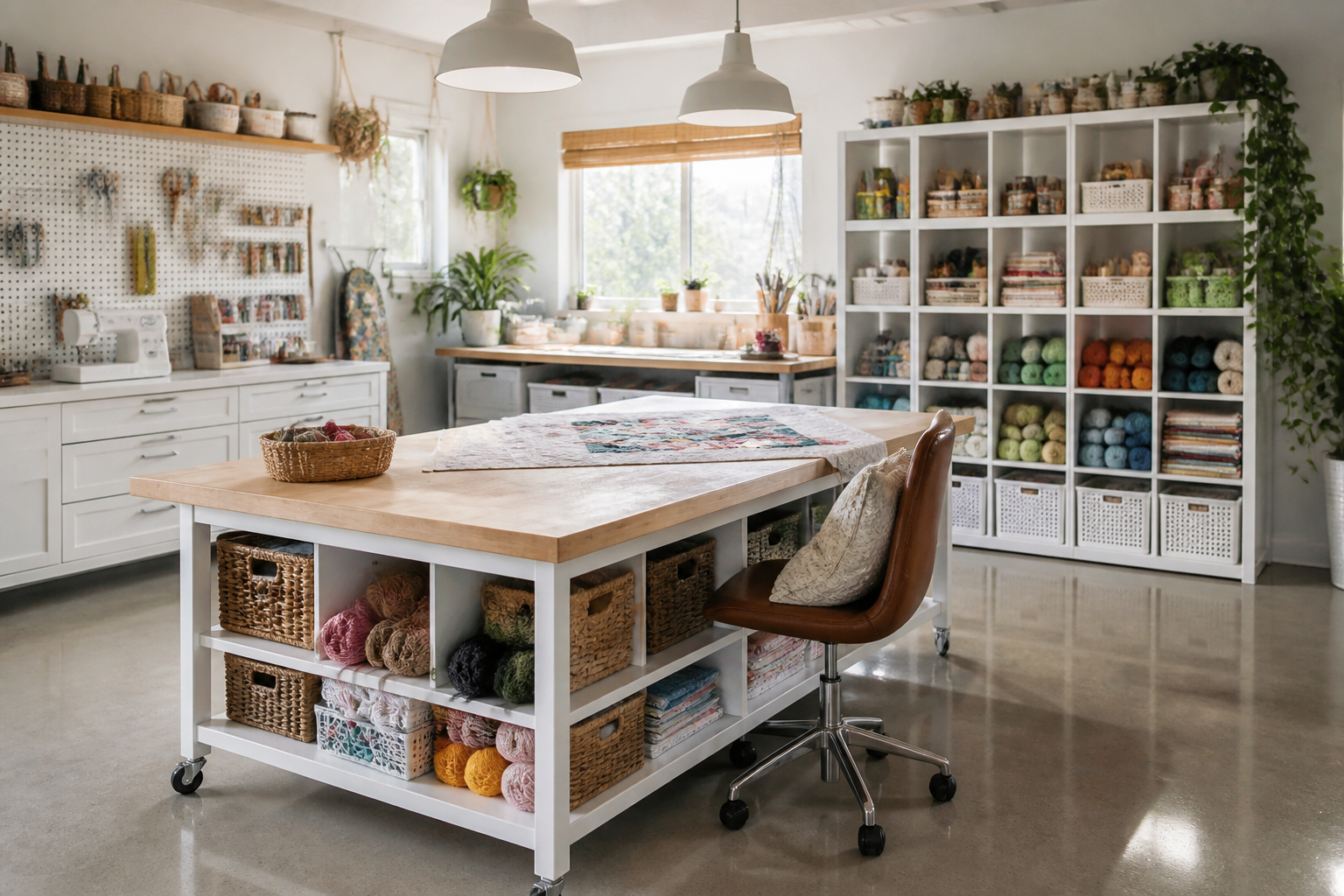
Garages make fantastic craft rooms because they offer abundant space, natural light, and flexibility you just can’t find in a spare bedroom. I’ve helped dozens of crafters transform their garages into dream creative studios where supplies stay organized and projects flow smoothly. This guide covers sewing and quilting stations, scrapbooking and paper crafts, painting and mixed media, yarn and fiber arts, and organized supply walls.
Sewing and Quilting Stations
Sewing and quilting require dedicated workspace with proper lighting, cutting surfaces, and storage for fabric, thread, and notions. A garage craft room gives you the square footage to set up multiple workstations without feeling cramped. You can position your sewing machine near a window for natural light while keeping a cutting table in the center for easy access from all sides. If your garage has unfinished walls, consider finishing your garage walls to create a more polished environment that keeps dust and debris away from your fabric. Climate control becomes important for fabric storage, so proper insulation protects your materials from humidity and temperature swings.
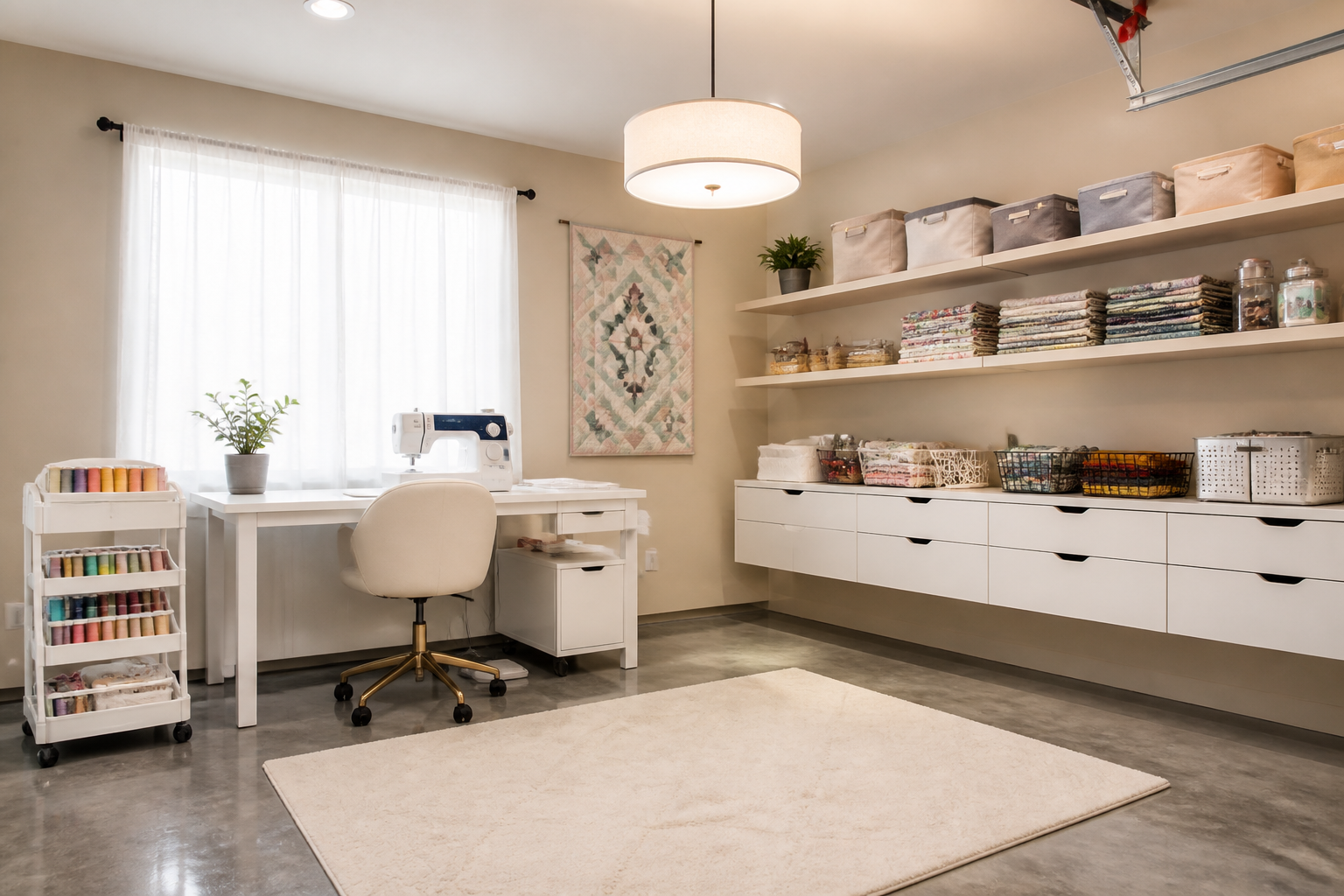
This sewing setup takes advantage of natural window light while keeping everything within arm’s reach. The rolling cart stores thread by color family, and floating shelves keep frequently used fabrics visible and accessible. The neutral palette helps you see fabric colors accurately without visual interference.
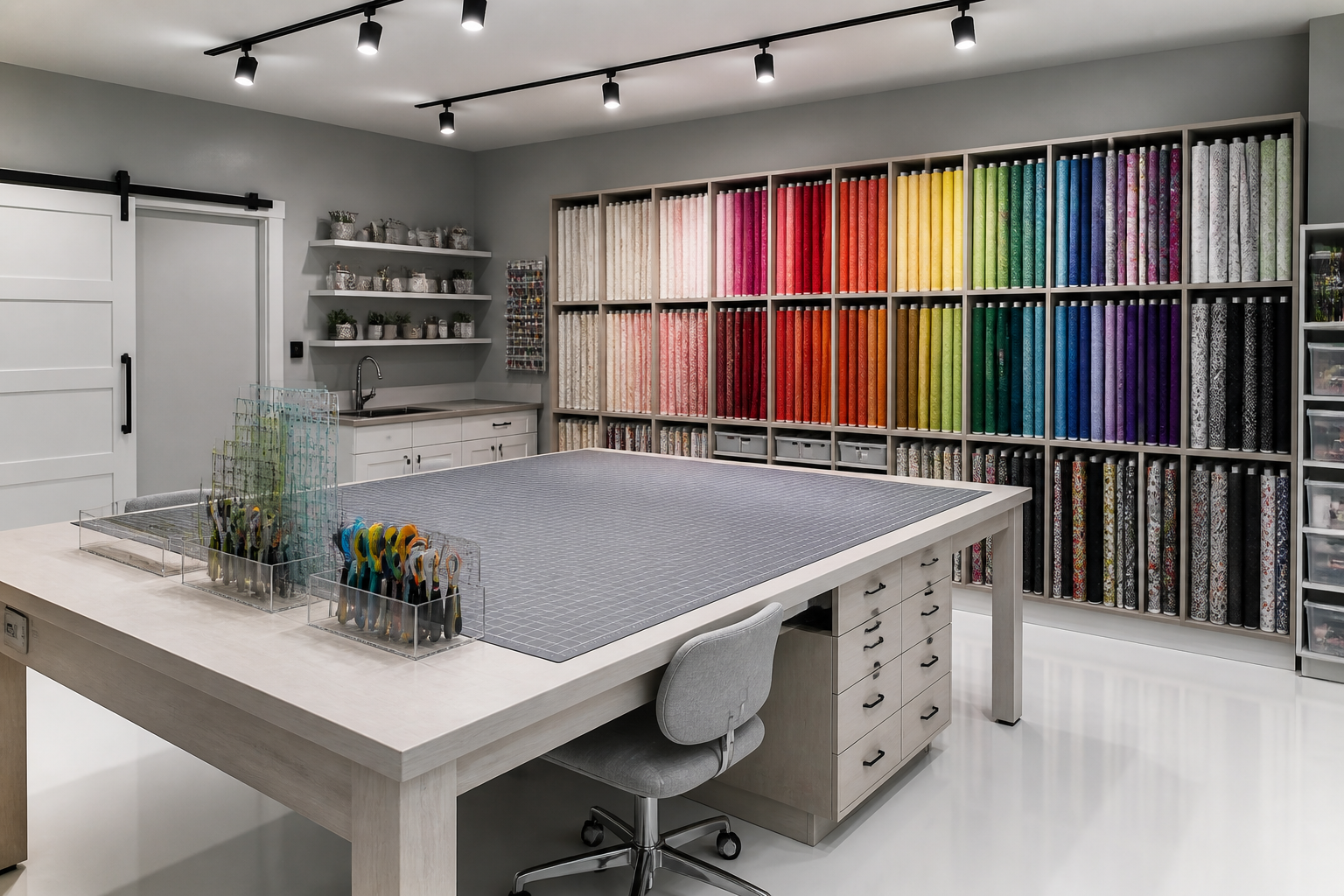
A dedicated cutting table becomes the centerpiece of this quilting station, with enough surface area to spread out queen-size quilt tops. The cubbies organize fabric by color and type, making it easy to pull exactly what you need. Track lighting eliminates shadows that can make cutting inaccurate.
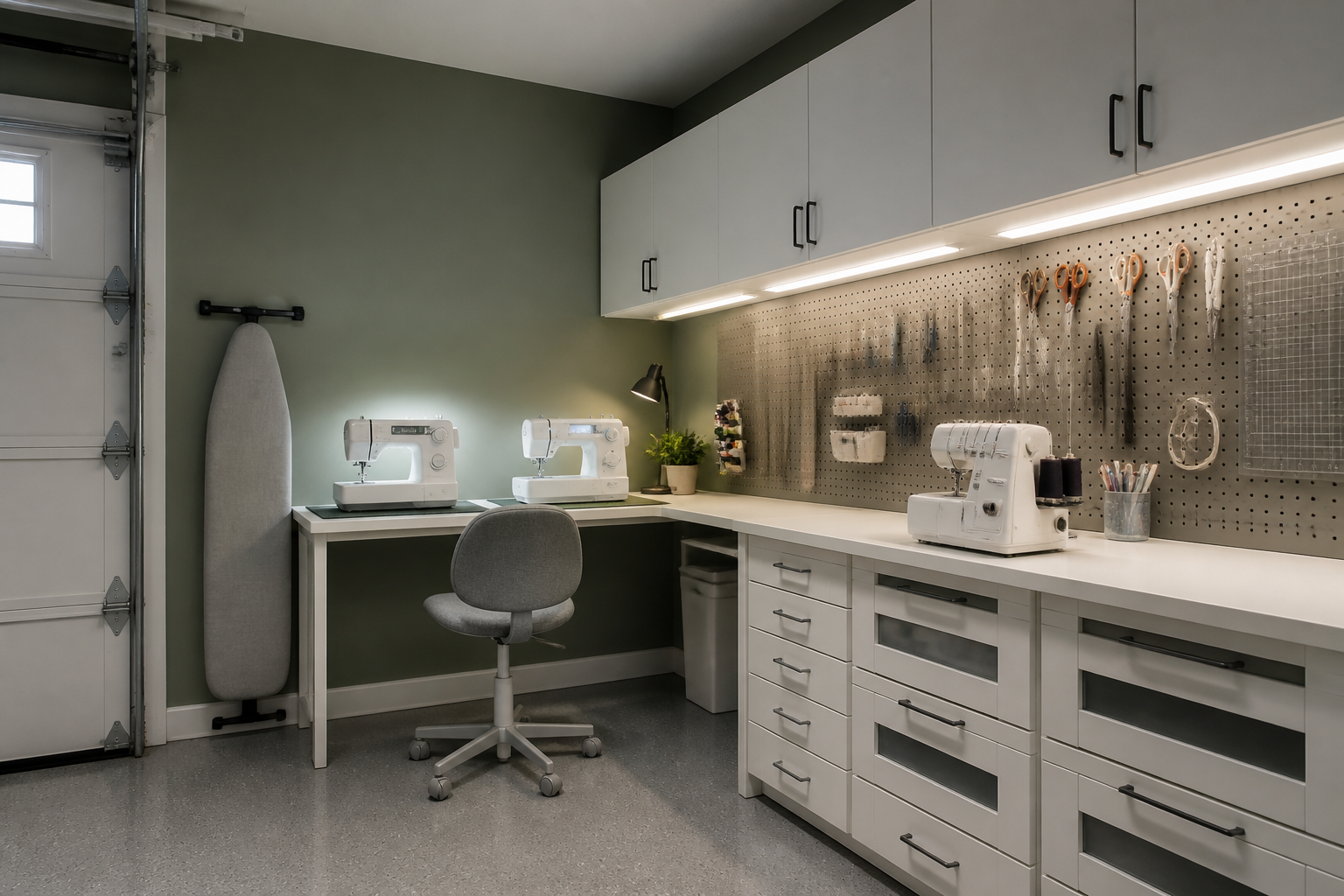
The L-shaped configuration lets you move between your sewing machine and serger without getting up, while pegboard storage ideas keep your most-used tools hanging at eye level. Under-desk cabinets hide bulkier supplies while keeping patterns and stabilizers within easy reach. The compact ironing station folds down when needed and tucks away when not in use.
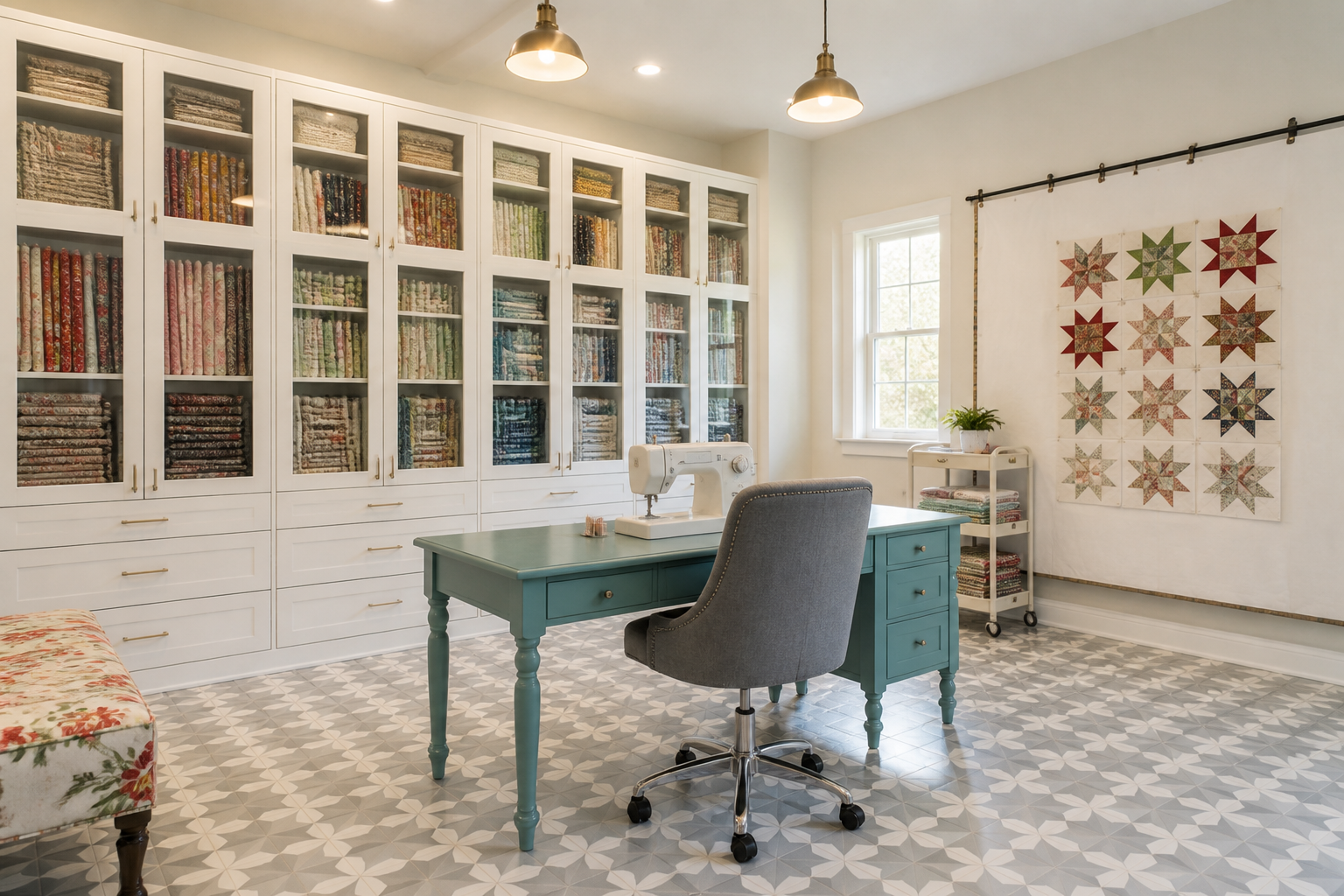
Glass-front cabinets turn your fabric collection into decorative storage while protecting it from dust and garage moisture. The flannel design wall lets you audition quilt blocks before sewing, which saves time and prevents mistakes. This setup proves that a garage craft room can be both functional and beautiful.
Scrapbooking and Paper Crafts
Paper crafters need excellent organization for the countless supplies that come with scrapbooking, card making, and mixed media projects. A garage gives you the space to spread out without constantly clearing the dining table, plus room for specialized storage that keeps paper flat, stickers organized, and embellishments sorted. Good ventilation matters when you’re using adhesives and inks, and garages naturally offer better airflow than interior rooms. The key is creating zones for different tasks so you can move smoothly from cutting to stamping to assembly without hunting for supplies.
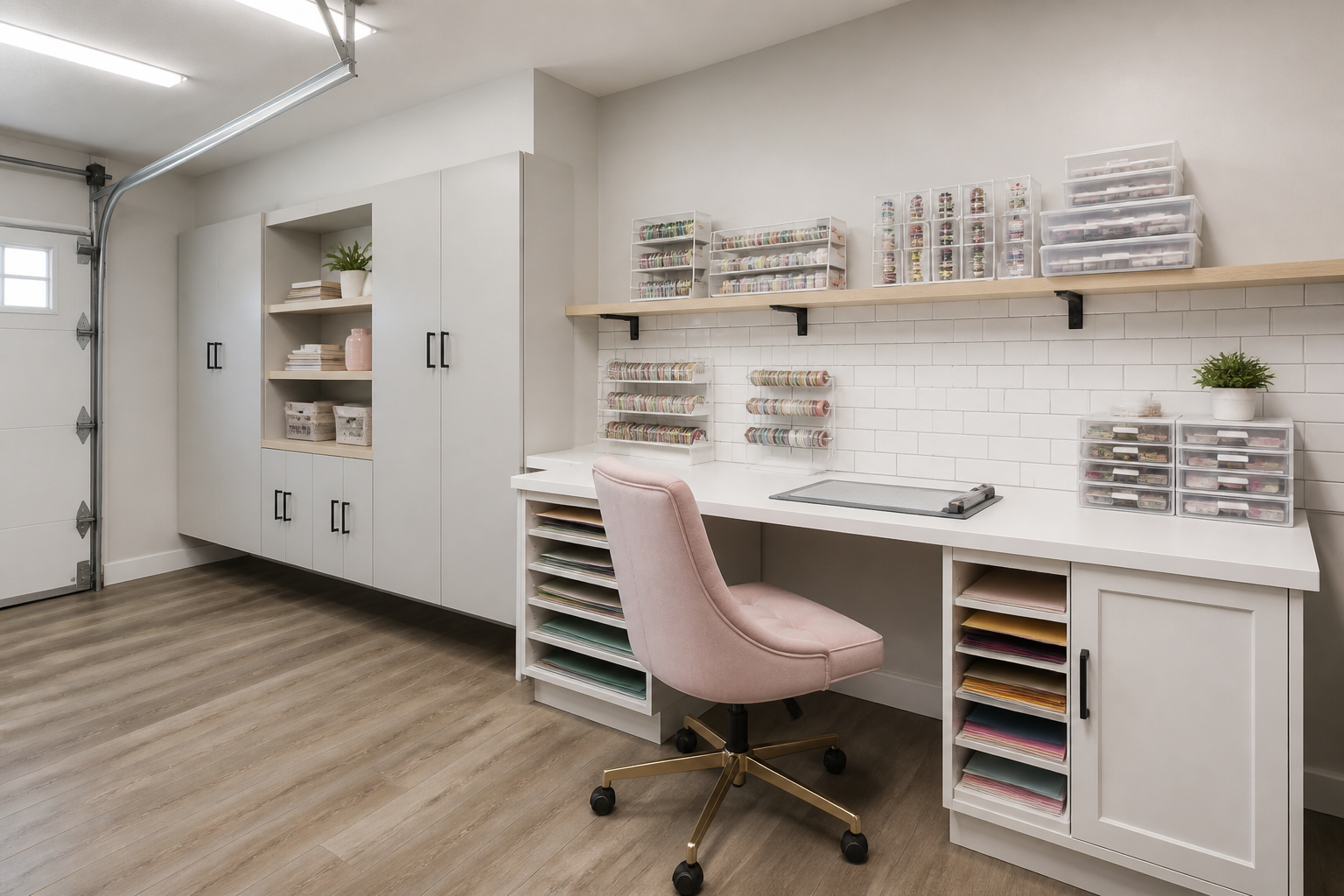
Built-in paper cubbies keep 12×12 cardstock and patterned paper organized by color without bending or creasing. Clear acrylic organizers let you see every washi tape pattern at a glance, which speeds up the creative process. The subway tile backsplash adds visual interest while staying easy to clean when adhesive or ink gets messy.
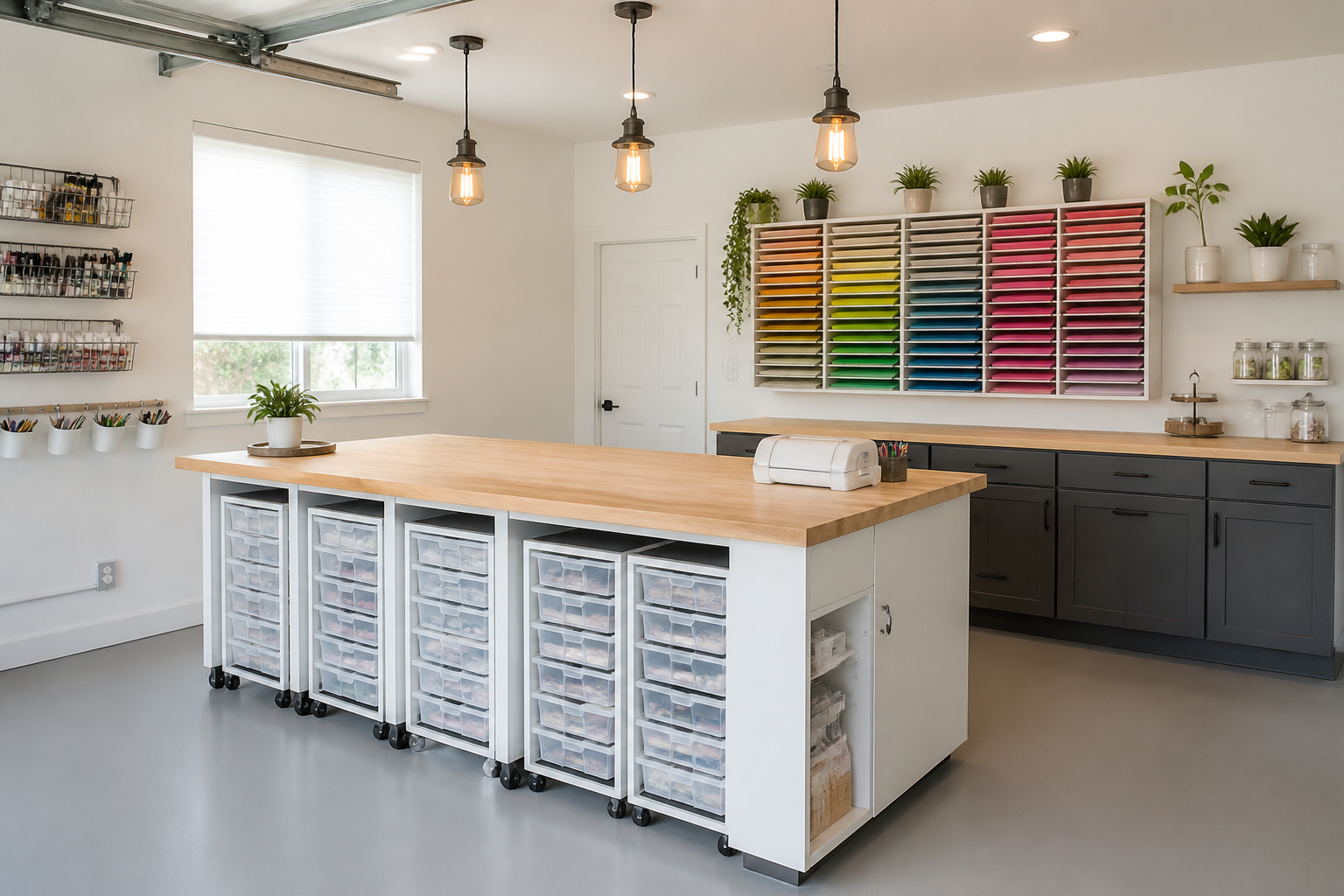
Rolling carts slide under the table when not in use, keeping your work surface clear while maintaining easy access to supplies. The wall-mounted vertical paper storage uses minimal floor space while holding hundreds of sheets organized by color. This mobile storage approach works especially well in small garage spaces where you need maximum flexibility.
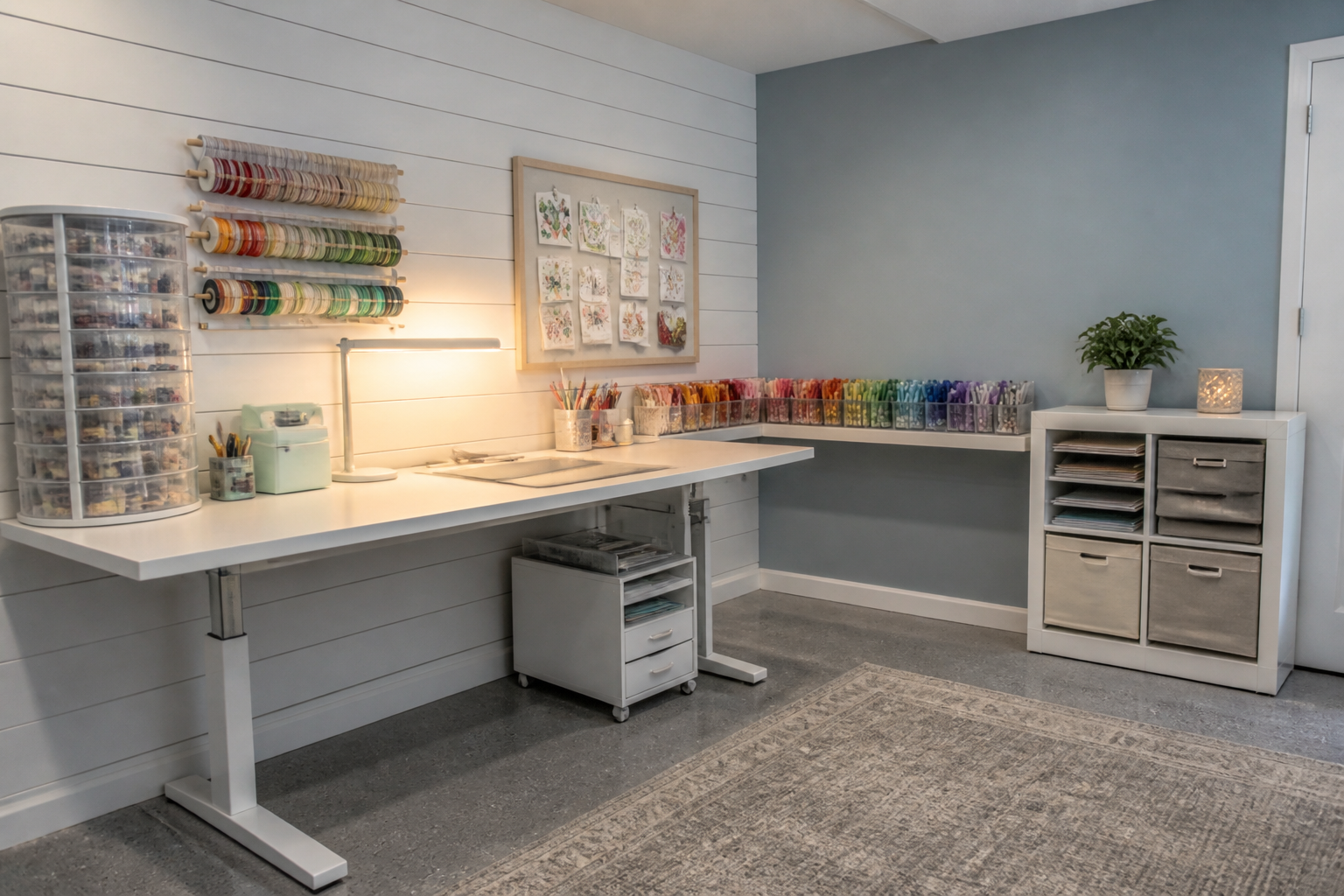
A rotating stamp tower keeps hundreds of stamps visible and accessible without eating up desk space. The ribbon dowel system prevents tangling while showing every color and pattern clearly. The sit-stand desk helps you stay comfortable during long crafting sessions without needing a separate workspace.
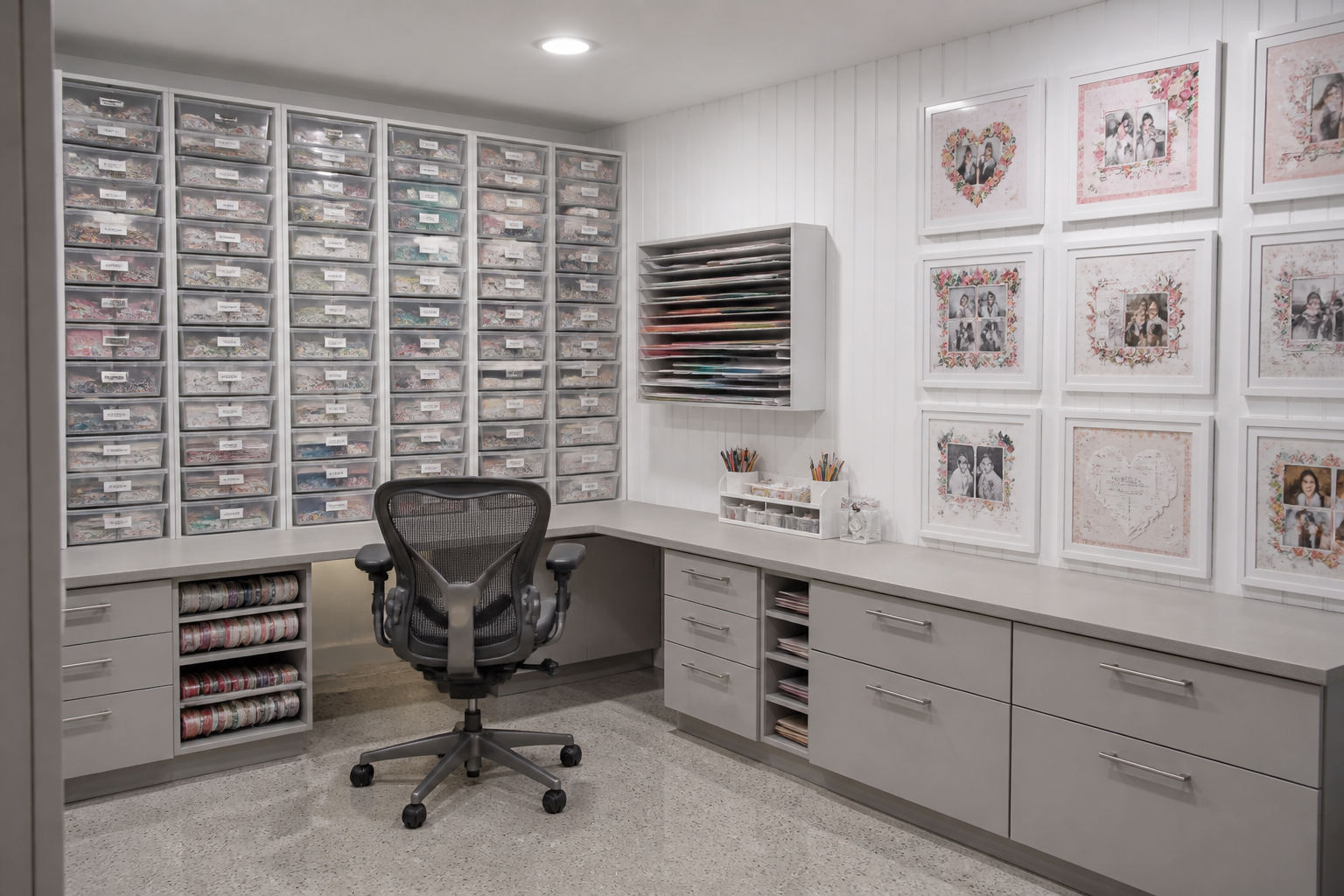
Clear containers with proper labels transform a chaotic collection into an organized system where you can find any embellishment in seconds. The three-tier paper rack keeps different weights and finishes separated while using vertical wall space efficiently. Framing finished pages turns your wall into a gallery that celebrates completed projects and inspires new ones.
Painting and Mixed Media
Painters and mixed media artists need space that can get messy without worry, making garages perfect for creative work. You can set up easels, store canvases upright, and work with messy materials without stressing about carpet or furniture. Ventilation becomes critical when working with acrylics, oils, or resins, and garage doors provide excellent airflow that interior rooms can’t match. Natural light streaming through windows helps with color accuracy, though you’ll want to supplement with quality artificial lighting for evening work sessions.
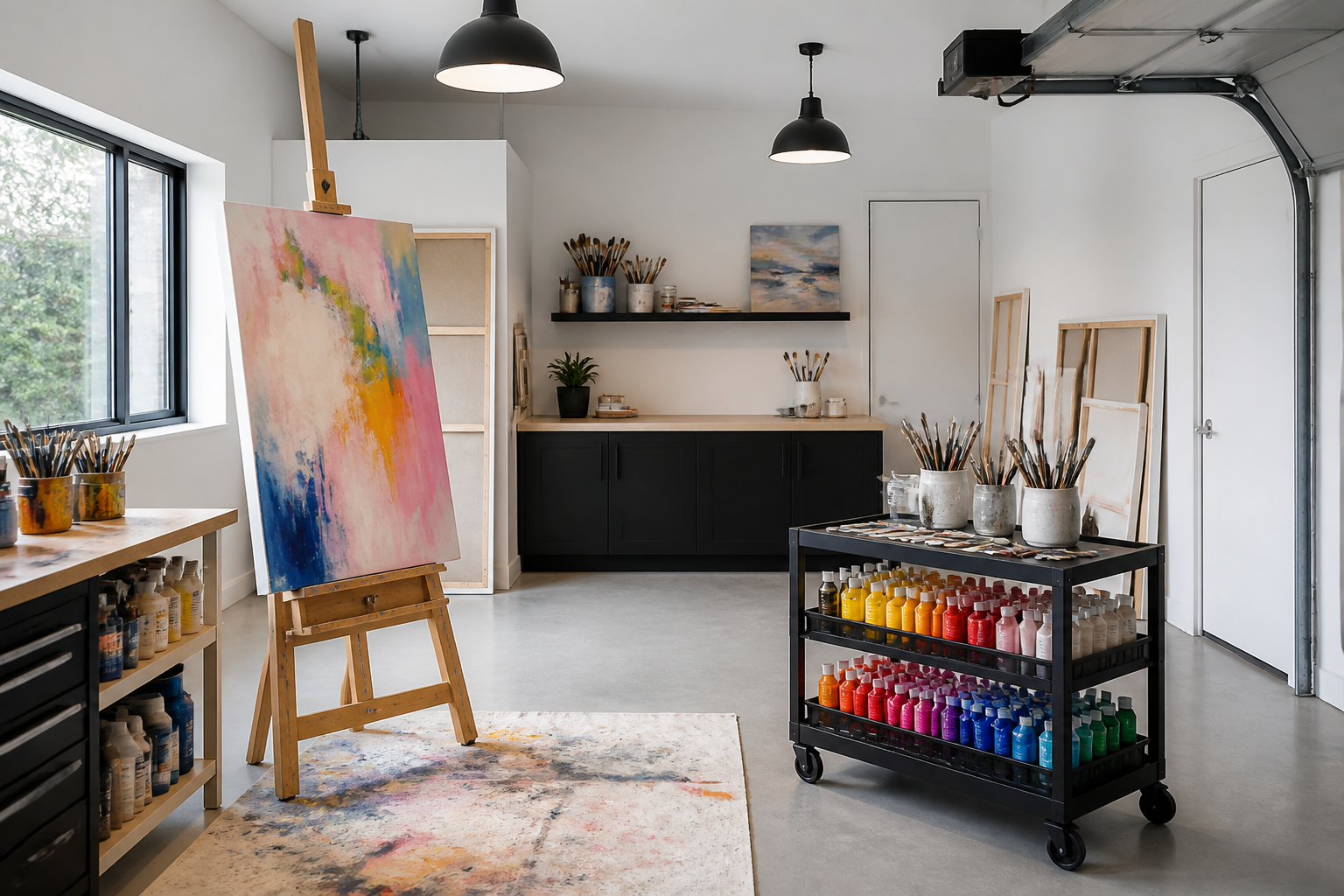
The rolling paint cart keeps supplies mobile so you can work at different angles without losing your flow. Natural window light helps you see colors accurately during daytime sessions, while industrial pendants provide bright task lighting. The sealed concrete floor handles paint spills without damage and cleans up easily.
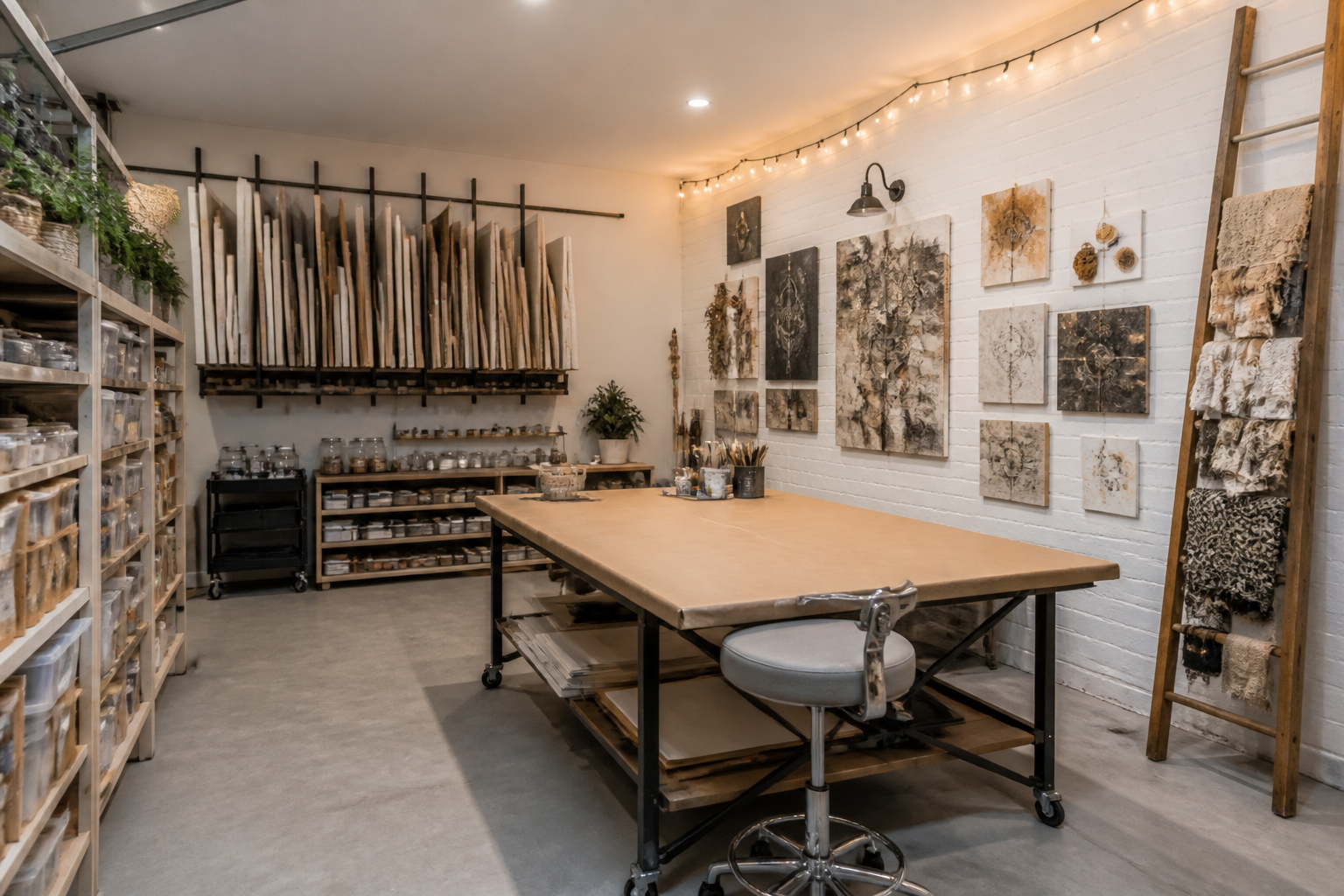
Open shelving displays found objects and materials that inspire new combinations and techniques. The wall-mounted drying rack holds multiple projects at once, which speeds up your workflow when you’re working in series. String lights add warmth and make the space feel more like a studio than a garage.
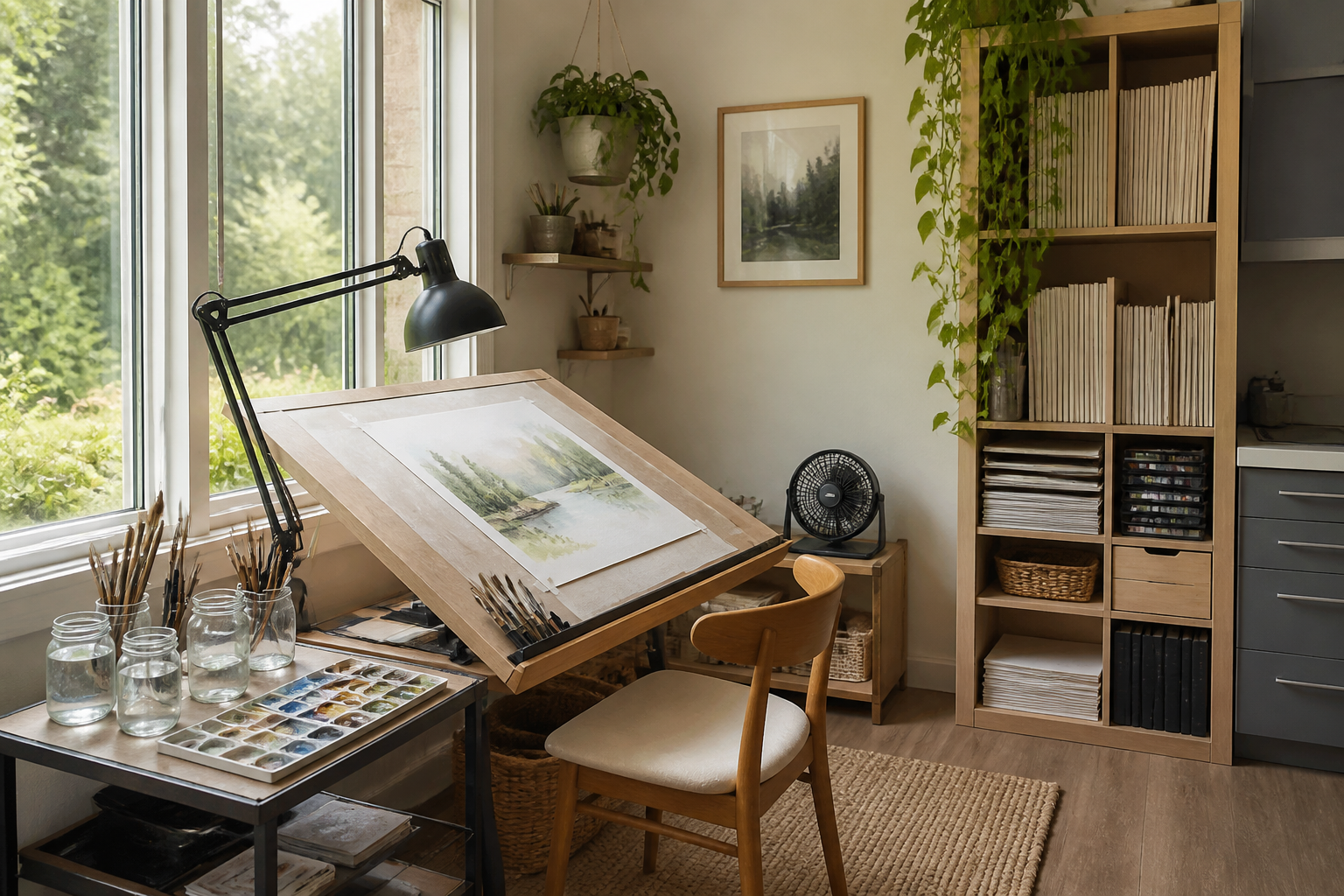
The tilted desk angle works perfectly for watercolor techniques while the window position provides consistent north light that doesn’t shift dramatically throughout the day. A small fan speeds drying time between layers without taking up valuable desk space. If your garage gets cold in winter, you might want to check out insulation options to keep your creative space comfortable year-round.
Yarn and Fiber Arts
Knitters, crocheters, and fiber artists need dedicated storage for yarn that protects it from moisture, pests, and tangles while keeping it visible and inspiring. Garages offer the space for comfortable seating, good lighting, and enough room to spread out knitting patterns or block finished pieces. Temperature and humidity control become important considerations since yarn can absorb moisture and develop musty odors in damp conditions. Creating a cozy atmosphere in your garage craft room helps balance the functional storage needs with a comfortable creative environment.
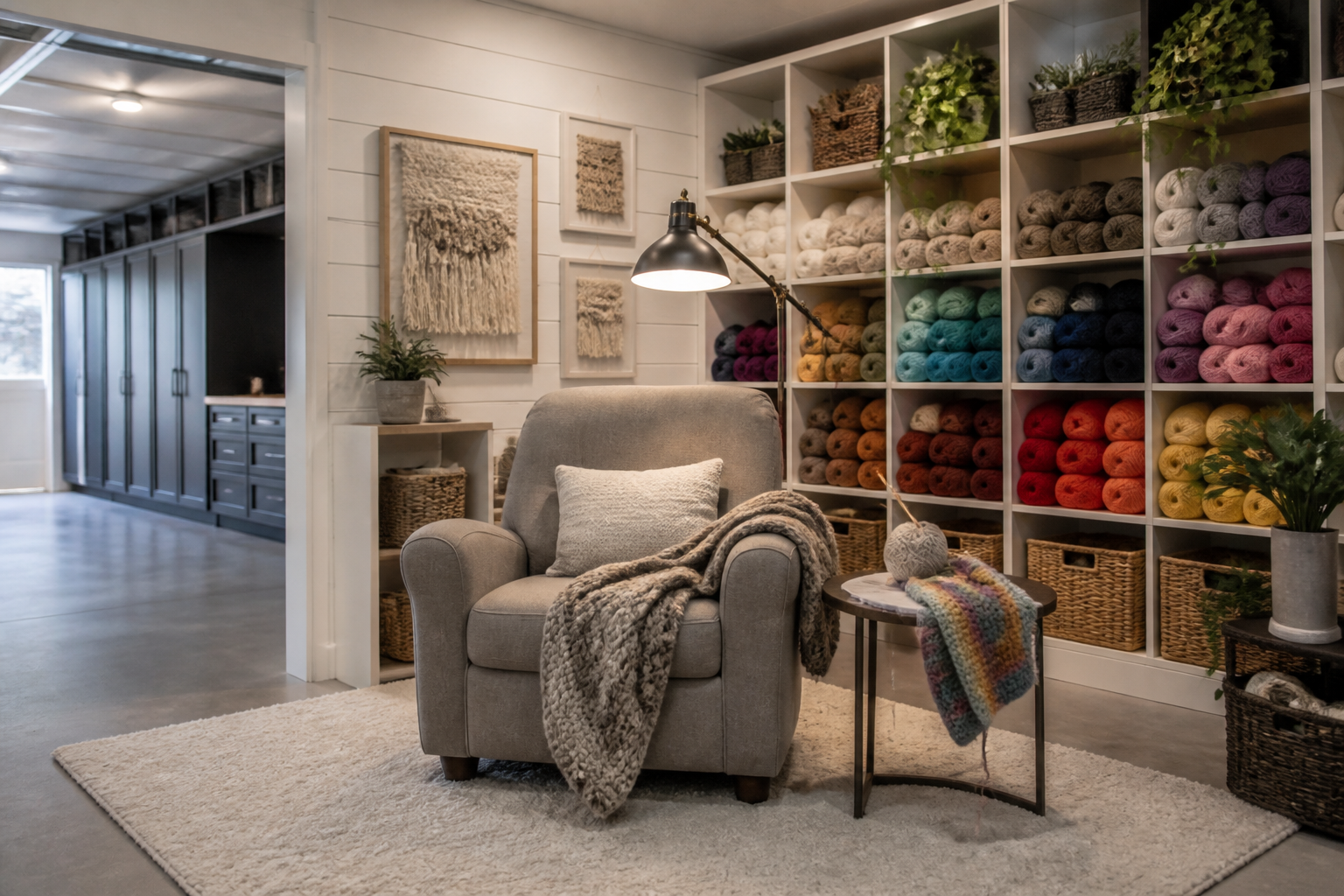
Rainbow-organized yarn cubbies turn your stash into wall art while making it easy to find the perfect color for any project. The comfortable armchair supports long knitting sessions with proper back support and armrests at the right height. Adding wall panels behind the shelving creates a finished backdrop that makes the space feel intentional and designed.
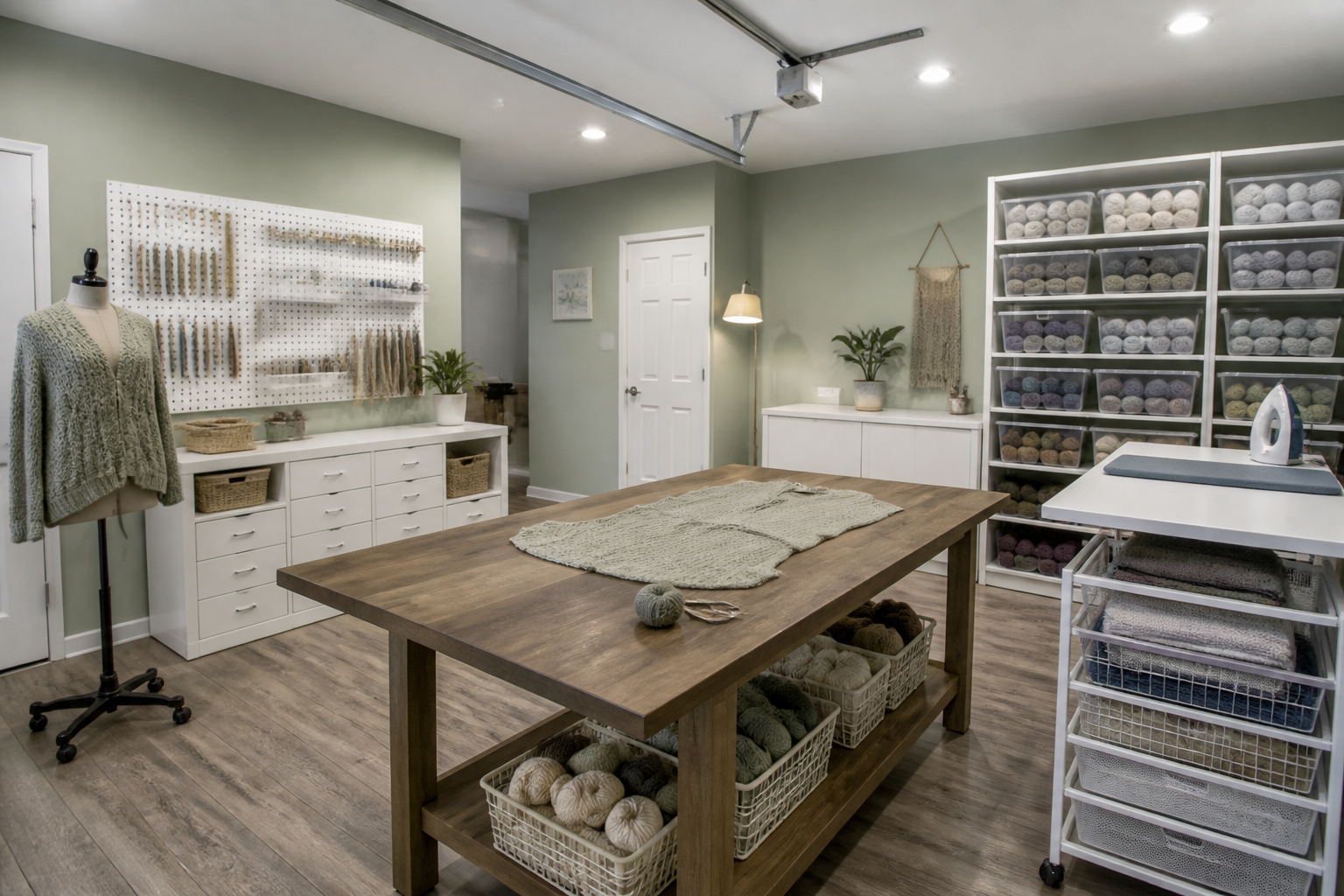
The farmhouse table provides a large flat surface for blocking finished pieces and seaming sweaters without cramping your workspace. Pegboard organization keeps needles sorted by size where you can grab them instantly without digging through drawers. The dress form lets you check fit as you work, which prevents sizing mistakes on custom garments.
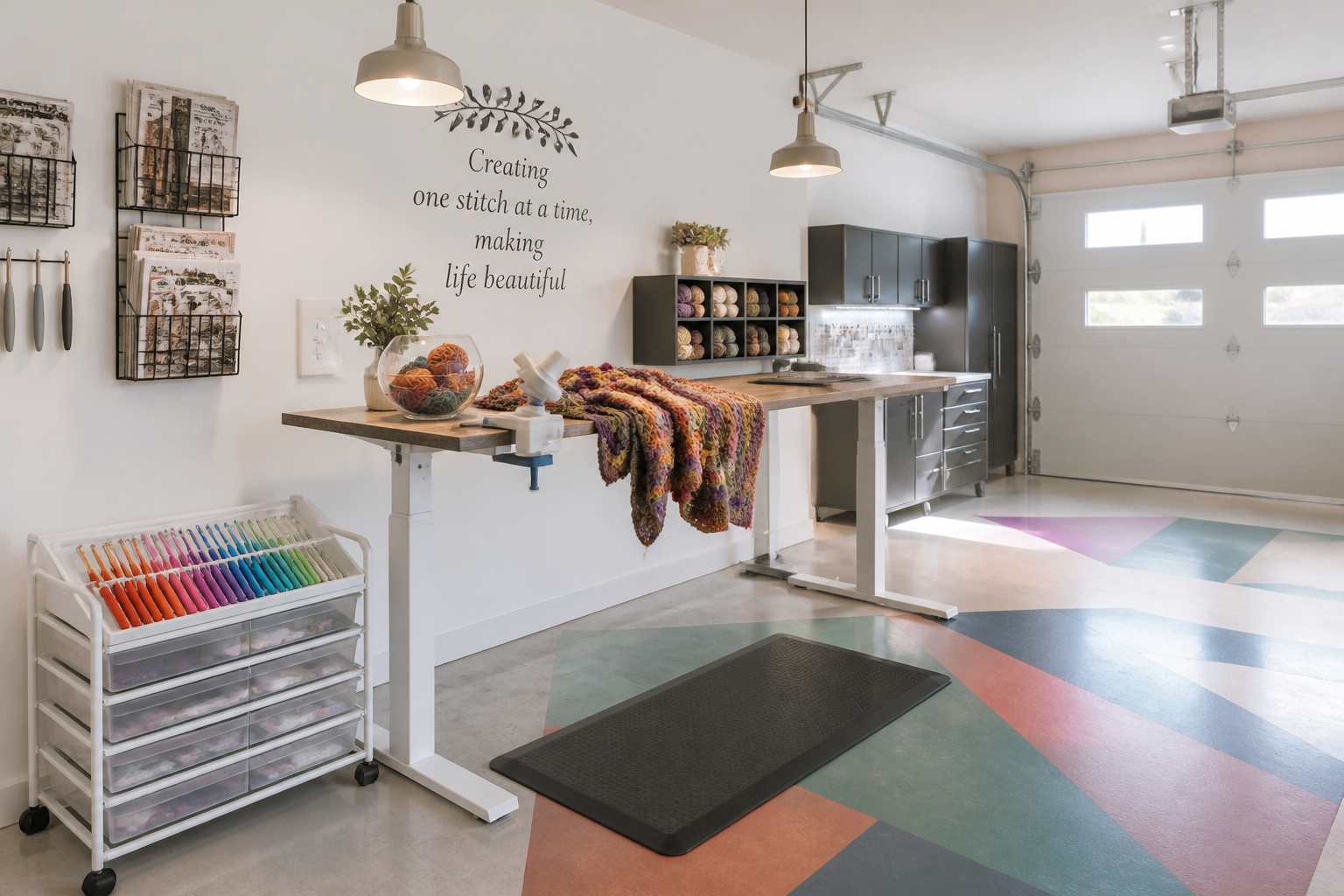
The standing desk option helps you stay comfortable when working on large projects that require constant movement and repositioning. A mounted yarn winder makes it easy to wind hanks into center-pull balls without chasing yarn across the room. The anti-fatigue mat cushions your feet during long standing sessions.
Organized Supply Walls
No matter what type of crafting you do, an organized supply wall keeps everything visible, accessible, and under control. These walls combine multiple storage solutions like shelving, pegboard, magnetic strips, and containers to create systems that actually work for your specific crafts. The key is matching storage to the supplies so small items don’t get lost and large items don’t waste space. A well-planned supply wall also grows with your hobby, letting you add storage as your collection expands without starting over from scratch.
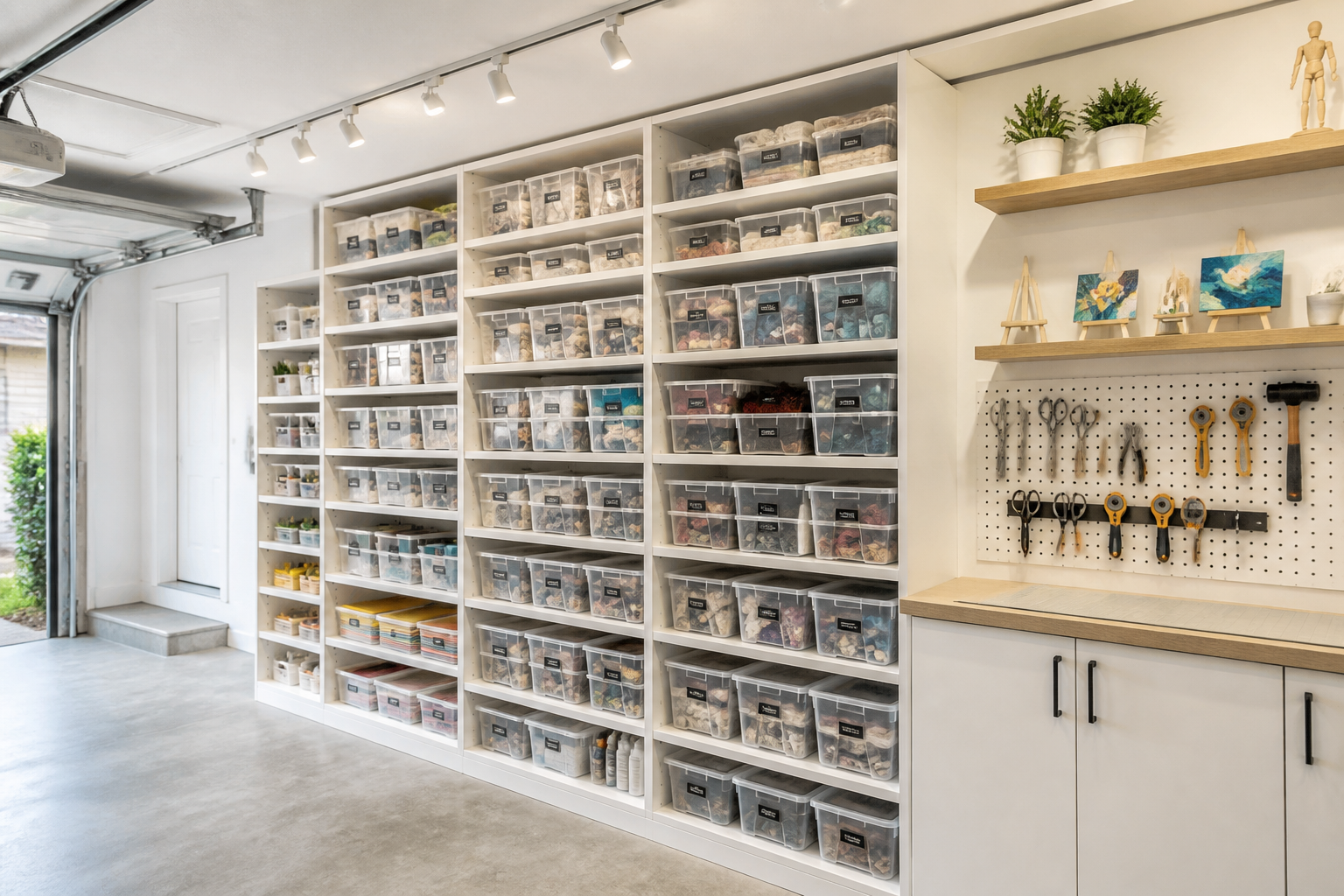
Modular cube systems adapt to changing needs by letting you rearrange bins and add sections as your supplies grow. The combination of pegboard and shelving handles both hanging tools and boxed supplies in one unified system. Chalkboard labels make it easy to update organization as your storage needs evolve.
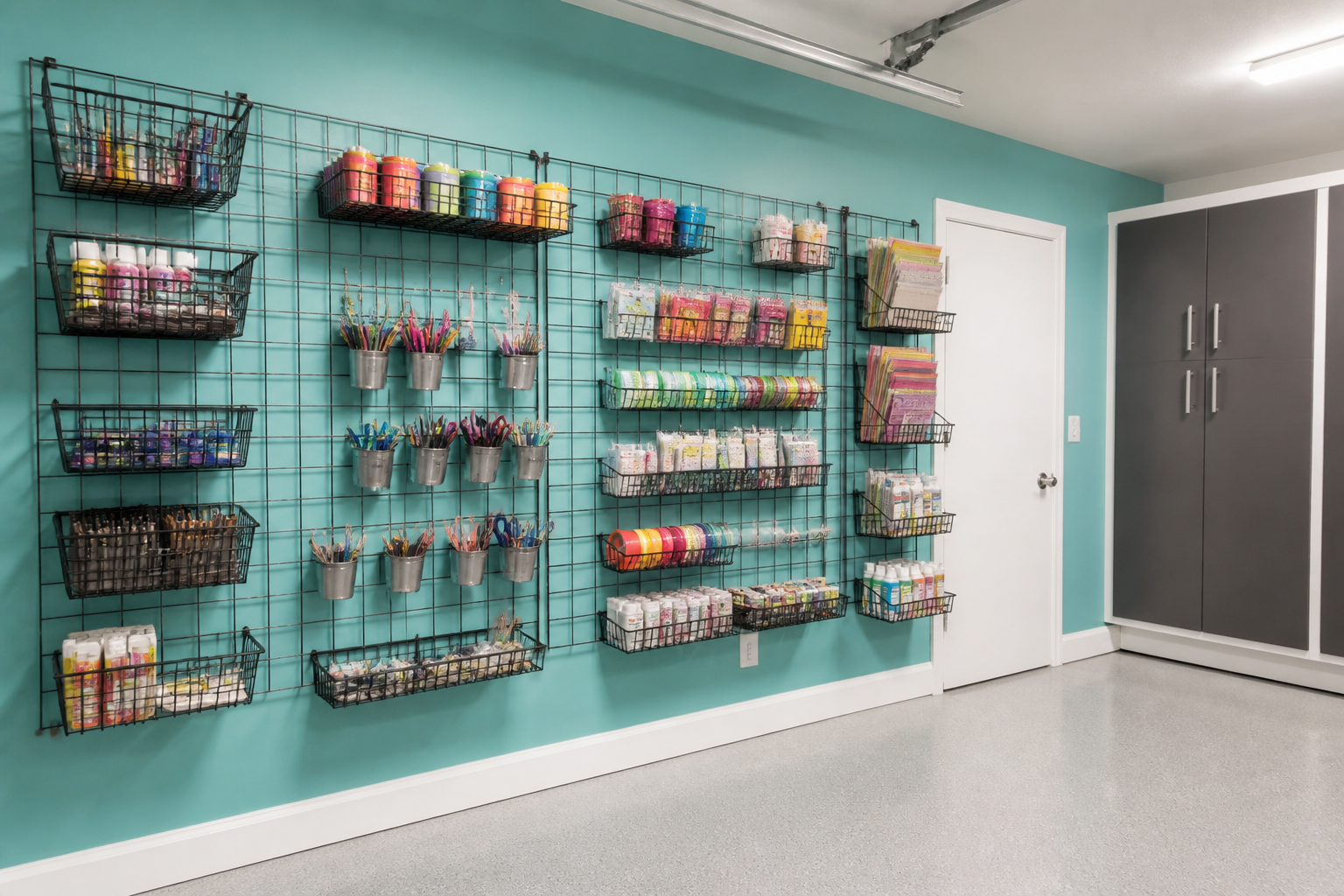
Wire grid systems offer incredible flexibility because every hook and container can be repositioned without tools or new holes. The open design keeps everything visible so you never forget what supplies you have on hand. Magnetic containers attach securely while staying completely removable when you need to reorganize.
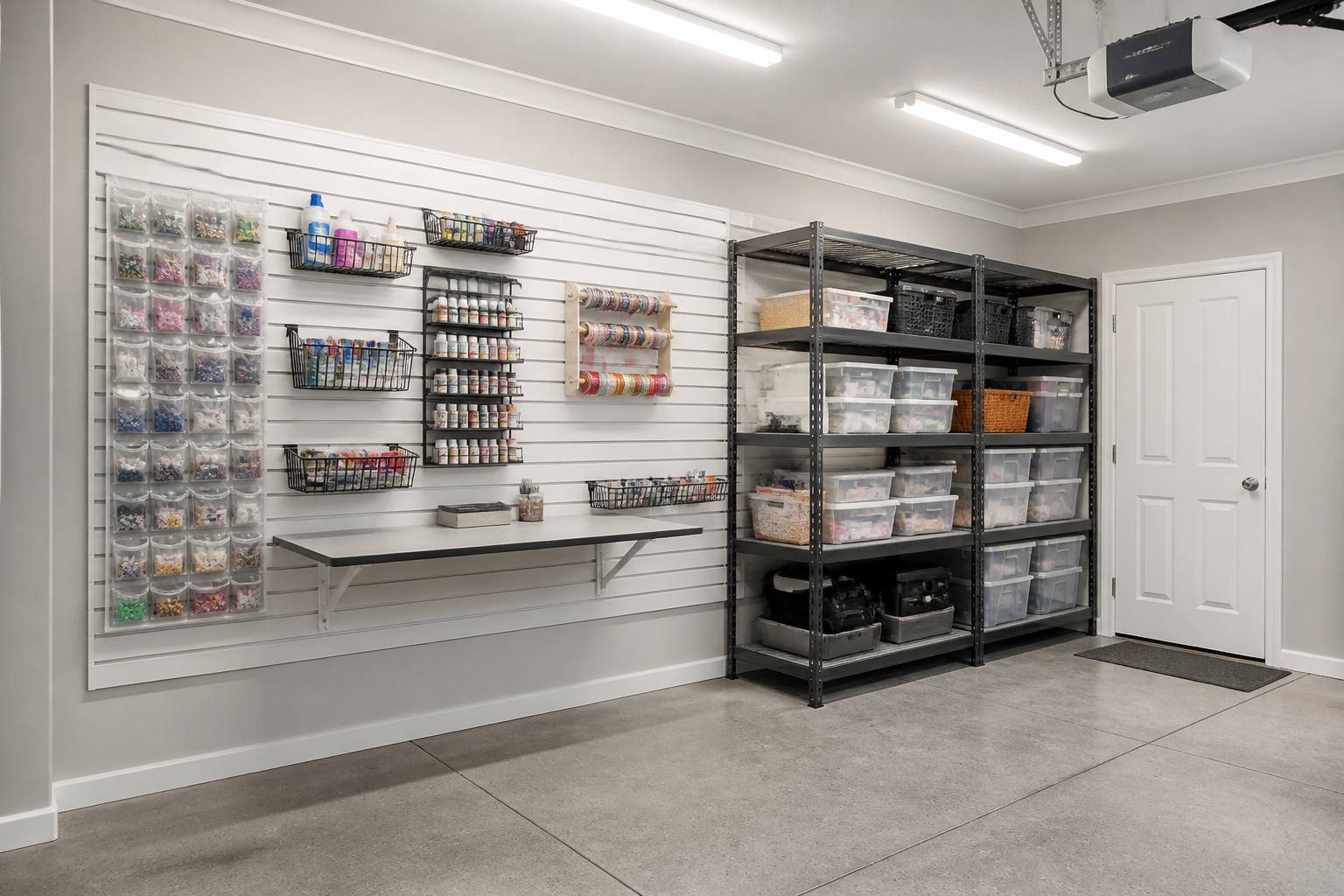
Slat wall systems give you the same flexibility as pegboard but with a cleaner, more finished appearance. The hanging shoe organizer becomes brilliant small-parts storage with its clear pockets making every tiny item visible. Wall-mounted lazy susans bring spice rack efficiency to craft paint storage.
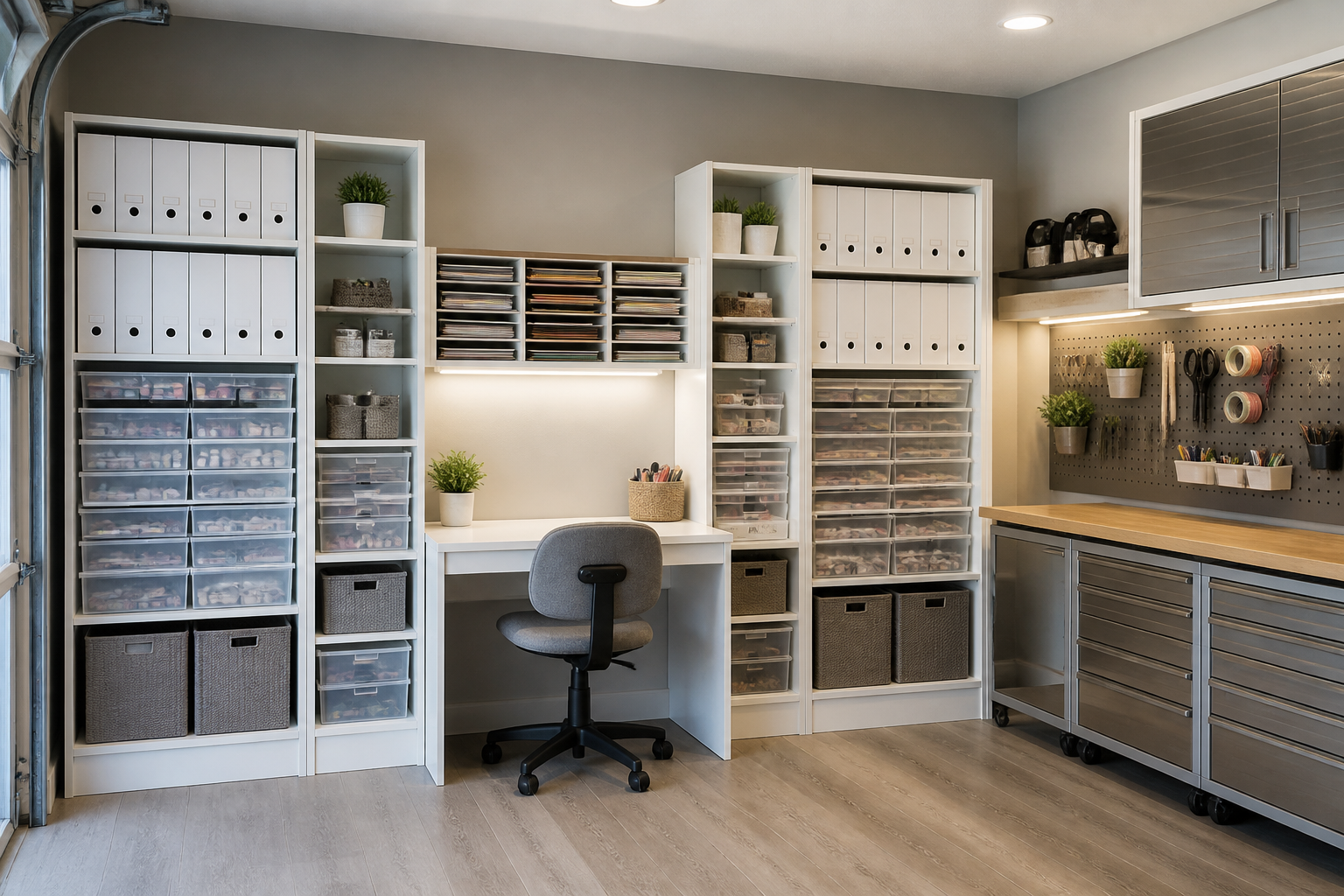
Floor-to-ceiling bookcases maximize vertical storage while maintaining an organized, library-like feel that makes supplies easy to browse. The integrated desk creates a compact workspace that doesn’t require a separate room area. Under-shelf LED lighting brightens deep shelves so you can see everything clearly without pulling bins out to check contents.
