

Your garage ceiling is some of the most underused real estate in your home. I’ve helped dozens of homeowners reclaim floor space by moving seasonal gear, sports equipment, and storage bins overhead. This guide covers three major approaches: overhead rack systems, pulley and hoist storage, and hidden ceiling storage designs.
Overhead Rack Systems
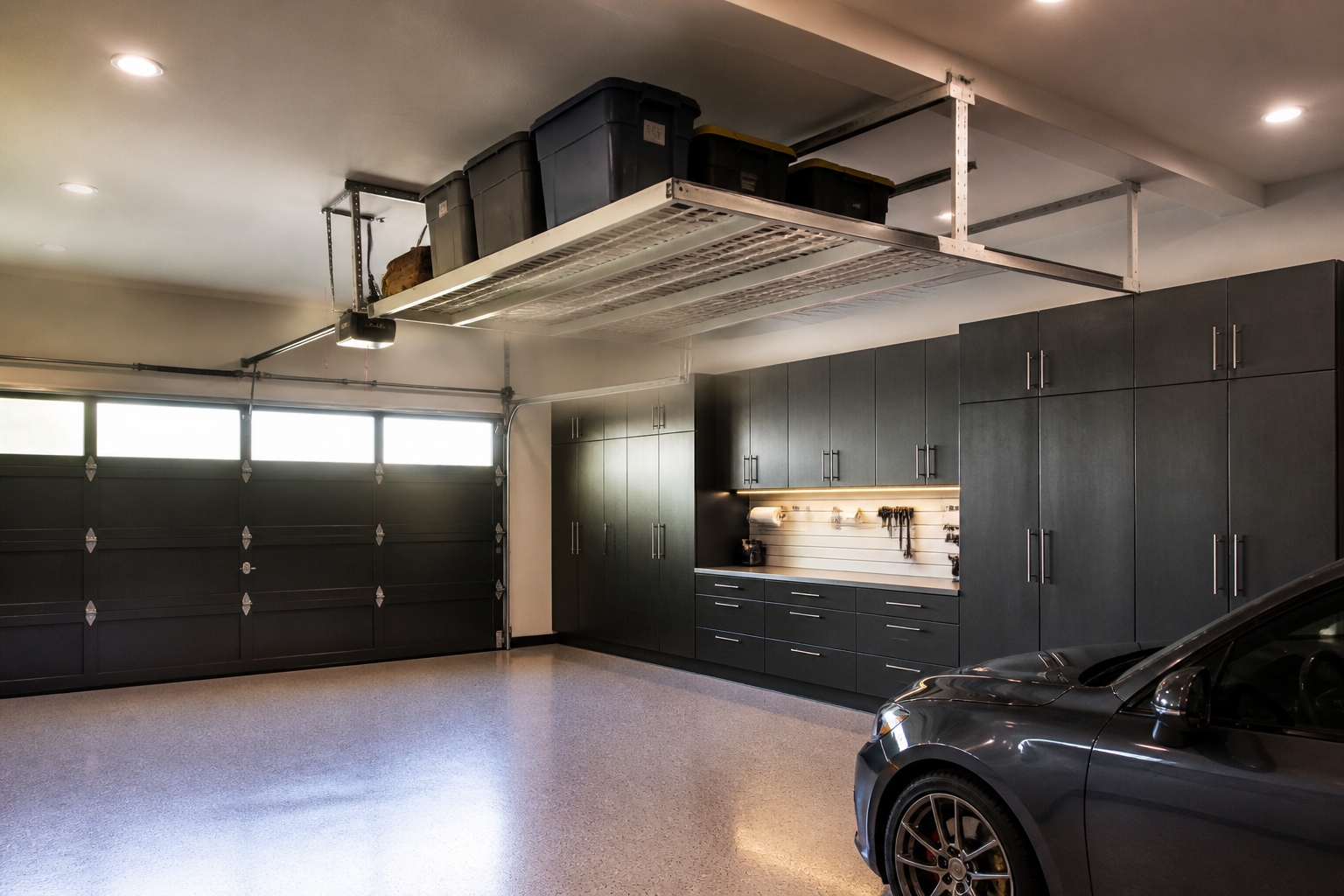
Overhead rack systems are the workhorses of garage ceiling storage ideas. These platforms bolt directly to your ceiling joists and create a suspended shelf anywhere from 16 to 40 inches below the ceiling line. I installed my first overhead rack about eight years ago and immediately freed up enough floor space to park both cars inside. Most racks handle 300 to 600 pounds, making them perfect for storage bins, camping gear, and holiday decorations. If you’re working with limited square footage, small garage organization starts by getting everything possible off the floor.

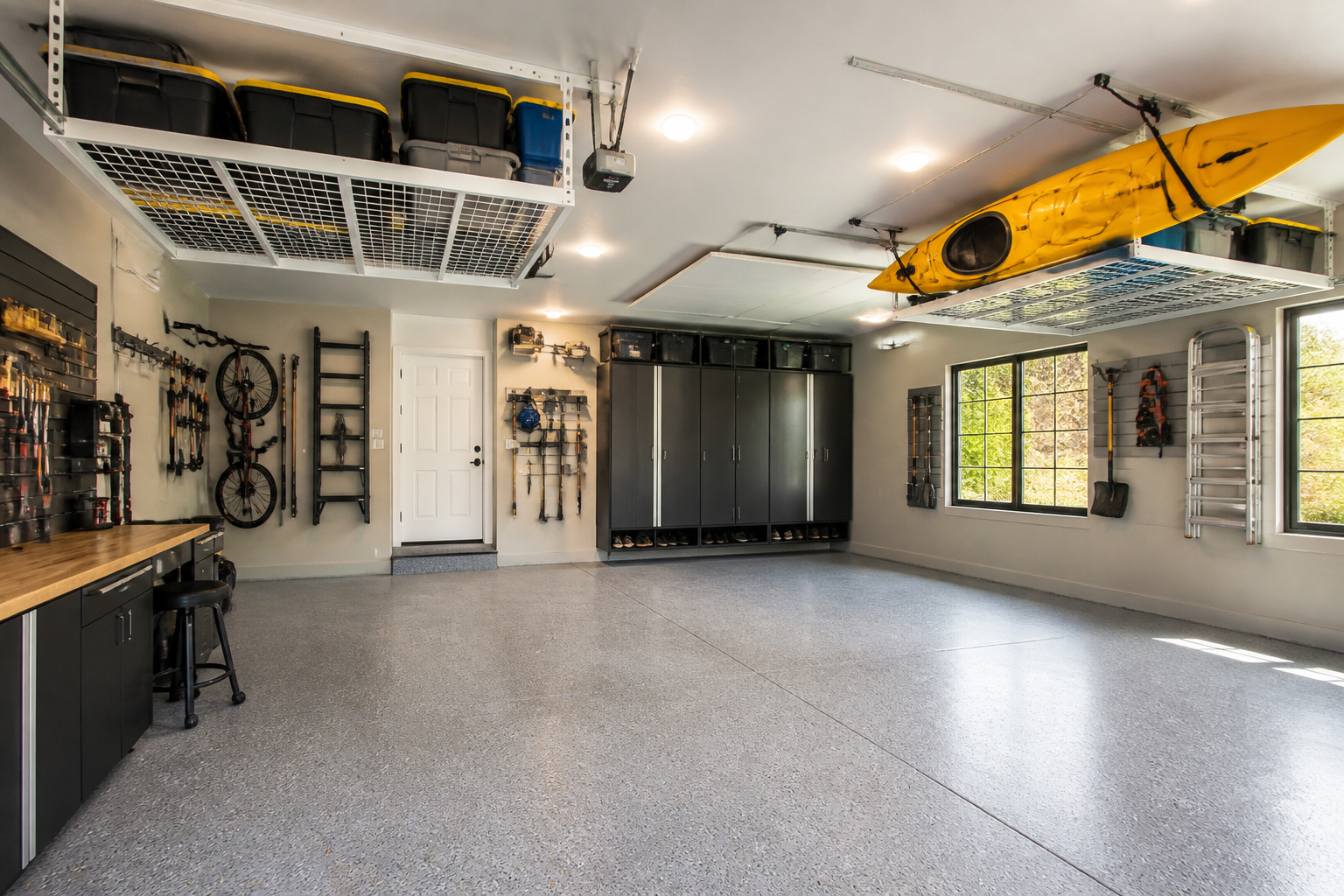
These white powder-coated racks span the width of a two-car garage and hold about a dozen clear bins. The finish matches the wall color and creates a clean, unified look. Mounting to ceiling joists ensures the weight is properly distributed across the structure.
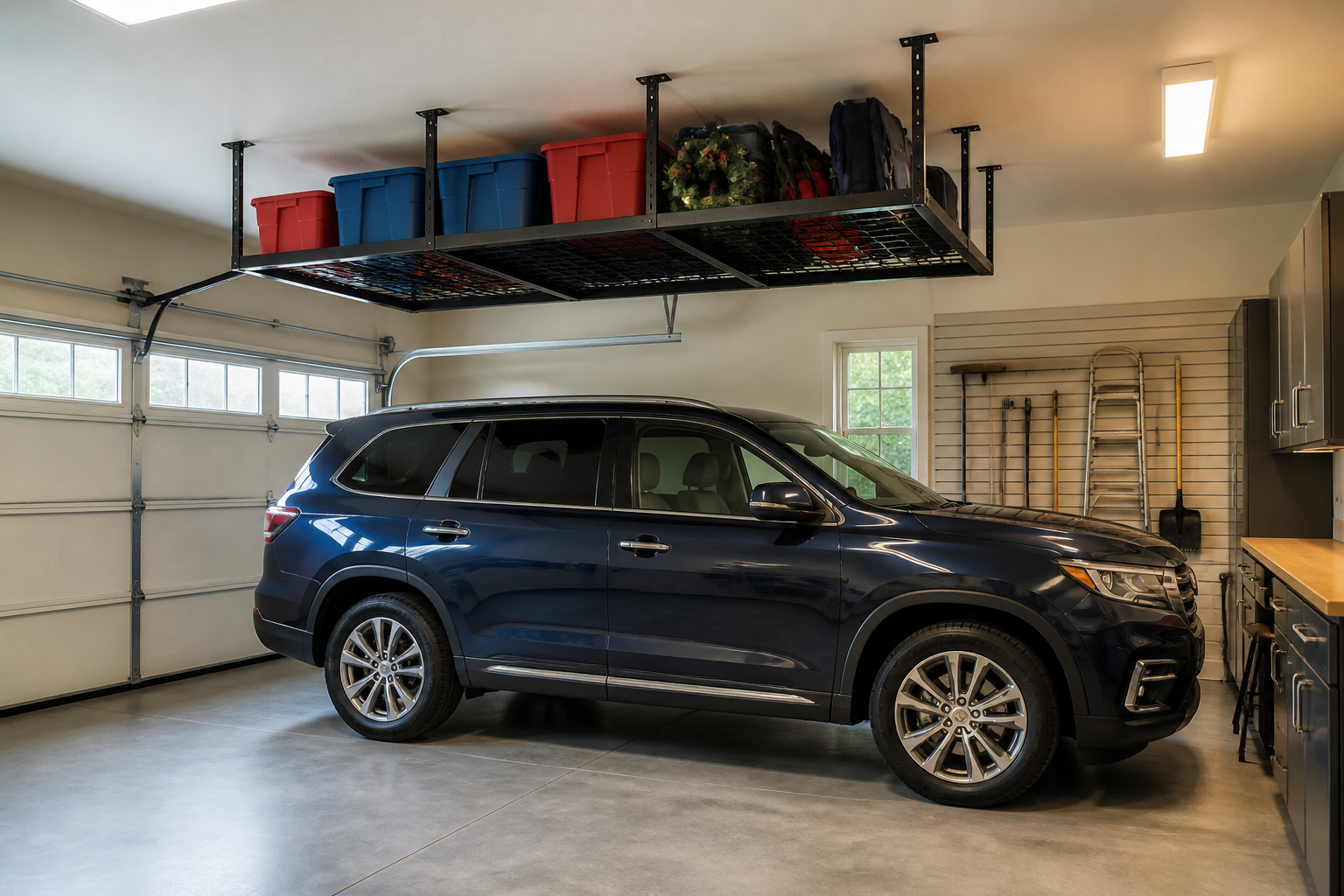
This rack sits high enough to clear an SUV with a roof rack, leaving about 18 inches of clearance. The black finish disappears against the shadows, making the storage feel less intrusive. For sizing and weight capacity details, check out the best garage ceiling storage racks buyers guide.
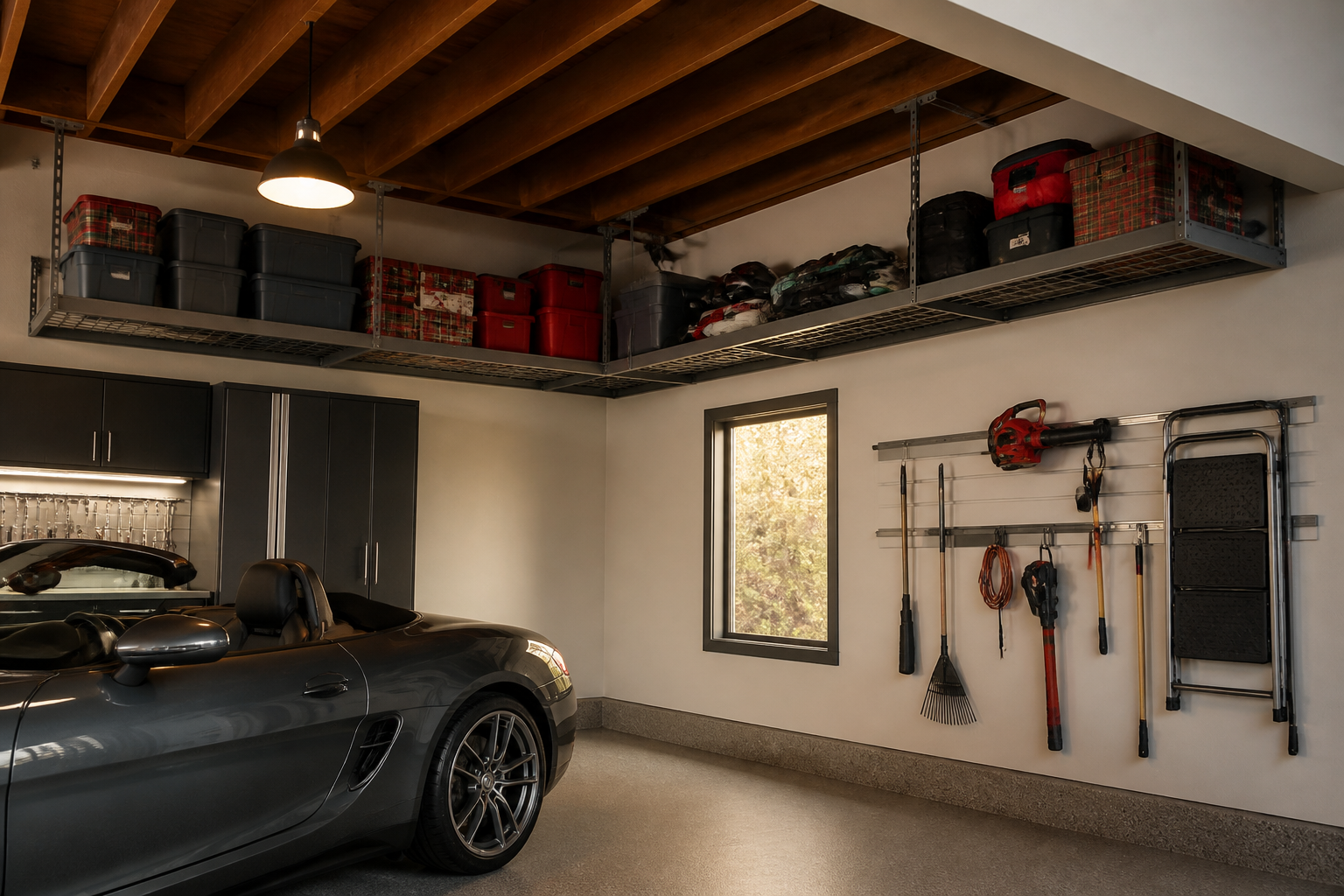
An L-shaped configuration makes use of corner space that’s often wasted. This setup works well when you need multiple zones for different categories of gear. The exposed joists give you visible confirmation that everything is anchored properly.
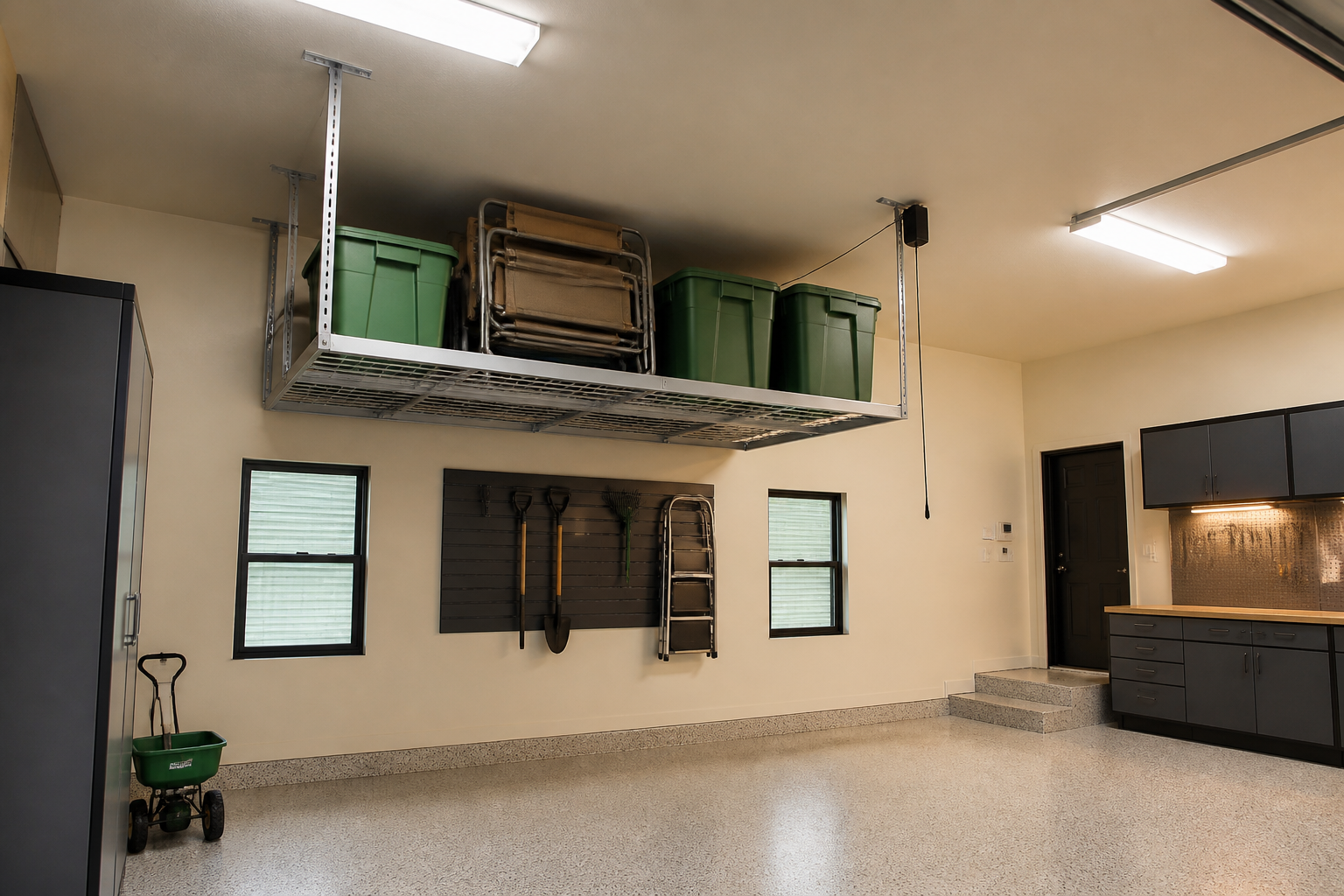
Adjustable racks let you change the height as your needs evolve. This one drops low enough to load easily but can be cranked up tight to the ceiling once filled. The crank mechanism lives on the side wall for quick access.
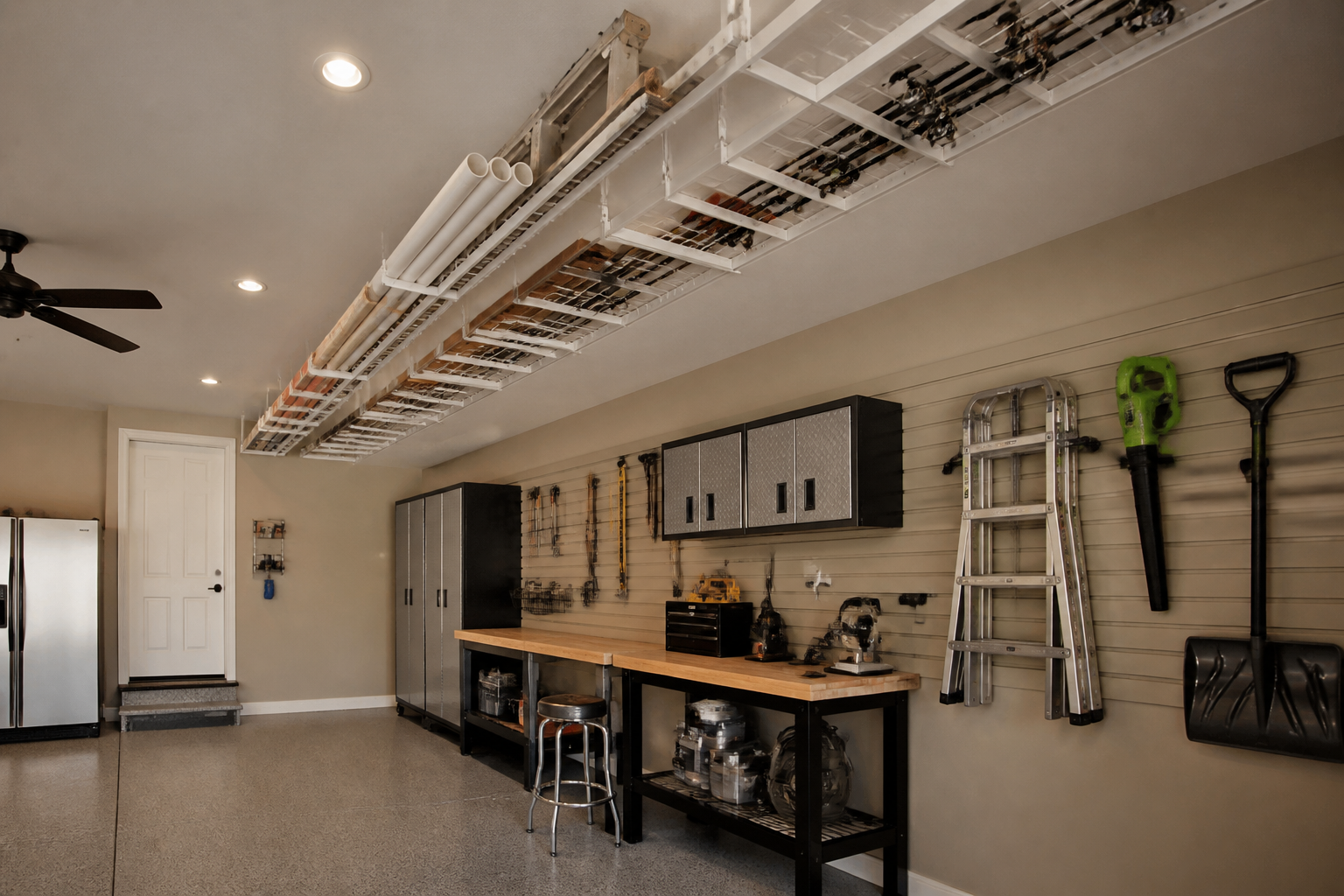
Narrow racks work better than one wide platform when you’re storing long, awkward items. Each rack can be dedicated to a specific category: lumber, fishing gear, or seasonal decorations. If you’re storing rods and tackle, the complete guide to garage fishing rod and tackle storage has more specialized options.
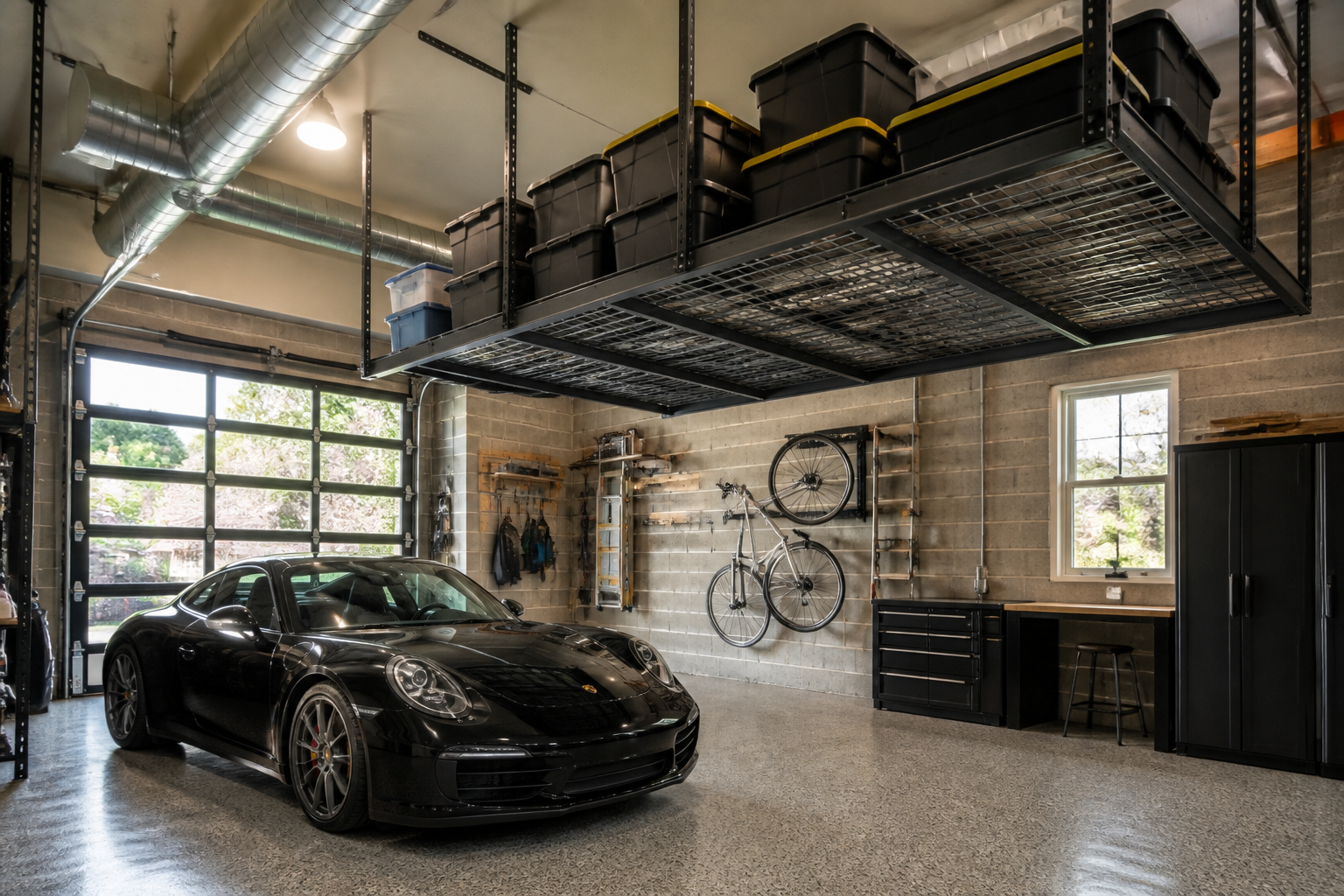
Wire grid decking allows air circulation and lets you see what’s stored from below. This industrial-grade setup handles serious weight and looks at home in a workshop-style garage. The open grid design also prevents dust buildup on top of the rack.

Built-in lighting transforms overhead storage from a dark cave into a visible, accessible system. The LED strips mount to the underside of the rack and illuminate both the stored items and the garage floor below. This design makes midnight trips to grab something actually pleasant.
Pulley and Hoist Storage
Pulley and hoist systems let you lift heavy or bulky items to the ceiling and lower them when needed. I use a hoist for my kayak and another for seasonal tire sets, and both have been absolute game changers. These systems shine when you’re dealing with items that are too heavy to lift overhead or too large to wrestle onto a fixed rack. Most mechanical hoists handle 200 to 400 pounds, while motorized units can lift even more. Before installing any hoist, make sure you understand how much weight you can hang from your garage ceiling.
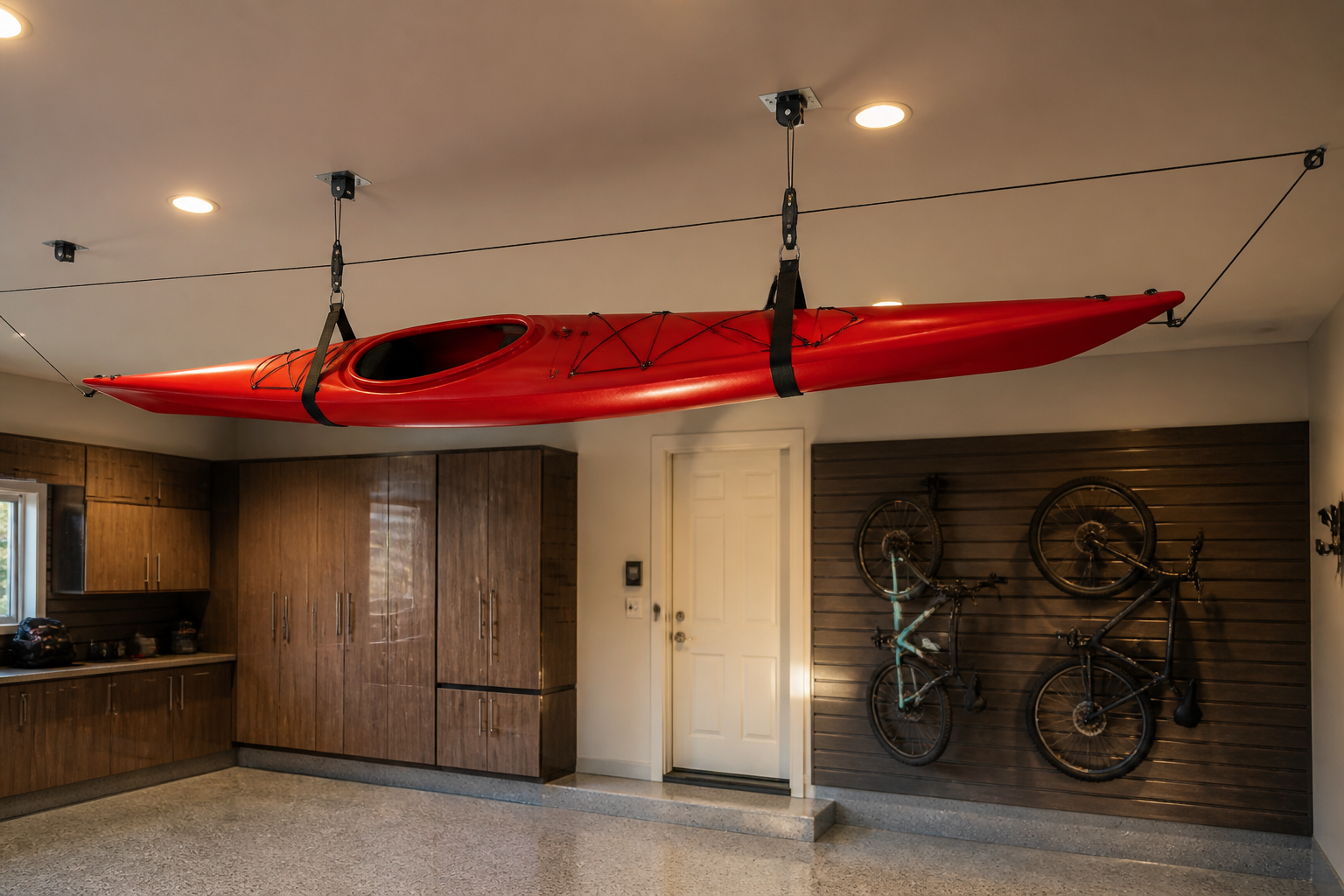
A four-point hoist keeps the kayak level and stable while it’s suspended. The ropes run through pulleys mounted to ceiling joists and terminate at wall-mounted cleats for easy tie-off. This setup gets a 12-foot kayak completely out of the way between paddling seasons.
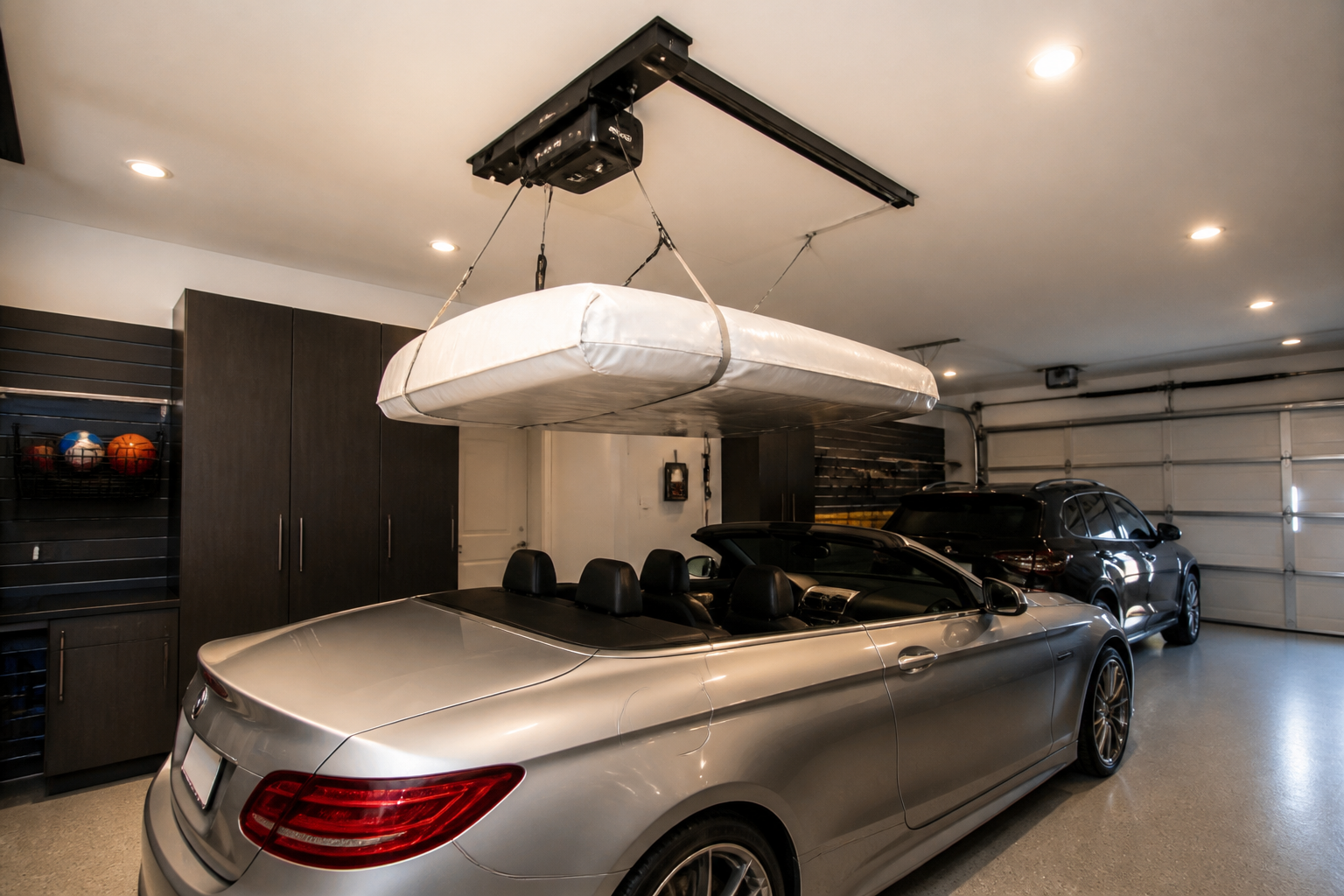
Motorized hoists eliminate the manual cranking and make storage effortless. This one lifts a convertible hardtop with the push of a button on a wireless remote. The protective wrap prevents scratches while the panel hangs overhead all summer.
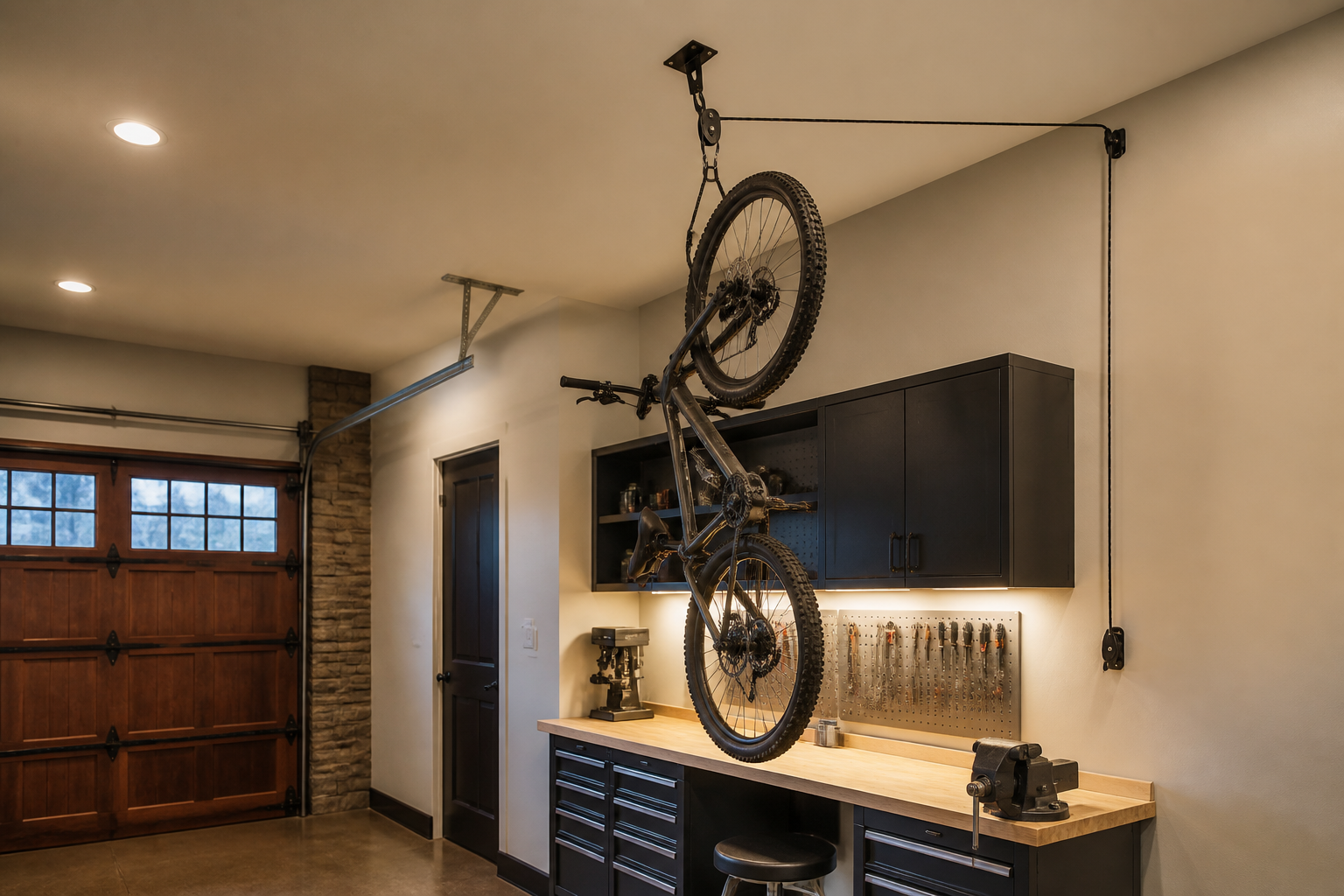
A single-point pulley system works well for bikes when you hang them vertically. The wheel hooks into a cradle, and you hoist it up until it clears head height. For more bike-specific solutions, browse through these garage bike storage ideas.
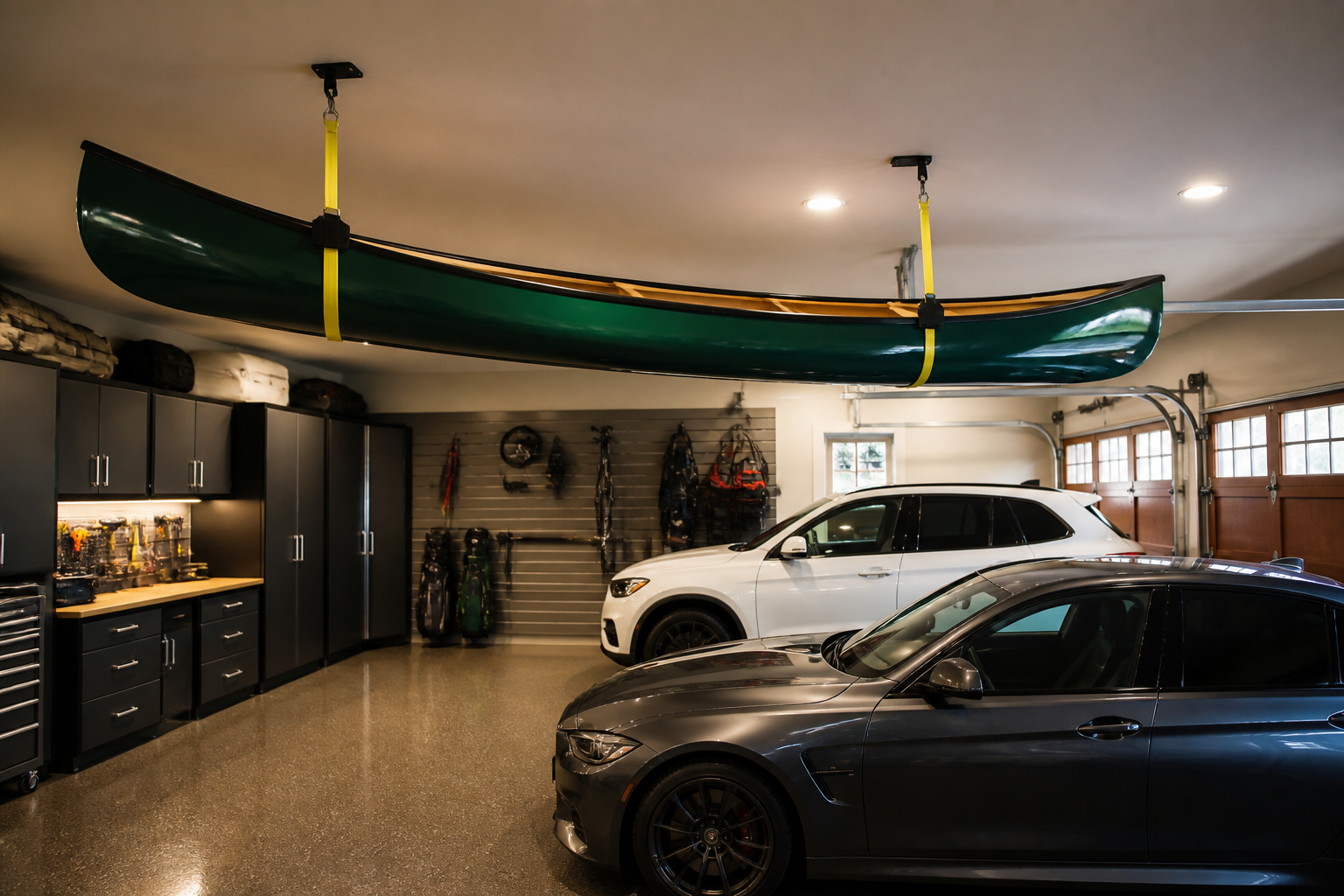
Wide straps distribute the load across the canoe’s gunwales without creating pressure points. This two-point system keeps the canoe balanced and prevents warping during long-term storage. The straps are rated for marine use and won’t degrade in humidity.
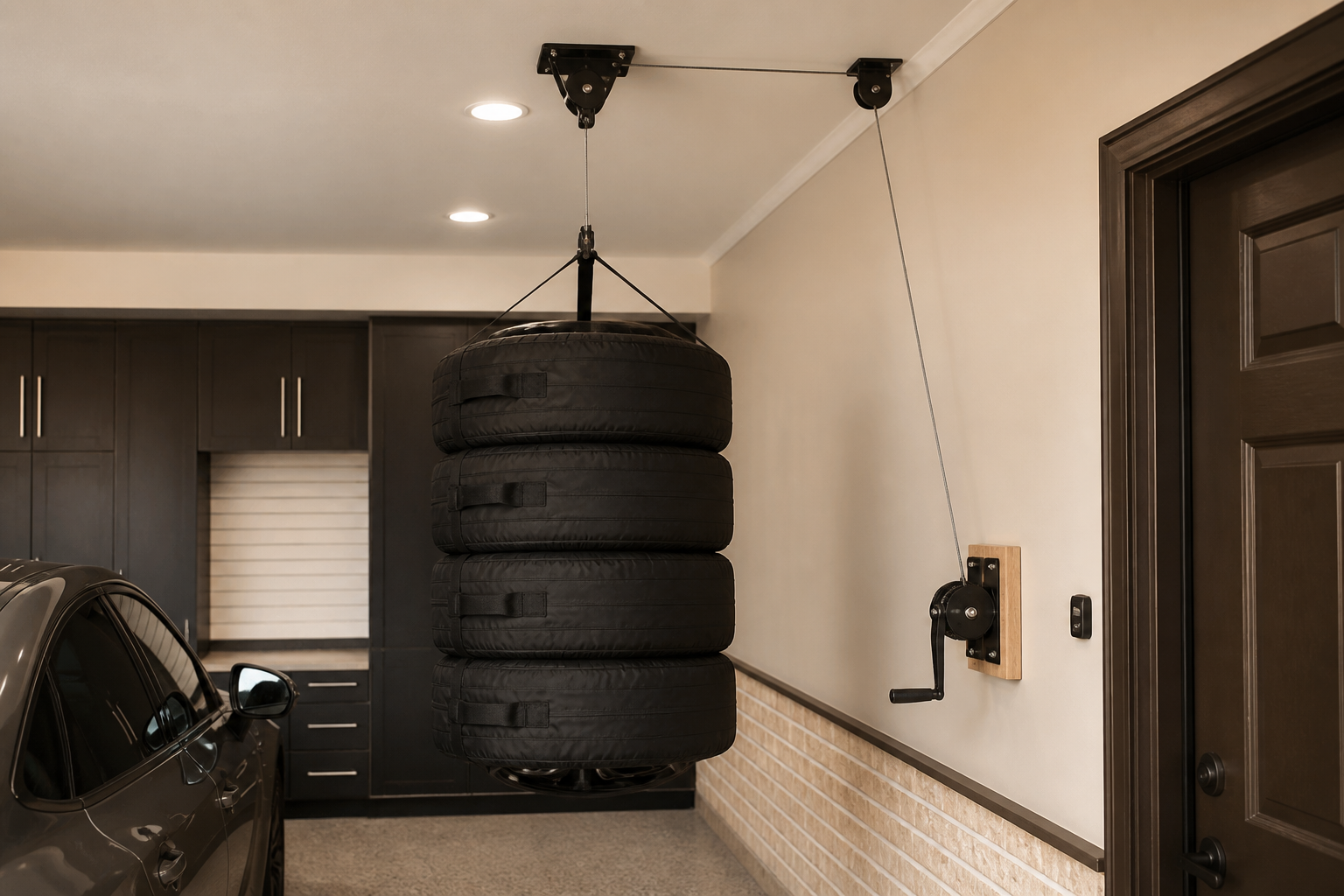
Stacked tires take up enormous floor space but disappear when hoisted to the ceiling. The tire bags keep them clean and protect the tread from dust and UV exposure. If you’re storing multiple sets, the winter tire storage garage organization guide covers dedicated rack options too.
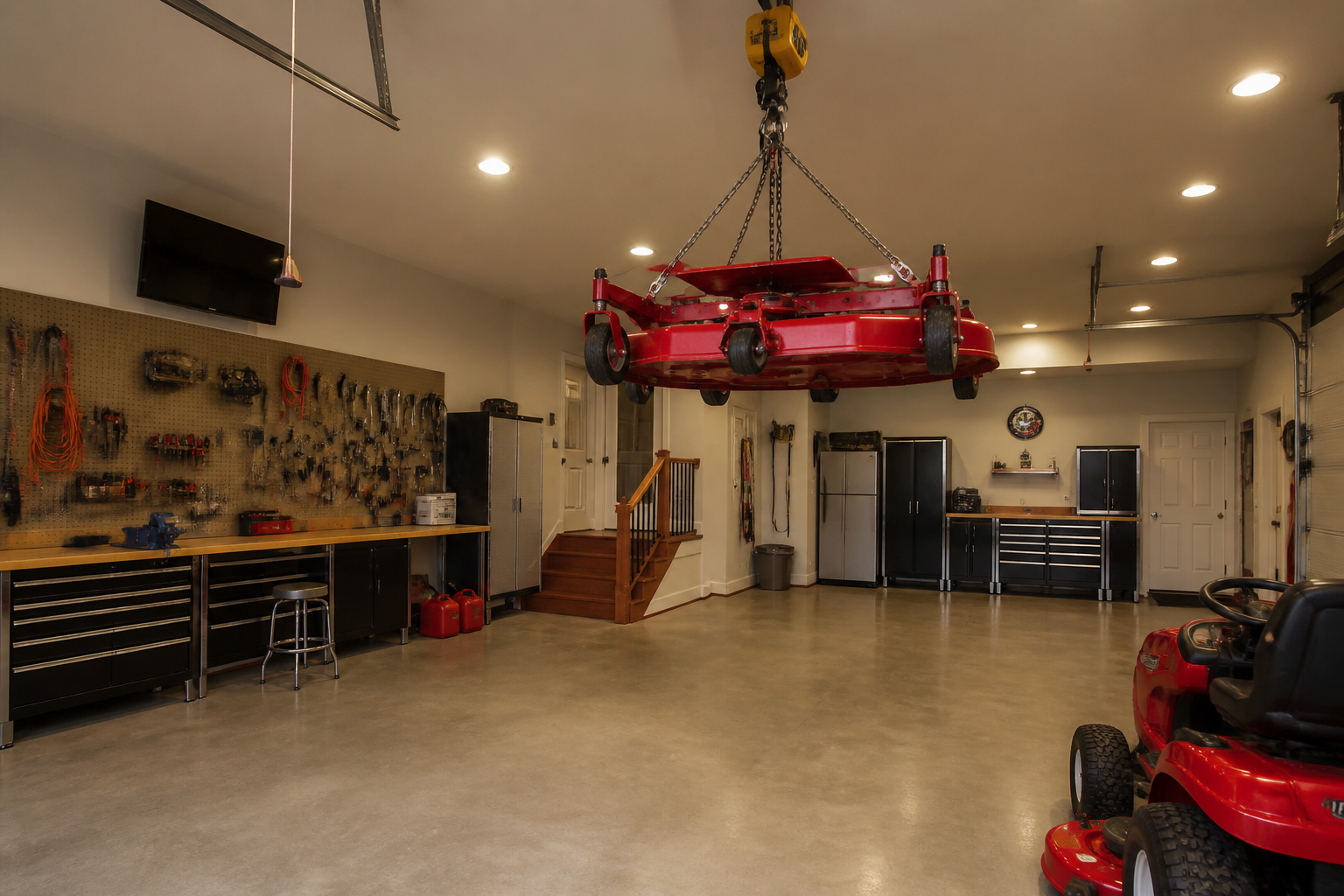
Removing and storing your mower deck makes maintenance easier and reclaims valuable floor space. A chain hoist handles the 100-pound deck with ease and locks in place once raised. The chain won’t stretch or fray like rope might under constant load.
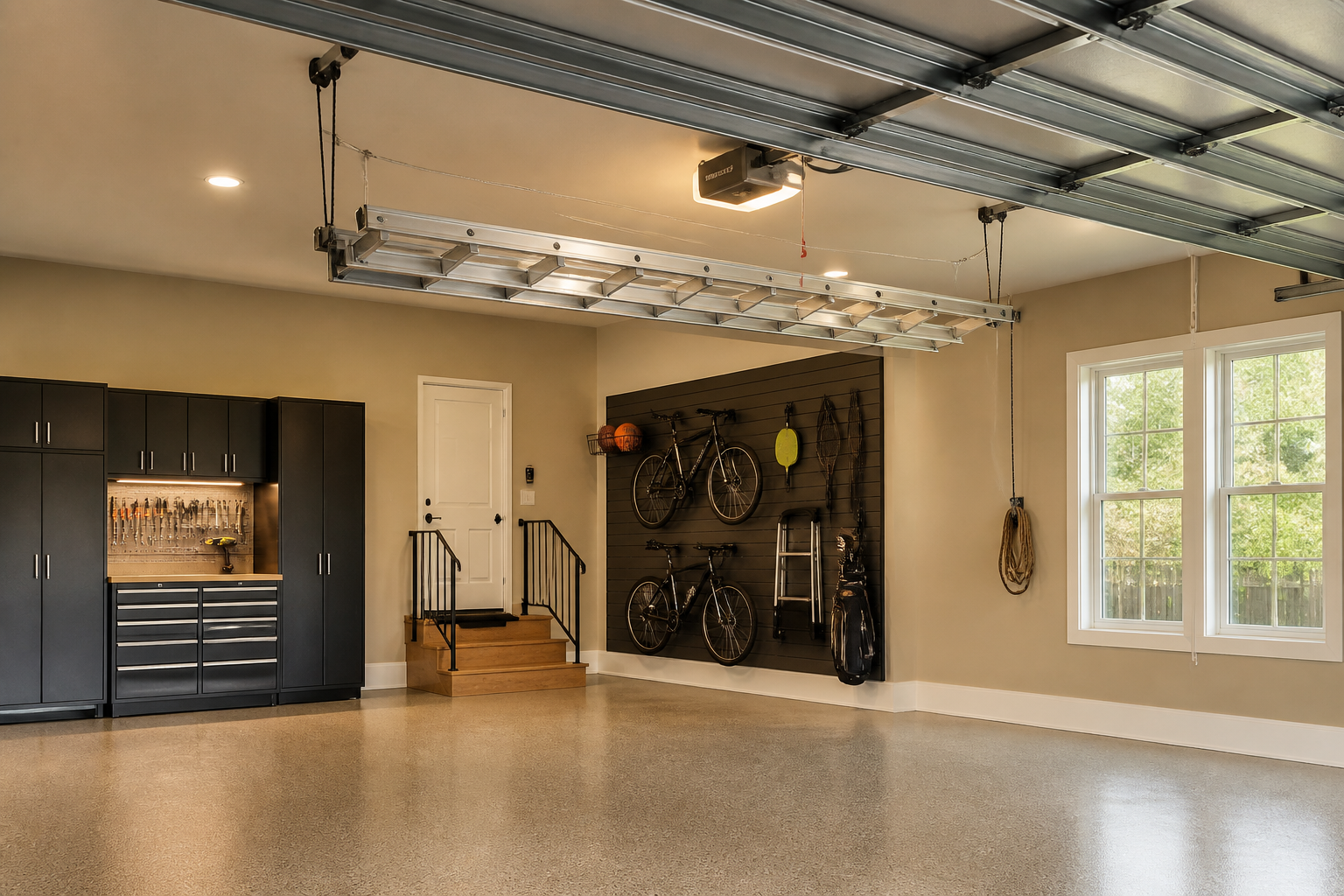
Ladders are awkward to store against walls where they’re always in the way. This horizontal hoist keeps the ladder accessible but completely overhead. When you need it, just uncleat the rope and lower it down. For permanent mounting options, see the best garage ladder storage racks for wall and ceiling mounting.
Hidden Ceiling Storage Designs
Hidden ceiling storage disguises your gear behind finished panels, flush-mount doors, or integrated architectural features. These designs work well when your garage doubles as a workshop, home gym, or entertaining space and you want storage that doesn’t announce itself. I’ve seen recessed ceiling bays that look like they were part of the original construction but actually hold out-of-season gear. The trick is matching your ceiling finish and hardware so the storage blends seamlessly. These solutions take more upfront planning but deliver a cleaner, more finished look than exposed racks.
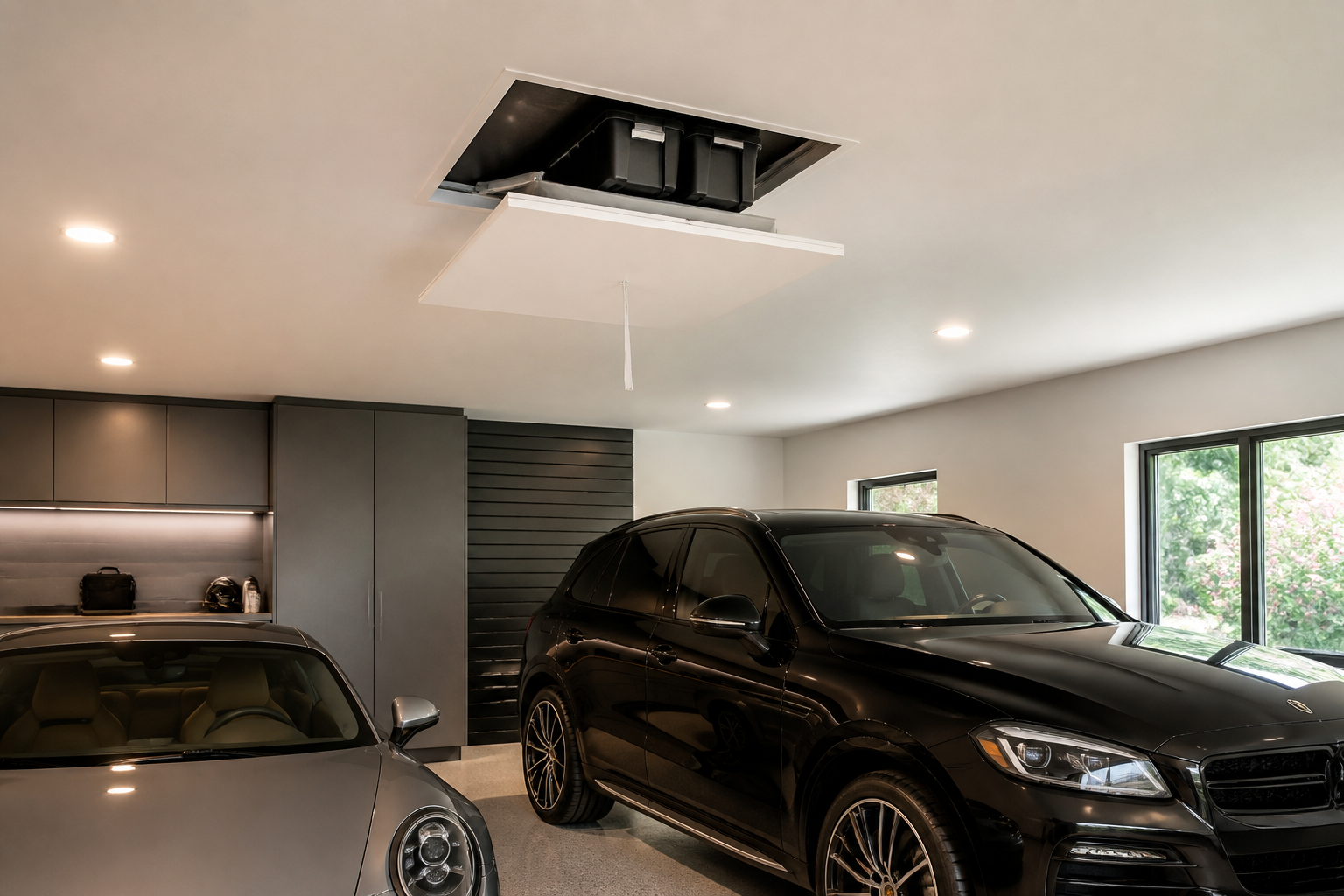
The panel blends so well you’d never know storage existed above. A magnetic touch latch eliminates visible hardware, and the recessed edges create shadow lines that disappear in normal lighting. This works best when you have attic space above the garage.

The sliding panel looks like decorative ceiling detail until you slide it open. The wood-on-wood construction maintains the warm, finished look of the space. If you’re planning a wood ceiling project, start with how to install a garage tongue and groove ceiling.

The boxes nestle between joists and use the structural bays as natural compartments. Each hinged lid drops down for access, then closes flush with the joist bottoms. This design adds storage without lowering the ceiling height or adding visual clutter.
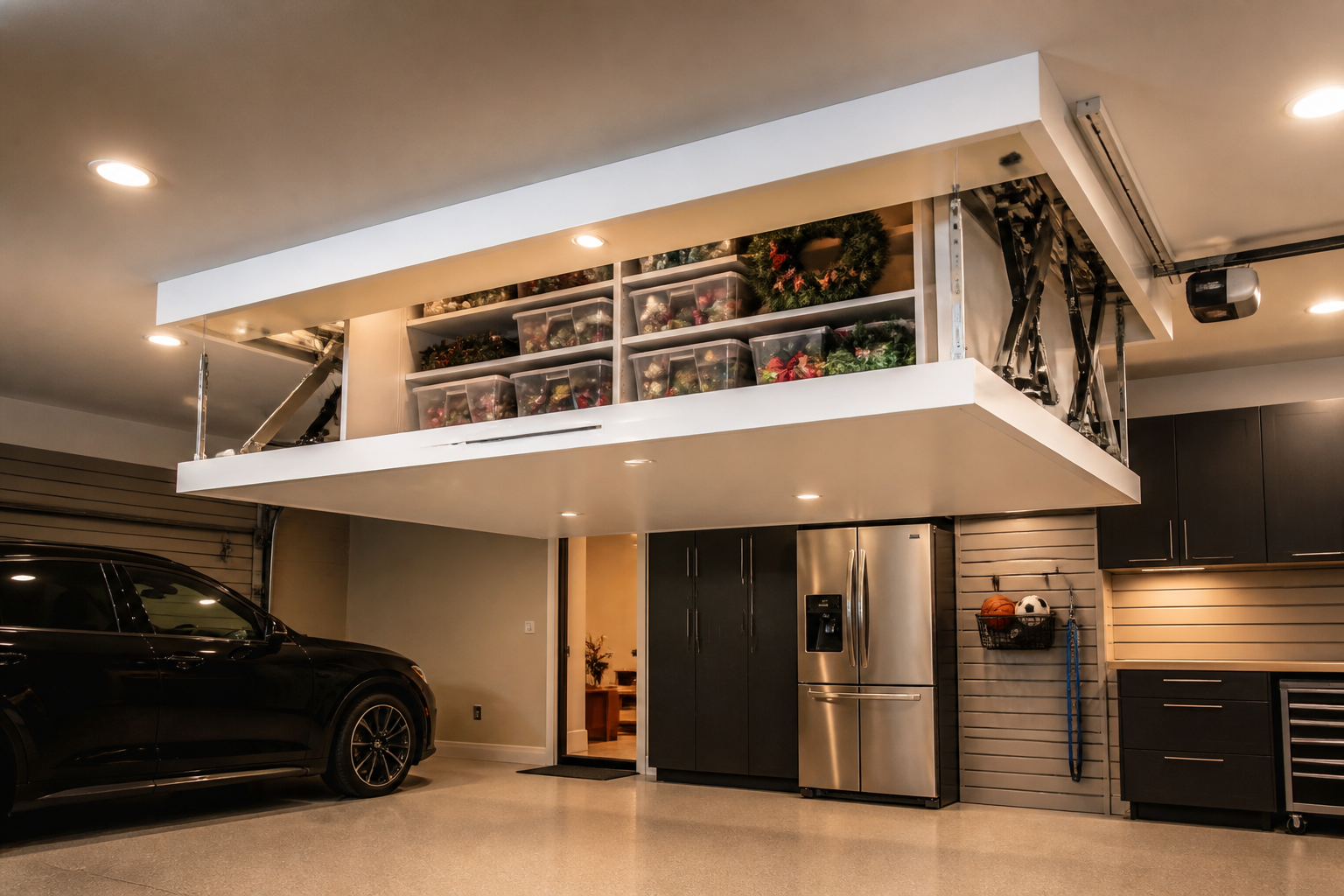
Hydraulic arms lower the entire storage unit for easy access, then lift it back flush with the ceiling. The motorized mechanism means no ladders or awkward reaching. This design costs more to install but delivers convenience that feels almost futuristic.
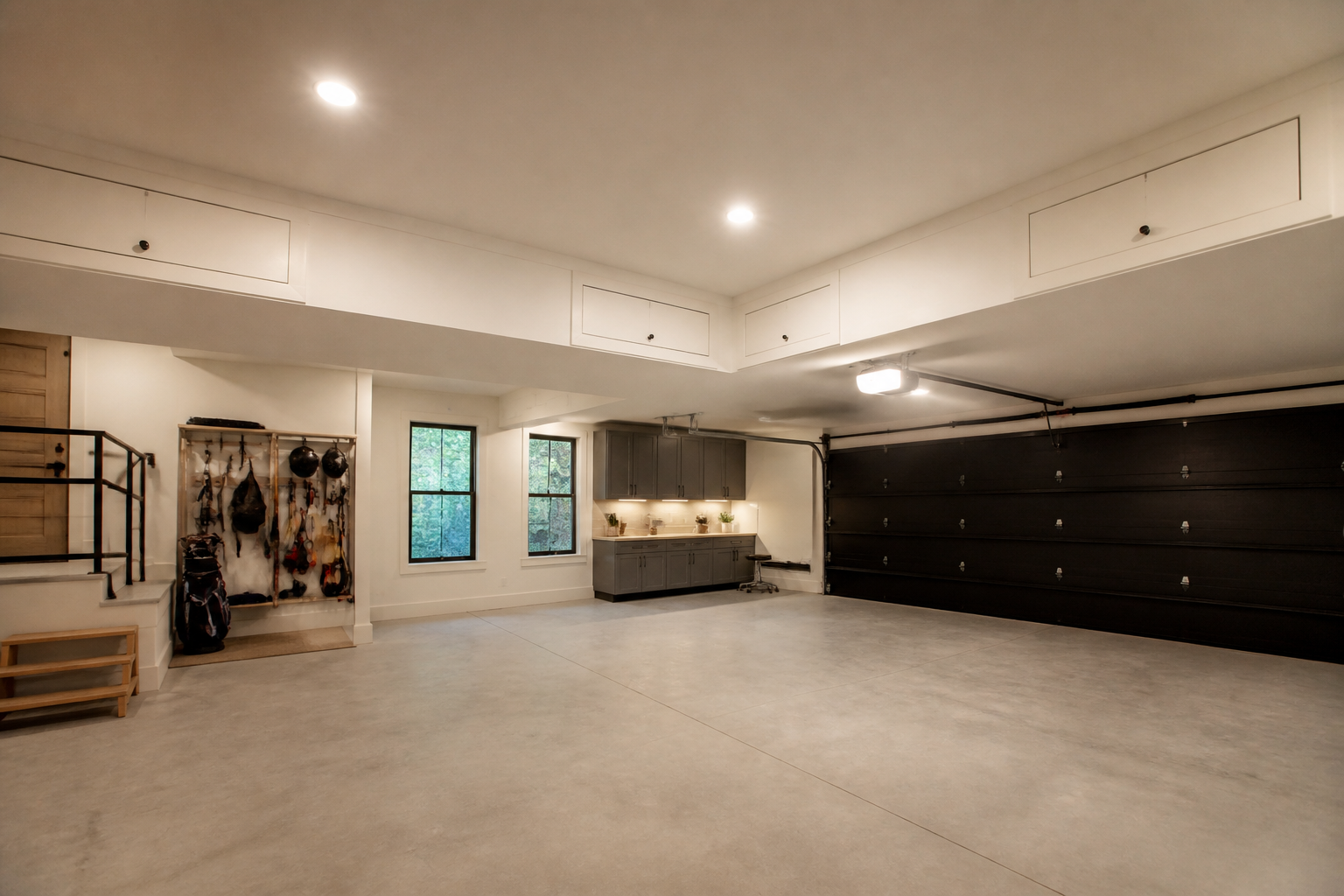
The soffit runs the perimeter like decorative trim but actually conceals storage for long, thin items. Small access doors every few feet let you slide in fishing rods, hockey sticks, or garden tools. The white finish ties into the ceiling and makes the garage feel taller.

This display-style storage makes your best-looking gear part of the decor. The LED accent lighting and glass doors turn storage into a design feature. It works for collectibles, vintage tools, or anything you want to protect but still show off.
The platform tucks against the wall when not needed and extends out over the garage floor for loading. Track-mounted casters make the motion smooth and quiet. This gives you the best of both worlds: hidden storage that’s still accessible without a ladder.
