

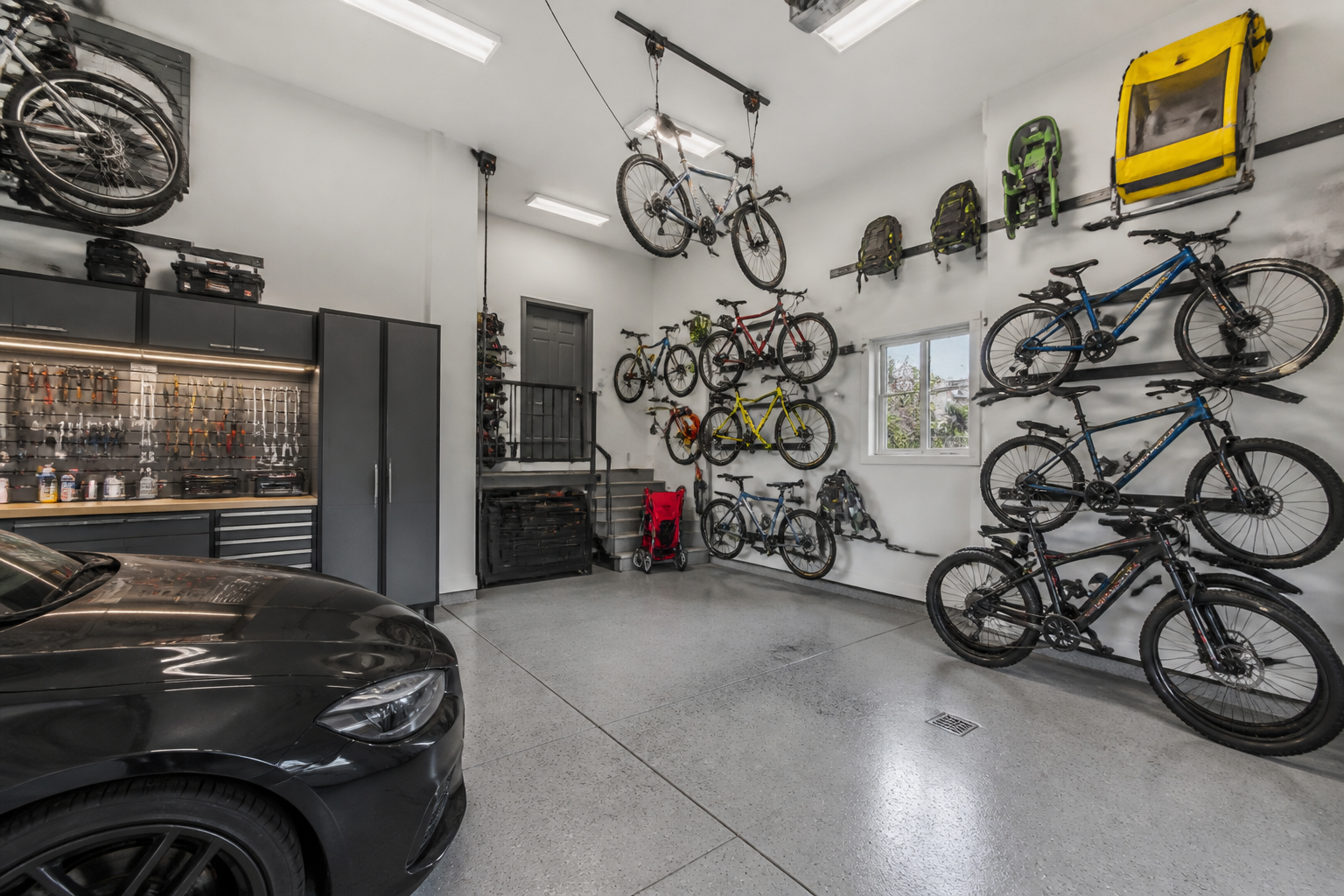
Bikes have a habit of cluttering up garage floor space faster than anything else I’ve dealt with. Getting them off the ground and onto walls or ceilings opens up room for cars, workbenches, and everything else you actually use daily. This guide covers wall-mounted bike racks, ceiling hoist systems, vertical stand setups, family bike stations, and cycling workshop corners.
Wall-Mounted Bike Racks
Wall-mounted bike racks are my go-to solution for garages with decent wall space but limited floor area. They keep bikes accessible while freeing up valuable square footage for parking and storage. Most systems mount directly to studs and can hold multiple bikes at different heights to maximize capacity. If you’re working with a tight footprint, these setups pair well with small garage organization strategies that make every inch count. The key is choosing a layout that matches your family’s riding habits and bike types.
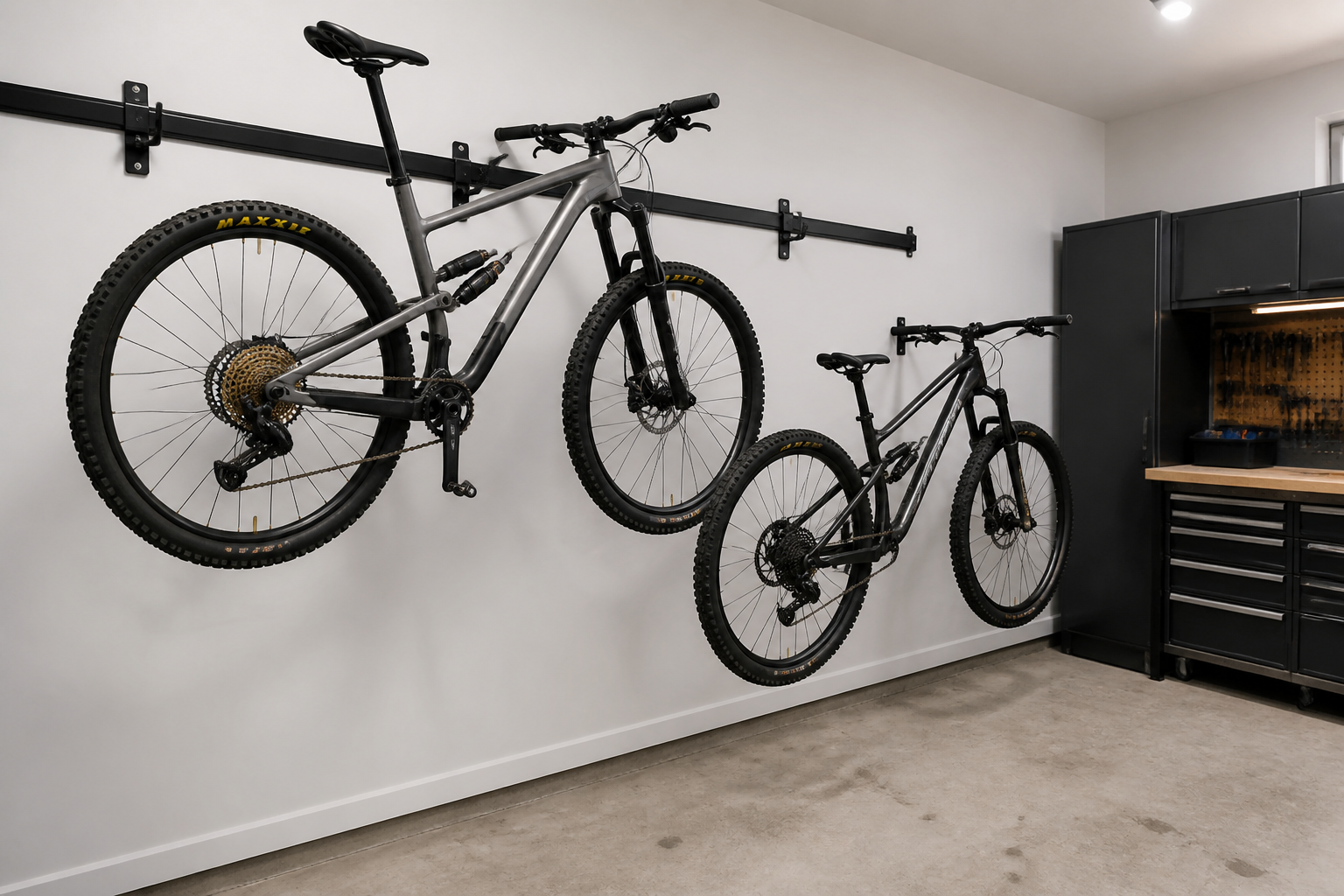
Horizontal hooks let you hang bikes by the front wheel, staggering them at different heights to fit more in less space. The black metal hooks stand out against white walls while keeping the bikes secure and easy to grab for weekend rides.
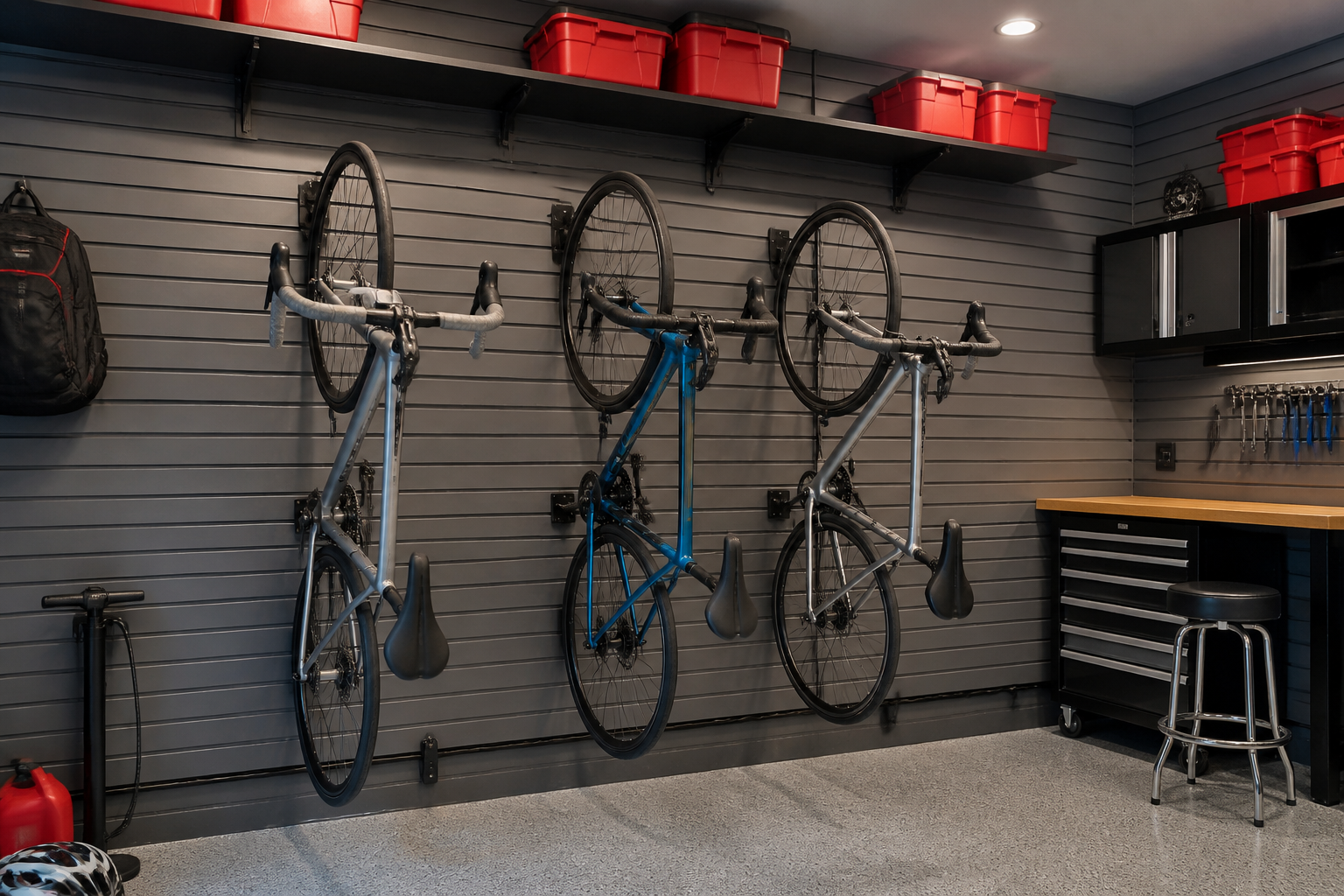
Vertical racks take up minimal horizontal wall space by orienting bikes perpendicular to the wall. This setup uses a slatwall panel system that lets you reconfigure hooks and shelves as your storage needs change throughout the year.
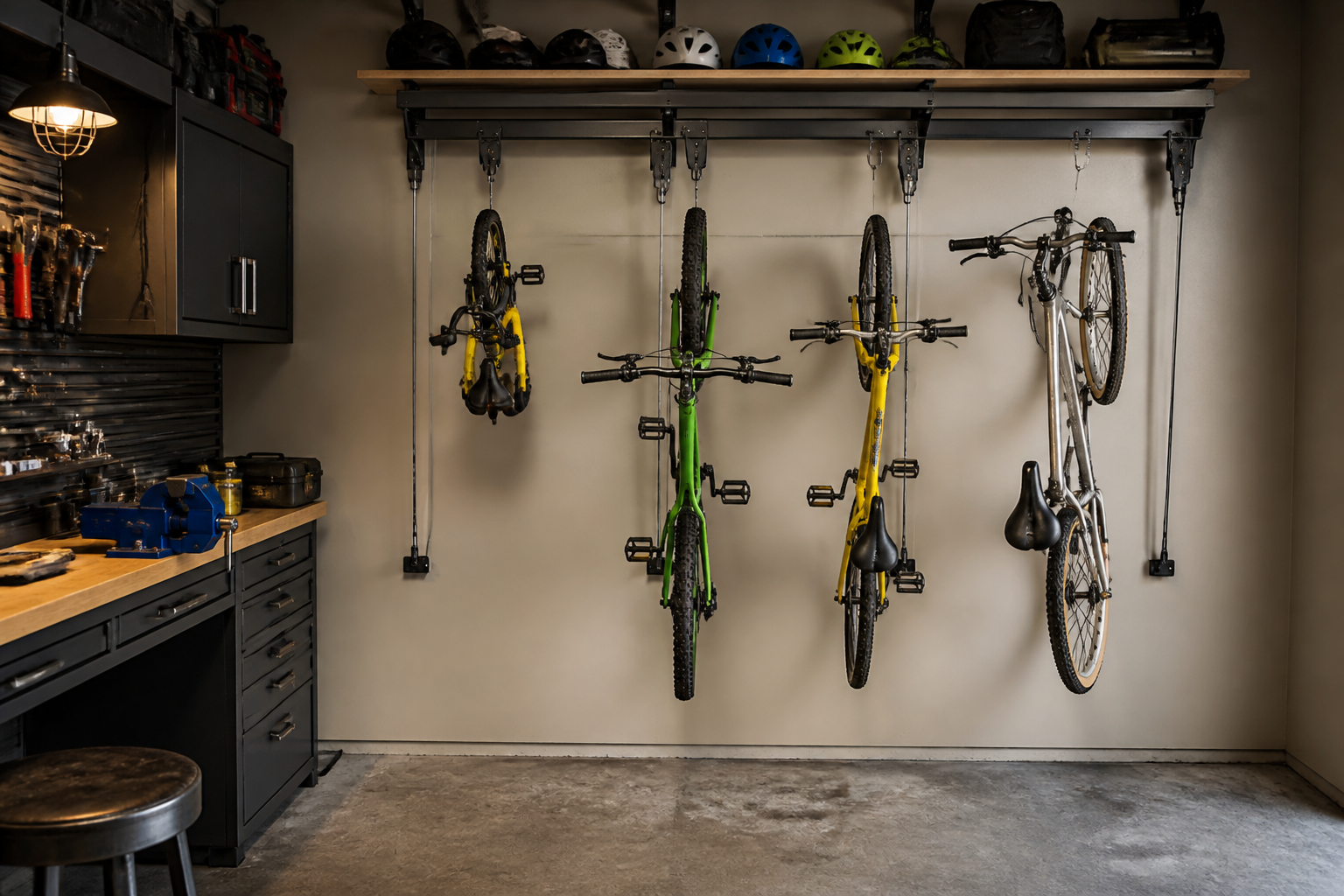
Staggered horizontal mounting works beautifully for families with bikes of different sizes. The highest hooks hold adult bikes while lower positions keep kids’ bikes within their reach, and the shelf above corrals helmets and cycling gear in one spot.
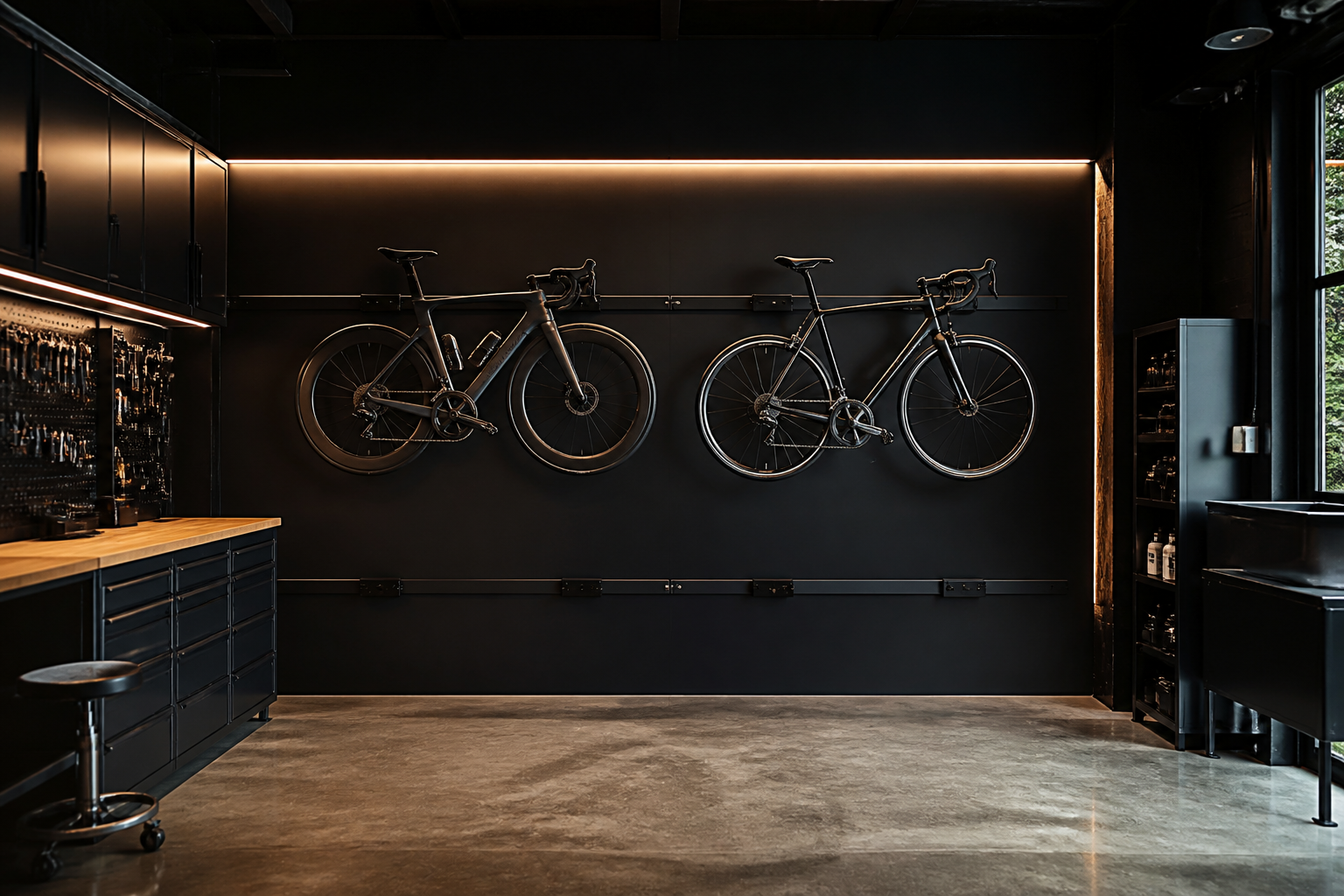
Rail systems offer a cleaner look than individual hooks, with sliding mounts that adjust along a single track. The integrated LED strip highlights the bikes as display pieces while providing task lighting for evening rides.
Ceiling Hoist Systems
Ceiling hoists are perfect when wall space is already claimed by pegboard tool storage or shelving. I’ve installed several pulley systems over the years, and they’re surprisingly simple to operate once you’ve secured them properly to ceiling joists. The bikes lift out of the way completely, leaving floor and wall space open for other storage needs. Most hoists handle bikes up to 50 pounds, which covers everything from kids’ bikes to heavier mountain bikes with ease.
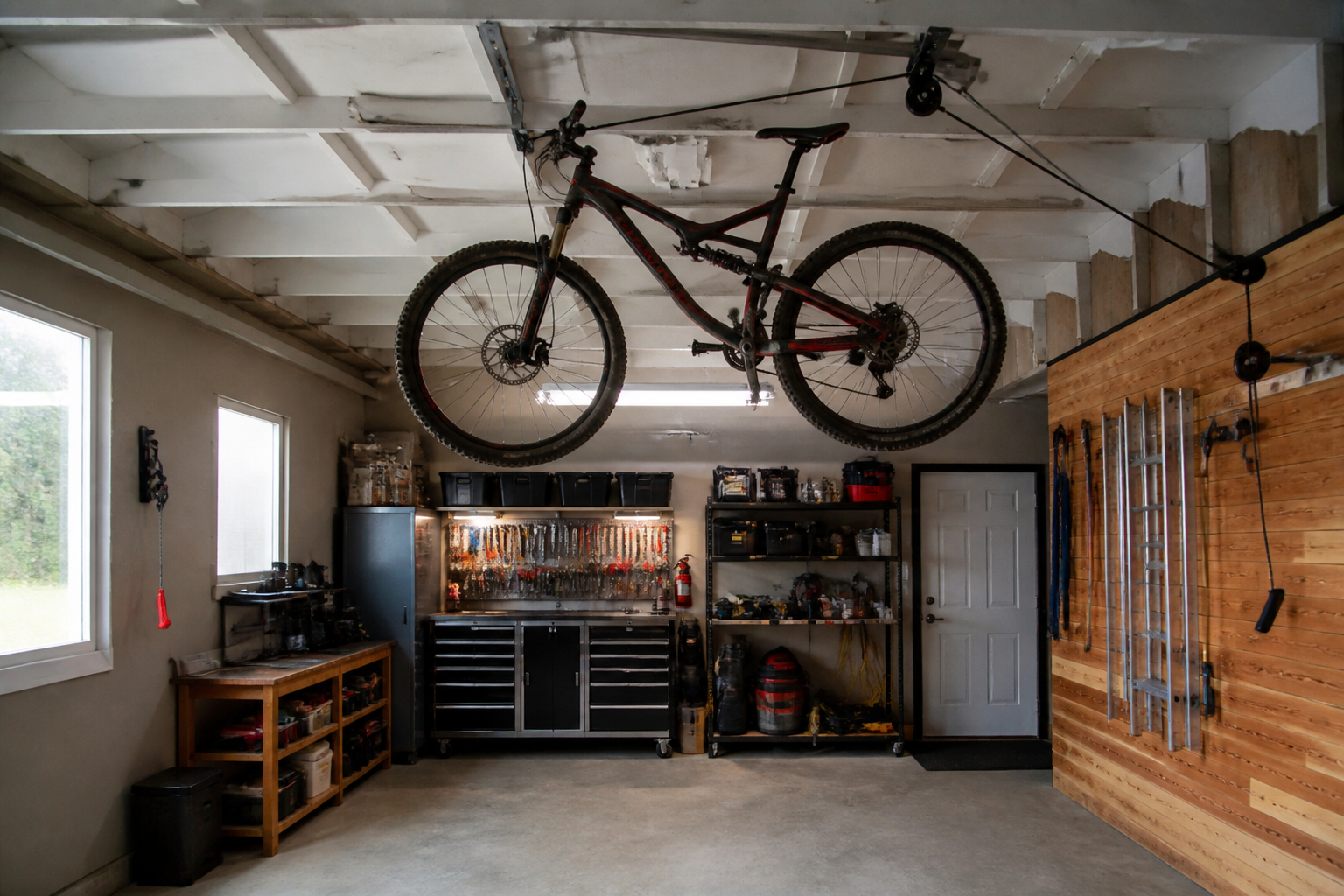
Manual pulley hoists use simple rope and hook systems to lift bikes overhead with minimal effort. This setup keeps the bike horizontal and close to the ceiling, making it ideal for garages where you need maximum clearance for vehicles below.
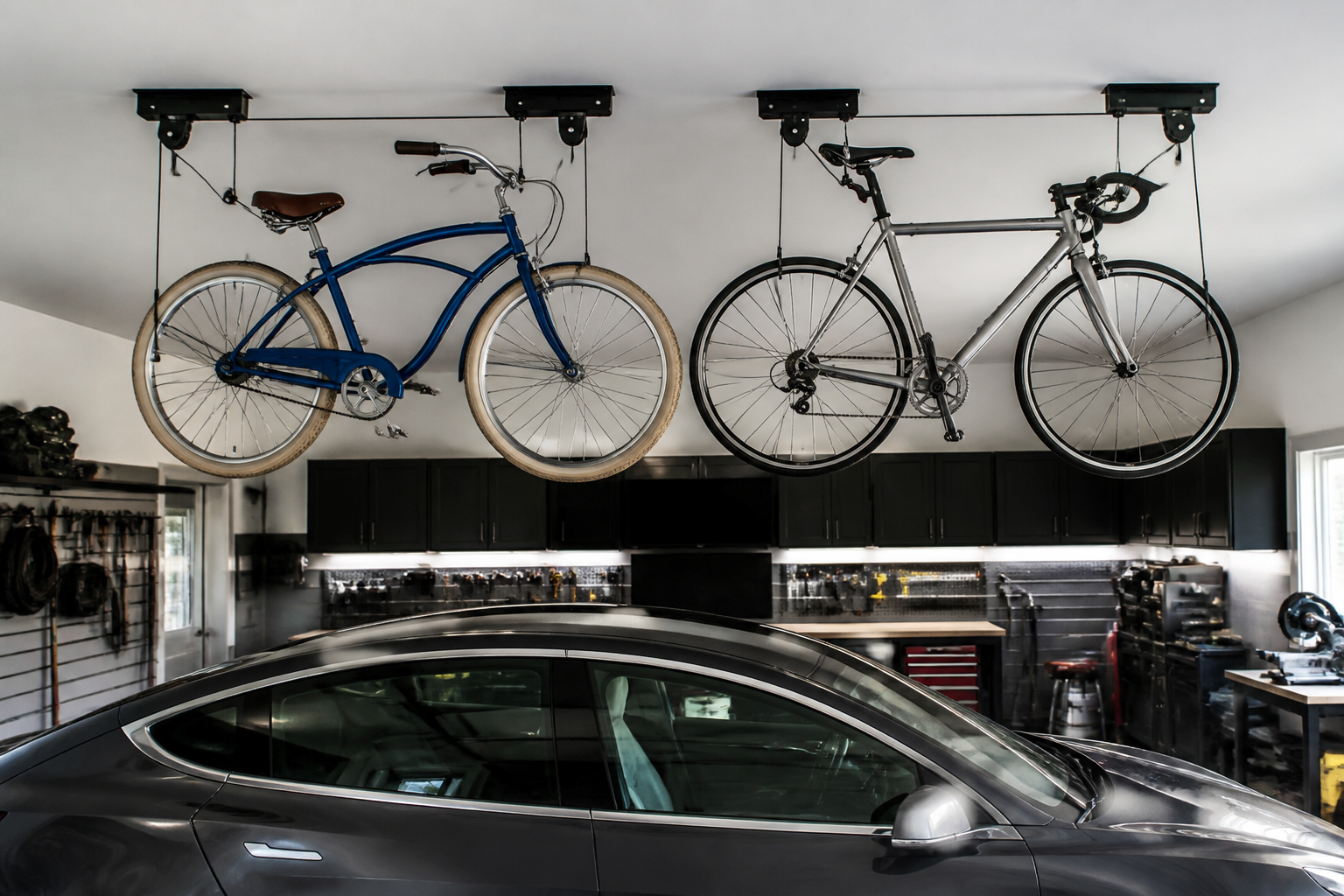
Dual hoist systems let you store two bikes in tandem without taking up any wall real estate. The independent pulleys mean you can lower one bike without disturbing the other, which matters when family members have different riding schedules.
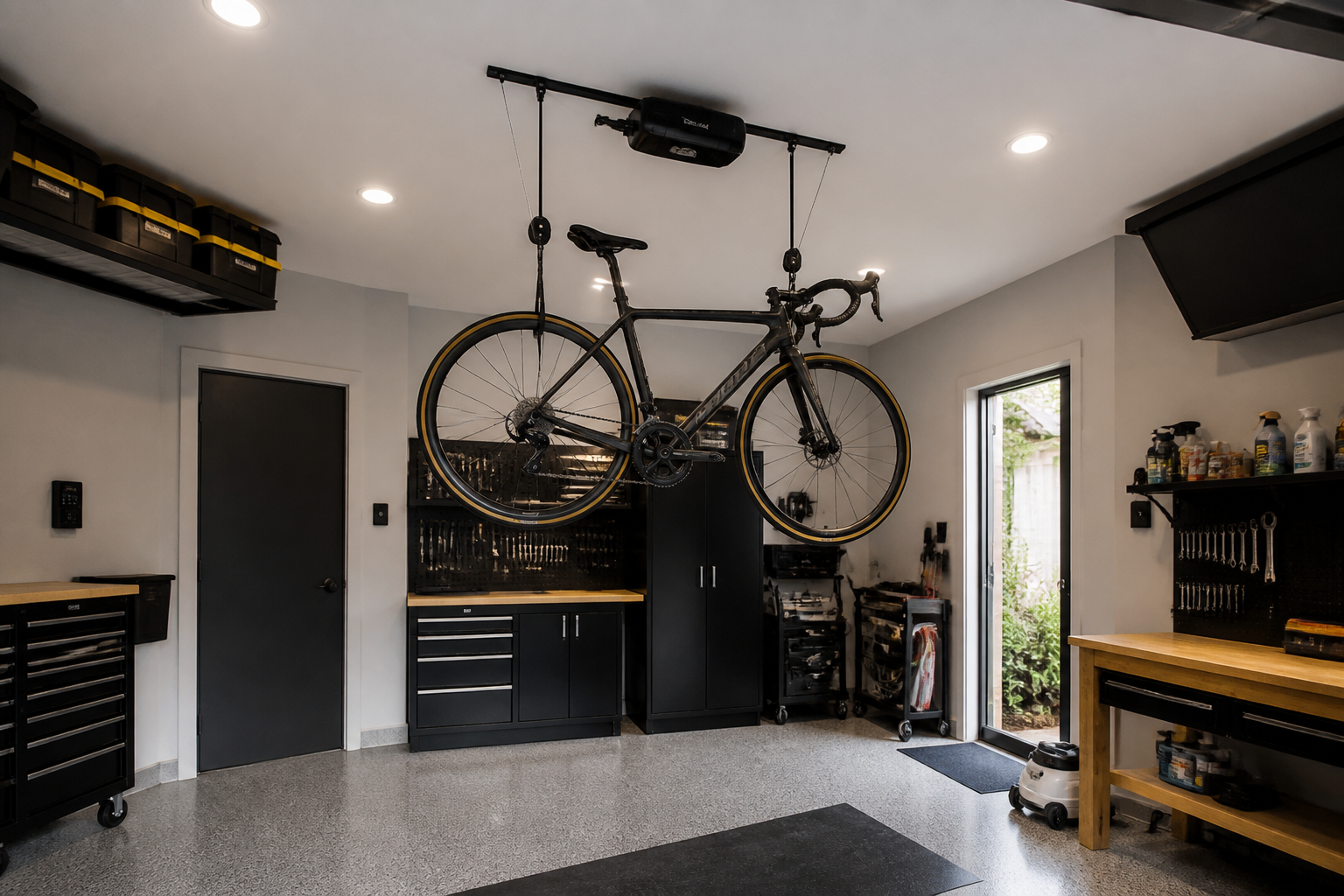
Motorized lifts eliminate the rope-pulling entirely, using wireless remotes to raise and lower bikes at the push of a button. They cost more upfront but make daily access effortless, especially if you’re dealing with heavier e-bikes or have mobility concerns.
Vertical Stand Setups
Vertical stands hold bikes upright on the floor while keeping handlebars and pedals from sprawling into walkways. These work well in corners or against walls where you want quick grab-and-go access without mounting hardware. I prefer them for bikes that get used daily, since there’s no lifting or hooking involved. They’re also portable, which makes them easy to rearrange as your garage layout evolves.
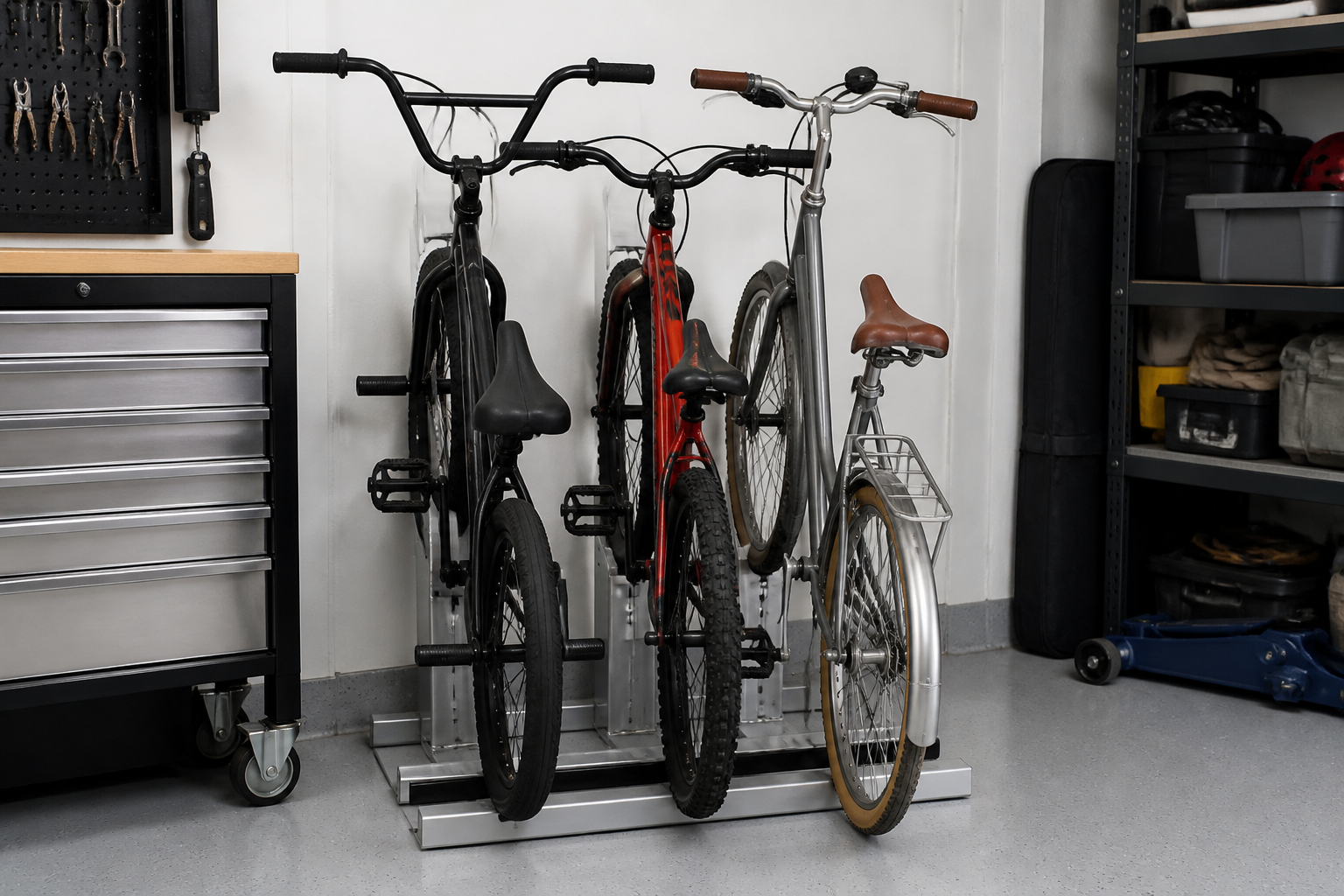
Freestanding gravity stands use the bike’s own weight to keep it balanced upright. The compact footprint fits three bikes in a corner that would otherwise go unused, and there’s zero installation required beyond setting the stand in place.
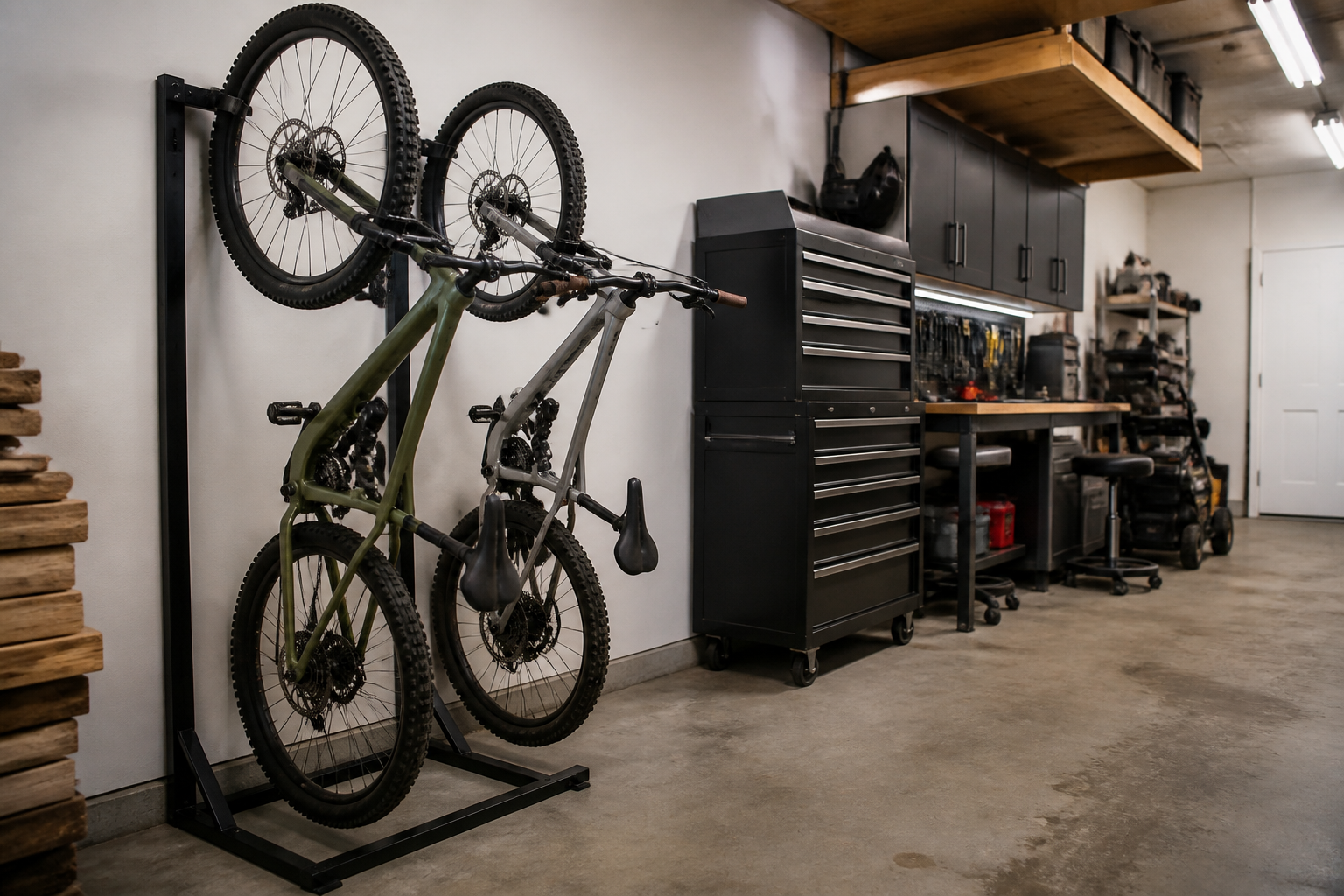
Wall-leaning racks stabilize bikes vertically without requiring drilling or anchors. This style works great next to a garage workshop area where you might be doing routine bike maintenance between rides.
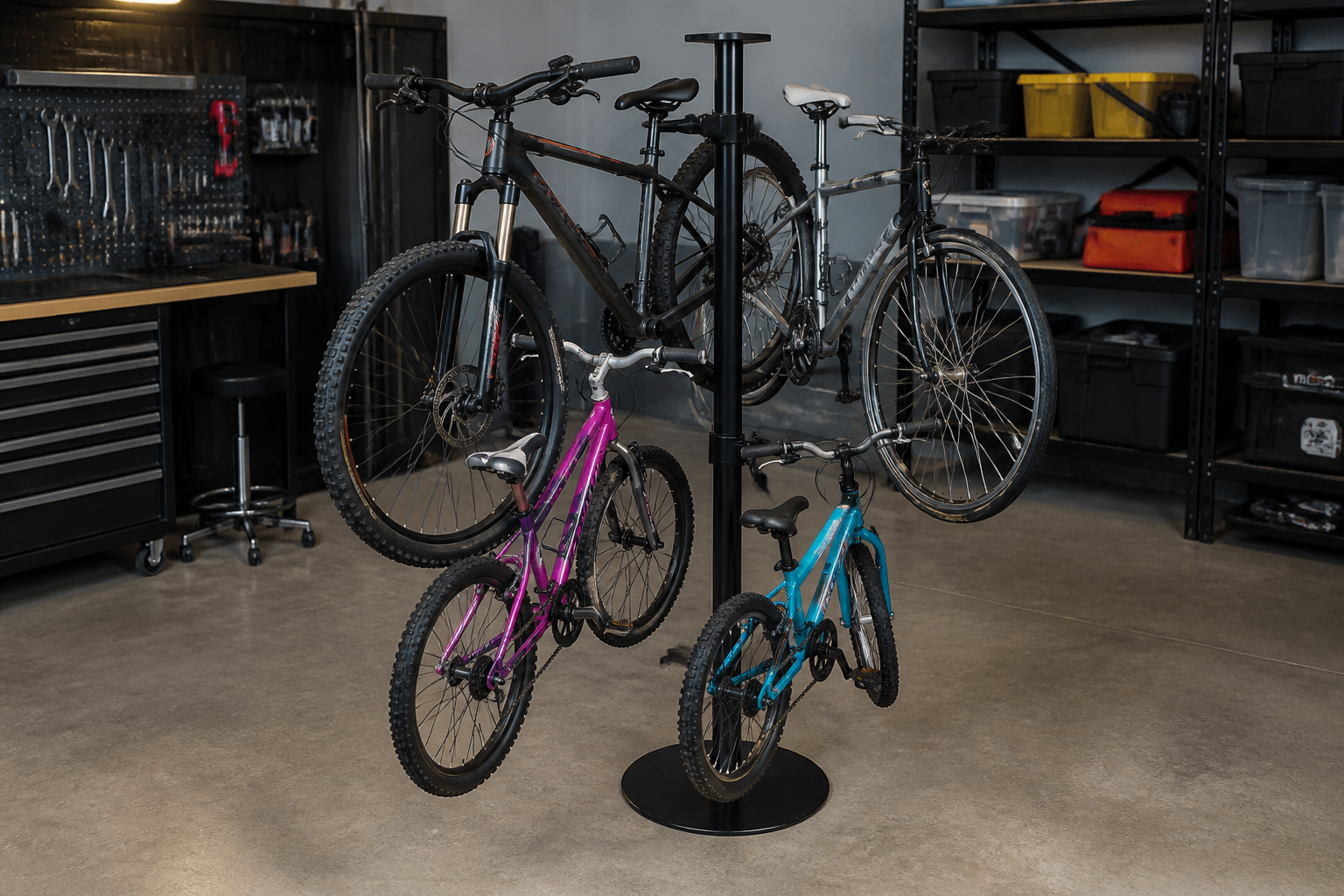
Tower-style stands arrange bikes in a circular or square footprint, maximizing storage density on the garage floor. The adjustable arms accommodate different wheel sizes, making them ideal for families with both kids’ and adult bikes in rotation.
Family Bike Stations
Family bike stations group all cycling gear in one dedicated zone, combining bike storage with helmet hooks, pump stations, and repair supplies. I’ve found these setups reduce the morning scramble when everyone’s trying to head out at once. The best designs keep kids’ bikes and gear at accessible heights while storing adult equipment higher up. If you’re building out a larger organizational system, these stations integrate nicely with overhead storage racks for seasonal cycling accessories.
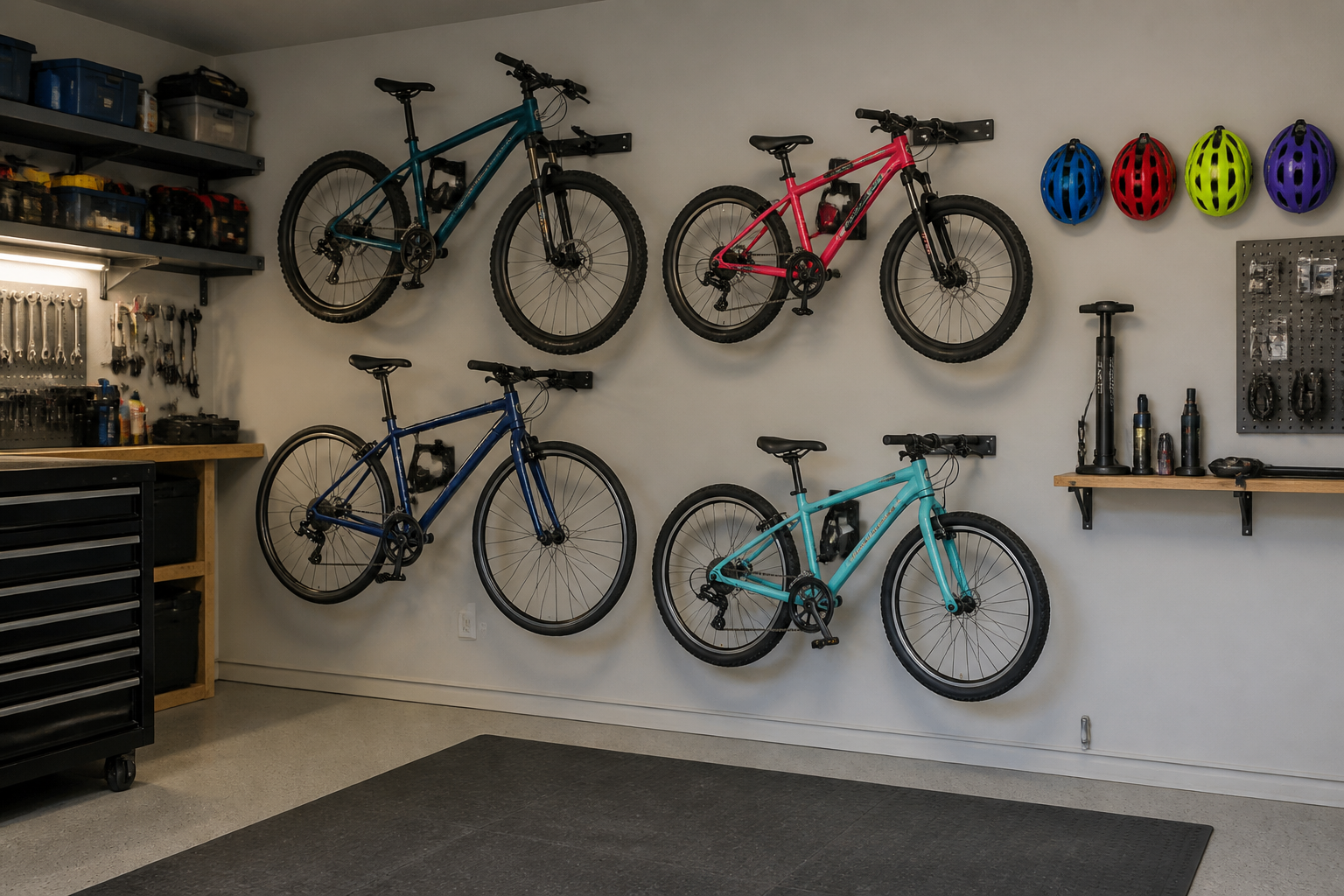
A full bike station consolidates everything in one wall section, with graduated rack heights that let each family member reach their own bike. The pegboard section keeps tire levers, chain lube, and patch kits visible and organized.
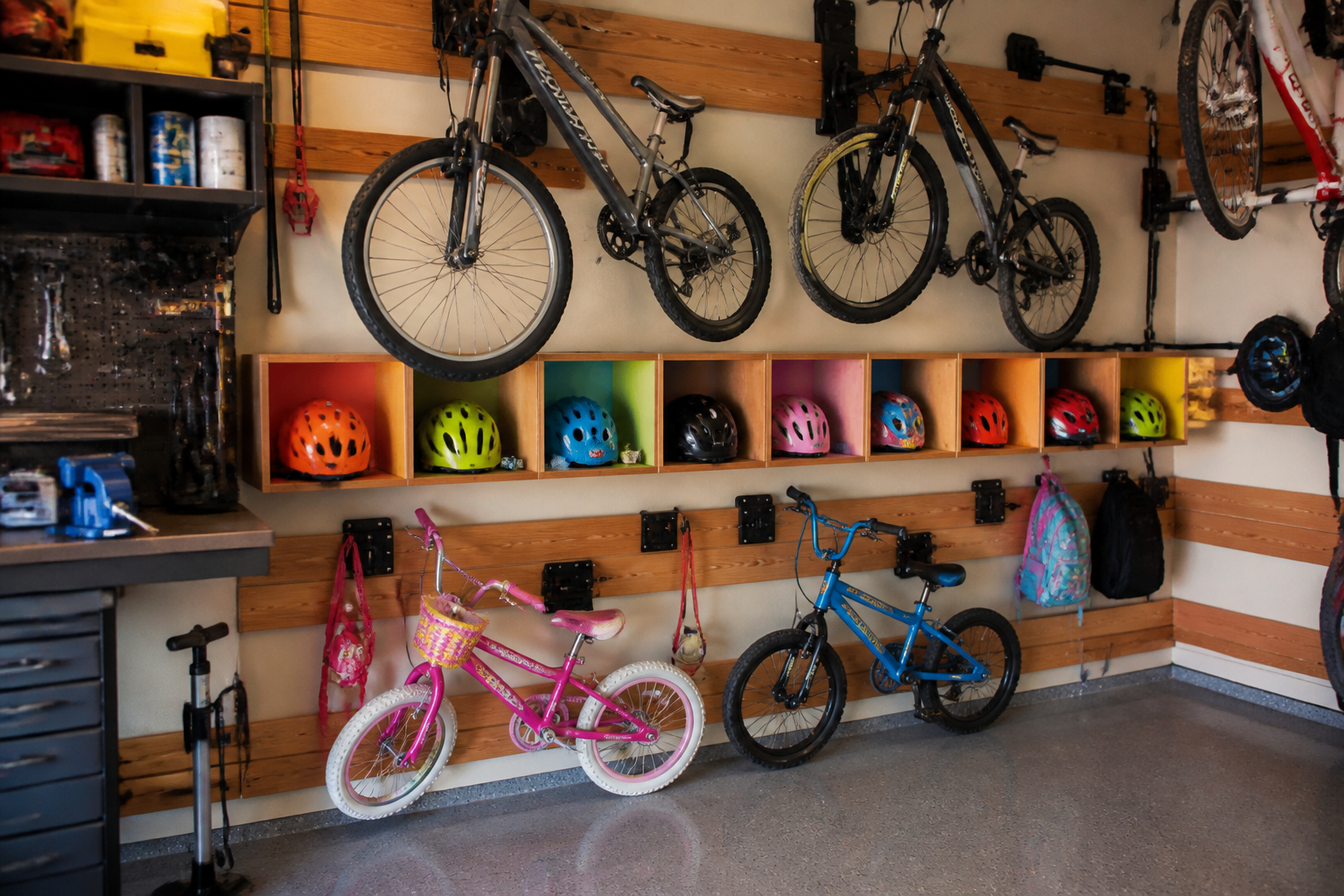
Kid-focused zones place bikes and helmets at heights children can actually reach independently. The colorful cubbies add a playful touch while teaching kids to put their gear away after rides, building good habits early.
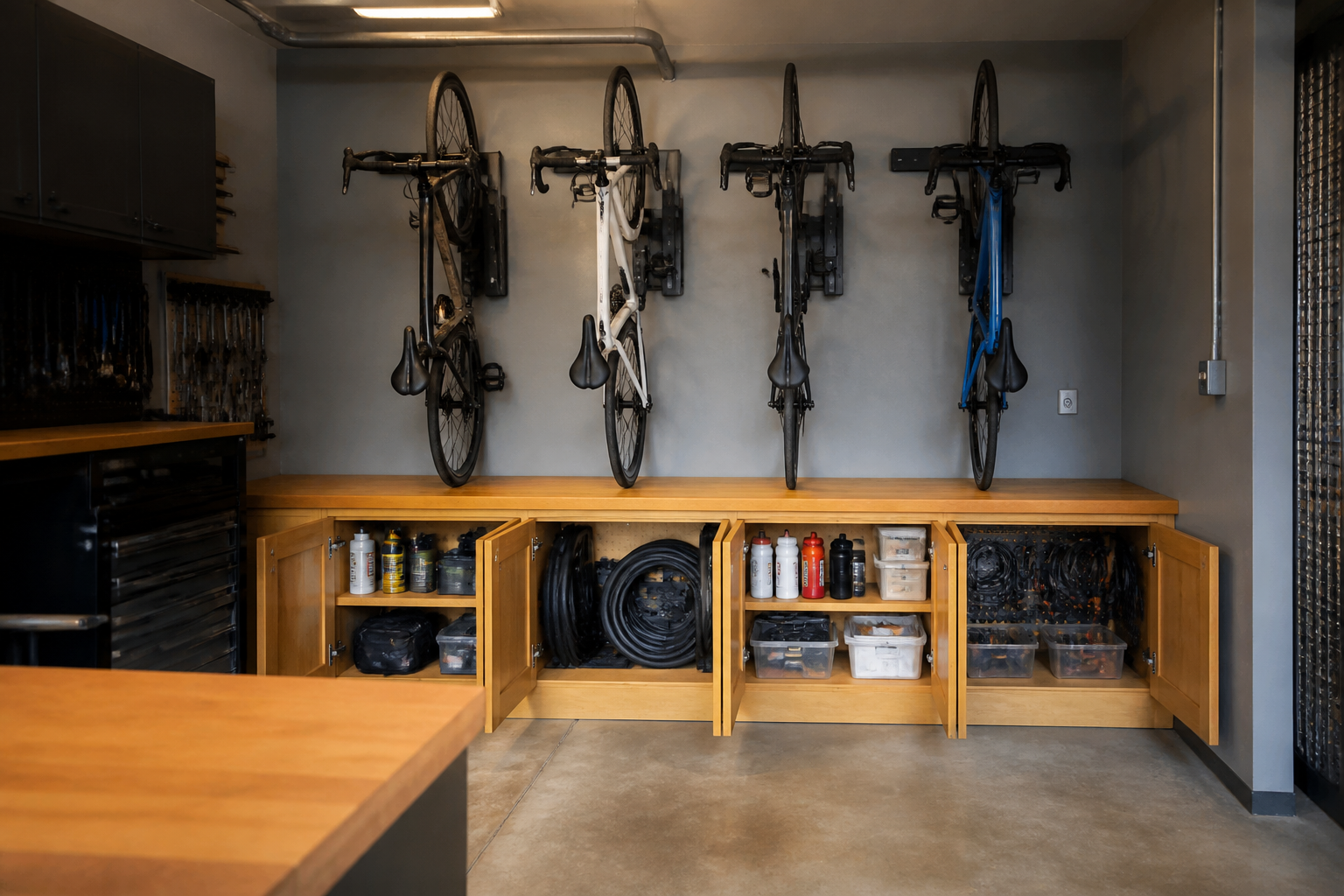
Cabinet-integrated stations hide maintenance supplies and spare parts behind closed doors while keeping bikes visible and accessible above. This approach works well if you want a cleaner look or need to keep certain items away from curious younger kids.
Cycling Workshop Corners
Dedicated cycling workshop corners combine bike storage with workbench space for repairs, upgrades, and regular maintenance. I set up a corner like this in my own garage after realizing how much time I spent kneeling on the floor to fix flats and adjust derailleurs. A proper work stand, tool organization, and good lighting turn routine maintenance into a quick task instead of a frustrating ordeal. These setups pair naturally with broader tool storage solutions if you’re also working on cars or other projects.
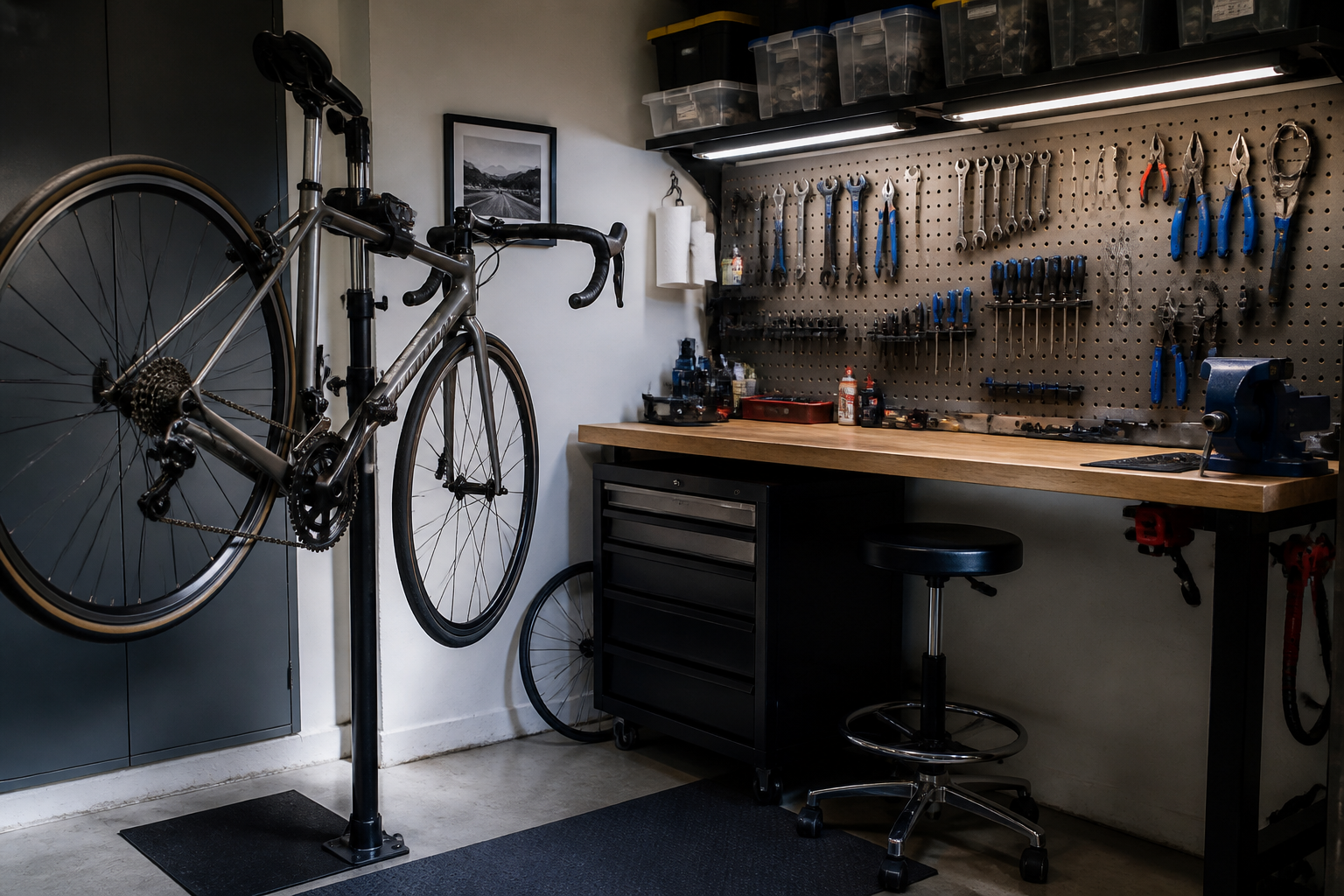
A wall-mounted work stand positions bikes at comfortable working height for adjustments and repairs. The pegboard above keeps wrenches, hex keys, and cable cutters within arm’s reach, eliminating trips back and forth to a main toolbox.
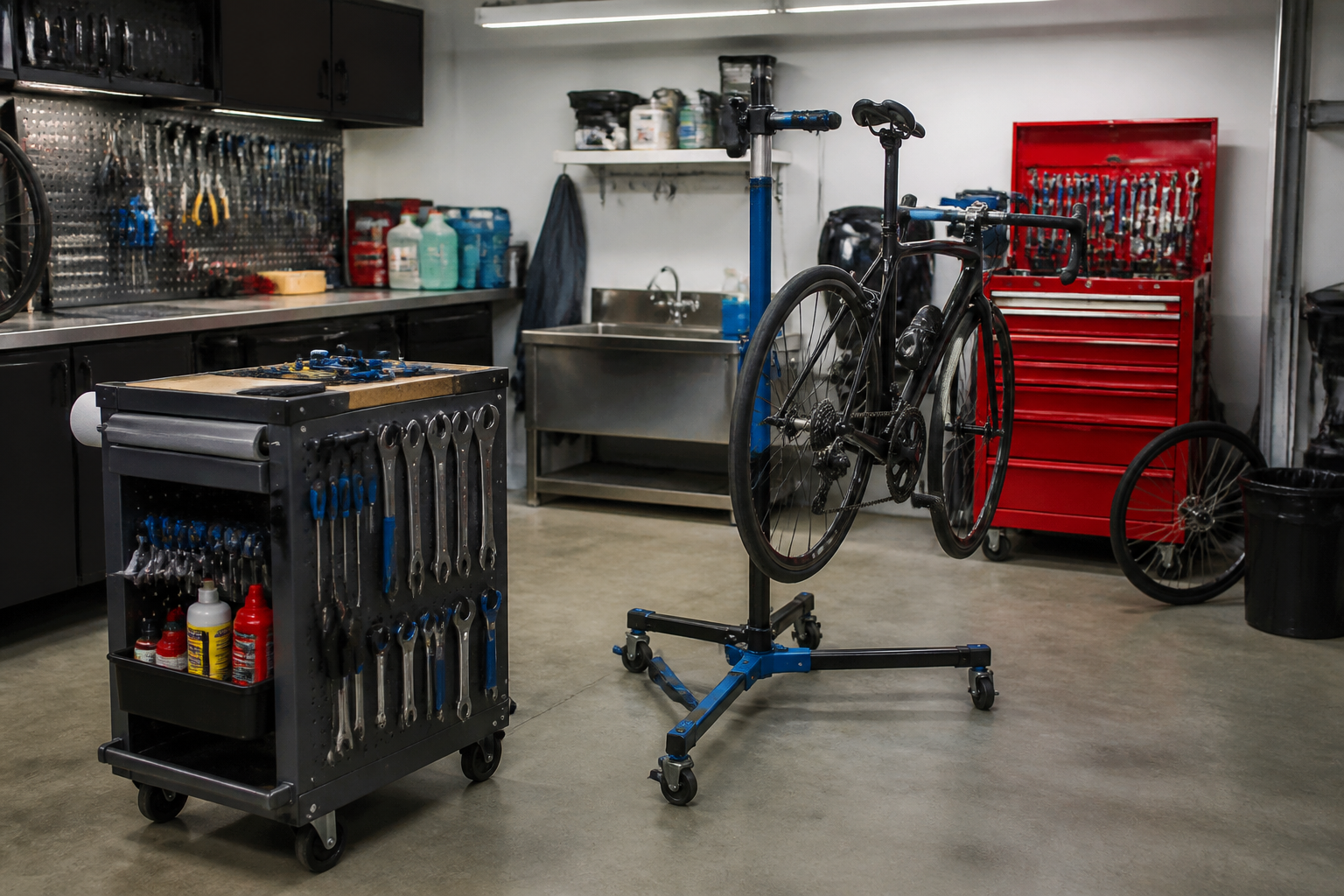
Rolling stands and tool carts create a mobile workshop you can position anywhere in the garage or even roll outside on nice days. The dedicated tool chest keeps cycling-specific equipment separate from general automotive tools, preventing cross-contamination of greases and lubricants.
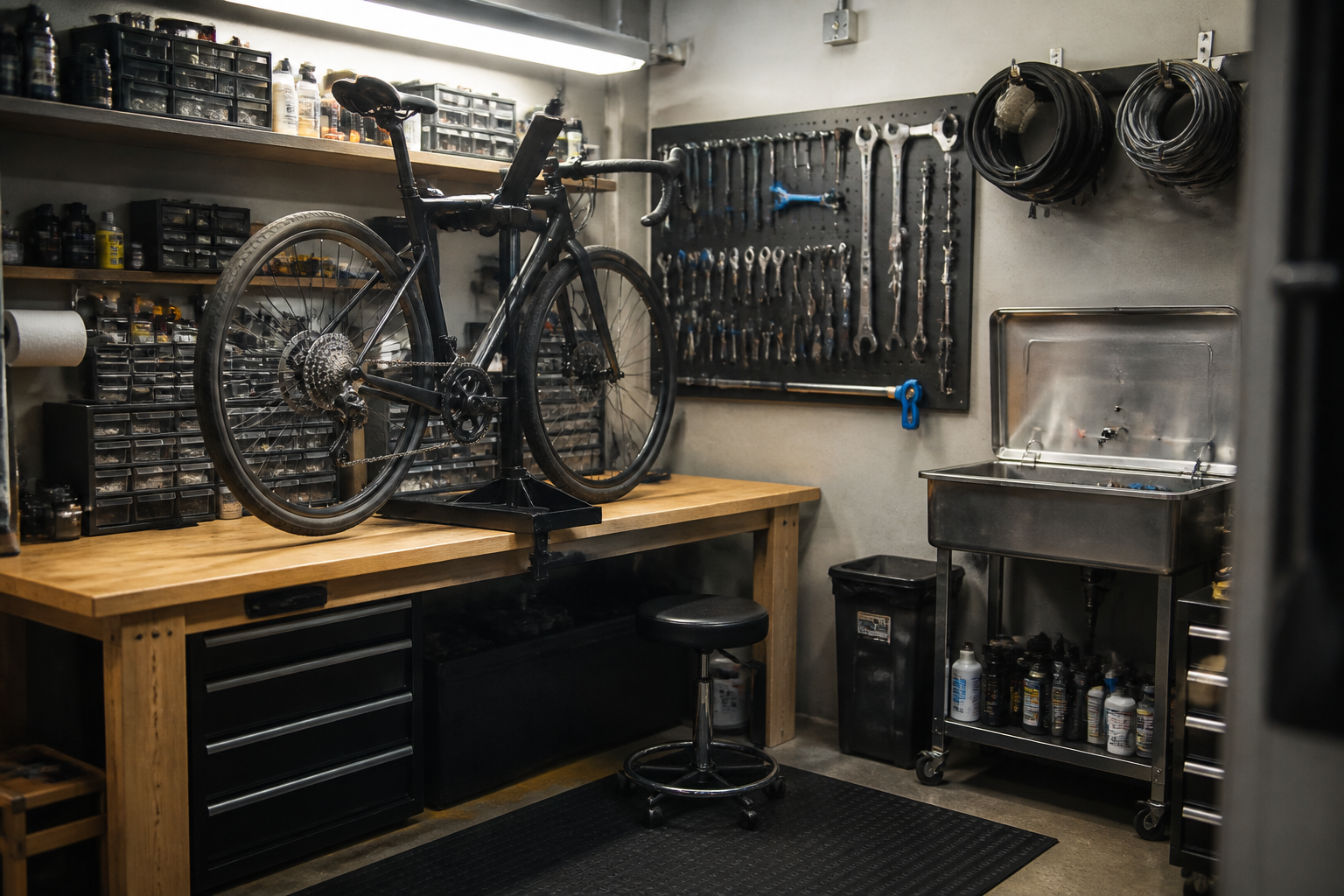
A full workbench setup handles everything from basic cleaning to complete rebuilds. The parts washer basin lets you properly degrease chains and cassettes, while dedicated hanging storage keeps replacement cables and chains from tangling in drawers.
