

As an Amazon Associate I earn from qualifying purchases.
Shoes piling up near the garage door is one of those problems that sneaks up on you fast. A few pairs become a dozen, and suddenly nobody can get in or out without tripping over something. These 14 garage shoe storage ideas cover wall-mounted racks, cubby and bench combos, boot and seasonal storage, and full family entry zones, so there’s something here no matter how much space you’re working with.
Wall-Mounted Racks
Wall-mounted shoe racks are one of the best moves you can make in a garage entry. They pull footwear completely off the floor, which makes sweeping easy and the whole area feel less chaotic. Tiered metal racks, floating shelves, and slatwall-style systems all work well here depending on how much wall space you have. If you’re already thinking about how to use your walls more effectively, the ideas in this guide to garage wall panels pair naturally with a shoe rack setup. The key is anchoring everything into studs so the system stays solid under daily use.
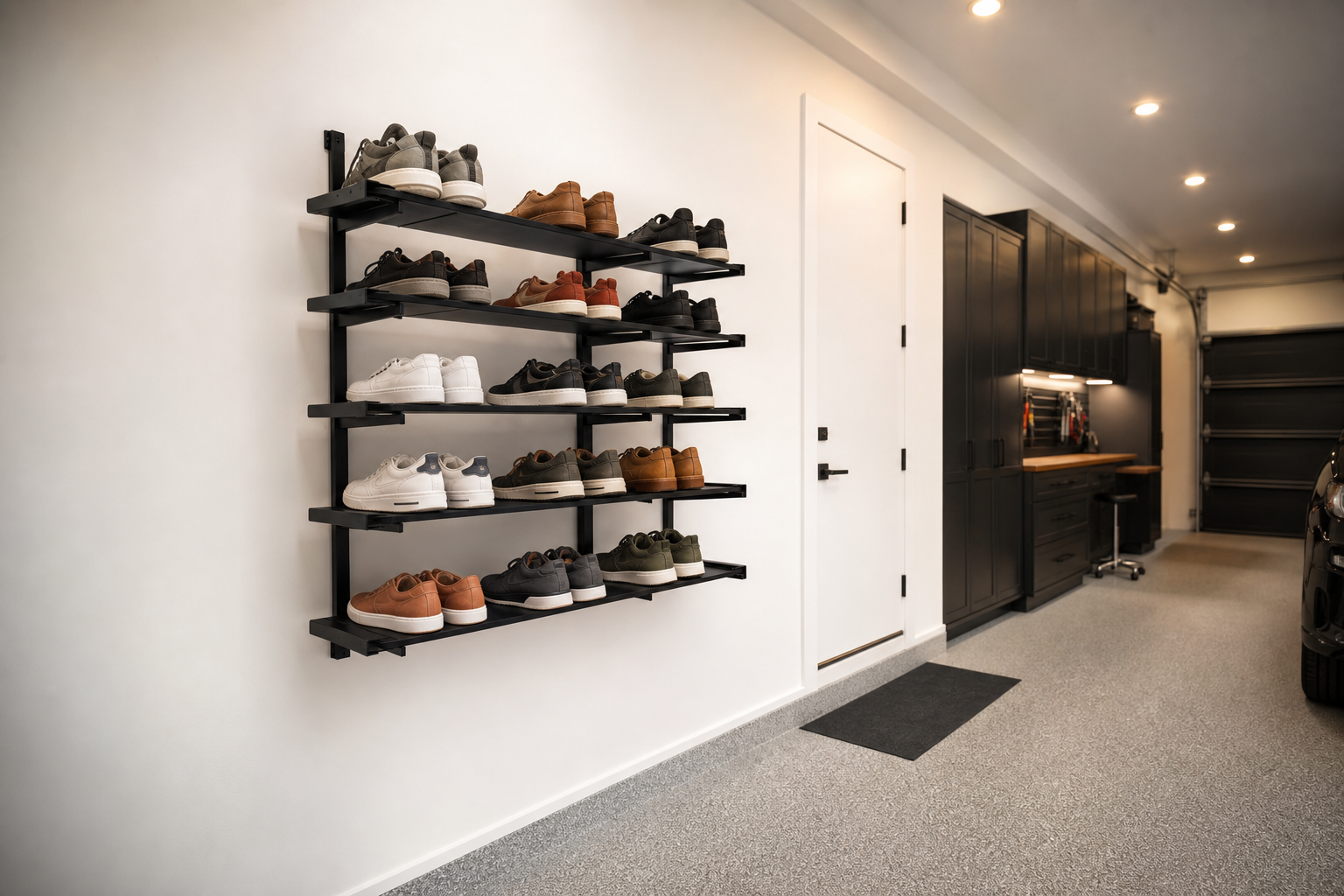
This powder-coated steel rack uses three angled tiers to store up to 12 pairs without eating any floor space. The matte black finish gives it a sharp, modern look that holds up well against garage humidity. Mount it at knee-to-hip height so it’s easy to use without bending down too far.
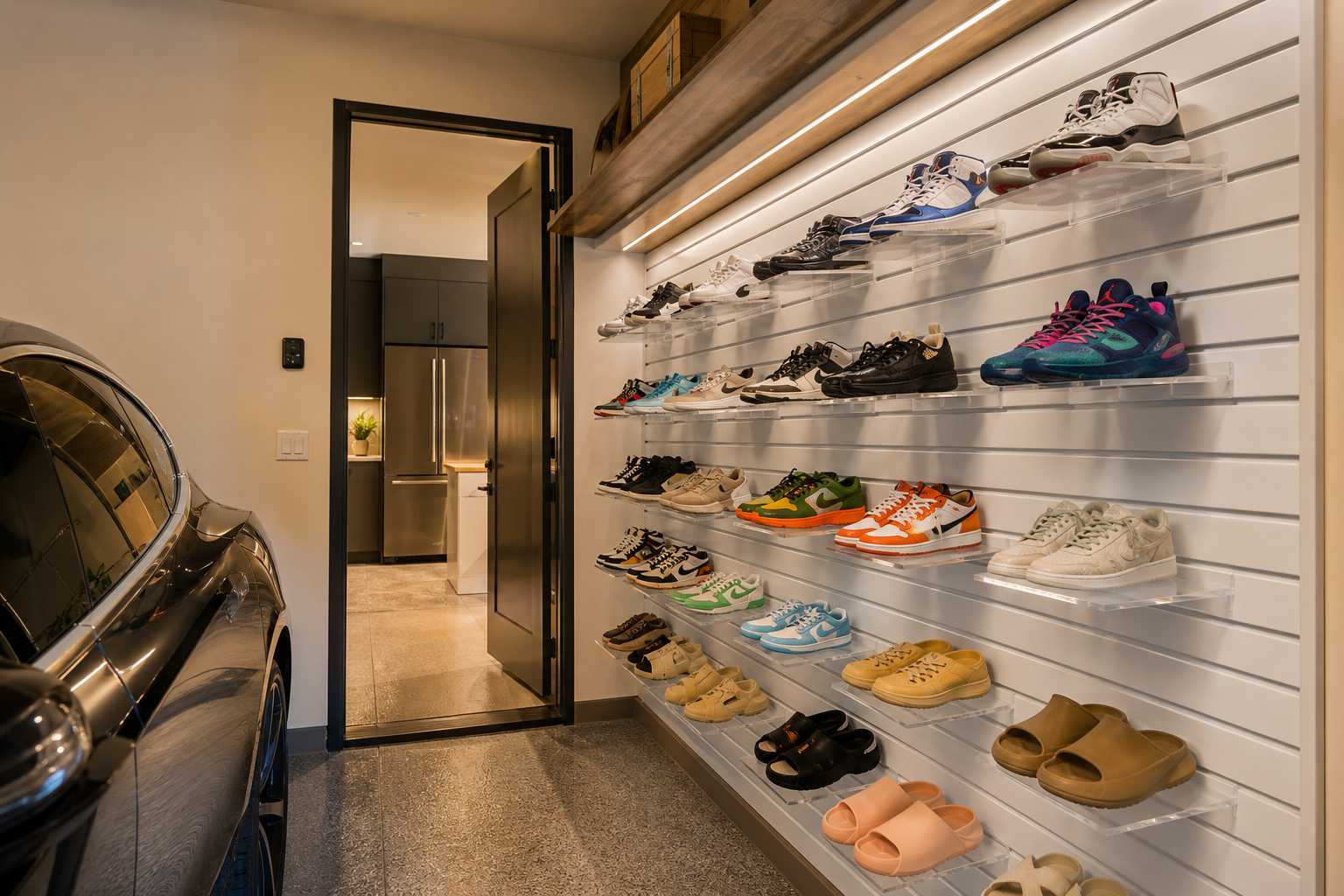
Slatwall panels give you the flexibility to rearrange shelves as your shoe collection changes, which is something fixed racks can’t offer. The clear acrylic shelves keep the display feeling open rather than cluttered. If you want to expand this system to hold bags, helmets, or sports gear, this collection of pegboard ideas shows how well slatwall and pegboard work side by side.
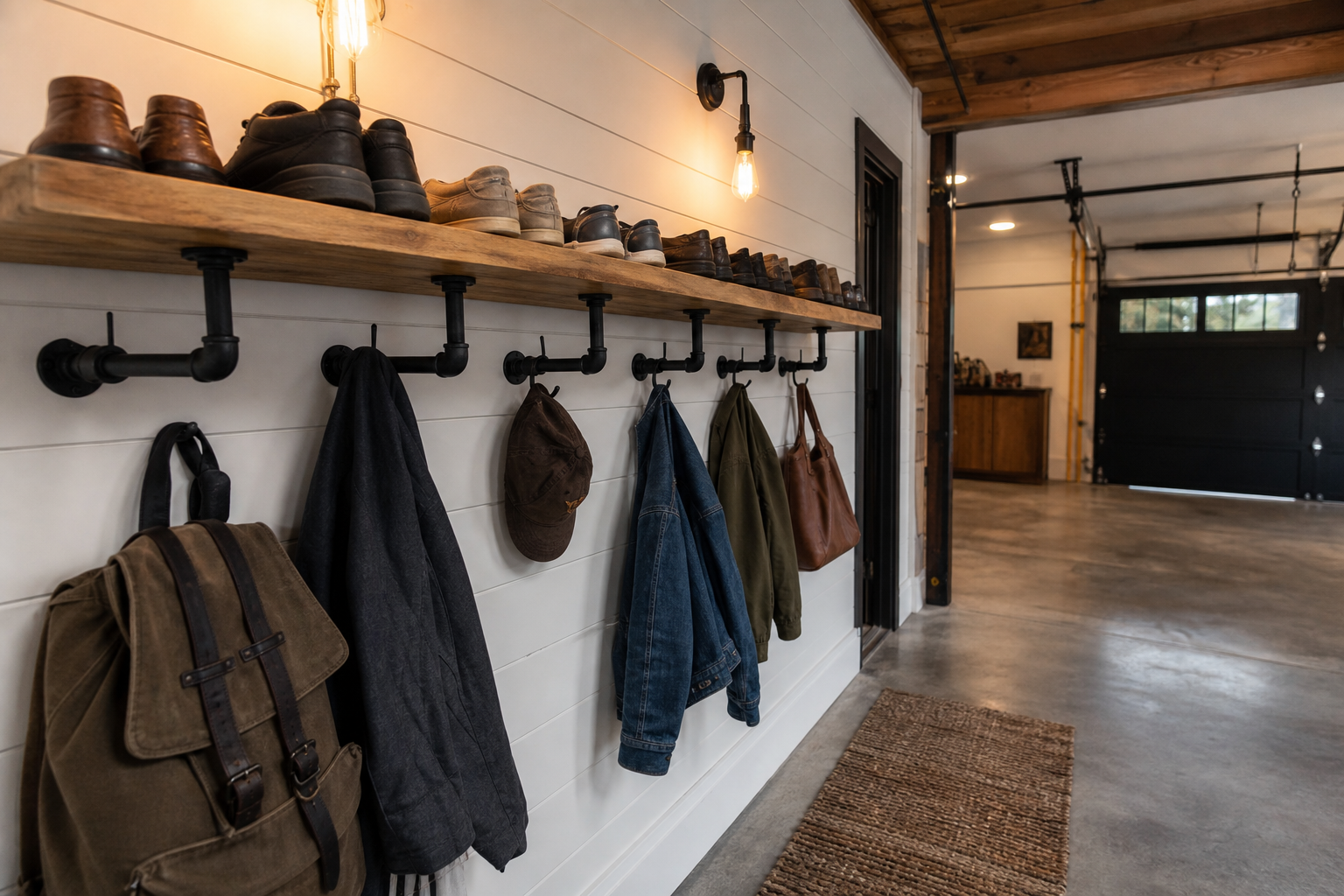
A single floating shelf with thick pipe brackets handles a surprising number of shoes when pairs are placed heel-to-toe. The warm wood tone and black iron hardware give the entry a farmhouse-industrial feel that looks intentional rather than improvised. Adding a few wall hooks just below keeps bags and jackets from landing on the floor.
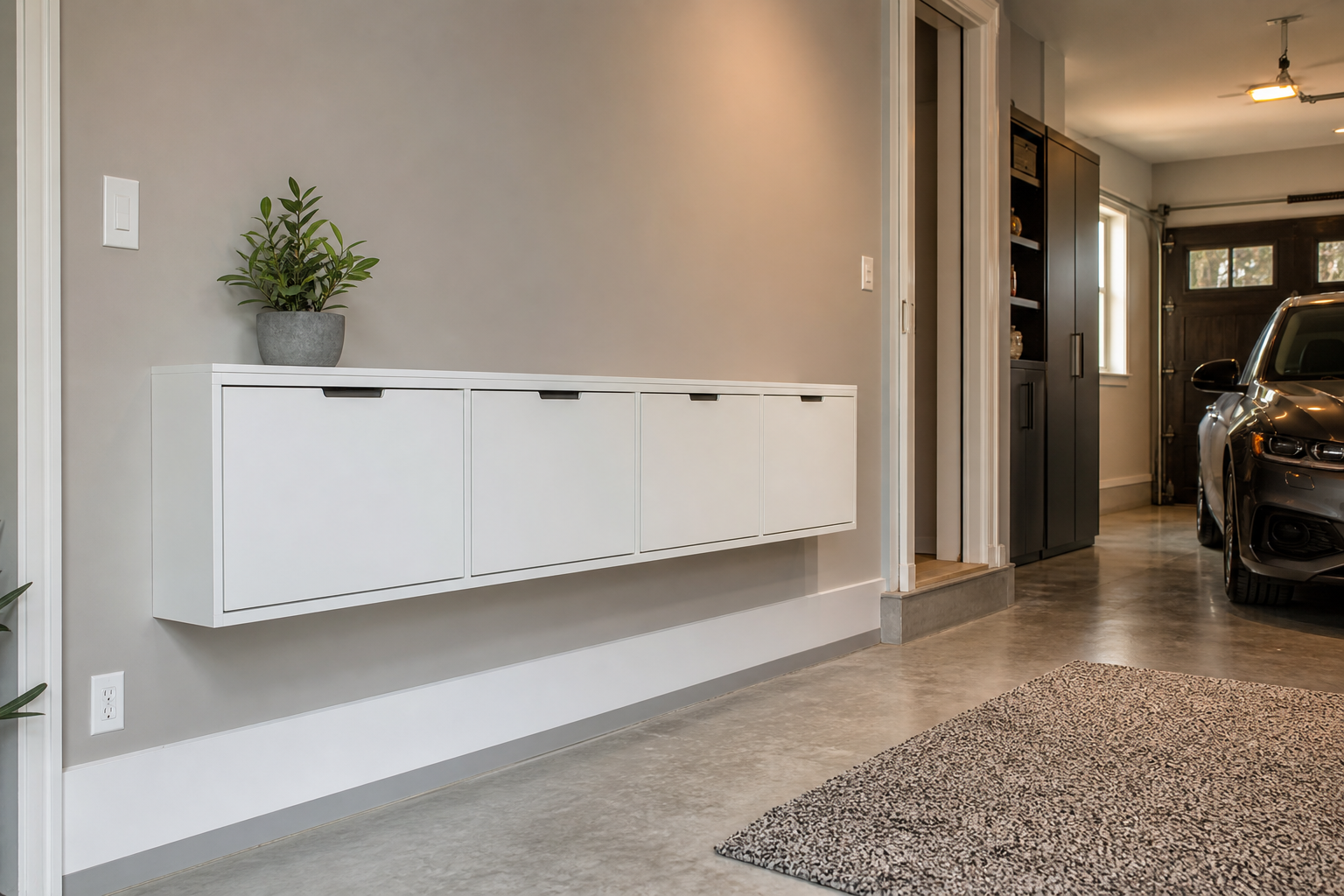
Flip-down shoe cabinets hide footwear completely, which makes a big difference if your garage entry is visible from the house interior. Each compartment holds two to three pairs and the doors double as a surface to set keys or a bag while you swap shoes. This kind of hidden-storage approach works especially well in small garages where visual clutter adds up fast.
Cubby and Bench Combos
A cubby-and-bench combo might be the most practical shoe storage format for a garage entry. You get a place to sit while putting on shoes, individual cubbies to keep pairs separated, and often some overhead storage on top. These setups range from simple DIY builds to furniture-grade units that look like they belong in a mudroom rather than a garage. If you’re planning a full garage entryway from scratch, the complete guide to building a garage mudroom entry area walks through layout and material choices in detail. Even a basic bench-and-cubby unit makes the entry feel intentional and keeps the floor clear.
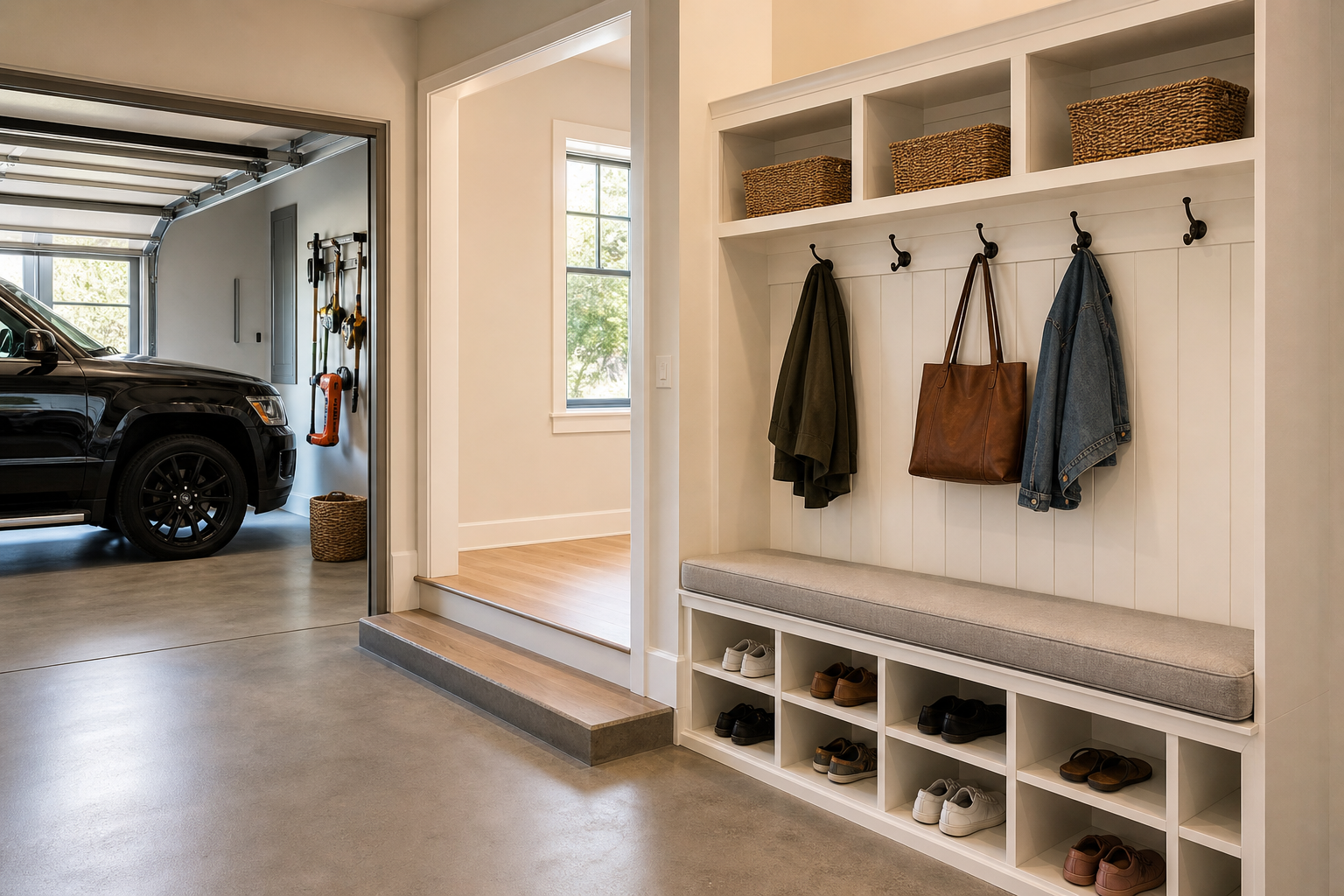
Eight open cubbies give each family member their own designated spot, which is the single biggest thing you can do to stop shoes from spreading across the floor. The upholstered bench seat makes putting on shoes in the morning noticeably easier. Painting the unit the same white as the walls helps it blend in and makes the space feel larger.
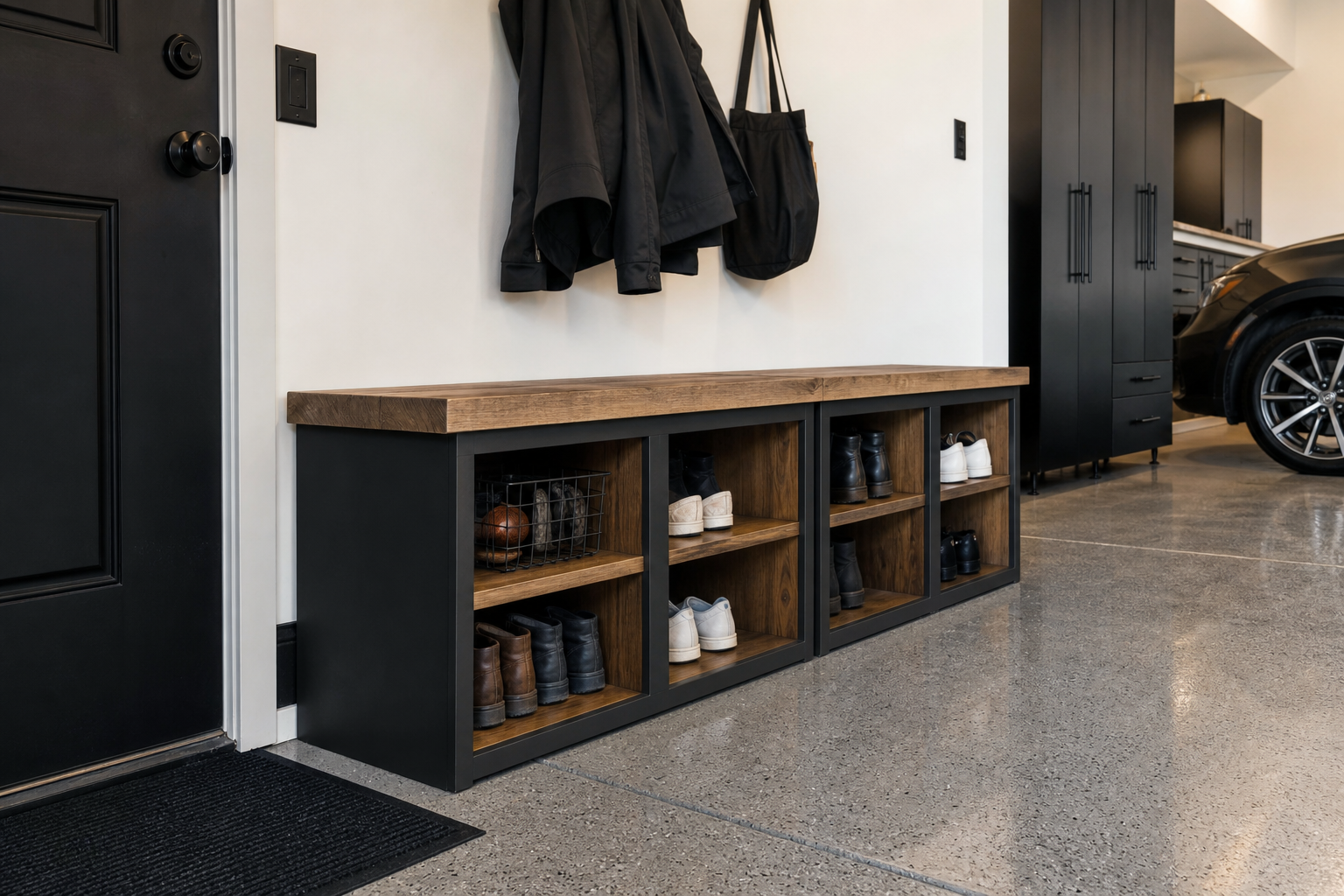
The dark charcoal frame against white walls creates a strong visual anchor for the entry zone. Natural wood cube inserts soften the look and add warmth without making things feel busy. Small wire baskets tucked into a couple of cubbies are great for corralling shoe insoles, laces, or small accessories that tend to disappear.
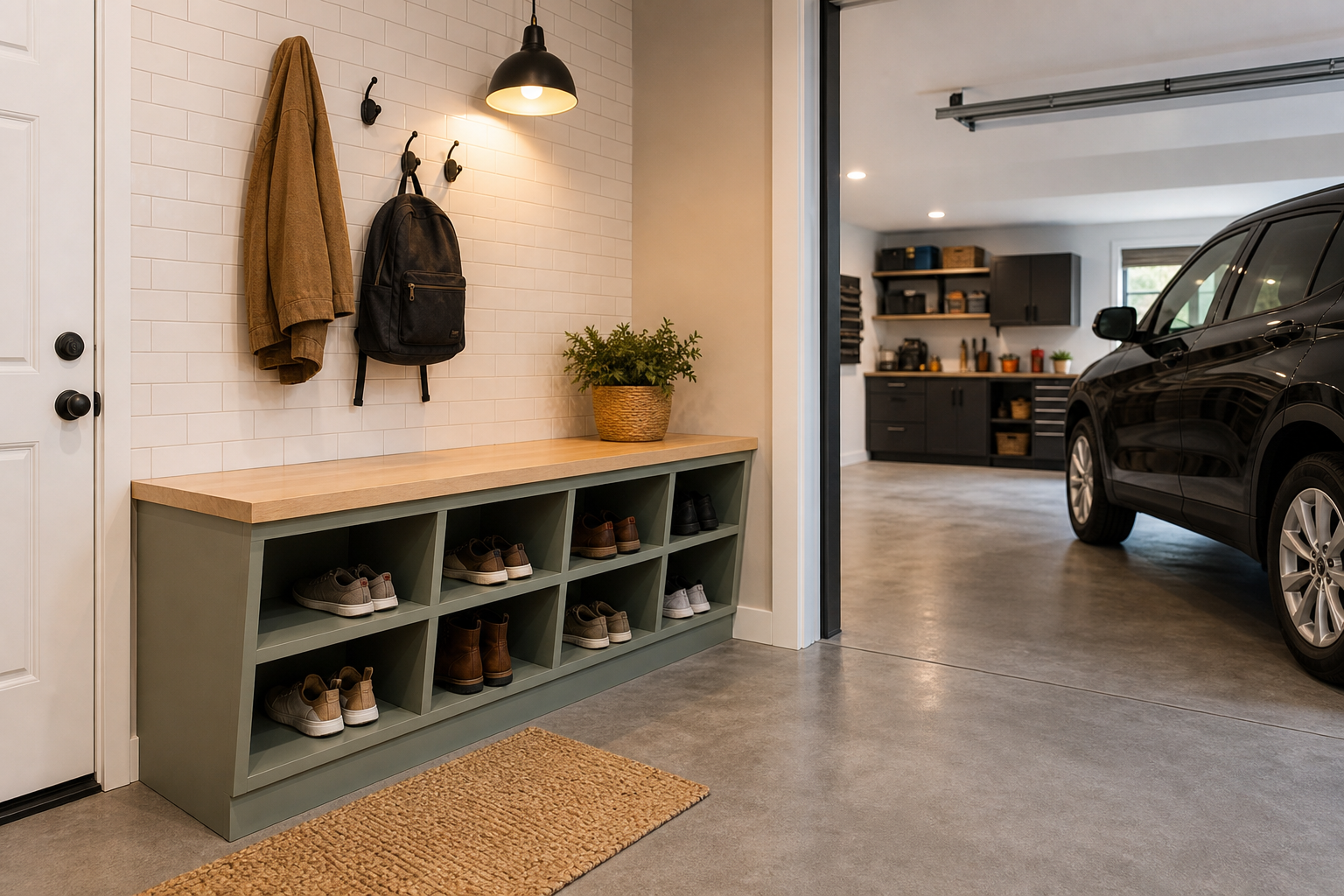
Angled cubby openings make it much easier to grab shoes without digging around, and they display footwear in a way that looks tidier than flat shelves. Sage green paint gives this DIY build a personality that standard wood or white units don’t always have. The natural birch bench top is durable and easy to wipe clean, which matters a lot in a garage setting.
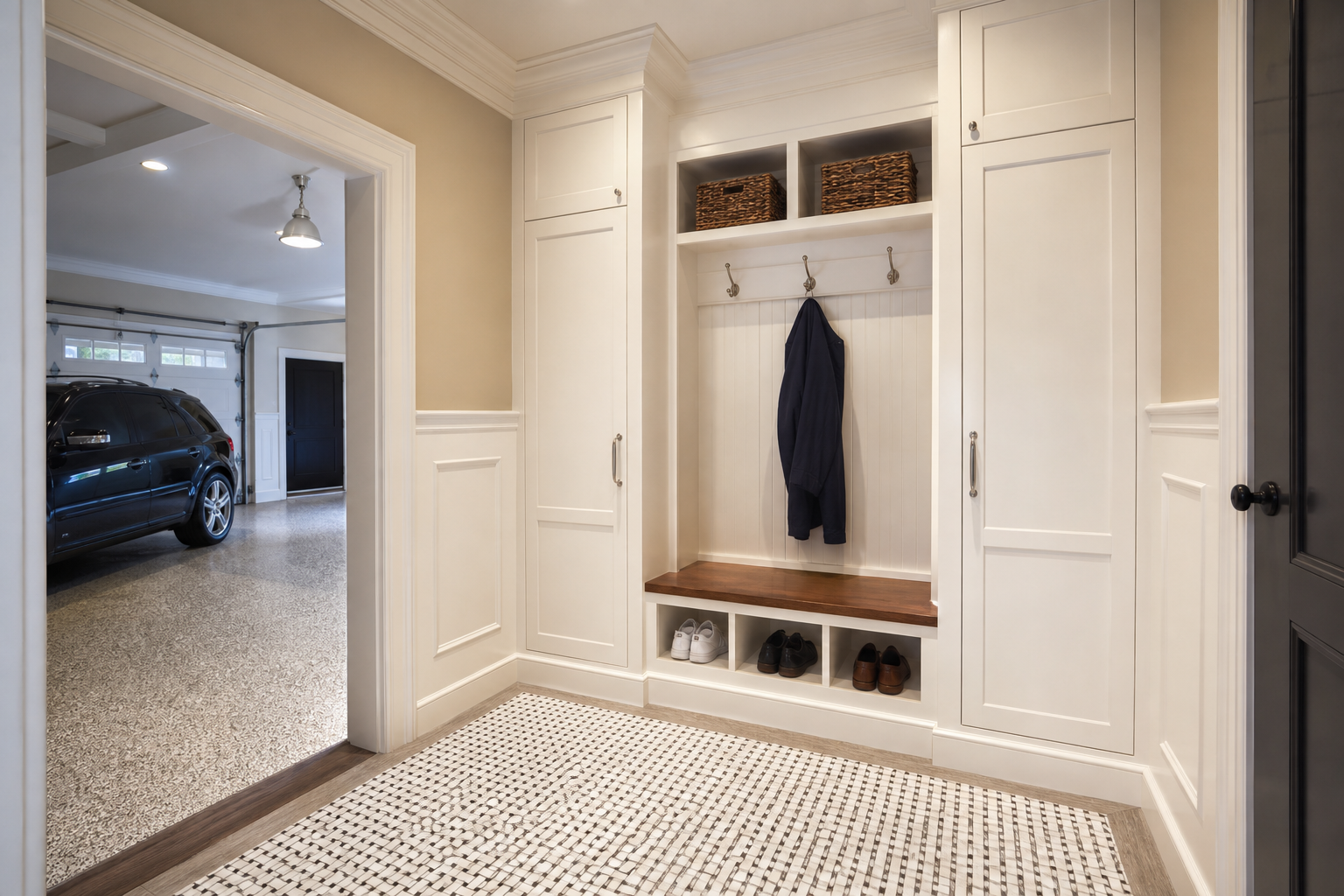
Floor-to-ceiling built-ins like this one make a garage entry feel as finished as any room in the house. The closed cabinet panels on each side handle overflow storage, coats, and seasonal gear so the open shoe cubbies stay uncluttered. If you’re thinking through the full layout before building, planning your garage storage layout is a good place to start so the dimensions work with your space.
Boot and Seasonal Storage
Boots and seasonal footwear present a different storage challenge than everyday sneakers. They’re bulkier, they often come in wet or muddy, and you only need them for part of the year. Dedicated boot racks, tray-and-rack combos, and lidded bins all solve this in different ways. I’ve found that keeping boots near the garage door makes more sense than bringing them inside, especially after a wet day outdoors. For anyone managing a full seasonal rotation, the guide to storing seasonal tires in the garage is a good reminder that bulk seasonal items generally do better in the garage than anywhere else in the house.
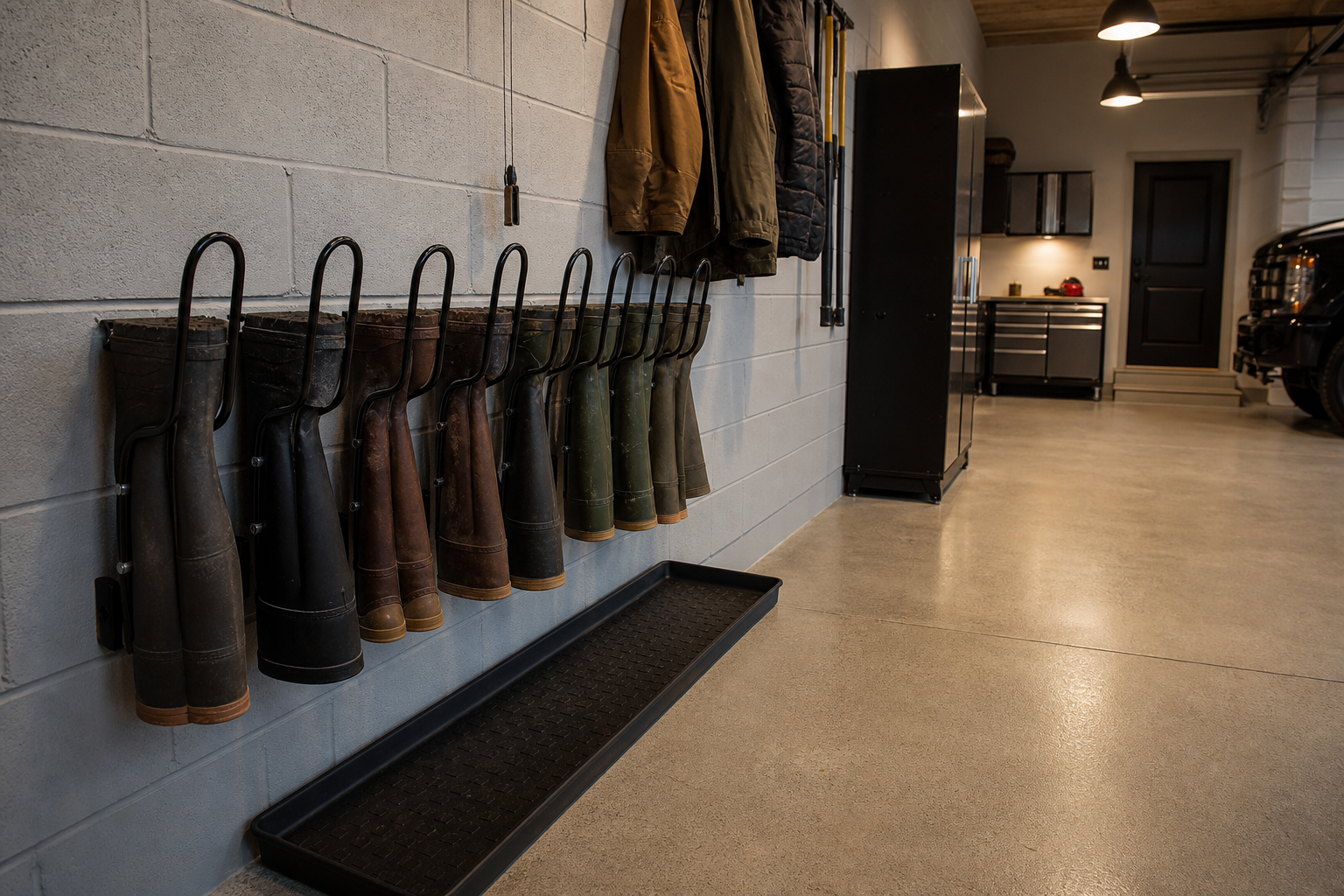
Vertical boot holders keep tall boots from flopping over and losing their shape, which is especially important for leather work boots or riding boots. The wide rubber tray underneath catches mud and water so it never hits the floor. This kind of practical, no-frills setup works best near the main garage entry door where wet boots actually get taken off.
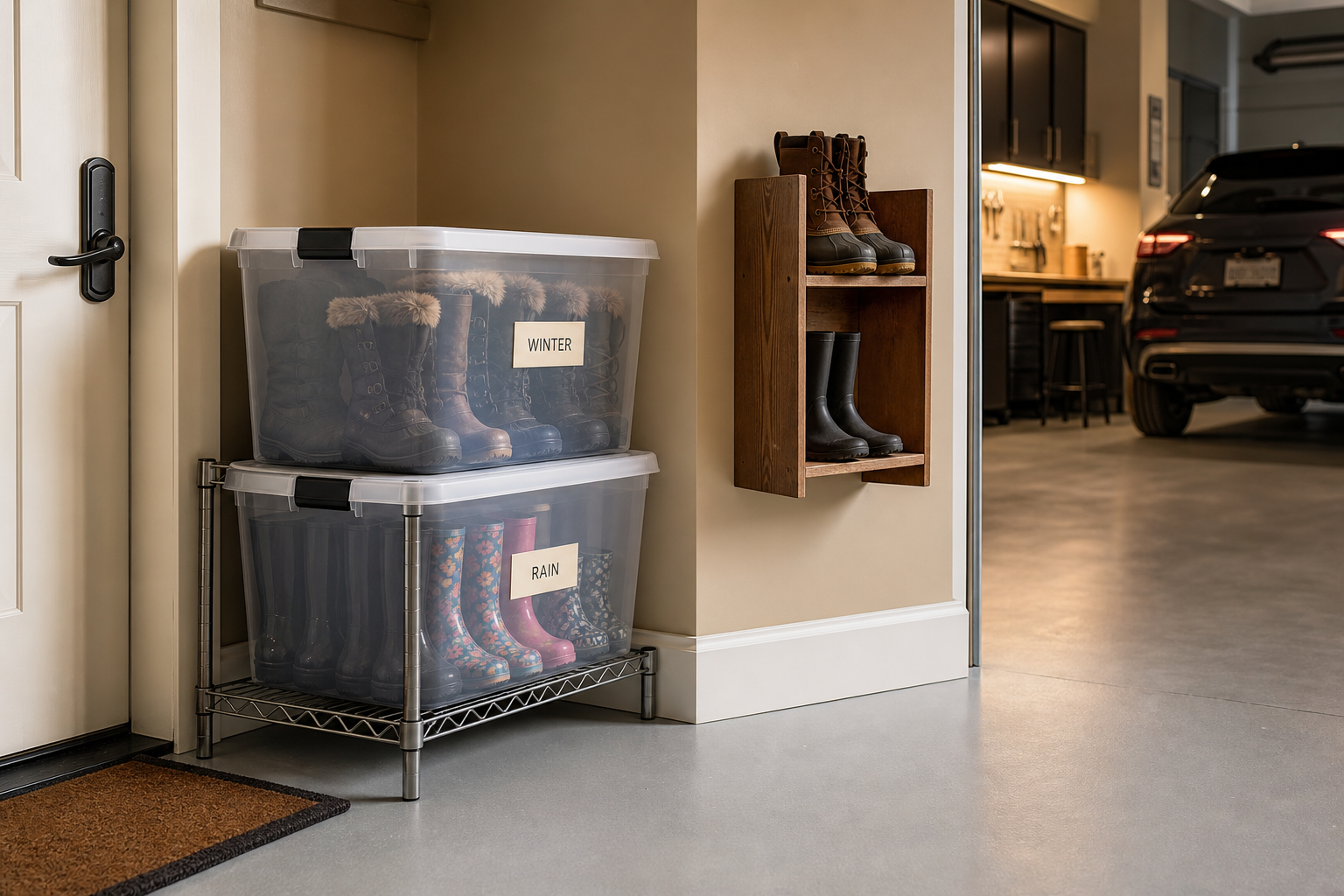
Rotating out-of-season boots into labeled clear bins keeps the active storage area from becoming overcrowded. The clear lids mean you can see exactly what’s inside without pulling everything out. Keeping the bins on a low shelf rather than directly on the floor protects footwear from moisture and makes the bins easier to access when seasons change.
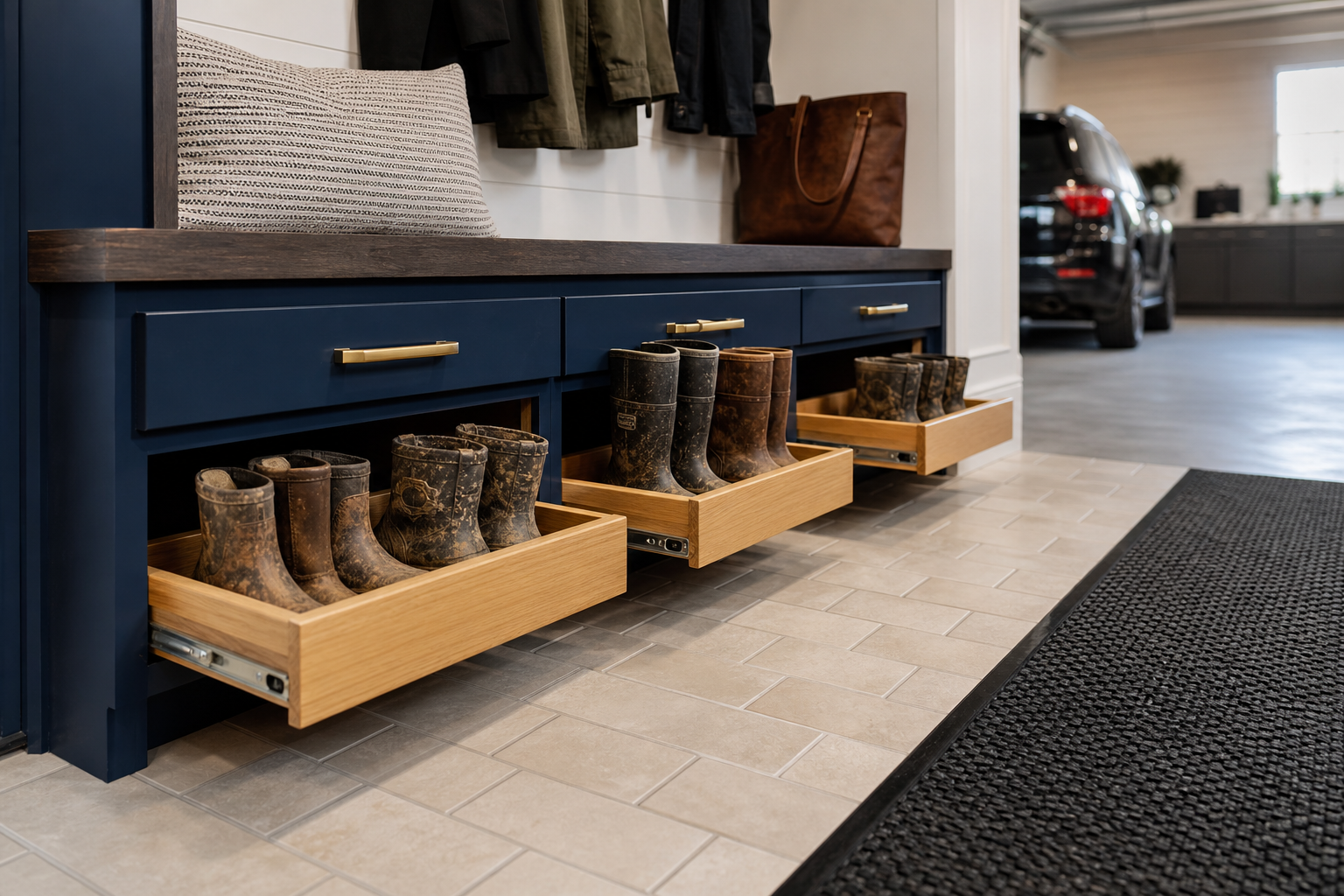
Pull-out boot trays are one of the cleaner solutions for wet and muddy footwear because everything stays contained until it dries. The navy cabinet faces with brass hardware give this entry a polished look that’s rare in a garage setting. Each tray slides out fully so you’re not reaching into a deep cabinet to grab boots from the back.
Family Entry Zones
When multiple people use the same garage entry every day, individual organization matters more than shared storage. Assigning each family member their own section, color, or cubby dramatically reduces the chaos. A well-designed family entry zone combines shoe storage with hooks, a bench, and sometimes a small shelf or bin for each person. These zones can be built from scratch, assembled from modular components, or put together from off-the-shelf units. If you want to think about the broader picture of how zones work across a garage, this guide to creating organized garage zones covers tools, lawn gear, and family areas together so the whole space works as a system.
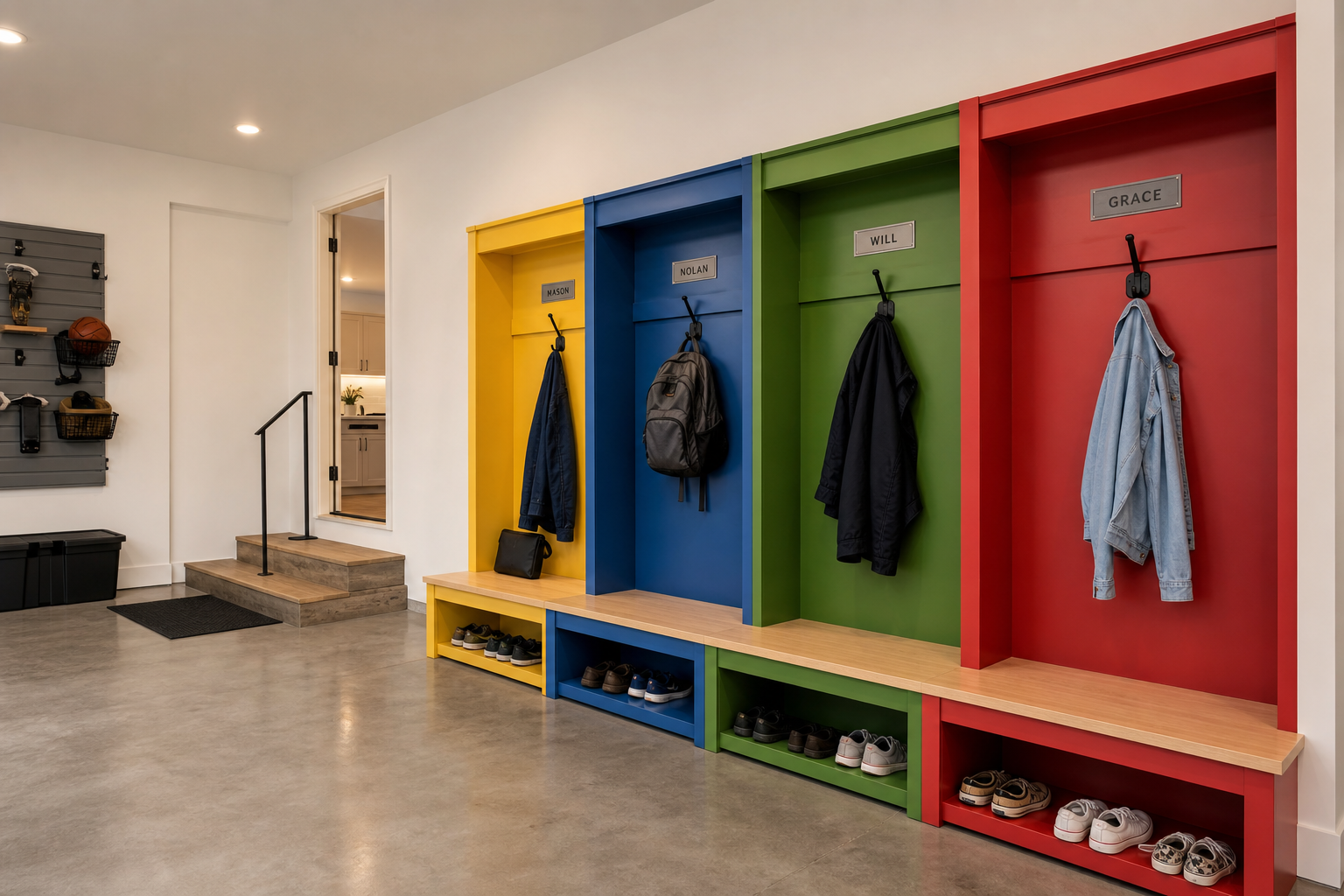
Color-coding each person’s section is the single most effective way to keep a family entry zone functioning, because it removes any question about where things belong. The continuous bench top ties the four units together so the wall reads as one piece of furniture rather than four separate units. Name labels or small chalkboard panels on each section give kids a sense of ownership, which actually makes them more likely to use the system. If you’re also managing bikes, balls, and other gear nearby, garage ball storage ideas work well as part of the same entry zone design.
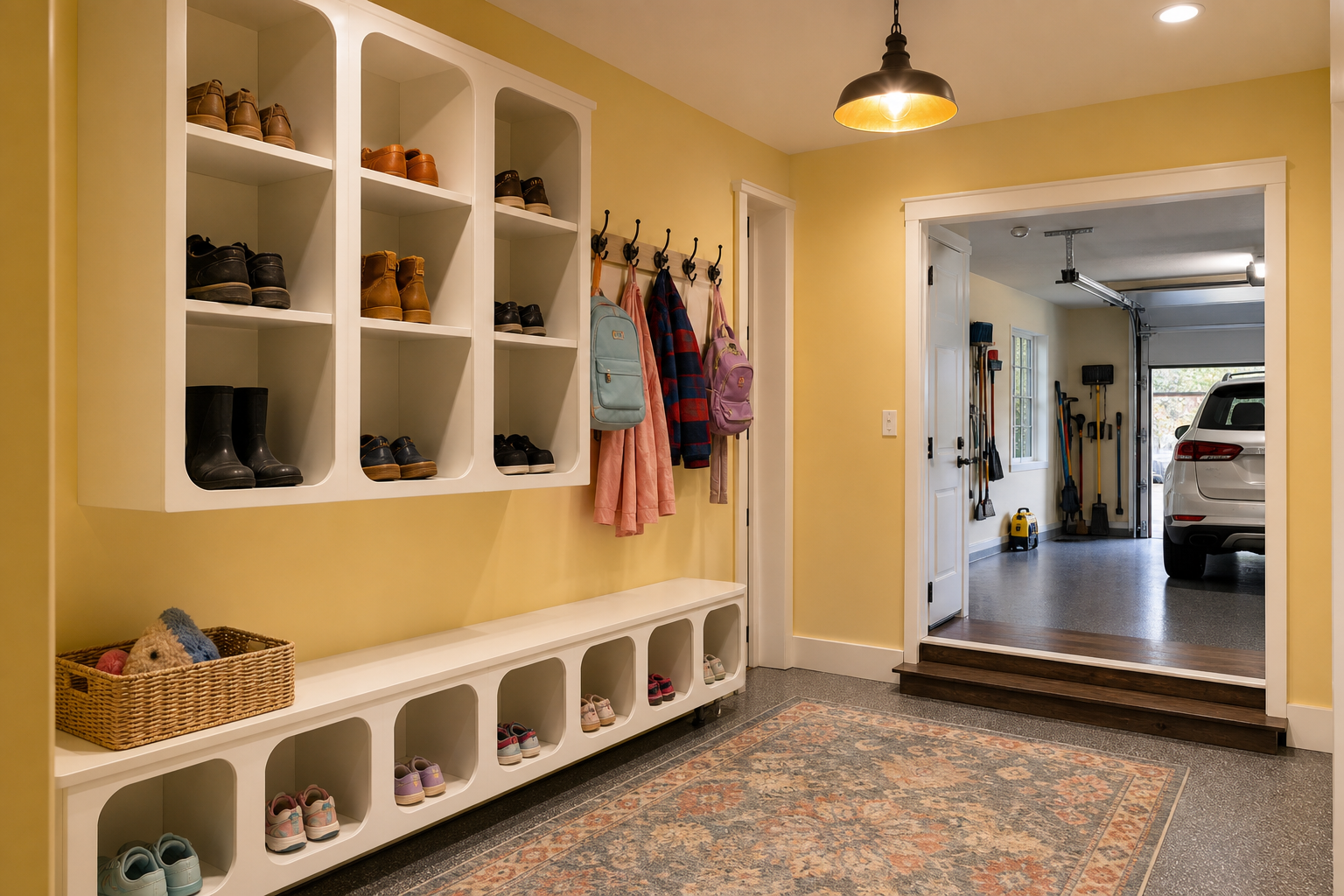
Designing a garage entry at two height levels means kids can actually use it independently, which matters more than most parents expect. Lower cubbies with rounded edges keep small shoes contained and safe, while the adult rack above stays out of the way of small hands. Backpack hooks at multiple heights mean everyone can hang their own bag without help, which genuinely speeds up the morning routine.
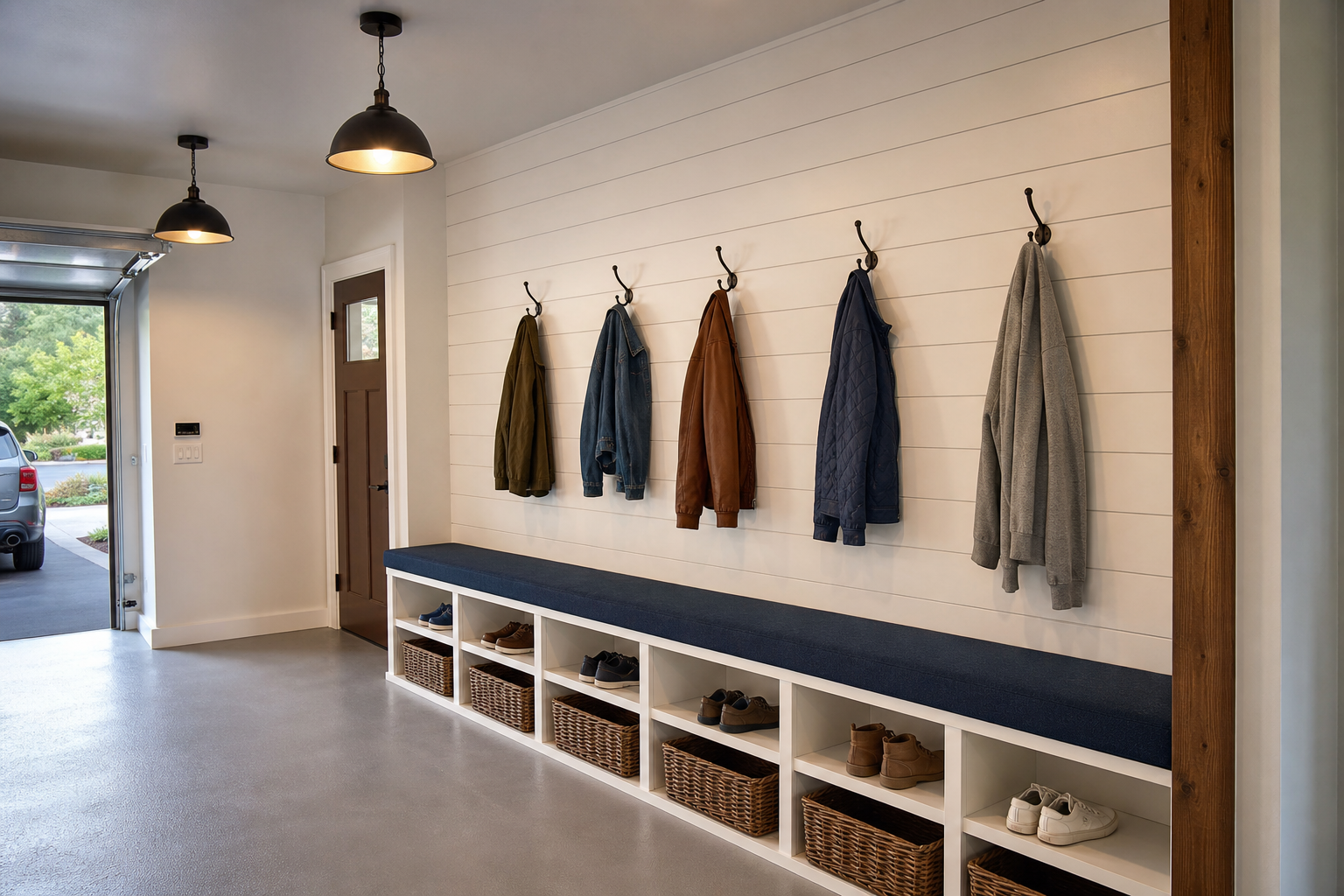
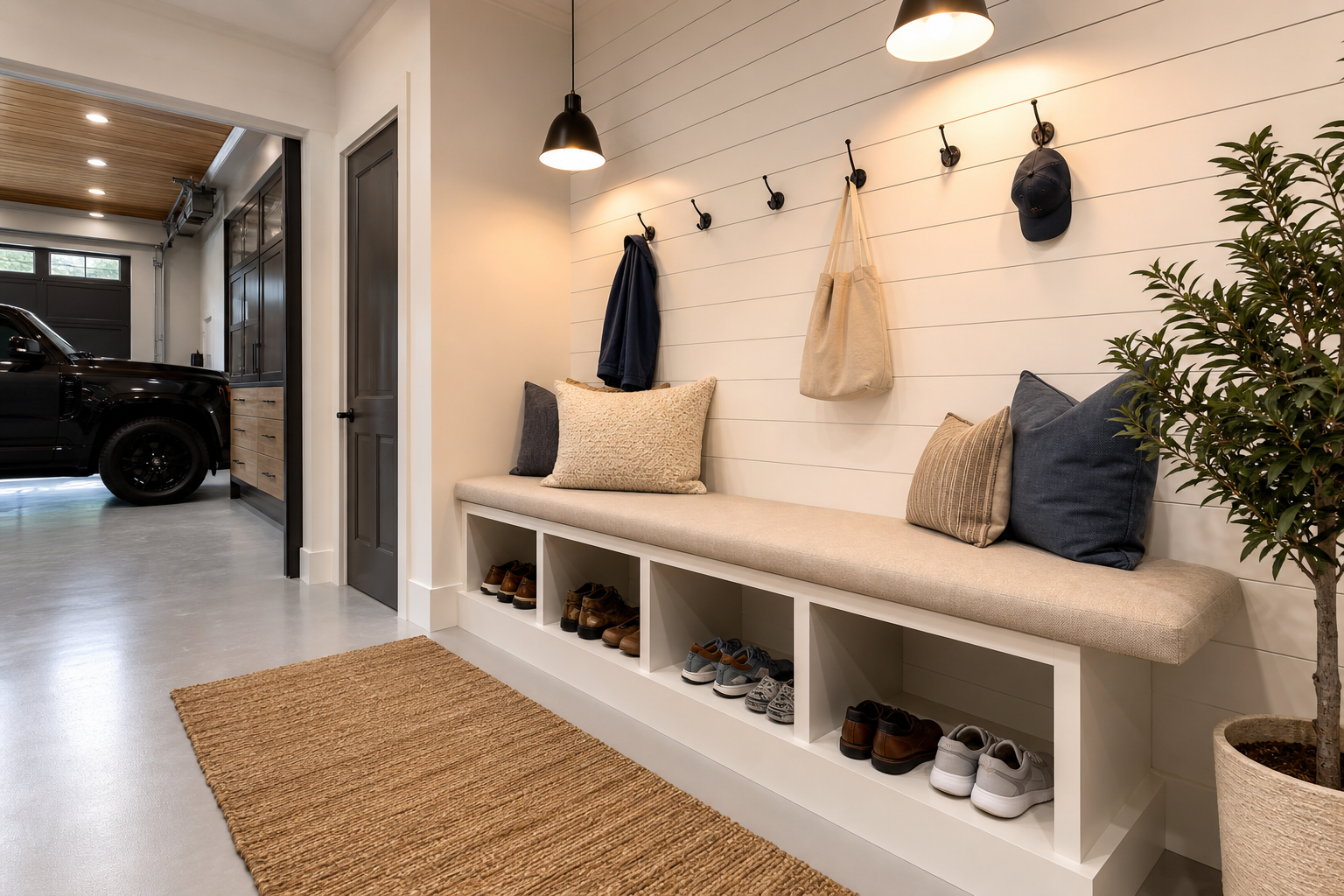
A long upholstered bench with individual cubbies below and dedicated hooks above is the format that holds up best for busy families over the long term. The woven baskets tucked under each cubby section handle the inevitable overflow of hats, gloves, and loose items without disrupting the clean sightline. White shiplap makes the wall feel finished and reflects light well, which helps a garage entry feel less like a utility space and more like part of the home.
