


As an Amazon Associate I earn from qualifying purchases.
A garage makes a surprisingly great podcast studio. The space is already separate from the main house, you can control who walks in, and there’s usually enough room to set things up properly without cramping your workflow. In this article I’m covering four areas that matter most when building a garage podcast studio: acoustic treatment setups, desk and mic stations, lighting for video, and cable and gear organization.
Acoustic Treatment Setups
Bad acoustics will ruin a great podcast faster than almost anything else. Garages have hard concrete walls, metal doors, and open ceilings that bounce sound all over the place. The good news is that treating a garage for audio doesn’t have to cost a fortune. A mix of acoustic panels, bass traps, and soft furnishings can bring the room under control. If you’re working with a tight budget, our guide to affordable garage acoustic panels is a solid place to start, and it’s worth pairing that with some basic garage insulation to knock out noise coming through the walls and door.

Charcoal grey acoustic foam panels line all three recording walls here, creating a tight, dead sound that’s ideal for voice work. The rubber tile floor adds another layer of absorption underfoot while keeping the space easy to clean. Warm LED strip lighting along the ceiling perimeter softens the look so it doesn’t feel like a closet.

Corner bass traps are one of the most effective things you can add to a garage studio because corners are where low frequencies stack up and cause muddiness. These cylindrical traps are wrapped in natural beige fabric that keeps the room feeling warm rather than clinical. The angled panel frames behind them help scatter mid-range frequencies evenly.

Suspended ceiling baffles are a smart choice when you want acoustic treatment without covering every inch of wall space. These dark teal and slate grey panels hang from standard ceiling track hardware, which makes them easy to reposition as needed. The exposed wood joists above give the setup a raw, creative feel that works well on camera.
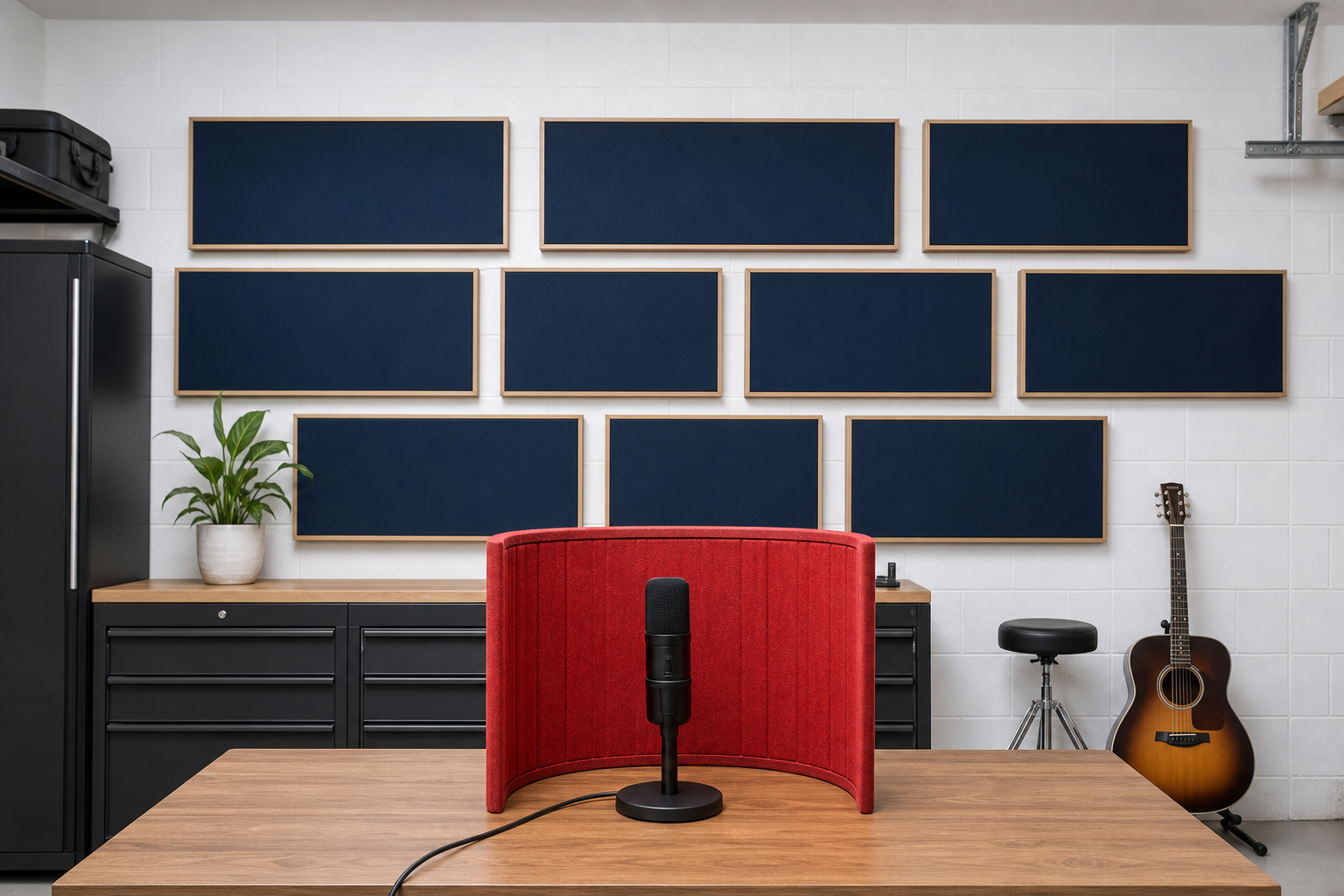
These DIY panels are built from standard lumber frames packed with rigid mineral wool and wrapped in deep navy blue fabric. The staggered brick pattern is more than decorative because it improves diffusion compared to a flat grid. This approach is covered in detail in the complete guide to soundproofing a garage studio, which walks through both panels and door treatments.
Desk and Mic Stations
Your desk and mic setup is the heart of any podcast studio, and in a garage you have more flexibility than you’d think. You can go wall-mounted floating desks to save floor space, or build out a full broadcast-style island in the center of the room. Either way, ergonomics matter. Your mic should be at mouth height without you hunching, and your monitors or headphone amp should be within easy reach. If you’re working with a smaller one- or two-car garage, the ideas in our small garage organization guide can help you plan the layout before you start drilling anything into walls.
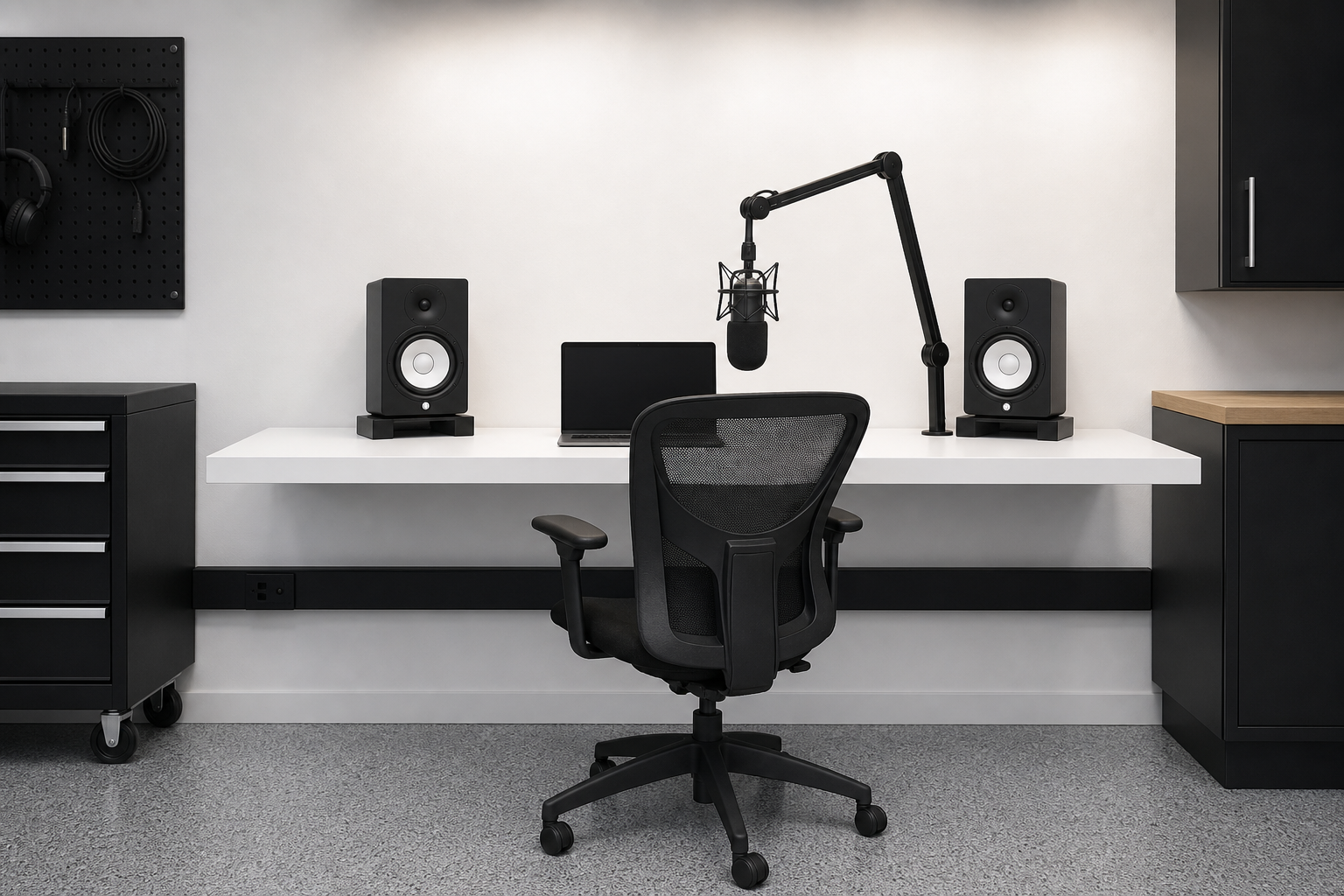
A floating wall-mounted desk keeps the floor clear, which is useful when a garage does double duty as a parking spot or workshop. This white laminate version pairs cleanly with matte black gear and a simple cable raceway that hides all the wiring behind the desk surface. The broadcast boom arm keeps the mic at the right height without eating up any desk real estate.

Running a two-host show means you need a desk setup that works for both people at once without feeling cramped. This dark walnut surface is wide enough to keep each host’s mic, headphone amp, and notes separate. The two chairs facing each other naturally creates the conversational energy that makes interview-style podcasts feel alive.

A standing-height station like this one is great if you prefer to record on your feet or want to record video content where you need to move around. The slatwall panel behind the station holds headphones, spare cables, and a pop filter on hooks, all within arm’s reach. The industrial combination of exposed metal and concrete floor keeps the look intentional rather than unfinished.
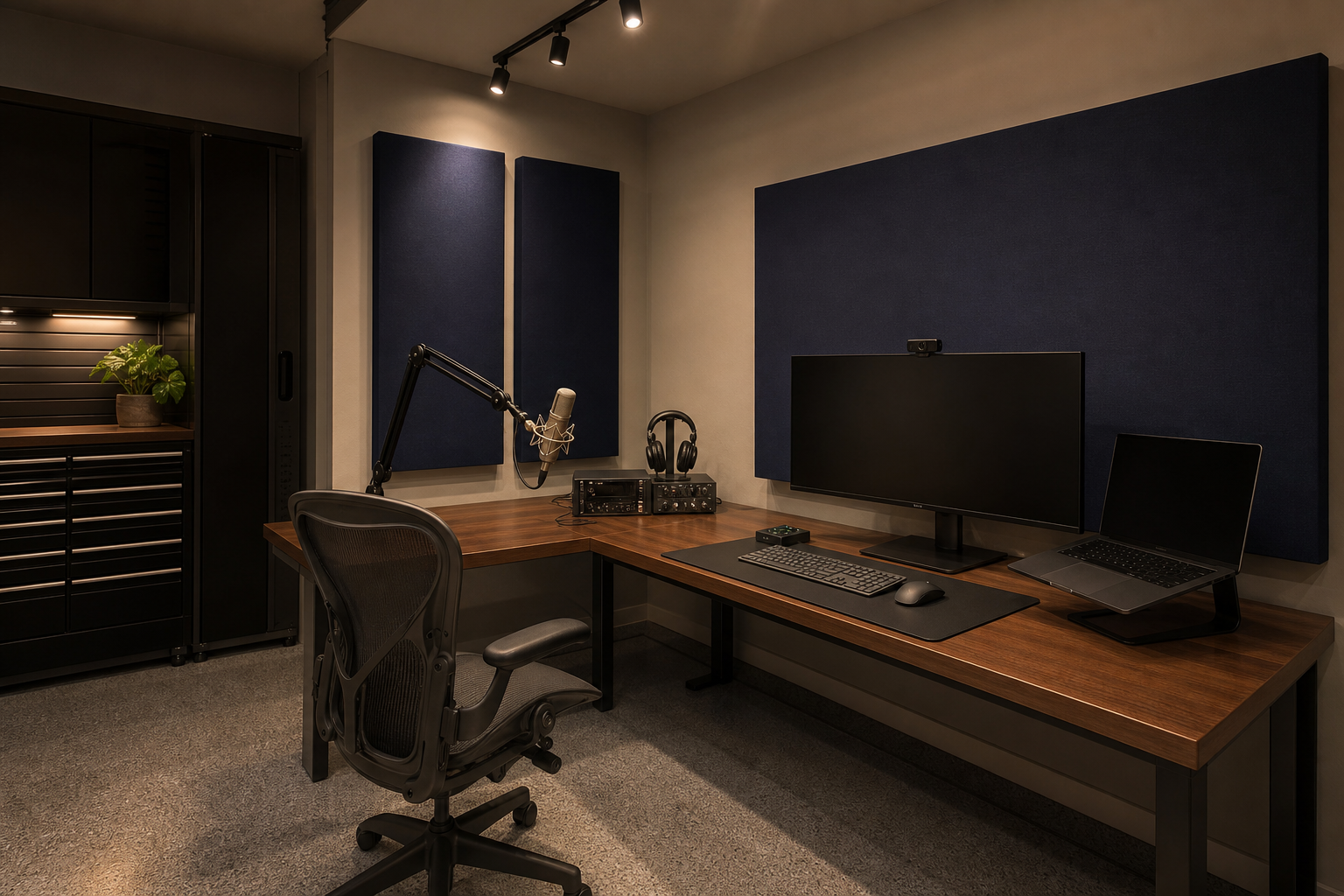
An L-shaped corner desk separates your recording side from your editing side, which cuts down on accidentally bumping your microphone while working. This warm wood laminate version fits snugly into the corner and makes good use of wall space that would otherwise go to waste. The navy acoustic panels in the background pull double duty as both treatment and backdrop for video recording.
Lighting for Video
If you’re recording video alongside your audio, lighting becomes just as important as acoustics. Flat, harsh lighting from overhead shop lights will make your face look washed out and your set look cheap. Key lights, fill lights, and a solid background light work together to give your video a polished, professional look. Garages don’t always have great natural light, so you’ll be relying on your own fixtures almost entirely. For a deeper look at how to plan a lighting layout that works for both function and video, the garage lighting layout guide covers the zone-by-zone approach really well. You might also want to check out the smart lighting setup guide for garage man caves, which has solid advice on dimmable and color-tunable options that translate directly to a podcast studio.
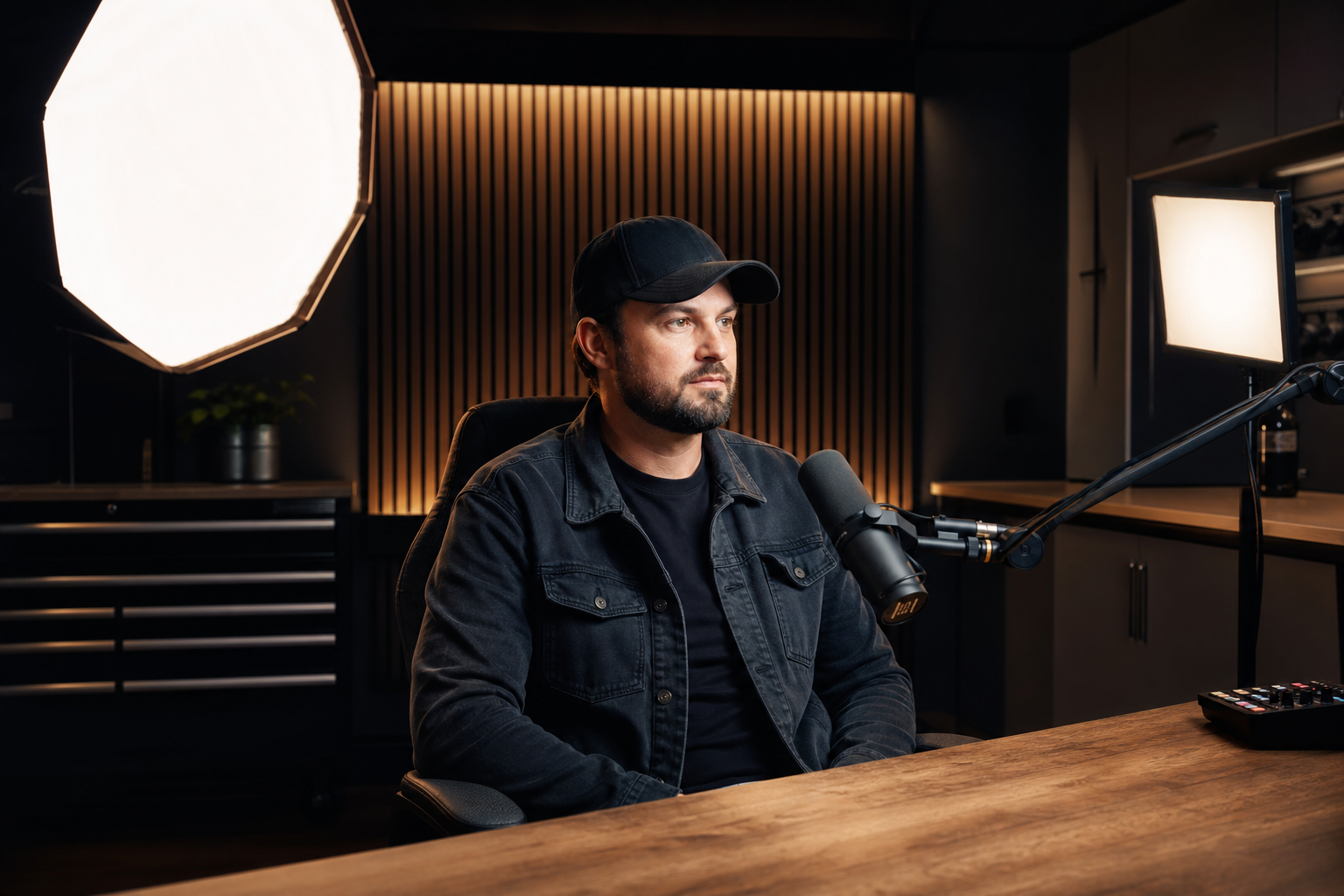
Three-point lighting is the standard for a reason. The large octagon softbox key light wraps around the subject’s face while the smaller fill light on the opposite side prevents harsh shadows. The warm backlight behind separates the subject from the acoustic panel background and adds depth to the frame.
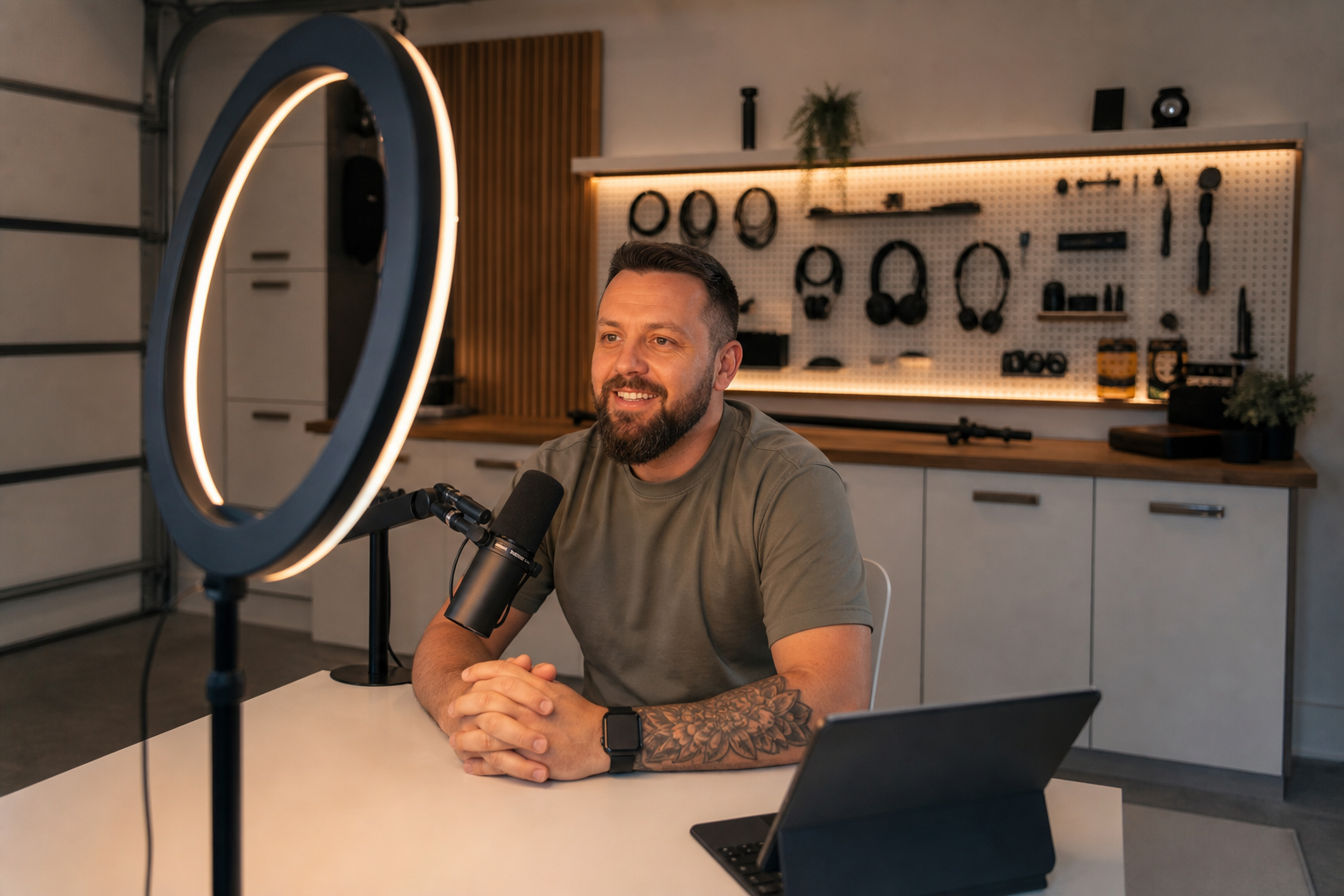
A ring light on a floor stand is a fast and affordable way to get clean, even light on your face for video without setting up a full three-light rig. The warm strip lighting behind on the pegboard gear wall creates a visually interesting background that also shows off your setup. This kind of layered lighting approach makes a garage studio look much more intentional on screen.
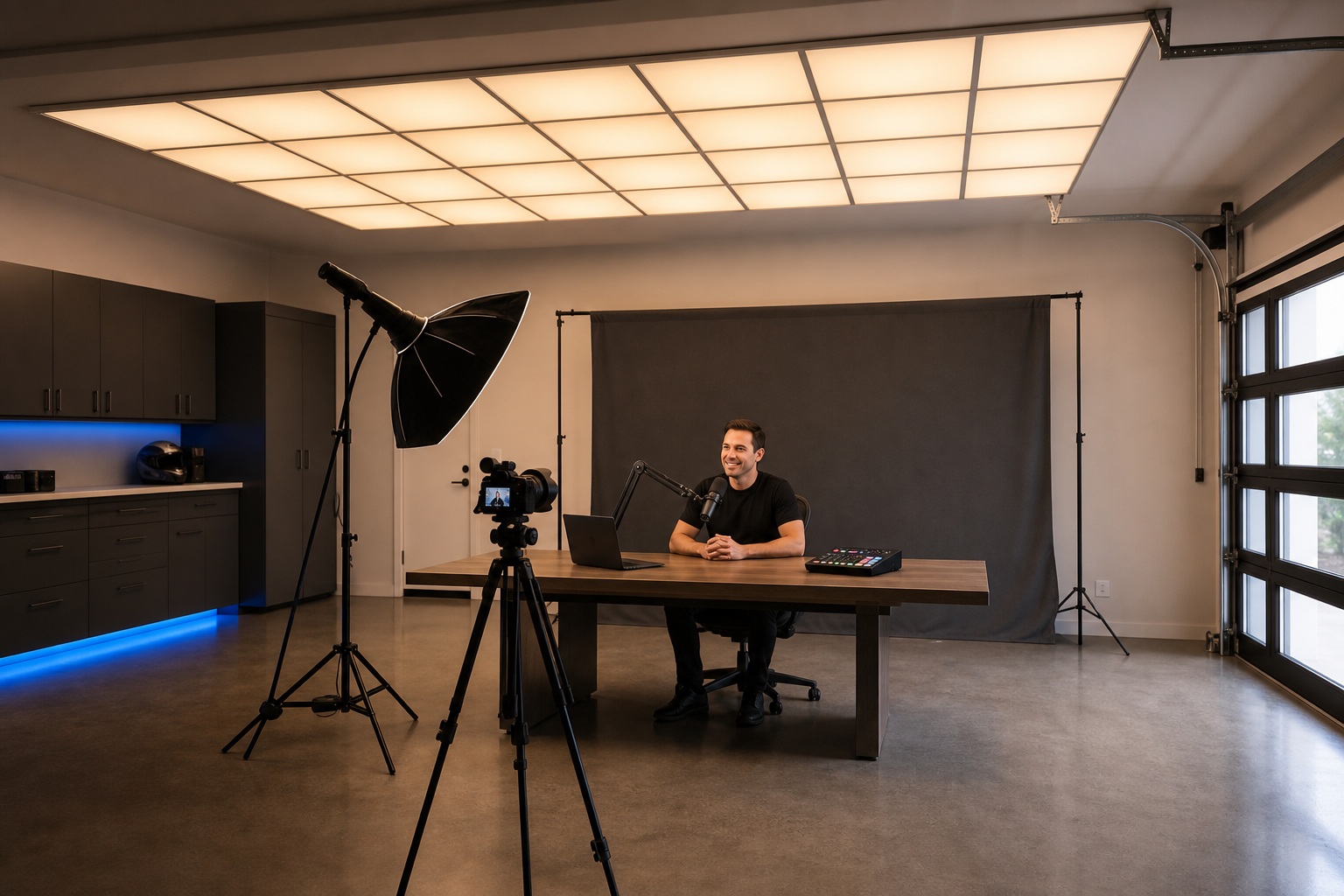
Color-tunable LED ceiling panels give you the flexibility to dial in the exact warmth or coolness that looks best on your specific camera. A fabric backdrop stand behind the chair keeps the background clean and consistent from episode to episode without having to treat an entire wall. The blue LED accent strip along the lower shelf adds a broadcast studio feel that reads really well on video.
Cable and Gear Organization
Nothing slows down a recording session like hunting for a cable or accidentally unplugging the wrong thing. Good cable and gear organization in a garage studio isn’t just about looking tidy on camera, it’s about being able to focus on your content instead of your setup. Wall-mounted solutions, cable raceways, and labeled patch panels all help. Garages have plenty of wall space to work with, and if you’ve already put up garage wall panels, adding hooks, shelving, and cable clips becomes even easier. For ideas on turning that wall space into a proper gear storage system, the guide to installing pegboard for tool organization translates almost directly to audio gear storage.
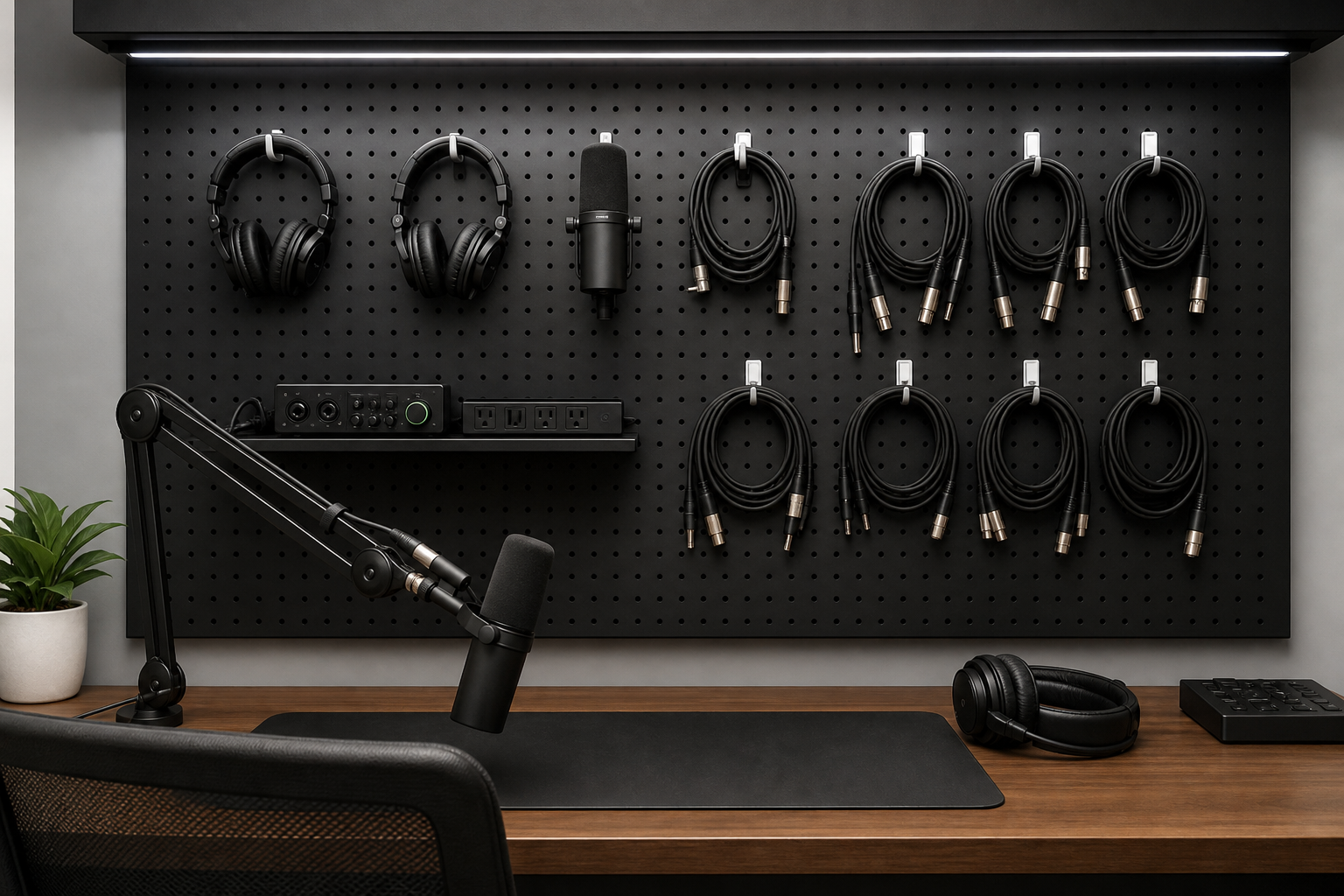
A sheet of black pegboard behind the desk turns an otherwise blank wall into a fully functional gear station. Every cable is coiled and hung on a dedicated hook with a small label tag so you never grab the wrong one mid-session. The shelf-mounted audio interface and power strip keep the desk surface clear while still sitting close enough to reach without standing up.
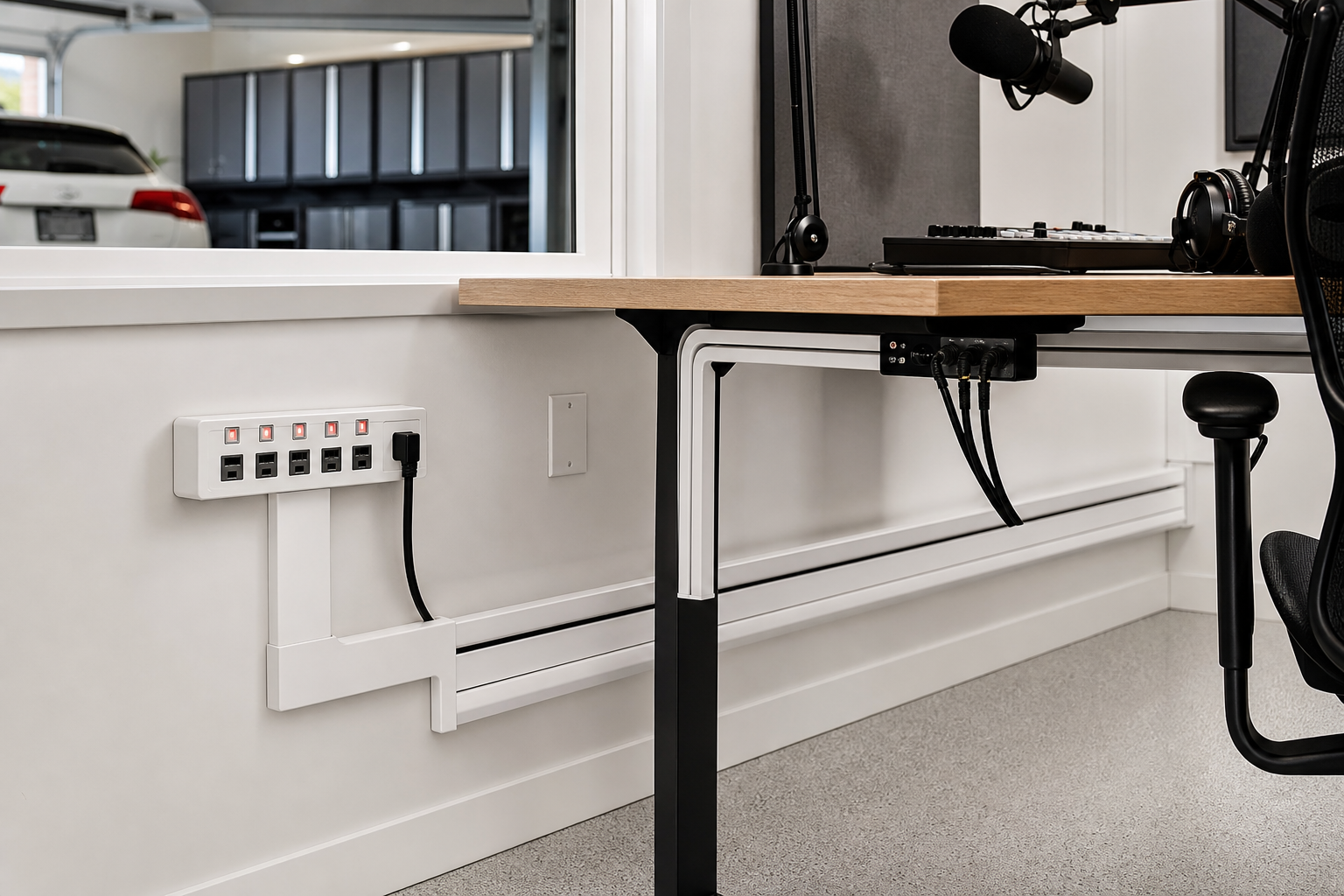
Running audio cables and power cables through separate raceways is a small detail that makes a real difference in signal quality since power cables can introduce hum when they run alongside unbalanced audio lines. These white plastic raceways clip to the wall and desk edge cleanly without any drilling damage. A wall-mounted power strip with individual switches means you can power down each device separately without crawling under the desk. If you’re routing network or ethernet lines too, the guide to running ethernet to a garage covers the cleanest way to get a wired connection into the space.
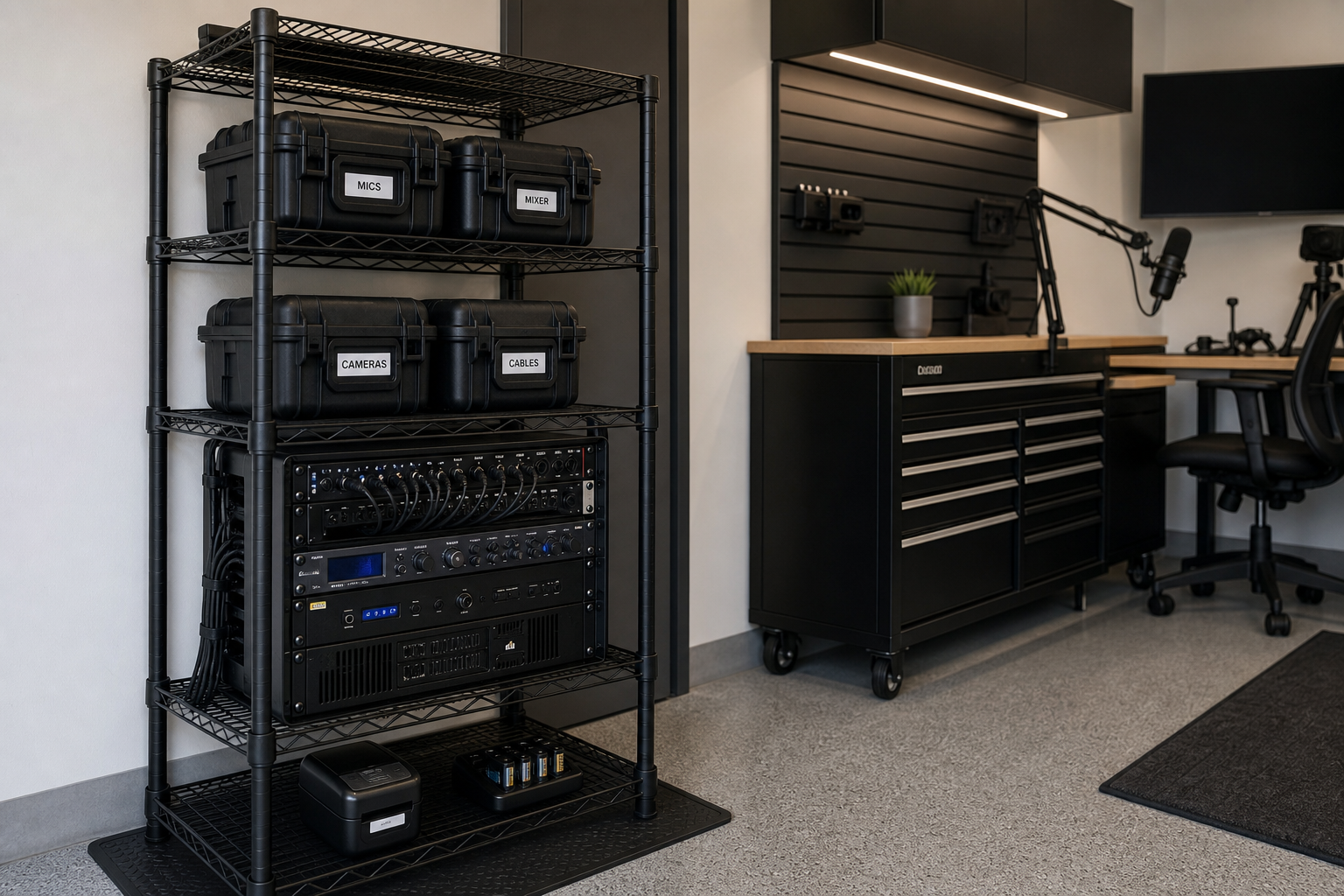
A proper equipment rack in the corner keeps all your signal chain gear together and makes troubleshooting fast because everything is visible and accessible. Velcro ties on the rear cables are much better than zip ties since you can undo and redo them without cutting anything when you need to swap gear. The power conditioner at the top of the rack protects everything below it from the voltage fluctuations that are more common in garage circuits than in your home’s main living areas.
