

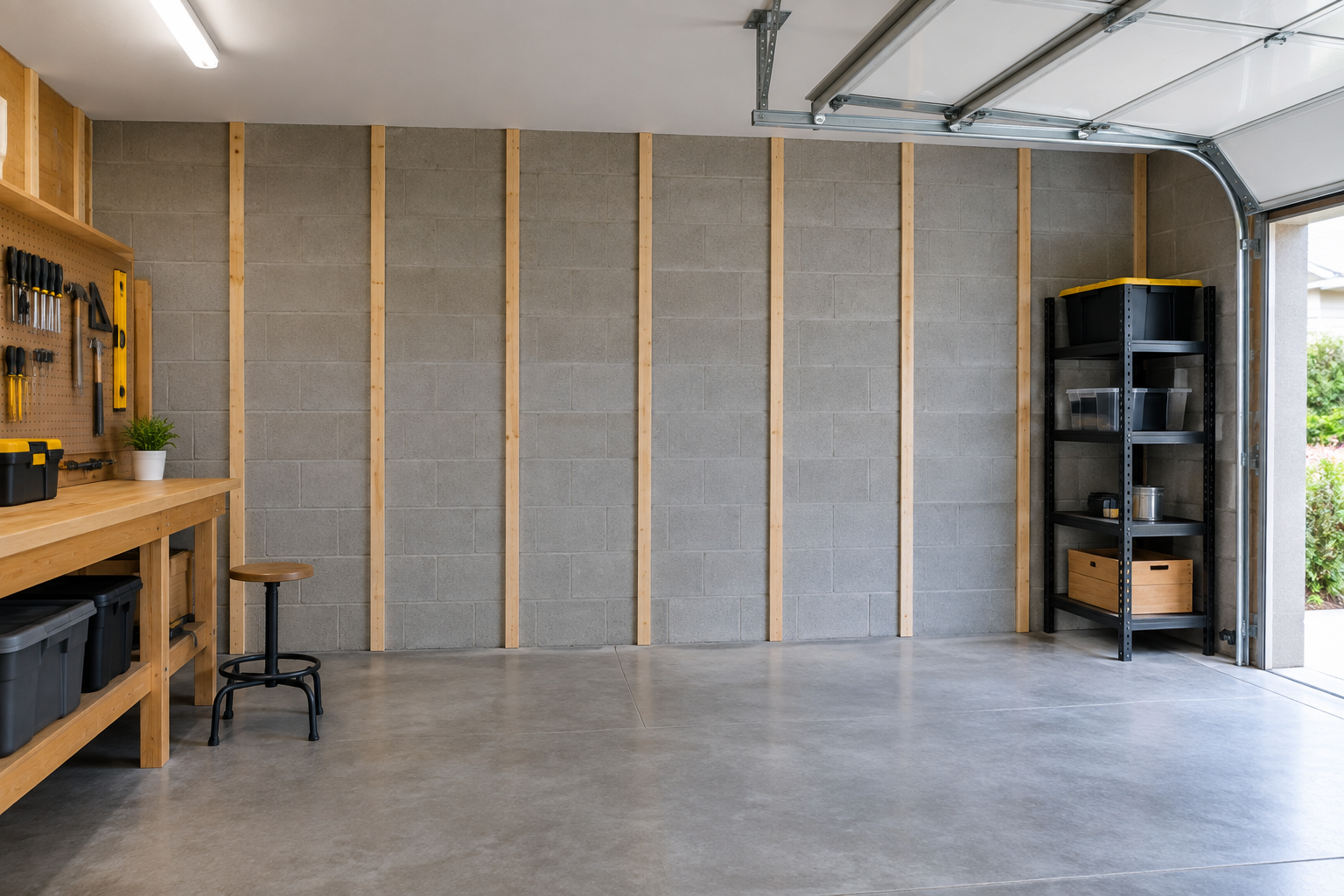
Bare concrete block walls make a garage feel like a bunker. That gray, chalky surface soaks up dust, sheds a fine grit every time you brush against it, and does nothing to help with light or moisture. But framing out the walls and hanging drywall over CMU block is a lot of labor, materials, and lost floor space for a garage you mainly want to look decent and function well.
The good news is you don’t have to choose between raw block and a full drywall build-out. There are several ways to finish concrete block walls that look intentional, hold up to garage abuse, and take a weekend or two instead of a month. Here’s how to pick the right one for your situation.
Start With Moisture, Not Aesthetics
Before you pick a finish, figure out whether your block walls have a moisture problem. Concrete block is porous, and if water is wicking through from the outside, no coating or panel is going to fix that long term. Trapping moisture behind a sealed surface is actually worse than leaving the block bare.
Do a simple tape test. Tape a square of plastic sheeting tightly to the wall and leave it for 24 to 48 hours. If you see condensation on the underside of the plastic or the block darkens beneath it, you’ve got moisture moving through the wall and need to address grading, gutters, or exterior waterproofing first. This is worth doing even if your garage seems dry, since block walls can hide slow seepage for years. For a deeper look at diagnosing this, check out our guide on garage floor moisture problems and our article on fixing high garage humidity, since block walls and slabs often share the same root causes.
If the wall passes the test, you’re clear to move forward with any of the finishes below. If it doesn’t, stick with breathable options like masonry paint rather than anything that fully seals the surface.
Clean and Paint: The Fastest, Cheapest Upgrade
Painting bare block is the simplest way to transform a garage without touching a saw or a trowel. It won’t hide the texture of the block, but it stops dust shedding, brightens the space considerably, and makes the walls easy to wipe down.
Start by cleaning the block with a stiff brush and a masonry cleaner or diluted TSP substitute to remove efflorescence, the white powdery mineral deposits that form on concrete. Skipping this step is the number one reason masonry paint peels within a year. Once the wall is dry, apply a dedicated masonry primer before your topcoat. A concrete block primer soaks into the porous surface and gives your paint something to grip, instead of just sitting on the surface and flaking off.
KILZ Masonry, Stucco and Brick Interior/Exterior Primer
A go-to primer for porous block and concrete surfaces that helps paint bond and last.
For the topcoat, use a 100% acrylic masonry or elastomeric paint rather than standard interior wall paint. These formulas flex slightly with temperature swings and resist the moisture vapor that naturally passes through block. Two coats with a thick-nap roller, built for texture, will get into the mortar joints and give you even coverage. If you want color inspiration for the space, our roundup of garage wall paint ideas has some good options that work well on masonry too.
Masonry Coatings and Textured Finishes
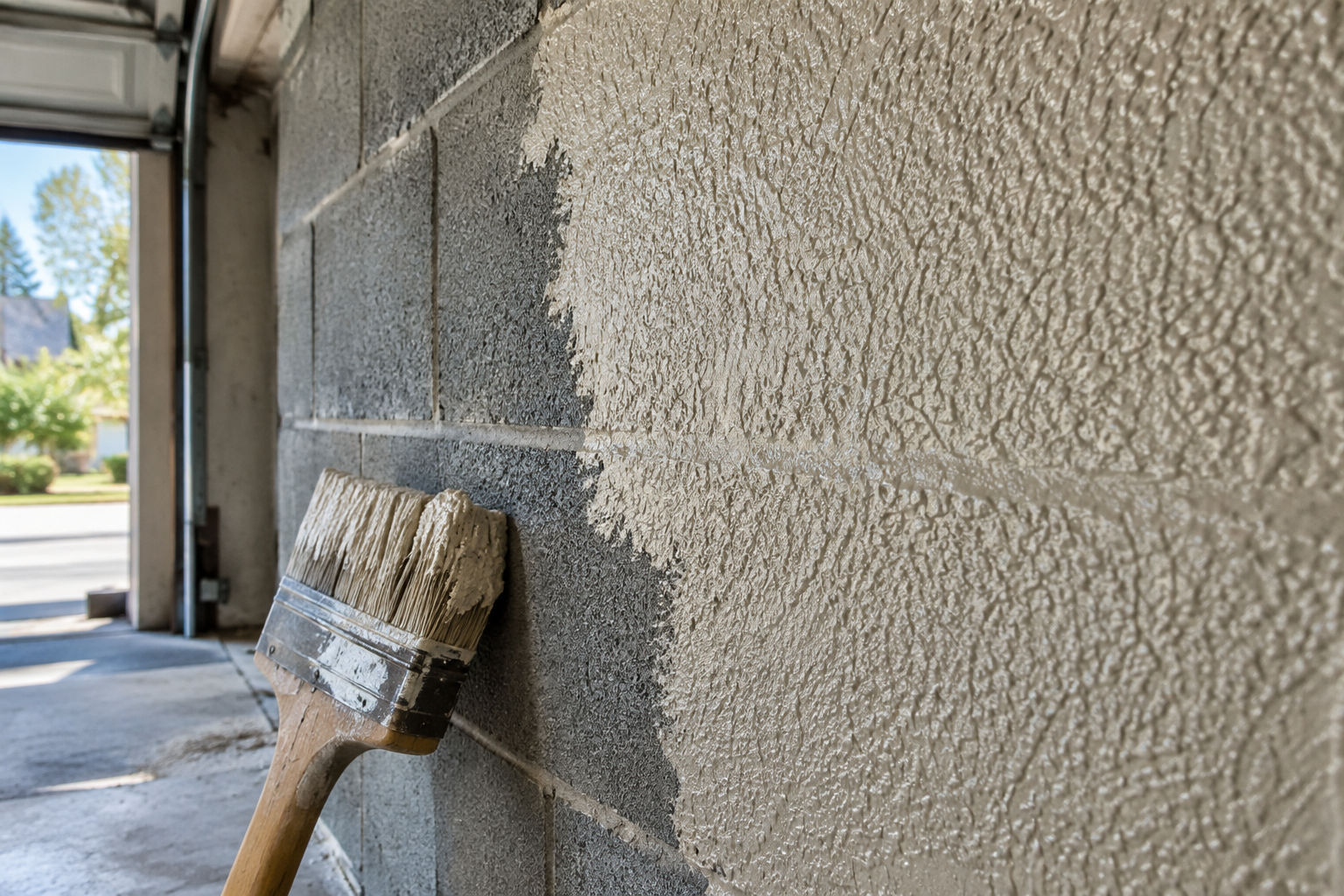
If you want more than paint but don’t need a fully smooth wall, a thick masonry coating is the middle ground. Products designed for waterproofing basements, like elastomeric masonry coatings, go on much thicker than paint and can bridge small cracks and gaps in mortar joints. Some are trowel-applied and leave a slightly stucco-like texture that looks more finished than a flat painted wall.
These coatings work well in garages because they add a layer of protection against wind-driven rain and minor seepage, on top of just looking better. They’re also forgiving of imperfect block, since the thickness hides chips, stains, and uneven mortar work that paint would leave visible. Application usually involves a stiff brush or roller and two coats, similar to painting but with a heavier product.
DryLok Masonry Waterproofer
A thick, brushable coating that both waterproofs and finishes block walls in one product.
Parging for a Smooth Stucco Look
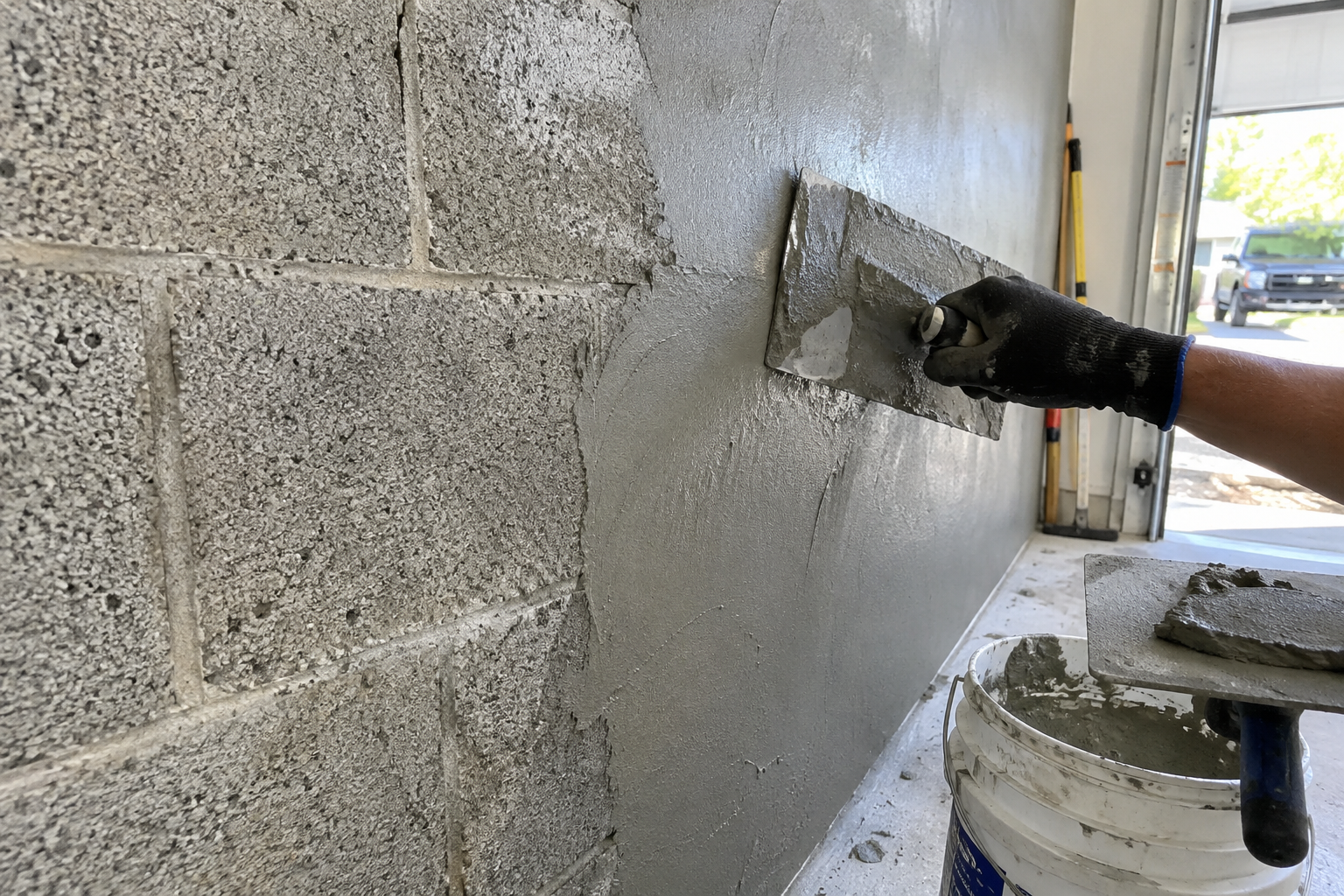
Parging is a thin layer of cement-based mortar troweled directly onto the block to create a smooth, stucco-like surface. It’s the traditional way to dress up a foundation or block wall without covering it in another material, and it holds up extremely well in an unheated garage since it’s cement to begin with.
You’ll need a mason’s trowel, a hawk to hold the mix, and a bonding agent or pre-mixed parging compound formulated to stick to CMU block. The process takes some practice to get an even texture, so plan on doing a small test section first, maybe a hidden corner, before tackling a full wall. Once cured, parging takes paint beautifully and gives you a finish that looks like a real plastered wall instead of obvious block.
This option takes more skill and time than paint or coatings, but it’s still far less work than framing and drywalling. It’s a good choice if you want the smoothest possible look while keeping the wall’s total thickness to a minimum, which matters in a tight one-car garage where every inch counts.
Direct-Mounted Panels Without Framing
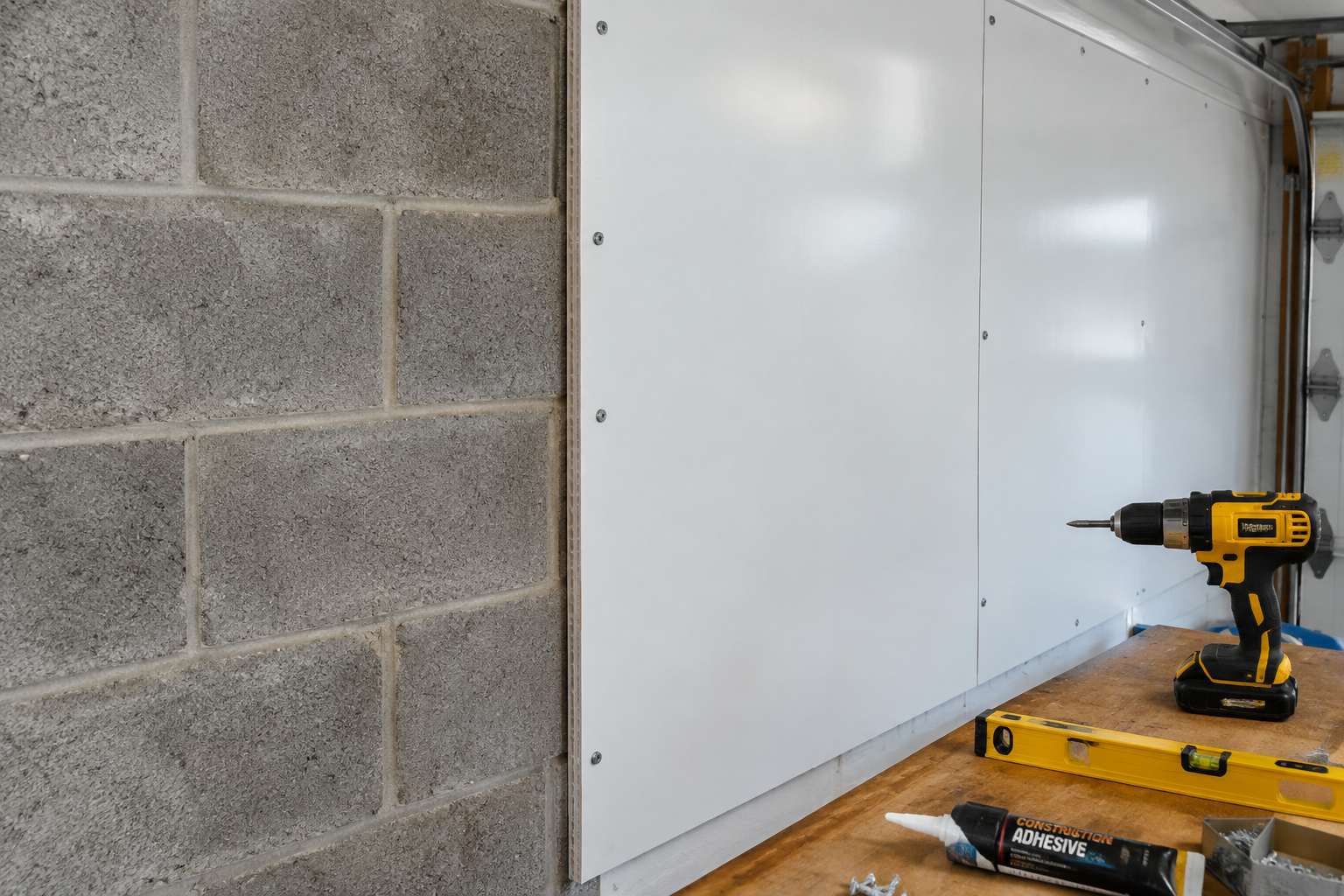
If you like the idea of a paneled look but don’t want to build a stud wall, several products mount directly to block using masonry screws and construction adhesive. PVC and FRP (fiberglass reinforced plastic) panels are common choices because they’re impervious to moisture and easy to clean, which matters in a garage where you’re dealing with road salt, oil drips, and the occasional spill.
To install, you typically snap horizontal furring strips to the block using concrete screws, then screw or glue the panels to the strips. This creates a small air gap between the panel and the block, which helps with any residual moisture and gives you a place to run wiring for outlets or lighting. It’s a fraction of the labor of a framed wall since you skip the stud layout, insulation, and drywall finishing entirely.
Tapcon Concrete Anchor Screws
The standard fastener for attaching furring strips or panels directly to concrete block.
Corrugated metal panels are another popular option for garages, especially if you’re going for an industrial or modern look. They mount the same way with furring strips and hold up to impacts far better than drywall ever would. If you’re weighing panel options against a full drywall build, our comparison of garage drywall vs OSB covers durability and cost tradeoffs that apply here too.
Surface Prep Matters More Than the Finish You Pick
Whatever finish you choose, the prep work is what determines whether it lasts. Fill holes and cracks in the mortar joints with a masonry patching compound before doing anything else, since paint and coatings will telegraph every flaw in the surface underneath. Pressure wash or scrub the wall to remove years of dust, cobwebs, and oil overspray, then let it dry completely, which can take a few days in a cold or damp garage.
Rust-Oleum Concrete Patch and Crack Filler
An easy way to fill mortar gaps and surface chips before painting or coating block walls.
If you’re finishing walls as part of a bigger garage overhaul, it’s worth planning lighting and storage at the same time so you’re not drilling into your new finish later. Our guide to LED garage lighting kits and our garage cabinet ideas article both cover mounting options that work well on block or panel walls.
Frequently Asked Questions
Can I paint over concrete block that already has paint peeling off?
Yes, but you need to remove the loose material first. Scrape and wire-brush off anything that isn’t firmly attached, then prime the exposed block and feathered edges before repainting. Skipping this step just means the new paint peels along with the old.
Do I need to insulate block walls before finishing them?
Not if you’re only painting, coating, or parging, since none of those add meaningful R-value. If you want actual insulation, you’ll need rigid foam board glued or mechanically fastened to the block, which is a separate step from the cosmetic finish and something to research if your garage has heating or cooling. Check our guide on fixing a cold garage for more on that.
Will finishing my block walls help with mice or pests getting in?
Sealing cracks and gaps as part of your surface prep does help, since block walls with open mortar joints or cracks are a common entry point. It shouldn’t be your only line of defense, so pair it with the steps in our article on mouse-proofing your garage for a complete approach.
This article contains affiliate links. We may earn a small commission at no extra cost to you.
