

As an Amazon Associate I earn from qualifying purchases.
A fresh coat of paint is one of the fastest ways to make your garage feel like a real part of your home. Whether you want something calm and clean or bold enough to turn heads, the right wall color sets the tone for everything else in the space. In this article I’ve pulled together 15 garage wall paint ideas across four categories: neutral base tones, bold accent walls, two-tone combinations, and durable finish choices.
Neutral Base Tones
Neutral colors are the backbone of a well-designed garage. They make the space feel larger, brighter, and more organized without competing with your tools, cabinets, or flooring. I’ve used light grays and warm whites in my own garage and they genuinely make the space feel cleaner day to day. If you’re still figuring out your full color direction, starting with a neutral base gives you flexibility to add accents later. Take a look at the best garage paint colors for more ideas on shades that work well in different lighting conditions.
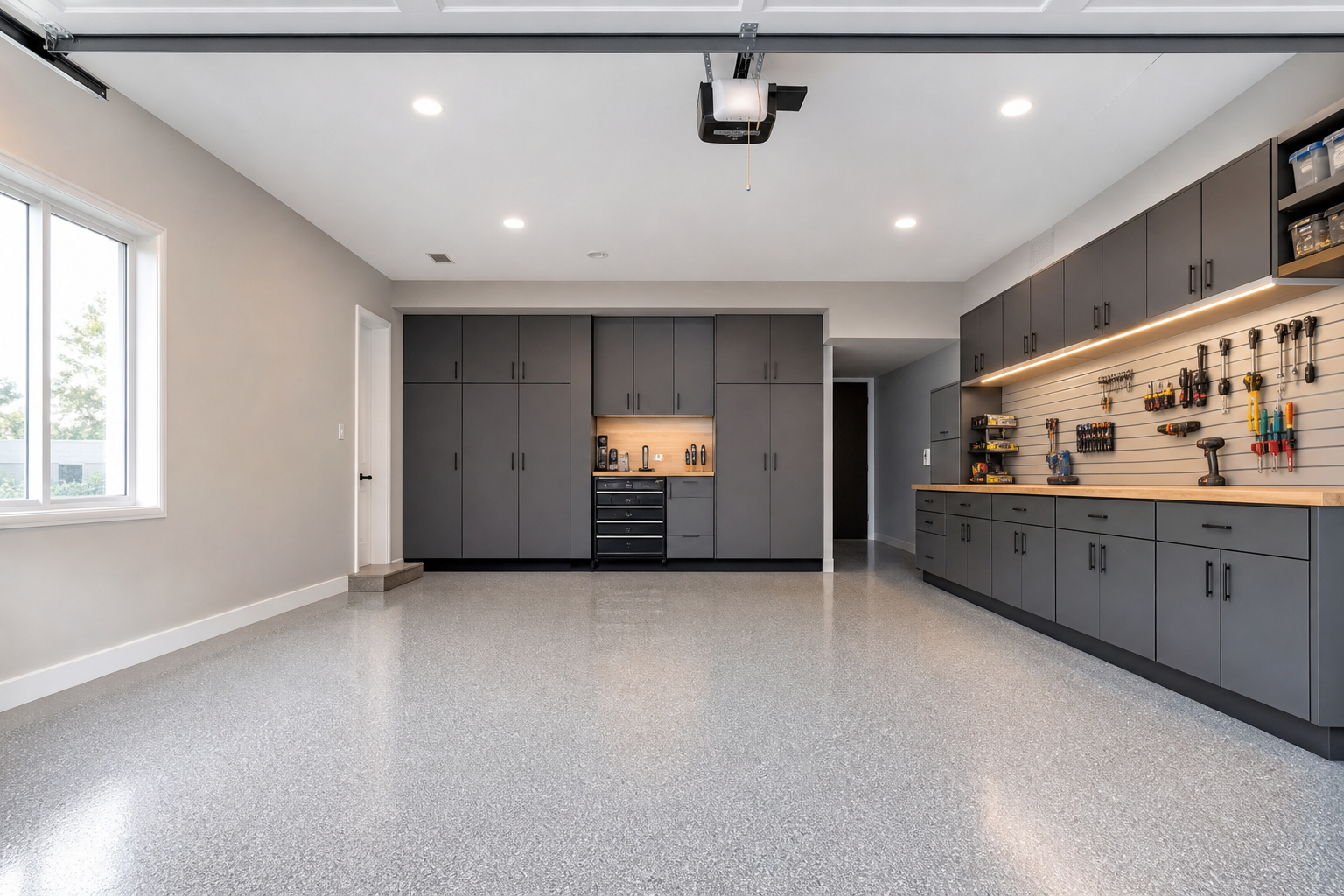
This light warm gray reads as almost white in good lighting, making the garage feel open and airy without the starkness of a pure white. It pairs naturally with white trim and cabinet doors, pulling the whole space together. If you’re planning to paint the ceiling too, check out how painting your garage walls and ceiling together can dramatically brighten the room.
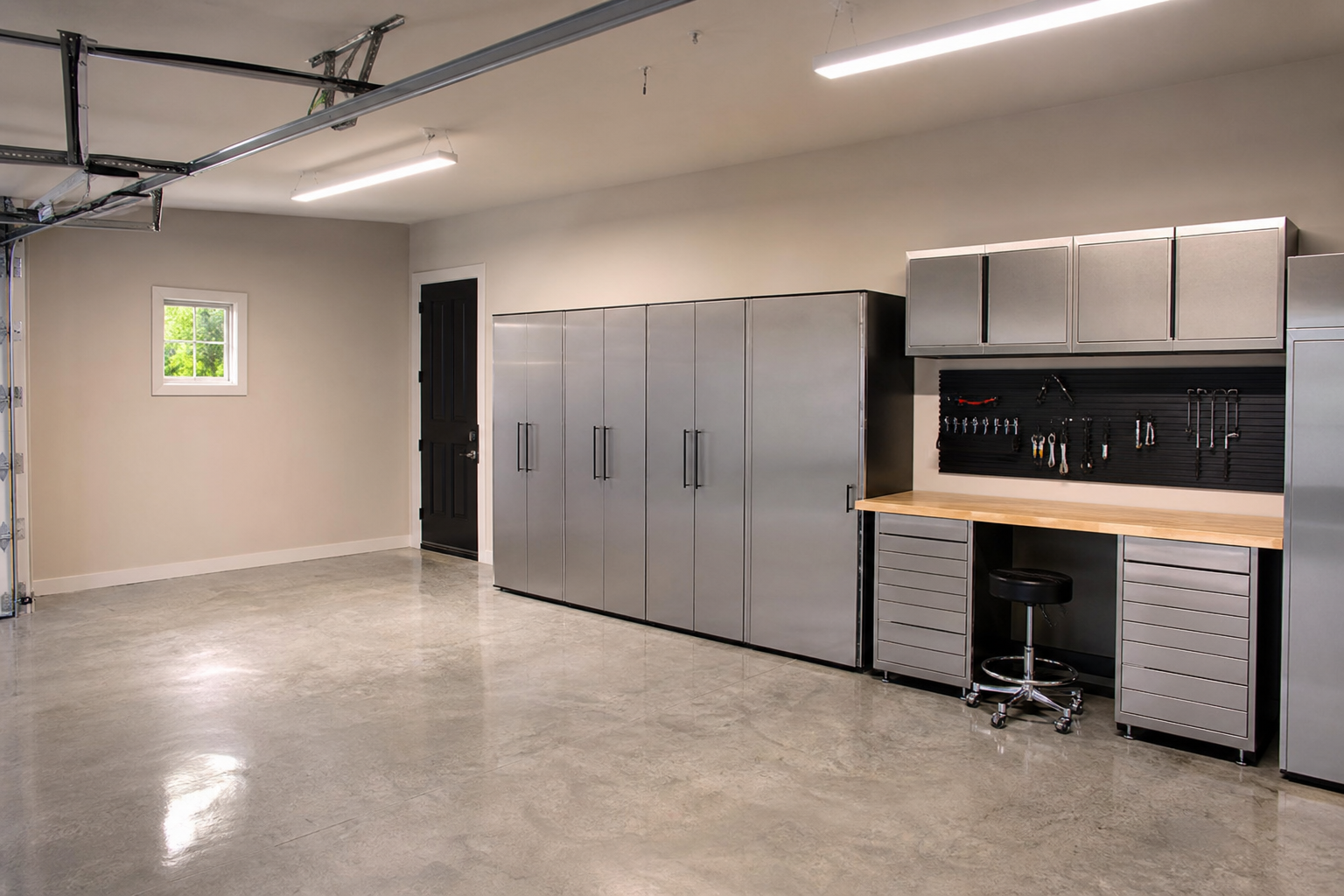
Greige sits right between beige and gray, giving you warmth without going full tan. It works especially well against stainless or black cabinet finishes, which can look cold on their own. The color adds just enough visual weight to make a large garage feel grounded rather than empty.
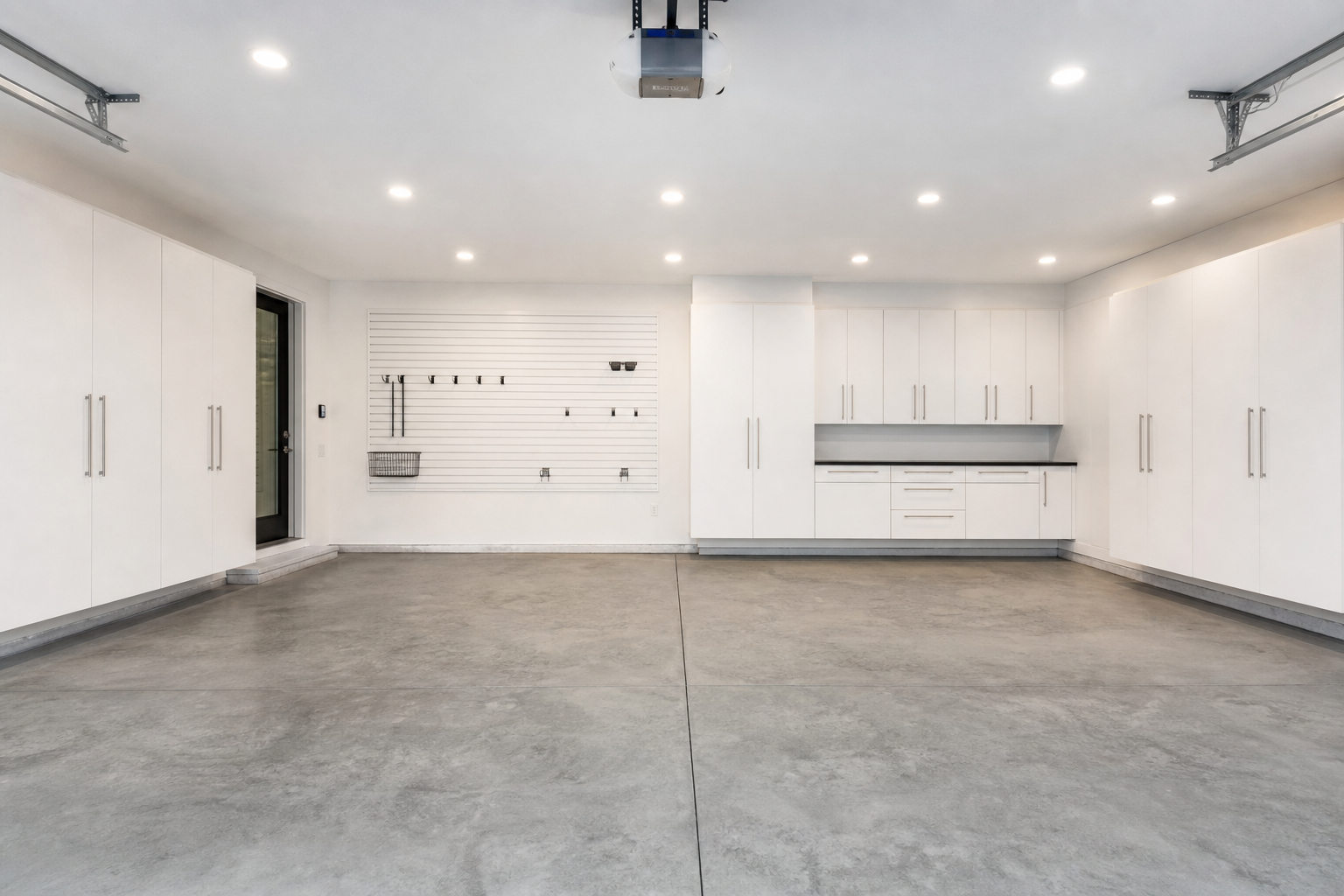
Crisp white walls reflect light from every direction, which makes a huge difference in a space where you’re doing detail work. Pair it with white cabinetry and a white slatwall system and the whole garage has a seamless, showroom quality feel. If you’re considering slatwall as part of the setup, the guide on installing garage slatwall accessories walks you through the process from start to finish.
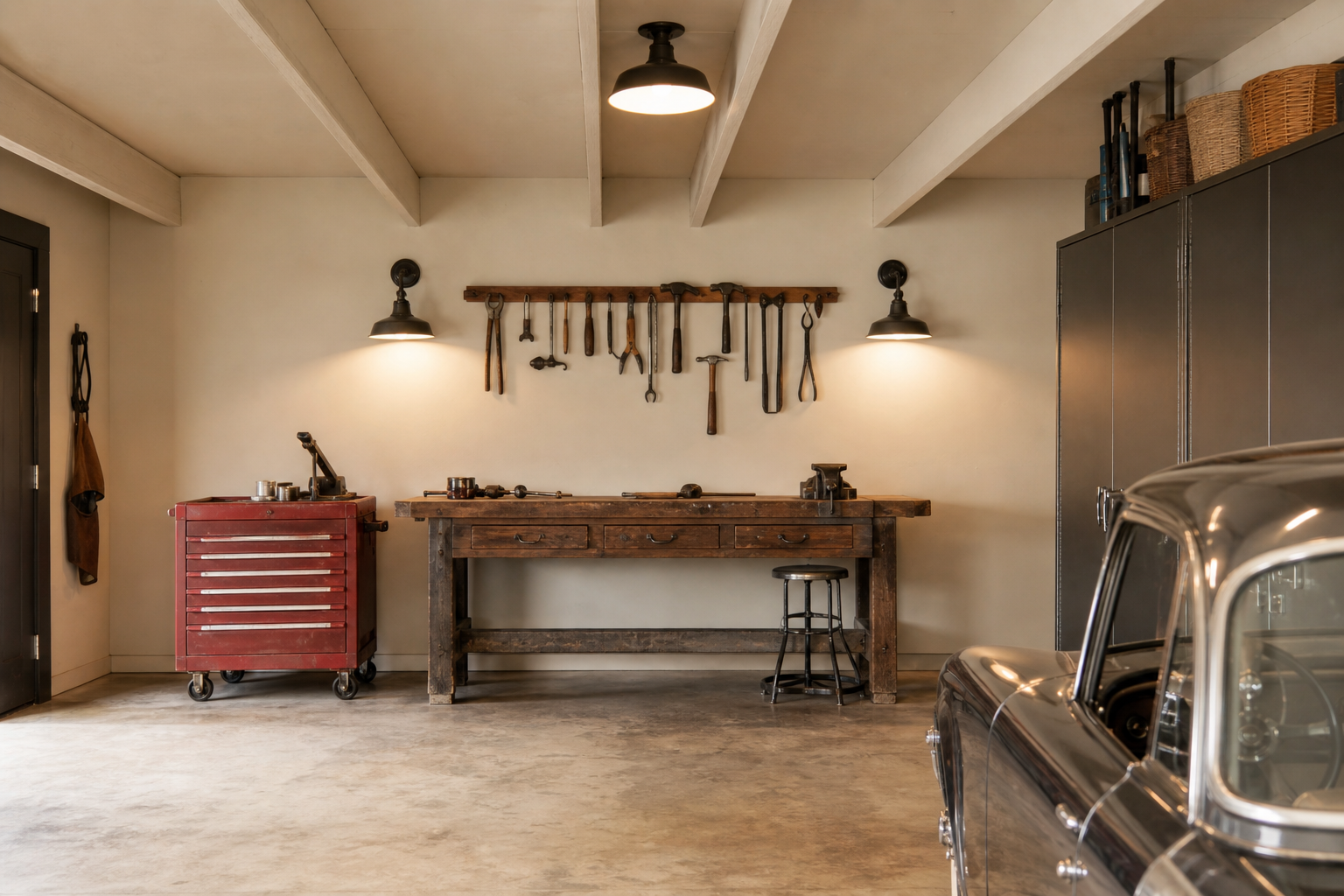
Off-white with a cream undertone softens a garage without making it feel sterile. It’s a great match for natural wood elements like exposed beams or a butcher block workbench top. The warmth in the tone keeps the space from feeling clinical while still staying light and easy to work in.
Bold Accent Walls
One accent wall can completely change the energy of a garage without requiring you to repaint every surface. A single bold color behind your workbench or on the back wall draws the eye and gives the space a focal point. This is my favorite approach when someone wants personality but isn’t ready to commit to a fully saturated room. Bold doesn’t always mean loud either. Deep navy, forest green, and charcoal all count. If you want even more ideas for making this work visually, the garage accent wall ideas post has some great directions to consider.
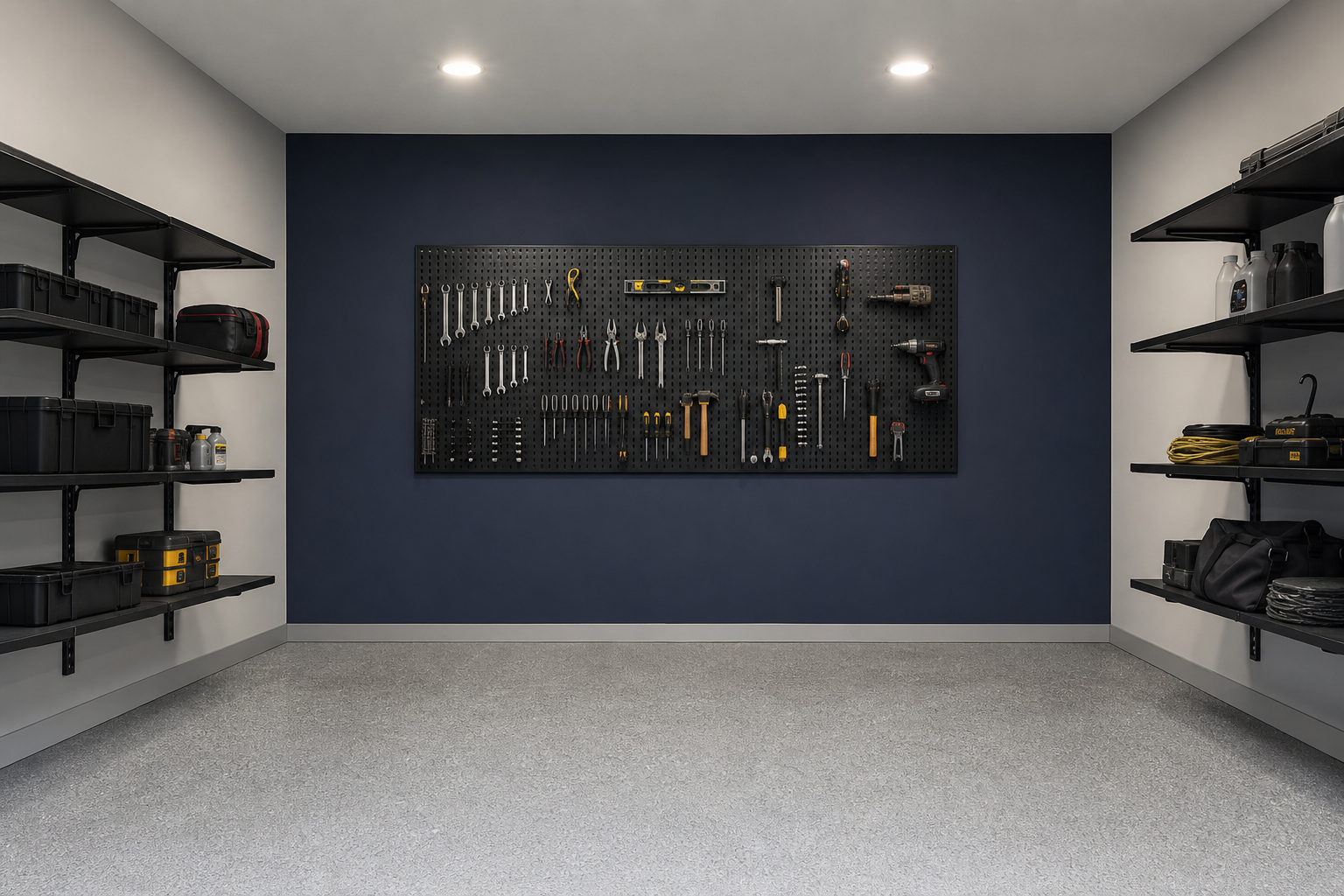
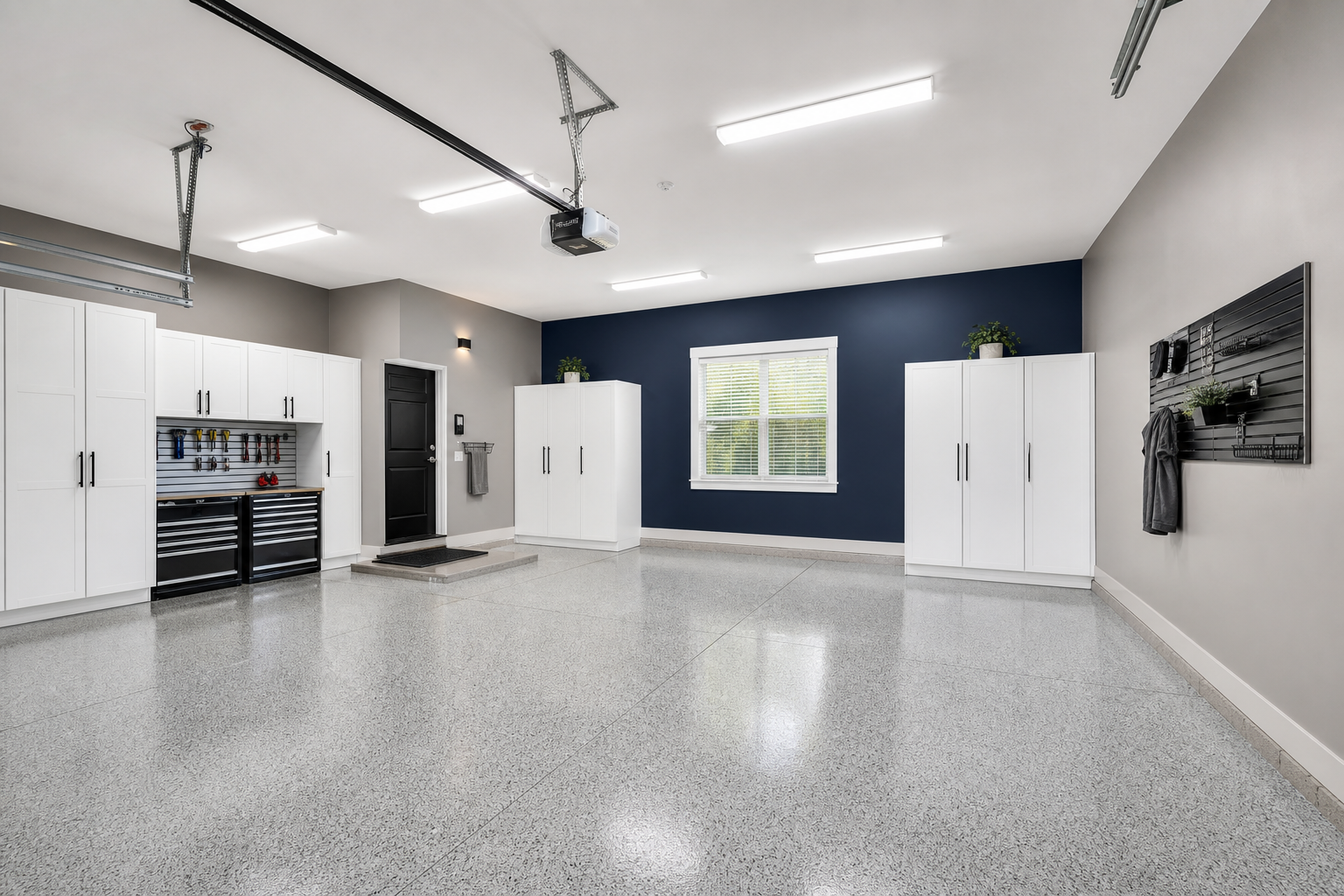
Deep navy on a single wall gives the garage a sharp, intentional look without going overboard. The color is dark enough to make mounted tools and shelving pop visually. It also pairs naturally with black metal fixtures, which you can find in plenty of garage wall hooks and hangers built for heavy tools.
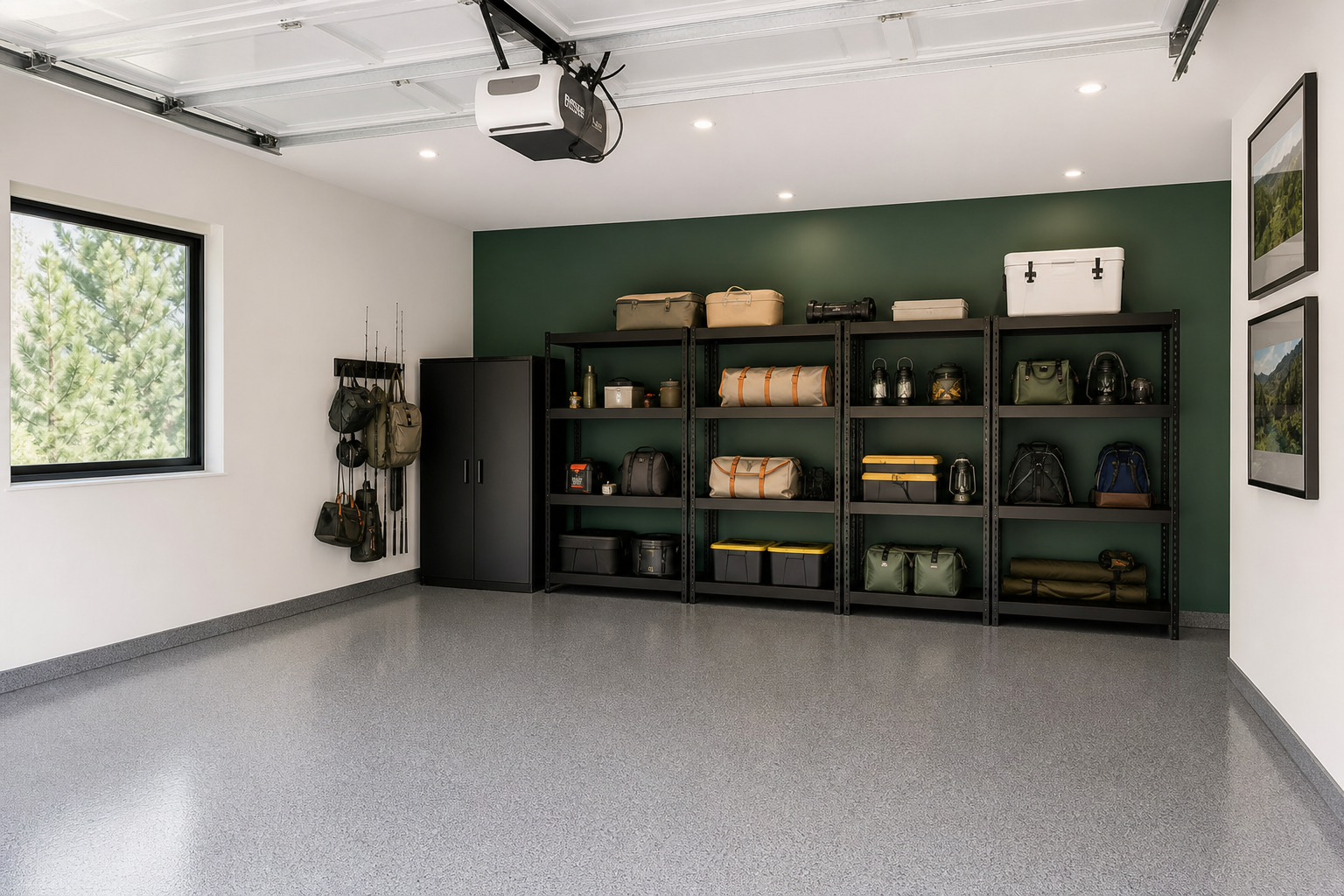
Forest green is having a moment in home design and it translates really well to garage spaces. Against white walls it feels fresh and considered rather than heavy. The depth of the color makes organized shelving look curated instead of utilitarian.
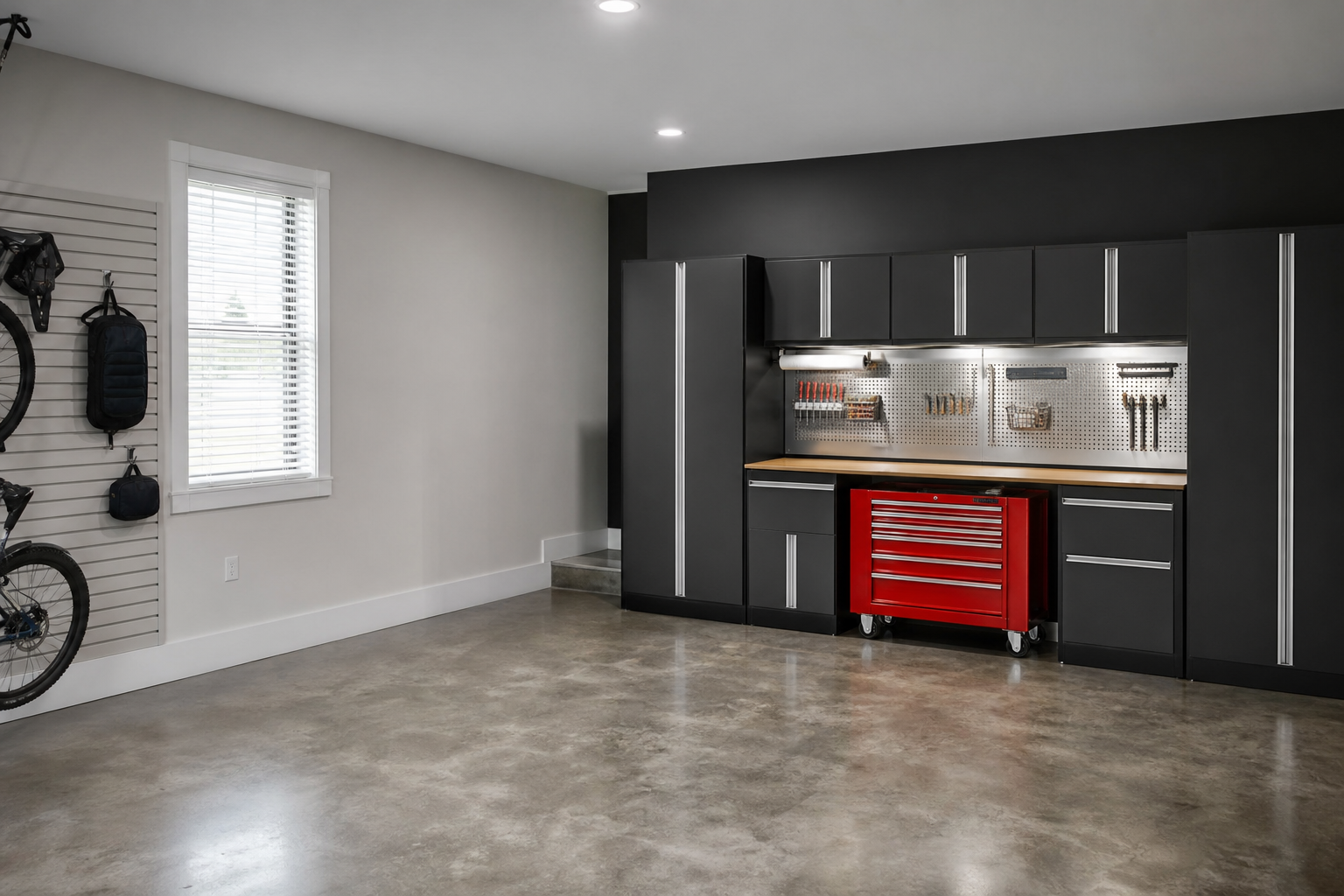
Charcoal is a bold choice that still feels sophisticated. It creates a strong contrast against light gray side walls and makes your workstation feel like a dedicated zone within the garage. The darkness of the wall actually makes bright tool chests and equipment stand out even more.
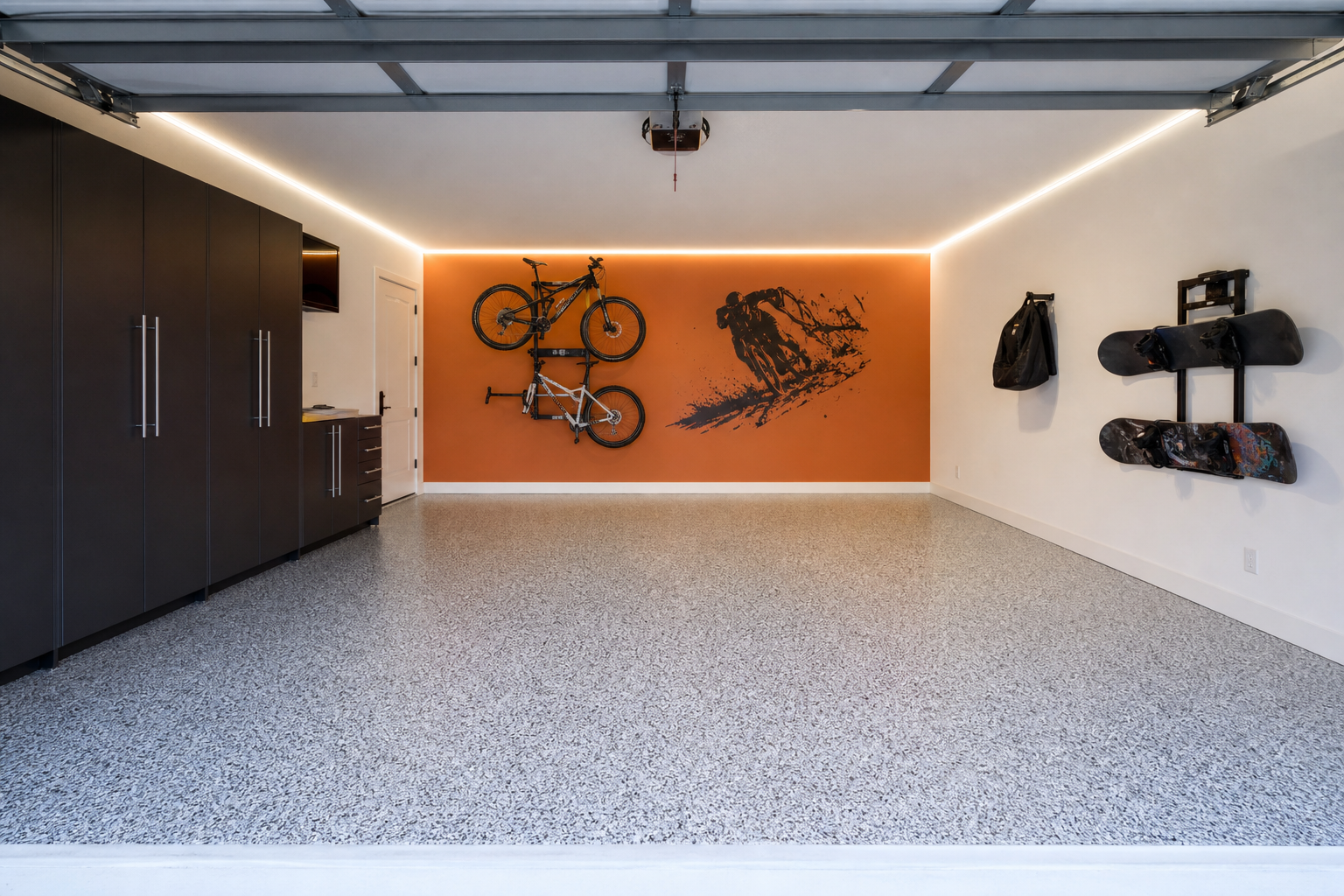
Burnt orange gives a garage real energy without feeling like a primary school classroom. It works especially well in sport and hobby-focused garages where the space doubles as a training or gear room. If bikes are part of the setup, pairing this wall with the right wall-mounted bike rack keeps things organized and on display.
Two-Tone Combinations
Two-tone paint schemes add depth and structure to a garage without needing any additional materials or wall treatments. The most common approach is a darker shade on the lower half and a lighter one on top, but flipping that ratio or splitting vertically can look just as sharp. I find that two-tone schemes also make a garage feel more finished, more like an interior room than a utility space. The dividing line is usually around 36 to 48 inches up from the floor, though there are no fixed rules. Choosing the right paint formulation matters just as much as the color, so it’s worth reading up on what to look for in garage wall paint before you commit to a two-tone project.
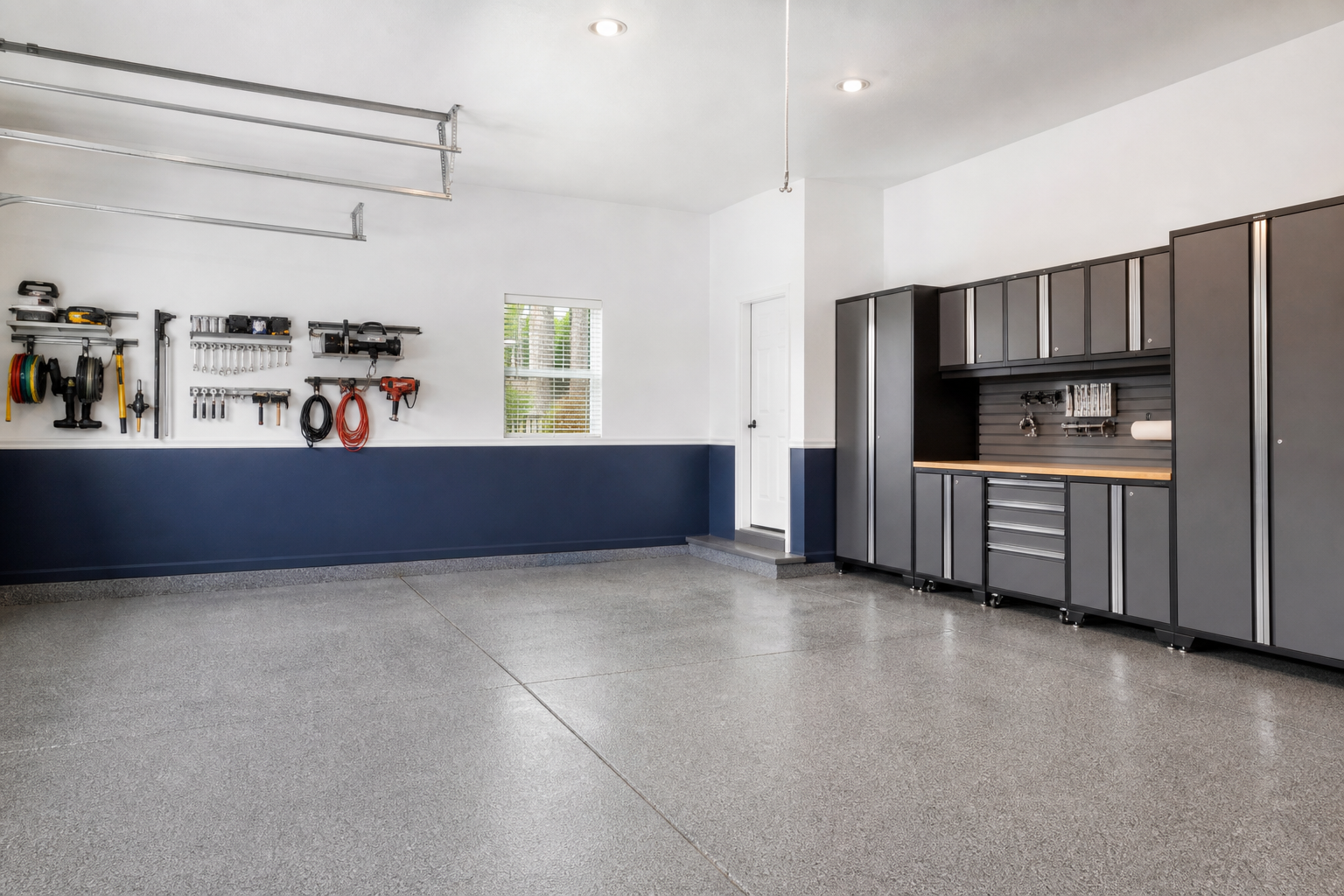
Slate blue on the lower wall protects against scuffs and marks while the white upper wall bounces light around the space. The chair rail gives the transition a finished look that you’d normally only see inside the house. This combination reads as calm and organized, which makes it a good fit for a garage used as a workshop.
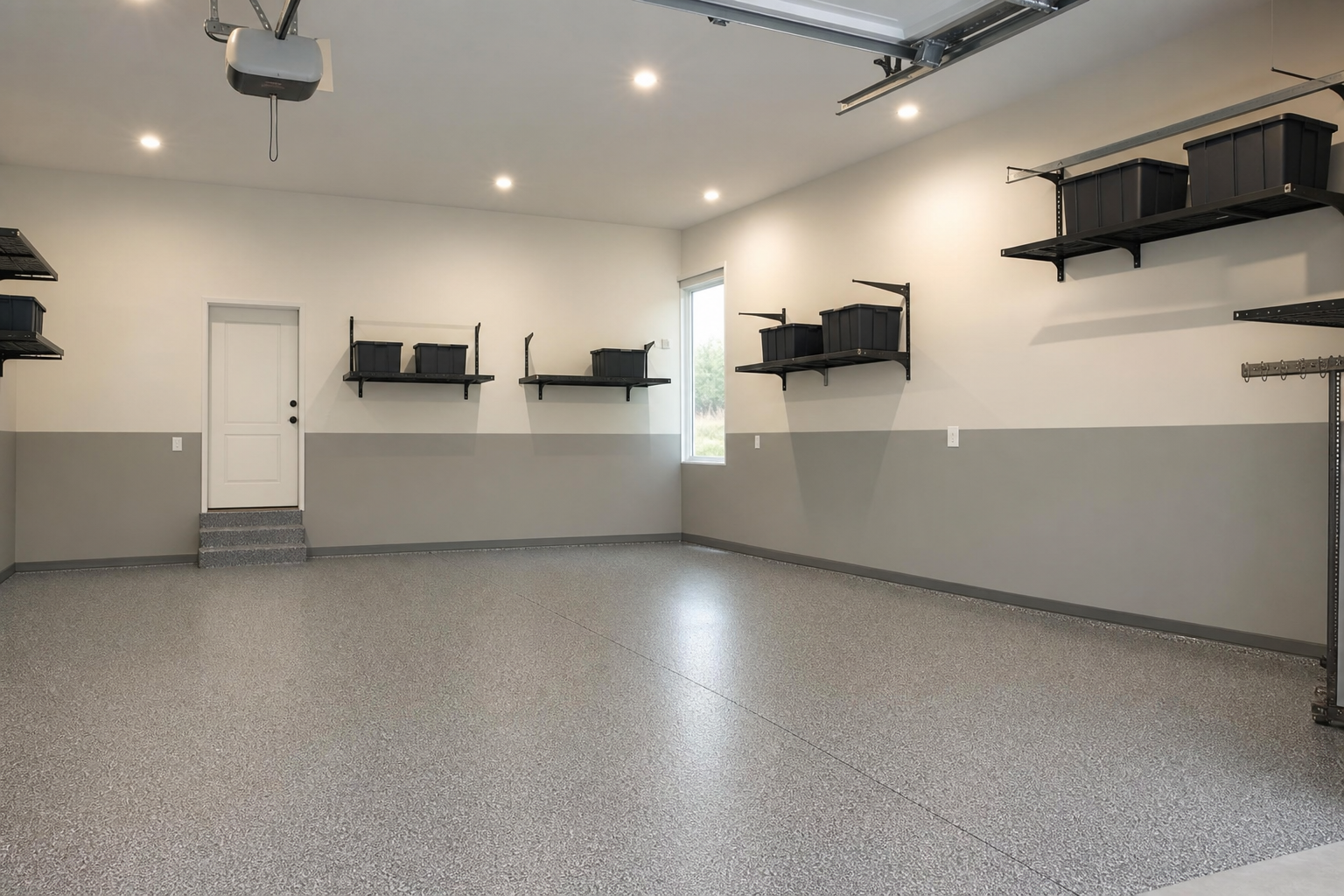
Skipping the chair rail and letting the paint line speak for itself gives this scheme a more modern, minimal look. Warm white and warm gray sit close enough in tone that the transition feels gradual rather than jarring. It’s a clean approach that works in any garage size.
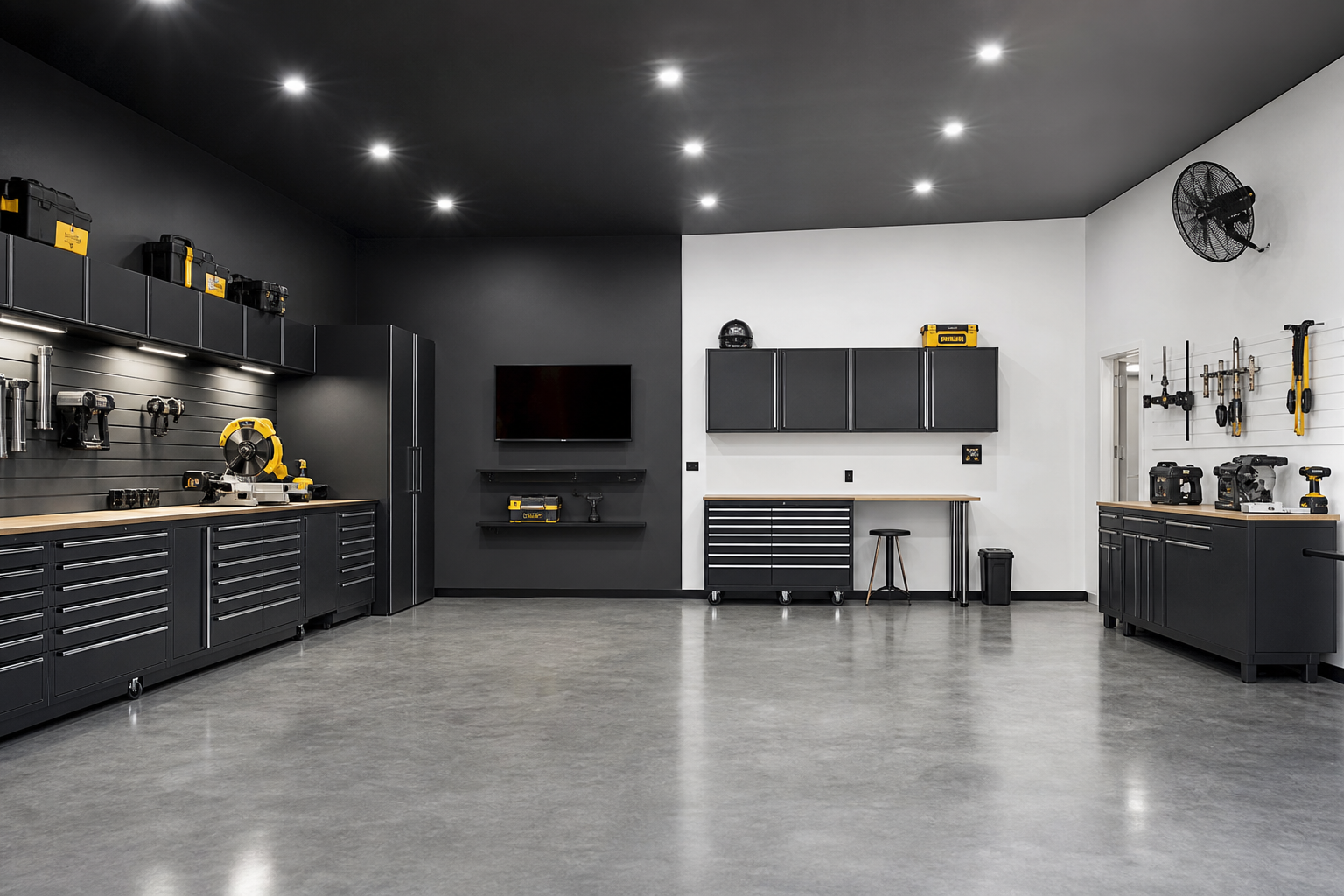
A vertical split is less common than horizontal banding but it can carve a large garage into two distinct zones. Charcoal on the workshop side and white on the parking or storage side creates a visual divide without any physical barrier. The corner where the two colors meet becomes a strong architectural line all on its own.
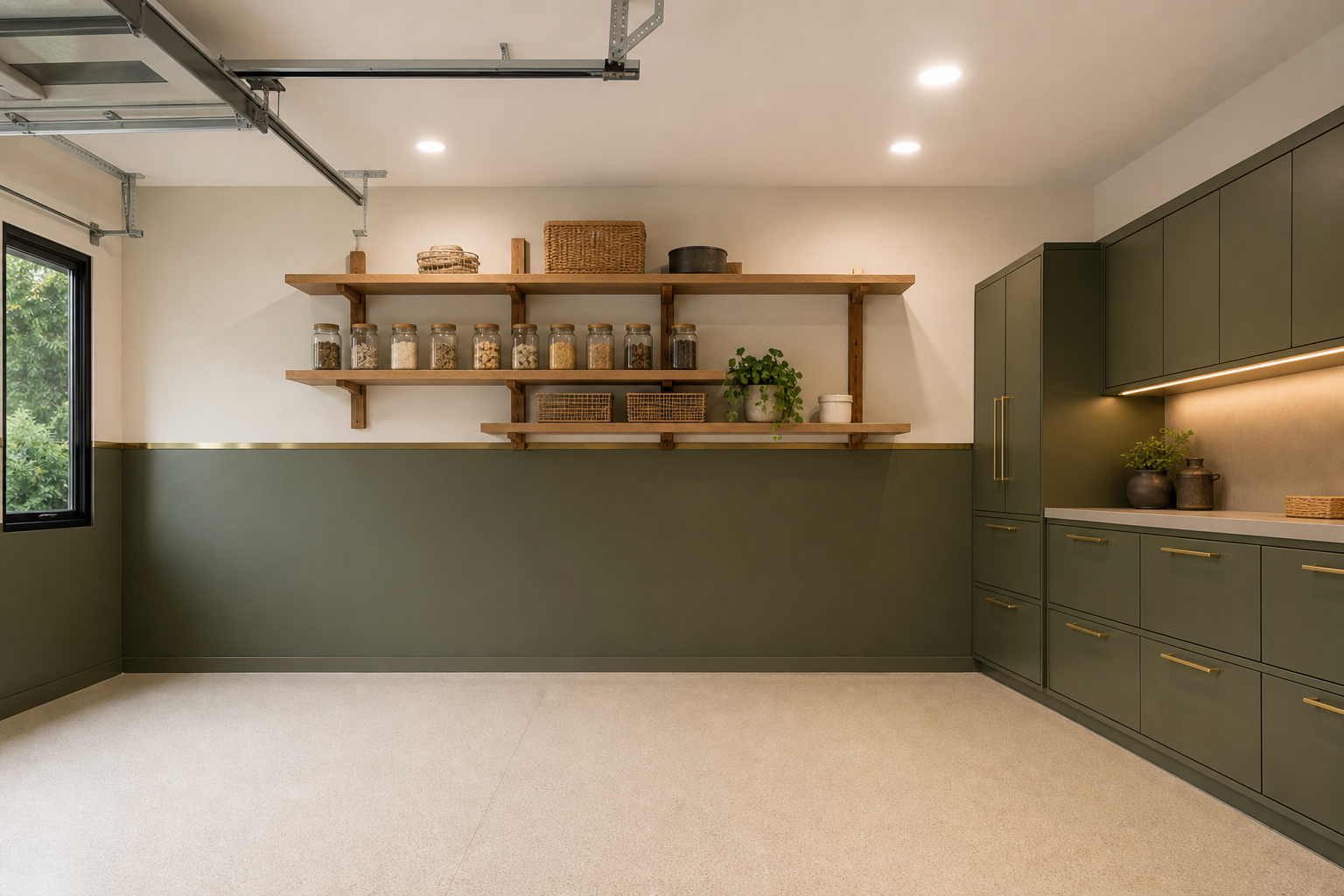
Olive green and warm off-white is an earthy combination that feels more like a stylish mudroom than a garage. Adding a thin metal strip at the dividing line in a warm brass or bronze finish elevates the whole look. This kind of finish is a simple step toward making your garage look more expensive without a major renovation. Speaking of which, there are some genuinely easy wins in this guide to making your garage look expensive.
Durable Finish Choices
Color is only part of the equation. The finish you choose determines how well that color holds up over time against moisture, grease, impact, and temperature swings. Here in Central Florida I’ve watched plenty of garage paint jobs fail within two years because the wrong product was used on concrete block or unprimed drywall. Satin and semi-gloss finishes clean up easier than flat paint and resist moisture better. For masonry walls, epoxy-based or masonry-specific paints are a different category entirely and worth understanding before you buy. If you want to go deep on this, the comparison of interior vs exterior garage paint explains why the formulation matters as much as the color. It’s also worth knowing about why garage paint peels so you can avoid those mistakes from the start.
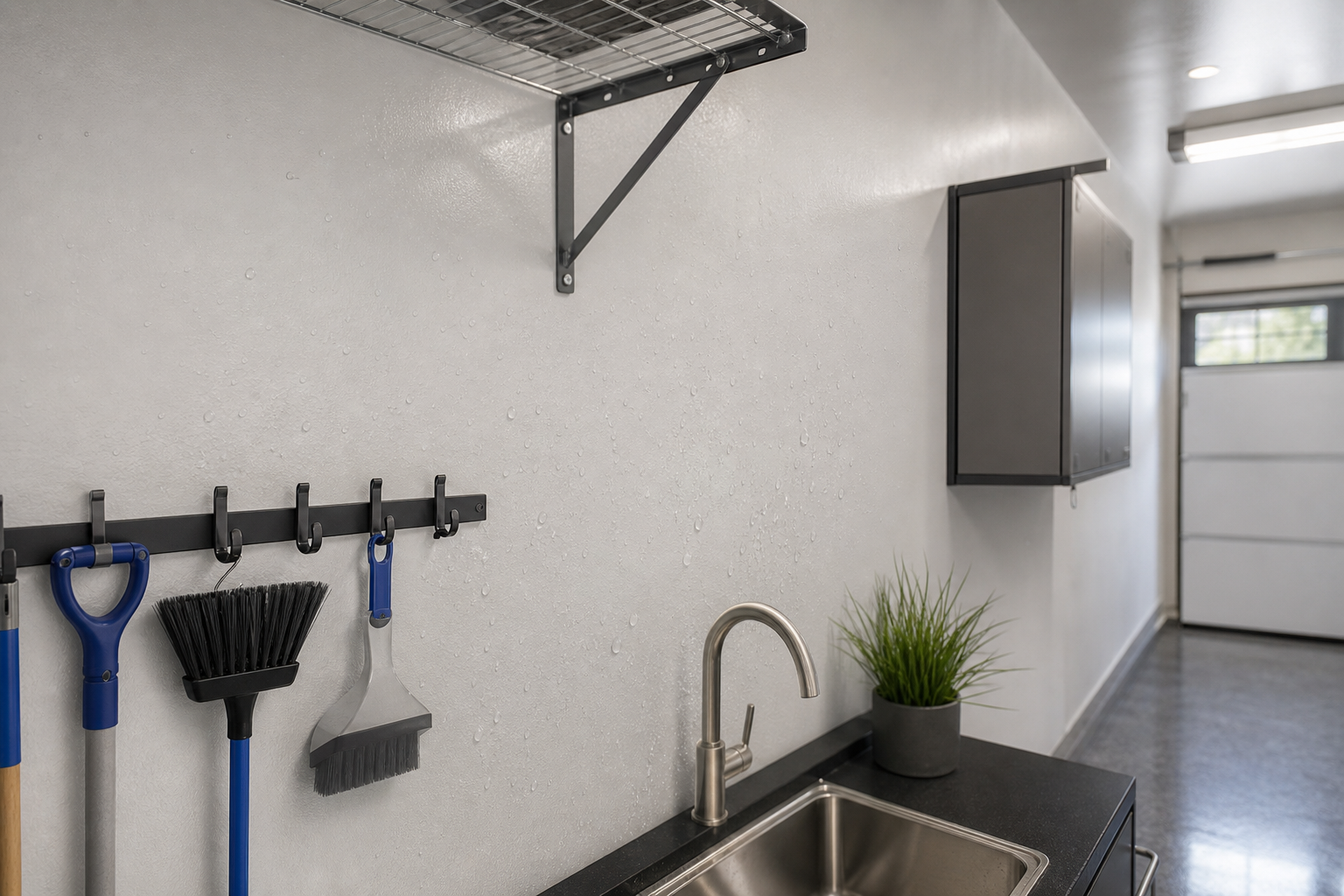
Semi-gloss is the workhorse finish for garage walls. The slight sheen makes it easy to wipe down grease or grime with a damp cloth without the paint dulling or rubbing off. It also reflects more light than a matte finish, which helps in garages that don’t get much natural light. If you’re dealing with a darker space, the tips on painting walls and ceilings for a brighter garage are worth reading before you pick your sheen level.
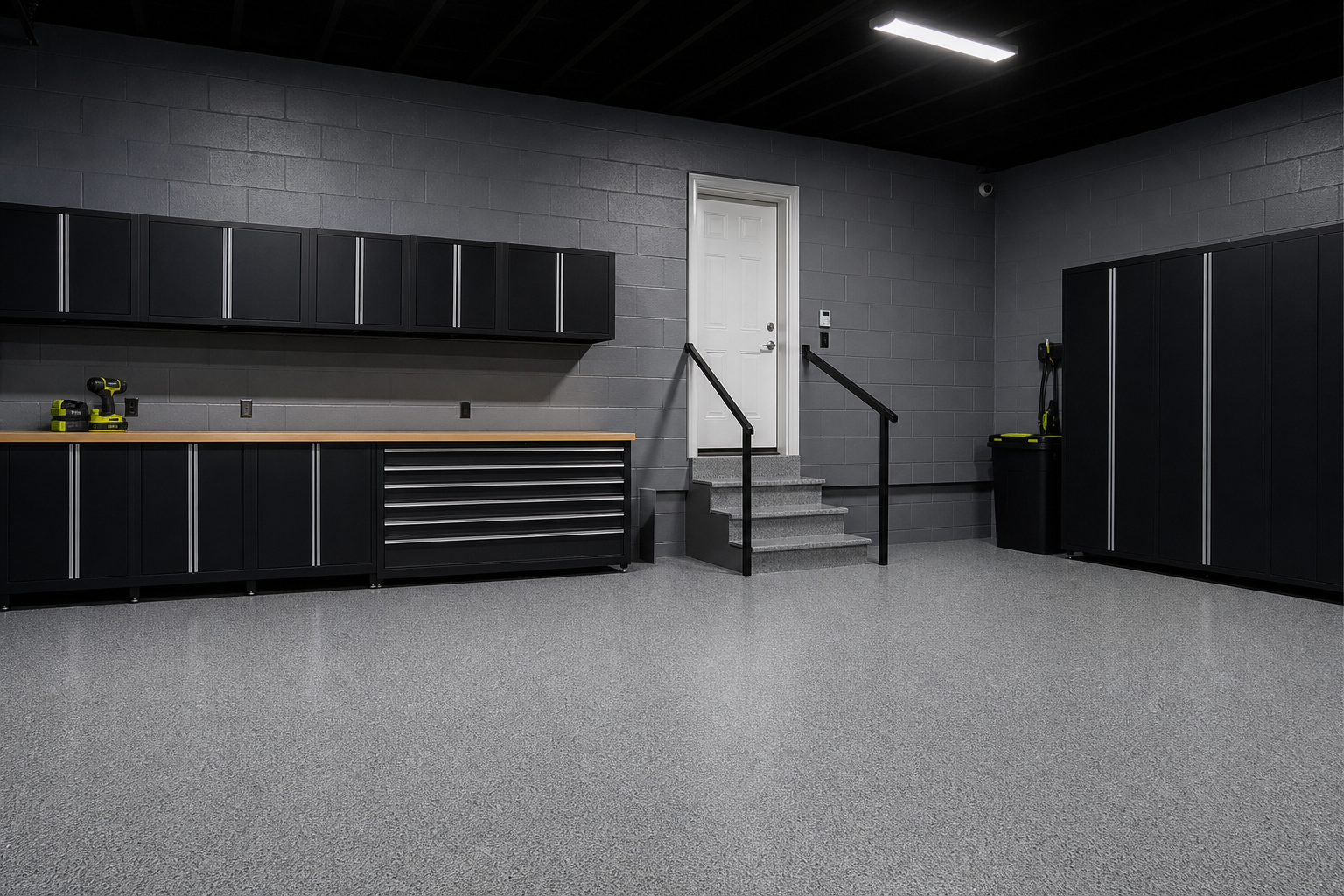
Epoxy masonry paint fills the surface pores of concrete block, creating a sealed wall that resists moisture from the inside and outside. The texture of the block stays visible, which gives the wall an honest, industrial character. If you’re starting from raw block walls and want to understand all your finishing options before painting, the guide to the best garage wall finishes covers drywall, PVC, and plywood alongside paint.
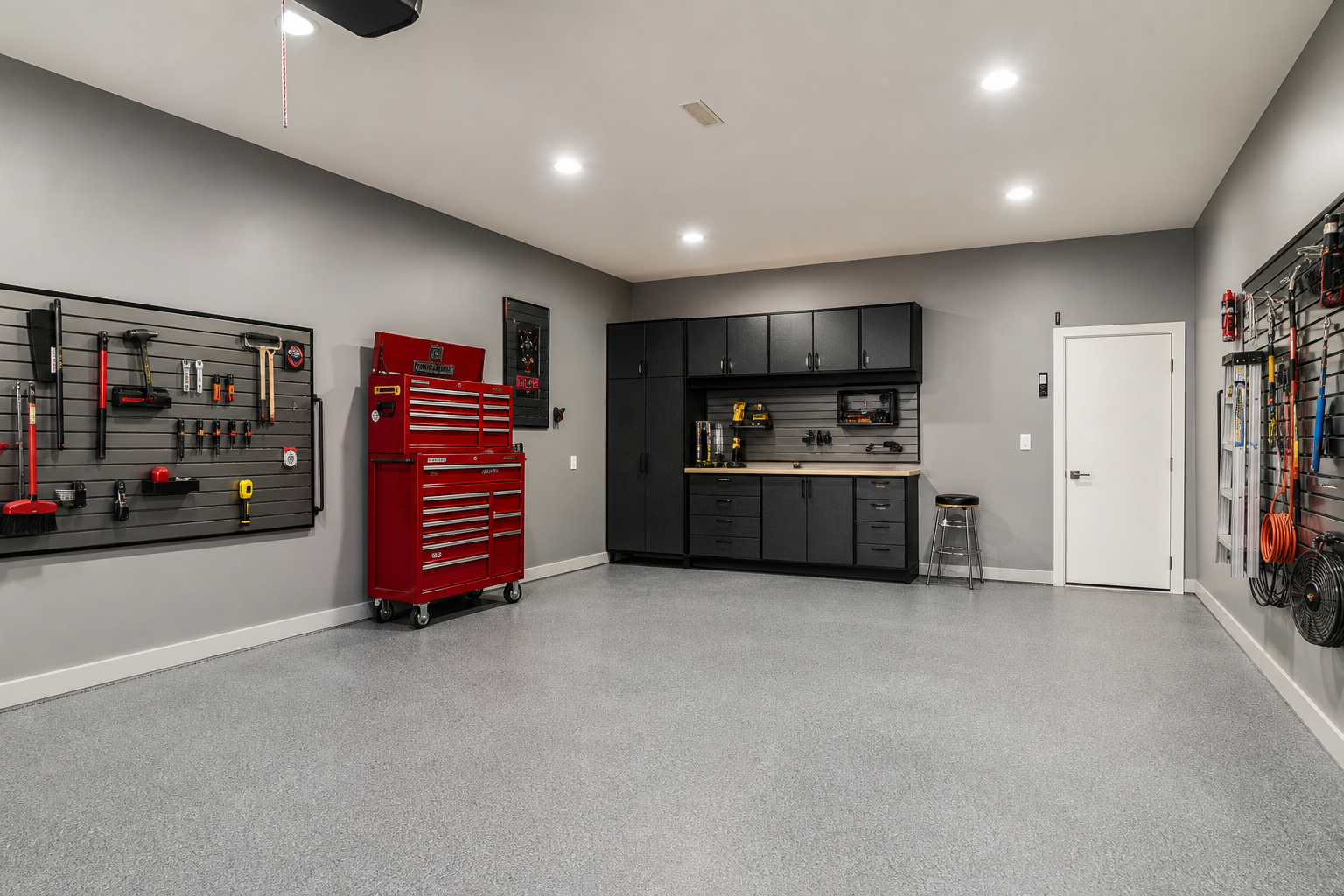
Satin finishes sit between eggshell and semi-gloss, giving you good washability with a softer look on the wall. On drywall this finish hides minor surface imperfections better than semi-gloss while still standing up to daily contact. Pairing a satin wall with bright LED lighting gets the most out of the finish without making every brush mark visible. Good lighting makes an enormous difference here, and the LED garage wall lights guide covers the fixtures worth considering.
