

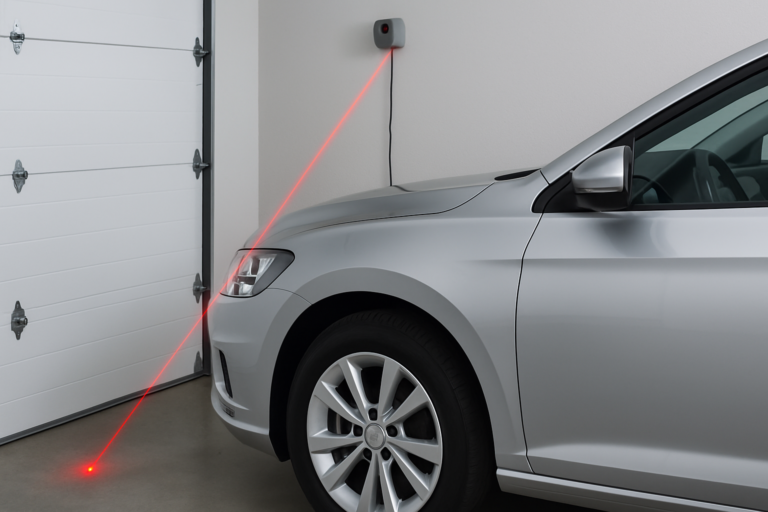
Parking in a tight garage can turn your daily routine into a stressful game of inches. You’re either creeping forward wondering if you’ll hit the wall, or you’re parking too far back and can’t close the garage door. Tennis balls hanging from strings might have worked for your parents, but there’s a better way.
Laser parking guides project a bright spot or line onto your windshield or dashboard, giving you a precise stopping point every time. They’ve come a long way from the basic single-laser units of years past. Modern systems include dual lasers for different vehicles, smartphone connectivity, motion sensors that only activate when you’re actually parking, and specialized options for garages where every inch matters.
Single Laser vs. Dual Laser Systems
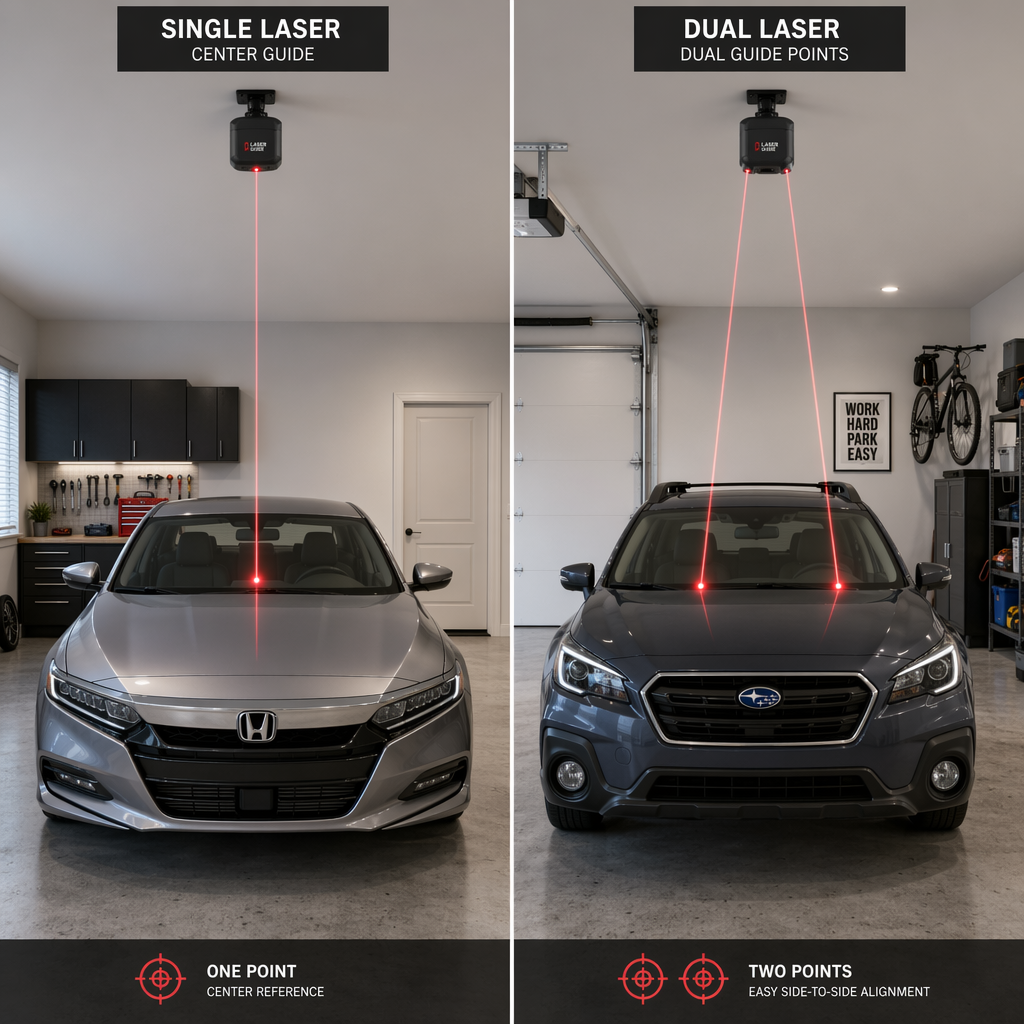
The basic single laser parking guide does exactly what you’d expect. It mounts to your garage ceiling, projects a laser dot or line when activated, and you stop when that mark hits a predetermined spot on your windshield. Simple, effective, and perfectly adequate for most single-car households.
Dual laser systems change the equation when you’re parking multiple vehicles or when different drivers use the same space. Instead of one laser unit, you get two independently adjustable lasers that can be positioned for different stopping points. This means your sedan and your spouse’s SUV can both park perfectly without any manual adjustments.
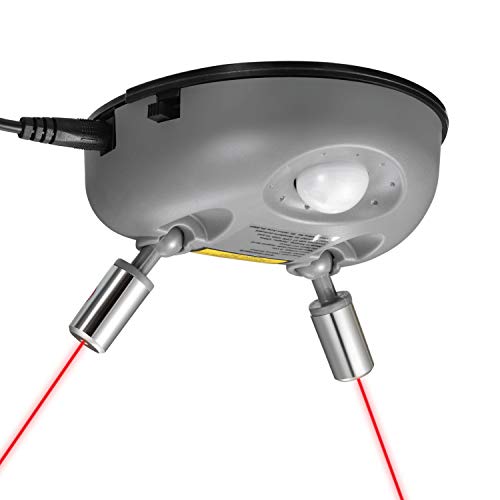
Dual Laser Parking System
Perfect for households with multiple vehicles that need different parking positions
The real advantage shows up in daily use. With a single laser, you might park perfectly but your partner has to estimate their position based on a mark that doesn’t work for their vehicle height. Dual systems eliminate that guesswork entirely. Each driver gets their own laser reference point.
Installation for both types follows similar principles. You’ll mount the unit to your ceiling, position your vehicle where you want it to stop, then adjust the laser angle until it hits your chosen target spot. Most systems include detailed instructions for finding the optimal ceiling position, usually 6 to 8 feet in front of your desired stopping point.
Vehicle Detection Sensors: Smart Activation
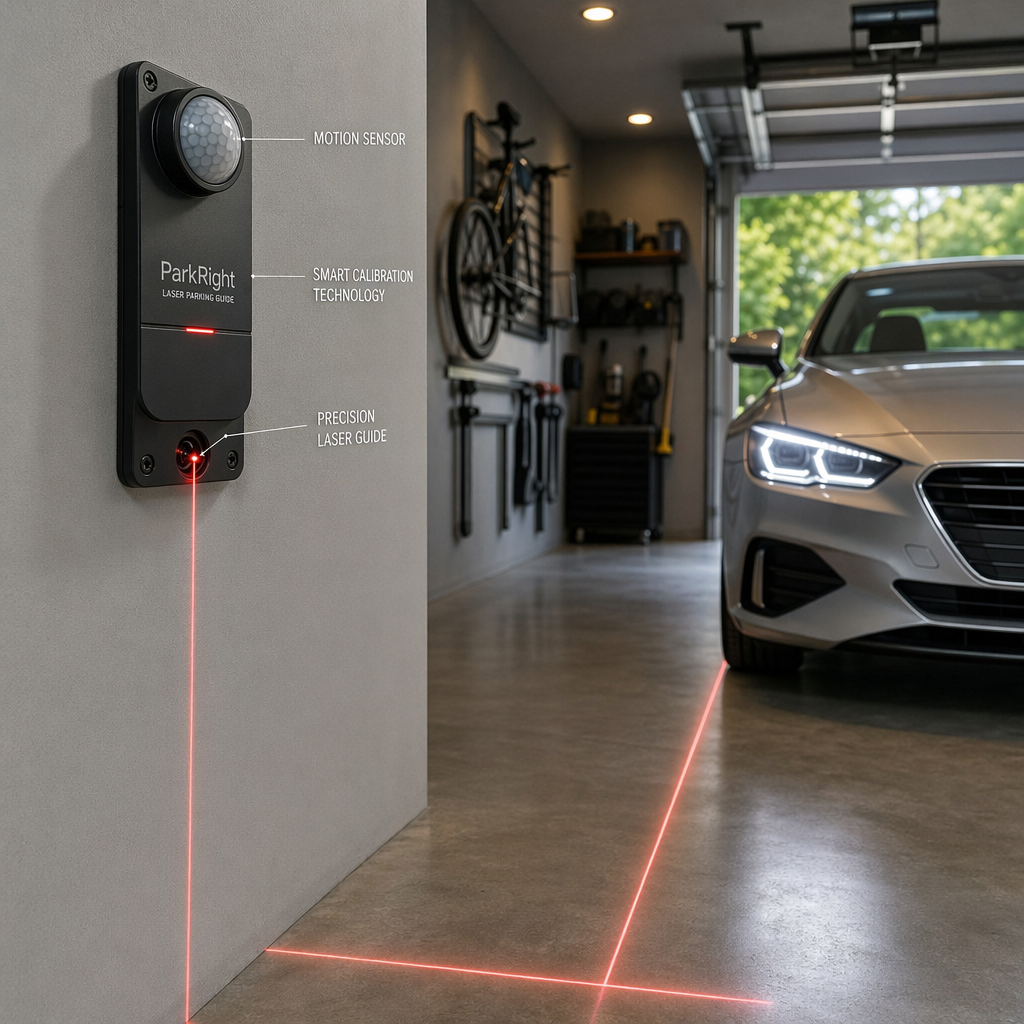
Early laser parking guides stayed on constantly or required manual switches. Modern units incorporate motion sensors or vehicle detection technology that activates the laser only when needed. This saves energy, extends laser life, and means you don’t have to remember to flip switches.
Ultrasonic sensors detect when your vehicle enters the garage, typically from 10 to 15 feet away. The laser activates automatically and stays on for a preset duration after you stop, usually 30 seconds to a minute. This gives you time to park and exit the vehicle without plunging into darkness the moment you turn off the ignition. For optimal garage security, consider pairing your laser guide with quality security cameras that can monitor your parking area.
Some advanced models use infrared motion detection instead of ultrasonics. These tend to be more accurate at distinguishing between your vehicle and other movement in the garage, like people walking or garage door operation. They also work better in garages with unusual layouts or obstacles that might confuse ultrasonic sensors.
The motion sensor laser parking guide category includes both types. Your choice depends partly on your garage configuration and partly on what other activities happen in your garage. If you use it as a workshop, ultrasonic sensors might trigger unnecessarily when you’re working near the parking area.
Smartphone Connectivity and App Controls
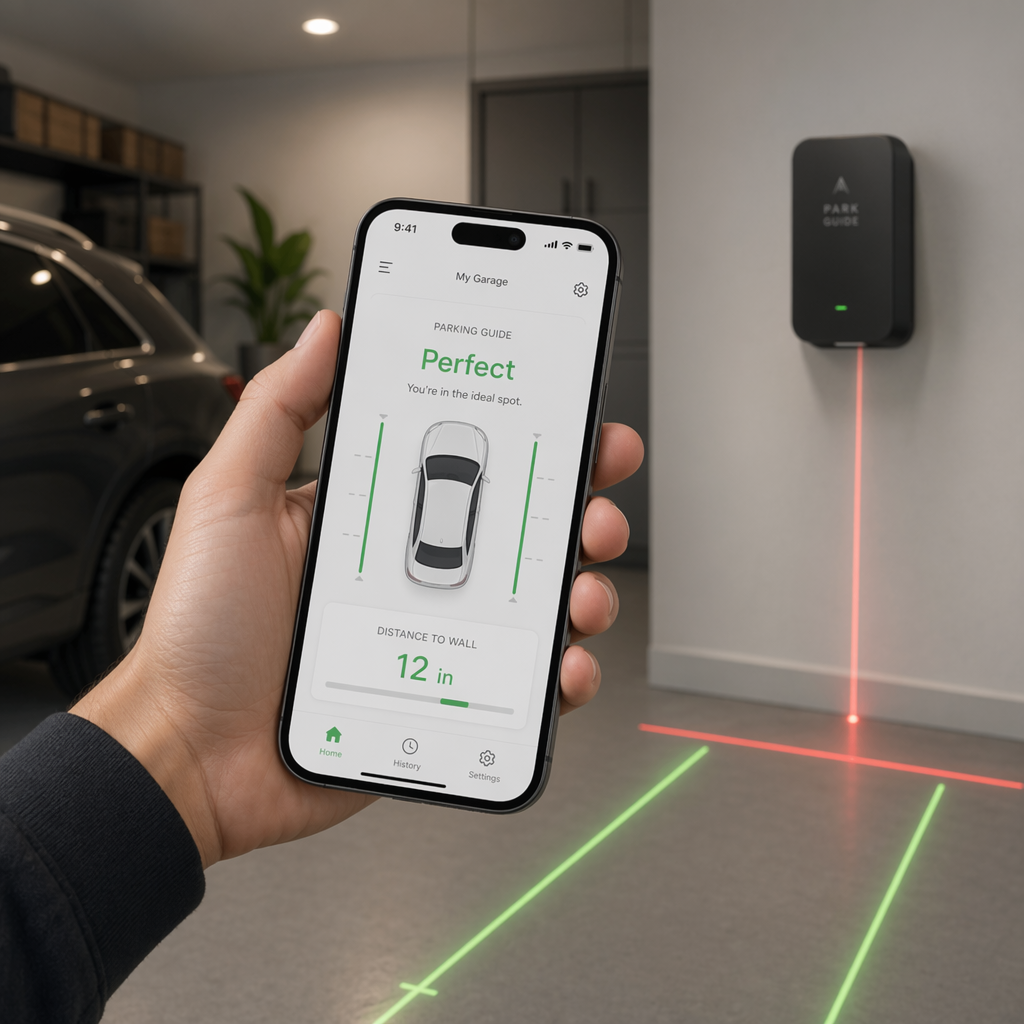
WiFi-enabled laser parking systems add a layer of convenience that wasn’t possible a few years ago. Through a smartphone app, you can adjust laser positioning, change activation sensitivity, set timers, and even configure different profiles for multiple vehicles, all without climbing a ladder.
This matters most during initial setup and when circumstances change. Getting the laser position perfect often requires multiple test parks and tiny adjustments. With app control, you can make these tweaks from the driver’s seat, drive in to test, and refine again immediately. Traditional systems require you to get out, adjust the physical unit, get back in, test, and repeat.
Smart WiFi Laser Parking Assistant
Allows easy adjustment and multiple vehicle profiles through your smartphone
Apps also enable scheduling features. You can program the system to be more or less sensitive at different times, or disable it entirely during certain hours. This prevents false activations if you’re working in the garage late at night or early morning.
The connectivity does add complexity and potential failure points. You’ll need a stable WiFi signal in your garage, which isn’t always a given. Some users report frustrations with apps that require cloud connectivity for basic functions. Look for systems that offer both app control and manual operation as a backup.
Installation Methods for Different Garage Types
Standard ceiling-mounted installation works great when you have exposed joists or a solid ceiling with easy access. You’ll drill into a joist or use appropriate anchors for drywall, mount the bracket, attach the laser unit, and run power to a nearby outlet or hardwire to your garage electrical system.
Low-clearance garages present a challenge. When you’re already tight on headroom, adding a ceiling-mounted device might interfere with your vehicle roof or garage door operation. Wall-mounted laser systems solve this by projecting horizontally rather than downward. They mount to the front or side wall and aim toward a target point on your vehicle’s side. To ensure your garage door operates smoothly alongside your new laser system, proper door lubrication is essential.
For renters or those who can’t make permanent installations, portable laser parking guides exist. These typically sit on the garage floor or a shelf and project upward or forward. They’re less precise than ceiling-mounted options but better than nothing, and you can take them with you when you move.
Power requirements vary by system. Battery-operated models offer the easiest installation since you don’t need to run wiring. You’ll need to change or recharge batteries periodically, but modern LED lasers are efficient enough that batteries last months. Plug-in models need an outlet within cord reach, while hardwired systems require basic electrical work or an electrician.
Tight Space Considerations
When your garage barely fits your vehicle with inches to spare on all sides, standard parking guides might not provide enough precision. You need to know not just when to stop, but also if you’re centered properly in the space. In these situations, proper garage sealing can help prevent drafts that might cause hanging guides to sway.
Dual-projection systems help here by providing both a stopping reference and a centering guide. One laser projects the stop point while another creates a line down your hood or windshield, showing whether you’re tracking straight or angled. This prevents the common problem of parking at the right depth but crooked, which can make one side impossible to access.
Some installers use multiple single-laser units to create a more detailed guidance system. Two lasers on the sides show clearance from walls or obstacles, while a third indicates stopping distance. This requires more setup time and cost but gives you complete spatial awareness.
Parking mats or floor guides can supplement laser systems in tight spaces. These parking mat guides lie on the floor and show wheel position, helping you maintain the same track every time you pull in. Combined with a laser stopping guide, you get repeatable precision parking. For more comprehensive solutions, check out our guide to garage parking aids.
Comparing Top Laser Parking Systems
The market includes everything from basic competitively priced laser pointers mounted in plastic housings to sophisticated competitively priced+ systems with multiple sensors and connectivity. Your needs determine which features justify the investment.
Basic single-laser units from manufacturers like Striker and Maxsa work perfectly well for straightforward applications. They project a bright red or green dot, activate via motion sensor, and mount to standard garage ceilings. Green lasers cost slightly more but show up better in bright conditions or on light-colored vehicles.
Green Laser Parking Guide
Green lasers provide better visibility on light-colored vehicles and in bright garages
Mid-range options add features like dual lasers, adjustable sensitivity, and longer detection ranges. These typically include better mounting hardware and more detailed instructions. Build quality improves noticeably in this range, with more durable housings and reliable sensors.
Premium systems bring smartphone connectivity, voice assistant integration, and advanced detection algorithms. Some include small display screens showing detection status and settings. These make sense if you’re parking expensive vehicles in very tight quarters, or if you value the convenience of app-based adjustments.
For pure stopping accuracy, laser quality matters more than features. A crisp, bright dot that’s easy to see beats fancy connectivity if the laser itself is dim or poorly focused. Read reviews specifically mentioning laser brightness and visibility in various lighting conditions.
Tips for Optimal Setup and Use
Position matters enormously for laser parking guide effectiveness. The ideal mounting location puts the laser about 6 to 8 feet in front of your desired stopping point, centered over your parking path. This angle creates a target spot that’s easy to see from the driver’s seat without being so far forward that small variations cause large position changes.
Mark your target spot on the windshield or dashboard with a small piece of colored tape during initial setup. This gives you a consistent reference point as you test different laser positions. Once you’ve dialed in the perfect spot, you can remove the tape since the laser will always hit the same place.
Test your setup with different lighting conditions. A laser that’s clearly visible at night might disappear in bright afternoon sun streaming through garage windows. If
