

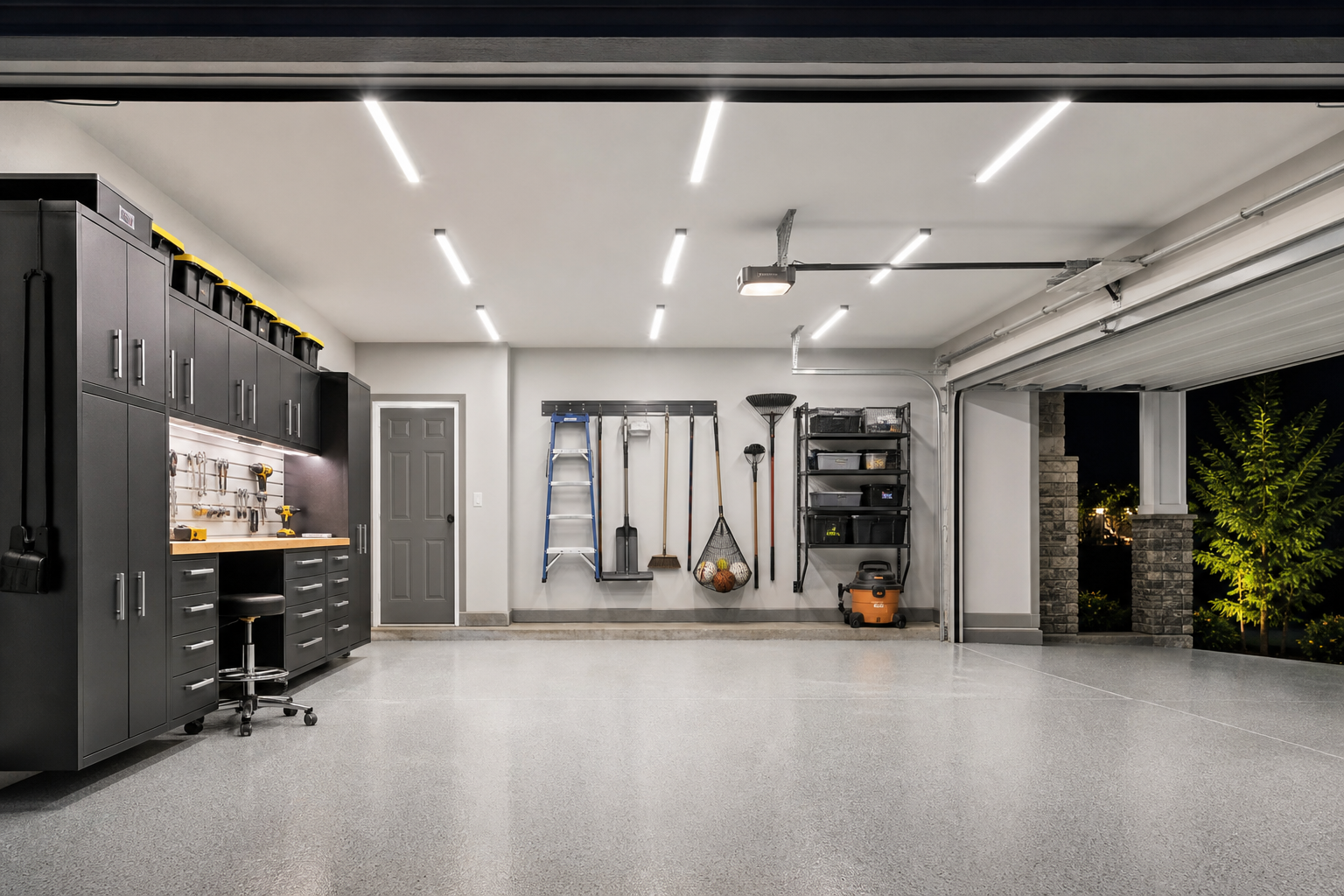
Shopping for garage lighting upgrades for a bright, safe space means sifting through dozens of options that all claim to be best. Marketing language is unreliable, and Amazon reviews can be misleading with incentivized ratings mixed in.
This guide focuses on specs and features that matter for real-world garage use. Every recommendation is based on performance, durability, and value, not advertising budgets.
Understanding Garage Lighting Basics
Placement matters as much as total output. Evenly spaced fixtures eliminate dark spots. Four to six 4-foot LED shop lights in rows cover most two-car garages well. Add a task light directly above the workbench, positioned so you don’t cast your own shadow on the work surface.
LED shop lights are the standard: 50,000+ hour lifespan, low electricity consumption, and instant full brightness. Linkable models daisy-chain from one outlet. Most manufacturers limit chains to 4 to 8 fixtures to prevent voltage drop that causes dimming or flickering on distant units.

LED Shop Light Linkable
Industry standard for garage lighting with long lifespan and instant brightness
Target 50 lumens per square foot for general garage use. A 400 square-foot two-car garage needs at least 20,000 lumens total. For workbench detail, boost to 300 lumens per square foot with dedicated task lighting positioned to minimize shadows.
LED Shop Light Selection
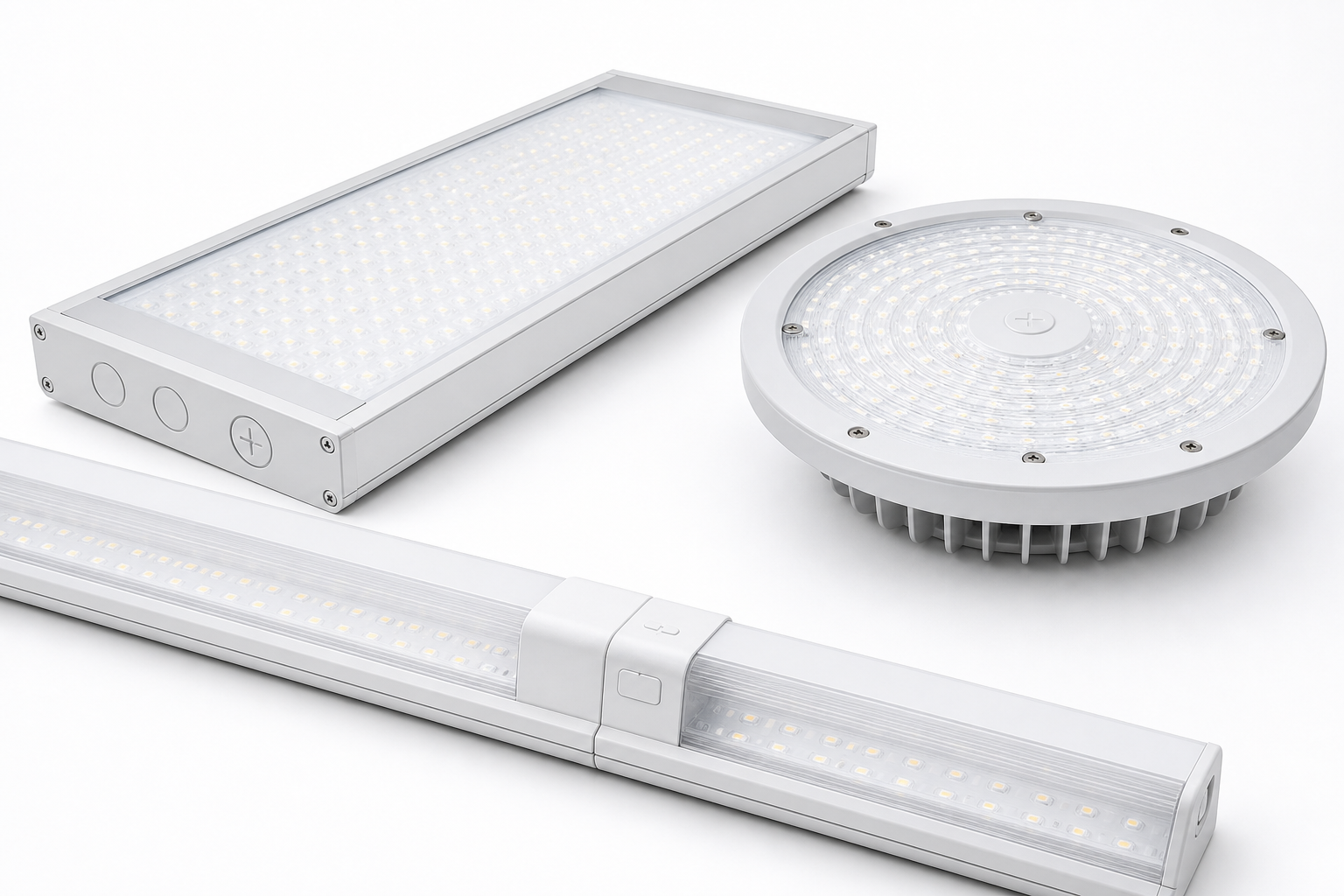
LED shop lights and high-bay fixtures work well for different situations. Understanding the specifics of your garage helps you choose the right approach. Your garage’s age, construction type, and local climate all influence what works best and what to avoid.
Check specific requirements before purchasing materials. Measure the area, note unusual conditions (extreme temps, high humidity, uneven surfaces), and read product specs carefully. A mismatch between your conditions and the product’s rated range is the most common cause of unexpected failures.
If this is your first lighting project, budget 50% more time than guides suggest. The learning curve is real, and careful work produces better results than rushing to meet an estimated timeline.
A quality motion sensor garage light makes a noticeable difference in convenience. Check current options and reviews to find the right match for your project and budget.
Linkable Light Bar Systems
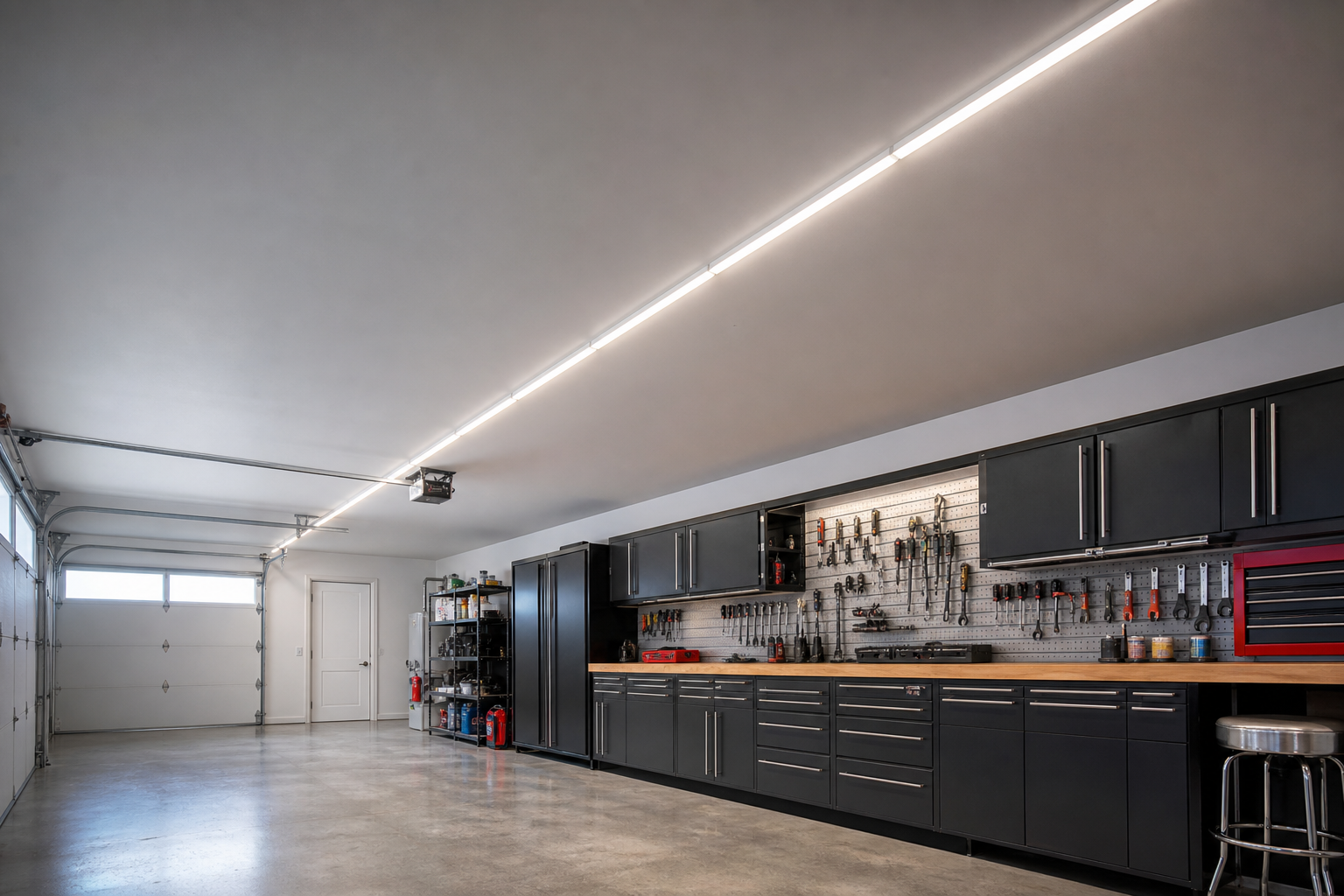
Linkable light bars and motion-activated solutions offer flexible installation options. This is an area where cutting corners comes back to haunt you. Invest the effort upfront and you’ll save significant time and money over the next several years of use.
Follow manufacturer instructions exactly, even when online tutorials suggest shortcuts. Electrical specifications differ between brands; what works for one product can cause failure with another. If the data sheet says maximum 4 units per circuit, those numbers aren’t suggestions.
Expect at least one surprise during the project. Hidden moisture, non-standard dimensions, or outdated wiring are common discoveries. Having backup materials and a flexible timeline reduces the stress when they appear.

Motion Sensor Garage Light
Automatic operation perfect for frequent garage access
Professional Workspace Lighting Plans
Many homeowners replace a single bare bulb with a true workspace lighting plan. Understanding the specifics of your situation helps you choose the right approach. Your garage’s age, construction type, and local climate all influence what works best and what to avoid.
Document every product you use: brand, color temperature, model number, installation date. Future replacements need exact material matches. Tape the info inside an electrical panel or take a quick phone photo for your records.
Whether you’re setting up a garage workshop or a home office space, proper lighting forms the foundation of a functional environment.
Color Temperature and Light Quality
Color temperature (Kelvin) determines light quality. 5000K (daylight) gives crisp, color-accurate illumination ideal for garages. 4000K (neutral white) is slightly warmer if you find daylight too harsh. Avoid warm-white bulbs (2700-3000K) for workshop use since they make it harder to see fine detail.
For detailed work areas, consider dedicated workbench lighting solutions that provide focused task illumination without casting shadows.
Installation Planning and Preparation
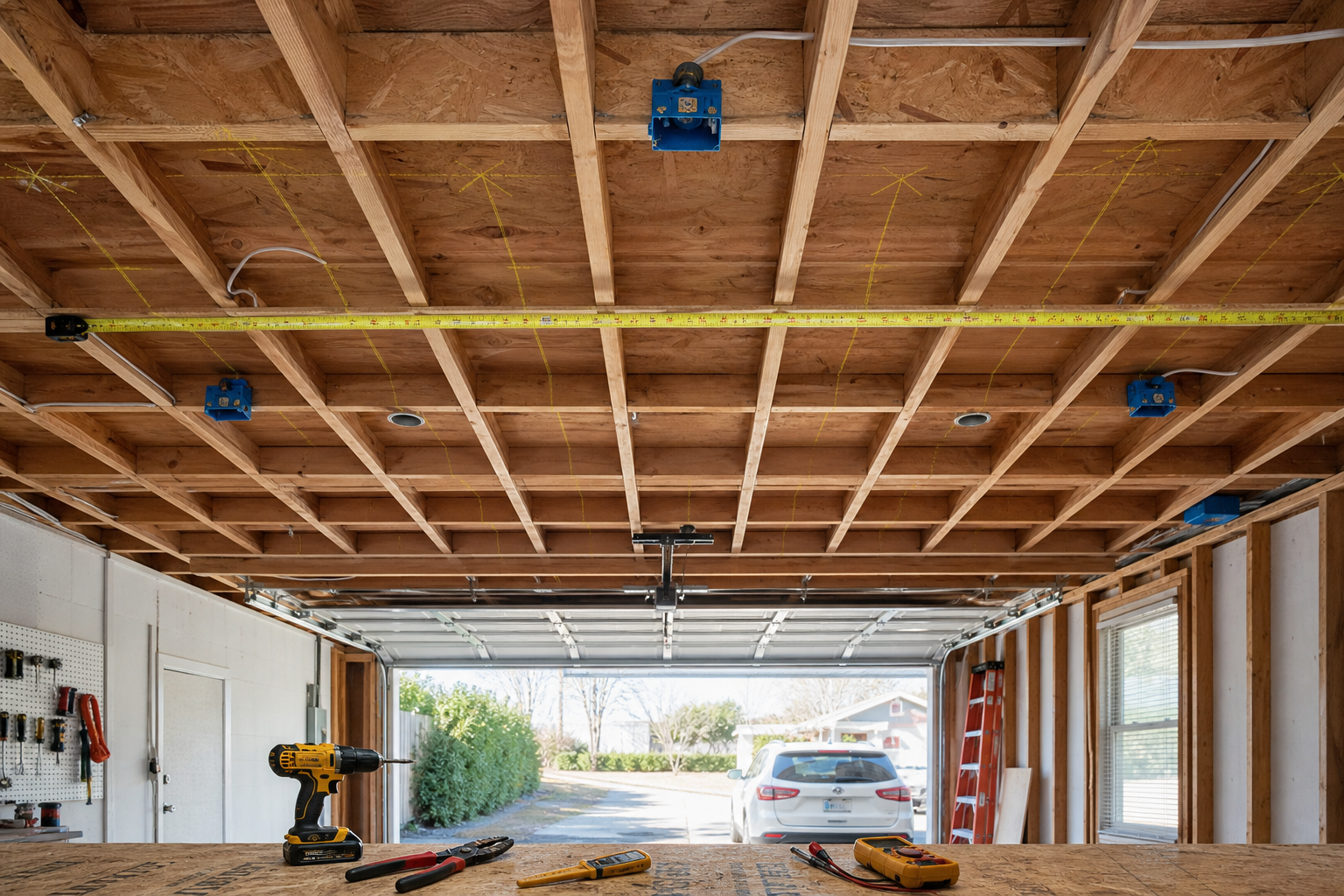
Invest in quality tools for tasks you’ll repeat. A reliable stud finder, a good level, a quality tape measure, and proper safety gear (eye protection, hearing protection, respirator) make every project easier and safer. These tools pay for themselves across multiple projects over the years.
Set a realistic timeline and budget before buying anything. Most garage projects take 50% longer and cost 20% more than initial estimates, especially for first-timers. Build that buffer into your plan so unexpected discoveries don’t derail the entire project.
Before starting any garage project, take stock of what you have and what you need. Walk the space with a tape measure and a notepad. Record dimensions, note existing electrical outlets and their amperage, check for moisture issues, and photograph anything you want to change.

What to Avoid in Garage Lighting
Knowing what to skip prevents expensive mistakes:
- “Universal” products claiming to work everywhere. Specialized products consistently outperform generalists.
- Unknown brands at rock-bottom prices. Established brands charge more for proven materials and real warranties.
- Products with vague specs or missing data sheets. If a manufacturer won’t publish details, that’s a red flag.
- Ignoring electrical capacity. Calculate total wattage before connecting multiple fixtures to avoid overloading circuits.
For specialty applications like art studios or music studios, consider how lighting affects your specific activities.
Frequently Asked Questions
What’s the biggest mistake to avoid when installing garage lighting?
Rushing preparation. Whether it’s measuring, checking electrical capacity, or reading installation instructions, upfront time prevents expensive do-overs. Poor planning leads to uneven lighting, electrical issues, or fixtures that don’t fit your space properly.
Can I handle garage lighting installation as a DIY project?
Most LED shop light installations are DIY-accessible with basic tools, especially linkable systems that plug into existing outlets. However, electrical work involving new circuits, junction boxes, or high-voltage connections should go to licensed electricians for safety and code compliance.
How many lumens do I really need for my garage?
Target 50 lumens per square foot for general garage use. A typical two-car garage (400 square feet) needs about 20,000 total lumens. For detailed work areas, increase to 300 lumens per square foot with focused task lighting that eliminates shadows on your work surface.
How long will quality LED garage lights last?
Quality LED shop lights typically last 50,000+ hours with proper installation. That translates to 10+ years of normal garage use. The key factors for longevity are choosing lights rated for your garage’s temperature range and protecting them from moisture and vibration.
This article contains affiliate links. We may earn a small commission at no extra cost to you.
