

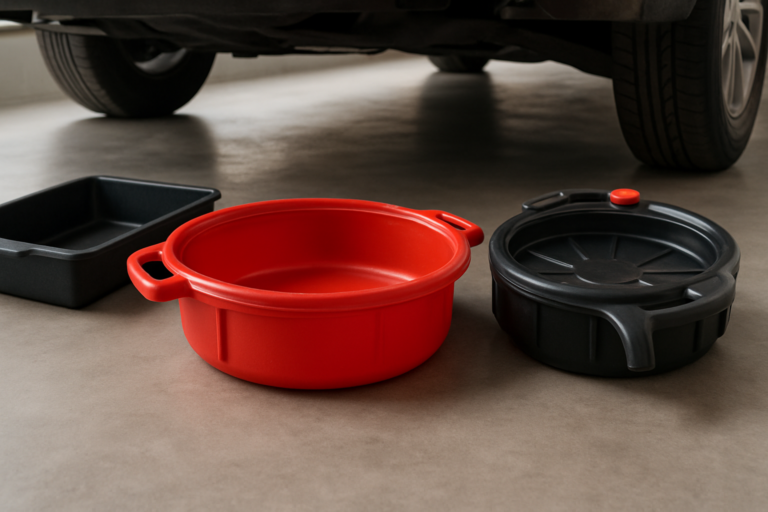
Changing your own oil is one of those satisfying DIY tasks that saves money and keeps you connected to your vehicle. But there’s nothing worse than fumbling with a flimsy drain pan while hot oil splashes everywhere, or worse, discovering a puddle of used motor oil spreading across your garage floor the next morning.
The right oil drain pan makes the difference between a clean, efficient oil change and a frustrating mess. After testing dozens of options over years of home garage use, I’ve learned what actually matters when you’re lying under your car with a wrench in hand. Let’s break down what separates the useful drain pans from the ones that create more problems than they solve.
Capacity Matters More Than You Think
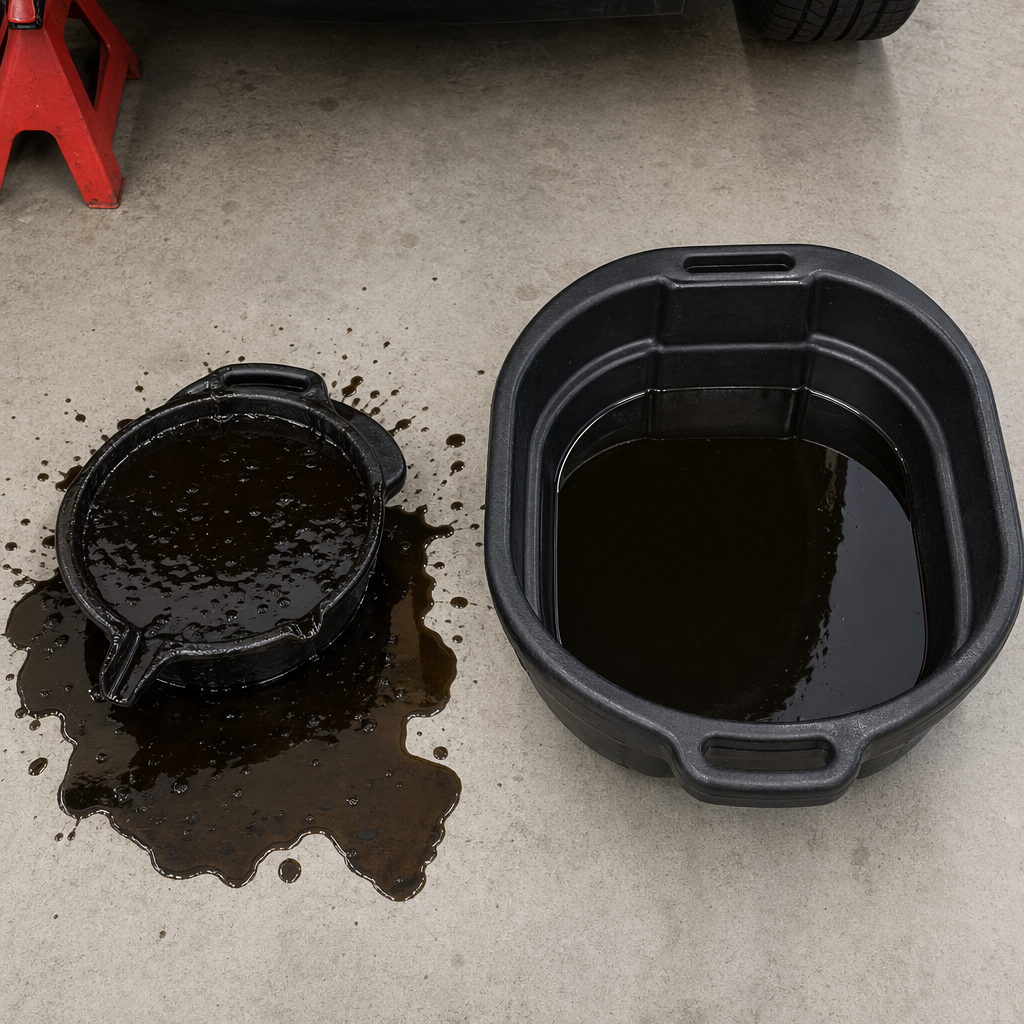
Most passenger cars hold between 4 to 6 quarts of oil, but you need more capacity than that in your drain pan. When oil first drains from a warm engine, it comes out fast and can splash or overflow a pan that’s barely large enough. I recommend a minimum 8-quart capacity for compact cars and at least 12 quarts if you work on trucks or SUVs.
The Flotool 11849 hits the sweet spot with a 15-quart capacity. It’s large enough for multiple vehicles without being unwieldy when you need to carry it. The wide, low-profile design slides easily under most vehicles, even lowered ones.

Flotool 11849 Oil Drain Pan
Large 15-quart capacity with anti-splash lip, perfect for most DIY garage needs
You’ll also want to consider what else you might use the pan for. Transmission fluid changes, coolant flushes, and differential service all generate liquid that needs containment. A larger pan handles these jobs without requiring you to buy specialized equipment for every task.
Spill Prevention Features That Actually Work
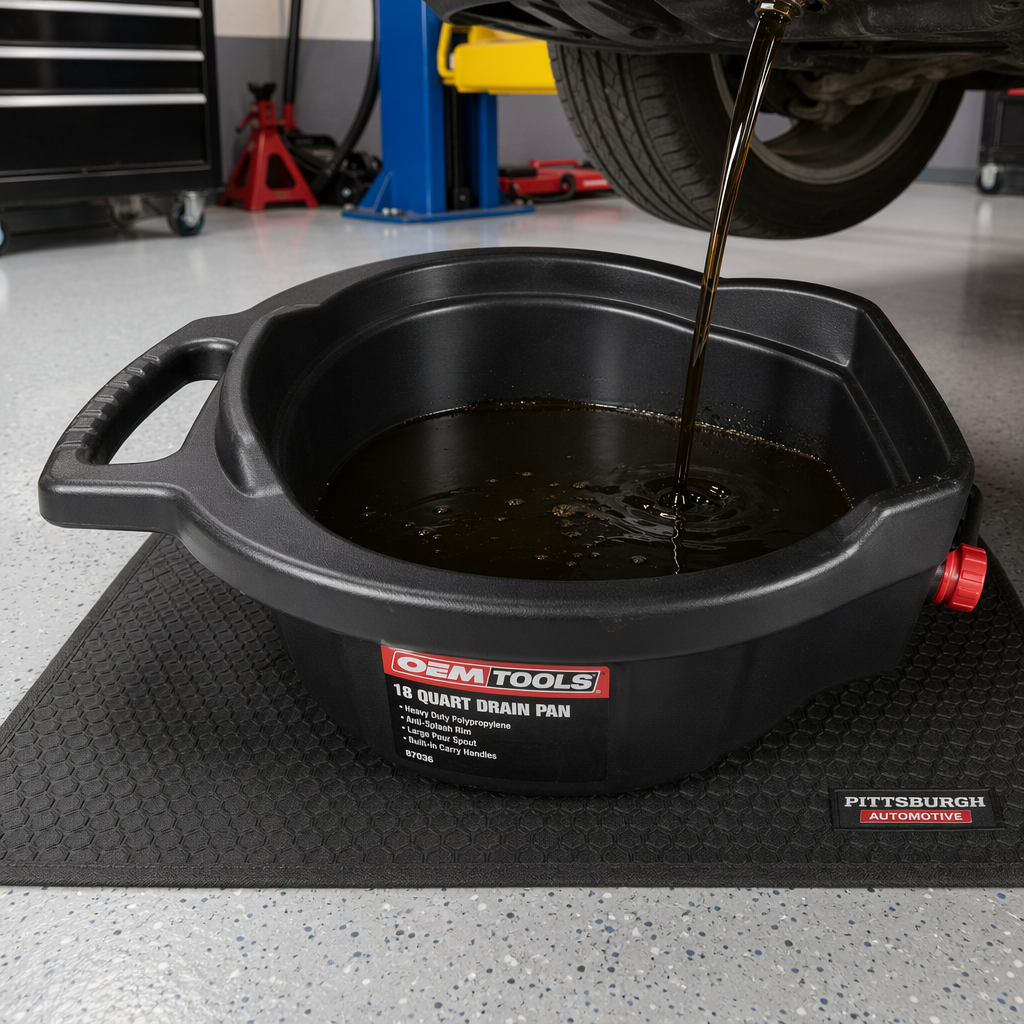
The biggest frustration with cheap drain pans comes when you’re moving them. A simple plastic tub with 5 quarts of used oil becomes a hazard the moment you pick it up. Look for pans with high walls, anti-splash lips, and stable bases.
Anti-splash lips around the rim prevent waves from sloshing over when you’re carrying the pan. This feature seems minor until you’re walking across your garage with several quarts of used oil and hit an uneven spot in the floor. The raised edge contains the movement and saves your shoes, and your garage floor. Protecting your flooring is crucial, especially if you have quality flooring that serves multiple purposes.
Low-profile designs with wide footprints provide stability both under the vehicle and when sitting on the ground. Tall, narrow pans tip easily, especially when you bump them while working. A wide-based drain pan stays put even when you accidentally kick it.
Some pans include lids or covers for storage. This feature transforms a good pan into a great one if you need to store used oil for a few days before taking it to a recycling center. Just make sure the lid seals properly. A loose-fitting cover doesn’t prevent spills during transport.
Drain Valves and Pour Spouts
Transferring used oil from your drain pan to storage containers or recycling jugs creates another opportunity for spills. Pans with integrated drain valves eliminate most of this problem. You attach a hose, open the valve, and gravity does the work.
The Hopkins FloTool drain container features a reliable drain valve that doesn’t leak when closed. The threaded design accepts standard garden hose fittings, so you can drain directly into approved disposal containers without lifting a heavy pan full of oil.

Hopkins FloTool Drain Container
Built-in drain valve and hose adapter make cleanup and disposal simple
Not all drain valves work equally well. I’ve used pans where the valve leaked constantly, defeating its entire purpose. Look for valves made from durable materials with rubber or silicone gaskets. The valve should close completely and stay closed even when the pan is full.
Pour spouts offer another transfer option. A well-designed spout creates a smooth flow without drips running down the outside of the pan. The spout should be positioned to make pouring comfortable when the pan is nearly full and heavy. Corner-mounted spouts typically work better than center-mounted ones.
Material Construction and Durability
Most drain pans use either high-density polyethylene (HDPE) plastic or metal construction. Each material has distinct advantages depending on how you use your garage.
HDPE plastic pans resist corrosion and handle petroleum products well. They’re lightweight, which matters when you’re carrying 6 quarts of used oil across your garage. Quality plastic pans tolerate temperature extremes without cracking or becoming brittle. However, cheap plastic versions crack easily, especially in cold weather.
Metal pans, typically made from galvanized steel or aluminum, offer superior durability. They won’t crack if you drop them or roll over them with a creeper. Metal construction also provides better heat resistance if you’re draining oil immediately after shutting off a hot engine. The downside is weight and eventual rust, though galvanized steel holds up well with proper care.
I prefer plastic for general use because it’s easier to clean and lighter to handle. But if you run a busy home garage or work on heavy equipment, a metal drain pan withstands harder use over time.
Portability and Storage Considerations
Your drain pan needs to fit under your vehicles and store conveniently when not in use. Low-profile pans, typically 4 to 6 inches tall, slide under most cars without requiring ramps or jack stands. This height range works for quick oil changes on vehicles with standard ground clearance.
For lowered vehicles or sports cars, you might need an ultra-low pan that’s only 2 to 3 inches tall. The tradeoff is reduced capacity, so these specialized pans work best if you only service compact cars with smaller oil capacities.
Handle design affects portability significantly. Integrated handles molded into the pan provide strength, but they often dig into your hands when the pan is heavy. Separate bail-style handles distribute weight better but can break at their attachment points on cheaper models.
Storage becomes an issue if you work in a small garage. Collapsible drain pans fold flat when empty, though I’ve found the folding mechanisms eventually leak after repeated use. Standard rigid pans stack better if you have multiple sizes. Standing for long periods while working on maintenance tasks can be tough on your feet, so consider using anti-fatigue mats in your work area for comfort.
Proper Disposal Methods for Used Motor Oil
Getting the oil out of your engine is just the first step. You’re legally responsible for disposing of used motor oil properly, and it’s easier than most people think.
Never dump used oil down drains, into storm sewers, or onto the ground. A single gallon of used oil can contaminate one million gallons of groundwater. Most states classify improper oil disposal as illegal dumping with substantial fines.
Instead, take your used oil to an approved collection center. Most auto parts stores, including AutoZone, O’Reilly Auto Parts, and Advance Auto Parts, accept used motor oil for free. Many accept used filters too. Call ahead to confirm their policies and container requirements.
Some municipalities operate household hazardous waste collection facilities that accept automotive fluids. These centers typically have weekend hours and handle oil, coolant, transmission fluid, and brake fluid. Check your county or city website for locations and schedules.
Store used oil in approved containers with tight-fitting lids. Old milk jugs deteriorate and leak. Instead, save your empty oil bottles or buy dedicated oil storage containers designed for this purpose. Label containers clearly as “Used Motor Oil” to prevent confusion.
Don’t mix different automotive fluids. Keep used motor oil separate from coolant, transmission fluid, and other liquids. Mixing contaminates the oil and makes recycling difficult or impossible. Many collection centers refuse mixed fluids. During winter months, be extra careful about spills since they can create dangerous conditions when mixed with snow and ice. Using protective floor mats designed for winter conditions can help prevent slips and protect your garage floor.
Specialized Pans for Specific Jobs
Beyond standard drain pans, specialized options handle unique situations better. Low-profile pans work for lowered cars. Extra-large capacity pans serve diesel trucks with 12+ quart capacities. Portable drain pans with wheels help if you work in a large shop.
The Lumax LX-1632 features a unique design that combines an upper and lower tank. You drain oil into the upper portion, then it flows through a screen into the lower tank. The screen catches the drain plug if you drop it, which happens more often than anyone wants to admit.
