

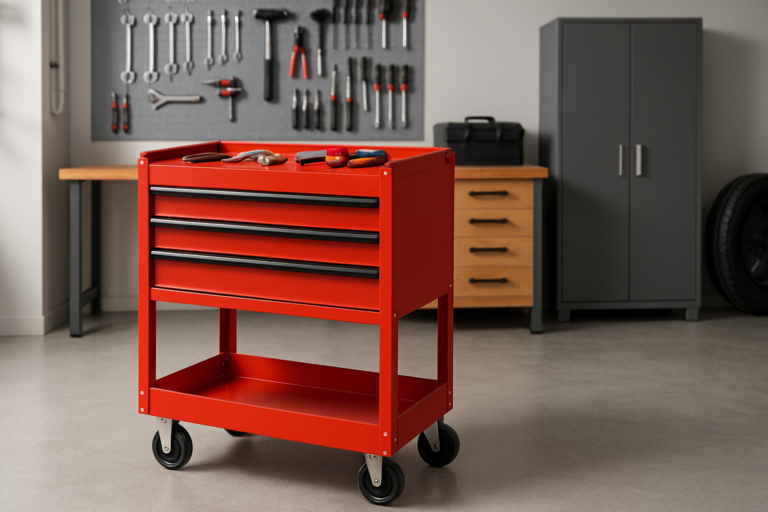
A quality rolling tool cart can transform how you work in your garage. Instead of walking back and forth to your main toolbox or bending down to floor level constantly, you bring your tools where you need them. The right cart keeps everything organized and accessible while you’re under the hood, assembling furniture, or tackling any project that requires multiple tools.
The market offers everything from lightweight portable carts to heavy-duty professional units that rival full-size toolboxes. Choosing the right one depends on your workspace, the tools you use most, and how much weight you need to move around. Let’s break down what actually matters when shopping for a rolling tool cart.
Understanding Weight Capacity and Construction
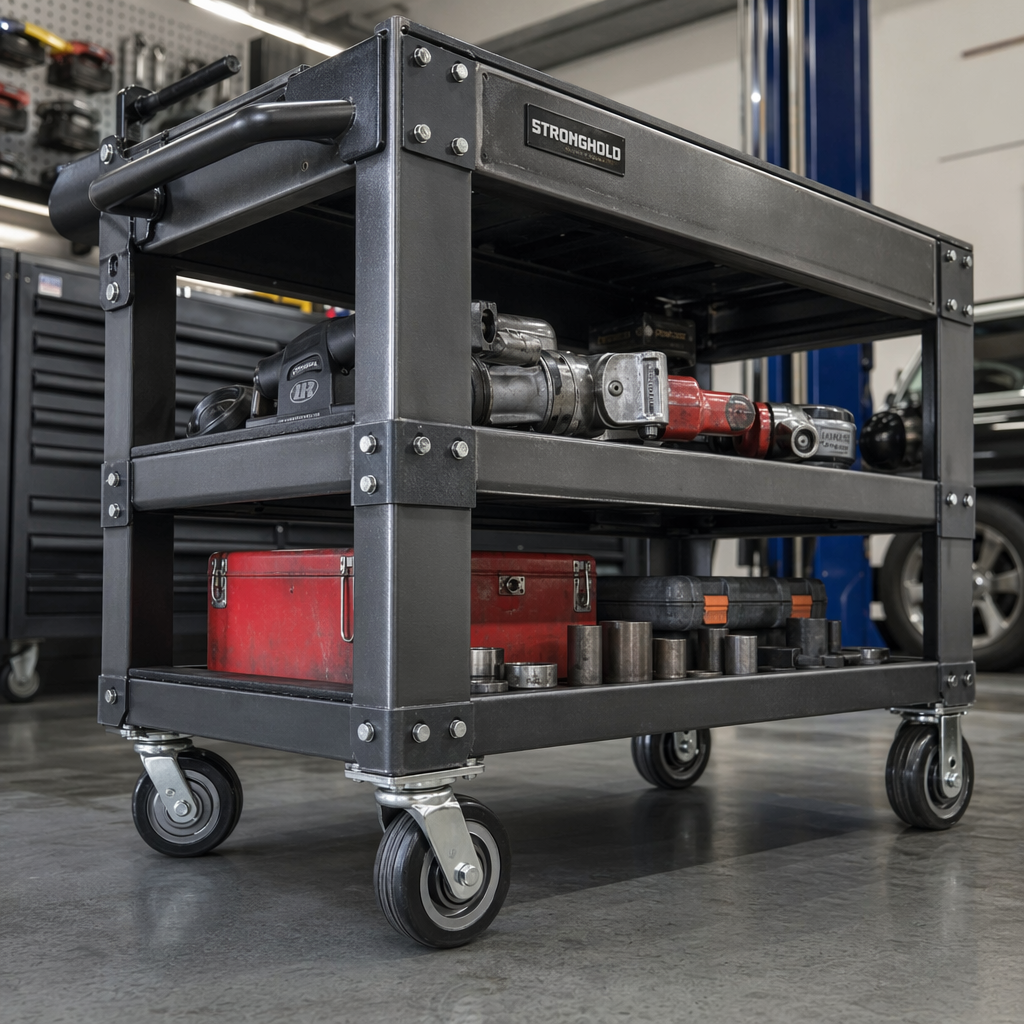
Weight capacity isn’t just a number on the spec sheet. It determines whether your cart will handle a full load of tools without wheels buckling or the frame flexing. Most portable carts handle 200-300 pounds, which works fine for hand tools and light equipment. Mid-range carts typically support 400-600 pounds. Professional-grade units can handle 800 pounds or more.
Steel gauge matters more than you might think. An 18-gauge steel cart feels solid and handles daily abuse. Thinner 22-gauge or 24-gauge steel works for occasional use but will dent and flex under heavy loads. Welded construction beats bolted frames for durability, especially at stress points where drawers slide in and out.
The Milwaukee PACKOUT rolling cart uses a modular design with reinforced corners and a 250-pound capacity. It’s built for job sites but works equally well in home garages where you need portability without sacrificing strength.
Drawer Configuration and Organization Features
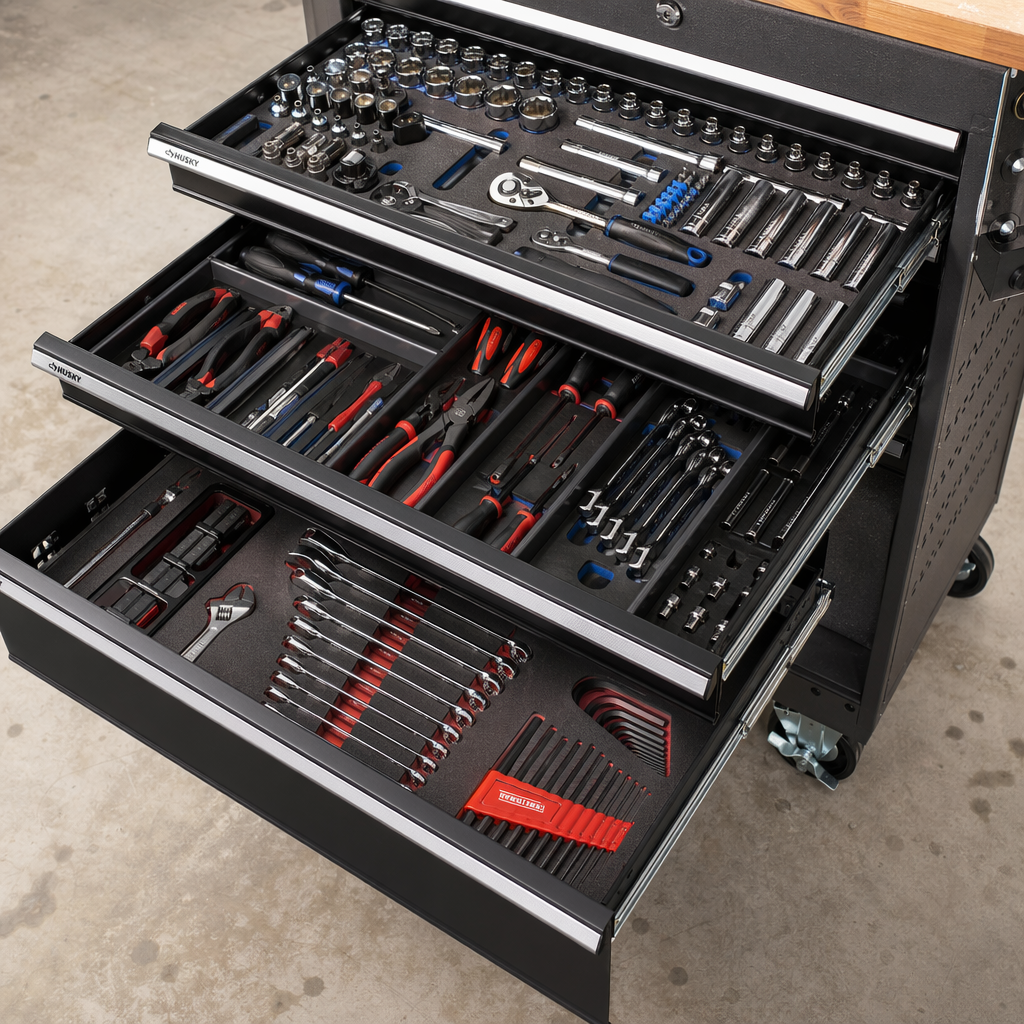
Drawer layout makes or breaks daily usability. A three-drawer cart with identical shallow drawers forces you to stack tools, making the bottom layer inaccessible. You want varied depths: shallow drawers (2-3 inches) for wrenches and sockets, medium drawers (4-5 inches) for power tool accessories, and at least one deep drawer (6+ inches) for bulkier items.
Ball-bearing slides cost more but they’re worth every penny. Cheaper carts use plastic rollers that bind when drawers are fully loaded. Quality ball-bearing slides extend smoothly even with 50+ pounds of tools inside. Look for slides rated for at least 50 pounds per drawer.

US General 30 Inch Tool Cart
Five drawers with ball-bearing slides and a built-in power strip make this a top pick for serious home mechanics
Drawer liners prevent tools from sliding around and protect the finish. Some carts include foam liners, but many come with bare metal. You can add your own tool drawer liner material for a custom fit.
Side compartments and magnetic strips add extra storage without taking drawer space. A magnetic strip on the side holds frequently-used wrenches or screwdrivers. Side hooks work great for extension cords or shop rags. Built-in cup holders and parts trays might seem gimmicky, but you’ll use them constantly during long projects.
Wheel Quality and Mobility
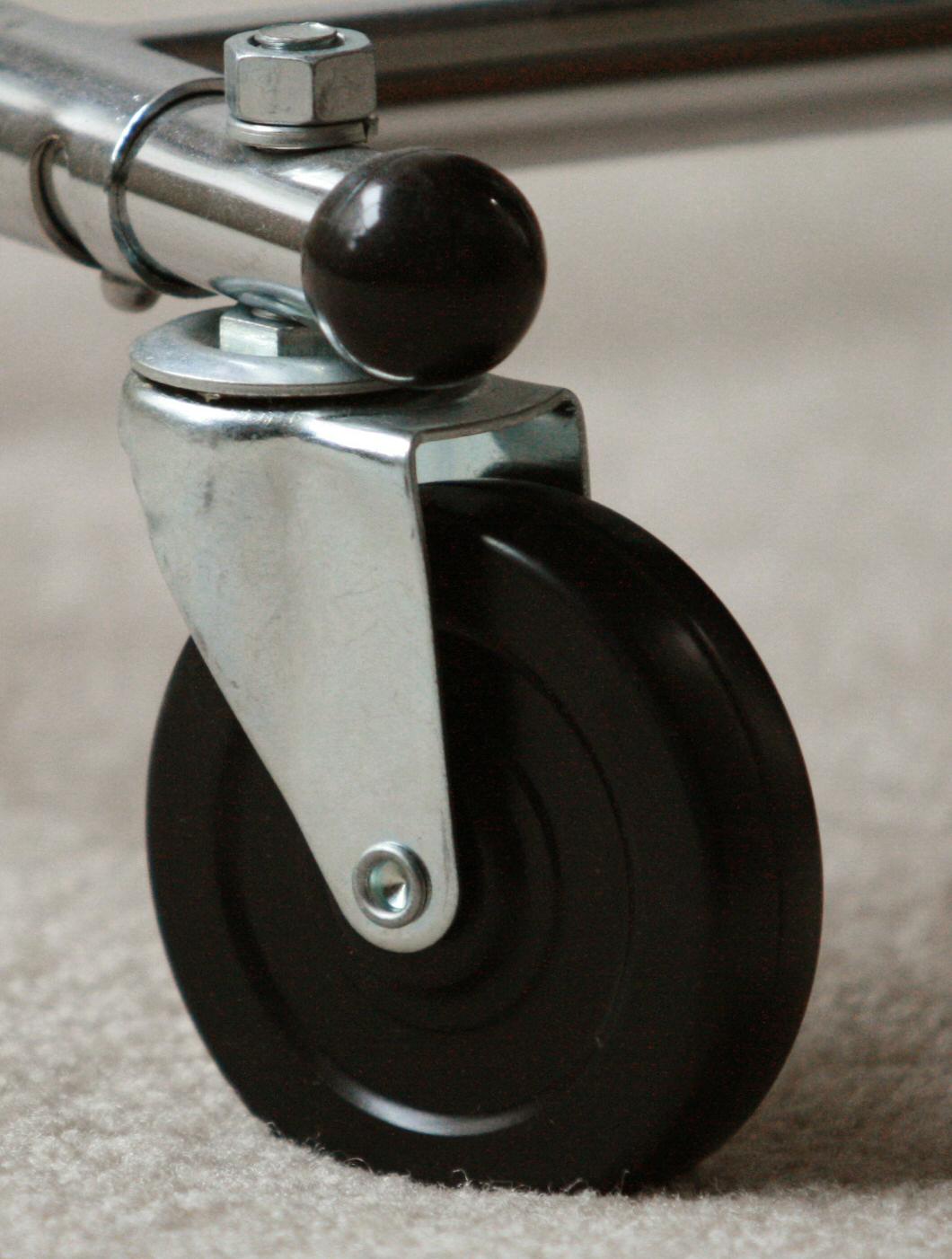
Wheels determine whether your cart glides effortlessly or fights you across the garage floor. Cheap casters with thin plastic wheels leave marks on epoxy floors and catch on every crack. Quality carts use polyurethane or rubber wheels that roll smoothly and protect your floor.
Size matters for both smooth rolling and obstacle clearance. 4-inch wheels work fine on perfectly smooth concrete. 5-inch or 6-inch wheels handle rougher surfaces and transition between garage and driveway more easily. Larger wheels also distribute weight better, reducing floor pressure.
Swivel versus fixed placement affects maneuverability. Most carts use four swivel casters for maximum flexibility. Some professional models use two fixed rear wheels and two swivel front wheels, which makes them easier to push in a straight line but slightly harder to spin in tight spaces.
Locking mechanisms should be easy to engage with your foot. You don’t want to bend down to lock wheels when your hands are full of tools. Better carts have locks on at least two wheels, preferably diagonal corners for stability.
Portable vs Full-Size Professional Carts
Portable carts prioritize mobility over maximum capacity. They typically feature 1-3 drawers or open shelves and weigh 20-40 pounds empty. These work perfectly if you need to move tools between locations or have limited garage space. The Keter portable tool cart even folds flat for storage in tight spaces.
The downside is limited capacity. You can’t fit your entire tool collection on a portable cart. They work best as supplements to a main toolbox, carrying the specific tools you need for a particular job. For comprehensive garage tool storage solutions, you’ll want to combine rolling carts with other organizational systems.

Husky 26 Inch Rolling Tool Cabinet
Three drawers with 200-pound capacity per drawer provide serious storage in a size that fits most garage spaces
Mid-size carts bridge the gap between portable and professional. Units in the 26-33 inch width range offer 4-5 drawers with enough capacity for most DIY mechanics. They’re still manageable to move around but hold significantly more tools than portable options.
Full-size professional carts run 40 inches or wider and can replace a traditional toolbox. These units feature 6-10 drawers, top compartments, and total capacities exceeding 1,000 pounds. They’re built for daily professional use but might overwhelm a small home garage. The width can make them difficult to maneuver in tight spaces between vehicles and workbenches.
Service Carts for Different Workshop Needs
Traditional tool carts focus on drawer storage, but service carts take a different approach. These feature open shelves or a combination of shelves and small drawers. They excel at holding larger items like power tools, parts containers, or supplies that don’t fit in standard drawers.
Three-tier utility carts work brilliantly for ongoing projects. Keep active work on the top shelf, tools on the middle, and parts or supplies on the bottom. The three-tier rolling utility cart design also works well for auto detailing supplies or gardening equipment storage.
Parts carts specialize in organizing small components during disassembly projects. They typically include multiple small bins or compartments plus a work surface. When you’re tearing down an engine or transmission, having dedicated spots for bolts sorted by location prevents the “where did that go?” frustration during reassembly. For hazardous materials like used fluids or solvents, ensure proper chemical storage separate from your mobile tool organization.
Pneumatic tool carts include built-in air hose reels and tool holders specifically designed for impact wrenches and air ratchets. These save significant time in shops where air tools are primary tools. Rather than dragging hoses across the floor, everything stays organized on one mobile platform.
Material Options and Durability Considerations
Steel dominates the tool cart market for good reasons. It handles heavy loads, resists damage, and lasts for decades with minimal maintenance. Powder-coated finishes protect against rust and look professional. Steel carts do weigh more, which matters if you frequently move your cart up and down ramps or load it in a truck.
Heavy-duty plastic carts trade load capacity for lighter weight and rust resistance. Medical-grade plastic carts used in hospitals have migrated to workshop use because they’re easy to clean and hold up well to chemicals. They typically max out around 300-400 pounds capacity, but that’s plenty for many applications.
Aluminum carts offer the best strength-to-weight ratio but cost significantly more. They’re popular with mobile mechanics and contractors who load equipment in vehicles daily. For stationary garage use, the weight savings rarely justify the premium pricing.
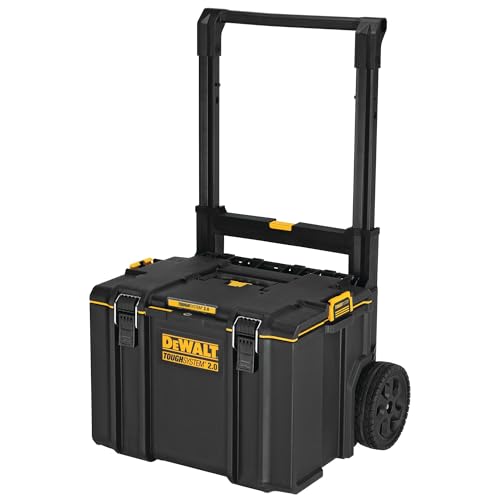
DEWALT Rolling Tool Storage System
Modular stackable design with weather-resistant construction makes this perfect for mechanics who work both inside and outside
Hybrid designs combine materials strategically. A steel frame provides structural strength while plastic drawers reduce weight and resist corrosion from moisture or chemicals. These designs often provide the best balance of durability and usability.
Top Features Worth Paying Extra For
Built-in power strips transform your cart into a mobile workstation. You can plug in work lights, charge tools, or run small power equipment without stretching extension cords across your workspace. Look for strips with surge protection and at least four outlets plus USB ports for modern cordless tool chargers.
Pegboard backs or side panels multiply organization options. You can arrange tool holders exactly how you
