

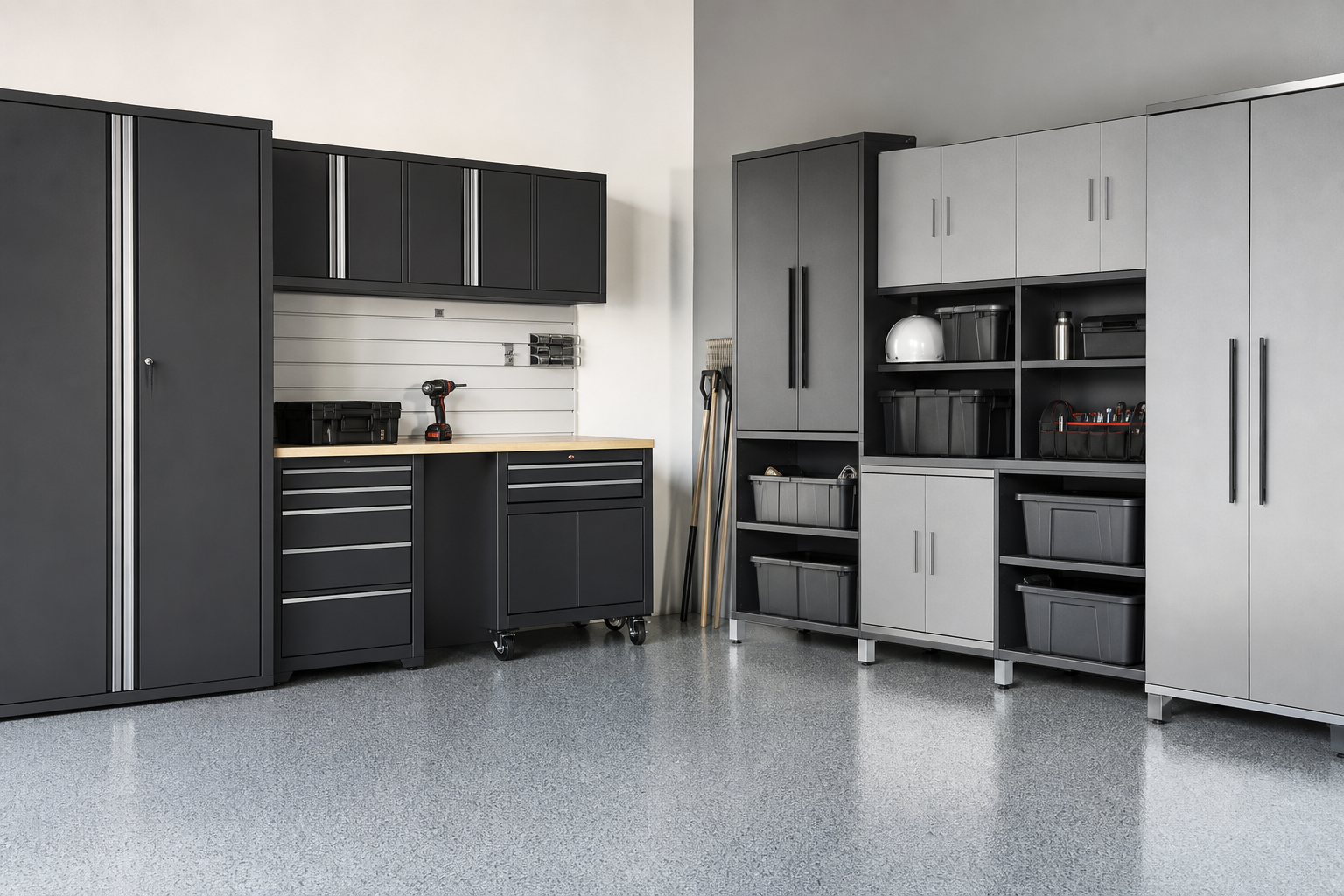
The market for garage storage cabinets for organization keeps growing, giving you more options and more chances to pick wrong. Understanding what separates quality from marketing hype saves real money and frustration.
This guide compares the leading products across the specs that actually matter, with clear recommendations at different price points.
Understanding the Basics
Weight capacity is critical and often misunderstood. Wall systems in studs hold 50 to 75 pounds per linear foot. On drywall alone, that drops to 15 to 25 pounds before failure. Ceiling racks rated for 600 pounds assume even distribution; concentrating weight in one area can cause failure well under the total limit.
The difference matters when you’re loading seasonal decorations versus power tools. A shelf holding four bins of Christmas lights is a completely different load profile than a shelf supporting a table saw accessory collection. Distribute heavy items across multiple anchor points. If you’re mounting a cabinet that weighs 80 pounds empty and will hold another 100 pounds of tools, you need at least three studs for safe distribution.
Clear plastic bins beat cardboard for garage storage in every way: moisture resistance, pest resistance, visibility, and stackability. Label each bin on the front for easy identification. A label maker and 20 minutes of work saves hours of searching over the coming years.
Standardize bin sizes within each zone. Three or four standard sizes stack more efficiently than a random collection. Most garage storage systems work best with 12-gallon and 18-gallon bins as the core sizes, with smaller 6-gallon bins for hardware and fasteners.
Zone your garage before buying products. Common zones: tools/workbench, automotive, seasonal items, sports gear, lawn/garden, and household overflow. Each zone stays self-contained so everything for a given task lives in one spot.
Draw a rough floor plan on graph paper before ordering cabinets. Mark existing features: doors, windows, electrical panels, water heaters, HVAC equipment. Note the door swing radius and vehicle parking footprint. This prevents ordering a cabinet system that blocks access to your breaker panel or makes it impossible to open your car door fully.

Heavy Duty Garage Storage Cabinets
Built to handle serious weight and daily use in demanding garage environments
Steel Cabinets vs. Modular Systems
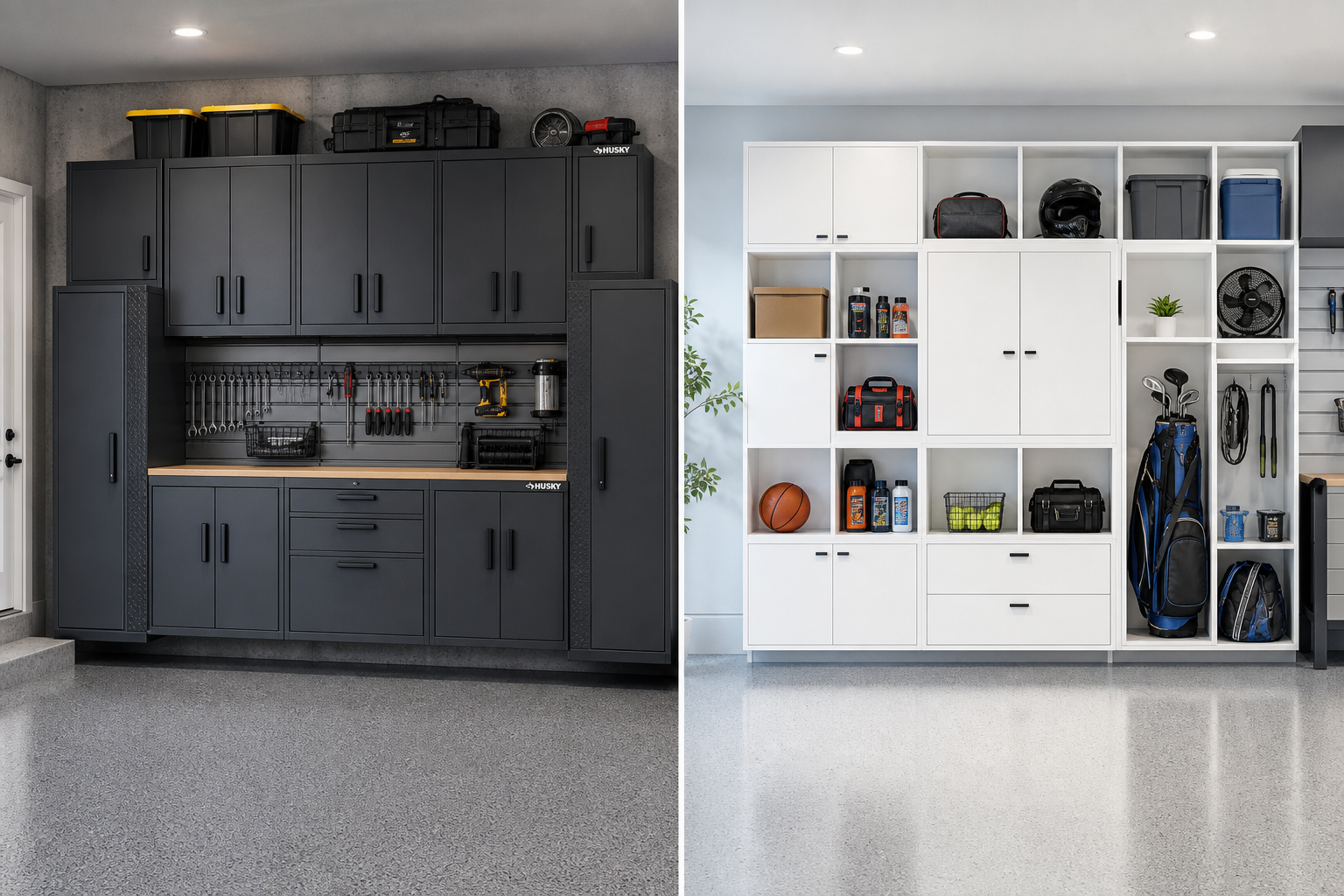
Steel cabinets deliver the most protection and the cleanest look. Quality units use 20-gauge or thicker steel with powder-coated finishes that resist rust and scratches. Budget models typically use thinner 24-gauge steel that dents more easily.
Welded frames outlast riveted or bolted construction. Check inside corners and seams. Welded joints create a single rigid structure. Bolted cabinets can develop play at the joints after years of opening and closing loaded drawers.
Look for adjustable shelves with reinforcement ribs on the underside. Flat shelves without ribs bow under weight. Adjustability lets you customize interior space as your storage needs change. Cabinets with three shelf positions are adequate. Five positions give more flexibility.
Locking mechanisms vary widely in quality. Tubular cam locks provide better security than the simple paddle locks common on budget cabinets. If you store chemicals, paint, or expensive tools, spend extra for real locks. For specialized chemical storage requirements, consider safe storage solutions for hazardous materials that meet safety standards.
Modular systems offer flexibility steel cabinets can’t match. You buy base units, wall cabinets, workbench sections, and overhead units separately, then arrange them to fit your space. Brands like Gladiator, NewAge Products, and Kobalt sell modular lines.
The upside is customization. Need a 10-foot run with a workbench in the middle? Buy five base cabinets, a workbench unit, and three wall cabinets. The downside is cost. Modular systems run significantly higher per linear foot for a complete setup with base and wall cabinets.
Assembly quality matters more with modular systems than with standalone steel cabinets. These systems use connector hardware to link units into a continuous run. Sloppy assembly creates gaps and misalignment. Budget four to six hours for a 10-foot modular installation if you’re working alone and following instructions carefully.
Wall-Mounted vs. Base Cabinets
Wall-mounted cabinets keep the floor clear and make cleanup easier. They work well in garages where floor space is limited or where you want to preserve vehicle parking. Quality wall cabinets hold 50 to 100 pounds when mounted to studs. Verify the cabinet’s internal structure before loading it heavily. Cabinets with full back panels distribute weight better than open-back designs.
Installation requires hitting studs. A stud finder is essential. Mark stud locations with painter’s tape before lifting the cabinet into position. Wall cabinets are awkward to hold and level simultaneously. A helper or a cabinet jack makes this work significantly easier.
If you’re looking to upgrade your wall storage beyond cabinets, consider how slat wall accessories can complement your cabinet system for tools and lighter items.

Garage Slatwall Hooks
Essential for maximizing wall storage efficiency with your cabinet setup
Durability and Weight Capacity Specs
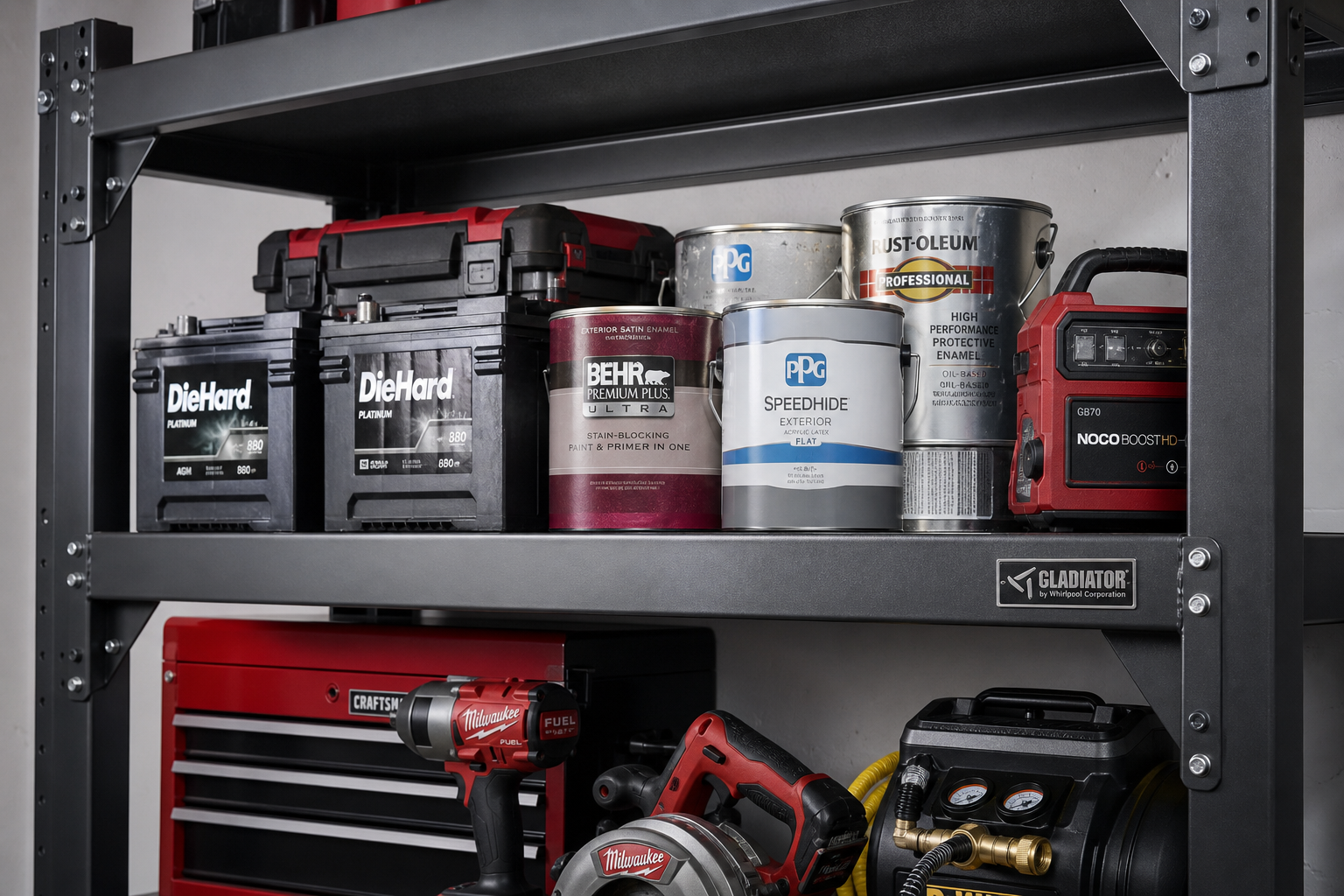
Weight ratings assume proper installation. A cabinet rated for 200 pounds per shelf achieves that capacity when mounted to studs and loaded evenly. Concentrating 200 pounds in one corner overloads the mounting hardware and the shelf itself.
Shelf material affects capacity. Heavy-gauge steel shelves hold more than particleboard or MDF shelves. Adjustable wire shelving flexes under load but won’t break catastrophically the way a particleboard shelf can. For storing heavy automotive parts or full paint cans, stick with metal shelves. If your storage needs include heavy-duty shelving units, consider dedicated systems designed for maximum weight capacity.
Drawer slides separate budget cabinets from quality ones. Ball-bearing slides rated for 100 pounds per drawer cost more but last years longer than the friction slides used on cheaper units. Open a drawer fully and push down on the extended drawer. Quality slides show minimal deflection. Cheap slides bend visibly under hand pressure.
Full-extension slides let you access items at the back of deep drawers. Partial-extension slides (typically extending 75% of the drawer depth) make it hard to reach items pushed to the back. The premium for full-extension slides pays off every time you use the drawer.
Security and Climate Considerations
Security features include locks, reinforced doors, and concealed hinges. If you’re storing anything valuable or dangerous, external hinges and flimsy paddle locks aren’t adequate. Concealed hinges can’t be popped with a screwdriver. Tubular cam locks resist picking better than wafer locks.
Some systems integrate with home security. Certain modular cabinet lines include wiring channels for motion sensors or contact switches. This adds cost but makes sense if you’re already running a monitored system.
Climate affects material choice. Steel cabinets in unheated garages can develop condensation inside if temperature swings are extreme. This isn’t a problem if you’re storing tools, but it can damage cardboard boxes or paper goods stored inside. Ventilation holes in the back panel help but don’t eliminate the issue.
Plastic cabinets (resin or heavy-duty polymer) resist moisture and temperature swings better than steel. They’re lighter, which simplifies installation, but they look less substantial. Weight capacity is lower, typically 25 to 50 pounds per shelf. They work well for seasonal storage and household overflow. They’re inadequate for heavy tools or automotive parts.
Matching Storage to Your Actual Needs
Effective garage storage uses walls and ceiling as primary surfaces, keeping the floor clear for vehicles and work. Wall-mounted track systems, overhead ceiling racks, and sturdy cabinets provide organized access without eating into parking or workspace.
Overhead ceiling racks handle bulky, lightweight items: camping gear, holiday decorations, luggage. They don’t work well for items you access frequently. Lifting a bin down from an 8-foot ceiling gets old fast. Reserve overhead storage for things you touch twice a year.
For items you access regularly, consider dedicated storage solutions like bike storage systems that keep frequently used equipment easily accessible.
Ceiling joist capacity matters. Most residential ceiling joists in garages are 2×6 or 2×8 lumber on 16-inch or 24-inch centers. That handles 40 to 60 pounds per square foot when properly distributed. A 4 by 8-foot overhead rack can hold 300 to 400 pounds if the load spreads evenly across multiple joists. Verify your joist size and spacing before installing overhead racks.
Workbench Area Storage
Wall space near the workbench should hold frequently used tools. Cabinets here need quick access, not maximum capacity. A base cabinet with a few drawers and a wall-mounted pegboard or slatwall panel beats a floor-to-ceiling cabinet that puts half your tools out of easy reach.
Deep base cabinets (24 inches deep) hold more but make it harder to find items. Shallower cabinets (12 to 18 inches deep) work better for hand tools, paint supplies, and automotive fluids. You see everything at a glance without digging.
Corner space is tricky. Standard rectangular cabinets waste corner footage. Lazy Susan corner units or diagonal corner cabinets use that space more efficiently. These specialty units cost 30% to 50% more than standard cabinets but make sense if you’re building out a full wall.
Measure your space in linear feet, then plan cabinetry that leaves access to service panels, outlets, and switches. A common mistake is installing a beautiful cabinet run that completely covers the electrical panel or water shutoff. Leave a 36-inch clearance in front of panels required by code.

Garage Tool Organizers
Perfect complement to cabinet storage for keeping frequently used tools within easy reach
Practical Planning Tips
Before starting any garage project, take stock of what you have and what you need. Walk the space with a tape measure and a notepad. Record dimensions, note existing electrical outlets and their amperage, check for moisture issues, and photograph anything you want to change. This baseline assessment prevents surprises mid-project and helps you budget materials accurately.
Inventory what you’re storing before ordering cabinets. Lay everything out in the driveway or on the lawn. Group similar items. This reveals how much storage you actually need and prevents over-buying cabinets. Many homeowners realize they can purge 30% to 40% of stored items once they see it all laid out.
Purging happens in waves. The first pass removes obvious trash and broken items. The second pass questions whether you’ve used something in the past year. The third pass gets ruthless about duplicates and things you’ll real
