

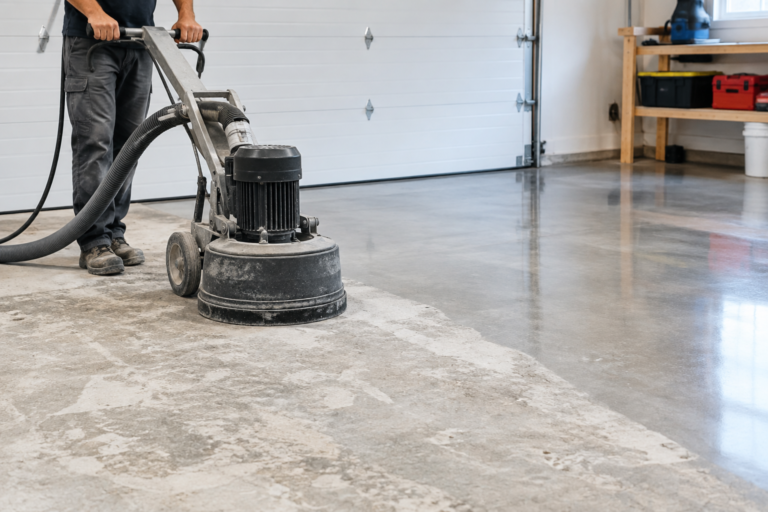
Epoxy failures almost always trace back to one thing: what happened to the concrete before the coating ever went down. Grinding is the most reliable way to get a garage floor ready, but it’s not always required. Whether you need it depends on your slab’s current condition, its age, and what’s already on it.
This guide walks through when grinding is necessary, when you can get away with lighter prep, and how to tell your floor is actually ready for epoxy. For the full installation process once your surface is prepped, check out our garage epoxy floor ideas guide.
Why Concrete Surface Profile Matters More Than You Think
Epoxy doesn’t just sit on top of concrete, it needs to mechanically bond with it. That bond depends on something called the concrete surface profile, or CSP, which is basically a rating scale for how rough or textured the surface is at a microscopic level.
Most epoxy manufacturers want a CSP between 2 and 4, similar in feel to medium-grit sandpaper. A smooth, glassy slab has a CSP close to zero, and epoxy applied over it will peel up in sheets within months, sometimes within weeks under tire traffic.
Grinding is the only method that reliably hits that target profile every time. Acid etching can work on some slabs, but it’s inconsistent, messy, and doesn’t remove existing coatings or heavy laitance the way mechanical abrasion does.
When Grinding Is Non-Negotiable
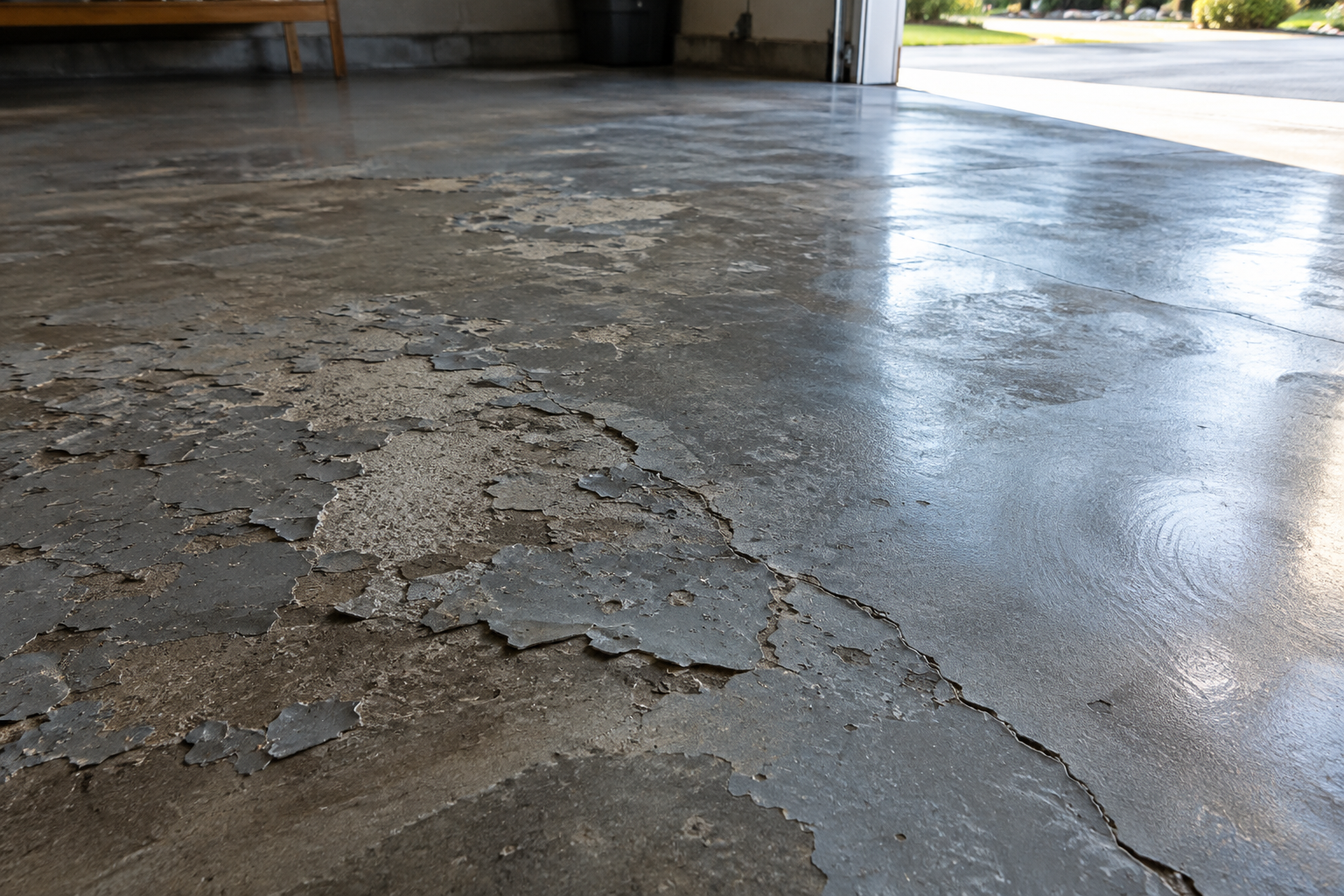
There are a few situations where skipping the grinder is asking for trouble.
- Smooth, power-troweled slabs. Builders finish garage floors with a power trowel to make them dense and smooth, which is great for durability but terrible for coating adhesion. These floors almost always need grinding.
- Existing paint or old epoxy. If your floor already has a coating on it, whether it’s peeling, chalky, or intact, that layer needs to come off or be profiled before new epoxy goes on. Painting over old coatings is one of the most common reasons floors fail, which we cover in detail in why garage floor paint wears off.
- Heavy laitance. Laitance is the weak, powdery layer of cement paste that rises to the surface as concrete cures. It’s soft, dusty, and has almost no strength, so epoxy bonds to it instead of the concrete underneath, then the whole thing lets go.
- Sealed or curing-compound-treated slabs. Many new slabs get sprayed with a curing compound that leaves an invisible film. You often can’t see it, but it blocks adhesion completely unless it’s ground off.
If your garage floor checks any of these boxes, plan on grinding. It’s the difference between a coating that lasts a decade and one you’re redoing next spring.
When You Might Get Away Without Grinding
Not every floor needs a grinder taken to it. If your slab is a broom-finished, unsealed, uncoated garage floor with visible texture you can feel with your hand, a thorough acid etch or a chemical degreaser-and-etch combo might be enough.
This is more common in older homes where the original contractor used a broom finish instead of a hard steel trowel. Run your palm across the concrete. If it feels like fine sandpaper and water soaks in within a minute or two during a simple water test, you likely have enough natural profile to skip mechanical grinding.
That said, grinding is rarely a bad choice even when it’s optional. It’s more consistent than etching, it doesn’t involve handling acid in your garage, and it exposes problems like hairline cracks or moisture issues you’d otherwise miss. If you’re dealing with cracks specifically, that’s a separate process worth addressing before any coating work, and if moisture is a concern, it’s worth testing for that too since coatings trap vapor that has nowhere else to go.
Choosing a Grinder and Managing the Dust
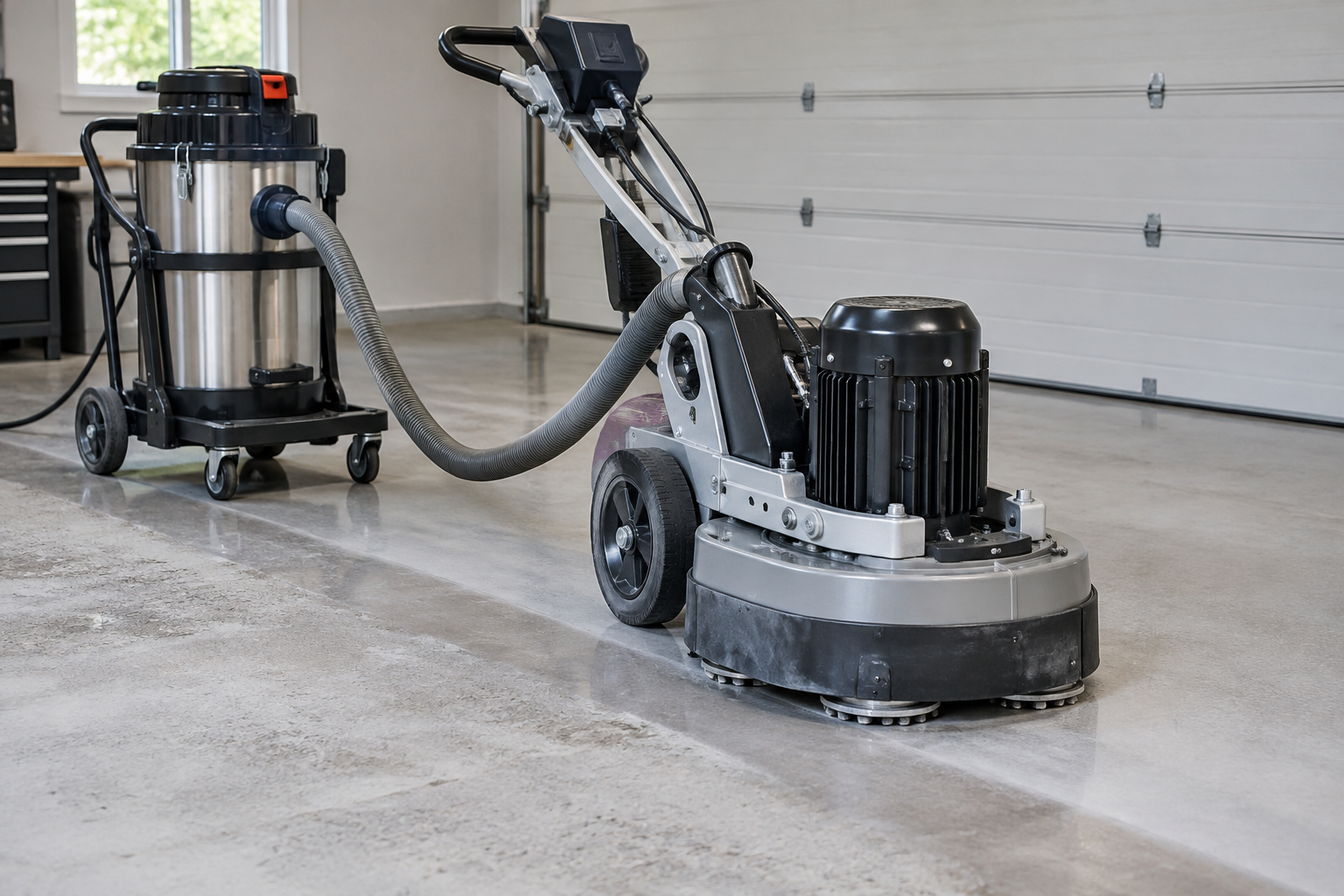
For a single-car or two-car garage, you don’t need industrial equipment. A handheld angle grinder fitted with a diamond cup wheel handles edges and small areas fine, while a walk-behind grinder covers open floor space much faster.
If you’re renting, most home centers carry small walk-behind grinders by the day. If you’d rather own the equipment for future projects, a concrete grinder with diamond cup wheel attachment for your angle grinder is a reasonable middle ground for smaller jobs and touch-up work.
Diamond Cup Wheel Grinder Attachment
A budget-friendly way to profile concrete edges and small areas without renting a full walk-behind machine.
Grinding produces a huge amount of fine silica dust, and that dust is genuinely hazardous to breathe. Always run a shop vac with a HEPA filter connected to your grinder’s dust shroud, wear an N95 or better respirator, and keep the garage door open for airflow.
A HEPA shop vac dust extractor pays for itself the first time you use it, since it keeps dust out of your lungs and off every shelf and tool in the garage. If your garage doubles as a workspace with cabinets or storage nearby, cover everything with plastic sheeting before you start, since fine concrete dust gets into everything.
Signs Your Floor Is Actually Ready
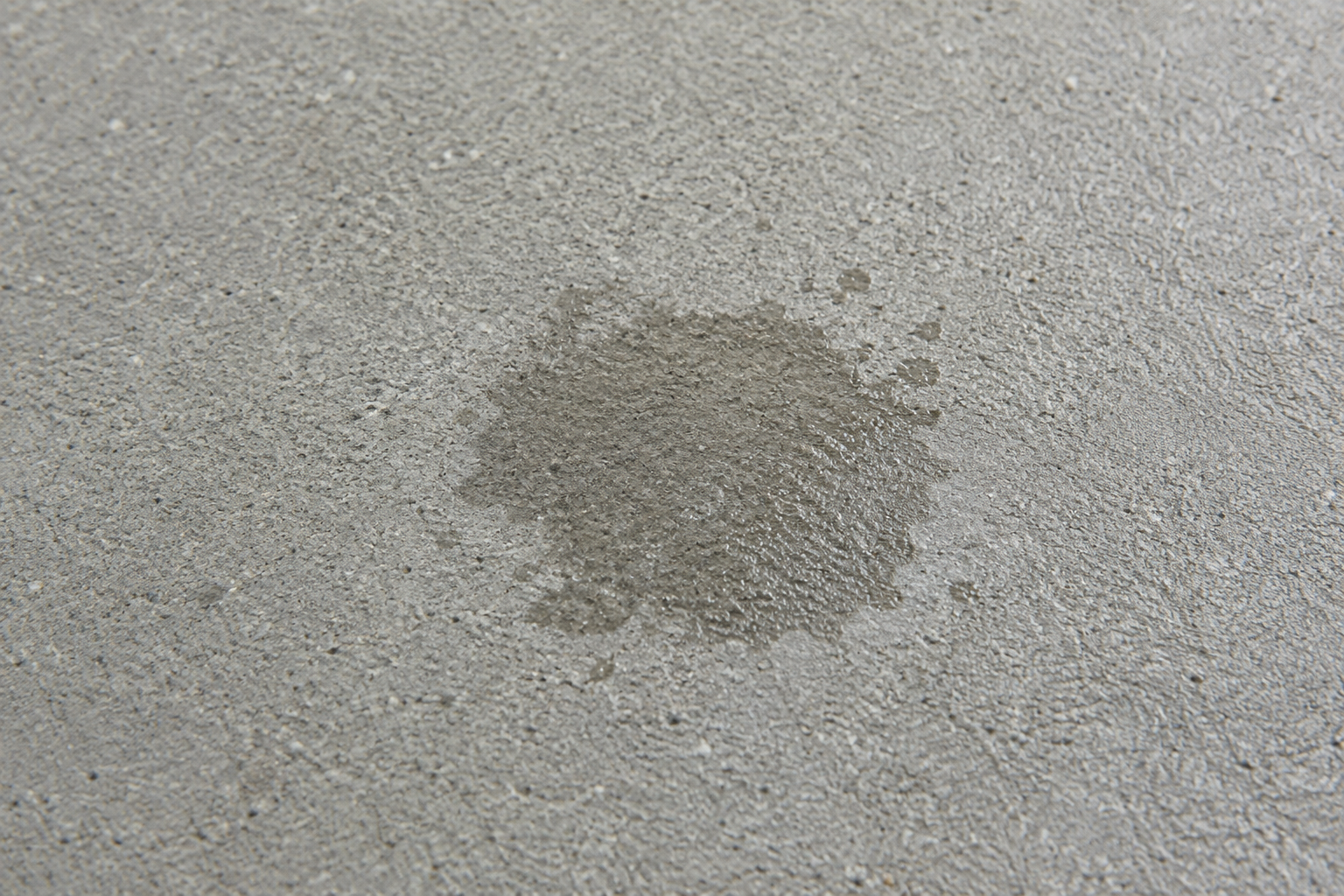
Before you mix a drop of epoxy, run through this checklist:
- The surface has a consistent matte, slightly rough texture across the entire floor, not just in spots.
- There’s no dust residue left behind after grinding and thorough vacuuming.
- A few drops of water sprinkled on the concrete soak in within a couple of minutes instead of beading up.
- Any oil stains, old coating remnants, or laitance are fully removed, not just lightened.
- The slab is dry, with no active moisture coming up from below.
If you can check every box, you’re in good shape to move on to priming and coating.
Frequently Asked Questions
Can I use a floor buffer with a sanding pad instead of a grinder?
A rented floor buffer with an aggressive sanding screen can help remove light laitance or scuff a lightly textured slab, but it won’t cut through hard trowel-finished concrete or old coatings the way a diamond cup wheel does. Treat it as a supplement for light cleanup, not a substitute for grinding on a problem floor.
Do I still need to grind if I’m using a garage floor paint instead of true epoxy?
Yes, in most cases. Standard garage floor paints have even weaker adhesive properties than two-part epoxy, so they’re actually more sensitive to a smooth or contaminated surface. If you’re comparing coating options, our garage floor paint ideas guide covers which products tolerate lighter prep versus which ones demand full grinding.
This article contains affiliate links. We may earn a small commission at no extra cost to you.
