

You press your garage door remote from the driveway and nothing happens. You pull up closer, try again, and finally the door opens when you’re almost touching it. A garage door opener that used to work from halfway down the street now barely responds from 10 feet away. This isn’t just annoying, it’s a sign that your opener’s antenna needs attention.
The antenna on your garage door opener is a simple but critical component. When it’s damaged, poorly positioned, or struggling with interference, your effective range drops dramatically. The good news is that fixing antenna issues is one of the easier garage door opener repairs you can tackle yourself.
Why Your Garage Door Opener Range Decreases Over Time
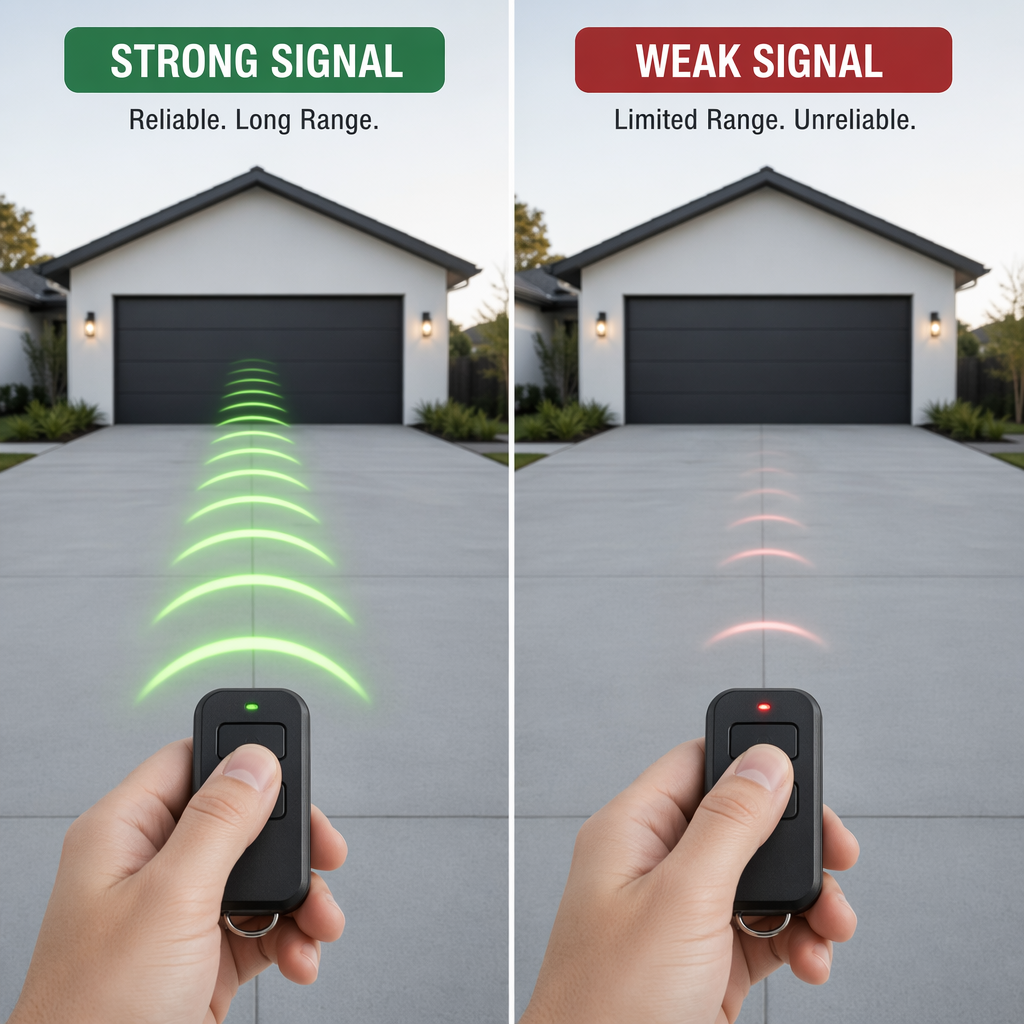
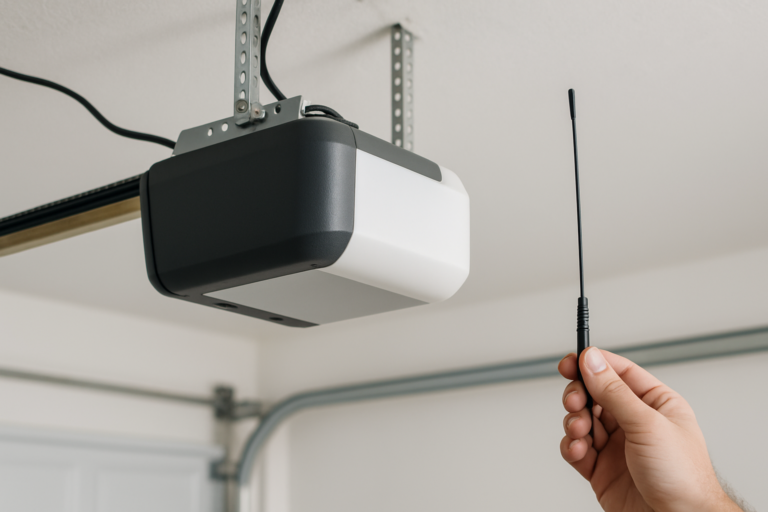
Most garage door openers come with a basic wire antenna that hangs down from the motor unit. This antenna is typically 6 to 12 inches long and does the job when everything’s working properly. But several factors can reduce its effectiveness over time.
The most common culprit is physical damage. That thin wire antenna gets bumped, bent, or even broken off completely when you’re moving ladders, holiday decorations, or other items in and out of your garage. Even a slight bend in the wire can impact signal reception.
Interference from other devices is another major issue. LED bulbs in your garage door opener itself are notorious for creating radio frequency interference. Many homeowners upgrade to LED bulbs for energy savings, only to discover their remote range drops to almost nothing.
Metal objects near the opener can also block or deflect the signal. Shelving units, metal garage doors (ironically), and even roof structure can create dead zones. The antenna needs a clear path to receive signals effectively.
Proper Antenna Positioning for Maximum Range
Before you spend money on antenna extensions or replacements, check your existing antenna positioning. You’d be surprised how often a simple adjustment solves the problem.
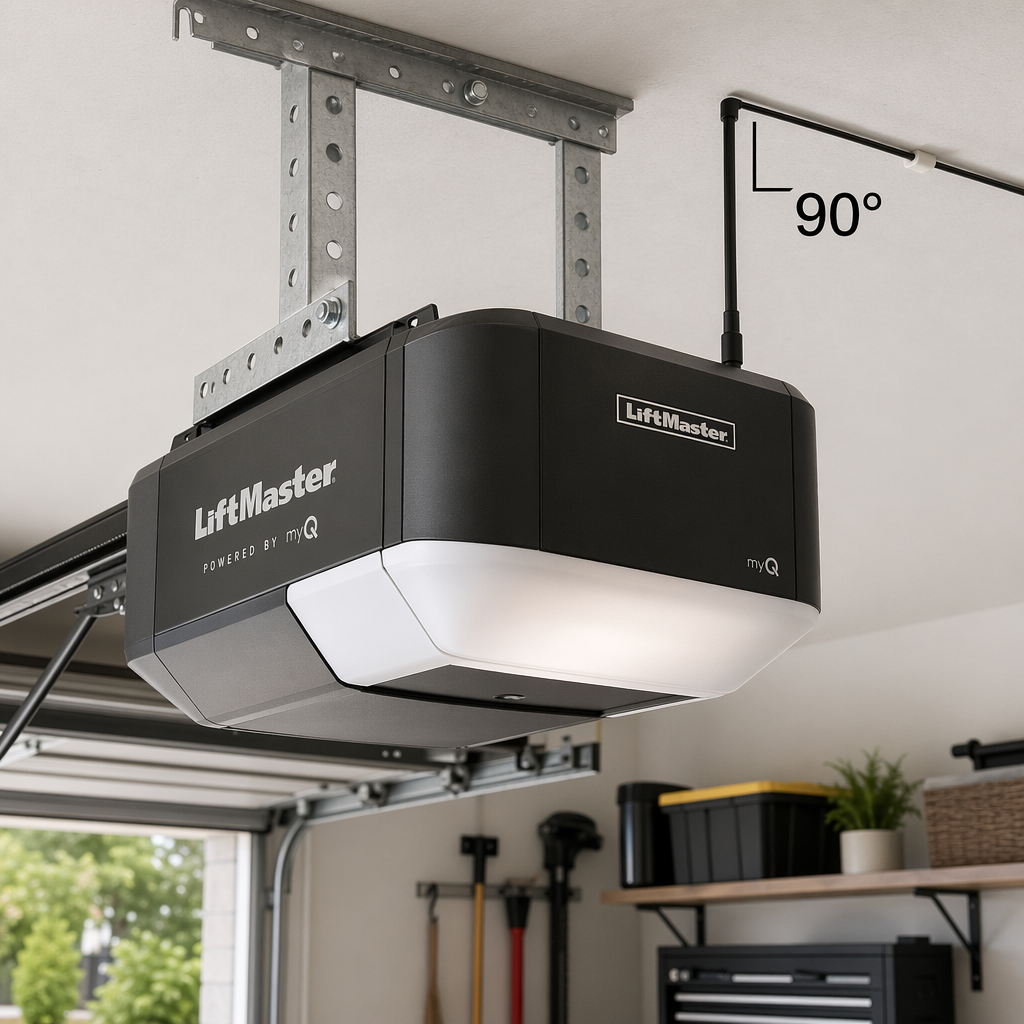
Your antenna wire should hang straight down from the motor unit without touching any metal surfaces. Many people accidentally coil it up, tuck it behind the opener, or let it rest against the motor housing. Any of these positions will reduce range significantly.
The antenna wire should extend below the bottom of the opener unit. This gets it away from the motor’s metal housing, which can interfere with signal reception. Think of the motor unit as a giant metal box that blocks radio waves.
Keep the antenna away from metal door tracks, ceiling joists, and metal storage shelves. Even a few inches of separation can make a noticeable difference. If your garage has metal studs or a metal roof, positioning becomes even more critical. Quality flooring materials can also help reduce static interference that affects signal quality.
Try different orientations if you’re still having issues. Sometimes rotating the antenna 90 degrees or angling it slightly can pick up signals from different directions. Test your remote from various positions around your property after each adjustment.
External Antenna Options for Better Reception
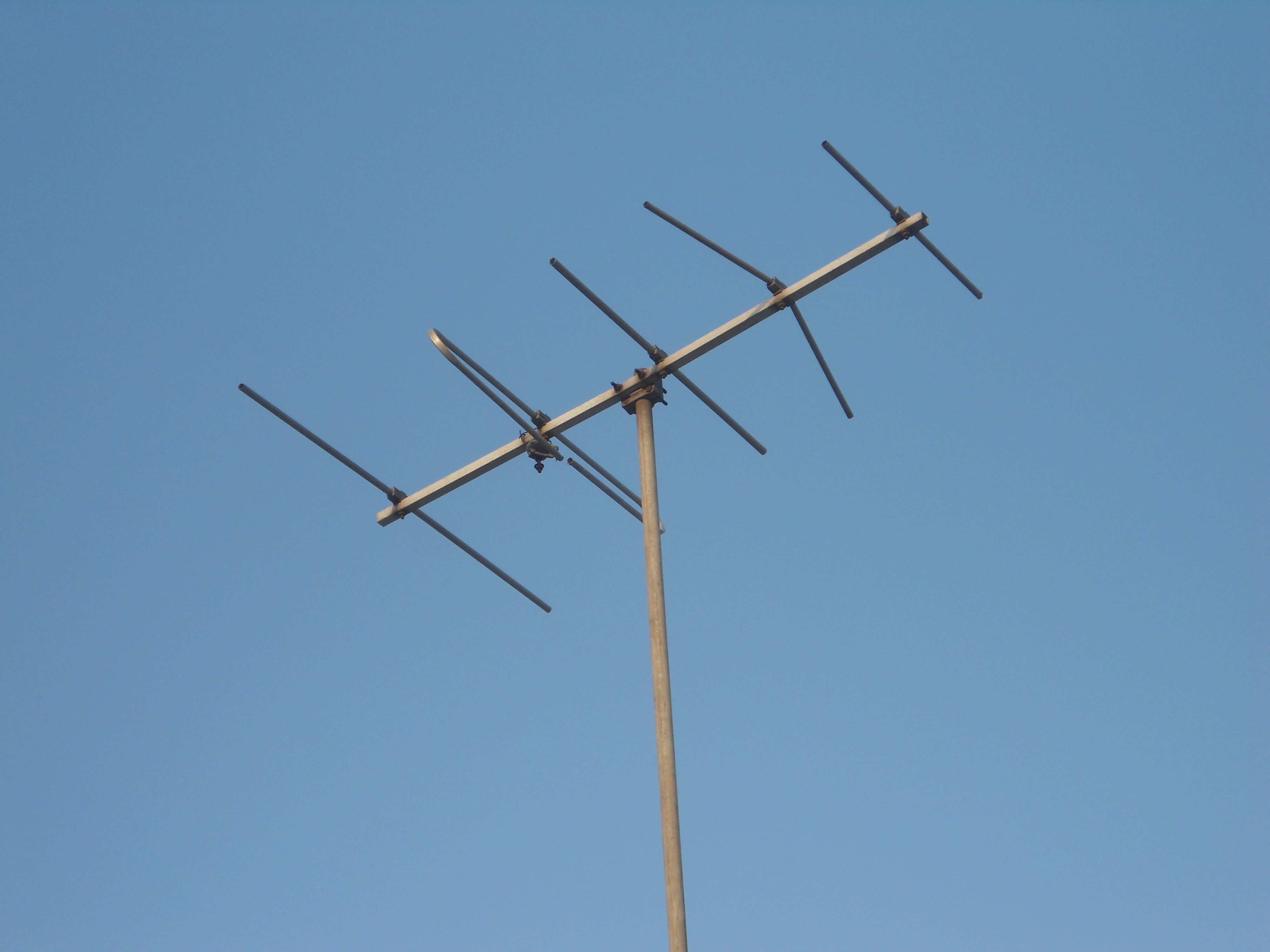
When positioning adjustments aren’t enough, an external antenna can dramatically improve your range. These antennas mount outside the opener unit and provide much better signal reception than the basic wire antenna.
External antennas typically connect to your garage door opener’s existing antenna terminal. Most modern openers (Chamberlain, LiftMaster, Genie) use a simple screw terminal or plug connection. You’ll remove the existing wire antenna and connect the external antenna cable in its place.

Garage Door Opener External Antenna
External antennas can triple your effective range compared to the standard wire antenna.
Some external antennas mount directly on the motor unit housing, while others come with extension cables that let you mount the antenna on a wall or even outside the garage. Wall-mounted options work particularly well if your opener is tucked up against metal ductwork or in a corner with poor reception.
Installation is usually simple. You’ll mount the antenna base using screws or adhesive, run the cable to your opener, and connect it to the antenna terminal. Most external antennas come with 10 to 20 feet of cable, giving you plenty of positioning options.
For extreme range needs or metal buildings, consider a high gain antenna. These look similar to WiFi antennas and can pick up signals through much more interference than standard antennas.
Dealing with LED Light Interference
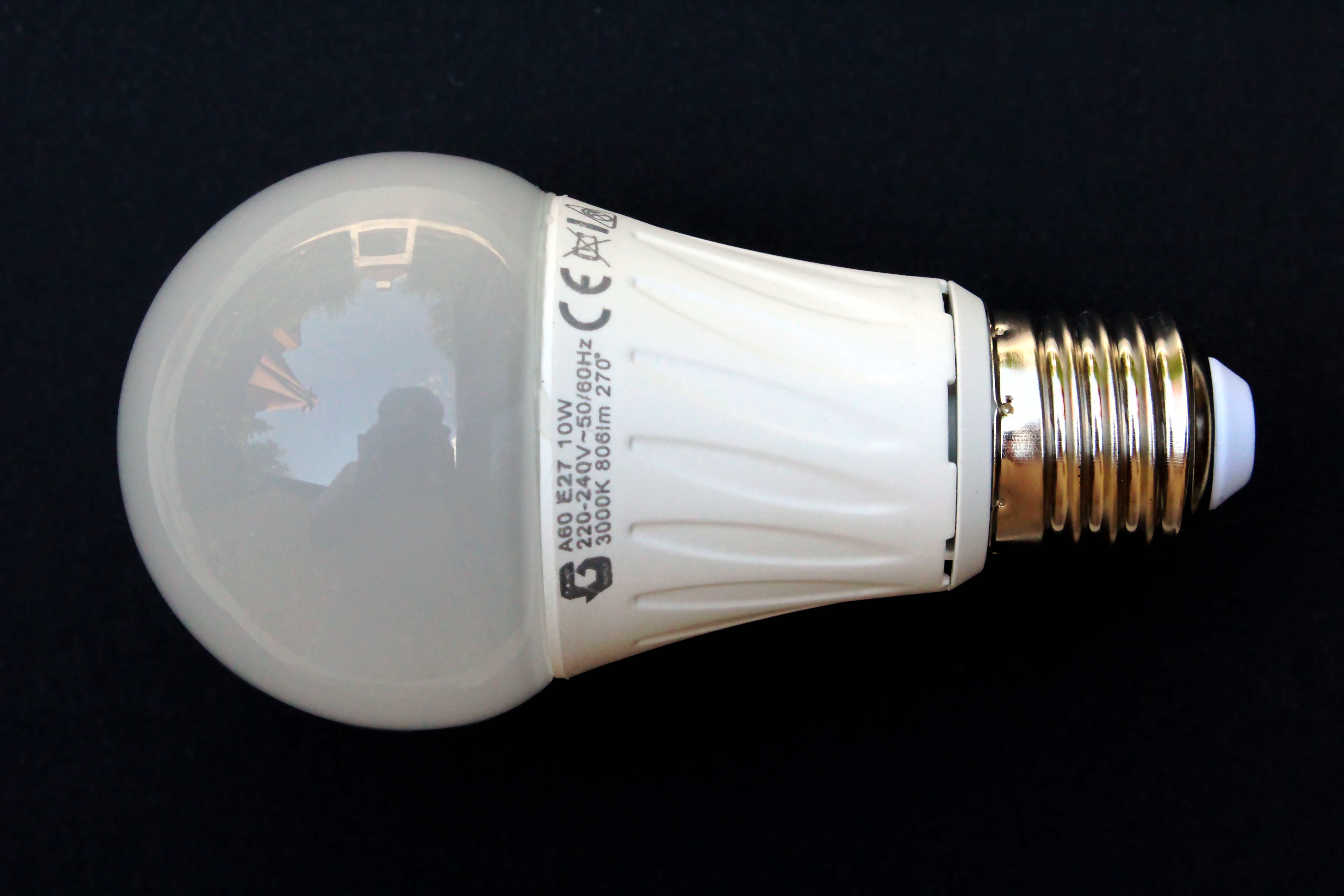
LED bulbs in your garage door opener are probably the single biggest cause of new range problems. The electronics inside cheap LED bulbs generate radio frequency interference that drowns out your remote’s signal.
Not all LED bulbs cause interference. The problem is most common with bargain LED bulbs that lack proper RF shielding. The interference they create operates on the same frequency range as garage door remotes (300-390 MHz), making it nearly impossible for your opener to receive signals.
You’ll know LED interference is the problem if your range suddenly dropped after changing bulbs, or if the opener works fine when the light is off but fails when it’s on. The interference can be so strong that you need to be within a few feet of the opener for the remote to work.
Your best solution is switching to garage door opener LED bulbs specifically designed to minimize interference. Genie and Chamberlain both make bulbs rated for opener use. These bulbs cost a bit more than standard LEDs, but they include proper RF shielding.

Genie Garage Door Opener LED Bulb
These bulbs are specifically designed to eliminate the RF interference that kills your remote range.
Another option is moving back to incandescent bulbs. They don’t create RF interference and they’re perfectly fine for the limited runtime of garage door opener lights. Yes, they use more energy, but your opener light probably runs less than 30 minutes per day total.
Some people solve the interference problem by removing the bulbs entirely and installing separate lighting on a different circuit. This works but seems extreme when interference-free LED bulbs are readily available.
Troubleshooting Persistent Range Issues
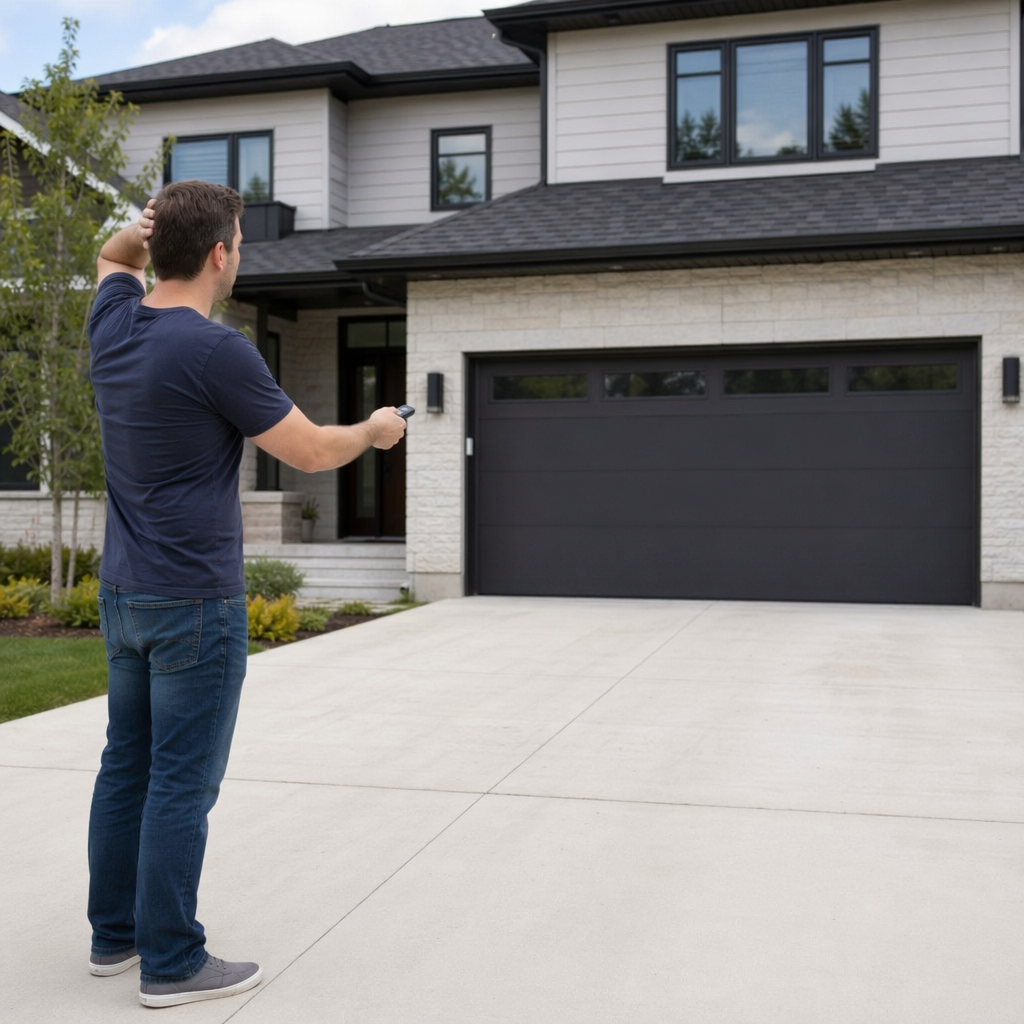
Sometimes you’ll fix the antenna, eliminate LED interference, and still have range problems. Here are some less common issues to check.
Remote battery life affects range more than you might think. A weak battery will work at close range but fail at distance. Replace your remote batteries annually as preventive maintenance, not just when they die completely.
Check your opener’s receiver board for damage or loose connections. The antenna connects to a circuit board inside the opener housing. Loose wire connections or a failing receiver board can mimic antenna problems. You’ll need to remove the opener’s cover to inspect these components. If you’re still experiencing problems, you might need to troubleshoot manual operation issues to rule out mechanical problems.
Nearby sources of interference can also cause problems. WiFi routers, cordless phones, baby monitors, and other devices operating on similar frequencies can interfere with your opener. Try unplugging nearby electronics temporarily to see if range improves.
Older garage door openers (pre-2005) may simply have weaker receivers than modern units. Security+ and Security+ 2.0 systems from Chamberlain/LiftMaster have significantly better range and interference resistance than older fixed-code systems. At some point, upgrading the entire opener makes more sense than fighting with an old system.
Frequently Asked Questions
Can I make my own garage door opener antenna extension?
You can extend your antenna using standard wire, but results vary. Use 18 to 22 gauge insulated wire and keep the total length between 6 and 12 inches for best results. Longer isn’t always better, because antenna length needs to match the wavelength of the signal frequency. External antennas are engineered for optimal length and usually outperform DIY extensions.
Will a stronger antenna help if my remote battery is weak?
Not really. The antenna improves how well your opener receives signals, but it can’t overcome a weak transmitter. A remote with a dying battery transmits a weaker signal that even the best antenna can’t pick up at distance. Replace remote batteries first before troubleshooting antenna issues, since batteries are cheap and easy to swap.
Do smart garage door openers have better range than traditional openers?
Smart openers like myQ systems use the same radio frequency technology as traditional remotes, so antenna issues affect them equally. The WiFi connectivity in smart openers is separate from the remote control receiver. However, many newer smart openers include better receiver technology and interference filtering than older units, which can provide better effective range.
This article contains affiliate links. We may earn a small commission at no extra cost to you.
