

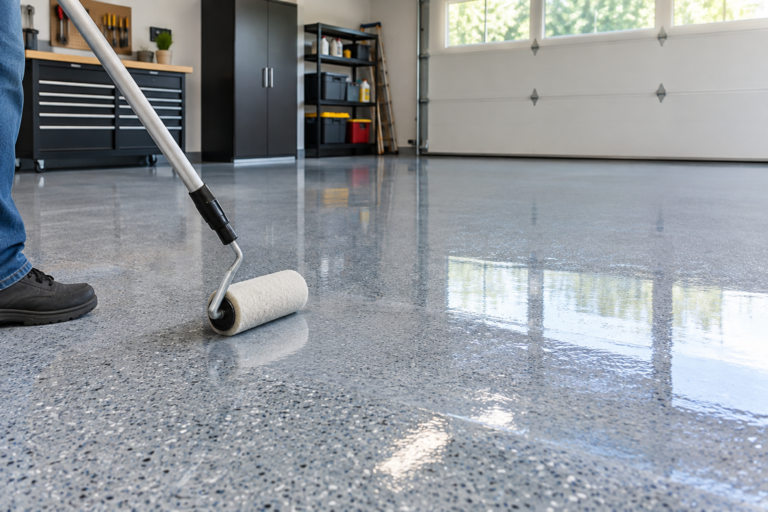
You’ve spent a weekend (or paid someone) to get a fresh epoxy floor down in your garage, and it looks fantastic. Then someone mentions you should probably put a clear coat over it, and you start wondering if you just skipped a step. Here’s the short answer: epoxy alone can hold up fine in a lot of garages, but a clear top coat is what actually protects that epoxy from the abuse a working garage floor takes every single day.
This isn’t about repeating everything you already know about epoxy application. It’s about answering one specific question: do you need a clear coat on top of it, and which type actually makes sense for your situation.
What a Clear Top Coat Actually Does
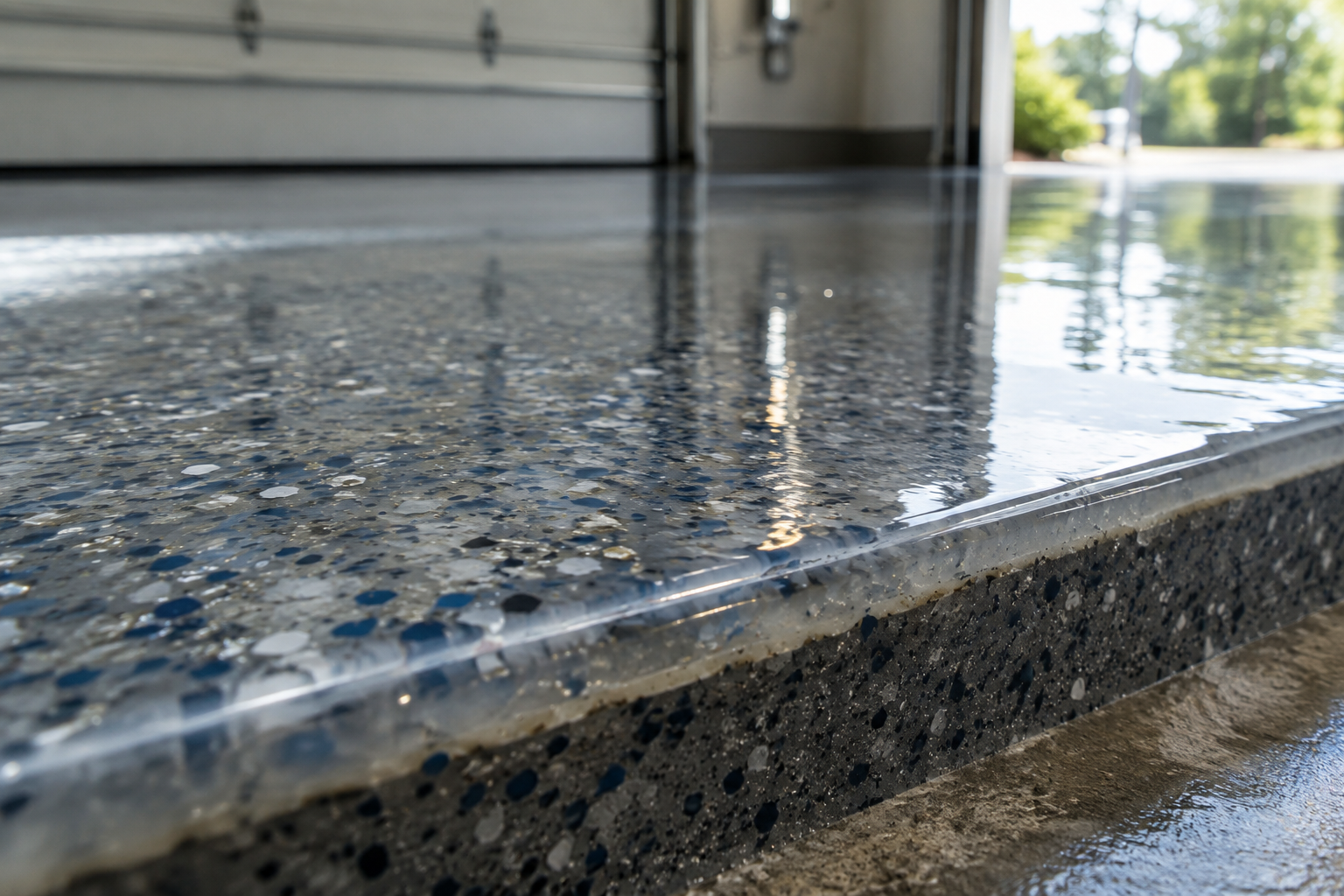
Epoxy is a great base layer because it bonds well to concrete and builds a thick, durable film. But standard epoxy has a few weak spots, and a clear top coat is designed to cover exactly those gaps.
Abrasion Resistance
Epoxy scratches more easily than most people expect. Dragging a steel toolbox across it, rolling a jack stand, or dropping a wrench edge-first can leave marks in bare epoxy. A polyurethane or polyaspartic top coat adds a harder, more scratch-resistant layer on top, so the epoxy underneath stays protected from daily wear instead of taking the hit directly.
UV Resistance
Standard epoxy yellows and ambers when it’s exposed to sunlight over time. If your garage has windows, gets sun through an open door, or you’re finishing a space that doubles as a workshop with natural light, that discoloration becomes noticeable within a year or two. Polyurethane and polyaspartic top coats are formulated to resist UV yellowing, which is one of the biggest reasons people add one.
Gloss and Depth
A clear coat adds noticeable shine and depth to the floor, especially over flake or metallic epoxy systems. If you’ve looked at photos in our garage epoxy floor ideas roundup and wondered why some floors look almost wet and glassy, that’s usually a topcoat doing the work, not the epoxy base coat alone.
Traction
Glossy floors get slippery when wet, especially with snow melt or oil drips tracked in from a vehicle. Most quality top coats let you broadcast an anti-slip additive into the final coat, giving you grip without sacrificing the look. If slipping is already a concern in your garage, it’s worth reading our guide on how to fix a slippery garage floor when wet before you commit to a finish.
Chemical Resistance
Motor oil, brake fluid, antifreeze, and de-icing salt can all stain or soften bare epoxy if they sit for a while. Top coats, particularly polyaspartics, resist chemical staining much better and make cleanup far less stressful when something spills.
Flake Lock-In
If you went with a decorative flake or chip floor, the top coat isn’t optional in any practical sense. It’s what locks the flakes in place and seals the surface smooth. Without it, flakes can lift at the edges over time, especially in high-traffic spots like in front of a workbench or where you park.
When Skipping the Top Coat Is Actually Fine
Not every garage needs the extra layer. If your garage is mostly used for parking one car, sees light foot traffic, and doesn’t get direct sunlight, a well-applied epoxy system can last several years without a clear coat. Some budget epoxy kits are even formulated as single-coat systems meant to stand alone.
Where people run into trouble is treating epoxy like it’s bulletproof. If you’ve read our post on why garage floor paint wears off, you already know that heavy vehicle traffic, hot tires, and dragged equipment are exactly what wears bare epoxy down fastest. A top coat is cheap insurance against redoing the whole floor two years earlier than you’d like.
Polyurethane vs Polyaspartic vs Epoxy Recoat
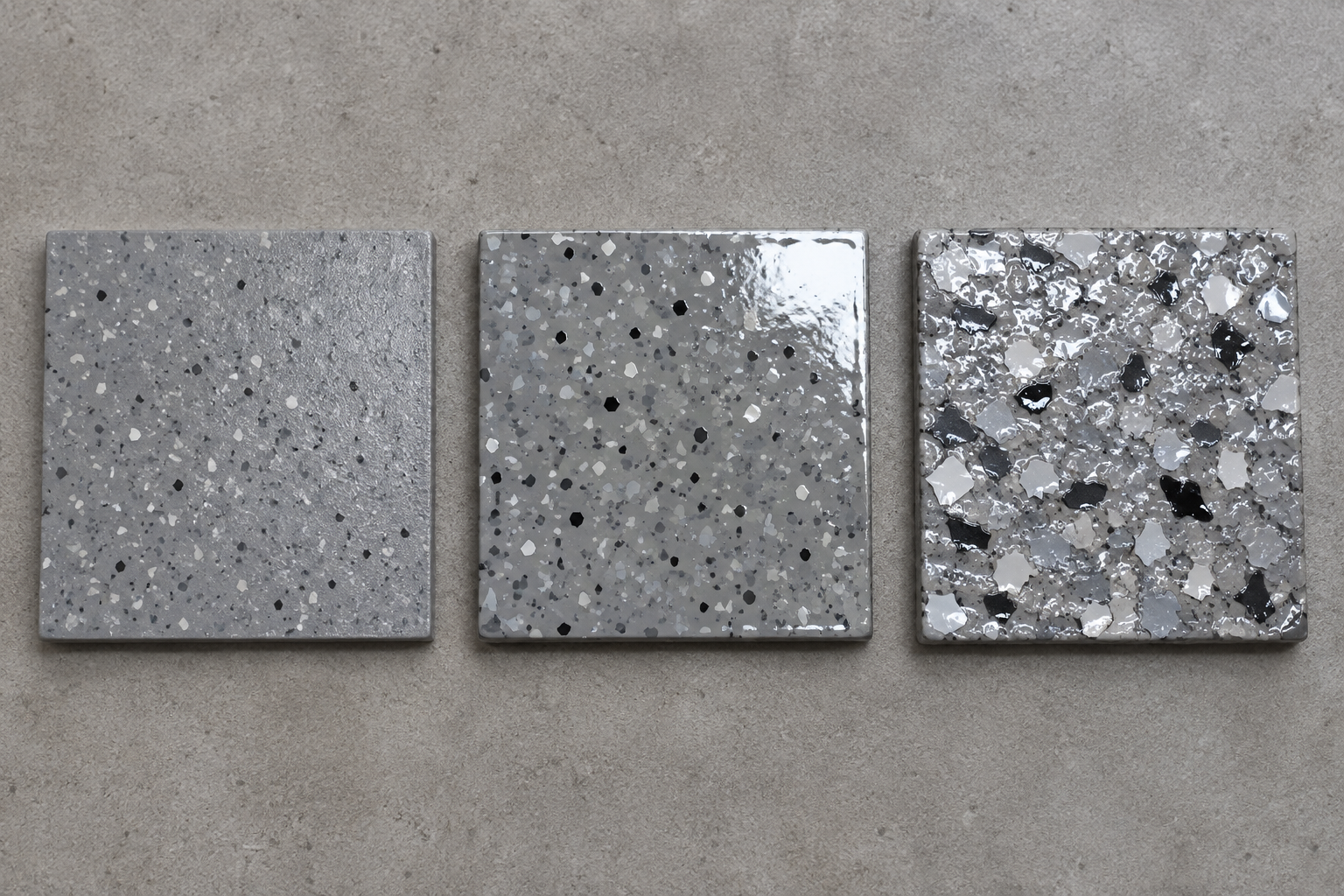
Once you’ve decided a top coat makes sense, the next question is which type. They’re not interchangeable, and picking the wrong one can waste a weekend.
Polyurethane is the classic choice for garage floors. It’s harder than epoxy, resists UV well, and gives a nice satin or gloss finish. The tradeoff is longer cure time between coats and more sensitivity to humidity during application.
Encore Ultra Poly Aliphatic Polyurethane
A DIY-friendly aliphatic polyurethane that resists yellowing and holds up well over epoxy flake floors.
Polyaspartic coatings have become the go-to for a lot of professional installers, and for good reason. They cure fast, often recoatable within an hour or two, resist UV and chemicals extremely well, and can be applied in a wider range of temperatures than polyurethane. The downside is a shorter working time once you mix it, which can be tricky for a first-time DIYer covering a large floor alone.
Rust-Oleum RockSolid Polycuramine Garage Floor Coating
A hybrid polyaspartic-style coating that’s become a popular one-day option for DIY garage floors.
A second epoxy coat is the simplest option since compatibility is never a question, but it doesn’t solve the UV yellowing problem and it’s still softer than polyurethane or polyaspartic. It’s an acceptable choice for a garage that stays dark and isn’t seeing heavy abuse, but it’s rarely the best long-term pick if you’re already investing time into the project.
Compatibility: What Sticks to What
This is where a lot of DIY floors go wrong. Not every top coat bonds properly to every epoxy, and skipping this check can lead to peeling within months.
- Water-based epoxy generally accepts both water-based polyurethane and polyaspartic top coats without issues, as long as the epoxy is fully cured, not just dry to the touch.
- Solvent-based epoxy is compatible with most polyurethanes but always check the manufacturer’s recoat window. Wait too long and the surface can gloss over and resist proper bonding, which usually means a light scuff sand before top coating.
- 100% solids epoxy (the thick, professional-grade stuff) is typically top coated with matching polyaspartic products from the same manufacturer, since these systems are often sold as a kit for a reason.
If you’re at all unsure, buy the top coat from the same brand as your epoxy base coat. Manufacturers test their own product lines together, and mixing brands is the most common cause of adhesion failure people report after the fact.
For anyone dealing with bubbling or adhesion problems after a coat goes down, whether it’s the base epoxy or the top coat, our guide on fixing epoxy floor bubbles covers the most common causes and how to correct them before the next coat.
Adding Anti-Slip Texture the Right Way
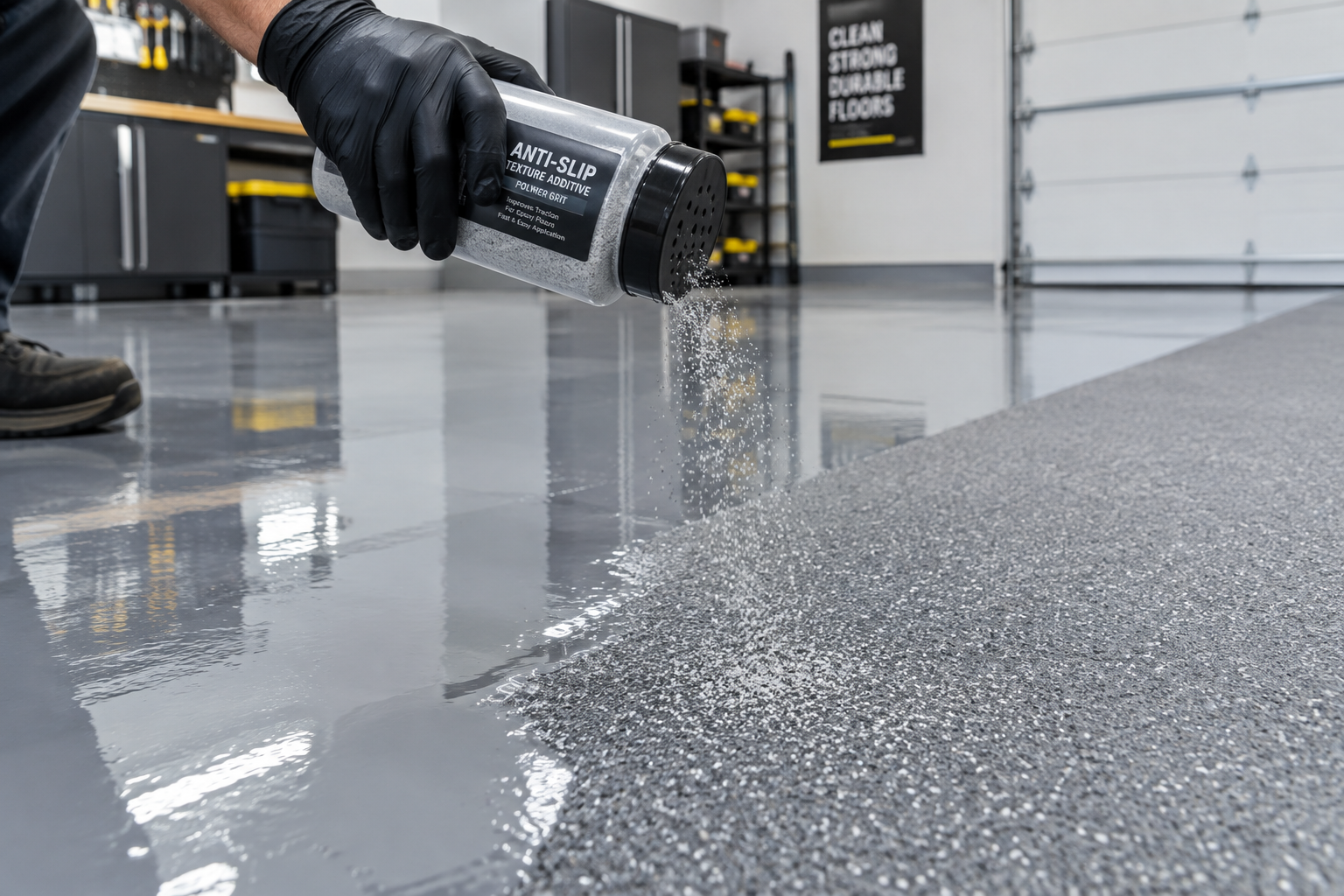
If you’re topcoating a floor that will get wet from snow melt, hosing off equipment, or general moisture, don’t skip the anti-slip additive. Most top coat manufacturers sell a matching fine aggregate that you broadcast into the wet final coat.
Non-Slip Anti-Skid Additive for Epoxy Floor Coating
An easy add-in for your final coat that improves grip without dulling the finish much.
Use it sparingly. Too much additive gives you a gritty, hard-to-clean texture, while too little barely changes traction at all. A light, even broadcast while the coat is still wet is usually enough to make a real difference underfoot.
Frequently Asked Questions
How long should I wait between epoxy and top coat?
Most epoxy products need somewhere between 12 and 24 hours of cure time before a top coat goes on, but always check your specific product’s data sheet. Waiting too long past the recommended recoat window can cause the surface to fully cure and become too glossy for good adhesion, which means you’ll need to scuff sand before applying anything else.
Can I apply polyurethane over old, cured epoxy?
Yes, as long as the epoxy is clean, degreased, and lightly sanded to give the polyurethane something to grip. This is common when people are refreshing an older floor instead of stripping it completely. Just be aware that any existing scratches or dullness in the epoxy will still show through a clear top coat, since it doesn’t hide surface damage, it just seals it.
Is a clear coat necessary over metallic or flake epoxy floors?
For flake floors, yes, essentially always. The top coat is what locks the flakes down and creates a smooth, walkable surface instead of a textured one that catches dirt. Metallic epoxy floors also benefit heavily from a top coat since it deepens the color and shine that makes metallic finishes look good in the first place.
This article contains affiliate links. We may earn a small commission at no extra cost to you.
