

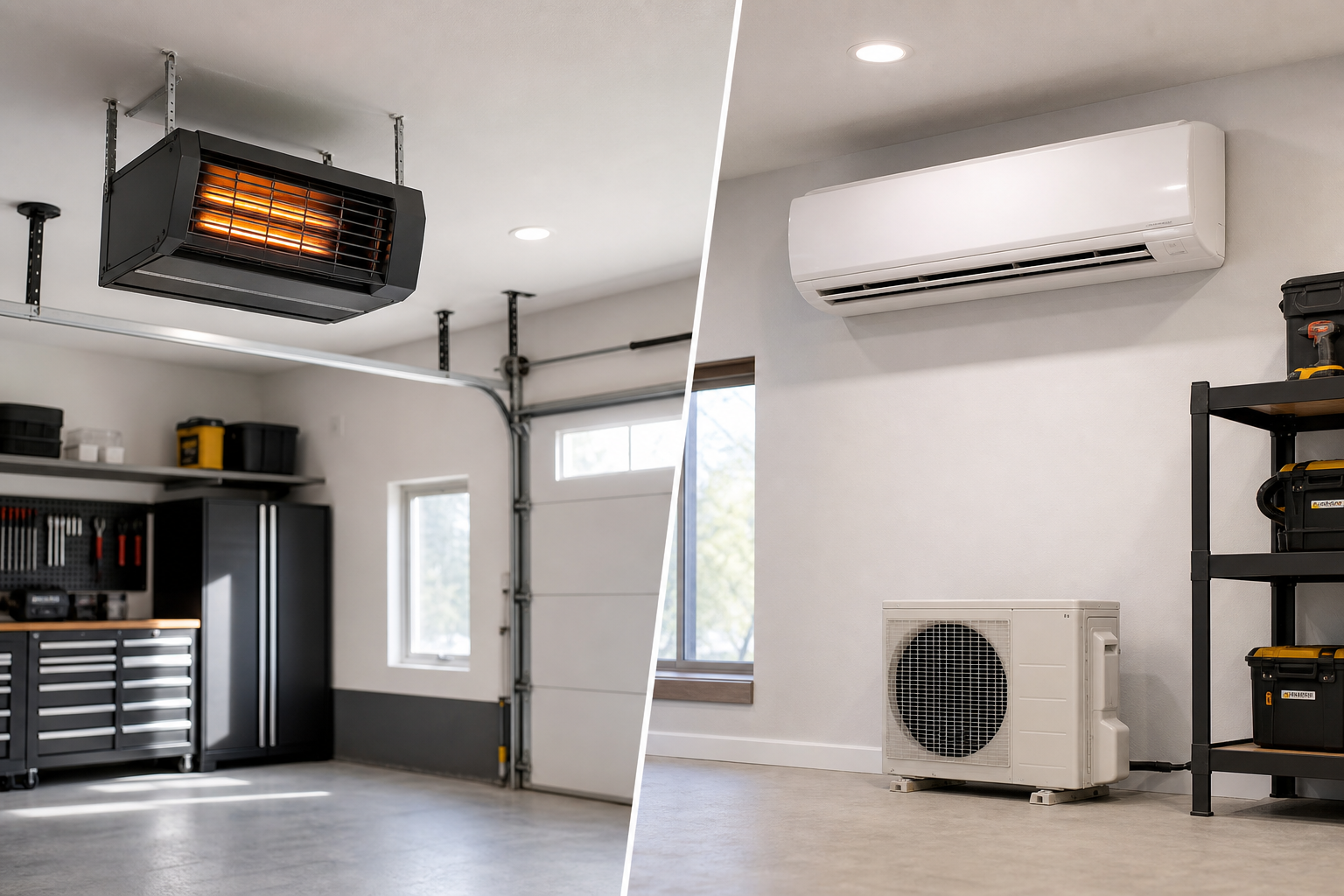
Taking on the project to choose between a garage heater and a mini split rewards careful planning and patience. Rushed work leads to results that need redoing within a year. A methodical approach delivers results that hold up for years.
Both systems heat your garage, but they work differently, cost differently, and suit different situations. A garage heater (usually gas or electric) runs only when you need heat. A mini split is a ductless heat pump that heats and cools year-round. The right choice depends on your climate, how you use the space, your budget, and whether you want cooling as well as heat.
This guide covers every stage from preparation to completion, with specific details on costs, installation requirements, operating expenses, and when each system makes sense. If you’re considering a full garage workshop transformation or converting your garage to a home office, choosing the right heating and cooling system is a crucial first step. Follow the sequence for the best outcome.
Understanding the Basics
A garage heater is a standalone heating unit. Gas models (natural gas or propane) produce high heat output fast. Electric models plug into standard or 240V outlets and require no venting. Most garage heaters mount to the ceiling or wall and blow heated air into the space. They’re on-demand: turn them on when you need heat, turn them off when you’re done.
Mini splits are ductless heat pumps. An outdoor compressor connects to one or more indoor air handlers through refrigerant lines. They move heat rather than generate it, making them efficient. In heating mode, they pull warmth from outside air and transfer it inside. In cooling mode, the process reverses. They run continuously at low power to maintain a set temperature, or you can use them on-demand like a garage heater.
The key difference: a garage heater only heats. A mini split heats and cools. That dual function costs more upfront but adds value if you work in the garage during hot months or live where summer heat makes an uninsulated garage unusable.
Gas garage heaters range from 30,000 to 75,000 BTU. A 30,000 BTU unit heats a two-car garage in moderate climates. A 50,000 to 60,000 BTU model handles larger spaces or colder regions. Electric heaters range from 1,500 watts (5,100 BTU) for small spaces to 7,500 watts (25,600 BTU) for bigger garages. Electric is simpler to install but slower to heat and more expensive to run in cold climates.
Mini splits for garage use typically range from 9,000 to 18,000 BTU cooling capacity. Heating capacity is similar or slightly higher. A 12,000 BTU mini split handles most two-car garages. Larger spaces or poorly insulated garages need 18,000 BTU or multi-zone setups.
Upfront Cost
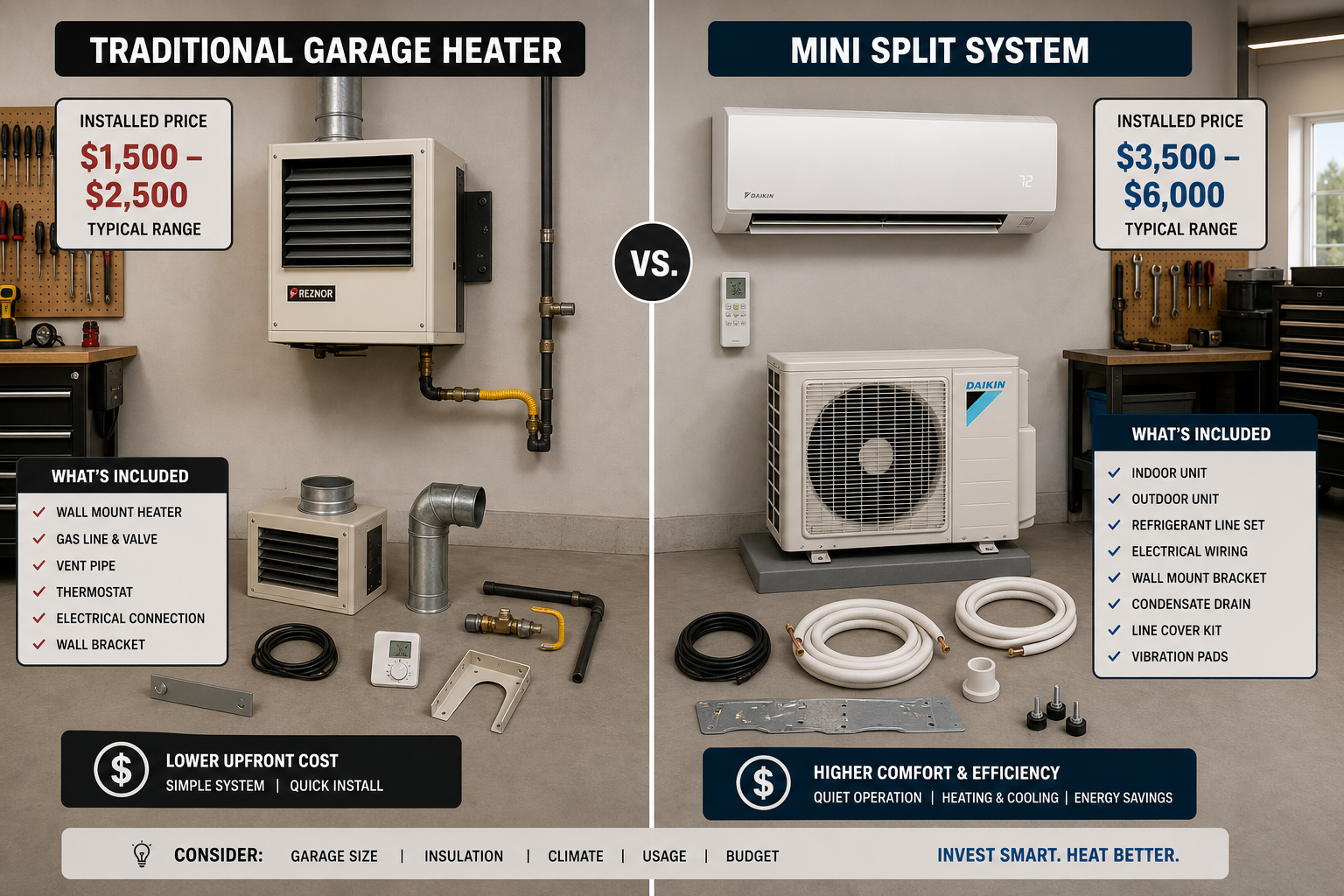
Upfront cost separates these systems significantly. Gas garage heaters competitively priced to competitively priced for the unit itself. Installation by a pro runs competitively priced to competitively priced if you already have a gas line nearby. If you need a new gas line run from the meter, add competitively priced to competitively priced depending on distance and local labor rates. Total installed cost: competitively priced to competitively priced for most setups.
Electric garage heaters competitively priced to competitively priced for the unit. Installation is cheaper because there’s no venting or gas line work. A 120V model plugs into an existing outlet. A 240V model needs a dedicated circuit and breaker, which an electrician installs competitively priced to competitively priced. Total installed cost: competitively priced to competitively priced.
Mini splits cost more. A single-zone system (one outdoor unit, one indoor head) runs competitively priced to competitively priced for the equipment. Professional installation adds competitively priced to competitively priced because it requires refrigerant line runs, electrical work, mounting brackets, and system charging. Total installed cost: competitively priced to competitively priced for a typical garage setup.

Mr Cool DIY Mini Split
Pre-charged lines and quick-connect fittings make this the best DIY option for garages
DIY mini split kits (pre-charged lines, simpler install) lower costs to competitively priced to competitively priced total if you’re comfortable with basic electrical and can follow detailed instructions. You still need a 240V circuit and breaker, which requires an electrician unless you’re licensed.
Gas heaters win on upfront cost if you already have gas service. Electric heaters are cheapest if you have an existing 240V circuit or can use a 120V model. Mini splits cost two to four times more than a garage heater, but that premium buys cooling, better efficiency, and quieter operation.
The details here make the difference between a result that lasts and one that needs redoing. Take the time to assess your conditions before committing to a method or product. If your garage has minimal insulation, consider adding radiant barrier insulation before installing either system. R-13 in the walls and R-30 to R-38 in the ceiling cuts heating costs by half and makes a smaller, cheaper unit viable.
Keep the workspace organized throughout. Debris and clutter cause errors and safety issues. Clear tools and waste between major steps rather than letting mess accumulate to the end.
Consider how this change fits the larger garage picture. Improvements in one area can shift dynamics elsewhere. Better insulation changes humidity patterns. Adding heat affects moisture levels, especially in cold climates where warm air meets cold surfaces. A heated garage in winter needs proper ventilation to prevent condensation on metal tools, car parts, and the garage door itself.
Operating Costs and Efficiency
Operating cost determines whether your initial savings on a cheaper heater actually save money over time. Gas heaters burn fuel. Electric heaters and mini splits use electricity. Your local utility rates and how many hours you run the system shape the true cost.
Natural gas garage heaters cost roughly competitively priced to competitively priced per hour to run at full output in areas where natural gas runs competitively priced to competitively priced per therm. A 50,000 BTU heater running two hours per day for four winter months costs competitively priced to competitively priced per season. Propane costs more, typically competitively priced to competitively priced per hour at current propane prices, making seasonal competitively priced to competitively priced for the same usage.
Electric garage heaters competitively priced to competitively priced per hour depending on wattage and local electric rates. A 5,000-watt heater in an area with competitively priced/kWh electricity competitively priced per hour at full blast. Two hours per day over four months runs competitively priced. In regions with higher electric rates (competitively priced to competitively priced/kWh), that same usage competitively priced to competitively priced.
Mini splits run more efficiently because they move heat rather than generate it. A 12,000 BTU mini split in heating mode draws 500 to 1,200 watts depending on outdoor temperature and how hard it’s working. competitively priced/kWh, that’s competitively priced to competitively priced per hour. Two hours per day over four months competitively priced to competitively priced. Even at higher electric rates, a mini split costs less to operate than electric resistance heat and often less than gas.
The efficiency gap widens when outdoor temps stay above 20°F. Below that, mini splits lose efficiency and some models struggle. Gas heaters maintain output regardless of outdoor temperature. Electric resistance heaters also maintain output but cost more per BTU delivered.
If you heat the garage daily for long stretches, a mini split pays back its higher upfront cost through lower operating expenses. If you heat occasionally (a few hours per week), a garage heater’s lower purchase price wins because you’re not running it enough to recoup the mini split premium.
Comfort and Installation Complexity
Understanding the specifics of your situation helps you choose the right approach. Your garage’s age, construction type, and local climate all influence what works best and what to avoid.
Gas garage heaters produce intense radiant heat. They warm objects and people directly, not just the air. You feel the heat fast, which is great for short sessions. The downside: uneven heating. The area near the heater gets hot while far corners stay cold. Forced-air models with a blower spread heat better but create noise and air movement that stirs up dust.
Electric garage heaters offer gentler, more even heat if ceiling-mounted with a fan. Radiant electric models (like infrared panels) work similarly to gas: direct warmth on people and objects, less on air. Convection models heat air, which rises and circulates. Neither heats as fast as gas, so expect a longer warm-up period.

Fahrenheat Ceiling Heater
Excellent forced-air distribution and solid construction for workshop spaces
Mini splits deliver the most consistent temperature control. They sense room temp and adjust output to maintain your setpoint. Airflow is quieter and more controlled than a blower heater. The indoor head mounts high on a wall, directing conditioned air across the space. Temperature stays even throughout the garage once it reaches setpoint.
Installation Requirements
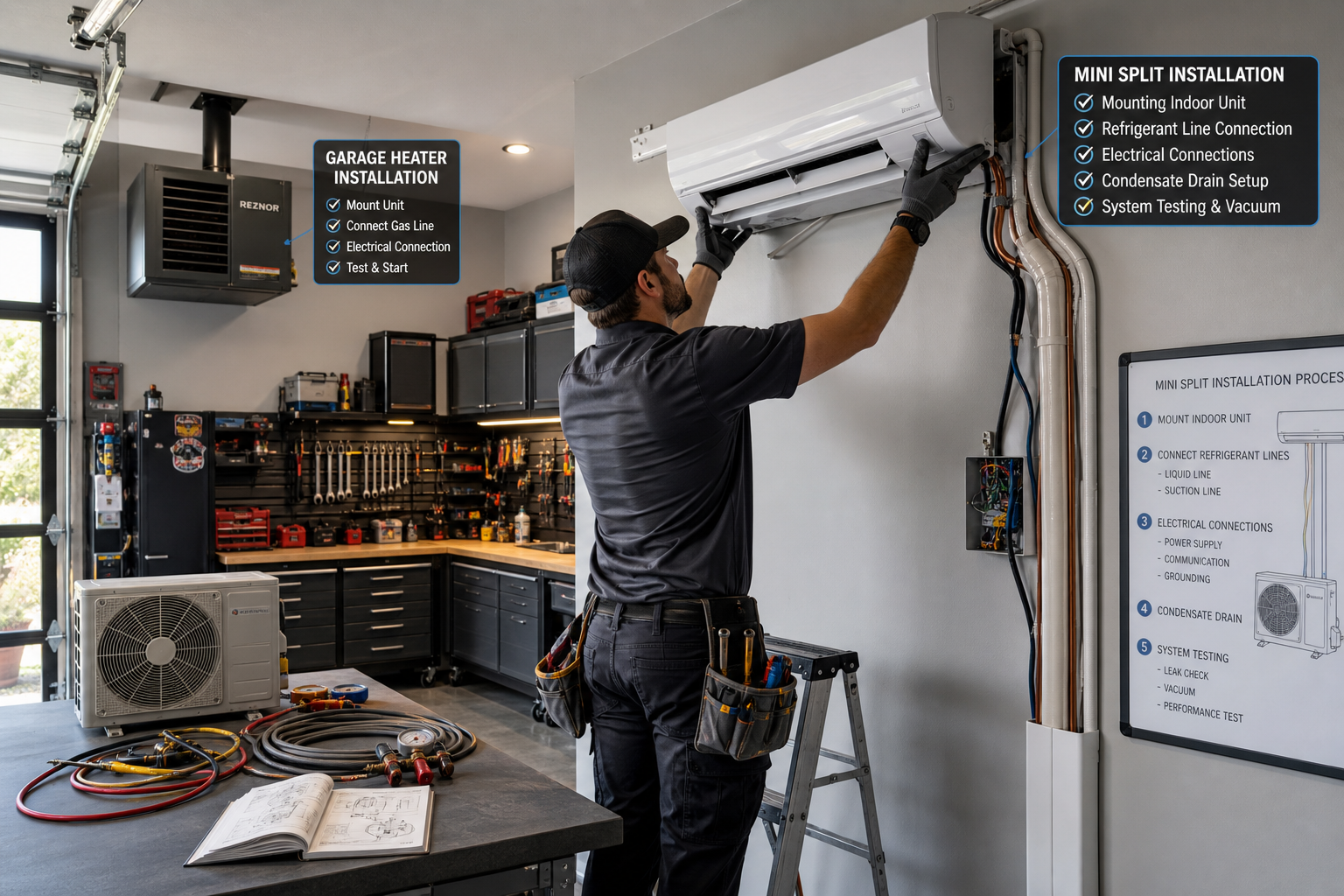
Installation complexity matters if you’re doing it yourself or paying someone. Gas heaters require venting (B-vent or direct-vent through a wall), a gas line connection, and in some cases a dedicated shutoff valve and drip leg. Venting through the roof is more complex than through a wall. Direct-vent models are safer and more efficient but cost more. You need a licensed HVAC tech or plumber in most jurisdictions.
Electric heaters are simpler. Mount the unit, run power to it, connect the wires. A 120V model plugs in. A 240V model needs hardwiring to a breaker. Ceiling-mount units require solid blocking or joists to support the weight (units run 20 to 50 pounds). Wall-mount models need anchors rated for the load.
Mini split installation involves mounting the outdoor condenser on a pad or wall bracket, running refrigerant lines and electrical through the wall, mounting the indoor head, connecting everything, and pulling a vacuum on the refrigerant lines before startup. DIY kits simplify this with pre-charged lines and quick-connect fittings, but it’s still a multi-step process that takes a full day for someone with moderate skills. Hiring a pro takes three to five hours and guarantees proper refrigerant charge and leak-free connections.
Work in small, manageable sections for better quality control. For installations, that means completing one part of the system fully before starting the next. Rushing through the electrical and then realizing you need to reposition the unit wastes time and creates errors.
Expect at least one surprise during the project. Hidden wiring in the wall where you planned to mount the indoor head, a gas line that’s not where the permit drawing shows it, or a breaker panel with no room for another circuit are common discoveries. Having backup plans and a flexible timeline reduces stress when surprises appear.
Climate and Usage Patterns
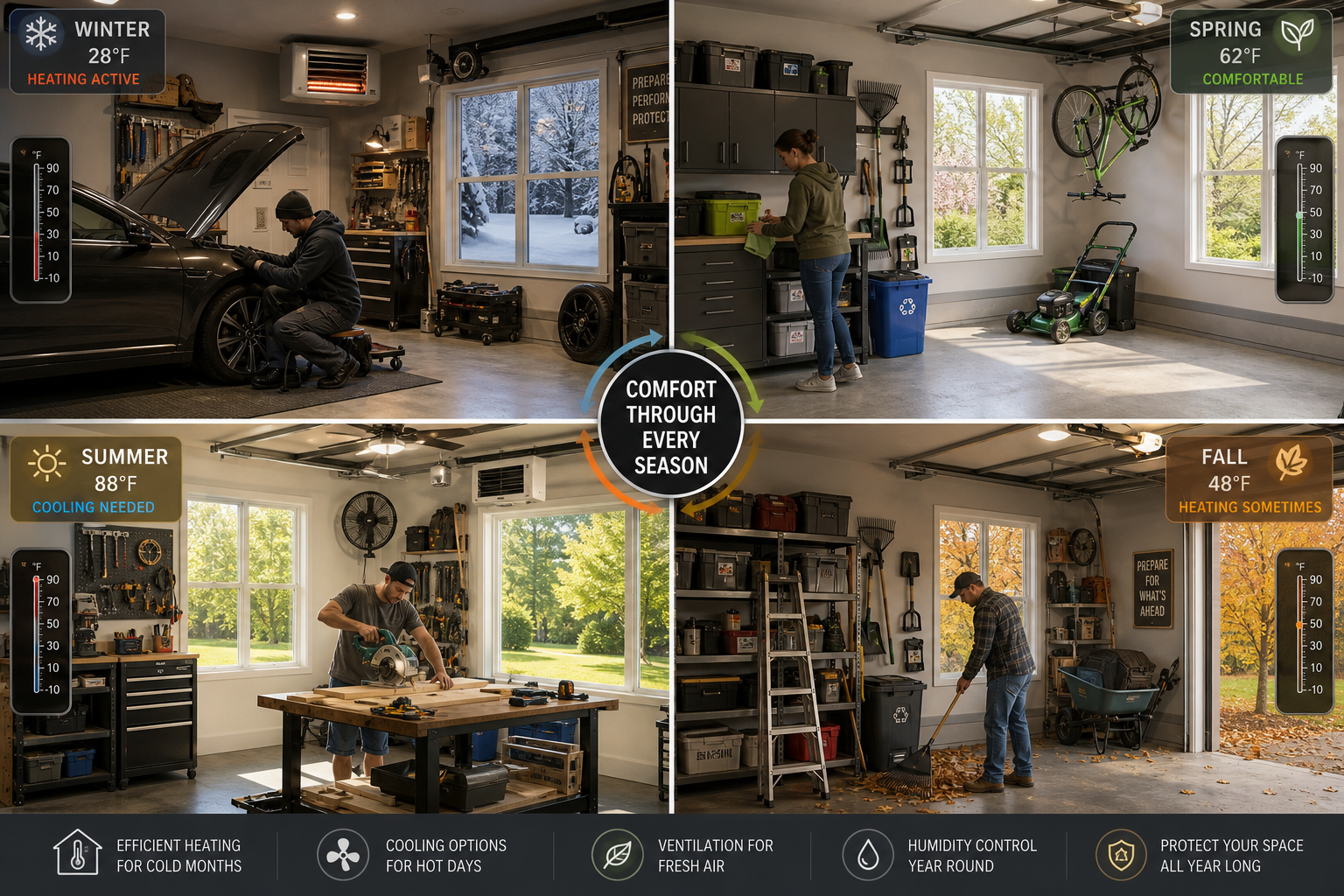
Simple decision paths based on climate and how often the garage is used. Understanding the specifics of your situation helps you choose the right approach. Your garage’s age, construction type, and local climate all influence what works best and what to avoid.
Cold climates (winter lows below 10°F regularly): Gas heaters perform consistently. Mini splits lose capacity and efficiency when outdoor temps drop below 20°F. Some cold-climate mini splits work down to -15°F, but they cost more and still lose heating power as temps fall. If you’re in Minnesota, Montana, or northern New England, gas is the safer bet unless you invest in a cold-climate-rated mini split.
Moderate climates (winter lows 20°F to 40°F): Mini splits excel here. They heat efficiently and the outdoor unit doesn’t struggle. If you also want summer cooling, the mini split justifies its cost. If you only need heat and rarely use the garage, an electric heater saves money upfront.
Hot climates with mild winters: Mini splits make sense because cooling is the bigger need. A window AC and a space heater cost less initially, but a mini split delivers better comfort and efficiency for year-round use.
Usage Frequency Impact
Usage frequency shifts the math. If you’re in the garage daily for hours (home gym, workshop, office space), invest in the mini split. Consistent use means lower per-hour operating costs matter more than upfront price. If you’re in the garage occasionally (weekend projects, car maintenance), a garage heater on-demand makes more sense. You’re not running it enough to justify the mini split premium.
Insulation level matters as much as climate. An insulated garage (R-13 walls, R-30+ ceiling, insulated garage door) holds heat and stays cool. A smaller, cheaper system works. An uninsulated garage bleeds heat fast. You’ll need oversized capacity and higher operating costs. Insulate before choosing your system and you’ll save on both the equipment and the monthly bills.
Document every product you use: brand, model number, BTU rating, installation date. Future repairs need exact specs. If the outdoor compressor fails five years from now, the HVAC tech needs to know what refrigerant type and capacity to match. Tape the info inside the electrical panel cover or take a photo and store it with your home maintenance records.
Factor in maintenance when choosing your approach. Gas heaters need annual inspections: check the burner, clean the igniter, inspect the venting. A service call runs competitively priced to competitively priced. Electric heaters need almost nothing beyond keeping the fan clean. Mini splits need filter cleaning every month or two (takes five minutes) and a professional service every two to three years to clean coils and check refrigerant (competitively priced to competitively priced per visit). Over ten years, gas heaters cost the most to maintain, electric the least, mini splits in the middle.
Practical Planning Tips
Set a realistic timeline and budget before buying anything. Most garage projects take 50% longer and cost 20% more than initial estimates, especially for first-timers. Build that buffer into your plan so unexpected discoveries don’t derail the entire project or blow the budget.
Research local building codes and permit requirements for your specific project. Gas heater installations require permits in most jurisdictions because of the gas connection and venting. Mini splits need permits for the electrical work and sometimes for the refrigerant handling. Electric heaters usually only need a permit if you’re adding a new 240V circuit. Working without required permits creates liability issues, insurance complications, and problems when selling the home. Inspectors can make you rip out unpermitted work and redo it to code.
Electrical capacity is a hidden constraint. Check your main panel before committing to an electric heater or mini split. A 240V heater draws 20 to 40 amps. A mini split draws 15 to 30 amps. If your panel is maxed out, you’ll need a subpanel or an upgrade, adding competitively priced to competitively priced to the project. Gas heaters avoid this issue because they only need 120V for the blower and igniter (small load).
Noise levels differ. Gas heaters are loud when the burner fires and the blower runs. Expect 60 to 75 decibels, similar to a vacuum cleaner. Electric forced-air heaters run 50 to 65 decibels. Mini splits are quiet
