

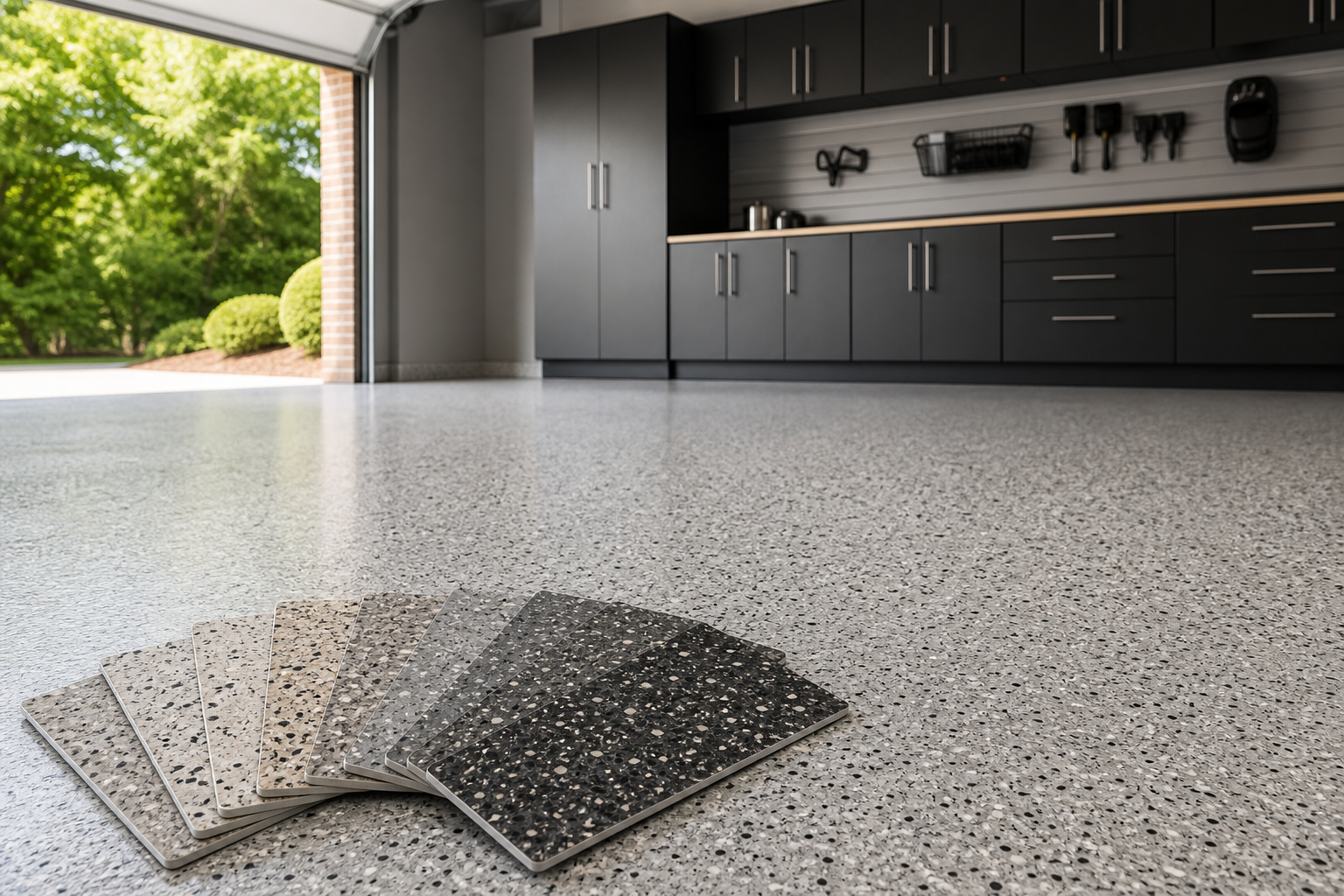
Whether you’ve been planning to choose the right flake color for your garage floor for months or decided to tackle it this weekend, a clear roadmap makes all the difference. Preparation accounts for about 80% of the success in projects like this.
Everything you need is below: tools, materials, step-by-step instructions, and the common pitfalls to avoid.
Understanding Flake Color Systems
Decorative flakes (also called chips or color flakes) are broadcast onto wet epoxy or polyaspartic coatings. They add texture, hide imperfections, and create the multicolor finish most people picture when they think of a professional garage floor. The flakes come in dozens of color combinations, ranging from subtle grays and tans to bold blues, reds, and metallics.
Most flake blends fall into three coverage levels: light (10-20% of the floor surface), medium (40-60%), and full broadcast (100%, where flakes completely cover the base coat). Light coverage shows more of the base color and creates a speckled look. Full broadcast creates a continuous flake surface with almost no base color visible.
Medium coverage is the sweet spot for most garages: enough flakes to hide tire marks and dirt patterns without using excessive material.
Flake size matters as much as color. Standard flakes are 1/4 inch, which balances coverage and texture. Smaller 1/8-inch flakes create a finer, more uniform appearance but require more material to achieve the same coverage. Larger 1/2-inch flakes make a bold statement but can feel rough underfoot and may not lay as flat during broadcast.
Manufacturers typically sell flakes in pre-mixed blends with names like “Granite,” “Mocha,” and “Nautical.” These blends combine three to five individual colors that work together. Buying a pre-mixed blend is easier than trying to create your own color ratios, and it ensures consistency if you need to order more material mid-project.
How Flake Colors Hide Dirt
Darker flake blends disguise oil drips, tire marks, and tracked-in dirt better than light colors. A charcoal or granite blend with black, gray, and tan flakes makes typical garage grime nearly invisible. Lighter blends like almond or beige show every tire track and require more frequent cleaning to maintain their appearance.
Multicolor blends outperform solid colors in hiding imperfections. A single-color floor (even with flakes of that one color) shows dirt patterns clearly. A blend with contrasting colors breaks up visual patterns. Your eye sees the color variation instead of the dirt.
Metallic flakes add shimmer but also highlight dirt in certain lighting. Under bright LED shop lights, metallic blends can make dust and footprints more visible than matte flakes. If you park daily and track in road salt or mud, stick with matte finishes in medium to dark tones.
Tan and brown blends hide dust best. Garages accumulate fine dust from drywall, sawdust, and dirt tracked in on shoes. Light gray blends show this dust film clearly. Tan, mocha, and brown flakes camouflage it. If you rarely sweep and want the floor to look clean between deep cleanings, choose a warm brown blend over cool grays.
Red oxide and rust tones disguise tire marks from hot tires particularly well. Black rubber marks blend into reddish-brown flakes better than into blue or green. If you park frequently and want minimal visible tire tracking, a rust-toned blend is a practical choice.
Matching Flakes to Cabinet Colors
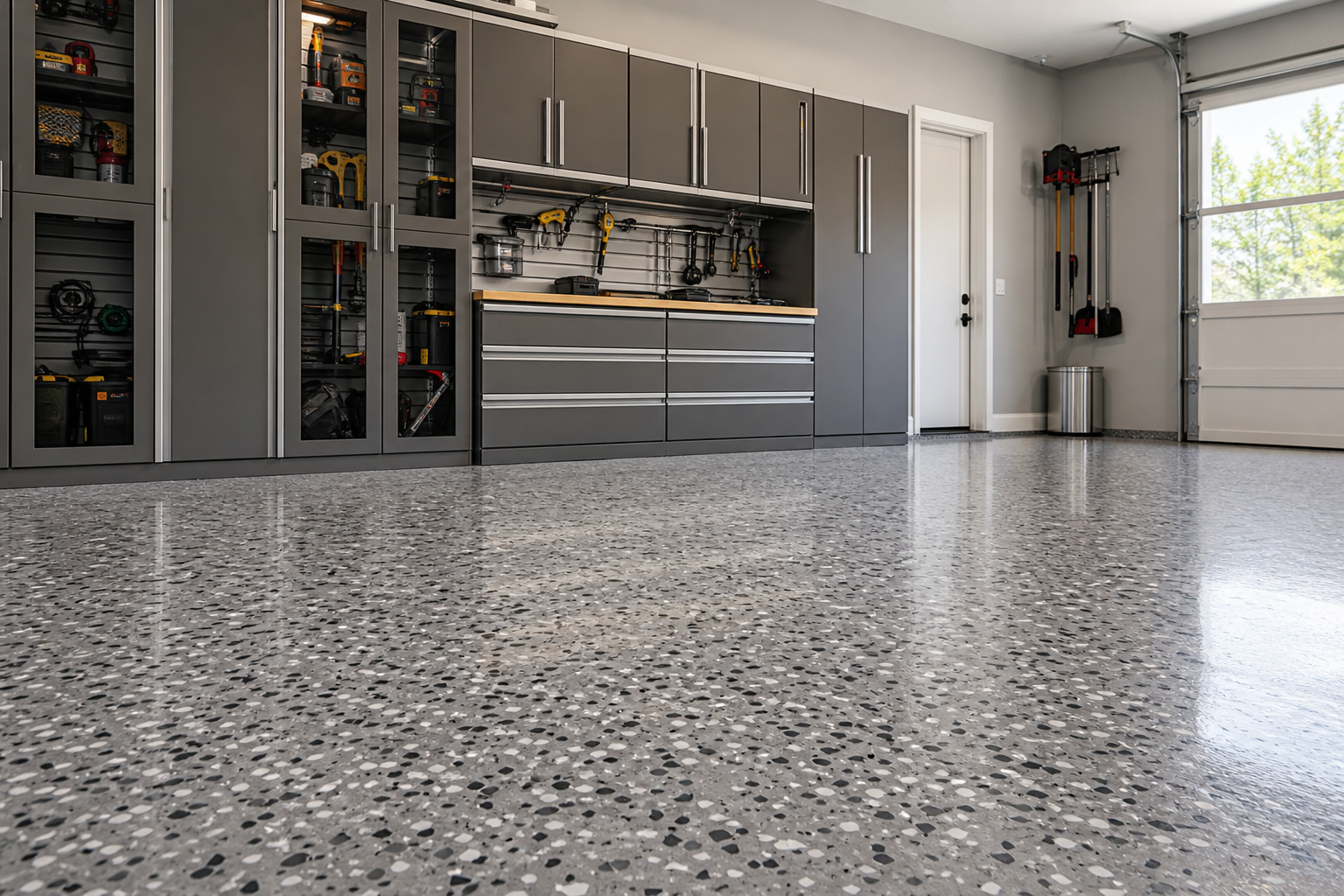
If you already have cabinets or plan to install them, coordinate your floor with their finish. Black or dark gray cabinets pair well with granite, gunmetal, or charcoal floor blends. The dark-on-dark scheme creates a cohesive workshop feel without stark contrasts.
Stainless steel or silver cabinets work with almost any floor color, but they look especially sharp with blue-gray or slate blends. The cool tones complement metal finishes without competing. Avoid warm browns and rust tones with stainless; the temperature clash looks unintentional.
Red cabinets are bold and need a floor that doesn’t fight them. Stick with neutral grays, blacks, or tans. A red cabinet with a blue or green floor reads as chaotic. Let the cabinets be the color statement and keep the floor grounded.
Wood-tone or natural finish cabinets pair best with earth-tone flake blends: mocha, sandstone, or tan blends. The warmth matches. Avoid metallic or bright blue flakes with wood cabinets unless you’re intentionally going for an eclectic look.
If you haven’t bought cabinets yet, choose your floor first. Cabinets are easier to swap or repaint than a floor coating. Once you’ve committed to a floor color, select cabinets that complement it.

Steel Garage Cabinet
Quality steel construction makes a noticeable difference in durability and appearance
Coordinating with Wall Paint
Your floor flakes should either complement your wall color or provide enough contrast to define the space. If walls are light gray or white, you have complete freedom with floor color. Nearly any flake blend works.
Beige or tan walls pair well with warm floor blends: mocha, sandstone, or rust tones. Cool gray or blue flakes can look disconnected against warm walls. Match the temperature (warm or cool) between walls and floor for a cohesive look.
Bright white walls make any floor color pop, but they also show dirt on the floor more clearly by contrast. If walls are pristine white, consider a medium-dark flake blend so the floor doesn’t look dingy by comparison.
Dark walls (charcoal, navy, dark green) need a lighter floor to avoid a cave effect. A light gray or tan flake blend balances dark walls and keeps the space from feeling cramped. Full-broadcast dark flakes on a dark wall garage will feel small and dim even with good lighting.
Painted block or concrete walls in garages often have texture. Choose floor flakes that echo that texture level. A heavily textured wall pairs well with larger flakes or high-coverage broadcast. Smooth drywall walls look better with smaller, more refined flakes.
Vehicle Considerations
If you park dark vehicles (black, navy, charcoal), a lighter floor makes the car stand out and the space feel larger. Light gray or tan flakes provide contrast without clashing. If you park light vehicles (white, silver, beige), a darker floor keeps the garage from feeling washed out.
Multiple vehicles in different colors? Stick with neutral floor tones: gray blends, tan blends, or black-and-white combinations. These work with any car color and won’t look dated if you change vehicles.
Classic or show cars benefit from floors that don’t compete for attention. A clean, understated gray or black flake blend keeps focus on the vehicle. Bright or busy floor colors distract from the car itself.
Work trucks that track in mud, gravel, and job-site debris need forgiving floor colors. Granite blends with black, gray, tan, and white flakes hide everything. Light blue or green floors will show every bit of dirt a work truck brings home.
Style Examples: Modern, Industrial, and Man Cave
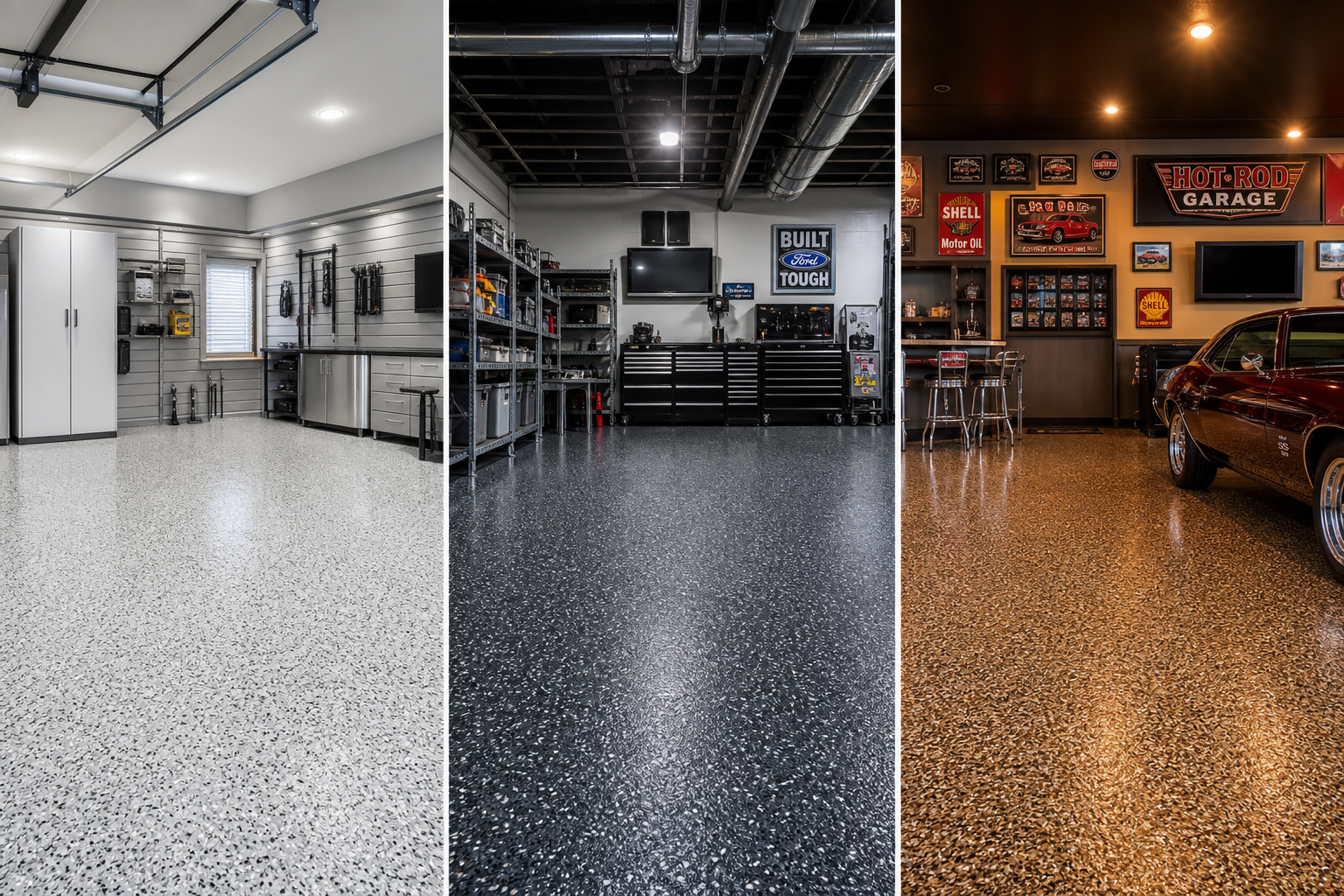
Modern Garage Style
Modern garages lean toward monochromatic schemes with clean lines. Think light gray walls, white ceiling, black or dark gray cabinets, and a silver-gray flake blend with metallic accents. Keep the flake pattern subtle (light to medium coverage) for a sleek look. Add stainless tool chests and minimalist lighting to complete the style.
Industrial Workshop Aesthetic
Industrial garages embrace raw materials and utilitarian finishes. Exposed joists or painted black ceilings, unpainted block walls or dark gray paint, and gunmetal or charcoal flake blends create the aesthetic. Use full-broadcast coverage for a workshop vibe. Pair with metal shelving, pegboard, and vintage signage.
For those leaning toward industrial or workshop aesthetics, our garage workshop ideas guide provides detailed layout and design inspiration. For an even more dramatic look, consider applying metallic epoxy for custom garage floors to add sophisticated shimmer and depth.
Man Cave Design
Man cave garages go bold with color and personality. Red or blue accent walls, neon signs, sports memorabilia, and flake blends that pop: bright blue with white and silver, red oxide with black and tan, or custom blends in team colors. Medium to full coverage works here. Add a TV mount, a mini fridge, and comfortable seating to finish the space.
Traditional Style
Traditional garage style uses earth tones and wood accents. Tan or beige walls, wood-tone cabinets or workbenches, and mocha or sandstone flake blends. Light to medium coverage keeps the floor from overwhelming the space. This style prioritizes function but still looks finished and intentional.
Flake Color and Lighting
LED shop lights (5000K to 6500K) produce a cool, bright white light that makes gray and blue flakes look crisp. Warm flakes (tan, rust, brown) can look slightly washed out under cool LEDs. If you already have cool LED lighting, choose gray or blue-toned flakes for the best appearance.
Warmer incandescent or halogen lights (2700K to 3000K) enhance tan, mocha, and rust-toned flakes. Cool grays and blues can look dull or greenish under warm light. Match your flake temperature to your light temperature for the most natural look.
Natural light from windows or open doors shifts color perception throughout the day. Flakes that look one way under artificial light may look different in daylight. If your garage has significant natural light, test flake samples in both natural and artificial light before committing.
Metallic flakes reflect light and create sparkle. Under bright overhead LEDs, metallic blends can look almost glittery. In garages with minimal lighting, metallics add visual interest and help reflect available light. Don’t choose metallics solely for aesthetics; consider how much light your garage actually has. For more insights on lighting and temperature comfort, you might find our guide on why garage floors feel cold and quick fixes helpful for creating a more comfortable workspace.
Common Mistakes with Flake Color Selection
Choosing flakes based solely on online photos is risky. Monitor calibration, lighting in product photos, and image compression all affect how colors appear on screen. Order physical samples from your supplier. Most manufacturers send small sample bags for a few dollars. Spread a sample on a piece of cardboard, let it dry, and view it in your actual garage lighting.
Ignoring your base coat color is a mistake. The base coat (the colored epoxy or polyaspartic you apply before broadcasting flakes) shows through light and medium flake coverage. A dark base coat with light flakes creates a different look than a light base coat with the same flakes. Confirm the recommended base coat color for your chosen flake blend.
Buying flakes from different batches can result in color variation. If you need multiple bags, order them all at once from the same production run. Dye lots vary slightly between batches. One bag of “Granite” flakes may have more brown than another bag labeled identically.
Underestimating flake quantity leads to thin coverage and visible base coat. Calculate square footage carefully and order 10-15% extra. Running out mid-broadcast means stopping to order more, and by then the base coat may have cured too much to accept additional flakes evenly.
Choosing trendy colors that will date your floor in five years is a long-term mistake. Neon green or purple flakes might match your current style, but floor coatings last 10 to 20 years. Stick with classic neutrals or earth tones unless you’re certain about a bold choice and willing to live with it for decades.
Testing Flake Colors Before Committing
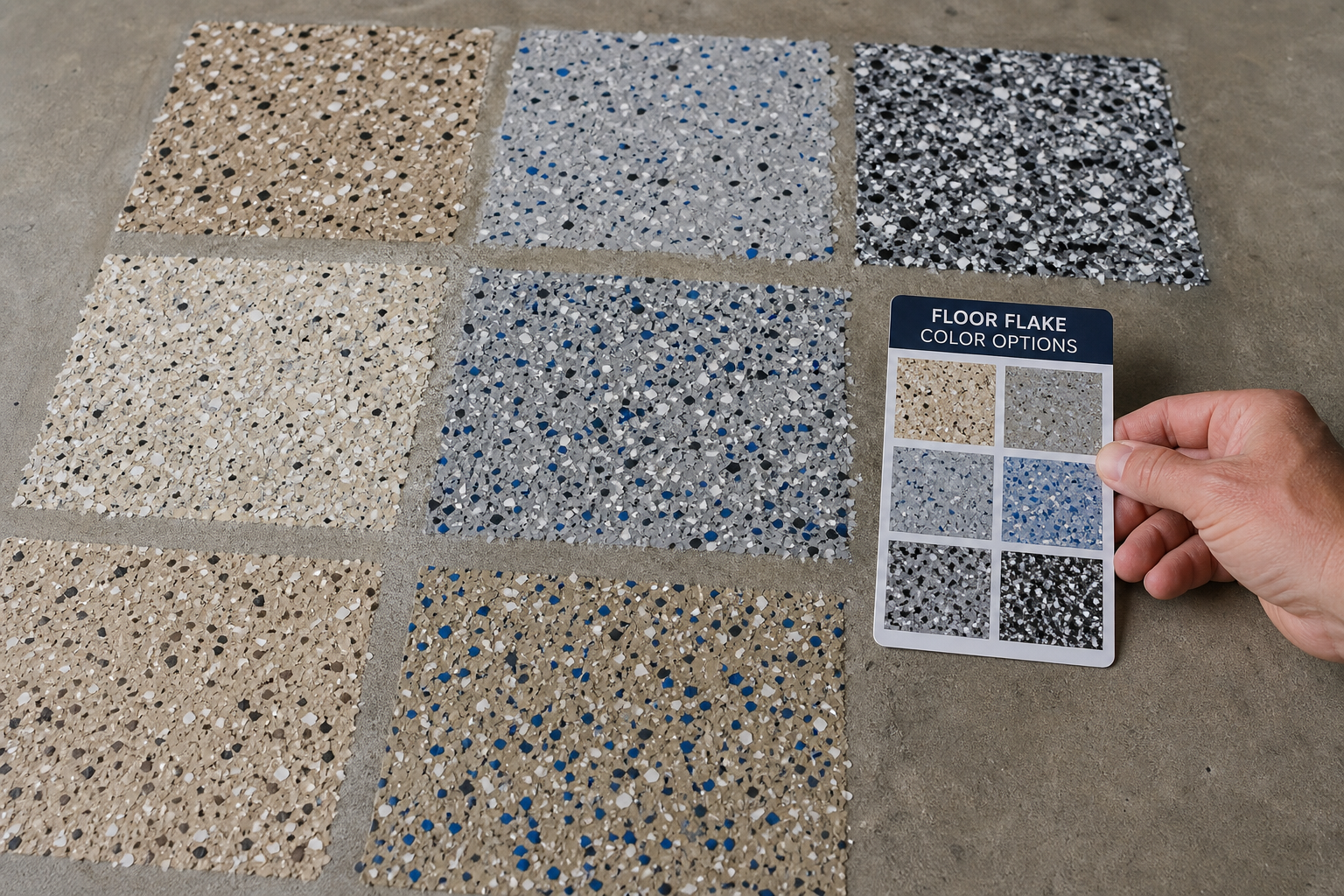
Order samples of your top three color choices. Most suppliers sell 1-pound sample bags. There’s enough to test on a small section of floor or a scrap piece of plywood.
Prep a test area just like you’d prep the real floor: clean, etch or grind, and apply a base coat. Broadcast flakes at your intended coverage level. Seal with a clear topcoat. This test panel shows exactly what the finished floor will look like.
View the test panel at different times of day and under different lighting conditions. What looks great under morning sun might look flat under evening LED light. Live with the sample for a few days before deciding.
If you’re between two similar colors, test them side by side. Subtle differences become obvious when samples are adjacent. You’ll immediately know which one feels right.
Don’t skip this step to save a few dollars. A small sample investment prevents a costly floor you dislike.
Cracks, Repairs, and Flake Coverage
Hairline cracks (under 1/8 inch) disappear under medium to full
