

Folding chairs are supposed to save space, but somehow they end up leaning against the wall, sliding behind the water heater, or stacked in a pile that topples every time you grab one. The whole point of a folding chair is that it collapses down flat, so if you’re not storing it flat against a wall or ceiling, you’re wasting the one advantage it has over a regular chair.
This guide covers the actual mounting options that work for folding chairs specifically, not general shelving advice. We’ll get into rack styles, hook types, stud spacing, and where these chairs fit best based on how deep they are and how you’ll actually grab them again later.
Measure Before You Mount Anything
Standard folding chairs run about 2 to 3 inches thick when closed, but the seat and backrest often add another inch or two of depth once you account for the frame curve. That matters because whatever storage method you pick needs enough wall clearance so the chair doesn’t scrape your car door or block a walkway.
Measure the folded thickness of your specific chairs, then add at least an inch of buffer. If you’re storing chairs near where you park, check that the folded depth still leaves room for the door to swing open without hitting them. This is the same clearance math you’d use when working out a garage floor plan and dimensions, just on a smaller scale.
Wall Racks Built for Folding Chairs
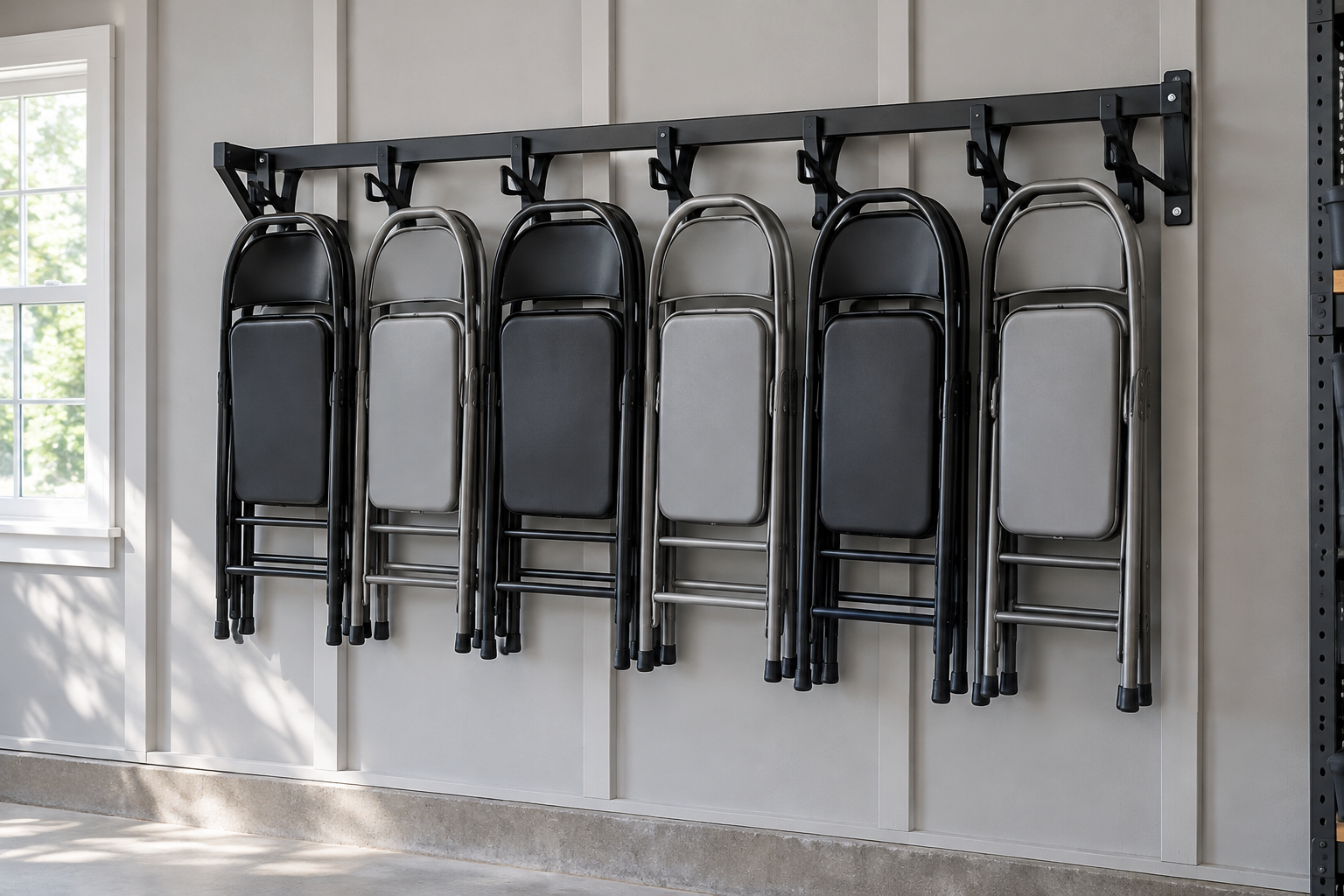
A dedicated wall rack is the best option if you own more than two or three folding chairs. These racks use angled arms or a horizontal bar system that holds chairs vertically, seat-to-seat, so a stack of six chairs takes up less than a foot of linear wall space.
The key detail here is stud mounting. Folding chairs aren’t heavy individually, but six or eight of them stacked on one rack adds up fast, and drywall anchors alone won’t hold that load long term. Find your studs with a stud finder and mount directly into them, or use a mounting board across multiple studs if your stud spacing doesn’t line up with the rack’s hole pattern.
Folding Chair Wall Storage Rack
A dedicated rack keeps a whole stack of chairs off the floor and organized in one spot instead of leaning around the garage.
Most racks hold anywhere from four to ten chairs depending on width, so measure your wall run before buying. If your garage already has a slatwall or pegboard panel installed, check whether the rack manufacturer sells slatwall-compatible hooks instead of a standalone unit, since that saves you from drilling new holes.
Utility Hooks for a Chair or Two
If you only have one or two folding chairs, a full rack is overkill. A pair of heavy-duty utility hooks mounted into a stud will hold a single chair by its top rail just as well, and it takes up almost no visible space.
Look for hooks rated for at least 30 pounds even though a folding chair weighs far less. The rating matters less for the chair’s weight and more for how much leverage a bumped chair puts on the hook over time. Cheap plastic hooks tend to crack at the base after repeated use, so spend a little more on a coated steel version.
Vertical Stacking vs Overhead Storage
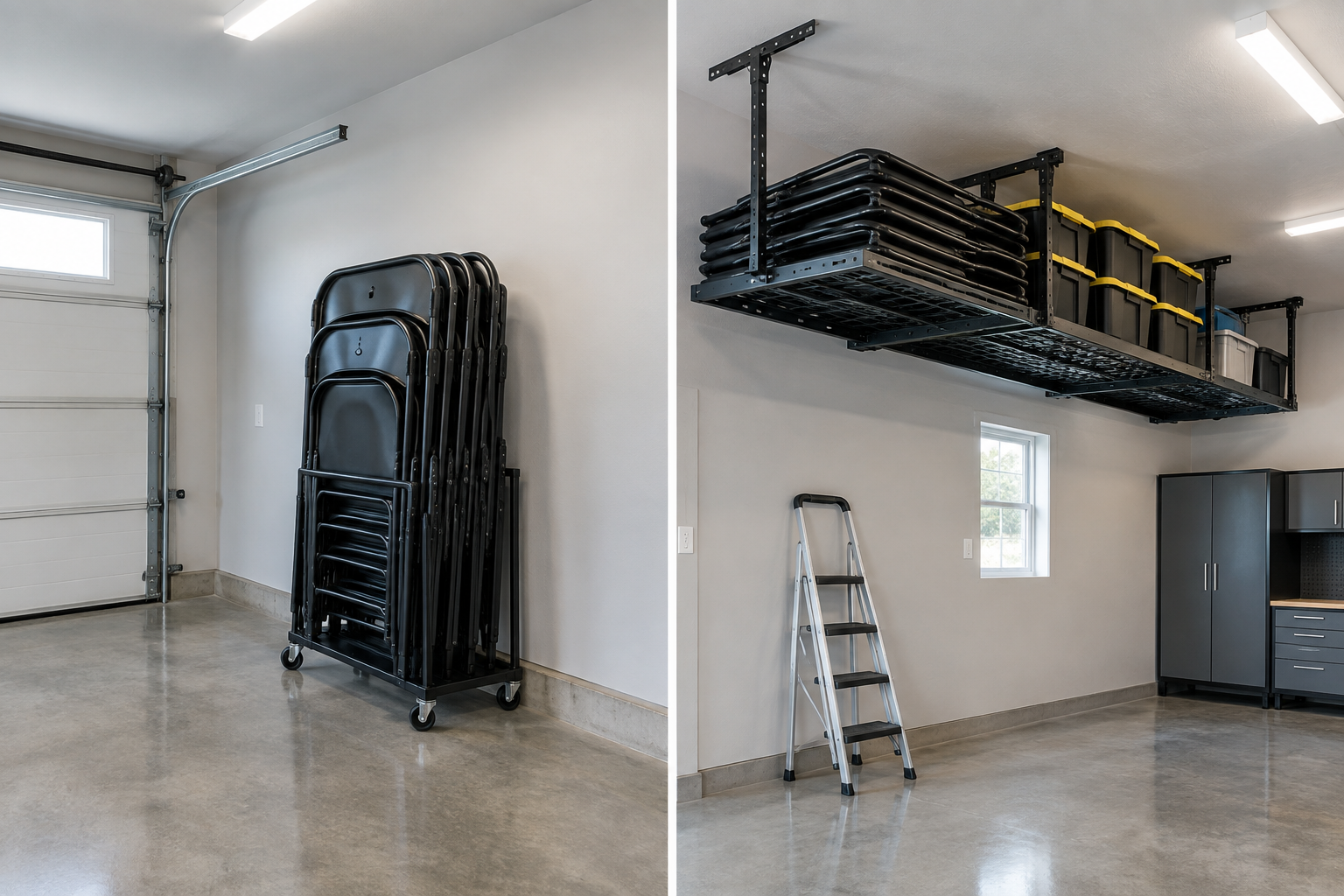
Stacking chairs vertically against a wall works fine for occasional use, but it’s the least space-efficient option on this list because the chairs still occupy floor footprint even when folded. It’s really only worth doing if you’re storing chairs temporarily between events rather than as a permanent setup.
Overhead storage is the better call if your floor space is tighter than your ceiling space. A slim overhead rack or a set of ceiling-mounted hooks near the garage door track keeps chairs completely out of the way, similar to how a lot of people handle ladder storage with wall vs ceiling mounting. The tradeoff is retrieval. If you need chairs quickly for guests, climbing up for them every time gets old fast, so reserve overhead spots for chairs you don’t grab often.
Behind-the-Door Storage
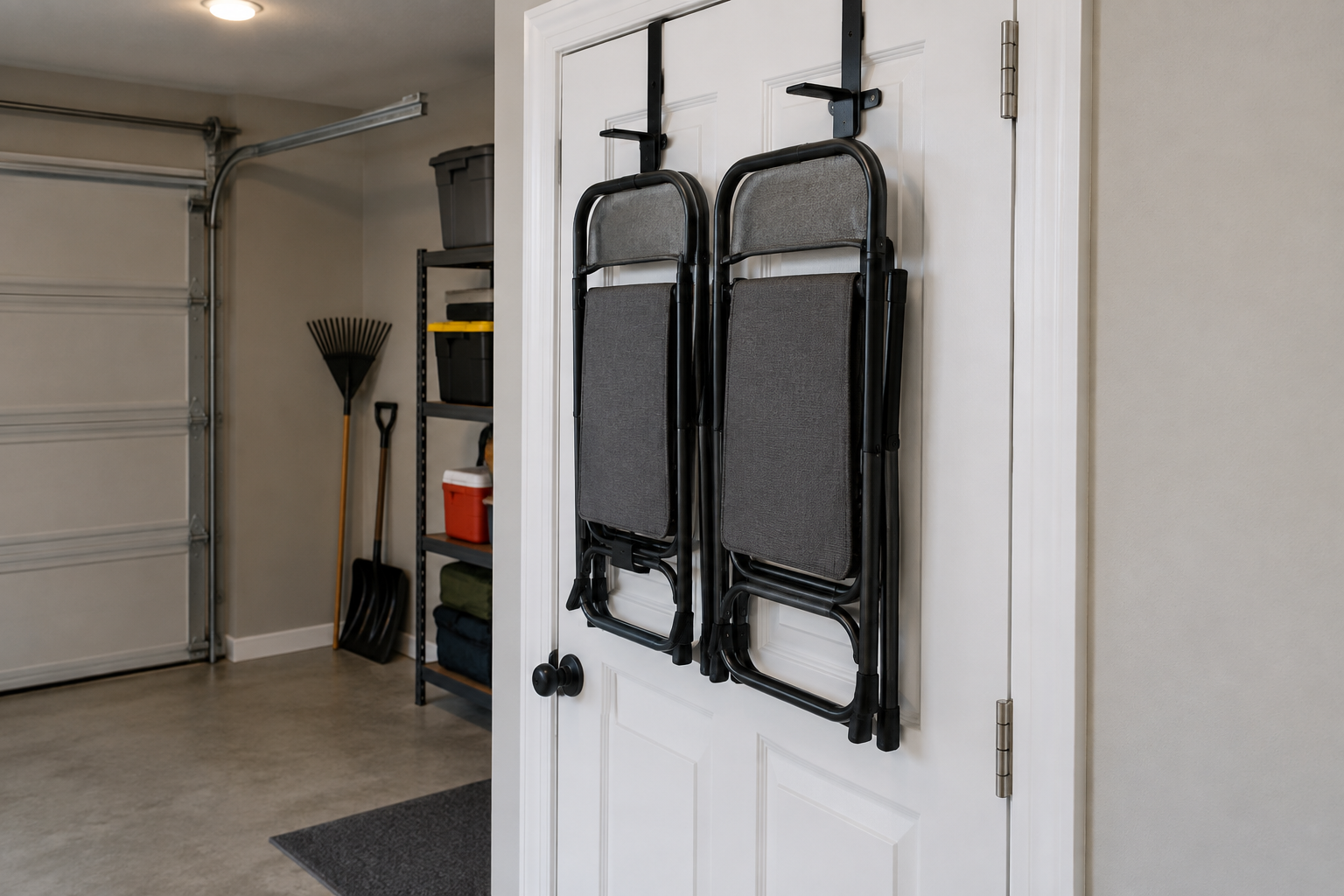
The space behind a side entry door or between a door and the wall is usually wasted, and it’s often just wide enough for a folded chair or two. This works best with a slim hook system rather than a bulky rack, since you need the chair to sit flat without blocking the door swing.
This spot is ideal for chairs you use often, like ones you pull out for weekend projects or quick backyard setups, since they’re at arm height and don’t require a ladder or a search through a stack. Just confirm the door still closes fully and the chair doesn’t rattle against the frame when the door opens.
FAQ
How much wall space do folding chairs actually need?
A single folded chair typically needs about 3 to 4 inches of depth clearance and roughly 18 to 20 inches of width, depending on the chair’s seat size. A rack holding six chairs stacked side by side usually needs a wall run of about 3 to 4 feet, which is far less than lining them up individually along a wall.
Can I mount a folding chair rack without hitting a stud?
You can, but only with heavy-duty drywall anchors rated for the total combined weight of every chair on the rack, not just one. For anything holding more than two or three chairs, stud mounting is the safer bet, especially if your garage walls are unfinished OSB or drywall rather than plywood, which affects how much anchor holding power you actually get.
This article contains affiliate links. We may earn a small commission at no extra cost to you.
