


Picking the right pest control methods for garages isn’t about finding the highest star rating. It’s about matching product strengths to your needs: durability, ease of installation, or budget constraints.
Below, you’ll find honest assessments of top contenders, what separates them, and which ones fall short of their marketing. Check Amazon for current pricing.
Understanding the Basics
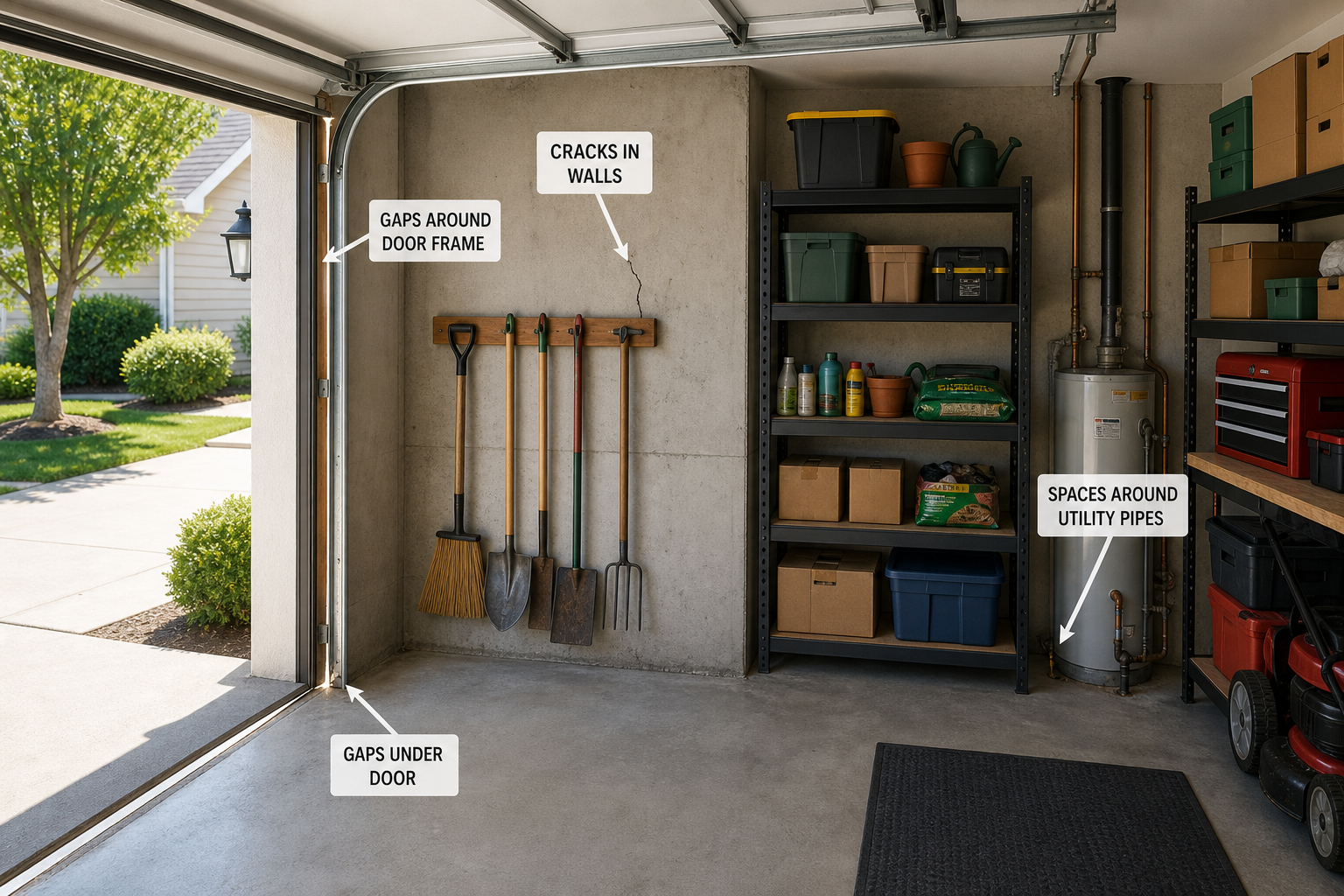
The garage door bottom seal is the most common pest entry point. A 1/4-inch gap admits mice, insects, and spiders. Inspect the entire seal length for cracks, compressed areas, or hardened rubber that no longer contacts the ground fully.
Other entries include gaps around pipes and wires, sill plate-to-foundation spaces, unscreened vents, and deteriorated weatherstripping on side doors. Physical exclusion (sealing gaps) beats traps because it prevents entry entirely.
Steel wool packed into openings and secured with expanding foam stops rodents. Foam alone gets chewed through, so the steel wool is essential. Copper mesh is even better for durability. For larger gaps, 1/4-inch galvanized hardware cloth screwed in place creates a permanent, chew-proof barrier.

Steel Wool Pest Control
Perfect for blocking small gaps and holes that rodents exploit
Safe for Workshops and Pets
Focusing on non-toxic options safe for workshops and pets makes sense for most garage situations. Understanding the specifics of your situation helps you choose the right approach. Your garage’s age, construction type, and local climate all influence what works best and what to avoid.
Start with a small test area if you’re uncertain. A 4 by 4-foot section in an inconspicuous spot lets you evaluate adhesion, appearance, and workability without committing to the full project. Troubleshooting a small test area is far easier than redoing everything.
If this is your first project of this type, budget 50% more time than guides suggest. The learning curve is real, and careful work produces better results than rushing to meet an estimated timeline.
A quality steel wool pest barrier makes a noticeable difference in results. Check current options and reviews on Amazon to find the right match for your project and budget.
Practical Planning Tips
Consider the seasonal timing of your project. Floor coatings apply best in mild weather (50 to 85 degrees). Insulation projects are most motivating (and noticeable) before extreme weather hits. Electrical and plumbing work can happen year-round but should be completed before insulating or finishing walls over the wiring.
Before starting any garage project, take stock of what you have and what you need. Walk the space with a tape measure and a notepad. Record dimensions, note existing electrical outlets and their amperage, check for moisture issues, and photograph anything you want to change.
This baseline assessment prevents surprises mid-project and helps you budget materials accurately.
Prioritizing Your Projects
Prioritize your projects based on impact and urgency. Safety issues (faulty wiring, CO risk, structural problems) come first. Comfort improvements (insulation, lighting, climate control) come second. Cosmetic upgrades (floor coatings, paint, organization systems) come last.
Following this order ensures you’re building each improvement on a solid foundation.
Invest in quality tools for tasks you’ll repeat. A reliable stud finder, a good level, a quality tape measure, and proper safety gear (eye protection, hearing protection, respirator) make every project easier and safer. These tools pay for themselves across multiple projects over the years.
What to Avoid
Knowing what to skip prevents expensive mistakes:
- Unknown brands at rock-bottom prices. Established brands charge more for proven materials and real warranties.
- “Universal” products claiming to work everywhere. Specialized products consistently outperform generalists.
- Products with vague specs or missing data sheets. If a manufacturer won’t publish details, that’s a red flag.
For those dealing with existing pest issues, check out our guide on DIY garage bug control for additional strategies that work alongside physical exclusion methods.

Frequently Asked Questions
Can I handle this as a DIY project?
Most steps are DIY-accessible with basic tools. Electrical, structural, and high-tension spring work should go to licensed professionals. Simple gap sealing with steel wool and foam is well within most homeowners’ capabilities.
What mistake should I avoid above all?
Rushing preparation. Whether it’s surface prep, measuring, or reading instructions, upfront time prevents expensive do-overs. Take photos before you start so you can reference original configurations if needed.
How much should I budget?
Varies widely by scope and materials. DIY saves significantly on labor costs. Basic steel wool and foam runs budget-friendly, while copper mesh and hardware cloth cost more but last longer. Check current Amazon pricing for accurate material estimates.
How long will the results last?
Years of reliable performance with quality materials and proper installation. Steel wool may need occasional replacement if it rusts, but copper mesh can last decades. Preparation quality is the single biggest longevity factor.
This article contains affiliate links. We may earn a small commission at no extra cost to you.
