

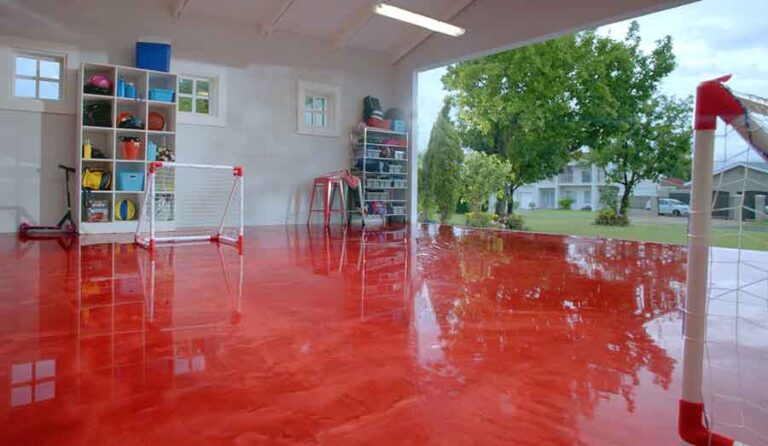
In this article, we’ll compare two popular garage floor coatings: RockSolid vs EpoxyShield. I’m often asked what the difference is between them since Rust-Oleum makes both garage floor coatings, and they’re both aimed at the average homeowner.
We’ll explore their key features, pros and cons, and costs, and even tackle the debate between installing them yourself or getting professional installation.
By the end, you’ll have all the information you need to compare RockSolid and EpoxyShield to choose the best one to create the garage floor of your dreams.
So, let’s roll up our sleeves and dive right into the first section, where we’ll get to know RockSolid and EpoxyShield better.
RockSolid Overview
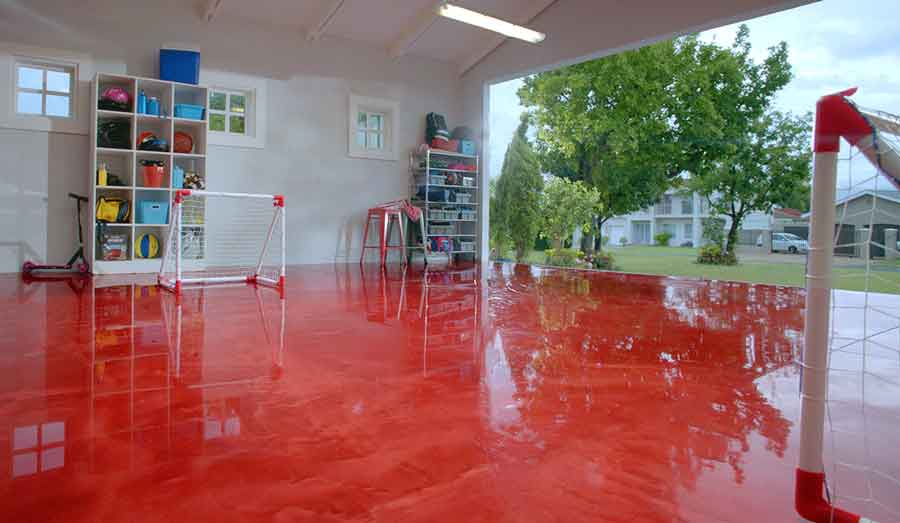
If you’re looking for a durable and attractive garage floor solution, the RockSolid Garage Floor Coating Kit is an excellent choice.
Specifically designed to provide superior hardness, adhesion, and durability on properly prepared concrete floors, it’s a solution that can truly stand up to the demands of a busy garage.
The real strength of RockSolid lies in its proprietary Polycuramine formula, a resin coating developed by Rust-Oleum for use in its RockSolid line of floor coating products.
Polycuramine is used in residential garage floors, basements, and other concrete surfaces that require a durable finish. Rust-Oleum claims that Polycuramine is 20 times stronger than traditional epoxy, creating an almost indestructible surface.
Unlike conventional epoxy coatings, which may become brittle and prone to cracking over time, polycuramine remains somewhat flexibile. This flexibility makes the coating resilient to temperature changes and helps prevent cracking or peeling. For those dealing with floor crack issues, proper surface preparation is crucial before applying any coating.
When considering the environmental and health aspects, polycuramine is also noteworthy. Its low-odor and low-VOC (Volatile Organic Compounds) make it a safer choice for use in enclosed spaces than other coatings.
RockSolid features patented Easy Mix Burst Pouch Technology, ensuring that mixing the components is convenient and accurate.
With a 96% solids formulation, it offers excellent coverage and a longer pot life than other 100% solids epoxies. That gives you more time to work with the product.
It also has a 7-day recoat window, making the application process easier and helping you complete the project faster.
To top it all off, RockSolid offers a variety of color options.
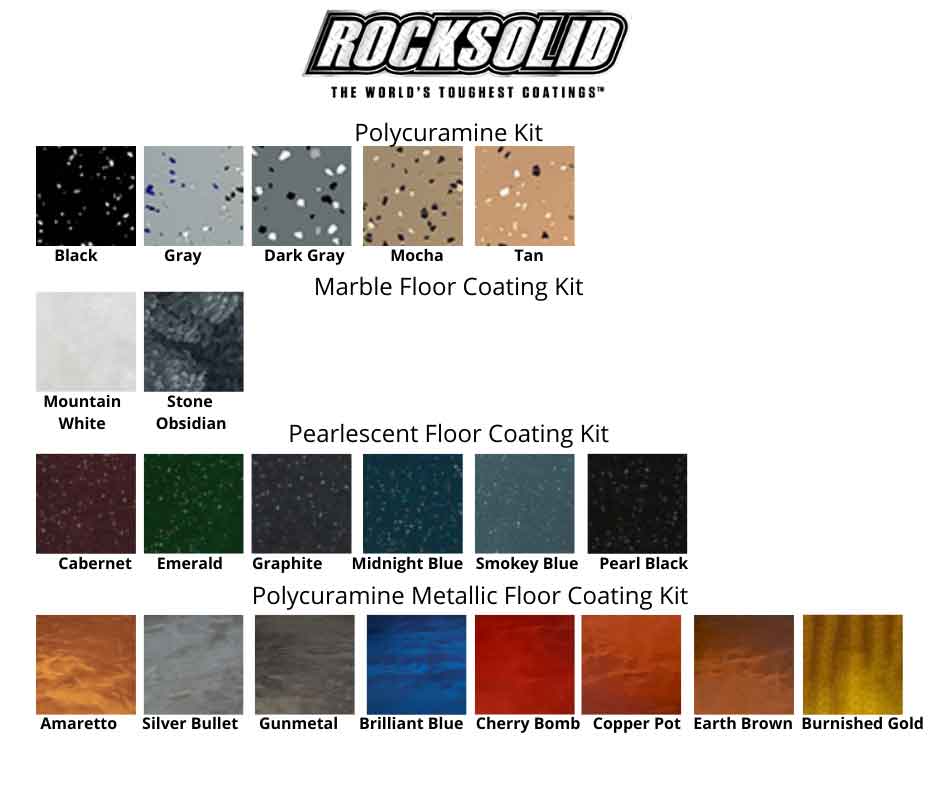
It’s available in standard colors like Gray, Tan, Mocha, Dark Gray, Black, or Modern Greige. There’s also a RockSolid Metallic with pearlescent and iridescent accents in Silver Bullet, Copper Pot, Earth Brown, Cherry Bomb, Amaretto, Gunmetal, and Brilliant Blue.
With RockSolid, you can transform your garage floor into a showpiece that is as strong as it is beautiful.
Quick Facts: Rust-Oleum RockSolid
Let’s take a closer look at the official RockSolid Technical Data Sheet (TDS). Here’s what you need to know:
- Durability and Resistance: RockSolid offers excellent hardness, adhesion, and durability on properly prepared concrete floors. It resists salt, oil, gasoline, and other harsh chemicals, making it a top choice for garage floors.
- Low Odor and Indoor Application: Worried about unpleasant smells during application? With RockSolid, you don’t have to. Its low odor allows for indoor application, meaning you can transform your garage without discomfort or disruption.
- Easy Application and Self-Leveling: The Easy Mix Burst Pouch Technology makes mixing a breeze. Plus, RockSolid has self-leveling properties for a smooth and even finish.
- Pot Life and Recoat Window: With it’s 96% solids formulation, RockSolid gives you more time to apply the product. If you need to recoat, you have a 7-day window without sanding.
- Coverage and Dry Time: Each Polycuramine pouch covers up to 200-250 square feet, depending on your concrete’s condition and porosity. Foot traffic can resume in just 8-10 hours, while vehicles can be back on after 24-36 hours.
- Surface Preparation: Proper preparation is critical. The TDS guides you through moisture testing, checking for sealers, and adhesion assessment. If necessary, it recommends using Rust-Oleum Concrete & Garage Recoat Primer.
- Application Tips: The TDS also provides detailed instructions on mixing and applying the product. It advises the best temperature range, avoiding direct sunlight or extremely damp conditions. Also, they recommend using the supplied foam roller and a synthetic brush for trimming edges.
- Coverage Rate and Limitations: Each pouch covers 200-250 square feet, though this can vary. Avoid applying in direct sunlight or if the substrate and ambient temperatures are below 40°F (4°C).
RockSolid’s durability, customization options, and user-friendly application make it a strong contender for your garage floor upgrade. For concrete floors with moisture problems, addressing these issues first is essential for any successful coating application. Learn more about moisture solutions for garage floors to ensure optimal results.
EpoxyShield Overview
The EpoxyShield Garage Floor Coating by Rustoleum is a traditional water-based 2-part epoxy garage floor coating specially designed for concrete garage floors. At 52% solids by volume, it’s a more cost-effective option than RockSolid.
It delivers good adhesion, durability, and chemical resistance when applied to a properly prepared surface.
EpoxyShield is an excellent option for your concrete floors, provided they are in sound condition and free of curing agents and sealers. Do not apply EpoxyShield to poorly adhered previous coatings or floors with moisture problems.
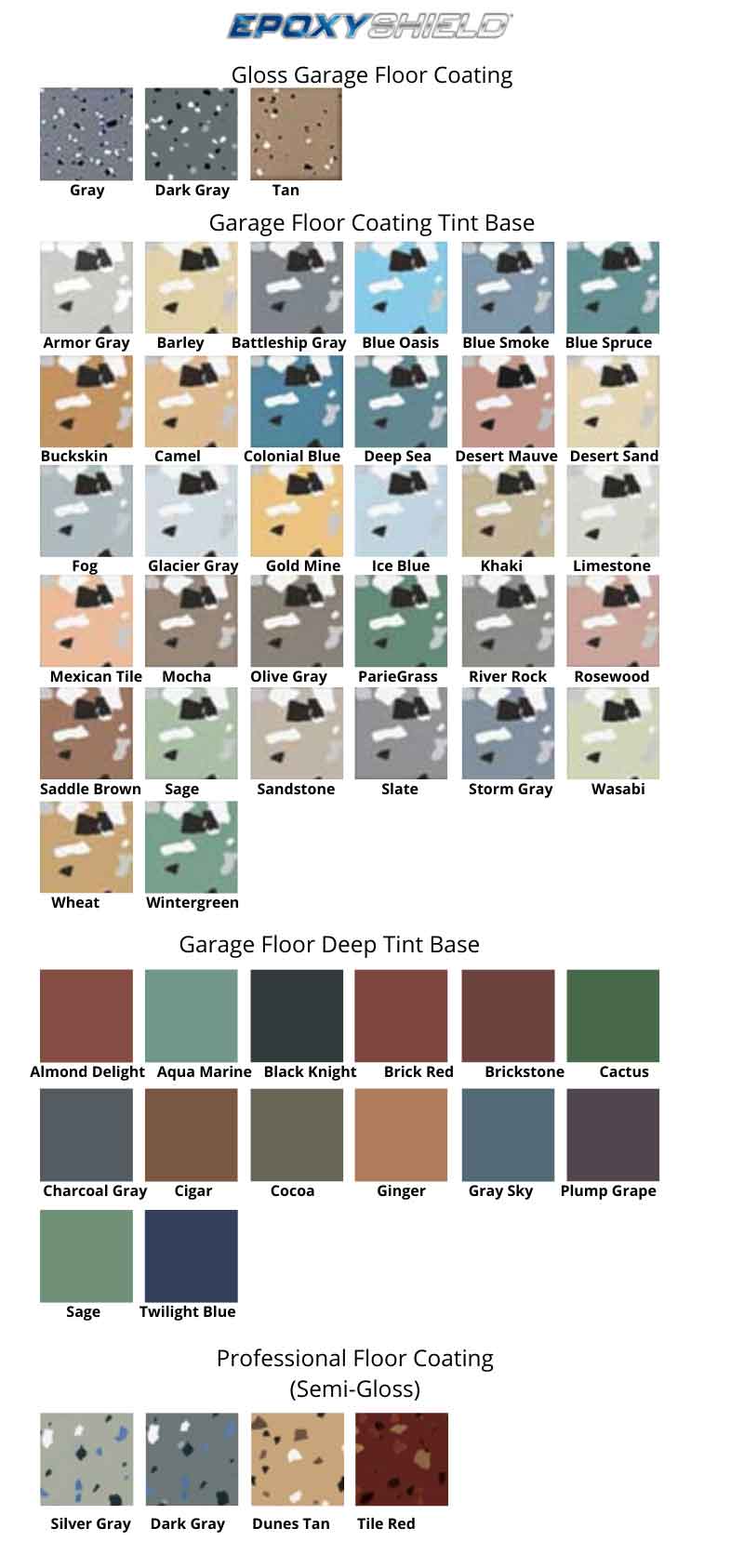
The end result of using EpoxyShield is a solid base color with a color-fleck finish that exudes a glossy appearance when dried. It comes in Car Kit and 2.5 Car Kit options with different color variations available, including Gray, Tan, and Dark Gray, allowing you to pick the one that best suits your taste and the overall aesthetics of your garage.
Each kit includes a two-part Burst Pouch Technology for convenient and accurate mixing, decorative chips for an enhanced appearance, a concrete etch, and an easy-to-follow instruction sheet.
Remember, surface preparation is crucial for optimal performance. So, you should conduct moisture testing, check for the presence of sealers, and address any poorly bonded paint or damaged concrete before applying the EpoxyShield coating.
The application process is straightforward: prepare the surface, mix the components, and apply the coating in 4×4 foot sections with a roller.
For an even more enhanced appearance, consider adding the provided decorative chips.
Much like RockSolid, EpoxyShield uses burst pouch technology and is applied with a roller. EpoxyShield will provide your garage with a sleek, durable, and chemically-resistant surface when applied correctly.
Quick Facts: Rust-Oleum EpoxyShield
Here are some specifics from the official EpoxyShield TDS:
- For Sound Concrete Floors: EpoxyShield is designed for concrete garage floors in good condition, free of curing agents and sealers. However, it’s unsuitable for floors with previous coatings or moisture problems.
- Gloss Finish with Color Fleck: This coating dries to a glossy finish with a solid base color and a color fleck finish.
- Surface Preparation: As with RockSolid, proper surface preparation is crucial. The TDS offers guidelines for checking for sealed concrete, poorly bonded paint, moisture in the concrete, and handling loose or damaged concrete. It emphasizes a clean, dry surface, removing sealers and loose paint, and repairing damaged areas.
- Mixing and Application: The TDS outlines the mixing process for the coating’s two components. It recommends using a brush or edger for cutting in the perimeter before applying the rest with a roller. You can apply Rust-Oleum Anti-Skid Additive and decorative chips for a better-looking, slip-resistant surface.
- Coverage and Dry Time: Light foot traffic can resume in 12-16 hours and regular foot traffic in 24-48 hours, at 70°F and 50% relative humidity.
- Painting Conditions and Limitations: The TDS gives detailed information on painting conditions and limitations. For instance, it advises not applying the product in direct sunlight or temperatures below 60°F or above 85°F.
EpoxyShield is a cost-effective, easy-to-apply solution for those looking to spruce up their garage floors without breaking the bank. When considering coating options, it’s worth comparing epoxy versus polyaspartic coatings to understand all available alternatives.
RockSolid vs EpoxyShield: Durability & Lifespan
This section will help you understand how RockSolid and EpoxyShield stack up in terms of durability and longevity:
RockSolid garage floor coatings are known for impressive durability. Its unique polycuramine formula results in a rugged, long-lasting floor coating. It’s durable, impact-resistant, and can withstand the pressure of vehicles, tools, and heavy equipment without cracking or chipping.
Furthermore, RockSolid is built to withstand most of the harsh chemicals found in a garage like salt, oil, and gasoline. It’s designed to resist hot tire pickup. If you apply and maintain it properly, RockSolid will provide a garage floor coating that can handle the daily abuse.
Now, let’s discuss EpoxyShield. This water-based
