

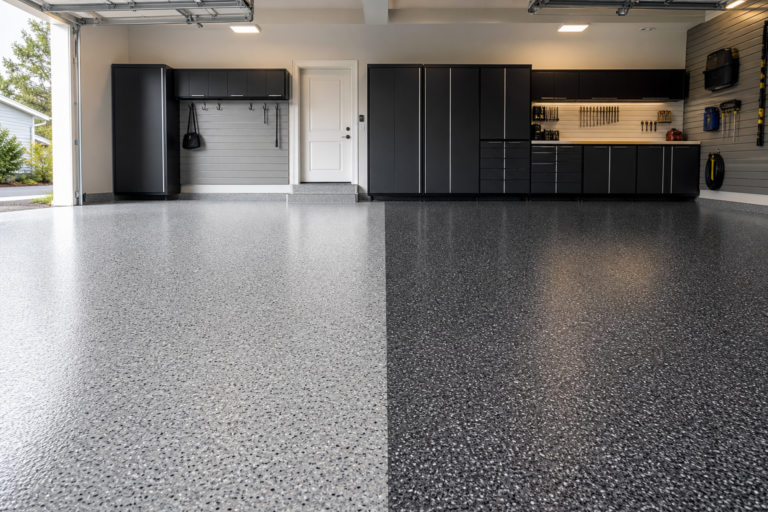
The epoxy vs. polyaspartic garage floor coatings decision comes up constantly, and both sides have passionate advocates. Marketing claims from each camp are hard to verify without hands-on experience.
This comparison cuts through the noise with a side-by-side look at what actually matters: performance, cost, durability, installation, and maintenance. The right choice for your situation should be clear by the end.
Understanding the Basics
Apply coatings when temperatures are falling, not rising. Warming concrete expels trapped air through the wet coating (outgassing), creating bubbles. Evening application avoids this. Most epoxies perform best between 55 and 85 degrees Fahrenheit with the slab surface in the same range.
Two-part epoxy creates a chemical bond far stronger than any single-can product. When resin and hardener mix, cross-linking produces a dense, chemical-resistant surface. This reaction is sensitive to temperature, humidity, and mixing ratios, making adherence to the data sheet critical.
Pot life varies by product: 30 to 60 minutes for standard epoxies, as little as 10 to 15 minutes for polyaspartic coatings. Plan your approach before mixing and work in manageable sections so you never feel rushed near the end of a batch.
Cure Time and UV Stability Differences
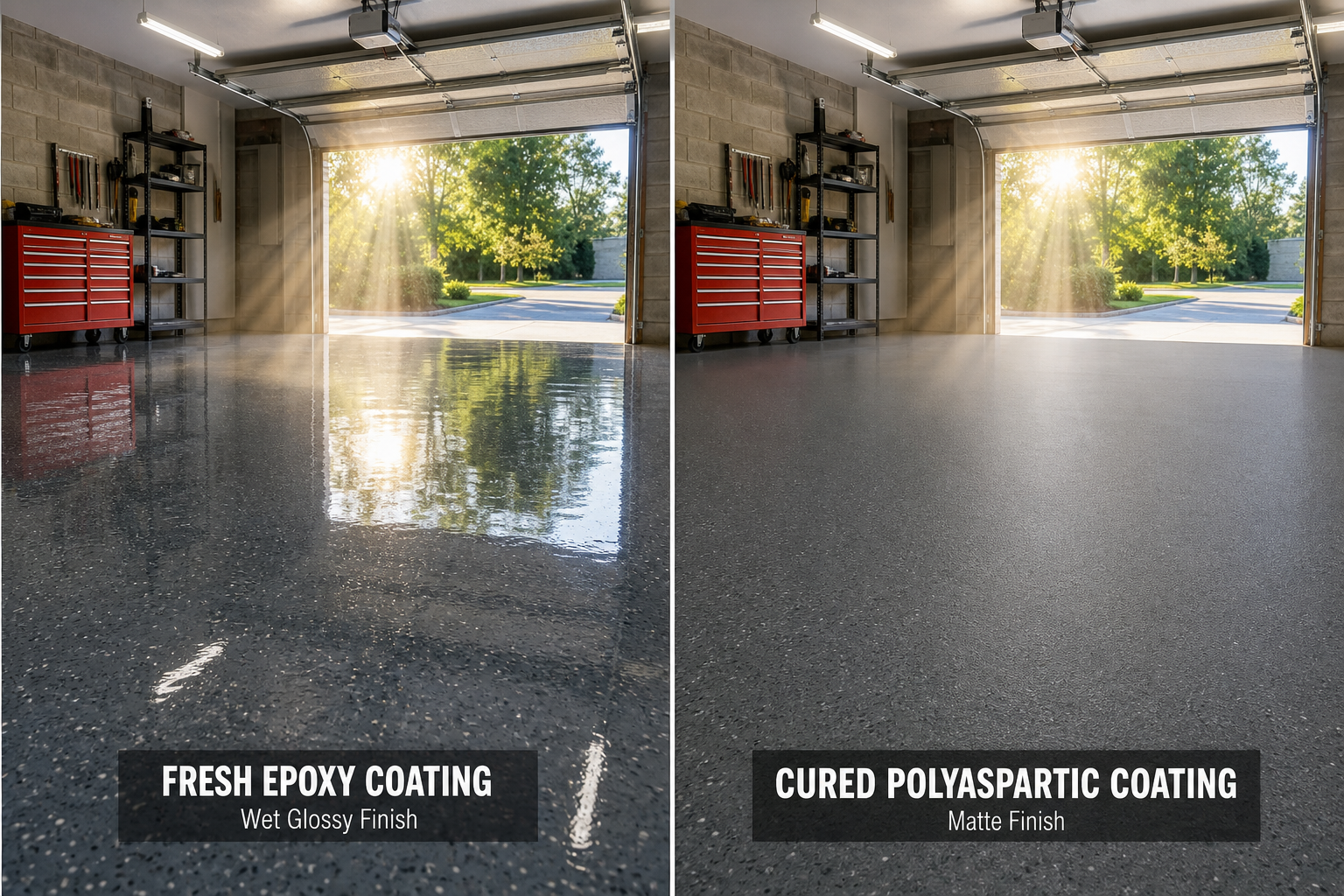
The real differences in cure time and UV stability make the difference between a result that lasts and one that needs redoing within a year. Take the time to assess your conditions before committing to a method or product.
Follow manufacturer instructions exactly, even when online tutorials suggest shortcuts. Formulations differ between brands; what works for one product can cause failure with another. If the data sheet says 4 hours between coats at 60 degrees minimum, those numbers aren’t suggestions.
Consider how this change fits the larger garage picture. Improvements in one area can shift dynamics elsewhere. Better insulation changes humidity patterns. Heavy storage affects the floor underneath. Think about interactions.

Concrete Moisture Test Kit
Essential for checking moisture levels before coating application
Chemical Resistance and Temperature Tolerance
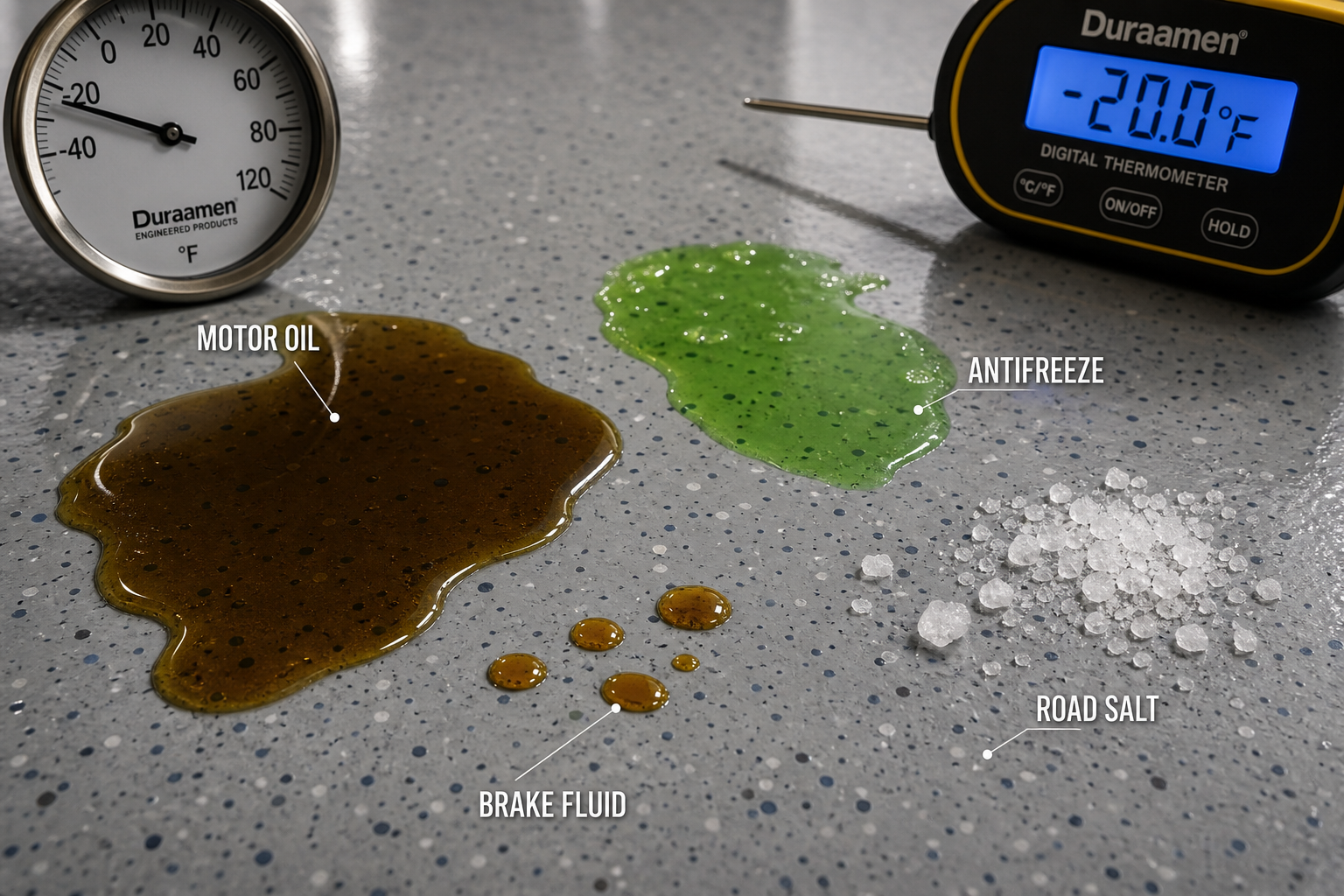
Chemical resistance and temperature tolerance vary significantly between coating types. Understanding the specifics of your situation helps you choose the right approach. Your garage’s age, construction type, and local climate all influence what works best and what to avoid.
Keep the workspace organized throughout. Debris and clutter cause errors and safety issues. Clear tools and waste between major steps rather than letting mess accumulate to the end.
Expect at least one surprise during the project. Hidden moisture, non-standard dimensions, or outdated wiring are common discoveries. Having backup materials and a flexible timeline reduces the stress when they appear.
When Standard Epoxy Beats Polyaspartic
Don’t believe the marketing that polyaspartic is always better. Standard epoxy is often the smarter choice. Getting this right requires matching your approach to actual conditions rather than following a generic formula. Climate, surface condition, and usage patterns all influence the best path forward.
Start with a small test area if you’re uncertain. A 4 by 4-foot section in an inconspicuous spot lets you evaluate adhesion, appearance, and workability without committing to the full project. Troubleshooting a small test area is far easier than redoing everything.
If this is your first project of this type, budget 50% more time than guides suggest. The learning curve is real, and careful work produces better results than rushing to meet an estimated timeline.
Cost Comparison for a 2-Car Garage
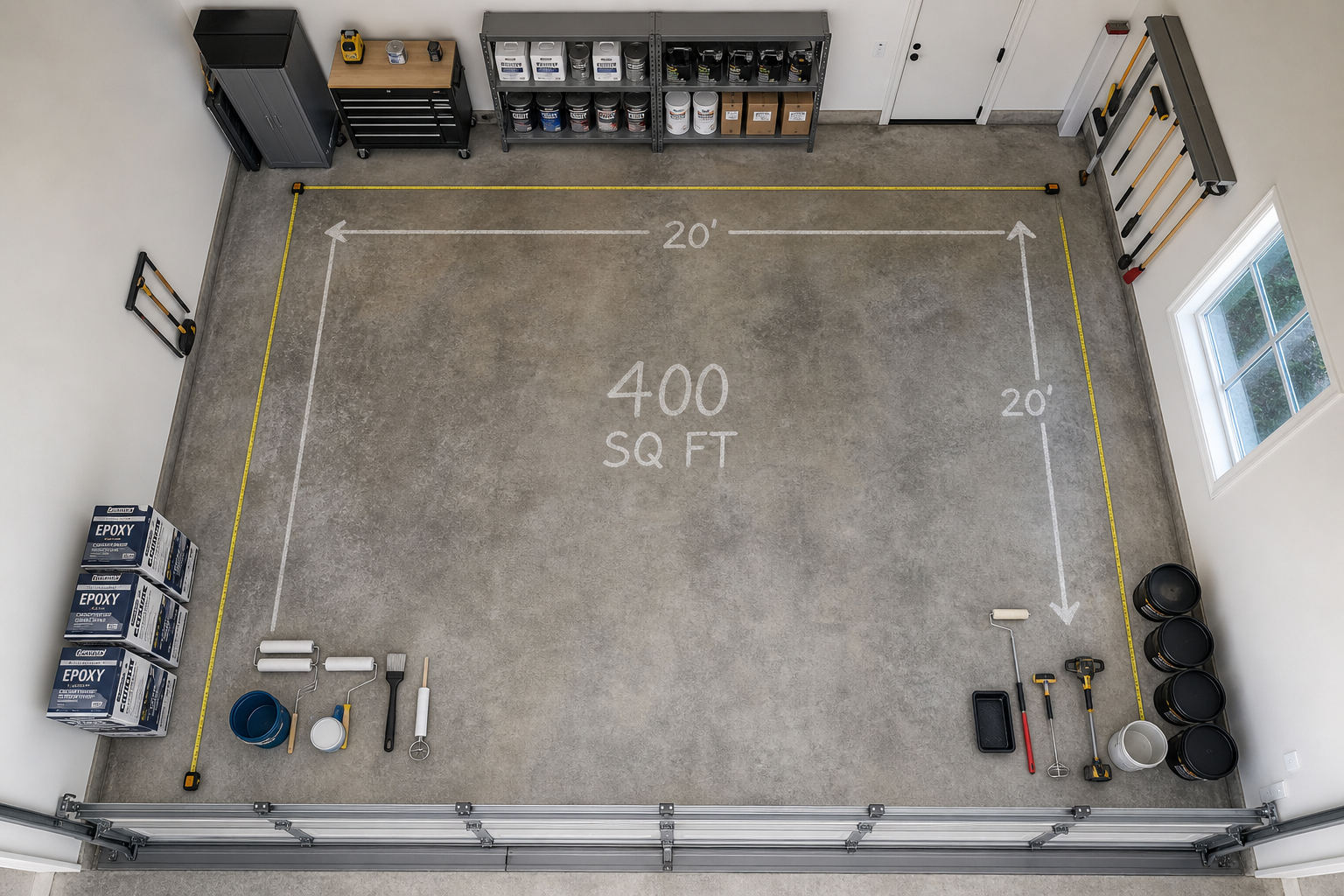
A comprehensive cost breakdown for a 2-car garage helps you understand the real investment. The details here make the difference between a result that lasts and one that needs redoing within a year. Take the time to assess your conditions before committing to a method or product.
Measure twice and commit once. A tape measure and five minutes of verification prevent the mistakes that take hours to fix. This applies doubly to cuts, holes, and any irreversible step.
Wear appropriate protection throughout: safety glasses, gloves, respirator when working with chemicals or dust. Ventilate when using adhesives, paints, or solvents. These aren’t optional precautions.
Additional Considerations
Cure Time Requirements
Never shortcut cure time. Most two-part epoxies need 24 hours for foot traffic, 72 hours for heavy use, and 7 days before vehicle parking. Polyaspartic systems cure faster, often allowing vehicles within 24 hours. Parking too early causes tire marks, soft spots, or full sheet delamination.
Surface Preparation
Surface preparation drives roughly 80% of a coating’s long-term performance. Concrete needs a CSP 2 to 3 surface profile for proper adhesion. Diamond grinding achieves this reliably. Proper sealing before epoxy application is crucial for lasting results.
Acid etching is a budget alternative on clean, unsealed concrete but creates a lighter profile that’s less durable in high-traffic areas. For best results, consider using primer for additional adhesion on questionable surfaces.
Making Your Final Decision
Both options have real strengths, and neither is universally superior. Your budget, timeline, climate, and usage patterns determine the better fit. Pick whichever checks more of your boxes and commit confidently.
Still undecided? Start with the lower-cost or more reversible option. You can always upgrade later once you have firsthand experience with the trade-offs in your specific setup.

Concrete Degreaser
Essential for proper surface preparation before coating application
For additional garage improvements beyond flooring, consider creating a dedicated workshop space or upgrading to a home gym setup to maximize your investment.
Frequently Asked Questions
How long does a garage floor coating last?
A properly applied two-part epoxy lasts 5 to 10 years. Polyaspartic coatings can go 15+ years. Surface prep quality is the biggest factor in how long the coating holds up.
Can I coat over an existing floor finish?
If the old coating is well-adhered and just worn thin, scuff-sand it and apply a new topcoat. If it’s peeling or bubbling, strip it completely first.
What temperature is best for floor coating application?
Between 50 and 85 degrees Fahrenheit with humidity below 85%. Apply in the evening when temperatures are falling to avoid outgassing bubbles.
How important is moisture testing before coating?
Critical. Excess moisture will cause coating failure regardless of product quality. Concrete moisture test kits help ensure proper conditions before application.
This article contains affiliate links. We may earn a small commission at no extra cost to you.
