

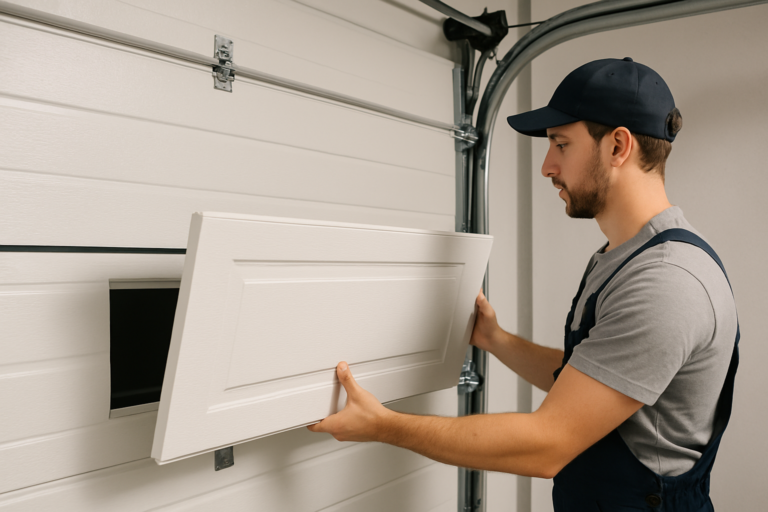
Your garage door just took a hit, and now you’re staring at a dented or cracked panel. Maybe a basketball went rogue, or you misjudged the distance while backing out. Whatever happened, you’re trying to figure out if you can replace just that one damaged panel or if you need to bite the bullet and replace the entire door.
The decision isn’t always obvious. Panel replacement can save you thousands of dollars compared to a full door replacement, but only if the conditions are right. Let’s break down exactly when panel replacement makes sense, what it’ll cost you, and how to navigate the process without making expensive mistakes.
When Panel Replacement Actually Makes Sense
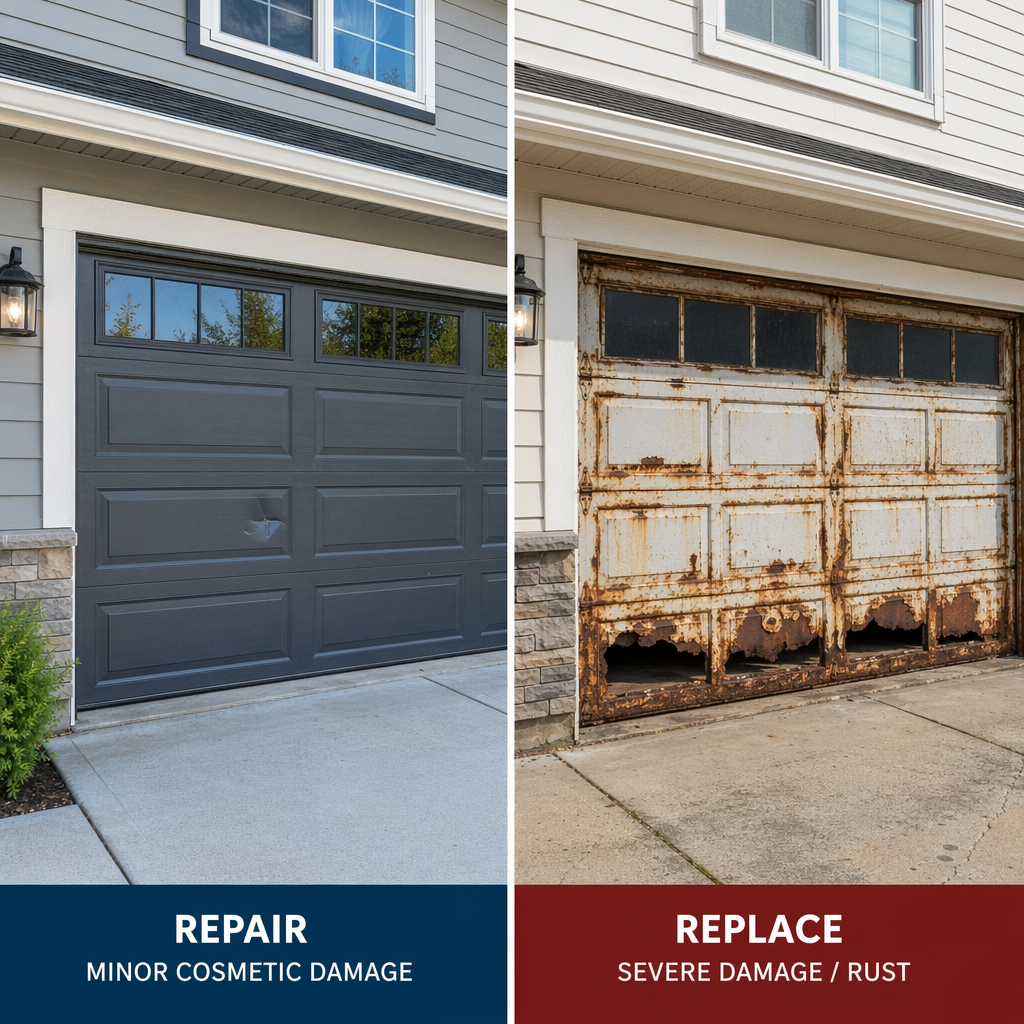
Replacing individual panels works best when your damage is limited to one or two sections and your door is relatively new. Most manufacturers keep panel designs and colors in production for about 10 to 15 years, which means you’ve got a decent window for finding exact matches.
The ideal candidate for panel replacement has damage on the lower panels. These are easier to access and replace because you don’t need to disassemble as much of the door hardware. Bottom panels also take the most abuse from weather, landscaping equipment, and vehicle bumps, so manufacturers expect these to need replacement more often.
You should also consider the overall condition of your door. If your garage door is already 15 years old with fading paint, multiple worn panels, or outdated insulation, replacing one panel is like putting a bandaid on a bigger problem. The new panel will stand out like a sore thumb, and you’ll likely face more repairs soon anyway.
When You Should Replace the Entire Door Instead
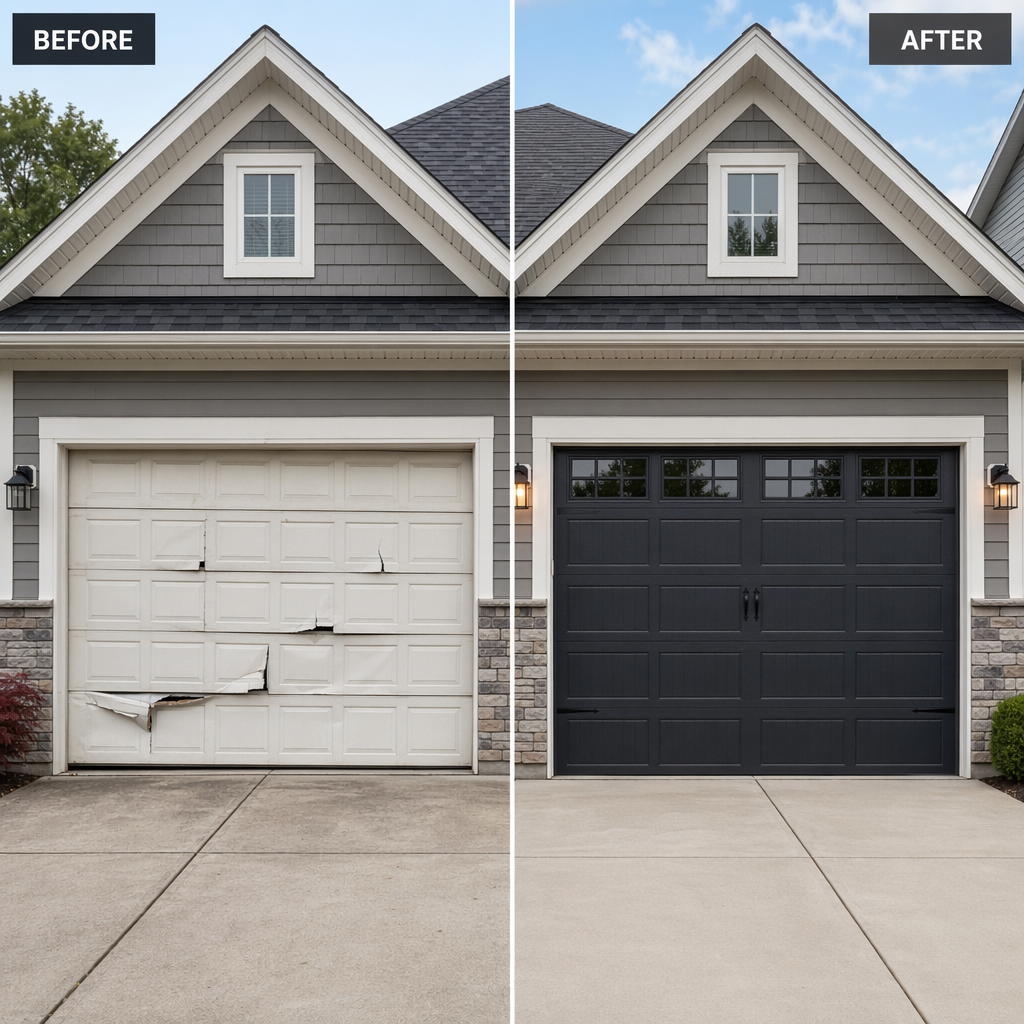
Some situations just don’t justify panel replacement, no matter how much you want to save money. If your door was manufactured more than 15 years ago, finding matching panels becomes a gamble. Even if the manufacturer is still in business, they’ve probably discontinued your specific style and color.
Multiple damaged panels push the math in favor of full replacement. Once you’re looking at three or four panels, especially if they’re not adjacent, the labor costs start adding up. You’re paying for repeated installations, and the technician needs to carefully rebalance the door multiple times.
Structural damage to the door frame, tracks, or roller system changes the equation completely. A hard impact that damages panels often bends the tracks or tweaks the frame alignment. Replacing panels on a compromised structure is throwing good money after bad.
You also can’t ignore safety concerns with broken springs or cables. If the incident that damaged your panel also affected these critical components, you’re better off with a complete replacement that addresses everything at once.
The Real Costs Behind Panel Replacement
Individual garage door panels typically run between competitively priced and competitively priced per panel for the part itself. Steel panels sit on the lower end of that range, while insulated or custom designs push toward the higher end. Wood panels and specialty materials can exceed competitively priced per panel.
Labor costs add another competitively priced to competitively priced per panel depending on your location and the complexity of the job. Top panels require more work because technicians need to release tension on the springs and partially disassemble the door. Bottom panels are quicker to replace, which means lower labor charges.
The total for a single panel replacement usually lands between competitively priced and competitively priced when you factor in parts and labor. Compare this to full door replacement, which ranges from competitively priced to competitively priced depending on size, material, and insulation quality. The math gets fuzzy when you need two or three panels replaced.
Don’t forget about the hidden costs. You might need to repaint or refinish adjacent panels if the new one doesn’t match perfectly. Color fading happens gradually, and even an exact replacement from the manufacturer can look noticeably different next to panels that have weathered for years.
Finding Panels That Match Your Existing Door
Start by identifying your door’s manufacturer and model number. This information usually appears on a sticker or metal plate attached to the door itself, often on the inside edge or back of a panel. Take clear photos of this label along with the overall door design and any unique features.
Contact the original manufacturer first. Companies like Clopay, Amarr, and CHI maintain databases of their panel designs and can tell you immediately if your model is still available. They can also direct you to authorized dealers who stock or can order your specific panels.
Generic panels exist as alternatives, but matching them requires careful measurement and comparison. You need to match the panel height, width, and profile exactly. Even small differences in the curve or embossing pattern will be visible once installed.
Color matching presents the biggest challenge. Sun exposure fades garage door paint differently based on which direction your door faces and your local climate. White and beige doors show fading less noticeably than darker colors like brown or gray. Some homeowners choose to replace all visible panels even when only one is damaged to ensure consistent appearance.
DIY Panel Replacement: What You’re Getting Into
Replacing bottom panels yourself is feasible if you’re comfortable with basic tools and following detailed instructions. You’ll need a socket set, locking pliers, a rubber mallet, and a helper to hold panels in position. The job typically takes two to three hours for someone with average DIY skills.
The process involves removing the damaged panel from the hinge system, detaching the rollers, and carefully sliding out the old section. You then reverse these steps with the new panel, making sure everything aligns properly. YouTube has plenty of walkthrough videos, but watch several before attempting the job yourself.
Don’t attempt DIY replacement on top panels or any panel near the springs. Garage door springs hold extreme tension and can cause serious injury or death if mishandled. This isn’t an exaggeration or liability warning, it’s a genuine safety issue that sends people to emergency rooms every year.
Even bottom panel replacement carries risks. You need to be methodical about tracking which hinge goes where and maintaining proper alignment. A garage door that’s even slightly out of alignment will bind in the tracks, wear out components faster, and potentially fail in dangerous ways.
Professional Installation: What to Expect
Hiring a professional garage door company removes most of the risk and frustration. Experienced technicians complete single panel replacements in 30 to 60 minutes because they’ve done this exact job hundreds of times. They bring the right tools and know how to handle unexpected complications.
Good companies will assess your entire door system before quoting a panel replacement. They’ll check spring tension, track alignment, and overall door condition. Sometimes they’ll recommend against panel replacement if they spot other issues that make it a poor investment.
Get quotes from at least two companies, preferably ones that are factory authorized dealers for your door’s brand. Authorized dealers have easier access to correct panels and understand the specific installation requirements for different models. They also usually offer better warranties on both parts and labor.
Watch out for companies that push hard for full replacement when panel replacement would work fine. Some use damage as an opportunity to upsell, while others legitimately believe full replacement offers better long-term value. Ask them to explain their reasoning and get their assessment in writing.
Working With Insurance on Garage Door Damage
Homeowners insurance often covers garage door damage from specific causes like storms, vehicle impacts, or vandalism. Your policy likely won’t cover damage from wear and tear, rust, or poor maintenance. Read your policy or call your agent to understand what’s covered before filing a claim.
Document everything with photos and detailed notes before making any repairs. Take pictures of the damaged panel from multiple angles, any objects that caused the damage, and the overall condition of your garage door. This documentation supports your claim and prevents disputes about the extent of damage.
Get repair estimates from licensed contractors before filing your claim. Some insurance companies want you to use their preferred vendors, while others let you choose your own contractor. Having estimates in hand strengthens your negotiating position and helps you understand if filing a claim makes financial sense.
Consider your deductible before filing. If your panel replacement competitively priced and your deductible is competitively priced, you’re only getting competitively priced from insurance. Filing a claim for such a small benefit can increase your premiums and isn’t worth it. Save insurance claims for major damage that significantly exceeds your deductible.
Insurance adjusters sometimes approve only panel replacement when you believe full replacement is necessary. If you disagree with their assessment, get a detailed written explanation from your contractor about why full replacement makes more sense. You can appeal the adjuster’s decision with this documentation.
Making the Right Decision for Your Situation
Panel replacement makes the most financial sense when you have one damaged panel on a door that’s less than 10 years old. You save 60% to 75% compared to full replacement, and matching panels is usually possible. This is especially true for common brands like Clopay or Amarr that maintain consistent product lines.
Go with full replacement when your door is older than 15 years, you need multiple panels, or the door has other issues. Modern garage doors offer better insulation, quieter operation, and improved safety features. The incremental cost difference between replacing three panels and installing a new door often isn’t that large.
Think about how long you plan to stay in your home too. If you’re selling within a year or two, a full replacement adds more curb appeal and gives potential buyers confidence in the home’s maintenance. Panel replacement works fine if you’re staying put and just need to fix immediate damage.
Frequently Asked Questions
Can I replace a garage door panel myself without professional help?
You can replace bottom panels yourself if you have basic tool skills and follow instructions carefully. The job requires removing hinges and rollers, which isn’t complicated but demands attention to detail. Never attempt to replace top panels or work near springs yourself because the extreme tension creates serious injury risks. Middle and top panel replacement should always be left to professionals who have the proper tools and training to handle spring systems safely.
How long does it take to get replacement panels after ordering?
Common panels from major manufacturers typically arrive within one to two weeks if your local dealer doesn’t stock them. Discontinued or specialty panels can take four to six weeks, and sometimes you’ll discover they’re no longer available at all. Custom colors or wood panels often require six to eight weeks for manufacturing and delivery. Order panels as soon as you confirm the match to avoid leaving your garage exposed or paying for temporary repairs.
Will a replaced panel ever match perfectly with my existing door?
Perfect matches are rare unless your door is very new. Sun exposure causes gradual fading that makes even identical panels look different when placed next to weathered ones. White and light colors hide this difference better than dark colors. Some homeowners choose to replace all visible panels on the garage’s front face to ensure consistency. Others accept slight color variation since it becomes less noticeable over time as the new panel weathers.
Does replacing one panel affect my garage door warranty?
Replacing a panel using manufacturer parts typically doesn’t void your warranty as long as installation is done correctly. Using generic panels or incorrect installation methods can void coverage on the rest of your door. Check your warranty documents before proceeding, and consider using factory authorized dealers for the work. Keep all receipts and documentation about the panel replacement in case you need warranty service on other components later.
